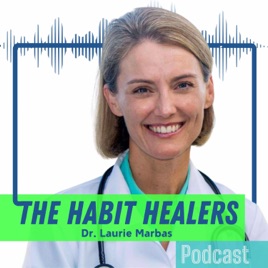
Welcome to The Habit Healers Podcast—where transformation starts with a single habit.
Hosted by Dr. Laurie Marbas, this podcast is for anyone ready to break free from chronic health struggles, rewire their habits, and create lasting healing. Through powerful stories, science-backed strategies, and real-world tools, we dive deep into the micro shifts that lead to massive health transformations.
You’ll learn how to heal beyond prescriptions—how to nourish your body, reprogram your mind, and build the habits that make vibrant health effortless. Whether you’re looking to reverse disease, boost energy, or finally make health a way of life, this podcast will show you how.
Because true healing isn’t about willpower—it’s about design. And you’re always just one healing habit away.
drlauriemarbas.substack.com
Advertise on The Habit Healers
Advertise on The Habit Healers to promote your brand to thousands of podcast listeners
Check latest episodes from The Habit Healers podcast
Does Your Social Life Accidentally Increase Your Risks of Catching a Cold?
2026/10/15
Why do some people catch every cold that goes around while others never seem to get sick? On this episode of The Habit Healers Podcast, I’m sharing research that changed how I think about your immune system and the common cold, and it has nothing to do with vitamin C.
When healthy volunteers were given a cold virus on purpose, the people with more kinds of relationships got sick far less often. Not more friends, more kinds of connection: family, neighbors, coworkers, a club, a faith community. The virus still got in. Their bodies just handled it better. I’ll walk you through how this study worked, why the total number of people in your life didn’t seem to matter, and what a banana crop wiped out by a soil fungus has to do with your social health.
We’ll also talk about what hugs did and didn’t do for cold protection, why life changes like retirement or an empty nest can quietly shrink your social circle, and the simplest way to start rebuilding it before cold and flu season hits.
What you’ll learn:
* Why social connection may matter as much as sleep for avoiding the common cold
* The difference between having many people and many kinds of relationships
* How hugs and feeling supported related to infection when stress was high
* Why loneliness and social isolation can creep in even when your calendar is full
* A two-minute self-check to score your own social diversity
* One phone call you can make tonight to support your immune system naturally
Dr. Marbas Substack Article: https://drlauriemarbas.substack.com/p/does-your-social-life-accidentally
Check out the Habit Healers Community: https://www.skool.com/habithealers/about
Get full access to The Habit Healers at drlauriemarbas.substack.com/subscribe
Batch Cooking Without Three Days of the Same Meal
2026/10/14
At one point, I asked Chef Martin Oswald whether restaurant kitchens had robots doing all the prep. Not yet, he told me. A little later, as tray after tray of cooked vegetables appeared on his counter, I decided he must at least own a magic oven.
If batch cooking has ever sounded like three days of the same finished meal, this session asked a better question. Could the repetitive work happen once without deciding every dinner in advance?
The speed did not come from cooking three finished dinners at once. It came from doing one kind of work once, then letting the ingredients take different directions later.
Martin had spent about 50 minutes preparing food for three people for the next three days. He did not line up 40 identical containers. He roasted vegetables in groups, cooked red rice, made a vegetable stock, and kept beans, tofu, hummus, and sauces ready to change the character of each meal.
That is batch cooking I can imagine using.
Cook by behavior
Martin began with the vegetables that take the longest. Carrots, potatoes, parsnips, and celeriac went together because they were firm and would roast at a similar pace. He cut them to roughly the same thickness, which helped them finish together.
Broccoli, Napa cabbage, zucchini, and tender squash needed a different plan. Some cook quickly because they are softer or contain more water. Martin showed how the cut can move an ingredient from one tray to another. A thick piece of squash could roast beside the roots. A thin slice could finish with the broccoli.
For this demonstration, he used a 400°F oven. The firmer tray went in first, and he prepared the quicker-cooking tray while it roasted. He estimated roughly 12 to 20 minutes for the batches, depending on the vegetables, their thickness, and the oven. The clock was a guide. The vegetables still had to be checked.
Even the scraps had somewhere to go. Mushroom stems and carrot peelings joined onion, garlic, bay leaf, and tomato in a vegetable stock. The work that usually feels like cleanup became the beginning of another meal.
Keep the meal unfinished
The familiar problem with meal prep is not only the chopping. It is opening the refrigerator on day three and seeing the same dinner staring back at you.
Martin avoids that by storing useful parts instead of deciding every meal in advance. He groups cooked ingredients by seasoning, then chooses what a meal will become when it is time to eat.
The first plate used hummus as a base for a mix of roasted broccoli, squash, onion, tofu, carrot, eggplant, potato, and cauliflower. The next moved in a Mediterranean direction with kidney beans, fennel, eggplant, tofu, tahini, and ajvar, the smoky pepper and eggplant sauce Martin mentioned during the live.
The same preparation became a bean stew when he warmed kidney beans, squash, roasted onion, garlic, and vegetable stock with a different spice blend. Then red rice, broccoli, Napa cabbage, tofu, apple, lime, soy sauce, and sriracha became a stir-fry.
The vegetables had not changed. The supporting ingredients and flavor direction had.
That is why sauce matters so much in this method. Martin made a quick tahini sauce with garlic, lemon, cumin, and sriracha. He also used ajvar and a few other strong flavor builders. A spoonful of sauce was not an afterthought. It was the turn that sent the same tray toward a different dinner.
Try the restaurant sequence
You do not need Martin’s magic oven or a restaurant-sized refrigerator. Start with this smaller version.
* Choose two vegetable groups. Put firm roots in one and quicker-cooking vegetables in the other. Cut the pieces within each group to a similar thickness.
* Start the firm vegetables first. Prepare the quicker group while the first tray roasts.
* Add one flexible base such as beans, tofu, hummus, or a cooked grain, plus one sauce you already enjoy.
* Keep the components separate enough to change direction. Build a bowl today, a quick stew tomorrow, and a stir-fry the next day.
* Cool the cooked food in shallow containers and refrigerate it within two hours. The USDA advises using most cooked leftovers within three to four days and reheating them to 165°F.
The practical choice is surprisingly small. Do not ask yourself to predict every meal for the week. Ask which prep job you would be relieved not to repeat tomorrow.
Martin’s answer was the chopping and roasting. Once that work was finished, dinner stopped being a project and became a choice among ingredients that were already waiting.
References:
* Chef Martin Oswald’s Rustic, Smoky Ajvar
* Chef Martin’s Cook Smarter, Not Harder, the companion article he mentioned during the session, and Chef Martin’s Healing Kitchen for his recipe collection
If you want help turning practical ideas like this into habits you can keep, join Chef Martin and me in The Habit Healers community on Skool.
Get full access to The Habit Healers at drlauriemarbas.substack.com/subscribe
Does Fasting Work Because You Ate in Fewer Hours, or Because You Ate Less?
2026/10/14
Does intermittent fasting actually work, or does 16:8 fasting just help you eat less? On this episode of The Habit Healers Podcast, I’m walking you through what the research on time-restricted eating really shows about weight loss, autophagy, and metabolic health.
If you’ve been keeping an eating window and wondering whether those fasting hours are doing something special in your body, this one is for you. I’m Dr. Laurie Marbas, and we’ll start with what happens after dinner: the metabolic switch from your last meal to stored fat, the cellular recycling process called autophagy, and how your circadian rhythm changes the way you handle food at different hours. Then we’ll look at what happened when researchers matched calories and changed only the timing, and why a story from cardiology in the 1980s is a useful warning about trusting a number just because you can count it. My goal isn’t to talk you out of fasting. It’s to help you judge it by what you can actually see.
What you’ll learn:
* Why time-restricted eating often works by quietly cutting calories
* What calorie-matched intermittent fasting trials found for weight loss and body fat
* What human research shows about autophagy, and what it doesn’t
* How an early eating window improved insulin sensitivity in one small, tightly controlled study
* Why tracking your strength matters if you’re fasting for weight loss
* Who should talk to their doctor first, including anyone taking insulin or sulfonylureas
Dr. Marbas Substack Article: https://drlauriemarbas.substack.com/p/does-fasting-work-because-you-ate
Check out the Habit Healers Community: https://www.skool.com/habithealers/about
Get full access to The Habit Healers at drlauriemarbas.substack.com/subscribe
Can a Bright Lamp in the Morning Lift Winter Depression?
2026/10/13
Does a light box for seasonal affective disorder really work, or did yours just never get a fair trial? In this episode, I walk through the research on light therapy for winter depression and the simple mistakes that keep it from working.
On this episode of The Habit Healers Podcast, I take you back to the early experiments showing that bright light, not ordinary room light, changes how the body responds. Then we look at a clever trial that put a 10,000 lux light box head to head with a common antidepressant, and the results surprised a lot of people. A recent depression treatment guideline now lists bright light as a first choice for depression that comes back every winter.
Here’s the part most people miss: the dose depends on how far you sit. Many light boxes only reach 10,000 lux a few inches from your face, and many ads show people sitting much too far away. I’ll walk you through how to choose a light box, when to use it, how long to sit, and how to tell whether it’s working, so you can treat seasonal depression with real evidence behind you.
What you’ll learn:
* How bright light therapy compared with an antidepressant for seasonal affective disorder
* Why distance from your light box changes the dose
* How to choose a 10,000 lux light box with white light and a UV filter
* Why morning light therapy works better than evening sessions
* Why it can take four weeks to judge whether light therapy is working
* Who should talk to a doctor before using a light box for depression
Dr. Marbas Substack Article: https://drlauriemarbas.substack.com/p/can-a-bright-lamp-in-the-morning
Check out the Habit Healers Community: https://www.skool.com/habithealers/about
Get full access to The Habit Healers at drlauriemarbas.substack.com/subscribe
Do Women Need Testosterone After Menopause?
2026/10/12
Is testosterone for women after menopause worth trying? If an online clinic has promised you that a testosterone cream will fix your low libido, energy, and weight, this episode looks at what the research actually shows.
On this episode of The Habit Healers Podcast, I’m walking you through more than thirty years of studies on testosterone therapy for women. We start with a surprising experiment involving blindfolded violinists, because it explains why you can’t judge a hormone fairly when you know you’re taking it. Then we look at what happened in placebo-controlled trials, what really happens to your testosterone at menopause, and why a blood test can’t tell you whether you need it.
Here’s what I want you to know: testosterone has one proven use after menopause, and it isn’t energy, brain fog, mood, or weight loss. If low sex drive in menopause is what’s bothering you, I’ll share where testosterone fits, why estrogen usually comes first, and how to set up a fair trial with your doctor so you know whether it’s working.
What you’ll learn:
* Why testosterone in women doesn’t crash at natural menopause
* What placebo-controlled trials found about testosterone for low libido after menopause
* Why a testosterone blood test can’t diagnose low sexual desire
* How an estrogen patch or gel differs from an estrogen pill in its effect on your own testosterone
* Why no testosterone product has FDA approval for women, and what the FDA is still asking about safety
* How to dose, monitor, and set a stop date for a fair testosterone trial
Dr. Marbas Substack Article: https://drlauriemarbas.substack.com/p/do-women-need-testosterone-after
Check out the Habit Healers Community: https://www.skool.com/habithealers/about
Get full access to The Habit Healers at drlauriemarbas.substack.com/subscribe
Why Can a 150-Pound Man Get Diabetes When a 300-Pound Man Does Not?
2026/10/11
Can you reverse type 2 diabetes? And why do some thin people develop insulin resistance and high blood sugar while others at a much higher weight have perfect labs? I’m Dr. Laurie Marbas, and in this episode I walk you through the personal fat threshold, the idea that changed how I think about type 2 diabetes remission.
For fifty years we were told diabetes was about how much fat you carry. The research from Professor Roy Taylor at Newcastle University points somewhere else: where your body stores it. I use a simple picture, a bathtub, to explain why each of us has a different limit for safe fat storage, and what happens when it overflows into the liver and pancreas. That overflow drives fatty liver, insulin resistance, and rising blood sugar, even at a normal BMI.
Here’s the hopeful part. The insulin-producing beta cells in your pancreas may not be gone. They may be resting, and the science suggests they can wake back up. I also share a few small daily habits that help lower blood sugar naturally, without overhauling your life.
In this episode of The Habit Healers Podcast, you’ll learn:
* What the personal fat threshold is, and why BMI misses your real type 2 diabetes risk
* How fat in the liver and pancreas drives insulin resistance, known as the Twin Cycle
* Why beta cells can recover, and what that means for type 2 diabetes remission
* How much weight loss the research links to remission: about 22 to 33 pounds for most people
* How quickly liver fat and fasting blood sugar can respond
* Four micro-habits for better blood sugar control: a pre-meal pantry staple, a seated calf movement, meal order, and evening light
Dr. Marbas Substack Article: https://drlauriemarbas.substack.com/p/why-can-a-150-pound-man-get-diabetes
Check out the Habit Healers Community: https://www.skool.com/habithealers/about
Get full access to The Habit Healers at drlauriemarbas.substack.com/subscribe
Why You Should Never Trust a Percentage in a Headline
2026/10/10
Relative risk vs absolute risk: it’s the one distinction that changes how you read every health headline. In this episode, I’m walking you through how to read a medical study, so a big percentage in the news never misleads you again.
Welcome to The Habit Healers Podcast. I’m Dr. Laurie Marbas, and this is week two of Mini Medical School, where we’re learning to understand medical research together. Today we’re in the Results section, the part of a paper most people skip, and the part that tells you the most.
I’ll show you why a drug that “cuts risk in half” may only change your personal risk by one percentage point, and where to find the raw numbers that headlines leave out. We’ll talk about what a p-value really measures, why statistically significant does not always mean clinically significant, and how to read a confidence interval so you can tell a precise result from a shaky one. Then I’ll give you the most useful tool of all, the number needed to treat, or NNT, which tells you how many people have to take a treatment for one person to benefit.
You don’t need a math background for any of this. You just need to know which numbers to look for.
What you’ll learn:
* The difference between relative risk and absolute risk, and how to calculate absolute risk reduction yourself
* Where to find the real numbers in a medical study (skip the summary, go to the tables)
* What a p-value of 0.05 means, and what it doesn’t
* Statistical significance vs clinical significance: is the effect real, and does it matter?
* How to read a 95% confidence interval and spot the “line of no effect”
* How to use the number needed to treat (NNT) to weigh a treatment’s benefit against its side effects and cost
Dr. Marbas Substack Article: https://drlauriemarbas.substack.com/p/why-you-should-never-trust-a-percentage
Check out the Habit Healers Community: https://www.skool.com/habithealers/about
Get full access to The Habit Healers at drlauriemarbas.substack.com/subscribe
How do you get stronger when your old workout routine no longer fits?
2026/10/09
Menopause joint pain can change how exercise feels almost overnight. In this episode of The Habit Healers Podcast, I sit down with sports scientist and personal trainer Patricia Siegel to talk about strength training and exercise during menopause, and what to do when your body starts responding differently.
I’m Dr. Laurie Marbas, and this one is personal. I ran a personal best at the Boston Half Marathon with my daughter. Shortly afterward, around the time of my last period, I developed horrible joint pain. Activities I had done for years suddenly came with real discomfort. Being told to simply keep exercising didn’t help, because I already wanted to move. What I needed was to know how.
Patricia is a former competitive runner who coaches midlife women in strength and endurance. We talk about building a menopause workout plan around the week you actually have, what to do when you slept poorly or feel exhausted, and how to keep getting stronger without guessing. You don’t have to get this perfect. You just have to start.
What you’ll learn:
- The two questions Patricia asks to build a realistic weekly exercise routine for midlife women
- A simple three-day starting point: two strength training sessions plus one walk with short stretches of jogging, swimming, or cycling
- How to adjust a workout on low-energy days without cramming the missed session into a crowded week
- Why recording your weights and repetitions helps you build strength during menopause
- How to set fitness goals beyond the scale, like climbing stairs or getting out of a chair
- One tiny habit to begin with: a lunch break walkDr. Marbas Substack: https://drlauriemarbas.substack.com/
Check out the Habit Healers Community: https://www.skool.com/habithealers/aboutMeet Patricia and keep learning
Patricia Siegel is the author of The Menopause Strength and Endurance Training Blueprint, forthcoming from Johns Hopkins University Press in Spring 2028, and a STRONG Fitness Magazine columnist. She is a sports scientist and a personal trainer at the Santa Barbara Athletic Club, based in Arroyo Grande, California, who coaches midlife women in person in Santa Barbara and virtually on strength and endurance. She runs The Menopause Training Blueprint on Substack and is a contributor for Sixty and Me.
You can read and subscribe to The Menopause Training Blueprint and learn about her coaching at PatriciaSiegel.com.
Get full access to The Habit Healers at drlauriemarbas.substack.com/subscribe
How do you get stronger when your old workout routine no longer fits?
2026/10/09
I ran a personal best at the Boston Half Marathon with my daughter. Shortly afterward, around the time of my last period, I developed horrible joint pain. Activities I had done for years suddenly came with significant discomfort.
I shared that experience with Patricia Siegel because advice to simply keep exercising can leave out something important. You may already want to move. You may have been moving for decades. What you need help with is figuring out how to continue when your body responds differently.
Patricia is a sports scientist, personal trainer, and former competitive runner who coaches midlife women in strength and endurance. In our conversation, we talked about what to do when the workout you think you should be doing does not fit the week you are actually having.
Start with the week you have
When I asked Patricia how to help someone who feels overwhelmed, she started with two questions. How many days can you set aside? How much time do you have on those days?
Those answers give her somewhere to begin. In the example we discussed, a woman with three available days might start with two strength sessions and one session of walking with short stretches of jogging. Someone who dislikes running could choose swimming or cycling instead.
That was a starting example she would adapt to the person. Strength work and aerobic activity both belong in a weekly routine, but you do not have to begin with the full schedule of an experienced athlete.
And enjoyment deserves a place in the decision. Patricia and I discovered that neither of us has much affection for the treadmill. I would much rather be outside. If the activity you picked makes you dread starting, it is worth considering another way to move.
Leave room to adjust
Making a schedule is only the beginning. You still have to decide what to do when you slept poorly, feel exhausted, or cannot manage the workout you planned.
Patricia described days when she tells a client to rest or replaces a planned strength session with a walk. She asks how the woman feels the next day and adjusts from there. There is no instruction to squeeze the missed workout into an already crowded week.
This has been a difficult lesson for Patricia herself. As a competitive athlete, she was accustomed to pushing through. She spoke candidly about how hard it can be to loosen that expectation when you are used to measuring commitment by how much you can endure.
That is why her next question is how the client feels after the adjustment. The answer helps her decide how to resume training. She can keep working toward a demanding goal while changing what she asks of someone on a difficult day.
Keep a record of what you can do
Adjusting a workout today can sit alongside a longer-term goal of getting stronger. Patricia has clients record the weights they use and pays attention to how many repetitions they can manage with good form. That gives them something specific to compare over time.
It also helps them choose the next challenge. When an exercise becomes easier, they can discuss whether to add weight or repetitions instead of guessing from memory.
We talked about looking beyond the scale, too. Getting out of a chair, climbing stairs, or reaching an overhead shelf gives strength a purpose you can recognize in your day. Those are useful goals to name when you are deciding why you want to train.
Before your next week begins, write down the days and time you can give to movement, one activity you enjoy, and one everyday task you would like to make easier. After a workout, jot down what you did and how it felt. Now you have something to build on and something to adjust.
At the end of our conversation, I asked Patricia for one tiny habit. She suggested a walk during a lunch break, perhaps with a colleague. You can begin with a place for movement in your day, then build your training around the time, capacity, and goals you have.
Meet Patricia and keep learning
Patricia Siegel is the author of The Menopause Strength and Endurance Training Blueprint, forthcoming from Johns Hopkins University Press in Spring 2028, and a STRONG Fitness Magazine columnist. She is a sports scientist and a personal trainer at the Santa Barbara Athletic Club, based in Arroyo Grande, California, who coaches midlife women in person in Santa Barbara and virtually on strength and endurance. She runs The Menopause Training Blueprint on Substack and is a contributor for Sixty and Me.
You can read and subscribe to The Menopause Training Blueprint and learn about her coaching at PatriciaSiegel.com.
Get full access to The Habit Healers at drlauriemarbas.substack.com/subscribe
One Plum, Three Very Different Dishes
2026/10/08
Chef Martin Oswald placed each halved plum skin-side down across a crumbly walnut crust. That one small move kept the juice inside the fruit as it baked, but it also explained the larger idea behind our latest cooking session.
He was not trying to make a familiar dessert better by simply taking things away. He kept asking what each ingredient needed to do. The walnuts had to bring richness and texture. The oats had to help the crust hold together. The plums had to supply tartness, sweetness, color, and moisture. Even the skins had a job.
By the time Martin finished, one seasonal fruit had become three very different dishes. We had a tart, an Austrian plum compote, and a crisp salad. The plums were baked, cooked down, and served fresh, yet each version still felt connected to the others.
Begin with texture
Martin started the tart crust with walnuts, but he stopped grinding while they were still crumbly. Take them too far and you have walnut butter. Stop at the right moment and those little pieces help create the delicate bite you expect from streusel.
He mixed the walnuts with oat flour, applesauce, cashew butter, date syrup, and warm spices. The mixture was not meant to look like a smooth dough. It stayed loose and flaky, then was pressed into the bottom of the pan before baking.
That was the first useful lesson. When you change a familiar recipe, you still have to account for the jobs the original ingredients performed. Butter would normally add richness and help create texture. Martin used walnuts and a small amount of cashew butter for richness, while oats and applesauce helped the crust come together. He was not chasing an imitation. He was rebuilding the crust’s richness and delicate texture with different ingredients.
Then came the plums. He chose firm fruit rather than the softest, juiciest pieces, halved and pitted them, and arranged them closely over the crust. A little cinnamon went over the top. The skins stayed on, so the fruit held its shape and its deep purple color remained part of the dessert.
Let time change the fruit
The second dish began with the same plums but produced an entirely different result. Martin made Zwetschkenröster, an Austrian plum compote that cooks until the fruit becomes dark, glossy, and intensely flavored.
He used only a small amount of water to get the cooking started, then let the plums release their own juice. Ground cinnamon, ground clove, and finely grated lemon zest stayed in the pot instead of being removed at the end. As the fruit softened, some pieces collapsed while others remained visible.
This was not just another dessert topping. Martin showed how the compote could move between meals. It could be spooned over oatmeal or toast, served beside a dessert, or used where you might otherwise reach for a chutney. Once it was in the refrigerator, it became a building block for other dishes.
Keep one version crisp
The third dish brought the plums back to their fresh state. Martin combined them with Belgian endive, peppery greens, purple cauliflower, red onion, and nuts. The result had sweetness from the plums, bitterness from the greens, acidity in the dressing, and crunch from the vegetables and nuts.
The clever connection was the dressing. Martin turned some of the cooked plum mixture into a dressing with vinegar, lemon, herbs, and a modest amount of olive oil. The compote gave the dressing body and tied the raw salad to the two cooked dishes that came before it.
With the tart, firm plum halves held their shape as they gave the dessert moisture. In the compote, heat concentrated the plum flavor and softened some pieces while leaving others intact. In the salad, the plums stayed raw, and the compote in the dressing tied that dish back to the cooked versions. Each cooking method revealed something different about the same fruit.
Try the three-question habit
The next time you bring home a seasonal fruit or vegetable, pause before deciding it has only one destination. Ask what could stay fresh, what could be baked, and what could be cooked down into something you can use again.
Keep an edible skin when it suits the dish. Taste the fruit before adding sweetness. Pay attention to whether an ingredient is there for flavor, moisture, richness, structure, or crunch. Those questions can turn a single purchase into several meals without making any of them feel repetitive.
Recipe link and additional resources
You can find the complete measurements, corrected cooking times, and all three recipes in Martin’s post Zwetschken Three Ways, A Seasonal Poly Boost.
If you want more practical cooking ideas like these, join Chef Martin and me in The Habit Healers community on Skool.
Get full access to The Habit Healers at drlauriemarbas.substack.com/subscribe
Why the Two-Pound Phone Was Better for Your Brain
2026/10/08
Smartphone addiction isn’t a willpower problem. In this episode, I explain why you can’t stop checking your phone, what all that screen time is doing to your brain, your sleep, and your relationships, and how to break the habit with a simple digital detox plan.
I’m Dr. Laurie Marbas, and on this episode of The Habit Healers Podcast we’re looking at how the phone went from a tool we use to a tool that uses us. I walk you through the dopamine loop behind every notification, the same variable reward pattern slot machines rely on, and why it overrides the part of your brain responsible for self-control. We talk about why Gen Z, the first generation to go through adolescence with a smartphone, reports the highest rates of anxiety, depression, and loneliness. Then we get into the physical side: text neck, blue light and melatonin, and the poor sleep that sends you right back to doomscrolling. We also look at what a phone on the dinner table does to your attention and to the people you love. You are not weak. You’re outmatched, and there are small, practical ways to take your attention back.
What you’ll learn:
* Why phone addiction works like a slot machine, and how dopamine keeps you checking
* Why teens and young adults are more vulnerable to smartphone addiction
* How text neck can put up to 60 pounds of load on your cervical spine
* How blue light from screens suppresses melatonin and disrupts your sleep
* What “phubbing” and “technoference” do to your focus and your relationships
* Five steps to reduce screen time, including grayscale mode, a phone-free bedroom, and urge surfing
Dr. Marbas Substack Article: https://drlauriemarbas.substack.com/p/why-the-two-pound-phone-was-better
Check out the Habit Healers Community: https://www.skool.com/habithealers/about
Get full access to The Habit Healers at drlauriemarbas.substack.com/subscribe
Did Your Brain Accidentally Decide You're Out of Willpower?
2026/10/07
Is willpower really a limited resource that runs out by the end of the day? If you’ve ever said “I’ve got nothing left” right before giving in at night, this episode on the science of willpower and self-control is for you.
I’m Dr. Laurie Marbas, and on this episode of The Habit Healers Podcast I walk you through one of the most famous ideas in psychology, often called ego depletion: the belief that every temptation you resist drains your willpower like a battery. It started in a room with fresh-baked cookies and a bowl of radishes, and it spread into business, law, marketing, and medicine. Then researchers put it through large, careful tests, with the rules written down in advance. What they found may change how you hear that worn-out feeling after a hard day.
Along the way, you’ll meet a horse in 1904 Berlin who seemed to do math, and you’ll see why his story explains so much about self-control research. Feeling that your day was hard is one thing. Deciding your willpower is used up is another.
What you’ll learn:
* Where the idea that willpower runs out came from, and what the original cookie and radish experiment never measured
* What happened when dozens of labs retested ego depletion under stricter rules in 2016 and 2021
* Why feeling mentally drained after a hard task did not reliably mean people did worse afterward
* Why a sugary drink is not a proven way to boost willpower
* What newer research found about believing your willpower is unlimited
* Why hitting that “I’m done” feeling is not a sign of weakness
Dr. Marbas Substack Article: https://drlauriemarbas.substack.com/p/did-your-brain-accidentally-decide
Check out the Habit Healers Community: https://www.skool.com/habithealers/about
Get full access to The Habit Healers at drlauriemarbas.substack.com/subscribe
Her DEXA Scan Said Bone Loss. She Used My Osteoporosis Protocol. The Next One Said Bone Gain.
2026/10/06
Osteopenia, a DEXA scan showing bone loss, and a prescription for Fosamax: that’s where Peggy was at 69. Two and a half years later, her bone density scan showed a 6.2 percent gain in her left hip. In this episode of The Habit Healers Podcast, I walk you through her story and what it can teach you about bone health after menopause.
I’m Dr. Laurie Marbas, and I want to be honest about what Peggy’s scans can and can’t tell us. She changed more than a dozen things, from daily prunes and tofu to vitamin D and a lot of heavy lifting, so we can’t say which one moved her hip. What we do know is that bone builds where it is loaded, and strength training for osteoporosis and osteopenia has the clearest trial evidence behind it. I’ll show you how to read your own bone density report, where your FRAX score fits into the medication conversation, and the six everyday movements Peggy built into ordinary days. As she put it, “I quit treating myself as fragile.”
What you’ll learn:
* How to tell whether a change on your DEXA scan is real, using the “least significant change” printed on your report
* What a FRAX score is, and the 10 year fracture risk levels where US guidelines consider medication for osteopenia
* Why heavy loading builds bone, and what a supervised lifting trial showed in postmenopausal women with low bone mass
* Six weight bearing and strength exercises for bone density: loaded carries, counter squats, hip hinges, balance practice, stairs, and lifting twice a week
* How balance training lowers fall risk, since most broken bones in older adults happen in a fall
* How to start safely if you have osteoporosis or a past spine fracture
Dr. Marbas Substack Article: https://drlauriemarbas.substack.com/p/her-dexa-scan-said-bone-loss-she
Check out the Habit Healers Community: https://www.skool.com/habithealers/about
Get full access to The Habit Healers at drlauriemarbas.substack.com/subscribe
Getting Older Barely Lowers Testosterone. So What Does? (Audio)
2026/10/03
Low testosterone isn’t just about age. If your lab results came back low, you’ve probably been told it’s simply part of getting older. In this episode, I break down what the research actually shows about what lowers testosterone in men, and which changes are tied to the biggest shifts.
I count down five common suspects, from the smallest effect to the largest: exercise, a new diagnosis, age, short sleep, and body weight. The research I walk you through followed the same men over four years, which lets us see what happens when one man’s habits change instead of comparing different men at one moment. I also cover a sleep lab study where one week of five-hour nights dropped testosterone more than a decade of aging did. And you’ll hear why weight loss was tied to the biggest rise of all, including what happened when men lost weight on purpose through diet or surgery.
If you’re weighing whether to live with low T or start testosterone replacement therapy, I want you to hear this first. There may be more in your control than you think.
What you’ll learn:
* Why age explains only a small part of declining testosterone in men
* How one week of poor sleep can lower testosterone by about 10%
* How losing 5% to 10% of your body weight can raise testosterone naturally
* The difference between total testosterone, free testosterone, and SHBG
* Why more exercise alone didn’t clearly raise testosterone in middle-aged men
* A realistic first weight loss target for better men’s hormone health
Dr. Marbas Substack Article: https://drlauriemarbas.substack.com/p/getting-older-barely-lowers-testosterone
Members can put this into practice with the three-week Points Plan and printable tracker in the companion article.
Get full access to The Habit Healers at drlauriemarbas.substack.com/subscribe
Did Your Sugar Ban Accidentally Start the Binge?
2026/10/02
Is sugar addictive, or is something else driving your sugar cravings and binge eating? In this episode of The Habit Healers Podcast, I look at the famous rat studies behind the idea of sugar addiction, and what they actually tested.
Here’s the part most people miss. The rats that looked “addicted” only showed those signs when sugar and food came and went on a strict schedule. Rats with sugar available all day drank about the same amount and didn’t show the same pattern. I’ll explain why the toilet paper shortage of 2020 is a surprisingly good way to understand the restrict-binge cycle. I’ll also cover what the research in people shows, and why announcing a diet can make some of us eat more before it even starts. If you’ve ever tried to quit sugar and ended up bingeing the night before, this one is for you.
What you’ll learn:
* Why the rat research on sugar addiction depends on restriction and timing, not the sugar itself
* How the evidence on food addiction in people compares, and why it is much thinner
* Why a start date for a diet or sugar ban can set up a binge
* How to stop binge eating at night by closing long gaps between meals
* The Steady Shelf Protocol, a step-by-step plan to break the binge cycle without banning sweets
* When binge eating may be binge eating disorder, and when to talk to your doctor
Dr. Marbas Substack Article: https://drlauriemarbas.substack.com/p/did-your-sugar-ban-accidentally-start
Check out the Habit Healers Community: https://www.skool.com/habithealers/about
Get full access to The Habit Healers at drlauriemarbas.substack.com/subscribe
Podcast reviews
Read The Habit Healers podcast reviews
4.7 out of 5
245 reviews
★★★★★
dkgcl 2026/09/17
Clear and actionable
I’m a retired pediatrician and I love her clear no-nonsense advice.
★★★★★
Klingk 2026/07/27
Very effective communicator
Dr. Marbas is adept at boiling down diverse research into actionable pieces that can be implemented immediately. This comes along with what to expect,...
★★★★★
Shala Senior Lady 2026/07/06
14 Factors about Dementia
I love her podcasts. She explains scientific information in common situations-horsepower, torque, and power-muscle penia. She gives you straightfor...
★★★★★
aptive4life 2024/01/19
Is a great podcast to learn about health
Dr. Marbas covers so much about health from psychology to cooking! Would definitely recommend it to anyone who is interested in improving their health...
★★☆☆☆
AKvegan17 2023/07/15
Not a fan of new format
I’ve positively reviewed this podcast before, but the new format with Dr Roc is not for me. I feel like many times questions are asked and not answere...
★★★★☆
Green latte 2023/03/07
Great teacher/speaker
Scientific information presented in a clear way. I’m not Diabetic but enjoy the information presented .
★★★★★
Elon~1 2023/01/20
Great Podcast
Great podcast and informational.
★★★★★
EricaBushwell 2021/06/29
Awesome podcast!
Dr. Laurie, host of the Healthy Human Revolution podcast, highlights all aspects of and more in this can’t miss podcast! The host and expert guests ...
★★★★★
spellophile 2021/05/25
Help in making positive changes
Dr. Marbas is not only an expert in her field, but she picks people to interview who are positive, knowledgeable and helpful. I always learn from her ...
★★★★★
kampergsl 2021/04/27
Thank you Plant Based Telehealth!
Especially Dr. Kim ❤️. Plant based for over 4 years and Dr. Kim knew immediately I’d been misdiagnosed and that’s why I’ve had such a struggle with my...