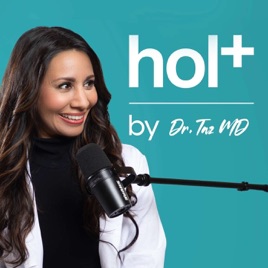
hol+ with Dr. Taz MD is redefining holistic medicine as the future of healthcare—integrating modern science, functional medicine, and time-tested healing systems to treat the whole human, not just symptoms. As a 2025 Webby honoree and pioneering show, hol+ dares to enter the next dimension of health-where both science and spirit converge to drive our health, happiness, relationships and family ecosystems.
Recent guests include mental health advocate and author, Sophie Gregorie Trudeau, best-selling author, Katherine Schwarzenegger, Emmy-winning host, actor, and health enthusiast, Cameron Mathison, supermodel Carol Alt, veteran actress and sometimes medicine woman, Jane Seymour, author and journalist, Tamsen Fadal, wellness advocate and cancer thriver, Kris Carr.
From cutting-edge and innovative experts to celebrities and thought leaders, veteran TV personality, author, and trople board-certified physician, Dr. Taz MD, the host of hol+, leads these game-changing conversations - redefining the future of medicine.
On the heels of her successful 8-year-long podcast, Super Woman Wellness, which boasted over 1 million downloads, hol+ continues to be recognized as a show to watch, recognized in the same category as the Mel Robbins Podcast in the 29th Annual Webby Awards.
Advertise on hol+ with Dr. Taz MD | The Future of Medicine is Holistic
Advertise on hol+ with Dr. Taz MD | The Future of Medicine is Holistic to promote your brand to thousands of podcast listeners
Unlock hol+ with Dr. Taz MD | The Future of Medicine is Holistic podcast Email contact info, Listeners & Audience details
Email contact information
Direct podcast contact details
Listeners
Audience numbers & engagement insights
Audience details
Podcast Insights
Social media
Check hol+ with Dr. Taz MD | The Future of Medicine is Holistic social media presence
Check latest episodes from hol+ with Dr. Taz MD | The Future of Medicine is Holistic podcast
Energy Medicine, Nervous System Healing, and the Body’s Hidden Signals - Dr. Sue Morter on Bioenergetics, Breathwork & Self-Healing
2026/04/21
What if the symptoms you feel in your body are not random, but signals of something deeper happening in your energy system? In this episode, Dr. Taz sits down with Dr. Sue Morter, master of bioenergetic medicine, founder of the Morter Institute for Bioenergetics, and author of The Anatomy of Awakening, to explore how energy medicine connects to the nervous system, chronic stress, emotional patterns, and the body’s ability to heal.
In this episode Dr. Sue explains how energetic blockages can show up as a lump in the throat, tightness in the chest, a knot in the stomach, chronic tension, anxiety, digestive issues, allergies, pain patterns, and other symptoms that often appear disconnected from the deeper root cause.
Dr. Sue shares how the flow of energy through the body acts like a master system, influencing the nervous system, endocrine system, digestive system, respiratory system, cardiovascular system, and the body’s self-regulating capacity. When that flow becomes blocked by unresolved emotions, survival patterns, stress, fear, or disconnection from the self, the body may move into dysregulation and lose access to its natural healing intelligence.
If you’re listening to this and thinking, “I know something is off in my body, but I don’t know where to start,” join the Circle here: 👉 https://holplus.co/circle
Healing is not just about treating symptoms. It is about understanding the deeper patterns beneath them, including stress, emotional suppression, nervous system dysregulation, breath, posture, self-compassion, and the relationship you have with your own body.
Learn more about support related to this conversation:Mental Health: https://holplus.co/services/mental-health Anxiety: https://holplus.co/conditions/anxiety
Dr. Taz and Dr. Sue also discuss why affirmations and manifestation practices may not work if they are coming from the protective or performing personality, why posture and breath can help shift the body into a different state, and how reconnecting with the true self can open the door to healing, creativity, safety, and wholeness.
If you’ve ever felt stuck in chronic stress, disconnected from your body, frustrated by symptoms that don’t fully resolve, or curious about the connection between energy, emotions, and physical health, this episode will help you understand what may actually be happening beneath the surface.
In this episode, we cover:
What energy medicine really means and why it belongs in the healing model How energetic blockages can dysregulate the nervous system Why symptoms like chest tightness, throat tension, stomach knots, and chronic pain may be body signals How unresolved emotions and survival patterns can affect physical health Why the body can get stuck in fight-or-flight, even when the original threat is gone How breathwork, posture, and internal awareness help energy move through the body Why affirmations may not work when they come from a place of lack or fear How self-compassion helps shift the relationship between the protective personality and the true self What Dr. Sue means by “the anatomy of awakening” and the five hidden codes How small daily practices can begin to restore a sense of safety, wholeness, and self-healingThis is not just about energy healing. It is about understanding the body as a connected system, learning how stress and emotion shape your physiology, and remembering that healing often begins by returning to yourself.
About The Guest:Dr. Sue Morter is an international speaker, master of bioenergetic medicine, founder of the Morter Institute for Bioenergetics, and author of The Anatomy of Awakening. With more than 40 years of clinical experience, she is known for bridging energy medicine, neuroscience, consciousness, breathwork, and embodied healing practices to help people move from survival patterns into coherence, vitality, and wholeness.
About Dr. Taz:Dr. Tasneem Bhatia (Dr. Taz) is a triple board-certified integrative medicine physician,bestselling author, and founder of hol+ a multi-location integrative medicine practice.Learn more: https://doctortaz.com/aboutStay Connected:
Connect further to Hol+ at https://holplus.co/- Don’t forget to like, subscribe, and hit the notification bell to stay updated on future episodes of hol+.Book a Hol+ Consultation: https://holplus.co/locations/virtual/
Follow Dr. Taz on Instagram:
https://www.instagram.com/drtazmd/
https://www.instagram.com/liveholplus/
Subscribe to the audio podcast: https://holplus.transistor.fm/subscribe
Subscribe to the video podcast: https://www.youtube.com/@DrTazMD/podcasts
Get your copy of The Hormone Shift: Balance Your Body and Thrive Through Midlife and Menopause
Follow Dr. Sue Morter: https://drsuemorter.com/ https://www.instagram.com/drsuemorter/
Get your copy of The Anatomy of Awakening
Host & Production Team
Host: Dr. Taz; Produced by ClipGrowth.com (Producer: Pat Gostek)
Chapters00:00 Energy blockages and nervous system dysregulation00:46 Introducing Dr. Sue Morter and bioenergetic medicine03:08 Why energy medicine belongs in the healing model04:40 What energy healing really means06:00 Ancient medicine, qi, and energy flow08:15 Is energy medicine scientific?09:45 Quantum science, consciousness, and physical reality12:00 Emotions, mitochondria, and generational patterns14:09 Patient stories and emotional blockages16:00 Can every illness be connected to energy?20:10 How to know if you have an energy blockage21:05 Throat tension, chest tightness, stomach knots, and body signals22:15 How energy flow affects the body’s master systems24:20 Safety, chronic stress, and nervous system overdrive26:30 Why self-compassion changes your energy29:45 How your inner world reflects in your outer life31:15 Support inside the Circle32:05 Why some people stay stuck in repeated patterns34:15 Manifestation, affirmations, and why they may not work35:15 T...
Weight Health, GLP-1s, and the Gut Connection - Ashley Koff RD on Metabolic Health, Food Noise & Hormones
2026/04/14
What if weight loss has never been the right goal in the first place? In this episode, Dr. Taz sits down with registered dietitian Ashley Koff, RD, author of Your Best Shot, to unpack why the conversation around GLP-1 medications is much bigger than Ozempic, Wegovy, or tirzepatide alone.
This episode reframes the entire GLP-1 conversation by shifting away from weight loss as the goal and toward what Ashley Koff calls “weight health.” Instead of treating Ozempic, Wegovy, tirzepatide, and related medications as magic fixes or villains, the conversation explores the deeper hormonal ecosystem behind appetite, blood sugar, digestion, inflammation, body composition, and metabolic health.
Ashley explains that GLP-1 and GIP are part of a larger family of peptide hormones made in the gut lining, and that when this system is disrupted by poor digestion, stress, gut lining damage, nutrient insufficiency, dehydration, medications, or microbiome imbalance, the body’s weight regulation becomes suboptimal. She argues that many people are not failing at weight loss. Their body simply does not have what it needs to function optimally.
If you’re dealing with weight changes, food noise, metabolic dysfunction, or feeling like your body is not responding the way it should, and want deeper, root-cause support, join the Circle here: 👉 https://holplus.co/circle
Weight is not just about calories in and calories out. It is deeply tied to gut health, digestion, blood sugar, inflammation, hydration, stress, hormones, and how well your body is actually functioning beneath the surface.
Learn more about support related to this conversation:Metabolic Health & Weight Support: https://holplus.co/glp1-and-peptides Digestive Health: https://holplus.co/conditions/digestive-health
Dr. Taz and Ashley also discuss when GLP-1 medications may be useful, why low dose use is often misunderstood as “microdosing,” the importance of preserving muscle and digestion while using these medications, and why a truly personalized, holistic plan matters far more than chasing a number on the scale.
If you’ve ever felt frustrated by belly fat, food noise, weight regain, or confusing lab results that say everything is “fine” when you know it’s not, this episode will help you understand what may actually be going on.
In this episode, we cover:
Weight loss is not the same as weight health, and focusing only on the scale can be misleading GLP-1 and GIP are gut-derived peptide hormones that act like signaling switches in a broader metabolic ecosystem Poor digestion, gut lining damage, stress, dehydration, and nutrient deficiencies can all impair natural GLP-1 function Many “normal” labs miss early signs of suboptimal metabolic health GLP-1 medications can be helpful, but they need to be part of a personalized, holistic strategy Low dose GLP-1 use is often mislabeled as microdosing, even though true microdosing is something different Preserving muscle, digestion, sleep, and hormone balance matters just as much as reducing appetite This is not just about losing weight. It is about understanding your body, improving metabolic function, and building a healthier, more personalized foundation for long-term well-being.\
About The Guest:Ashley Koff, RD is a registered dietitian with more than 25 years of clinical experience and the author of Your Best Shot. She is known for her work in metabolic health, nutrition, and personalized wellness, with a focus on helping people understand the deeper root causes behind weight, digestion, and hormone-related challenges.
About Dr. Taz:Dr. Tasneem Bhatia (Dr. Taz) is a triple board-certified integrative medicine physician,bestselling author, and founder of hol+ a multi-location integrative medicine practice.Learn more: https://doctortaz.com/aboutStay Connected:
Connect further to Hol+ at https://holplus.co/- Don’t forget to like, subscribe, and hit the notification bell to stay updated on future episodes of hol+.Book a Hol+ Consultation: https://holplus.co/locations/virtual/
Follow Dr. Taz on Instagram:
https://www.instagram.com/drtazmd/
https://www.instagram.com/liveholplus/
Subscribe to the audio podcast: https://holplus.transistor.fm/subscribe
Subscribe to the video podcast: https://www.youtube.com/@DrTazMD/podcasts
Get your copy of The Hormone Shift: Balance Your Body and Thrive Through Midlife and Menopause
Follow Ashley Koff, RDhttps://www.instagram.com/ashleykoffapproved/https://thebetternutritionprogram.com/
Get your copy of Your Best ShotHost & Production Team
Host: Dr. Taz; Produced by ClipGrowth.com (Producer: Pat Gostek)
Chapters00:00 Why weight loss may be the wrong goal02:00 Introducing Ashley Koff and the idea of weight health03:00 How Ashley got into the GLP-1 space04:20 What the incretin effect really means05:15 How gut hormones regulate the body08:30 Where GLP-1 hormones are made and how they work09:45 What happens when the signaling system breaks down13:30 Why natural GLP-1 function becomes suboptimal15:00 Gut lining damage, digestion, and modern life16:40 The vagus nerve, stress, and metabolic signaling19:00 Stress, cortisol, and early warning signs22:00 Digestive clues your body may be struggling25:25 Why GLP-1 medications are everywhere right now30:00 Weight health vs. weight loss34:35 What to track instead of total body weight40:30 The truth about metabolic health markers46:40 Where GLP-1 medications can help49:00 Side effects, digestion, and appetite suppression50:40 Low dose vs. true microdosing53:30 Why GLP-1s need a holistic plan55:30 Insurance, responsibility, and the broken system59:30 Ashley’s message from Your Best Shot01:01:00 The future of GLP-1 and new medications01:03:10 Creating generational weight health
Why Anxiety Might Not Be What You Think - Root Causes of Stress & Women’s Mental Health with Dr. Ellen Vora
2026/04/07
What if your anxiety, overwhelm, or constant sense of unease is not just a mental health issue, but a signal from a body that is overstimulated, under-rested, and out of balance? In this episode, Dr. Taz sits down with integrative psychiatrist Ellen Vora, author of The Anatomy of Anxiety, to unpack how modern life, stress, and physiology are quietly driving the rise of anxiety.
If you’re dealing with anxiety, burnout, or feeling “off” and want deeper, root-cause support, join the Circle here: 👉 https://holplus.co/circle
Anxiety is rarely just about your thoughts. It often reflects a deeper imbalance involving sleep, blood sugar, gut health, inflammation, and how your nervous system is responding to the world around you.
Learn more about support related to this conversation: Anxiety & Stress Support: https://holplus.co/anxiety In this episode, Dr. Ellen Vora explains the difference between true anxiety and physiological anxiety, and why many people are treating the wrong problem. She breaks down how poor sleep, overstimulation, gut imbalances, and even mouth breathing can create anxiety symptoms, and why medications don’t always address the root cause. You’ll learn why some anxiety is actually a healthy signal, how modern lifestyles are dysregulating our nervous systems, and why addressing the body first can change everything. This conversation challenges the idea that anxiety is simply a chemical imbalance and offers a more holistic, empowering path forward.
If you’ve ever felt like your anxiety doesn’t fully make sense, or that you’ve tried everything but still don’t feel better, this episode will help you understand what might actually be missing.
In this video, we cover: What “true anxiety” vs. “false anxiety” really means Why anxiety is not always a mental health disorder How sleep, blood sugar, and gut health impact anxiety The hidden role of overstimulation and modern life Why medications don’t always solve anxiety long-term The connection between ADHD and a “tired brain” How breathing and sleep quality affect mental health Why emotional sensitivity is not a weakness Practical foundations to regulate your nervous system
This is not just about managing anxiety. It’s about understanding your body, restoring balance, and creating a foundation for mental clarity, resilience, and long-term well-being.
About The Guest: Dr. Ellen Vora, MD is a board-certified psychiatrist, acupuncturist, and yoga teacher who takes a functional, whole-person approach to mental health. She is the author of The Anatomy of Anxiety and specializes in identifying the root causes of anxiety through physiology, lifestyle, and emotional health.
About Dr. Taz:Dr. Tasneem Bhatia (Dr. Taz) is a triple board-certified integrative medicine physician,bestselling author, and founder of hol+ a multi-location integrative medicine practice.Learn more: https://doctortaz.com/aboutStay Connected:
Connect further to Hol+ at https://holplus.co/- Don’t forget to like, subscribe, and hit the notification bell to stay updated on future episodes of hol+.Book a Hol+ Consultation: https://holplus.co/locations/virtual/
Follow Dr. Taz on Instagram:
https://www.instagram.com/drtazmd/
https://www.instagram.com/liveholplus/
Subscribe to the audio podcast: https://holplus.transistor.fm/subscribe
Subscribe to the video podcast: https://www.youtube.com/@DrTazMD/podcasts
Get your copy of The Hormone Shift: Balance Your Body and Thrive Through Midlife and Menopause
Follow Dr. Ellen Vora https://www.instagram.com/ellenvoramd/https://ellenvora.com/
Host & Production Team
Host: Dr. Taz; Produced by ClipGrowth.com (Producer: Pat Gostek)
Chapters00:00 Why anxiety may not be what you think 02:00 True anxiety vs. physiological anxiety 06:00 The “wide open antenna” and emotional sensitivity 10:00 Why crying is a biological release 13:00 The myth of the chemical imbalance 18:00 The foundations: sleep, nourishment, movement 22:00 Why medications don’t always work long-term 25:00 Withdrawal and hidden medication effects 30:00 Anxiety in kids and teens 37:00 ADHD as a “tired brain” 39:00 Sleep, breathing, and oxygenation 41:00 Gut health, food, and inflammation 46:00 Women, hormones, and emotional health 53:00 Reclaiming intuition and nervous system balance
The No. 1 Contributor to Chronic Pain & Why it's NOT Just a Result of Aging with Dr. Dan Ginader
2026/03/31
What if your chronic pain, stiffness, or recurring injuries are not just about aging, but signals from a nervous system that feels overwhelmed, inflamed, and under-supported? In this episode, Dr. Taz sits down with physical therapist Dr. Dan Ginader, author of The Pain-Free Body, to unpack how modern lifestyles, stress, and sedentary habits are quietly driving the rise of chronic pain.
If you’re dealing with ongoing pain, fatigue, or inflammation and want deeper, root-cause support, join the Circle here: 👉 https://holplus.co/circle
Chronic pain is rarely just about one injury or one body part. It often reflects a deeper imbalance involving movement, mindset, inflammation, and how the brain interprets safety and threat.
Learn more about support related to this conversation:Inflammation https://holplus.co/conditions/inflammation/ Arthritis / Chronic Joint Pain: https://holplus.co/conditions/arthritis-chronic-joint-pain/
In this episode, Dr. Dan explains why pain is not always a reliable indicator of damage, why MRIs and scans often don’t tell the full story, and how fear, stress, and inactivity can keep pain stuck in the body. He breaks down what actually drives chronic pain, why so many people feel worse as they get older, and what simple daily habits can either worsen or reverse the process.
You’ll learn why movement is essential medicine, how optimism and mindset influence recovery, and why small, consistent actions matter more than occasional intense workouts. This conversation challenges the idea that pain is inevitable with age and offers a more hopeful, practical path forward.
If you’ve been told your pain is “just part of getting older,” or feel like nothing has fully worked, this episode will help you understand what might actually be missing.
In this video, we cover:
Why chronic pain is not just about agingThe real impact of sedentary lifestyles on the bodyWhy scans and imaging don’t always match your painHow fear, stress, and mindset influence recoveryThe difference between acute pain and chronic painWhy “weekend workouts” can increase injury riskSimple daily movement habits that reduce pain over timeHow to catch early warning signs before pain becomes chronicThis is not just about fixing pain. It’s about understanding your body, rebuilding resilience, and creating a lifestyle that supports long-term strength, mobility, and ease.
About The Guest:Dr. Dan Ginader, DPT is a Doctor of Physical Therapy, author of The Pain-Free Body, and Clinic Director at Mims Method Physical Therapy in New York City. He specializes in helping patients understand the root causes of pain and build long-term resilience through movement and education. About Dr. Taz: Dr. Tasneem Bhatia (Dr. Taz) is a triple board-certified integrative medicine physician,bestselling author, and founder of hol+ a multi-location integrative medicine practice.Learn more: https://doctortaz.com/aboutStay Connected:
Connect further to Hol+ at https://holplus.co/- Don’t forget to like, subscribe, and hit the notification bell to stay updated on future episodes of hol+.Book a Hol+ Consultation: https://holplus.co/locations/virtual/
Follow Dr. Taz on Instagram:
https://www.instagram.com/drtazmd/
https://www.instagram.com/liveholplus/
Subscribe to the audio podcast: https://holplus.transistor.fm/subscribe
Subscribe to the video podcast: https://www.youtube.com/@DrTazMD/podcasts
Get your copy of The Hormone Shift: Balance Your Body and Thrive Through Midlife and Menopause
Follow Dr. Dan Ginaderhttps://www.instagram.com/dr.dan_dpt/https://www.tiktok.com/@dr.dan_dptCheck out Dr. Dan's book The Pain-Free Body
Host & Production Team
Host: Dr. Taz; Produced by ClipGrowth.com (Producer: Pat Gostek)
Chapters00:00 Optimism and the surprising link to chronic pain
01:05 The #1 contributor to chronic pain: sedentary behavior
03:42 What most people get wrong about pain
04:46 Where pain actually comes from
07:51 How fear, stress, and expectation amplify pain
12:35 When acute pain becomes chronic pain
18:15 How much movement you actually need
20:55 Easy movement snacks to reduce pain
26:20 Why MRIs and scans often don’t explain your pain
50:45 The #1 rule for staying pain-free as you age
How Phones and Algorithms Are Slowly Reshaping Childhood, Parenting, and Emotional Health | Dr. Shefali Tsabary
2026/03/24
What if your child’s anxiety, disconnection, screen obsession, or emotional shutdown are not random at all, but signs of a deeper struggle for safety, attachment, and regulation in a world shaped by algorithms? In this episode, Dr. Taz sits down with Dr. Shafali to unpack how technology, social media, and modern stress are quietly reshaping childhood, parenting, and emotional well-being.
If you’re navigating parenting challenges, emotional overwhelm, or family disconnection and want deeper support, join the Circle here: 👉 https://holplus.co/circle
Struggles with attention, anxiety, and emotional regulation often point to something deeper happening beneath the surface. Learn more about support related to this conversation: Anxiety: https://holplus.co/conditions/anxiety/ Mental Health Services: https://holplus.co/conditions-and-services/
In this episode, Dr. Shafali explains why parenting today is no longer just about discipline or communication. Parents are now competing with screens, social media, and algorithms that are designed to capture children’s attention, attachment, and identity. She breaks down what children actually need most, why boys and girls often struggle differently, and how conscious parenting can help families reconnect in a distracted, dysregulated world.
You’ll learn why children need safety, soothing, significance, and belonging, how screens can become a substitute for emotional regulation, and why real healing in families starts with presence, attunement, boundaries, and connection.
If you’ve been feeling like technology is changing your child, your family dynamic, or your ability to stay connected, this conversation may help you understand why.
In this video, we cover:
How social media and algorithms are reshaping childhood What children really need to feel safe and connected Why boys and girls often respond differently to stress How screens affect emotional regulation and identity The difference between conscious parenting and permissive parenting Why connection must come before boundaries Practical tools to rebuild trust, presence, and co-regulation at home This is not just about screen time. It’s about understanding what our children are turning toward, what they are missing, and how parents can become the anchor again.
Stay Connected:
Connect further to Hol+ at https://holplus.co/- Don’t forget to like, subscribe, and hit the notification bell to stay updated on future episodes of hol+.
Follow Dr. Taz on Instagram:
https://www.instagram.com/drtazmd/
https://www.instagram.com/liveholplus/
Subscribe to the audio podcast: https://holplus.transistor.fm/subscribe
Subscribe to the video podcast: https://www.youtube.com/@DrTazMD/podcasts
Get your copy of The Hormone Shift: Balance Your Body and Thrive Through Midlife and MenopauseFollow Dr. Shefali TsabaryInstagram: https://www.instagram.com/doctorshefali/ YouTube: https://www.youtube.com/c/DrShefali Website: https://www.drshefali.com/
Dr. Shefali's Newest Books - Raising Conscious Daughters - Raising Conscious Sons
Host & Production Team
Host: Dr. Taz; Produced by ClipGrowth.com (Producer: Pat Gostek)
Chapters00:00 The algorithm is competing with parents00:42 Introducing Dr. Shafali01:38 What conscious parenting really means03:02 Why parenting has changed in the digital era05:30 How technology replaces emotional regulation07:42 Australia banning social media for children09:16 Dr. Taz shares her daughter’s phone battles12:07 What parents should do instead of fighting screens15:17 Why busy parents cannot ignore this problem18:08 Presence, attunement, and what children really need20:42 Stress, cortisol, and dysregulated family systems23:20 Why parents should think deeply before having kids25:12 The role of community, mentors, and extended family30:16 Raising conscious sons vs. daughters32:58 Why boys and girls are struggling differently36:58 What boys need most from parents42:06 What girls need most from parents47:39 Social media, identity, and perfectionism in girls52:26 Common parenting traps and overcorrection57:38 Boundaries, compassion, and developmental realism1:03:15 Parenting as a spiritual journey1:08:24 How parents can regulate in real time1:12:08 Mirror neurons, co-regulation, and hope1:14:30 Final thoughts and what makes Dr. Shafali hol
7 Signs You’re Stuck in a Cortisol Loop (High Cortisol, Low Cortisol, Chronic Stress)
2026/03/17
What if your fatigue, brain fog, poor sleep, and belly fat are actually signs of high cortisol, low cortisol, or chronic stress building up over time? In this episode, Dr. Taz explains how your cortisol levels shift and why learning how to lower cortisol levels starts with understanding the pattern your body is stuck in.
If you’re dealing with chronic stress, fatigue, or hormone imbalances and want to address the root cause, join the Circle and get support here: 👉 https://holplus.co/circle
Chronic stress often shows up as adrenal fatigue and hormone imbalances.
Learn more about conditions related to cortisol imbalance:
Adrenal Fatigue: https://holplus.co/conditions/adrenal-fatigue/Hormonal Imbalance: https://holplus.co/conditions/hormone-imbalance/In this episode, Dr. Taz breaks down what she calls the cortisol loop - a chronic stress cycle where your body goes from high cortisol to low cortisol, leaving you feeling wired, exhausted, and unable to recover. You’ll learn how this loop affects your nervous system, hormones, gut health, and long-term well-being, even when your labs appear “normal.”
If you’ve been feeling off and can’t explain why, this may be the missing piece.
In this video, we cover:
What the cortisol loop actually isThe difference between high cortisol and low cortisolHow chronic stress keeps your body stuck in the cycle7 key signs your body is dysregulatedWhy your symptoms aren’t randomWhere to start to begin breaking the loopThis is not just about stress. It’s about understanding the cycle your body has been stuck in.
Stay Connected:
Connect further to Hol+ at https://holplus.co/- Don’t forget to like, subscribe, and hit the notification bell to stay updated on future episodes of hol+.
Follow Dr. Taz on Instagram:
https://www.instagram.com/drtazmd/
https://www.instagram.com/liveholplus/
Subscribe to the audio podcast: https://holplus.transistor.fm/subscribe
Subscribe to the video podcast: https://www.youtube.com/@DrTazMD/podcasts
Get your copy of The Hormone Shift: Balance Your Body and Thrive Through Midlife and MenopauseHost & Production Team
Host: Dr. Taz; Produced by ClipGrowth.com (Producer: Pat Gostek)
Chapters
00:00 High Cortisol or Low Cortisol? Understanding the Cortisol Loop00:50 What Is the Cortisol Loop? Chronic Stress Explained01:42 Normal Labs but Still Feeling Bad? Cortisol Levels Explained02:55 Acute vs Chronic Stress and Cortisol Response05:00 High Cortisol Symptoms and Effects on the Body06:50 Low Cortisol Symptoms: Burnout and Fatigue Explained07:42 Chronic Stress, Cortisol Imbalance, and Disease Risk09:29 Cortisol, Brain Health, and Inflammation11:30 Cortisol in Women vs Men (Hormones and Stress Response)14:20 Chronic Stress in Modern Life (Why It’s Getting Worse)15:20 7 Signs of High Cortisol and Low Cortisol17:10 Fatigue, Brain Fog, Belly Fat (Cortisol Symptoms)18:08 How to Test Cortisol Levels (Blood Sugar, HRV, Sleep)20:05 Nervous System Regulation and the Cortisol Loop21:25 How to Lower Cortisol Levels Naturally22:12 Gut Health, Diet, and Blood Sugar Stability23:45 Best Supplements for Cortisol (Magnesium, B Vitamins, Omega-3)25:35 Daily Habits to Reduce Cortisol and Stress27:10 Chronic Stress, Environment, and Relationships28:55 How to Break the Cortisol Loop (Step-by-Step)30:37 Final Thoughts on Chronic Stress and Cortisol Recovery
The Science of Real Optimism and Why Visualization Works with Dr. Deepika Chopra
2026/03/10
Want deeper support? Join Circle at holplus.co/circle and use code PODCAST for a one-month trial.
Optimism is often misunderstood. It gets reduced to positive thinking, good vibes, or pretending everything is fine. But real optimism is not about denying pain. It is about learning how to stay grounded in reality while still believing that healing, change, and resilience are possible.
In this episode of hol+, Dr. Taz sits down with Dr. Deepika Chopra, known as The Optimism Doctor, to explore what optimism actually means and why it matters for both mental and physical health. Together, they unpack the difference between optimism and toxic positivity, why our brains are wired to expect worst-case scenarios, and how that pattern may no longer serve us in modern life.
They also explore the science behind sensory-based visual imagery and how the brain responds to what we vividly imagine, often in ways that influence expectation, motivation, and even the body’s stress response. Dr. Deepika shares how these tools were used in psych-oncology settings, where patients practiced visualizing treatments working with the body rather than against it, and how similar techniques can support people navigating anxiety, illness, self-doubt, and major life transitions.
The conversation expands into practical tools for everyday life, including the 12-second rule, the role of awe in calming anxious or depressive states, and the importance of collecting believable evidence rather than relying on empty affirmations. They also discuss why naming emotions honestly is more healing than suppressing them, how to shift deeply rooted self-beliefs in realistic ways, and why purpose plays such an important role in long-term well-being.
Rather than asking listeners to force positivity, this episode offers a more compassionate and evidence-based framework. It is about building optimism as a skill, strengthening resilience over time, and learning to meet hard seasons with honesty, curiosity, and hope. This conversation is for anyone feeling stuck in negative thought loops, overwhelmed by stress, or ready to approach healing with more realism and self-trust.
About Dr. Deepika Chopra Dr. Deepika Chopra is a licensed clinical health psychologist, speaker, and author known as the Optimism Doctor. With a background in cognitive behavioral therapy, psych-oncology, and integrative mental health, her work focuses on helping people build resilience through practical, science-based tools.
She is the author of The Power of Real Optimism, a book that explores how optimism can be strengthened through everyday practices rooted in psychology, neuroscience, and emotional honesty. Her approach bridges research with real life, offering accessible strategies for navigating stress, uncertainty, and personal growth.
Order the BookThe Power of Real Optimism
Stay Connected:
Connect further to Hol+ at https://holplus.co/- Don’t forget to like, subscribe, and hit the notification bell to stay updated on future episodes of hol+.
Follow Dr. Deepika ChopraInstagram: https://www.instagram.com/drdeepikachopra/Website: https://www.drdeepikachopra.com/
Follow Dr. Taz on Instagram:
https://www.instagram.com/drtazmd/
https://www.instagram.com/liveholplus/
Subscribe to the audio podcast: https://holplus.transistor.fm/subscribe
Subscribe to the video podcast: https://www.youtube.com/@DrTazMD/podcasts
Get your copy of The Hormone Shift: Balance Your Body and Thrive Through Midlife and Menopause
Host & Production Team
Host: Dr. Taz; Produced by ClipGrowth.com (Producer: Pat Gostek)
Hormone Replacement Therapy Myths That Still Hurt Women | Dr. Erika Schwartz
2026/03/03
Want deeper support? Join Circle at holplus.co/circle and use code PODCAST for a one-month trial.
Hormone therapy is often framed in extremes. It is either dangerous and cancer-causing, or it is the miracle solution to aging. For decades, women have been told to fear estrogen, avoid progesterone, and accept midlife decline as inevitable. But what if the story around hormones was shaped more by panic and oversimplified data than by the full clinical picture?
In this episode of hol+, Dr. Taz sits down with preventive medicine pioneer Dr. Erika Schwartz to revisit the Women’s Health Initiative and the ripple effects that followed. Together, they explore how one study reshaped hormone replacement therapy guidelines, why the concept of “class effect” blurred important distinctions between different types of hormones, and how relative risk statistics can be misunderstood in ways that drive fear-based decisions.
They also discuss bioidentical hormone therapy, the difference between compounded and FDA-approved options, and how delivery methods like creams, patches, and pellets may affect long-term outcomes. The conversation expands beyond menopause into birth control, progesterone deficiency, teen hormone health, and the broader question of how women can advocate for themselves in a system that often prioritizes protocols over personalization.
Rather than promoting blind trust or blanket rejection, this episode focuses on clarity. It invites listeners to understand risk more accurately, ask better questions, and approach hormone care with nuance instead of fear. This conversation is for anyone navigating perimenopause, menopause, hormone therapy decisions, or simply wanting to better understand how women’s health became so complicated.
About Dr. Erika Schwartz Dr. Erika Schwartz is a board-certified internist and a leading voice in preventive and integrative medicine. After spending 15 years practicing conventional medicine and running a trauma center, she shifted her focus toward prevention, longevity, and personalized hormone therapy.
For more than three decades, Dr. Schwartz has advocated for bioidentical hormones and individualized care, teaching physicians, speaking internationally, and helping patients navigate midlife health with a whole-body approach. She founded one of the first compounding hormone pharmacies in New York and has worked extensively in physician education through organizations focused on longevity and preventive medicine.
She is the author of multiple bestselling books, including the newly revised edition of Don’t Let Your Doctor Kill You, which empowers patients to understand medical risk, advocate for themselves, and make informed decisions without fear.
Order the Book
Don't Let Your Doctor Kill You
Stay Connected:
Connect further to Hol+ at https://holplus.co/- Don’t forget to like, subscribe, and hit the notification bell to stay updated on future episodes of hol+.
Follow Dr. Erika SchwartzInstagram: https://www.instagram.com/drerikaschwartz YouTube: https://www.youtube.com/@DrErika Website: https://drerika.com/
Follow Dr. Taz on Instagram:
https://www.instagram.com/drtazmd/
https://www.instagram.com/liveholplus/
Subscribe to the audio podcast: https://holplus.transistor.fm/subscribe
Subscribe to the video podcast: https://www.youtube.com/@DrTazMD/podcasts
Get your copy of The Hormone Shift: Balance Your Body and Thrive Through Midlife and Menopause
Host & Production Team
Host: Dr. Taz; Produced by ClipGrowth.com (Producer: Pat Gostek)
Why Bro Science Biohacking Backfires for Women - Hormone Chaos, Burnout, Inflammation and What Women’s Bodies ACTUALLY Need
2026/02/24
Want deeper support? Join Circle at holplus.co/circle and use code PODCAST for a one-month trial.
What if the real issue in women’s health isn’t that women are “doing it wrong,” but that the entire wellness system was built on research, protocols, and performance standards designed for male bodies?
In this solo episode, Dr. Taz breaks down why bro science and modern biohacking culture often backfire for women, and how pushing harder, optimizing more, and chasing protocols can quietly drive hormone chaos, burnout, inflammation, and nervous system dysregulation. She explains why so many women are told their labs are “normal” while their bodies are clearly signaling that something is off, and how medical models that isolate symptoms fail to capture how women’s systems actually work.
This episode is rooted in the same clinical patterns that led Dr. Taz to writeThe Hormone Shift. After years of watching women come into her practice exhausted, inflamed, and dismissed by conventional care, she began documenting the repeating cycles she saw across life stages, from teens to perimenopause to post-menopause. You’ll learn why women were historically excluded from research, how that gap still shapes today’s treatment models, and why intensity, calorie restriction, and rigid optimization strategies may worsen hormonal imbalance, metabolic stress, and emotional exhaustion in female bodies. This episode reframes women’s health as a whole-body system, not a protocol stack, and explores why safety, rhythm, recovery, and regulation matter more than force.
This conversation reframes healing as a process of supporting interconnected systems, not overriding them. Hormones, gut health, immune function, nervous system regulation, emotional safety, stress load, and life stage are not separate variables. When these systems fall out of sync, symptoms multiply. When they are supported together, the body can restore balance, energy, and resilience.
Dr. Taz shares: • Why bro science and biohacking trends often backfire for women • How “normal labs” can still mean your body is not functioning optimally • Why women’s bodies were historically excluded from research and how that impacts care today • How pushing harder, restricting calories, and overtraining disrupt hormones and metabolism • Why women’s nervous systems require safety, rhythm, and recovery to heal • How stress physiology, trauma patterns, and life stage shape women’s health outcomes • Why hormones don’t act in isolation, but communicate with the gut, immune system, and brain • Where modern tools like HRT, GLP-1s, peptides, and protocols fit and where they fall short • How to build a sustainable, personalized approach to women’s health that works with the body, not against it
Whether you’re feeling dismissed by your labs, burned out from trying every new wellness trend, or frustrated by protocols that seem to work for others but not for you, this episode offers a grounded, integrative framework for understanding what women’s bodies actually need.
Women don’t heal through force. They heal through safety, rhythm, and whole-system support.
Stay Connected:
Connect further to Hol+ at https://holplus.co/- Don’t forget to like, subscribe, and hit the notification bell to stay updated on future episodes of hol+.
Follow Dr. Taz on Instagram:
https://www.instagram.com/drtazmd/
https://www.instagram.com/liveholplus/
Subscribe to the audio podcast: https://holplus.transistor.fm/subscribe
Subscribe to the video podcast: https://www.youtube.com/@DrTazMD/podcasts
Get your copy of The Hormone Shift: Balance Your Body and Thrive Through Midlife and MenopauseHost & Production Team
Host: Dr. Taz; Produced by ClipGrowth.com (Producer: Pat Gostek)
Chapters0:00 Women told it’s “normal” and “in your head” 1:13 Holistic approach and the “five bodies” 1:25 Why Dr. Taz is done with “bro science” 4:25 “Your labs are normal” and the dismissal problem 5:20 Why biohacking culture worsens women’s health 6:10 HRT, IVF, peptides, GLP-1s without a holistic context 8:18 Why AI and protocols can’t replace the whole-woman lens 9:01 What bro science gets wrong (intensity, restriction, isolated hormones) 10:31 Life stage, stress load, nervous system, trauma, lineage 11:45 Bias against women and what it means in the exam room 13:28 Why “evidence-based” fails women when studies exclude women 14:20 What “evidence-based holistic medicine” actually means 16:19 Stats on women’s health disparities and research gaps 17:55 Where are you on the health spectrum: powering through vs powering up 18:21 Identify your biggest symptom and quality-of-life limiter 20:00 Don’t let “normal labs” end the story, track patterns over time 21:10 Female stress response, intuition, and cortisol sensitivity 24:15 Hormones, gut, immune system triangle and inflammation 27:00 Stress processing differences and guardrails 28:15 Safety as the foundation of women’s health 30:10 Women’s rhythms: hormones, sleep, food, nervous system 32:50 A woman’s body doesn’t respond to force 34:25 What holistic healing for women actually looks like 35:39 Closing: share this with a woman who needs it
(00:00) - Women told it’s “normal” and “in your head”
(01:13) - Holistic approach and the “five bodies”
(01:25) - Why Dr. Taz is done with “bro science”
(04:25) - “Your labs are normal” and the dismissal problem
(05:20) - Why biohacking culture worsens women’s health
(06:10) - HRT, IVF, peptides, GLP-1s without a holistic context
(08:18) - Why AI and protocols can’t replace the whole-woman lens
(09:01) - What bro science gets wrong (intensity, restriction, isolated h...
The Truth About Mammograms and Breast Cancer Screening: What the Data Really Shows with Dr. Jenn Simmons
2026/02/17
Breast cancer screening is often treated as a given. Mammograms are framed as routine, early detection as unquestionably life-saving, and following guidelines as the responsible choice. But what if the full picture is more complicated?
In this episode of hol+, Dr. Taz sits down with integrative oncologist and breast surgeon Dr. Jenn Simmons, author of The Smart Woman's Guide to Breast Cancer, to explore what breast cancer screening data actually shows, where common narratives may oversimplify reality, and how statistics can sometimes be misunderstood by both patients and providers.
Together, they discuss the difference between screening and diagnostic imaging, why detecting more cancers does not always mean fewer deaths, and how concepts like overdiagnosis and lead-time bias shape our interpretation of outcomes. Dr. Jenn also explains how breast cancer behaves differently from many other cancers, why progression is not always linear, and what tumor markers like ER, PR, HER2, and triple-negative really indicate.
The conversation expands beyond imaging into a whole-body view of breast health, touching on inflammation, immune function, metabolic health, toxic burden, stress, and lifestyle as factors that shape cancer risk and recovery. Rather than promoting fear or urgency, this episode focuses on helping listeners understand their bodies, ask better questions, and make informed decisions with clarity.
This episode is for anyone who wants a deeper understanding of breast cancer screening, feels overwhelmed by conflicting guidance, or wants to approach breast health with more nuance and less panic.
About Dr. Jenn Simmons
Dr. Jenn Simmons is an integrative oncologist, breast surgeon, and founder of Real Health MD. She was Philadelphia’s first fellowship-trained breast surgeon and spent nearly two decades leading one of the region’s top breast programs before transitioning into integrative oncology.
Drawing from her experience in conventional cancer care and her own health journey, Dr. Simmons now focuses on whole-body approaches to breast health, cancer prevention, and recovery, including metabolic health, inflammation, immune function, lifestyle medicine, and root-cause healing. She is the author of The Smart Woman's Guide to Breast Cancer, a patient-centered resource designed to help women better understand their diagnosis, ask informed questions, and navigate treatment decisions with clarity rather than fear.
Order the Book
The Smart Woman's Guide to Breast Cancer
Stay Connected:
Connect further to Hol+ at https://holplus.co/- Don’t forget to like, subscribe, and hit the notification bell to stay updated on future episodes of hol+.
Follow Dr. Jenn SimmonsInstagram: https://www.instagram.com/drjennsimmonsYouTube: https://www.youtube.com/@dr.jennsimmonsWebsite: https://www.jennsimmonsmd.com/
Follow Dr. Taz on Instagram:
https://www.instagram.com/drtazmd/
https://www.instagram.com/liveholplus/
Subscribe to the audio podcast: https://holplus.transistor.fm/subscribe
Subscribe to the video podcast: https://www.youtube.com/@DrTazMD/podcasts
Get your copy of The Hormone Shift: Balance Your Body and Thrive Through Midlife and Menopause
Host & Production Team
Host: Dr. Taz; Produced by ClipGrowth.com (Producer: Pat Gostek)
00:00 Swedish trial claim and overdiagnosis framing 00:52 Why this became a part two conversation 03:25 Reframing screening narratives and medical training gaps 04:39 Why Dr. Simmons questions mammograms as a screening tool 06:06 Origins of screening programs and “invitation to screen” bias 07:12 Relative risk vs absolute numbers example (4 vs 5 per 1,000) 08:49 Overdiagnosis explained with a vivid analogy 09:50 Autopsy-study claim and the “microscopic cancer” idea 12:11 Swedish trial claim revisited: more diagnoses, same deaths 13:38 Downstream harms: callbacks, biopsies, overtreatment 15:04 Lead-time bias and survival statistics explained 16:44 Dr. Simmons’ view on the founder’s regret narrative 18:16 Switzerland headline clarified and what actually changed 20:10 Cautionary stories and aggressive cancers discussion 22:07 Why breast cancer does not always progress linearly 24:21 Buckets: DCIS, invasive, inflammatory, receptor types 26:15 Clinical vs subclinical disease approach 28:25 Long-term tradeoffs and “forgotten woman” after treatment 32:15 What ER PR HER2 mean biologically and system incentives 35:33 Testosterone discussion and prevention claim presented 42:15 Hormones after breast cancer and the 4-year “reintroduction” idea 44:29 Triple negative: environment, toxicity, immune system focus 49:19 What to do next: pause, exceptions, whole-body workup 52:32 Prevention and breast health approach begins 53:24 At-home tears test explanation (as discussed) 56:24 Detox basics and why sweating is emphasized 59:34 Imaging preferences for screening and what to do if limited access
Living With OCD: The Hidden Cycle, Family Accommodation, and How to Break Free with Melissa Mose, LMFT
2026/02/10
OCD is often misunderstood as being about cleanliness, checking, or perfectionism. In this episode, Dr. Taz sits down with therapist and author Melissa Mose, LMFT, to unpack why OCD is frequently misdiagnosed for over a decade and what’s really happening beneath the surface of obsessions and compulsions. Melissa’s book Internal Family Systems Therapy for OCD bridges compassionate parts-based work with proven science to offer a richer path to lasting change.
Using clear science and compassionate explanations, this conversation explores how OCD hijacks the brain through a cycle of alarm and relief, why reassurance and family accommodation can quietly reinforce symptoms, and what actually works in treatment. Melissa breaks down why talk therapy alone often fails OCD, how Exposure and Response Prevention (ERP) retrains the nervous system, and how Internal Family Systems (IFS) adds depth, self-compassion, and relational healing to recovery.
In this hol+ conversation, Dr. Taz sits down with therapist, educator, and author Melissa Mose, LMFT, to unpack what OCD really is and why it often goes undiagnosed for over a decade. Melissa shares why OCD disguises itself as “just anxiety,” how well-meaning reassurance can quietly reinforce the disorder, and why many people spend years in talk therapy without real relief.
Using clear science and compassionate language, this episode explores how OCD operates through a cycle of alarm and relief, why the brain learns to depend on compulsions, and how Exposure and Response Prevention (ERP) helps retrain the nervous system. Melissa also explains how Internal Family Systems (IFS) adds a relational, self-compassionate layer to treatment, helping people work with their inner world instead of battling it.
This conversation also looks at the bigger picture. OCD does not exist in isolation. Dr. Taz and Melissa explore how neuroinflammation, PANS and PANDAS, hormonal shifts, trauma, ADHD, eating disorders, and chronic stress can overlap with or intensify OCD symptoms. They discuss why intrusive thoughts can be disturbing and taboo, why intolerance of uncertainty sits at the core of OCD, and how relationships and intimacy are often quietly impacted.
From shame and self-blame to clarity and support, this episode offers a grounded reframe of OCD as a treatable condition rooted in brain-body patterns, not personal failure. Whether you are seeking help for yourself, supporting someone you love, or trying to understand OCD beyond the stereotypes, this conversation replaces fear with understanding and helplessness with practical pathways forward.
Dr. Taz and Melissa Mose, LMFT discuss:
Why OCD often goes undiagnosed for 11 to 17 years How reassurance and family accommodation make OCD worse The obsession-compulsion cycle and why it gets reinforced Why talk therapy alone often fails OCD What ERP actually does to retrain the brain How Internal Family Systems supports compassion and healing The role of uncertainty intolerance in OCD How OCD affects families, partners, and intimacy Neuroinflammation, PANS, PANDAS, hormones, and symptom flares Why intrusive thoughts do not define who you areAbout Melissa Mose, LMFT Melissa Mose is a licensed marriage and family therapist, educator, and specialist in the treatment of obsessive-compulsive disorder. With over 30 years of clinical experience, she works with individuals and families navigating OCD and anxiety, and trains clinicians in evidence-based treatment approaches. Melissa integrates Exposure and Response Prevention with Internal Family Systems to support deep, sustainable change that goes beyond symptom management. Melissa is the author of Internal Family Systems Therapy for OCD: A Clinician’s Guide, a resource designed to help therapists bring compassion, parts-based awareness, and relational healing into gold-standard OCD treatment.
Stay Connected:
Connect further to Hol+ at https://holplus.co/- Don’t forget to like, subscribe, and hit the notification bell to stay updated on future episodes of hol+.
Follow Melissa Mose, LMFT Learn more about Melissa’s work: https://melissamosemft.comInstagram: https://www.instagram.com/melissamosemft
Follow Dr. Taz on Instagram:
https://www.instagram.com/drtazmd/
https://www.instagram.com/liveholplus/
Subscribe to the audio podcast: https://holplus.transistor.fm/subscribe
Subscribe to the video podcast: https://www.youtube.com/@DrTazMD/podcasts
Get your copy of The Hormone Shift: Balance Your Body and Thrive Through Midlife and Menopause
Host & Production Team
Host: Dr. Taz; Produced by ClipGrowth.com (Producer: Pat Gostek)
Pregnancy After 35: The Fertility Clock Myth, Egg Quality Truths, and How to Get Pregnant Without Panic with Dr. Lucky Sekhon
2026/02/03
Many women reach their 30s and suddenly feel an invisible pressure set in. The clock gets louder. The messaging gets scarier. And fertility, something that once felt distant or optional, becomes charged with fear, urgency, and self-blame.
This episode is for anyone who has ever wondered if they waited too long, if their body is betraying them, or if turning 35 means everything has suddenly changed.
This is not a failure of timing.This is not a lack of effort.And it is not a fertility cliff.
In this hol+ conversation, Dr. Taz sits down with double board-certified reproductive endocrinologist and infertility specialist Dr. Lucky Sekhon to dismantle one of the most anxiety-producing myths in women’s health: that fertility suddenly collapses at 35.
Dr. Lucky explains why fertility is a continuum, not a deadline, and why the panic surrounding age often does more harm than the biology itself. Using clear science and compassionate language, she breaks down the difference between egg quantity and egg quality, why egg quality cannot be directly tested, and what actually changes as women age.
This episode explores why fertility struggles are increasing worldwide, even among young women, and how factors like insulin resistance, PCOS, endometriosis, inflammation, environmental toxins, and chronic stress quietly shape reproductive health long before pregnancy becomes a goal.
Dr. Taz and Dr. Lucky also reframe painful and irregular periods as vital signs that should never be ignored, explain why many fertility diagnoses remain unclear, and clarify how treatments like IUI and IVF work not because the body is broken, but because human reproduction is naturally inefficient.
From fear-based fertility messaging to evidence-based clarity, this conversation offers a grounding reset. If you are trying to get pregnant, thinking about egg freezing, navigating fertility anxiety, or simply want to understand your body better, this episode replaces panic with perspective and urgency with informed choice.
Dr. Taz and Dr. Lucky Sekhon discuss:• Why fertility does not suddenly end at 35• The difference between egg count and egg quality• Why egg quality cannot be directly tested• The real drivers behind declining fertility rates• PCOS, endometriosis, and insulin resistance as fertility blockers• Why painful or irregular periods are red flags• What fertility treatments actually improve and what they cannot• How to approach pregnancy with clarity instead of fear
About Dr. Lucky SekhonDr. Lucky Sekhon is a double board-certified reproductive endocrinologist, infertility specialist, and OB/GYN based in New York City. She is widely recognized for her compassionate, evidence-based approach to fertility care and her ability to translate complex reproductive science into language women can actually understand.
Dr. Lucky is the author of The Lucky Egg: Understanding Your Fertility and How to Get Pregnant Now, a practical and empowering guide designed to help individuals and couples navigate fertility decisions with confidence, clarity, and realism. Her work focuses on demystifying fertility testing, treatment options, and the emotional toll of trying to conceive.
In addition to her clinical work, Dr. Lucky is a trusted educator across social media and digital platforms, where she helps women move beyond fear-based fertility narratives and make informed choices aligned with their life goals.
Order the Book
The Lucky Egg: Understanding Your Fertility and How to Get Pregnant Now
Stay Connected:
Connect further to Hol+ at https://holplus.co/- Don’t forget to like, subscribe, and hit the notification bell to stay updated on future episodes of hol+.
Follow Dr. Lucky SekhonInstagram: https://www.instagram.com/lucky.sekhonWebsite: https://theluckyegg.com/
Follow Dr. Taz on Instagram:
https://www.instagram.com/drtazmd/
https://www.instagram.com/liveholplus/
Subscribe to the audio podcast: https://holplus.transistor.fm/subscribe
Subscribe to the video podcast: https://www.youtube.com/@DrTazMD/podcasts
Get your copy of The Hormone Shift: Balance Your Body and Thrive Through Midlife and Menopause
Host & Production Team
Host: Dr. Taz; Produced by ClipGrowth.com (Producer: Pat Gostek)
Age Like a Girl: The Brain Reset Behind Menopause, Mood Shifts, and Why Women Reinvent Themselves After 40 with Dr. Mindy Pelz
2026/01/27
Many women hit midlife and feel something they cannot name. They are still doing the right things, eating well, exercising consistently, showing up for everyone, yet life suddenly feels harder and less familiar. Age Like a Girl gives language to this experience and explains why it is not a failure, but a shift happening beneath the surface.
This is not a motivation problem.This is not a discipline issue.And it is not “all in your head."
In this hol+ conversation, Dr. Taz sits down with New York Times bestselling author and leading voice in women’s health Dr. Mindy Pelz, host of the hit podcast The Resetter Podcast, to explore the core message behind Age Like a Girl: menopause is not a decline, it is a biologically wired reinvention.
Instead of treating perimenopause and menopause as a crisis to manage, Dr. Mindy reframes the transition as a neurochemical and cognitive remodel designed to make women more focused, emotionally resilient, and aligned with who they truly are. She breaks down why modern life often clashes with this primal design, and why brain fog, mood shifts, and emotional intensity are not random symptoms, but signals that the brain is asking for a new way of living.
This episode explores why women can feel anxious, disconnected, or unlike themselves even when they are “doing everything right,” and how metabolism, stress chemistry, and neurotransmitters shape mood, clarity, and identity. Dr. Taz and Dr. Mindy discuss why many women initiate big life and relationship changes after 40, why community and connection become essential, and why reinvention is not a midlife crisis, but biology.
From perimenopause into postmenopause, this conversation reframes aging as an awakening. Not the end of youth, but the return of clarity, boundaries, and self-trust. If you have ever felt dismissed, confused, or afraid that something is wrong with you, this episode offers a validating and hopeful roadmap forward.
Dr. Taz and Dr. Mindy Pelz discuss: • The core message of Age Like a Girl and why it reframes menopause • Why the female brain is biologically wired for reinvention after 40 • Brain fog and mood shifts as signals of a cognitive remodel • How modern life clashes with primal biology • Why women often make major life decisions in midlife • The role of neurotransmitters in clarity, calm, and confidence • Why community and deep connection matter more than ever • How to reclaim vitality without another exhausting checklist
About Dr. Mindy PelzDr. Mindy Pelz is a New York Times bestselling author, visionary educator, and trailblazer in the field of women’s health and hormone science. With over two decades of experience, she’s built a global movement to help women understand the power of their bodies at every stage of life. Her bestselling books, including Fast Like a Girl, The Menopause Reset, and Eat Like a Girl, have helped millions of women use fasting, nutrition, and lifestyle shifts to balance hormones, boost energy, and take back control of their health. Her newest release book, Age Like a Girl, redefines what it means to grow older as a woman.Rooted in the latest science and rich in personal story, the book challenges outdated narratives about menopause and aging offering instead a roadmap for awakening. Dr. Mindy shows women how to use the neurochemical shifts of midlife as a launchpad for purpose, leadership, and bold reinvention.
Dr. Mindy’s Resetter Podcast consistently ranks among Apple’s top U.S. science shows, with guests ranging from LeAnn Rimes and Rachel Hollis to Dr. Rangan Chatterjee. Her YouTube channel has surpassed 110 million views, and her teachings have reached hundreds of thousands through workshops, online programs, and live events.
Order the book: Age Like a Girl
Stay Connected:
Connect further to Hol+ at https://holplus.co/- Don’t forget to like, subscribe, and hit the notification bell to stay updated on future episodes of hol+.
Follow Dr. Mindy PelzInstagram: https://www.instagram.com/dr.mindypelz/Website: https://drmindypelz.com/ Podcast: The Resetter Podcast
Follow Dr. Taz on Instagram:
https://www.instagram.com/drtazmd/
https://www.instagram.com/liveholplus/
Subscribe to the audio podcast: https://holplus.transistor.fm/subscribe
Subscribe to the video podcast: https://www.youtube.com/@DrTazMD/podcasts
Get your copy of The Hormone Shift: Balance Your Body and Thrive Through Midlife and Menopause
Host & Production Team
Host: Dr. Taz; Produced by ClipGrowth.com (Producer: Pat Gostek)
Longevity and Living Longer ≠ Living Better: How Cellular Health, Gut Function, Stress, and Community Shape Healthy Aging
2026/01/20
What if the real question isn’t just how to live longer, but why so many people are living longer and healthier lives on paper, yet feel depleted, inflamed, disconnected, or cognitively foggy in daily life?
In this solo episode, Dr. Taz reframes what longevity really means and why healthy aging has far less to do with chasing more years and far more to do with protecting cellular health, vitality, and resilience across decades. She explains why humans are living longer than ever before, yet not necessarily living better, and how focusing only on disease management or biohacking trends misses the real drivers of aging.
You’ll learn why longevity is not defined by a number, but by biological age, health span, and cellular aging, and how inflammation, metabolic dysfunction, gut imbalance, nervous system stress, emotional disconnection, and loss of community quietly accelerate aging long before symptoms become diagnoses.
This episode reframes longevity as a full body system, not a supplement stack or a protocol. One that integrates physical health, brain function, emotional regulation, spirituality, and community. When these systems fall out of sync, aging speeds up. When they are supported together, living longer becomes living with clarity, strength, and purpose.
Dr. Taz shares: • What longevity actually means and why lifespan and health span are not the same • Why humans are living longer but not necessarily healthier • How cellular aging, inflammation, and metabolic stress drive chronic disease • Why diet quality, gut health, liver function, movement, sleep, and nervous system balance matter more than biohacking • How cognitive reserve, dopamine regulation, and emotional health protect the aging brain • Why community and spirituality are overlooked but essential pillars of healthy aging • Where peptides, hormones, and modern longevity tools fit and where they don’t • How to build a longevity plan that is realistic, accessible, and sustainable
Whether you’re thinking about how to live longer, worried about aging faster than you should, or simply want to protect your health span as you move through midlife and beyond, this episode offers a grounded, integrative roadmap.
Longevity is not about optimizing harder. It’s about supporting the systems that keep you well, year after year.
Stay Connected:
Connect further to Hol+ at https://holplus.co/- Don’t forget to like, subscribe, and hit the notification bell to stay updated on future episodes of hol+.
Follow Dr. Taz on Instagram:
https://www.instagram.com/drtazmd/
https://www.instagram.com/liveholplus/
Subscribe to the audio podcast: https://holplus.transistor.fm/subscribe
Subscribe to the video podcast: https://www.youtube.com/@DrTazMD/podcasts
Get your copy of The Hormone Shift: Balance Your Body and Thrive Through Midlife and MenopauseHost & Production Team
Host: Dr. Taz; Produced by ClipGrowth.com (Producer: Pat Gostek)
Chapters00:00 Longevity is not about more years00:50 Are humans really living longer01:49 The global aging reality03:31 Why aging became something to fear05:17 Aging on a spectrum, not a number06:07 The hidden disease burden of aging08:31 Cellular aging explained09:45 Why biohacking misses the foundation11:10 The five-body approach to longevity13:10 Community, emotion, and aging14:05 Diet, inflammation, and cellular health16:19 Medications, gut health, and aging16:49 Fasting, calories, and longevity18:52 What eating for longevity actually means19:39 Movement and aging well21:35 Sleep, repair, and brain health22:50 Dementia, cognitive reserve, and prevention24:20 Dopamine, emotion, and brain aging26:49 Spirituality, community, and vitality30:05 Peptides, hormones, and future medicine31:58 A new vision for positive aging32:48 Longevity is built day by day
(00:00) - Longevity is not about more years
(00:50) - Are humans really living longer
(01:49) - The global aging reality
(03:31) - Why aging became something to fear
(05:17) - Aging on a spectrum, not a number
(06:07) - The hidden disease burden of aging
(08:31) - Cellular aging explained
(09:45) - Why biohacking misses the foundation
(11:10) - The five-body approach to longevity
(13:10) - Community, emotion, and aging
(14:05) - Diet, inflammation, and cellular health
(16:19) - Medications, gut health, and aging
(16:49) - Fasting, calories, and longevity
(18:52) - What eating for longevity actually means
(19:39) - Movement and aging well
(21:35) - Sleep, repair, and brain health
(22:50) - Dementia, cognitive reserve, and prevention
(24:20) - Dopamine, emotion, and brain aging
(26:49) - Spirituality, community, and vitality
(30:05) - Peptides, hormones, and future medicine
(31:58) - A new vision for positive aging
(32:48) - Longevity is built day by day
Fertility, Motherhood Without the Myth, and Finding Peace After Loss | Whitney Port’s Real Story After The Hills
2026/01/13
Fertility, motherhood, and grief are rarely experienced in isolation. They overlap, compound, and quietly reshape how a woman sees herself, her body, and her future.
Many women move through loss while still being expected to function. They carry grief while building families. They navigate pregnancy, postpartum, and fertility decisions while holding careers, relationships, and public identities together. From the outside, it can look composed. Inside, it often feels fragile, confusing, and deeply human.
This is not failure.This is not weakness.And it is not something that needs to be fixed.
In this hol+ conversation, Dr. Taz sits down with Whitney Port for an honest, grounding conversation about motherhood without the myth, and finding peace after profound loss. Whitney shares what unfolded after The Hills, including the loss of her father, who was also her business partner, and how grief reshaped her identity, marriage, and mental health during a pivotal season of life.
Together, they explore the realities that are often softened or skipped entirely. Pregnancy that does not feel joyful. Postpartum that feels disorienting. Breastfeeding struggles that take a real toll on mental health. And the invisible pressure women carry to do motherhood and fertility “the right way.”
Whitney also opens up about her fertility journey, including recurrent miscarriage, IVF, surrogacy, and failed transfers. She speaks candidly about the emotional spiral that can happen when you are someone used to achieving goals, but suddenly face something you cannot control. Rather than centering the story on struggle alone, this conversation focuses on what helped her find steadier ground: learning to stop future-spiraling, returning to the present, and holding gratitude alongside grief.
This episode is a reminder that healing does not mean bypassing pain. It means allowing space for it, while slowly reconnecting to meaning, relationships, and self-trust. It reframes fertility and motherhood not as tests of worth or discipline, but as deeply relational, emotional, and embodied experiences.
Dr. Taz and Whitney Port discuss: • Life after The Hills and the identity shift that followed • Losing a parent and navigating grief while building a family • Motherhood without the myth of constant joy • Pregnancy, postpartum, and mental health honesty • Breastfeeding pressure, pumping, and maternal burnout • Fertility, IVF, surrogacy, and the emotional weight of uncertainty • Why high-achieving women struggle most with loss of control • How to stop future-spiraling and return to the present • Sharing your story publicly while protecting what is sacred
About Whitney PortWhitney Port is a television personality, entrepreneur, podcast host, and creative consultant. Known for starring on The Hills and The City, she now uses her platform to speak openly about grief, anxiety, fertility, body image, and modern motherhood, helping women feel less alone in experiences that are often hidden.
Stay Connected:
Connect further to Hol+ at https://holplus.co/- Don’t forget to like, subscribe, and hit the notification bell to stay updated on future episodes of hol+.
Follow Whitney Port:Instagram: https://www.instagram.com/whitneyeveportTikTok: https://www.tiktok.com/@whitneyportWebsite: https://whitneyport.com/Podcast: With Whit
Follow Dr. Taz on Instagram:
https://www.instagram.com/drtazmd/
https://www.instagram.com/liveholplus/
Subscribe to the audio podcast: https://holplus.transistor.fm/subscribe
Subscribe to the video podcast: https://www.youtube.com/@DrTazMD/podcasts
Get your copy of The Hormone Shift: Balance Your Body and Thrive Through Midlife and Menopause
Host & Production Team
Host: Dr. Taz; Produced by ClipGrowth.com (Producer: Pat Gostek)
(00:00) - Grief after dad’s diagnosis and loss
(00:30) - Dr. Taz introduces Whitney Port
(01:30) - Pregnancy was not “the best time”
(02:00) - Fertility pressure, self-blame, finding the right team
(02:30) - Dr. Taz fan-girl moment and why Whitney’s story matters
(04:30) - Reality TV then vs now
(06:30) - Who Whitney is beyond the show
(08:00) - Losing control of your narrative (editing + portrayal)
(10:15) - The gifts of the show and creative platform
(11:30) - Dad’s illness, grief, identity shift
(13:30) - “I Love My Baby, But…” and being vulnerable on YouTube
(16:00) - Marriage, grief fog, and coping
(18:00) - Breastfeeding, pumping, mastitis, mental health
(21:00) - What we’re not telling new moms (trust + noise)
(23:00) - Body image, female bodies, and acceptance
(27:30) - Fertility journey begins: miscarriage cycle
(29:30) - Surrogacy conversation and failed transfers
(32:00) - Age, hope, and continuing the journey
(33:30) - Shame, grief, staying sane, gratitude shift
(37:30) - Finding the right doctor and the lab factor
(42:30) - Preparing physically and emotionally this time
(44:00) - Privacy boundaries in public life
(46:00) - Advice: purpose, staying in your lane
(50:30) - Businesses, creative consulting, entrepreneurship
(56:30) - What makes you hol + where to follow
Podcast reviews
Read hol+ with Dr. Taz MD | The Future of Medicine is Holistic podcast reviews
4.7 out of 5
211 reviews
★★★★★
Dr. Kate Davis 2026/03/17
Fantastic Insights Into Health
I absolutely love that Dr. Taz talks about the nuances around research and the scientific method - not everything fits into this tiny box. The human b...
★★★★★
KynsPerry 2025/06/14
Love Dr.Taz!
Love listening to Dr.Taz! I also see one of her providers at CentreSpring. I’ve come a long way in my health journey, but still so far to go. PCOS & E...
★★★☆☆
Denver 12 2026/03/12
Frustrating messaging
The irony of your interview with Dr. Erika Schwartz is that while she emphasized, “Don’t let your doctor scare you,” she scared me more than any other...
★★★★★
Barb1235 2025/03/28
Uplifting
Dr. Taz’s work she showcases on her podcast is groundbreaking! Not only does she skillfully connects western medicine with more holistic approaches, b...
★★★★★
MollyLovesFruit 2024/10/21
Wow I mean literally wow
I stumbled upon this podcast off of a random search of my current ongoing debilitating struggles. There was not a word in this podcast that I did not ...
★★★★★
Ksan 33 2024/05/04
All things women’s health
Love, love Dr. Taz. I believe I first heard Dr. Taz on the Genius Life podcast. I started following her Instagram page, and I listen to all her new po...
★★★★★
j5145 2024/02/07
Life changing Information
Dr. Taz is a godsend in a world of pill pushers and non-listeners. She is knowledgeable and can back up her beliefs with documented facts. I always ...
★★★★★
-monkeys09-:) 2023/11/04
All women need to listen
I was lucky enough to see Dr Taz years ago when I lived in Atlanta. Listening to her podcasts allows me to learn more on health topics that are impor...
★★★★★
kathleenjennifer 2023/08/15
I love her guests!!
Wow! Dr. Taz is an incredible interviewer, inviting some of the most interesting guests! Her style is perfect for easy but informative listening. I hi...
★★★★★
Marifre 2023/07/04
Always timely!
It seems like whenever I have thoughts about everything from mental health to nutrition, she releases a podcast about it! I have learned so much from ...