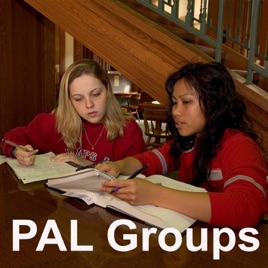
Advertise on podcast: Peer Assisted Learning (PAL) Groups Podcast: College Group Tutoring and Study Review Groups
This podcast has
100 episodes
Language
EnglishPublisher
David ArendaleExplicit
No
Date created
2017/01/28
Latest episode
2021/12/15
Average duration
11 min.
Release period
3 days
Description
The “PALgroups Podcast” is focused on college study review groups. PAL is the name for the study review groups used at the University of Minnesota. We drew upon best practices from national models such as Supplemental Instruction, Peer-led Team Learning, and the Emerging Scholars Program. I served on the team that created the PAL model on our campus. I serve as an Associate Professor in the Curriculum and Instruction Department within the College of Education and Human Development. Some episodes share new things I am learning about postsecondary peer cooperative learning groups from the U.S. and countries around the world. Other episodes feature student study group leaders describing session activities that worked well with the subject matter and the students. Those interviews include what the PAL facilitator is learning personally and professionally about their experience. Initially, the interviews will be with PAL facilitators at the University of Minnesota. Eventually, study group leaders at other colleges will be featured. Send an email to David Arendale, [email protected], if you or your students would like to be interviewed for the podcast. I also maintain an annotated bibliography of publications about seven major peer learning models. It now exceeds 1,100 publication. Click this link to download the bibliography, http://z.umn.edu/peerbib Click this link for PAL training materials and other resources, http://z.umn.edu/peerlearning
Unlock Peer Assisted Learning (PAL) Groups Podcast: College Group Tutoring and Study Review Groups podcast Email contact info,
Listeners & Audience details
Email contact information
Direct podcast contact details

Listeners
Audience numbers & engagement insights

Audience details
Podcast Insights

Podcast episodes
Check latest episodes from Peer Assisted Learning (PAL) Groups Podcast: College Group Tutoring and Study Review Groups podcast
Interview, Sara, SI Leader, Housatonic Comm Coll CN
2021/12/15
S04-E27 We feature an interview with Sara who is a biology SI leader for the peer study group program at Housatonic Community College in Connecticut. She shares some of the learning activities that were used during the face-to-face and online SI sessions. Sara finishes the interview by sharing what she has learned personally and professionally from her experiences in the program and the friendships that she formed with the SI participants and other SI leaders.
The following links allow you to subscribe: iTunes and Apple Podcast, Amazon Music/Audible, Castbox.fm, Deezer, Facebook, Gaana, Google Podcast, iHeartRadio, Player.fm, Radio Public, Samsung Listen, Spotify, Stitcher, TuneIn, Twitter, Vurbl, and YouTube. Automatically available through these podcast apps: Castamatic, iCatcher, Overcast, Pocket Casts, RSSRadio, and more.
Please post comments to the podcast website, www.palgroups.org, iTunes and other apps, or email to me, [email protected] You can also check out my other four podcasts and other social media at www.davidmedia.org
(Bonus) Infographic on SI Program at HCC
2021/12/13
(Bonus) This infographic provides information about the SI program at Housatonic Community College.
(Bonus) Overview Housatonic Community College (CN)
2021/12/13
(Bonus) Housatonic Community College (HCC) is a public community college in Bridgeport, Connecticut. It is part of the Connecticut State Colleges & Universities system. HCC grants associate degrees and also has certificate programs.
Interview, Kristen, Prog Mngr, Housatonic Comm Coll (CN)
2021/12/13
S04-E26 We feature an interview with Kristen who is the program manager for the peer study group program at Housatonic Community College in Connecticut. She shares about the rapid growth of the SI program and the challenges faced by implementing it at a two-year institution. Kristen finishes the interview by sharing what she has learned personally and professionally from her experiences in the program and with the SI leaders.
In addition to this audio episode, I also provide several PDF documents: first, is an overview of Housatonic Community College and second is an infographic about the peer study group program.
Supplemental Instruction programs are less common at two-year institutions than at four-year ones in the U.S. HCC was the first community college in the state of Connecticut to implement SI. It was piloted in the Developmental Studies department and then rapidly expanded throughout the campus due to its early success.
In the Community College environment, where it is more difficult to cultivate relationships, this program facilitates this need and creates a support network by encouraging relationships in and out of the classroom. Housatonic Community College’s Supplemental Instruction Program develops academic support communities of higher-level thinkers and self-empowered learners. This self-selecting, course-specific, peer-led program seeks to promote active, collaborative learning involving critical thinking and transferable study skills that leads to a feeling of empowerment to complete their goals toward their Associate Degree and beyond.
The following links allow you to subscribe: iTunes and Apple Podcast, Amazon Music/Audible, Castbox.fm, Deezer, Facebook, Gaana, Google Podcast, iHeartRadio, Player.fm, Radio Public, Samsung Listen, Spotify, Stitcher, TuneIn, Twitter, Vurbl, and YouTube. Automatically available through these podcast apps: Castamatic, iCatcher, Overcast, Pocket Casts, RSSRadio, and more.
Please post comments to the podcast website, www.palgroups.org, iTunes and other apps, or email to me, [email protected] You can also checkout my other four podcasts and other social media at www.davidmedia.org
(Bonus) Organic Chemistry Overview
2021/11/29
(Bonus) Organic chemistry is a branch of chemistry that studies the structure, properties and reactions of organic compounds, which contain carbon in covalent bonding. Study of structure determines their structural formula. Study of properties includes physical and chemical properties, and evaluation of chemical reactivity to understand their behavior. The study of organic reactions includes the chemical synthesis of natural products, drugs, and polymers, and study of individual organic molecules in the laboratory and via theoretical (in silico) study. The range of chemicals studied in organic chemistry includes hydrocarbons (compounds containing only carbon and hydrogen) as well as compounds based on carbon, but also containing other elements, especially oxygen, nitrogen, sulfur, phosphorus (included in many biochemicals) and halogens. Organometallic chemistry is the study of compounds containing carbon–metal bonds. In addition, contemporary research focuses on organic chemistry involving other organometallics including the lanthanides, but especially the transition metals zinc, copper, palladium, nickel, cobalt, titanium and chromium. Organic compounds form the basis of all earthly life and constitute the majority of known chemicals. The bonding patterns of carbon, with its valence of four—formal single, double, and triple bonds, plus structures with delocalized electrons—make the array of organic compounds structurally diverse, and their range of applications enormous. They form the basis of, or are constituents of, many commercial products including pharmaceuticals; petrochemicals and agrichemicals, and products made from them including lubricants, solvents; plastics; fuels and explosives. The study of organic chemistry overlaps organometallic chemistry and biochemistry, but also with medicinal chemistry, polymer chemistry, and materials science.
Interview, Louisa, Study Leader, Florida Int. Univ.
2021/11/29
S04-E25 We have a conversation with Louisa who is a student study group leader at Florida International University. While she provides academic support for a number of courses, I asked her to focus on one course and why it is challenging for first-year students. Louisa provided insight to why the Organic Course was challenging. She then provides examples of learning activities used during the study sessions. Her comments were similar to other study group leaders who focused on building the self-confidence of the students as a critical attribute for academic success. Louisa completes her story by sharing how she has changed personally as a result of serving as a tutor and study session leader.
The following links allow you to subscribe: iTunes and Apple Podcast, Amazon Music/Audible, Castbox.fm, Deezer, Facebook, Gaana, Google Podcast, iHeartRadio, Player.fm, Radio Public, Samsung Listen, Spotify, Stitcher, TuneIn, Twitter, Vurbl, and YouTube. Automatically available through these podcast apps: Castamatic, iCatcher, Overcast, Pocket Casts, RSSRadio, and more.
Please post comments to the podcast website, www.palgroups.org, iTunes and other apps, or email to me, [email protected] You can also check out my other four podcasts and other social media at www.davidmedia.org
(Bonus) Overview of Biology
2021/11/27
(Bonus) Biology is the scientific study of life. It is a natural science with a broad scope but has several unifying themes that tie it together as a single, coherent field. For instance, all organisms are made up of cells that process hereditary information encoded in genes, which can be transmitted to future generations. Another major theme is evolution, which explains the unity and diversity of life. Energy processing is also important to life as it allows organisms to move, grow, and reproduce. Finally, all organisms are able to regulate their own internal environments.
Biologists are able to study life at multiple levels of organization. From the molecular biology of a cell to the anatomy and physiology of plants and animals, and the evolution of populations. Hence, there are multiple subdisciplines within biology, each defined by the nature of their research questions and the tools that they use. Like other scientists, biologists use the scientific method to make observations, pose questions, generate hypotheses, perform experiments, and form conclusions about the world around them.
Life on Earth, which emerged more than 3.7 billion years ago, is immensely diverse. Biologists have sought to study and classify the various forms of life, from prokaryotic organisms such as archaea and bacteria to eukaryotic organisms such as protists, fungi, plants, and animals. These various organisms contribute to the biodiversity of an ecosystem, where they play specialized roles in the cycling of nutrients and energy through their biophysical environment.
Interview, Emily, Study Leader, Florida Int. Univ.
2021/11/27
S04-E24 We have a conversation with Emily who is a student study group leader at Florida International University. This is part three of a four-part series from FIU.
We begin our conversation with Emily when she describes her vocational path to becoming a school teacher as a result of her experiences as a tutor, small group study leader, and influence by family members. She then explains how she provides support for several biology courses and a course in research methods in psychology. Emily explains why those courses are historically difficult for many first-year students. She then provides examples of learning activities used during the study sessions. Emily completes her story by sharing how she has changed personally as a result of serving as a tutor and study session leader.
The following links allow you to subscribe: iTunes and Apple Podcast, Amazon Music/Audible, Castbox.fm, Deezer, Facebook, Gaana, Google Podcast, iHeartRadio, Player.fm, Radio Public, Samsung Listen, Spotify, Stitcher, TuneIn, Twitter, Vurbl, and YouTube. Automatically available through these podcast apps: Castamatic, iCatcher, Overcast, Pocket Casts, RSSRadio, and more.
Please post comments to the podcast website, www.palgroups.org, iTunes and other apps, or email to me, [email protected] You can also check out my other four podcasts and other social media at www.davidmedia.org
(Bonus) Overview of Physics
2021/11/24
(Bonus) Physics is the natural science that studies matter, its fundamental constituents, its motion and behavior through space and time, and the related entities of energy and force. Physics is one of the most fundamental scientific disciplines, and its main goal is to understand how the universe behaves.
Physics is one of the oldest academic disciplines and, through its inclusion of astronomy, perhaps the oldest. Over much of the past two millennia, physics, chemistry, biology, and certain branches of mathematics were a part of natural philosophy, but during the Scientific Revolution in the 17th century, these natural sciences emerged as unique research endeavors in their own right. Physics intersects with many interdisciplinary areas of research, such as biophysics and quantum chemistry, and the boundaries of physics are not rigidly defined. New ideas in physics often explain the fundamental mechanisms studied by other sciences and suggest new avenues of research in academic disciplines such as mathematics and philosophy.
Interview, Mario, Study Leader, Florida Int. Univ.
2021/11/24
S04-E23 Mario is a student study group leader at Florida International University. This is part two of a four-part series from FIU. We begin our conversation with Mario describing his experience as an international student. He describes his journey to becoming a tutor at the institution. Among the topics that Mario is responsible for, he describes why physics is challenging for many students. Careful listening to student needs is a key element to the sophisticated approaches that Mario brings to his study sessions. Mario finishes by explaining the joy that he receives as part of his experience as a tutor and small group session leader.
The following links allow you to subscribe: iTunes and Apple Podcast, Amazon Music/Audible, Castbox.fm, Deezer, Facebook, Gaana, Google Podcast, iHeartRadio, Player.fm, Radio Public, Samsung Listen, Spotify, Stitcher, TuneIn, Twitter, Vurbl, and YouTube. Automatically available through these podcast apps: Castamatic, iCatcher, Overcast, Pocket Casts, RSSRadio, and more.
Please post comments to the podcast website, www.palgroups.org, iTunes and other apps, or email to me, [email protected] You can also checkout my other four podcasts and other social media at www.davidmedia.orgS04-E23
(Bonus) Florida International Univerview Overview
2021/11/23
(Bonus) Florida International University (FIU) is a public research university with its main campus in University Park, Florida. It is part of the State University System of Florida and has been designated as having "Emerging Preeminence". Founded in 1965, it has quickly grown to become the largest university in the Greater Miami region. It is the largest university in South Florida, the second-largest in Florida, and the fourth-largest in the United States by enrollment.
Interview, Vincenta, Program Mngr., Florida Int. Univ.
2021/11/23
S04-E22 We have a conversation with Vicenta who leads the program that hosts the campus tutoring and small study group program at Florida International University. She provided an overview of the academic support program and how it adapted to online services during the COVID pandemic. Then the conversation turns to certification programs that have guided the student support programs. We end our conversation with Vicenta sharing her life journey to her current position at FIU and the lessons she is learning in her doctoral program that will be informing and improving the services offered to the students at FIU.
In addition to this audio episode, I also provide a PDF document that provides an overview of Florida International University.
The Center for Academic Success (CAS), https://cfas.fiu.edu/ is housed under Academic and Career Success (ACS). Located at both MMC and BBC, the center facilitates the academic advancement of students by providing support in an environment that is conducive to teaching and learning. Students can access tutoring in a variety of subject areas, as well as participate in programs that develop their critical thinking and learning strategies. With a comprehensive approach, services are delivered in person or online via one-on-one sessions, small groups, study halls, or workshops. CAS interacts with undergraduate students at all levels throughout their academic experience; from preparing students before admission to assisting them along the pathway towards graduation. The center fosters constructive relationships between students and tutors, and incorporates high and low-tech tools to enhance learning, improve retention, and promote academic excellence. CAS has plenty of tutors who are able available to help you with your academic needs. Online tutoring is also available. Book a tutoring session today! CAS offers an array of extra credit workshops. Earn a few extra points to your grade and learn how to incorporate vital study skills to get you through semesters to come..
The following links allow you to subscribe: iTunes and Apple Podcast, Amazon Music/Audible, Castbox.fm, Deezer, Facebook, Gaana, Google Podcast, iHeartRadio, Player.fm, Radio Public, Samsung Listen, Spotify, Stitcher, TuneIn, Twitter, Vurbl, and YouTube. Automatically available through these podcast apps: Castamatic, iCatcher, Overcast, Pocket Casts, RSSRadio, and more.
Please post comments to the podcast website, www.palgroups.org, iTunes and other apps, or email to me, [email protected] You can also check out my other four podcasts and other social media at www.davidmedia.org
Podcast reviews
Read Peer Assisted Learning (PAL) Groups Podcast: College Group Tutoring and Study Review Groups podcast reviews
Podcast sponsorship advertising
Start advertising on Peer Assisted Learning (PAL) Groups Podcast: College Group Tutoring and Study Review Groups relevant audience podcasts
You may also like to advertise on these Podcasts
4.4371061566
The Megyn Kelly Show
SiriusXM
4.888901269
Fearless with Jason Whitlock
Blaze Podcast Network
4.8118931000
Mind Pump: Raw Fitness Truth
Sal Di Stefano, Adam Schafer, Justin Andrews, Doug Egge
4.8102131585
Tara Brach
Tara Brach
4.541561215
Something You Should Know
Mike Carruthers | OmniCast Media

4.513841343
Strictly Anonymous Confessions
Kathy Kay

4.8292781897
Fantasy Footballers - Fantasy Football Podcast
Fantasy Football

4.62382612
Football Weekly
The Guardian

4.45387666
Two Judgey Girls
Two Judgey Girls
3.8258501152
The Viall Files
Nick Viall