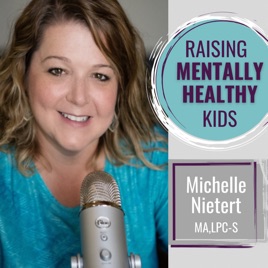
Advertise on podcast: Raising Mentally Healthy Kids with Michelle Nietert
Rating
4.9from
This podcast has
66 episodes
Language
EnglishPublisher
Michelle NietertExplicit
No
Date created
2017/08/07
Latest episode
2022/06/21
Average duration
37 min.
Release period
16 days
Description
You’re listening to the raising mentally healthy kids podcast with host Michelle Nietert who’s been a licensed professional counselor for over 20 years, An award-winning Author, previous creator of a large school district crisis counseling program and the clinical director of community counseling associates located in the Dallas Texas area. With the increase in mental health statistics regarding kids and teens along with climbing suicide rates, Michelle is passionate about equipping parents To understand and talk with their kids about the mental health issues they encounter in our culture every day.
Unlock Raising Mentally Healthy Kids with Michelle Nietert podcast Email contact info,
Listeners & Audience details
Email contact information
Direct podcast contact details

Listeners
Audience numbers & engagement insights

Audience details
Podcast Insights

Podcast episodes
Check latest episodes from Raising Mentally Healthy Kids with Michelle Nietert podcast
How to Create Emotional & Spiritual Health in Your Home with Debra Fileta, M.A., LPC
2022/06/21
I want to ask you a simple, but hard question - “Are you really okay?” In this episode with licensed professional counselor and author Debra Fileta, we’re focusing on how we as parents can do the hard work of building emotional awareness within ourselves so we can normalize talking about emotions within our homes. Debra also shares how our view of God, others, and self affects our spiritual health and offers a practical exercise you can do with your child to help them explore their emotions and create healthy conversations.
Key points from our conversation:
🩹 Healthy people make healthy relationships. So much of what we learn is modeled, so one of the best things was can do is take care of ourselves.
🌋 It’s crucial that we build emotional awareness. If we don’t release the emotions building under the surface in healthy ways, they will show up in an emotional outburst.
🎨 To help your child unpack their emotions, try the “feeling in my body” activity. Have the child draw an outline of their body and have them color it using different colors to show emotions in the body. The magic of the exercise is in the conversation it creates. It normalizes that it’s good and normal to talk about emotions.
❓ There are over 500 different emotions. Asking questions expands your child’s emotional vocabulary and helps them discover what they’re feeling and why.
✨ Emotions are real, but they are not always true. What makes emotions right or wrong is not feeling them, but what we do with that feeling. Emotional control means lining up what you feel with God’s truth.
✝️ Our view of God, others, and self are a big indicator of spiritual health because we often transfer our hurts to what we think about God. We must know what we truly believe about God. If we believe the wrong things, then our actions are rooted in the wrong things. The why is crucial.
❤️ What you believe about yourself determines the kind of relationship you believe you deserve.
Resources mentioned:
Are You Really OK?: Getting Real About Who You Are, How You’re Doing, and Why It Matters
Printable feeling wheel
The Body Keeps the Score: Brain, Mind, and Body in the Healing of Trauma
Follow Debra: website | Instagram | Facebook | podcast
Repairing Damage in Family Relationships with Ann Taylor McNiece, LMFT
2022/06/07
In our last episode with Marriage & Family Therapist Ann Taylor McNiece we talked about how we can engage in healthy discussion and avoid conflict that destroys. In the second part of our conversation, we’re discussing how we can repair the damage that’s already been caused, specifically in our family relationships.
Key points from our conversation:
🩹 What you consider a repair may not be what the other person considers a repair, but your repair attempts count.
👂 Own any part of the problem you can gets your partner out of the attack cycle. Try reflective listening - reflect what you hear the person say, ask if you heard them right, own what you can.
💍 69% of problems are going to be unsolvable because they have to do with personality and preference. You can have a very happy marriage on the 31% you can work out.
💕 We are called to love and give sometimes more than we receive. You either have rejected the person or you’ve accepted that in your commitment, this isn’t a deal breaker. It’s not a character issue, it’s a preference. It’s not abuse, addiction, or adultery.
🙏 Being intentional about reflecting on what your grateful for about your spouse will create a more positive perspective in your marriage. This can be extremely difficult if you’re experiencing depression.
🤝 Counseling isn’t an effort to “fix” someone, it’s to find out how you can work better together.
🥪 Practice using the sandwich method - give a compliment, submit your request, follow it with the positive it will bring.
🧠 If you want to raise a mentally healthy kid, focus on your mental health first.
Resources Mentioned:
Gottman Bible Guide
The Seven Principles for Making Marriage Work
No More Perfect Marriages: Experience the Freedom of Being Real Together
Boundaries in Marriage: Understanding the Choices That Make or Break Loving Relationships
Follow Ann: website | Instagram | Facebook
Key Communication Skills to Engage in Healthy Conflict with Your Family with Ann Taylor McNiece, LMFT
2022/05/24
As much as we may try, we can’t avoid conflict and have healthy relationships. In this episode with Marriage & Family Therapist Ann Taylor McNiece, we’re sharing some skills to help you engage in healthy discussion and avoid conflict that destroys. While most of this conversation is focused on spouses, these communication skills will impact every relationship in your life and change the dynamic of your household.
Key points from our conversation:
💍 All marriages struggle, but you can choose to engage in a way that shows honor or one that causes destruction. The first 5 to 7 years of marriage are hard with the hardest being the year when you have your first child.
❤️ A sound relationship begins on the firm foundation of knowing each other. Partners should begin by building a “Love Map,” which is the essential guide to your partner’s inner world. In an ideal relationship, you and your partner know each other better than anyone else. Start by listening to each other one minute at a time.
💋 Couples need to be comfortable talking about sex outside the bedroom. You’re also going to need to be able to talk to your kids about sex.
😡 Before engaging in a conflict discussion, emotionally self-regulate so that you can approach the other person softly. A hard approach can cause unwanted conflict. Don’t have conversations when you’re hungry, angry, lonely, or tired.
🕒 When you feel yourself moving out of your tolerance window, set a time and place to revisit the conversation.
🧠 Teach kids coping skills to use when flooded such as listening to music, watching a funny video on YouTube, or calling a friend.
The “four horsemen” of conflict:
Criticism – Criticizing your partner is different than offering a critique or voicing a complaint. Criticizing is an attack on your partner at the core of their character. Contempt - When we communicate in this state, we are truly mean. The target of contempt is made to feel despised and worthless. Contempt is the single greatest predictor of divorce. Defensiveness - This is typically a response to criticism. When we feel unjustly accused, we respond in a way that guards you so that you can’t get to the root of the issue. Stonewalling - Stonewalling occurs when the listener withdraws from the interaction, shuts down, and simply stops responding to their partner. Resources Mentioned:
Gottman Bible Guide
Soul Grit Podcast
Soul Grit Counseling
Solution-Focused Pastoral Counseling: An Effective Short-Term Approach for Getting People Back on Track
Gottman Card Decks App
Sound Relationship House
Celebrate Kids
When Sorry Isn't Enough: Making Things Right with Those You Love
Follow Ann: website | Instagram | Facebook
Overcoming Dysregulation through Families Trying Softer with Aundi Kolber
2022/05/11
In this episode, I'm continuing my conversation with author and therapist, Aundi Kolber and digging into what it looks like to try softer with our families and the profound effect co-regulation can have on our children's nervous systems. We also walk through a practical technique you can use to ground yourself and share some encouragement for parents who feel their house is constantly dysregulated. Key points from our conversation:
❓ Become curious about the type of home you grew up in. It will give you ideas and information about your own body.
🔎 Examine if there are things in your routine that habitually cause you anxiety. Notice how your body feels. Try grounding techniques – practices that use your 5 senses to bring you to the present moment.
🚀 "5,4,3,2,1 Blast Off" technique – identify 5 things you can see, 4 things you can hear, 3 things you can touch, 2 things you can smell, and 1 thing you can taste.
✨ Regulating is a skill. When we’re dysregulated, we don’t have the capacity to solve problems strategically. Anything you can do to build your regulation will produce more goodness and life because you can evaluate what’s working.
🧠 Our regulation shapes our children's nervous systems. The more we ground, it translates to them. The more you practice, the faster you can regulate
💛 If you grew up in a dysregulated home, honor that your response to how you've survived your life is valid. Have compassion for how hard it’s been to get where you are today.
🩹 Compassion brings integration that allows for growth and change. Every single moment is a new moment and the sooner you begin to turn with compassion for your own story and your kids, the closer you have ever been to healing.
🥰 When we find compassion for ourselves, we can extend it to our kids.
🤝 Cognitive knowledge does not equate to embodied knowledge. Kids need to experience co-regulation with you. They need safety to be able to be open to what it looks like to problem solve.
🗣️ Connect, then correct. Do they feel heard? Kids aren’t open to learning if their bodies are dysregulated.
Resources mentioned:
Try Harder
Connect with Aundi: website | Instagram | Facebook | podcast
Moving Families Out of Anxiety, Stress, and Survival Mode with Aundi Kolber
2022/04/26
In society we're often told to try harder, but what would it look like to try softer? In this episode, I'm joined by author and therapist, Aundi Kolber who shares about what it means to try softer, how we can help our kids process the trauma stuck in their bodies, and what it means to co-regulate.
Key points from our conversation:
🧠 Trauma is anything that overwhelms our nervous system and its capacity to cope. That trauma gets stuck in our bodies and must be processed.
🧬 When trauma is "stuck," it doesn't metabolize through our bodies and our brains cannot recognize the difference between the past and the present. Certain cues may trigger a past experience as though it was happening now.
👁️ Trauma always involves a perception element that is influenced by development.
🩹 When a parent's nervous system is in the window of tolerance where it is functioning well, we have the capacity to help our kids experience connection and safety.
✨ Our communication is mostly non-verbal. First, regulate yourself, then help your child by being present with them reassuring them that you see them and that they matter.
💙 Trying softer is learning to pay compassionate attention. It creates resistance because it isn't easy. It takes faith to trust that God will work when you are not.
💪 Softness does not equal weakness. It is hard work to be soft. We don’t get there by pushing ourselves beyond capacity, it's a different kind of work that requires courage.
🤗 There is nothing more predictive of mental health than the ability to have a sense of safety internalized in your body.
Resources mentioned:
Try Harder
The Body Keeps the Score
The Search for Significance
Connect with Aundi: website | Instagram | Facebook | podcast
Overcoming Mindset Struggles with Brooke Tilghman
2022/04/12
In the last two episodes, I’ve been joined by Todd and Brooke Tilghman who have shared about their journey with their son who has battled with depression and anxiety, but this episode is a bit different. In this conversation, Brooke gets candid about her mental health struggles with post-partum depression and anxiety, as well as the tension she’s felt as a Christian who has found medication effective in treating her symptoms. She also offers hope to struggling parents that the situation is temporary and you don’t have to be driven by your feelings or fear.
Key points from our conversation:
✨ It might feel as though things will never change, but that’s a lie. It requires intentionality, but we can have hope through bad feelings.
💜 Your diagnosis is not your destiny, it’s a snapshot of your life. We’re bigger than our worst moments. The struggle doesn’t change who you are as a person.
💊 It’s difficult to experience God when you’re depressed. Taking medication helped balance Brooke neurochemically so she could fight spiritually.
👎 You may not recognize when you’re stepping into depression. Be on the lookout for feelings of hopelessness and worthlessness.
🧠 People want to feel a certain way, but you have to learn how to think a different way and that takes time. Give yourself grace. Just because you don’t feel happy doesn’t mean you’re not doing the work.
🤝Accept feelings and stop judging them. Don’t let them drive.
✝️ Learn to recognize when symptoms are coming and use the tools you have. Remember that the worst-case scenario is getting depressed again, but the Lord brought you out last time and He can bring you out again. Don’t let fear drive you.
Resources mentioned:
Make Up Your Mind: Unlock Your Thoughts, Transform Your Life
Connect with Brooke: Instagram | Facebook
Winning as a Parent When Your Kid has a Mental Health Issue with Brooke & Todd Tilghman
2022/03/29
In the second half of my conversation with the authors of Every Little Win: How Celebrating Small Victories Can Lead to Big Joy Brooke and Todd Tilghman, they’re sharing their journey of supporting their oldest son Eagan through difficulty in school and mental health issues that arose as a result. In this episode, they explain why and when they chose to seek professional help for their son, what the process looked like for them as parents, the changes they made to promote Eagan’s mental health, and different ways we can “win” when our children struggle with mental health complications.
Key points from our conversation:
🗣️ If your child tells you they’re struggling or self-harming, believe them and ask how you can support them well.
👂 School counselors may not be able to offer one-on-one counseling, but they are equipped to listen and connect parents with resources.
❓ A therapist can help by giving you knowledge so that you can ask your child better questions without violating their confidence.
🧠 If the mental health issue is severe, a counselor can send the child for an in-patient evaluation. If hospitalized, the child should be put on a treatment plan that helps them learn skills for healthy emotional processing.
🏥 Parents are often separated from the child for a short period after they’re admitted for in-patient treatment to give the child an opportunity to stabilize and focus on getting themselves well. Stays typically only last a few days before the child is sent home for a partial hospitalization program or intensive outpatient program.
🎒 You are your child’s biggest advocate. If their school environment is toxic and the administration is unable or unwilling to help, remove your child. There are multiple education options available.
🏆 We win when we confess our mistakes as parents. We win when we fight for our kids when things get hard. We win when we find others who can help in ways we can’t. We win when we ask our kids how can we help them.
Connect with Todd: website | Instagram | Facebook
Connect with Brooke: Instagram | Facebook
Getting Your Child Help for Depression with Brooke and Todd Tilghman
2022/03/15
In this episode, I’m chatting with the authors of Every Little Win: How Celebrating Small Victories Can Lead to Big Joy Brooke and Todd Tilghman. You might recognize Todd as the winner of season 18 of NBC’s The Voice, but in this conversation, he and Brooke share how their focus on joy and celebrating every little win has helped them to overcome numerous challenges over their twenty-plus-year marriage. They also help us understand how we can help our children (and ourselves) battle negative thoughts through daily practices.
Key points from our conversation:
👂 It’s important for parents to say less and listen more. Try holding family meetings and allow each child to express what the family is doing well at, what the biggest issue is from their perspective, and what they think you could do better as parents.
🧠 Managing fear and anxiety comes from monitoring our thoughts, which affect our feelings. It’s important to model this for our children by battling our own thoughts first.
🙁 You’ll know when a child’s neurochemistry begins to change when overwhelm turns into hopelessness or depression.
🙏 The work of eliminating negative thoughts will take time. Pray, seek counseling, do the daily work, and if necessary, consider medication.
💊 With every major life transition comes grief. There’s no shame in getting some extra help with medication for difficult seasons.
✝️ We can’t rely on others to fix us, we have to turn to God and do the hard work of fixing ourselves - hopefully with the support of our partner.
🤝 We win when we can share our struggles with others and help them see they’re not alone.
Connect with Todd: website | Instagram | Facebook
Connect with Brooke: Instagram | Facebook
How to Talk to Your Kids About Loss with Georgia Shaffer
2022/03/01
In our last episode, I spoke with author Georgia Schaffer about what healthy grieving looks like for our kids. In the second part of our conversation we’re digging into how to talk to kids about loss and answering some of the questions we hear most like is it okay to use the word “death” with my kids? Should I have my children attend the funeral of a loved one? And is it okay to keep my kid out of school while they grieve? We also offer some practical suggestions of how you can help grieving families.
Key points from our conversation:
😢 When deciding how to tell your child about the death of a person or pet, consider what their experience has been with loss to this point and how the death occurred. Was it sudden or did you know it was imminent?
💀It’s okay to use the word “death” when speaking to your kids. Young children often don’t understand what “passed away” means. The more direct you can be, the better.
🐶 It’s not a good idea to replace a pet to hide a loss. The death of a pet is sometimes the first opportunity to prepare your kids with healthy mechanisms to deal with loss in the future.
💬Ask your children how they want to grieve. It could be a memorial service, drawing a picture, or writing a letter. There is no one way to grieve, it’s dependent on personalities. Just provide the child a chance to talk about what they experienced and allow them to work through it.
⛔ The fact that a person died is public knowledge, but how they died isn’t always for everyone. We need to be respectful of that. It’s okay to not know. Be careful not to overstate things.
🎒 If someone in the family dies it’s okay to keep your kid out of school, but not too long. Being a little busy is good to help you not get lost in the pain, but moving past the suffering too fast can stunt the grieving process.
⚰️ Talk to your kids about attending the memorial service of a loved one. If they’re not ready for a funeral, perhaps they might want to attend the viewing, graveside service, or process in a different way.
🗣️Some kids process verbally and need to talk about a loss, others only want to share a few words about what they’re feeling. If they do talk, help them feel heard by practicing reflective listening.
💕Some practical things you can do for grieving families include babysitting, getting the kids something off their wish list, giving money to be used toward food delivery services, and checking in on significant dates.
✨When kids lose a parent at a young age people think they’ll have trauma forever, but that child understands loss in a way others can’t. It helps them develop empathy and compassion the average person wouldn’t as well as equips them with a well-developed emotional vocabulary and resilience.
🧠 If a child is acting out or shutting down, get them a mental health check-up with a professional.
✝️ There is a time to grieve and a time to dance. Grief is hard, but there’s a lot of love that happens in that season. And you can bring that light to others when they grieve. We have hope in Christ that we’ll see them again.
⚱️ Think ahead about how you will handle loss. Talk about grief with your children before it happens. Ask what grief means to them. Planning isn’t being morbid, it’s being real.
💛 If you’re experiencing loss, allow others to love you well. If you can’t accept it, let others love your children.
Resources mentioned:
Mourning Glory Minute
When Dinosaurs Die: A Guide to Understanding Death
I Wasn't Ready to Say Goodbye: Surviving, Coping, and Healing After the Sudden Death of a Loved One
Become a Better Listener download
Connect with Georgia: website | Instagram | Facebook
Empowering Your Kids to Grieve in a Healthy Way with Georgia Shaffer
2022/02/15
One of the questions I get asked most is how to talk to kids about grief. Unfortunately, there's no magic formula to speeding up the grieving process. And grieving isn't just about the loss of a loved one, there are a number of losses we grieve, from loss of a dream to loss of health. In the first half of my conversation with coach Georgia Shaffer, she explains what health grieving looks like.
Key points from our conversation:
💊 Kids are more susceptible to addiction when a loss occurs.
😢 6-18 months after a loss can be more difficult due in part to the loss of support you get immediately after death. Shock and numbness wear off and reality sets in.
💔 The "Five Stages of Grief" - denial, anger, bargaining, depression, and acceptance – are not accurate. Grief takes far longer than anyone talks about.
🕰️ Time does not heal, it gives us tools and perspective to cope with our loss.
🤷♀️ We can’t ignore when our kids are grieving and we don’t understand why.
🥺 Modeling healthy grief means not ignoring the pain or covering it with busyness, comfort eating, or addictions.
😭 It’s okay to cry in front of your kids. It’s important to be able to talk about our feelings with our children.
😩 Sad is a basic emotion. Ask younger kids “how sad are you?” to gauge their level of emotion. Ask them when the last time they cried was. This is especially important with men to break the myth men don’t cry. If you don’t, it typically comes out in unhealthy anger.
😡 Dig deeper with words like "anger," "disappointed," "devastated," and "overwhelmed." Consult a feelings wheel to broaden your emotional vocabulary.
⛹️♂️ Everyone grieves differently. Some withdraw, while some want to talk. Try doing an activity with your kids to give them the opportunity to open up.
✨ No feeling is good or bad, it’s what we do with the feelings that can be negative.
🧸 Kids sometimes want to cry, but they can’t. Play therapy can help them reconnect to their emotions.
⏳ Parents will need to be patient as kids grieve. If you stop the grieving process too soon with smaller losses (pets, etc.), they may not be comfortable sharing about the bigger losses.
💨 We can only deal with the pain a little at a time, so you have to let the pressure out gradually.
☹️ People experience emotions differently. You cannot compare grief, even within a family. Your pain is your pain.
👩⚕️ Therapy can be helpful because kids aren’t always comfortable revealing certain feelings to their parents, especially if it’s about that parent. They need someone they feel safe and comfortable speaking to.
💙 It is not our kid's job to take care of our emotions. It’s our job to take care of them.
Resources mentioned:
A Gift of Mourning Glories: Restoring Your Life After Loss
Grief Share
Connect with Georgia: website | Instagram | Facebook
Setting Healthy Boundaries with Your Teens and Tweens with Dr. John Townsend
2022/02/01
I’m so excited to kick off our new season with this rich conversation I had with psychologist and author Dr. John Townsend about how we can set healthy boundaries with our teens and tweens. We cover a wide range of topics including three skills every parent should utilize to raise mentally healthy kids, how to build a stronger relationship with kids moving toward autonomy, connecting with kids struggling with gender identity, and so much more.
Key points from our conversation:
💬 Some parents tend to fragilize their kids rather than setting healthy boundaries. Enter their world and find compassion. If you’re not sure, take your child to a counselor to help determine where they are.
⛔ A “trigger” isn’t when something upsets you, it’s a clinical word used when something brings up traumatic experiences that affect your ability to function.
✨ There are three skills every parent should utilize to raise mentally healthy kids –
Warmth – connect and enter the child’s world Appropriate strictness – there must be boundaries and structure Realistic expectations - neither child nor parents will be perfect 🤝 As your children become autonomous, moving toward them in the negative moments will help build a stronger connection. Sit with them, but still enforce appropriate disciplines.
💕 Support doesn’t mean you share an opinion, but that you love them completely.
🧑 Kids struggling with gender is a normal experience today. The most important thing is that you stay connected, address if there’s any danger, and give the information you have. Help them with their character because healthy character will make the right decisions.
🗣️ Healthy character comes from learning to bond and connect, helping children speak up and set boundaries, getting rid of the inner critic, and accepting themselves and reality. Our job as parents is to work on the character. Remind them that they are more than one thing – their gender shouldn’t be their full identity.
🧠 You can determine if your child’s detachment has become unhealthy by asking if they’re emotionally engaged with the family, helpful, vulnerable, and doing okay with school and their hobbies.
👣 If your child is hesitant to spend more time with the family, try an activity. An activity with less eye contact like walking can make them more comfortable. They want to be understood and are waiting to open up, but it’s our job to come up with the framework.
👂 Practice listening without judgment. Lead with curiosity instead of aiming to correct. You earn the right to give truth with grace and listening. The order matters. You have to put in the time.
Resources mentioned:
Boundaries with Teens: When to Say Yes, How to Say No
Connect with Dr. Townsend: website | Instagram | Facebook
How to Find a Counselor for Your Young Adult with Melissa Spoelstra
2022/01/05
With so many young adults struggling with anxiety and depression as they return to school after the holidays, I wanted to release a bonus episode answering questions from author Melissa Spoelstra about parenting young adults who need to find a counselor. In this episode, we’ll discuss some practical aspects such as insurance coverage and the variety of mental health professionals available to help your child as well as offer you some tips on questions to ask prospective counselors, when it’s time to seek professional help, and how to encourage your child to get help without offending them.
Key points from our conversation:
🩺 If insurance is a deal-breaker, call your company and get the names of 10 Christian counselors that are in-network, then narrow them down by finding out who is taking new patients. Have your child do research online like reading bios and watching videos to see who they connect with best. Telehealth may be a good option if you’re in a rural area.
✝️ Therapists use different approaches when it comes to treatment. When interviewing prospective counselors, have your child ask if they are a Christian who does counseling or if they integrate faith into best counseling practices. Also, ask if they are a biblical counselor who doesn’t integrate psychology and if they are a directive or non-directive therapist.
🚨 If your young adult tends to change their mind about counseling, but chronic problems persist, encourage them to find a counselor as quickly as possible. Use the urgency to prevent a future emergency.
🗣️ If your child is resistant because they view counseling as a sign of weakness, normalize it. Since 2020, 40% of young adults 18-24 are experiencing diagnosable anxiety and depression. Practice empathic listening and try changing the verbiage from “you need counseling” to “you could benefit from counseling.”
😖 Panic attacks are immediate criteria for therapy because it means they’re at a place where their mind is not able to control the body in such a way that things happen that are out of control.
🥼 Seeing a therapist should be as normal as seeing a doctor. When in doubt, check it out.
🧠 You may not notice ADHD in your young adult before college because home life and school can provide a structure they can manage. Smarter kids can take even longer to diagnose because their intelligence compensates for their lack of executive management skills.
👂 When your young adult comes home and shares struggles, reassure them that you get it and they’re not alone. Engage them by asking how they would like to try to solve the problem. Offer to get them help, even if they get offended. If you’re the authority, you make the call even if they don’t want to. You know what’s best for them.
Resources mentioned:
Smart but Scattered by Peg Dawson
Connect with Melissa: website | Instagram | Facebook
Podcast reviews
Read Raising Mentally Healthy Kids with Michelle Nietert podcast reviews
wieselfoot 2022/05/18
Great advice
I have a son who has developed anxiety & has worsened since Covid & all the unknowns. He over analyzes situations & turns every situation into the mor...
Patty Writes 2021/09/23
Timely Conversations for Raising Mentally Healthy Kids
I enjoy listening to this podcast!
Michelle brings energy and fantastic guests into the same space to talk about relevant and timely issues our kids...
GRCHM206 2022/02/02
Your Brain is Always Listening
If this was to be an interview with Dr. Amen, it was hard to tell. Michelle did not give Dr. Amen ample opportunity to discuss his work. It was all ab...
RMCM1261 2021/09/23
Good but….
This podcast has some incredible guests and very helpful information. Unfortunately, the host doesn’t allow the guests to provide info bc she talks ov...
Hopeful Warrior 2021/09/12
Phenomenal Podcast
The “Raising Mentally Healthy Kids” Podcast is full of invaluable encouragement. Michelle Nietert shares her knowledge and experiences for the purpose...
Deb Gruelle 2021/07/24
Such Important Information for Parents
Michelle is entertaining and informative as she draws out information from those she interviews. Her heart and wisdom to help children and their paren...
MyMotoMoto 2021/06/03
Must listen
So uplifting and helpful. I wish I'd had this podcast when my girls were little
akdavi 2020/10/20
Amazing!
I love this podcast not only for myself as a mom, but also for my daughter! It’s rare to have a podcast for us both that strengthens our relationship ...
sully214 2020/08/15
Super helpful!
This is the most helpful podcast for moms of girls. I really appreciate the fresh perspective. Can’t wait for the next episode.
KTee22 2020/07/22
Great resource for moms and daughters!
Love the format of mothers and daughters sharing about their relationship and offering tools to help strengthen others.
Podcast sponsorship advertising
Start advertising on Raising Mentally Healthy Kids with Michelle Nietert relevant audience podcasts
You may also like to advertise on these Podcasts

4.4371061566
The Megyn Kelly Show
SiriusXM

4.888901269
Fearless with Jason Whitlock
Blaze Podcast Network

4.8118931000
Mind Pump: Raw Fitness Truth
Sal Di Stefano, Adam Schafer, Justin Andrews, Doug Egge
4.8102131585
Tara Brach
Tara Brach

4.541561215
Something You Should Know
Mike Carruthers | OmniCast Media

4.513841343
Strictly Anonymous Confessions
Kathy Kay

4.8292781897
Fantasy Footballers - Fantasy Football Podcast
Fantasy Football

4.62382612
Football Weekly
The Guardian

4.45387666
Two Judgey Girls
Two Judgey Girls

3.8258501152
The Viall Files
Nick Viall