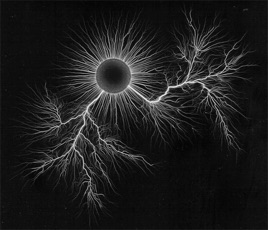
Advertise on podcast: Science History Podcast
Rating
4.8from
This podcast has
100 episodes
Language
EnglishPublisher
Frank A. von HippelExplicit
No
Date created
2017/12/13
Latest episode
2026/10/11
Average duration
87 min.
Release period
31 days
Description
Monthly interviews on important moments in the history of science.
Unlock Science History Podcast podcast Email contact info,
Listeners & Audience details
Email contact information
Direct podcast contact details

Listeners
Audience numbers & engagement insights

Audience details
Podcast Insights

Podcast episodes
Check latest episodes from Science History Podcast podcast
Psychiatry at Nuremberg: Jack El-Hai
2026/10/11
How did the psychiatrist Douglas Kelley end up evaluating high-ranking Nazis at the 1945-1946 International Military Tribunal at Nuremberg? Who were Kelley's patients on trial for war crimes? How did Kelley interpret the responses that he got from the Nazis with the use of the Rorschach test? What did Kelley learn about the psychology of evil? Kelley killed himself, and he did so using cyanide, just as Hermann Göring did - was his suicide somehow a mirror of Göring's suicide? With us to answer these and other questions is Jack El-Hai. Jack writes nonfiction books and articles on the topics of medicine, history, science, and crime. Among his books are The Lobotomist, The Lost Brothers, Face in the Mirror, and his new book The Case of the Autographed Corpse: A Medicine Man and a Mystery Writer in Pursuit of Justice. Today we discuss his book The Nazi and the Psychiatrist, which was recently adapted into the movie Nuremberg.
The Space Race: Leroy Chiao
2026/09/10
Those of us who grew up during the Cold War were keenly aware of the space race between the US and USSR. With us to relive the victories and tragedies of the space race is Leroy Chiao. Leroy is a former NASA astronaut and International Space Station commander. A veteran of four space missions, Leroy most recently served as Commander and NASA Science Officer of Expedition 10 aboard the International Space Station. He logged 229 days in space - over 36 hours of which were spent in spacewalks. Leroy flew missions with Russian, Japanese, and European astronauts and their affiliated space agencies. In addition to being a Space Station Commander and Space Shuttle Mission Specialist, Leroy was also a certified co-pilot of the Russian Soyuz spacecraft. Today we discuss his book Dinner with an Astronaut, published in 2026 by Hanover Square Press.
Curie's Elements: Dava Sobel
2026/08/10
Marie Curie was one of the most remarkable scientists in history. She was the first woman to win a Nobel Prize, the first person to win two, and the only person ever to earn Nobel awards in separate fields of science. Today we explore the life and legacy of Marie Curie with the science writer Dava Sobel. Dava is the author of prominent and best-selling science history books, including Longitude, Galileo's Daughter, The Planets, A More Perfect Heaven, and The Glass Universe. Today's conversation is based on Dava's latest book, entitled, The Elements of Marie Curie, How the Glow of Radium Lit a Path for Women in Science.
Pugwash: John Holdren
2026/07/11
On July 9, 1955, mathematician and philosopher Bertrand Russell announced the Russell-Einstein manifesto, which warned the world of the dangers posed by nuclear weapons. The 11 signatories included Albert Einstein, who signed it just before his death. Physicist Joseph Rotblat stated that the manifesto was "the last message from the man who was the symbol of the great heights the human intellect can reach, imploring us not to let all this be destroyed by human folly." Russell and Rotblat then initiated the Pugwash Conferences on Science and World Affairs, with the first one occurring in 1957 in Pugwash, Nova Scotia. Rotblat led the Pugwash Conferences until 1973, and he and the Pugwash Conferences jointly won the Nobel Peace Prize in 1995 "for their efforts to diminish the part played by nuclear arms in international politics and, in the longer run, to eliminate such arms". With us to discuss the history of Pugwash, nuclear disarmament, and public policy related to science is John Holdren. John served as science advisor to President Barack Obama from 2009 to 2017, making him the longest serving presidential science advisor since World War II. He served in many other scientific leadership roles, including as chair of the executive committee of the Pugwash Conferences from 1987-1997. When the group was awarded the Nobel Peace Prize in 1995, John delivered the acceptance lecture, so he is the perfect person to reflect on the history of Pugwash and nuclear disarmament.
Astronomy: Sarah Alam Malik
2026/06/16
What did the ancient world discover about the cosmos? What were the contributions of Copernicus, Kepler, and Galileo? How did the science of astronomy advance under Newton? And how did everything change again with the discoveries of special relativity, general relativity, and quantum mechanics? With us to answer these questions is Sarah Alam Malik. Sarah is an expert on dark matter, and her work on large-scale experiments such as the Large Hadron Collider has placed her at the cutting edge of exploring the universe's mysteries and its fundamental laws. Today we discuss her new book entitled, A Brief History of the Universe (and our place in it).
Chemicals & Children's Health: Tracey Woodruff
2026/05/14
Chemical exposures in the womb can lead to what biologists call organizational effects - that is, impacts on the developing child that are irreversible. How were developmental problems associated with chemical exposures during pregnancy first discovered? And how did these discoveries influence policy? With me to discuss chemicals and child development is Tracey Woodruff. Tracey is a professor in the Department of Epidemiology and Population Health at Stanford University, where she co-leads the UCSF/Stanford Environmental Research and Translation for Health Center. She is an expert on environmental pollution exposures and impacts on health, with a focus on pregnancy, infancy and childhood, and health equity. Tracey was elected to the National Academy of Medicine in recognition of her pioneering work advancing environmental health and reproductive justice.
Longitude: Emily Akkermans
2026/04/10
The age of exploration altered the course of human history, but how did early explorers find their way? Calculating their latitude at sea was a relatively straightforward proposition, but calculating longitude presented a vexing problem. Given the big power competition for colonies, conquest, and riches, the search to discover an accurate means of assessing longitude became a scramble. A major piece of the puzzle lay in the accurate assessment of time on a rocking vessel, which tested the ingenuity of the most creative clock makers. With me to discuss the history of the technologies associated with the measurement of longitude is Emily Akkermans. Emily is the Curator of Time at Royal Museums Greenwich, which includes the Royal Observatory Greenwich. The observatory is Britain's oldest purpose-built scientific institution, and it just celebrated its 350th anniversary - which is the impetus for this episode. The observatory is the birthplace of modern astronomy and the home of Greenwich Mean Time and the Prime Meridian.
Bohr's Legacy: Tomas Bohr
2026/03/11
Today we explore the life and legacy of the physicist Niels Bohr through the reflections of his grandson Tomas Bohr. Tomas is an Emeritus Professor at the Technical University of Denmark. He studies fluid dynamics, biophysics, chaos, turbulence and statistical mechanics, and he has a long and distinguished career publishing in these fields. He is a member of the Royal Danish Academy of Sciences and Letters.
Rapa Nui's Collapse: Mike Pitts
2026/02/11
Often in the history of science, myths overrun scientific findings and take hold with such force that they are difficult or nearly impossible to dislodge from public understanding. Perhaps no example of this phenomenon is more pronounced than that of the societal collapse of Easter Island, also known as Rapa Nui. With us to unravel the myth from the science is Mike Pitts. Mike is a writer and broadcaster (a frequent voice on BBC radio), archaeologist (directing excavations at Stonehenge), and one-time museum curator. He has written for The Times, Telegraph, Sunday Times, Observer, and Guardian, and many magazines including New Scientist, Archaeology, and BBC History. He edited British Archaeology magazine for 20 years and has written books on topics ranging from the discovery of Richard III's grave to How to Build Stonehenge. His original research has been published in peer-reviewed journals such as Nature, World Archaeology, and Antiquity. He is a Fellow of the Society of Antiquaries.
Retrospective: Tom Lehrer's Mathematics
2026/01/10
The Science History Podcast, now in its 9th year, has spanned Trump's first term in office, four years of the Biden Administration, and a year of the second Trump Administration, not to mention a global pandemic, horrific wars around the world, and the emergence of AI. So now seems like the perfect moment for some levity. The master of musical satire, Tom Lehrer, passed away in 2025. Here is my celebration of Lehrer's ability to make us laugh during the even more tumultuous times of the Civil Rights era, the Vietnam War, the Cold War, and political assassinations and violent polarization.
Forever Chemicals: Sharon Udasin
2025/12/10
Today's episode is a discussion on the history of PFAS, or forever chemicals, including their accidental development, incorporation into commercial products, concerns about health effects, and environmental contamination and remediation. My guest is Sharon Udasin. Sharon is a Colorado-based environmental journalist and author of Poisoning the Well: How Forever Chemicals Contaminated America. She was a Ted Scripps Fellow in Environmental Journalism at the University of Colorado Boulder in 2019-2020 and received a SEAL Environmental Journalism Award in 2023. A graduate of the University of Pennsylvania and Columbia Journalism School, she has reported for numerous publications over the past two decades — most recently for The Hill.
The Weather: Simon Winchester
2025/11/11
The weather has always been a critical element of the human experience - deadly during storms and droughts, sustaining when aligned with the harvest schedule, beautiful and frightening, and integrated into the myths and religions of all societies. How did a scientific understanding of the weather come about? Here to guide us on this question is Simon Winchester. Simon's articles and approximately 30 books range in topic from travel writing to politics, geography, biography, and science history. Simon is best known for his books The Professor and the Madman, The Men Who United the States, The Map That Changed the World, The Man Who Loved China, A Crack in the Edge of the World, and Krakatoa, all of which were New York Times bestsellers. In 2006, Simon was made an officer of the Order of the British Empire by Her Majesty Queen Elizabeth the II. Today we discuss Simon's new book about the weather entitled, The Breath of the Gods, published by HarperCollins.
The River War: James Muller
2025/10/11
In Episodes 10 and 11 of the Science History Podcast, I interviewed James Muller on the role that Winston Churchill played in the unparalleled advancement of science and technology during the first half of the 20th Century, particularly as it related to the two world wars. In today's episode, Jim returns to discuss Churchill and an earlier war fought in the Sudan at the end of the 19th Century. Jim is a Professor Emeritus at the University of Alaska Anchorage and one of the world's foremost authorities on Churchill. For more than a quarter century, Jim has chaired the Board of Academic Advisers of the International Churchill Society. He is the author of many works on Churchill, including edited and scholarly reprintings of Churchill's interwar books Thoughts and Adventures and Great Contemporaries. Today we discuss his remarkable new edition of the two-volume Churchill book The River War: An Historical Account of the Reconquest of the Soudan, published in 2021 by St. Augustine's Press, which won the Churchill Literary Award from the International Churchill Society. St. Augustine's Press also published Jim's 2024 scholarly edition of Churchill's book My Early Life, A Roving Commission.
Lead Poisoning: Bruce Lanphear
2025/09/11
Our health, and the health of wildlife, depends on a clean environment. Since the advent of the industrial revolution, our environment has suffered from waves of pollution as different technologies came to the fore, each with its own set of practical benefits and associated chemical waste. Perhaps the most insidious of these environmental pollutants is lead. With us to discuss the history of lead as an environmental contaminant is Bruce Lanphear. For over 30 years, Bruce has investigated how toxic chemicals harm human health, especially the health of children. His research helped shape U.S. federal standards for lead in air, water, and house dust, and played a key role in the landmark conclusion that no amount of lead is safe for children.
Attacks on University Research: Claudia Polsky
2025/08/11
The year 2025 has seen the most aggressive moves ever by the US executive branch against scientific research as the Trump Administration has gutted federal science and regulatory agencies and cancelled billions of dollars in research grants that had already been awarded to universities. With me to discuss the Trump Administration attacks on university research is Claudia Polsky. Claudia is a clinical professor of law and the founding director of the Environmental Law Clinic at the University of California, Berkeley.
Podcast reviews
Read Science History Podcast podcast reviews
mharrisARCH 2024/02/01
Enlightening
One of my favorite podcast. I end up listening to these multiple times out of both enjoyment and information. Highly recommended.
MelBums 2023/01/23
Interesting and engaging!
I appreciate Dr. Von Hippel’s ability to make science understandable and interesting. I enjoy his show, I learn something new each time.
Serena Fox 2022/07/18
Disappointing
The host is very intelligent and knowledgeable, guests and subjects typically the same but when the political bias and one sidedness comes out it is v...
Ptierra 2022/06/13
Amazing
This podcast is an interesting and entertaining way to learn more about science topics across the board.
Peter the Poet 2022/06/11
Peter G
Consistently excellent. Essential listening. Thank you for your efforts
Keiushka 2020/12/22
Great knowledge
Lots of information I was not aware about from scientists. Some very revealing details
Shrek's#1Fan 2020/12/10
Great!
Very interesting and eye opening information.
Bran L K 2020/10/17
Excellent show
Highly recommended!
Davethanaman 2020/10/06
Fascinating information
After hearing Frank von Hippel be interviewed on #1540 of the Joe Rogan Experience podcast I craved more. I was so excited to find this Science Histor...
FlickFromFlag 2020/01/24
Broad AND nuanced
The wide scope of topics covered are sure to pique the interests of many, but the intimate conversations with the guests make the show both conversati...
Podcast sponsorship advertising
Start advertising on Science History Podcast relevant audience podcasts
You may also like to advertise on these Podcasts
4.922981174
Dropping Bombs
Brad Lea: CEO, Entrepreneur, and Host of The Bottom Line
4.549132000
The Daily Stoic
Daily Stoic | Backyard Ventures
4.682501293
The Daily Beast Podcast
The Daily Beast, Joanna Coles

4.831561355
The Late-Round Fantasy Football Podcast
iHeartPodcasts
4.922331833
The Ten Minute Bible Hour Podcast
Matt Whitman
4.662842000
The Dr. Laura Podcast
Dr. Laura Schlessinger & SiriusXM
4.723702000
Everything Everywhere Daily
Gary Arndt

4.813252012
The Jeff Cameron Show ~ Warchant.com
Jeff Cameron Show

4.8258931492
Relatable with Allie Beth Stuckey
Blaze Podcast Network
4.8224751793
The Andrew Klavan Show
The Daily Wire