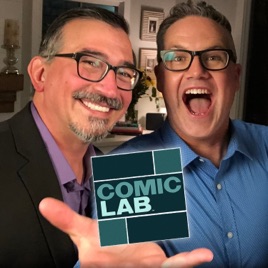
Advertise on podcast: Comic Lab
Rating
4.9from
This podcast has
460 episodes
Language
EnglishPublisher
Brad Guigar and Dave KellettExplicit
Yes
Date created
2018/01/03
Latest episode
2026/10/08
Average duration
68 min.
Release period
7 days
Description
The podcast about making comics — and making a living from comics! It's half shop talk, half how-to, and half friendship. WE SQUEEZED IN THREE HALVES. It's tips and tricks and all the joys of cartooning as a pro. So pull up your drawing chair, put on some headphones, and join us while you draw! And if you like what you hear, join our community at patreon.com/comiclab (For sponsorship inquiries: [email protected])
Unlock Comic Lab podcast Email contact info,
Listeners & Audience details
Email contact information
Direct podcast contact details

Listeners
Audience numbers & engagement insights

Audience details
Podcast Insights

Podcast episodes
Check latest episodes from Comic Lab podcast
How to Launch a Comics Studio
2026/10/08
Should you launch a comic studio — or are you really talking about a comics collective, a shared workspace, or simply collaborating on a project? This week, Brad and Dave unpack what the word “studio” actually means and why adding another layer of branding might make your project harder, rather than easier, to promote. They discuss shared creative spaces, financial partnerships, anthology projects, comics collectives, and why most collaborations work better when everybody knows exactly what they’re signing up for.
They also argue that an anthology generally doesn’t need an umbrella “studio” brand at all. Keep the marketing focused on the book, make the financial responsibilities clear, and be wary of creating an organization that one hardworking person winds up carrying by themselves.
Also in this episode:
Kickstarter late pledges really work. Dave reports continued pledges long after his campaign ended — but Brad and Dave agree emphatically that you should never advertise late pledges while the campaign is still running. Kickstarter depends heavily on urgency and FOMO.Why having more free time can make you less productive. Both Brad and Dave have experienced the strange phenomenon of getting less done when their schedules suddenly open up. They discuss rest, motivation, structure, and learning to shift to other useful tasks when the creative work isn’t happening.Dave introduces his “Three Sisters” approach to productivity: when one part of your comics career isn’t moving, switch to another complementary task — bookkeeping, website improvements, promotion, admin work, or another creative project — so the overall career keeps moving forward.Susan McTaggart returns! ComicLab’s internationally unverified motivational speaker offers another soul-fortifying affirmation.And Dr. Reginald Wigglesby explores Lionel Feininger’s 1906 comic strip Wee Willie Winkie — with exactly the level of scholarly rigor longtime listeners have come to expect.
You get great rewards when you join the ComicLab Community on Patreon
$2 — Early access to episodes$5 — Submit a question for possible use on the show AND get the exclusive ProTips podcast. Plus $2-tier rewards.If you'd like a one-on-one consultation about your comic, book it now!
Brad Guigar is the creator of Evil Inc and the author of The Webcomics Handbook. He is available for personal consultations. Dave Kellett is the creator of Sheldon and Drive. He is the co-director of the comics documentary, Stripped.
Is there a LIMIT to comics success?
2026/10/01
Is there a limit to how many cartoonists can build successful careers—or is the real limiting factor the cartoonists themselves?
Cartoonists Brad Guigar and Dave Kellett examine the surprisingly vast comics ecosystem, where thousands of creators can cultivate separate audiences without ever appearing on one another’s radar. The market may have room for far more working cartoonists than we realize — but success requires more than artistic ability. Creators must also be willing to learn business, communicate consistently with their audiences, and improve when something doesn’t work.
Also: Brad discovers that his brilliant new idea had already been implemented… by Brad.
ON TODAY’S SHOW
Is there a ceiling on the number of successful comics careers?Why artistic talent alone isn’t enoughThe danger of waiting for Marvel, syndication, or a publisher to “make” your careerAudience-building isn’t “shilling”—it’s part of the jobCould 10,000 different Brad Guigars all make a living?How niche comics find their “true fans”Three essentials for a sustainable comics careerWhy repeated promotional messaging mattersThe Council of BradsDo Kickstarter creators owe sales tax?Kickstarter Pledge Manager vs. BackerKitDr. Wigglesby: Which comic was the first successful daily newspaper strip?
You get great rewards when you join the ComicLab Community on Patreon
$2 — Early access to episodes$5 — Submit a question for possible use on the show AND get the exclusive ProTips podcast. Plus $2-tier rewards.If you'd like a one-on-one consultation about your comic, book it now!
Brad Guigar is the creator of Evil Inc and the author of The Webcomics Handbook. He is available for personal consultations. Dave Kellett is the creator of Sheldon and Drive. He is the co-director of the comics documentary, Stripped.
How to Build Momentum
2026/09/24
How do you build momentum as a cartoonist — and what happens when you lose it?
Brad and Dave examine momentum across every part of a creative career: generating ideas, maintaining a productive workflow, growing an audience, and building a sustainable business. They discuss why progress can feel imperceptibly slow at first, how consistent work eventually begins producing its own energy, and why returning after a break can feel like starting a stalled train.
Then, a listener asks how cartoonists should transition between scenes, chapters, and storylines in a collected book. Brad and Dave compare their very different approaches, debate whether a completely blank page is ever justified, and explain how multiple purpose-driven read-throughs can reveal problems with pacing, continuity, page turns, and transitions.
Also: Skunk Watch 2026 continues, Dave considers surrendering his backyard, and Professor Dr. Reginald Wigglesby reveals the completely reliable history behind Little Orphan Annie’s pupil-less eyes.
ON THIS WEEK’S SHOW...
What “momentum” means in a creative careerWhy momentum takes longer to build than most cartoonists expectCreative momentum and generating new ideasUsing an assembly-line workflow to work faster and betterRepurposing one comic for websites, social media, books, merchandise, and moreBuilding business momentum through Patreon, Kickstarter, and audience trustWhy old business models can survive on momentum—even after they stop making senseRecovering after a creative pauseTransitioning between scenes, chapters, and storylinesSplash pages, title pages, narration boxes—and the dreaded blank pageConducting separate read-throughs for dialogue, art, pacing, continuity, and page turnsReviewing a book in print, on desktop, and on a small screenSkunk Watch 2026Prof. Wigglesby, The Histories of Sequential Art: Little Orphan Annie’s eyes
You get great rewards when you join the ComicLab Community on Patreon
$2 — Early access to episodes$5 — Submit a question for possible use on the show AND get the exclusive ProTips podcast. Plus $2-tier rewards.If you'd like a one-on-one consultation about your comic, book it now!
Brad Guigar is the creator of Evil Inc and the author of The Webcomics Handbook. He is available for personal consultations. Dave Kellett is the creator of Sheldon and Drive. He is the co-director of the comics documentary, Stripped.
How to Make a Style Guide for Your Comic
2026/09/17
How much of a successful comics career depends on being temporarily delusional? Brad and Dave suspect it may be more than anyone wants to admit.
Then, a listener asks about creating a style guide for a comic. Brad and Dave discuss the small decisions that help lettering remain clear, consistent, and easy to read — from spelling out numerals and avoiding hyphenated line breaks to shaping word balloons, using all-caps lettering, and deciding whether “livestream” is one word or two.
Finally, they look back at the pivotal “sliding doors” moments that could have sent their careers in entirely different directions. Dave talks about leaving Mattel, choosing webcomics over syndication, and the friendships that helped him become a better cartoonist. Brad remembers the collapsed newspaper job offer that sent him back to comics, the syndicate pitch that deserved to fail, and the leap that finally made cartooning his full-time career.
ON THIS WEEK’S SHOW...
Why every creative career requires a little temporary delusionWhat belongs in a comic-specific style guideWhy Brad spells out numbers in Evil IncPunctuation, abbreviations, and the Oxford commaWhy hyphenating words inside balloons hurts readabilityHow line breaks affect the shape and flow of a word balloonAll caps versus sentence-case letteringUsing colloquial spellings without making dialogue difficult to readThe pivotal decisions that changed Brad and Dave’s careersLeaving a secure job to become a full-time cartoonistChoosing webcomics over newspaper syndicationHow a community of fellow cartoonists can accelerate your growthComicLab is made possible through the support of our Patreon members. Join us at Patreon.com/ComicLab for more than 200 hours of bonus episodes, including our exclusive Pro Tips podcast, and access to the ComicLab Discord community.
Share your thoughts on the ComicLab Confab Line: 1-609-379-3520. We may play your message on a future episode!
You get great rewards when you join the ComicLab Community on Patreon
$2 — Early access to episodes$5 — Submit a question for possible use on the show AND get the exclusive ProTips podcast. Plus $2-tier rewards.If you'd like a one-on-one consultation about your comic, book it now!
Brad Guigar is the creator of Evil Inc and the author of The Webcomics Handbook. He is available for personal consultations. Dave Kellett is the creator of Sheldon and Drive. He is the co-director of the comics documentary, Stripped.
80th Annual NCS Conference and Reuben Awards Review
2026/09/10
Dave and Brad return from the 80th Annual National Cartoonists Society Conference and Reuben Awards with stories to tell!
They look back on ComicLab LIVE and a private tour of the newly redesigned Billy Ireland Cartoon Library & Museum!
Then it's on to the Reuben Awards, where Mark Tatulli finally won the Reuben Award after years of nominations.
But some of the best moments happened between the scheduled events. Brad gets the chance to sit down with 95-year-old cartooning legend Mort Gerberg and hear stories about the golden age of magazine cartooning — including an incredible story about a newly arrived Sergio Aragonés taking Manhattan by storm. Jim Davis shares the story behind Garfield's famous suction-cup dolls, along with his surprisingly strict 25-word rule for writing the strip. And the farewell brunch turns into an exchange of sketches, original art, and some wonderful reminders of why cartoonists come back to this event year after year.
Finally, an old collection of America's “best college cartoonists” offers an unexpected lesson about making a career in comics: You don't have to start out at the front of the pack. You just have to keep going.
ON THIS WEEK'S SHOW...
• ComicLab LIVE at the NCS Conference
• The newly redesigned Billy Ireland Cartoon Library & Museum
• Which original would you save from a museum fire?
• The Reuben Awards
• Katie Cook and Mark Tatulli take home awards
• Lunch with Dave and Eileen Blazek
• Brad's conversation with Mort Gerberg
• Mort's stories about Sergio Aragonés
• Jim Davis on writing Garfield
• The accidental origin of the Garfield suction-cup doll
• Rick Kirkman and Jerry Scott
• Original art at the farewell brunch
• ComicLab listeners at the NCS
• The NCS Cartoonist Showcase
• Why persistence matters more than being the best
You get great rewards when you join the ComicLab Community on Patreon
$2 — Early access to episodes$5 — Submit a question for possible use on the show AND get the exclusive ProTips podcast. Plus $2-tier rewards.If you'd like a one-on-one consultation about your comic, book it now!
Brad Guigar is the creator of Evil Inc and the author of The Webcomics Handbook. He is available for personal consultations. Dave Kellett is the creator of Sheldon and Drive. He is the co-director of the comics documentary, Stripped.
ComicLab LIVE! at the 80th annual National Cartoonists Society Conference and Reuben Awards
2026/09/03
Once again, Dave and Brad brought their podcast to the stage at the annual National Cartoonists Society Conference and Reuben Awards. They were joined by Dee Fish, Terri Libenson, and Jamar Nicholas — three cartoonists with very different creative paths and a wealth of hard-earned advice to share.
Dee Fish
Dee Fish is a cartoonist, illustrator, and writer best known for Finding Dee, her semi-autobiographical webcomic about navigating life after coming out as a transgender woman. Dee was nominated for a Reuben Award in the Best Online Shortform category.
Terri Libenson
Terri Libenson is the cartoonist and author behind the New York Times bestselling Emmie & Friends graphic-novel series. Before moving into graphic novels, she created the syndicated comic strip The Pajama Diaries and worked as a writer and illustrator for greeting cards. Her tenth Emmie & Friends book, Seriously, Celia?, arrives in September 2026.
Jamar Nicholas
Jamar Nicholas is an award-winning cartoonist, graphic novelist, and educator whose work includes the Leon series from Scholastic Graphix, beginning with Leon the Extraordinary. He also adapted Geoffrey Canada’s memoir Fist Stick Knife Gun into a graphic novel and has spent much of his career teaching and encouraging young people to tell stories through comics. The third Leon graphic novel, Leon and the Big, Big Problem, is scheduled for January 2027.
You get great rewards when you join the ComicLab Community on Patreon
$2 — Early access to episodes$5 — Submit a question for possible use on the show AND get the exclusive ProTips podcast. Plus $2-tier rewards.If you'd like a one-on-one consultation about your comic, book it now!
Brad Guigar is the creator of Evil Inc and the author of The Webcomics Handbook. He is available for personal consultations. Dave Kellett is the creator of Sheldon and Drive. He is the co-director of the comics documentary, Stripped.
How to Succeed at San Diego Comic-Con
2026/08/27
Today's show is brought to you by Hogan's Alley, the fantastic magazine devoted to comics history, cartoonists, and the art form we love. Visit HoganMag.com and use the discount code COMICLAB10 for 10% off.
Dave Kellett is back from San Diego Comic-Con 2026, and he brought receipts! After 27 years of exhibiting at the show, Dave just had his best Comic-Con ever — including an absolutely bonkers $6,000 Sunday.
But a big gross number doesn't necessarily mean a big payday. Brad and Dave dig into the actual economics of exhibiting at one of the world's biggest conventions: booth fees, sales tax, travel, merchandise, lost studio time, and the advantages Dave has because he lives within driving distance of San Diego. After roughly $19,600 in gross sales, Dave estimates his actual profit at about $11,000.
Then, they get into the stuff you can actually use at your next convention:
Track your sales throughout the day
When sales slow down, get active
Use drawing as theater
Pay attention to your product mix
Think about revenue per square inch
Let the market prune your merchandise
Your merchandise should say something about the buyer — not about you
SPONSORED BY HOGAN'S ALLEY
This week's episode is sponsored by Hogan's Alley, the fantastic magazine devoted to comics history, cartoonists, and the art form we love.
Visit HoganMag.com and use the discount code COMICLAB10 for 10% off.
MORE COMIC-CON ADVICE ON PRO TIPS
Dave had another 15–20 Comic-Con topics he wanted to cover, so we're continuing the conversation on ComicLab Pro Tips with a deeper dive into conventions, exhibiting, merchandising, and Dave's approach to making a convention financially worthwhile. To hear those episodes, join us at Patreon.com/ComicLab.
You get great rewards when you join the ComicLab Community on Patreon
$2 — Early access to episodes$5 — Submit a question for possible use on the show AND get the exclusive ProTips podcast. Plus $2-tier rewards.If you'd like a one-on-one consultation about your comic, book it now!
Brad Guigar is the creator of Evil Inc and the author of The Webcomics Handbook. He is available for personal consultations. Dave Kellett is the creator of Sheldon and Drive. He is the co-director of the comics documentary, Stripped.
Special Guest Fran Sundblad, creator of "Tiff & Eve"
2026/08/20
Cartoonist Fran Sundblad, creator of Tiff & Eve, joins Brad for a wide-ranging conversation about creating character-driven comics, finding an audience on Reddit, and learning when not to chase the algorithm.
Fran traces Tiff & Eve from its beginnings in her sketchbook to a comic that regularly reaches thousands of readers. She explains how Tiff and Eve represent two very different impulses — Tiff as the superego and Eve as the id — and shares a terrific character-development exercise: Lock your character in a room and ask what they do next. If you don't know the answer, you probably don't know the character well enough yet.
Fran and Brad also talk about finding humor in the characters themselves rather than building every strip around a traditional punchline. That approach has helped Tiff & Eve explore Fran's experiences as a trans woman while remaining first and foremost a funny comic about two friends.
In this episode:
How Tiff & Eve grew out of Fran's sketchbook
Writing two characters as opposing parts of your own personality
Fran's “locked room” test for determining whether a character is fully developed
Character-driven humor vs. setup/punchline comedy
Using comedy to make personal experiences relatable
What happens when readers interpret your comics differently than you intended
Why Fran refuses to explain a joke
Surviving hostile comments, Reddit Cares abuse, and the stranger side of online audiences
Why cartoonists should post comics to their Reddit profile, not only to individual subreddits
Learning the culture of each subreddit instead of treating Reddit as one giant audience
Formatting comics differently for different communities — including designing images so Reddit's mobile crop doesn't hide important information
Why fewer clicks usually means more readers
The danger of chasing trends, politics, and viral Reddit “meta” events simply for upvotes
Why a huge viral hit may produce surprisingly few new followers or Patreon supporters
Why effort and artistic complexity don't necessarily translate into social-media success
The value of clarity, brevity, and consistency on Reddit
Knowing when a topical comic is nevertheless necessary because it's true to the characters
Sunday Comix, a webcomic collective and email newsletter designed to help cartoonists reach readers without depending entirely on social-media algorithms
Fran's experience offers an especially useful reminder for cartoonists trying to build an audience online: don't confuse attention with audience growth. A trendy comic might earn tens of thousands of upvotes, but the work that builds a lasting readership is the work that gives people a reason to come back for your characters.
Find Fran Sundblad and Tiff & Eve:
Website: FranSundblad.com
Bluesky / Instagram: @TiffAndEveComics
Reddit: u/CrazyGnomenclature
Sunday Comix: https://sundaycomix.com/
You get great rewards when you join the ComicLab Community on Patreon
$2 — Early access to episodes$5 — Submit a question for possible use on the show AND get the exclusive ProTips podcast. Plus $2-tier rewards.If you'd like a one-on-one consultation about your comic, book it now!
Brad Guigar is the creator of Evil Inc and the author of The Webcomics Handbook. He is available for personal consultations. Dave Kellett is the creator of Sheldon and Drive. He is the co-director of the comics documentary, Stripped.
The Worst Thing About Webcomics
2026/08/13
Although we typically focus on the bright side of being independent cartoonists, a listener asks us to address the downside of webcomics. We'll talk about time management, burnout, financial insecurity, and reader interactions. Then we realize that all those drawbacks have one very important thing in common — and it's not what you'd expect!
TODAY’S SHOW
ComicLab gets someone engaged!
The worst parts of being a webcartoonist.
Creativity isn’t always consistent.
Success doesn’t eliminate insecurity.
The business work never disappears.
Webcomics demand interaction.
The drawbacks are the flip side of the benefits!
Is the direct market disappearing?
Grieve the comic-shop dream—and move forward.
Getting outside your comfort zone.
Comedy can strengthen dramatic storytelling.
Beware the shiny object.
You get great rewards when you join the ComicLab Community on Patreon
$2 — Early access to episodes$5 — Submit a question for possible use on the show AND get the exclusive ProTips podcast. Plus $2-tier rewards.If you'd like a one-on-one consultation about your comic, book it now!
Brad Guigar is the creator of Evil Inc and the author of The Webcomics Handbook. He is available for personal consultations. Dave Kellett is the creator of Sheldon and Drive. He is the co-director of the comics documentary, Stripped.
How to Calculate Churn — and Why
2026/08/06
Patreon backers have access to an exclusive ComicLab Churn Rate spreadsheet — it does the math for you!
Is your Patreon actually growing—or are new members disguising a retention problem? Brad walks Dave through the process of calculating churn rate and shows how one number can unlock a much clearer understanding of a membership business. They discuss subscriber retention, lifetime value, onboarding, well-timed interventions, and how to determine whether advertising or convention appearances are truly worth the investment. Then, Dave asks whether publishing a children’s book page by page on his existing webcomic could finally help him finish it.
Topics include:
Skunk Watch 2026
What churn rate means for a Patreon creator
Why total membership and revenue can give you an incomplete picture
Finding the necessary numbers in Patreon Insights
Two methods for calculating churn rate
What constitutes a healthy churn rate
Why one month of data isn’t enough
Calculating your average churn rate over time
Calculating your retention rate
Estimating average subscriber lifetime
Calculating average monthly revenue per member
Determining the lifetime value of a Patreon backer
Why retaining a current member is cheaper than acquiring a new one
Using Patreon Autopilot to reduce cancellations
Evaluating the quality and value of your Patreon rewards
Improving the onboarding experience for new members
Welcome messages, digital gifts, and personalized Bonjoro videos
Brad’s one-week Patreon check-in
Helping new backers navigate a complicated archive
Using average subscriber lifetime to schedule a retention intervention
Brad’s 18-month check-in and longtime-backer gift
Repackaging older work into valuable digital rewards
Rewarding and recognizing your longest-serving supporters
Exclusive livestreams, previews, and “inner circle” benefits
Calculating an acceptable customer-acquisition cost
Evaluating paid advertising with lifetime-value data
Tracking whether a comic convention was financially worthwhile
Why free webcomics may still be the best customer-acquisition strategy
Dave’s productivity tip: drawing to Brazilian Carnival music
Using a webcomic schedule to force yourself to complete a children’s book
Why serialized children’s-book pages may not satisfy online readers
Publishing complete thematic sections instead of individual pages
Building a new project into an established comic’s schedule
The difficulty of building an audience for an independent children’s book
When a traditional children’s-book publisher may be helpful
Creative control, editorial notes, and refusing unwanted revisions
Breaking publishing rules and trusting your own experience
Releasing a finished independent book before seeking wider distribution
Why experienced cartoonists may resist redrawing or revising completed work
ComicLab LIVE at the National Cartoonists Society Reuben Awards
You get great rewards when you join the ComicLab Community on Patreon
$2 — Early access to episodes$5 — Submit a question for possible use on the show AND get the exclusive ProTips podcast. Plus $2-tier rewards.If you'd like a one-on-one consultation about your comic, book it now!
Brad Guigar is the creator of Evil Inc and the author of The Webcomics Handbook. He is available for personal consultations. Dave Kellett is the creator of Sheldon and Drive. He is the co-director of the comics documentary, Stripped.
First Pages First
2026/07/30
What belongs at the beginning of your book? Brad and Dave discuss whether an anti-AI statement offers creators any meaningful protection, break down the information that belongs on a copyright page, and explore the many ways cartoonists can approach the first page of a story or chapter. The best opening isn’t determined by a universal rule—it should establish the right expectations, reflect the story you’re telling, and give readers a reason to keep going.
Topics include:
Skunk Watch 2026
Do anti-AI statements offer creators legal protection?
Why a standard copyright notice may already cover AI training
The difference between creating, declaring, and registering a copyright
What information belongs on a copyright page
Copyright and trademark ownership
When to use ™ and when to use ®
Print location, printing numbers, and edition information
ISBNs and Library of Congress numbers
Combining copyright, title, credit, and dedication pages
Should a comic begin with a splash page?
Does the main character need to appear on page one?
Using the opening page to establish tone and make a promise to the reader
Why different stories require different kinds of openings
Brad’s two-page system for beginning a new Evil Inc chapter
Creating separate covers for SFW and NSFW editions
Using chapter openers as archive markers, promotional art, and production buffers
Dave’s approach to prologues, chapter openings, and world-building vignettes
The difference between the first page and the first chapter
ComicLab LIVE at the National Cartoonists Society Reuben Awards
You get great rewards when you join the ComicLab Community on Patreon
$2 — Early access to episodes$5 — Submit a question for possible use on the show AND get the exclusive ProTips podcast. Plus $2-tier rewards.If you'd like a one-on-one consultation about your comic, book it now!
Brad Guigar is the creator of Evil Inc and the author of The Webcomics Handbook. He is available for personal consultations. Dave Kellett is the creator of Sheldon and Drive. He is the co-director of the comics documentary, Stripped.
Special Guest Dylan Meconis
2026/07/23
Cartoonist and author Dylan Meconis joins Dave Kellett to discuss marketing middle-grade webcomics, working with fans who offer to translate your work, and finding the right balance between control and accessibility. They also share practical advice for cartoonists creating an autobiographical avatar — including how simplification, posture, clothing, line quality, and tone can make a character feel unmistakably like you.
Topics include:
Marketing and monetizing middle-grade webcomics
Reaching young readers through parents, newsletters, libraries, and local events
Using print editions, zines, and snail-mail clubs to complement online comics
Deciding whether to permit fan translations
Maintaining quality control with beta readers and creator-hosted translations
Balancing copyright concerns with the desire to reach new audiences
Designing a cartoon version of yourself for memoir and autobiographical comics
You get great rewards when you join the ComicLab Community on Patreon
$2 — Early access to episodes$5 — Submit a question for possible use on the show AND get the exclusive ProTips podcast. Plus $2-tier rewards.If you'd like a one-on-one consultation about your comic, book it now!
Brad Guigar is the creator of Evil Inc and the author of The Webcomics Handbook. He is available for personal consultations. Dave Kellett is the creator of Sheldon and Drive. He is the co-director of the comics documentary, Stripped.
What's the Best Business Model for Comics?
2026/07/16
This week, Brad and Dave talk about the best business model for longform webcomics — and why putting your comic online for free is still the strongest way to build a sustainable career. Also: Kickstarter’s late-pledge and pledge-manager tools, the difference between market research and mirror research, and how to keep going when your first posts get nothing but crickets.
ON THIS WEEK'S SHOW...
Dave’s backyard skunk problem may or may not require Super Soakers
What’s the best business model for longform webcomics?
Why fear of theft can stop creators from building an audience
Why free-to-read comics remain the best foundation for a comics business
“First comes the crowd, then comes the funding”
Why readers who enjoy your work online are often first in line to buy the book
How delayed access and early-access posts fit into a Patreon strategy
Why exclusive side stories can work better than paywalling your main archive
Avoiding physical rewards on Patreon and Substack
Dave will be at San Diego Comic-Con booth 1228 with free ComicLab pins (use the super-easy mnemonic: 1BAT)
Kickstarter late pledges and Pledge Manager are bringing in real money
Why charging shipping closer to fulfillment can be safer
Market research vs. mirror research
How to estimate Kickstarter shipping more accurately
What to do when you start posting online and get “crickets”
Why seven posts is not enough time to expect traction
Reframing early work as building an archive for future fans
Social-media advice for giving readers a reason to engage
Why success in comics is a marathon, not a sprint
You get great rewards when you join the ComicLab Community on Patreon
$2 — Early access to episodes$5 — Submit a question for possible use on the show AND get the exclusive ProTips podcast. Plus $2-tier rewards.If you'd like a one-on-one consultation about your comic, book it now!
Brad Guigar is the creator of Evil Inc and the author of The Webcomics Handbook. He is available for personal consultations. Dave Kellett is the creator of Sheldon and Drive. He is the co-director of the comics documentary, Stripped.
Why Some Punchlines Don’t Land
2026/07/09
Dave Kellett returns from his first-ever college reunion with a full heart — and a renewed appreciation for old friends, running jokes, and the occasional listener washing dishes through the cold open. From there, Brad and Dave dig into one of the trickiest parts of writing comics: how much work should the reader have to do to “get” the punchline?
Using Brad’s motorcycle-jump-over-a-ravine metaphor, they discuss why wider joke “canyons” can create bigger laughs, why shorter jumps can feel merely “technically funny,” and why the best cartoonists learn how to build strong launching ramps while understanding that every reader brings a different landing ramp.
Also in this episode: How to show music in a silent medium, why semi-realistic comics should still embrace comics iconography, a quick San Diego Comic-Con update, Bluesky’s expanded image carousel, and why obsessing over analytics can become a form of creative procrastination.
Topics covered in this episode include:
Writing punchlines that require inference from the reader
Brad’s “motorcycle jumping a ravine” metaphor for humor
Why wider joke gaps can produce bigger laughs
The difference between “funny” and “technically funny”
Why some jokes land for one reader and miss for another
How audience literacy, life experience, and context affect comedy
Why “it took me a second” can be a feature, not a bug
The danger of making every joke too obvious
Why memorable comics often take bigger comedic swings
Why being someone’s “top three cartoonist” matters more than broad mild approval
The difference between newspaper-era comics and webcomics-era audience building
Dave’s San Diego Comic-Con booth update
The free ComicLab pin for listeners at Booth 1228
Bluesky expanding post image limits from 4 images to 10
How the new Bluesky carousel can help sequential artists
How to communicate piano music in comics
Why floating music notes are not “too cartoony” for semi-realistic comics
Using established comics iconography instead of reinventing the wheel
Why comics can suggest music but rarely reproduce the experience of music
How manga and anime use visual language more freely
Using musical notation as a visual “spice,” not the whole dish
Why analytics can become creative avoidance
Whether it matters how quickly a comic reaches its maximum views
Why “magic number” thinking can distract from improving the next comic
Why creators should spend less time dusting bookcases and more time making better comics
What's better? A simple gag or one that requires the audience to think?
UPDATE: Comic-Con International booth 1228
Update: Bluesky update... 10 images per post!
Indicating music in a realistic comic
How long does it take to achieve maximum views?
You get great rewards when you join the ComicLab Community on Patreon
$2 — Early access to episodes$5 — Submit a question for possible use on the show AND get the exclusive ProTips podcast. Plus $2-tier rewards.If you'd like a one-on-one consultation about your comic, book it now!
Brad Guigar is the creator of Evil Inc and the author of The Webcomics Handbook. He is available for personal consultations. Dave Kellett is the creator of Sheldon and Drive. He is the co-director of the comics documentary, Stripped.
Never Outsource Your Vision
2026/07/02
This week, Brad and Dave discuss one of the easiest traps for independent creators to fall into: Outsourcing important business or creative decisions to reader polls. Audience feedback can be useful, but when creators ask readers to steer decisions about Patreon tiers, Kickstarter rewards, publishing strategy, or creative direction, they often get noisy, contradictory advice that can lead them away from their own best judgment.
Topics covered in this episode include:
Why readers are experts in consumption, not creation
The danger of asking your audience to make business decisions for you
Brad’s cautionary tale from his early days as a newspaper designer
Why negative comments carry more psychological weight than positive ones
The difference between listening to readers and asking readers to decide
Why feedback should be treated as a compass, not a steering wheel
How polling readers can create factions and resentment among backers
Why creators should rely first on their own instincts, goals, and judgment
The value of seeking advice from trusted peers and experienced professionals
Why no single expert — including ComicLab — should be treated as the only authority
Dave’s hierarchy of advice: Heart and mind first, peers and pros second, passive reader feedback third
Erika Moen’s thoughtful counterpoint about social-media assistants
How a social-media assistant can protect creators from harassment, criticism, and burnout
The difference between a social-media assistant as a partner versus a replacement
Plans and possibilities for future live ComicLab events
Dave’s San Diego Comic-Con appearance at Booth 1228, including free ComicLab pins for listeners
A listener question about “boomer humor” and whether it should be taken as an insult
The difference between old-fashioned joke structure and out-of-touch subject matter
Why traditional setup-and-punchline comedy still works
How Reddit comments often reflect meme culture more than thoughtful criticism
When repeated criticism might be worth filtering for a useful grain of truth
Why creators should protect their confidence while staying open to thoughtful feedback
You get great rewards when you join the ComicLab Community on Patreon
$2 — Early access to episodes$5 — Submit a question for possible use on the show AND get the exclusive ProTips podcast. Plus $2-tier rewards.If you'd like a one-on-one consultation about your comic, book it now!
Brad Guigar is the creator of Evil Inc and the author of The Webcomics Handbook. He is available for personal consultations. Dave Kellett is the creator of Sheldon and Drive. He is the co-director of the comics documentary, Stripped.
Podcast reviews
Read Comic Lab podcast reviews
Skiffymom 2025/08/26
So Joy-Filled
I’ve been listening to the guys for several years, now, and they are a continuing delight. I am an Indie science fiction novelist with a background in...
birdbohannon 2025/07/15
Inclusive Comics Uncles
While Dad and Brave might be middle aged, they deliver their helpful comics industry experience in an inclusive manner. I’ve been binging old episodes...
Dan_G 2025/05/16
Long time fan
I love Brad and Dave, I’ve been listening to them ever since the days of Webcomics Weekly, so they’ve been a pillar of podcast excellence for many, ma...
Mr Will Henry 2025/04/01
Always a delight
Always a delight, always informative, always keeps the creativity flowing. Thanks gentlemen.
JustJoeKingJr 2025/03/28
Entertaining and informative!
Brad and Dave know what they’re talking about and are great at presenting all sorts of comic-related advice. They’re a fun listen.
Veteran Cartoonist 2024/12/30
A must-listen if you're a cartoonist
Comic Lab is by far the best podcast about cartooning and the business of cartooning. Brad and Dave discuss topics like optimizing your Patreon page, ...
BobbyGee99 2024/12/20
Your New Best Friends
Do you like comics? Of course you do, everybody loves comics. Do you like making comics? if so, this is the podcast for you. Comic veterans Brad Guig...
Gary Scott Beatty 2024/12/12
Good info, funny people
Full of useful information presented by cartoonists with historical perspective and true creative and marketing experience. The best reason to subscri...
cantbelivemynameistaken 2024/10/09
A rating from the past!
Muuaagghh the French!! I discovered comics lab from a recommendation from a start up founders podcast and I’ve been hooked ever since, the friendship ...
Wubbs 2024/03/18
For Dave
I just wanted you and Brad to know that Comic Lab has earned the official Hairy Toe Knucklers of America Seal of Approval.
This also automatically put...
Podcast sponsorship advertising
Start advertising on Comic Lab relevant audience podcasts
You may also like to advertise on these Podcasts

4.2155648
TENNIS.com Podcast
TENNIS.com Podcast/Tennis Channel Podcast Network

4.510839770
The Joe Budden Podcast
The Joe Budden Network

4.611626506
The Bulwark Podcast
The Bulwark

4.711470388
Matt and Shane's Secret Podcast
Matt McCusker & Shane Gillis

4.82503178
Smosh Reads Reddit Stories
Smosh

4.975169748
Small Town Murder
James Pietragallo, Jimmie Whisman

4.71280594
Bulwark Takes
The Bulwark

4.8583398
Didn't I Just Feed You
Stacie Billis and Meghan Splawn

4.4503509
Warfare
History Hit

4.8296581981
Fantasy Footballers - Fantasy Football Podcast
Fantasy Football