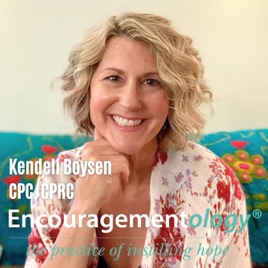
Advertise on podcast: Encouragementology
Rating
4.9from
This podcast has
101 episodes
Language
EnglishPublisher
Kendell BoysenExplicit
No
Date created
2018/11/16
Latest episode
2026/10/02
Average duration
30 min.
Release period
8 days
Description
Weekly topics covering life‘s challenges with a positive spin and a new perspective. It‘s time to connect, learn, and grow!
Unlock Encouragementology podcast Email contact info,
Listeners & Audience details
Email contact information
Direct podcast contact details

Listeners
Audience numbers & engagement insights

Audience details
Podcast Insights

Podcast episodes
Check latest episodes from Encouragementology podcast
The Beauty We Stop Noticing: Learning to See What’s Been There All Along
2026/10/02
The Beauty We Stop Noticing: Learning to See What’s Been There All Along explores what happens when the familiar becomes so familiar that we stop truly seeing it. In a world filled with movement, information, stimulation, and endless opportunities for something new, it can be surprisingly easy to overlook the ordinary beauty already woven into our lives. This episode isn’t about rejecting technology, escaping your responsibilities, or forcing yourself to slow everything down. It’s about becoming more intentional with your attention, rediscovering curiosity, and learning to look again at the people, places, routines, and simple moments that have been there all along.
Here is what we unpack together:
Why familiar things can slowly become almost invisible to us
The difference between recognizing something and truly noticing it
How our appetite for newness can compete with appreciation for what is already here
Why curiosity can be a more natural approach than forcing ourselves to “be grateful”
What Rob Walker’s The Art of Noticing teaches us about practicing attention
How Alexandra Horowitz’s On Looking reveals what we miss in familiar surroundings
A simple experiment for discovering what you’ve stopped noticing
Why we may not need a different life to experience something new
The difference between slowing down your life and slowing down your attention
How returning to the present can help us rediscover beauty in the life we’re already living
CHALLENGE: Look again. Before this day is over, notice one familiar thing as if you haven’t already decided what there is to see. Give it a few extra seconds of your attention and see what shows up. The beauty may have been there all along, just waiting for you to notice.
I Know YOU Can Do It!
The Lost Art of Paying Attention: How to Slow Down and Stay Present
2026/09/25
The Lost Art of Paying Attention: How to Slow Down and Stay Present explores what happens when our attention is constantly divided between screens, tasks, thoughts, conversations, and whatever is asking for us next. We may feel productive when we’re juggling several things at once, but are we actually experiencing any of them fully? In this episode, we look at the hidden cost of task switching, why active listening requires us to stay in someone else’s story, and how we can become more intentional about where our attention goes. This isn’t about eliminating distractions or adding another self-improvement project to your list. It’s about noticing when your attention starts to wander and remembering that you have a choice: you can follow the next thing, or you can practice the stay.
Here is what we unpack together:
Why doing several things at once can feel productive even when our attention is fragmented
The difference between multitasking and rapidly switching between tasks
What research reveals about the mental cost of repeatedly shifting our attention
Why we sometimes interrupt ourselves even when nothing external is demanding our attention
How divided attention can affect comprehension, memory, and meaningful connection
Why active listening means following someone else’s story instead of preparing our own
How reducing the competition for our attention can be more effective than simply trying harder to focus
Simple ways to practice doing one thing at a time without giving up technology
Why boredom and unfilled moments may offer something valuable instead of something to escape
How “practicing the stay” can help us become more present with our work, our experiences, and the people around us
CHALLENGE: Choose one moment this week to practice the stay. Close the extra tabs, put down the second device, let someone finish their story, or simply sit with your hands in your lap and allow one thing to be enough. Give something your full attention and notice what you experience that you might otherwise have missed.
I Know YOU Can Do It!
Emotional Contagion: Why Negativity Spreads and How to Stop Catching It
2026/09/18
Emotional Contagion: Why Negativity Spreads and How to Stop Catching It explores how easily we absorb the moods, fears, frustrations, and perspectives of the people and information around us, often without realizing it. From workplace “water cooler” conversations to headlines and social media, negativity can quickly shape the emotional temperature of our day. But becoming more aware doesn’t mean ignoring difficult realities or forcing yourself to be positive. In this episode, we look at why negative information gets our attention, how shared frustration can create connection, and how to recognize what you’re catching, carrying, and ultimately spreading to others.
Here is what we unpack together:
What emotional contagion is and how we unconsciously absorb other people’s emotions
Why negative experiences and information often capture more of our attention
How the workplace “water cooler” can turn frustration into a shared emotional experience
Why outrage, fear, and emotionally charged information can spread so quickly
The subtle social rewards that can keep negativity circulating
Why “I’m just being honest” may sometimes reveal a perspective we’ve become conditioned to see
How to tell the difference between processing frustration and recruiting others into it
Simple ways to notice what you’re catching before automatically carrying it forward
Why difficult emotions aren’t the enemy and can provide useful information
The important difference between feeling a negative emotion and continuing to feed it
CHALLENGE: Catch yourself before you catch the negativity. Notice one conversation, one headline, or one emotional exchange this week that begins pulling you somewhere you don’t want to go, and choose what you will carry forward instead. You don’t have to change the whole room. Just be responsible for what you add to it.
I Know YOU Can Do It!
🎶 Music that Moves the Message
All original music featured in this episode—including the Encouragementology intro, outro, and interludes—was written and performed by Matt Martino. His work brings warmth and emotion to every episode.
Find more of Matt’s music here:
MATT MARTINO
Spotify
iTunes
Youtube
When Helping Becomes Overstepping: Are You Helping or Holding Them Back?
2026/09/11
When Helping Becomes Overstepping: Are You Helping or Holding Them Back? explores the complicated line between supporting someone you love and unintentionally getting in the way of their growth. Helping usually comes from a good place, but what happens when our desire to fix, protect, or make life easier begins removing the very experiences someone needs to build confidence, resilience, and independence? In this episode, we look at the difference between encouragement and rescue, why watching someone struggle can be so uncomfortable, and how stepping back can sometimes be one of the most loving things we do. Because maybe the goal isn’t to remove every obstacle, but to help someone discover they have the strength to climb over it themselves.
Here is what we unpack together:
How helping can quietly cross the line into overstepping, rescuing, or enabling
The important difference between supporting someone and taking responsibility for their problem
Why struggle, problem-solving, and even mistakes can help build confidence and resilience
How Albert Bandura’s concept of self-efficacy helps explain the power of doing hard things for ourselves
Why our discomfort with someone else’s struggle can trigger the urge to step in and fix
How to ask what kind of support someone actually wants before automatically offering solutions
Why helping with the next step can be more empowering than taking over the entire journey
How healthy boundaries allow us to care deeply without becoming responsible for someone else’s choices
The surprising ways being needed can become part of the helper’s identity
Why sometimes the most encouraging message we can offer is simply, “I believe you can do this.”
CHALLENGE: Notice one place this week where your instinct is to step in and fix, and instead, pause. Ask yourself, “What kind of help would leave this person stronger?” Then have enough faith in them to give them room to take the next step.
I Know YOU Can Do It!
🎶 Music that Moves the Message
All original music featured in this episode—including the Encouragementology intro, outro, and interludes—was written and performed by Matt Martino. His work brings warmth and emotion to every episode.
Find more of Matt’s music here:
MATT MARTINO
Spotify
iTunes
Youtube
When Anger Becomes Comfortable: Are You Holding On Without Realizing It?
2026/09/04
When anger becomes comfortable, it can quietly shift from something you feel into something you carry everywhere you go. In this episode of Encouragementology, we explore the difference between experiencing anger and allowing it to become a habit, a protective layer, or even part of your identity. We’ll look at why holding on to anger can feel strangely safe, how unresolved anger can spill into unrelated relationships and everyday interactions, and why letting go doesn’t mean excusing what happened. Most importantly, this conversation offers a compassionate opportunity to recognize what your anger may be trying to tell you, what it might be costing you, and how to begin making room for something else.
Here is what we unpack together:
The difference between being angry and slowly becoming an angry person
How anger can move from an emotional response into a familiar pattern
Why replaying and rehearsing an offense can keep anger alive long after the moment has passed
How anger sometimes covers more vulnerable emotions like hurt, fear, rejection, grief, or powerlessness
Everyday signs that unresolved anger may be influencing how you interpret people and situations
How to separate what actually happened from the story you’ve attached to it
The important difference between anger that calls for action and anger that requires acceptance
Why letting go of anger does not mean excusing someone, removing accountability, or pretending something didn’t hurt
How anger can become connected to identity and why releasing it may feel more complicated than expected
Small, intentional ways to stop automatically reaching for anger and begin making room for curiosity, connection, peace, and hope
CHALLENGE: Catch yourself reaching for anger and get curious before you put it on. Ask yourself, “What is this anger doing for me, and what is it costing me?” Then make one intentional choice that creates room for something else. You’ve worn the old robe long enough.
I Know YOU Can Do It!
🎶 Music that Moves the Message
All original music featured in this episode—including the Encouragementology intro, outro, and interludes—was written and performed by Matt Martino. His work brings warmth and emotion to every episode.
Find more of Matt’s music here:
MATT MARTINO
Spotify
iTunes
Youtube
When Your Head and Heart Don’t Agree: Which One Should You Trust?
2026/08/28
When your head and heart don’t agree, which one should you trust? We’ve all had those moments when logic points clearly in one direction while something inside us pulls the other way. But what we call our “head” and “heart” may be more connected than we realize. In this episode, we explore the science behind intuition, emotion, bodily signals, and decision-making, while also looking at how our past experiences can quietly influence what feels right or wrong today. Instead of choosing between logic and emotion, we’ll learn how to listen to both, recognize where our reactions may be coming from, and make more intentional decisions rooted in our values and the person we’re becoming.
Here is what we unpack together:
Why the familiar battle between your “head” and “heart” isn’t quite as simple as logic versus emotion
How past experiences influence both conscious reasoning and emotional responses
The difference between intuition, fear, and an old protective response
What interoception is and how bodily signals can influence decision-making
Why a feeling can be completely real without being completely accurate about the present
How to separate facts, feelings, assumptions, and predictions when you’re conflicted
Why asking “What am I trying to protect?” can uncover what’s really driving a decision
How to distinguish discomfort from actual danger when you’re stretching beyond familiar patterns
Why making decisions from your values can be more reliable than waiting for complete certainty
How real self-trust means listening to yourself without automatically believing every thought or obeying every feeling
CHALLENGE: Notice the next time your head and heart disagree and resist the urge to immediately choose a side. Listen to what each is trying to tell you, ask whether it’s speaking from the present or echoing the past, and then make your choice based on what you know, what you value, and who you’re becoming.
I Know YOU Can Do It!
🎶 Music that Moves the Message
All original music featured in this episode—including the Encouragementology intro, outro, and interludes—was written and performed by Matt Martino. His work brings warmth and emotion to every episode.
Find more of Matt’s music here:
MATT MARTINO
Spotify
iTunes
Youtube
What Will Be Different Because You Were Here? Taking Ownership of Your Impact
2026/08/21
SHOW NOTES:
What Will Be Different Because You Were Here? Taking Ownership of Your Impact explores a different way to think about legacy, not as something we leave behind at the end of our lives, but as something we’re creating every day. Our words, choices, relationships, knowledge, encouragement, and even the patterns we choose to change can continue moving through other people long after the original moment has passed. In this episode, we’re looking at the difference between being remembered and making a difference, the personal responsibility we have for what we put into circulation, and how we can live more intentionally without trying to control where our influence ultimately goes.
Here is what we unpack together:
Why legacy is something we’re creating now, not something we leave someday
The difference between controlling your life and taking responsibility for your part
How psychology’s concept of generativity connects contribution with future generations
The surprising difference between wanting to be remembered and wanting to make an impact
How values, skills, encouragement, and behaviors can travel through people without us realizing it
Why not everything handed to us needs to be handed forward
How caring for your own life is connected to what you’re able to contribute to others
Why you don’t need a bigger platform to make a meaningful difference
The important distinction between taking ownership of your impact and trying to control the outcome
Why your name can disappear from the story while the good you started keeps moving
CHALLENGE: Look at one thing you have been given that is worth passing forward, and intentionally put it into circulation this week. Teach it, share it, model it, encourage it, or simply live it in a way that someone else can carry with them. Just take ownership of your part and leave something good in motion.
I Know YOU Can Do It!
🎶 Music that Moves the Message
All original music featured in this episode—including the Encouragementology intro, outro, and interludes—was written and performed by Matt Martino. His work brings warmth and emotion to every episode.
Find more of Matt’s music here:
MATT MARTINO
Spotify
iTunes
Youtube
Why Do I Keep Going Back to What Hurt Me? Breaking the Patterns That Feel Like Home
2026/08/15
SHOW NOTES:
Why Do I Keep Going Back to What Hurt Me? Breaking the Patterns That Feel Like Home explores why we can recognize that a relationship, reaction, belief, or behavior isn’t good for us and still feel strangely pulled back toward it. Sometimes what we call a comfort zone isn’t comfortable at all; it’s simply familiar. In this episode, we look at the emotional patterns that keep us returning to what we know, how past experiences can quietly become permanent identities, and why changing our lives may require becoming comfortable with not having ourselves completely figured out. Most importantly, we explore how self-awareness can help us catch an old pattern in the moment, question the story behind it, and create enough space to choose something different.
Here is what we unpack together:
Why familiar pain can sometimes feel safer than unfamiliar possibility
The difference between a comfort zone and a “familiarity zone”
How repeated experiences can quietly become beliefs about who we are
Why words like “always,” “never,” and “that’s just who I am” deserve a second look
The psychology behind our desire for consistency in how we understand ourselves
How to separate what you’re experiencing from how you define yourself
Why a new, healthier response can initially feel uncomfortable or even wrong
How self-awareness creates space between an automatic reaction and a conscious choice
The surprising question to ask before trying to eliminate an old pattern: “What has this been doing for me?”
How gathering new evidence through small choices can help you discover who you’re still becoming
CHALLENGE: Catch yourself when you start reaching for an old pattern, an old reaction, or an old definition of who you are, and before you automatically follow it, ask yourself, “Is there another way?” You don’t have to know exactly who you’re becoming or change everything at once; just give yourself permission to make one different choice and see what it teaches you.
I Know YOU Can Do It!
🎶 Music that Moves the Message
All original music featured in this episode—including the Encouragementology intro, outro, and interludes—was written and performed by Matt Martino. His work brings warmth and emotion to every episode.
Find more of Matt’s music here:
MATT MARTINO
Spotify
iTunes
Youtube
When the Ripple Returns: What the Starfish Story Never Told Us
2026/08/07
SHOW NOTES:
When the Ripple Returns: What the Starfish Story Never Told Us explores one of the most enduring motivational stories through a fresh lens. We all know the lesson of the starfish story: one person can make a difference. But what happens when that difference finds its way back to us? In this episode of Encouragementology, we talk about overcoming the feeling of helplessness, why one act of kindness is never too small, and how encouragement creates ripples we may never see. You’ll discover that changing one life isn’t a consolation prize. It may be exactly how the world changes, one person, one conversation, and one act of compassion at a time.
Here is what we unpack together:
Why the Starfish Story continues to resonate decades after it was first told.
How all-or-nothing thinking keeps us from making a meaningful difference.
The surprising power of focusing on one person instead of the whole problem.
Why awareness without action can leave us feeling helpless.
How simple acts of encouragement create ripples that continue long after we’re gone.
The role of generosity, compassion, and presence in building stronger communities.
Why we should never give with the expectation of getting something back, yet remain grateful when a ripple unexpectedly returns.
The beautiful connection between planting seeds today and blessing people we may never meet.
Practical ways to notice the “starfish” already in your everyday life.
How choosing faithfulness over visibility leads to a life of lasting significance.
CHALLENGE: Become someone’s starfish. Don’t wait until you have the time, the resources, or the perfect opportunity. Reach out, encourage someone, plant a seed of kindness, and then release it without needing to know where the ripple will go. And if one day that ripple finds its way back to you, receive it as a beautiful reminder to keep planting, keep encouraging, and keep believing that one person is enough.
I Know YOU Can Do It!
🎶 Music that Moves the Message
All original music featured in this episode—including the Encouragementology intro, outro, and interludes—was written and performed by Matt Martino. His work brings warmth and emotion to every episode.
Find more of Matt’s music here:
MATT MARTINO
Spotify
iTunes
Youtube
Why Do I Feel Off Even When Everything Looks Fine?
2026/07/30
SHOW NOTES:
Why do I feel off even when everything looks fine? If you’ve ever asked yourself that question, you’re not alone. Sometimes life appears to be going well on the outside, yet something inside feels unsettled. In this episode of Encouragementology, we explore why that disconnect happens and how comparison, unrealistic expectations, emotional misalignment, and the stories we tell ourselves can quietly shape our perspective. Instead of assuming something is wrong, you’ll learn how to pause, investigate your feelings with curiosity, and reconnect with what’s actually true. This conversation will help you stop chasing someone else’s version of “enough” and start appreciating the ordinary moments that often become the most meaningful parts of a well-lived life.
Here is what we unpack together:
Why feeling “off” doesn’t automatically mean something is wrong with your life.
The difference between emotions that inform us and emotions that mislead us.
How the arrival fallacy keeps moving the finish line for happiness.
Why social comparison makes us feel like we’re missing out, even when we’re not.
A simple personal inventory to help separate facts from interpretations.
How to identify whether you’re chasing an object or the emotion you hope it will provide.
Practical ways to reconnect with what’s true before making major life changes.
Why we’ve lost the ability to appreciate ordinary life and how to reclaim it.
The surprising freedom that comes from questioning the stories your mind creates.
How curiosity, discernment, and gratitude can help you find peace without changing your circumstances.
CHALLENGE: Become a detective instead of a critic. When that quiet feeling tells you something is missing, don’t rush to change your life. Pause, get curious, and ask yourself what story you’re believing and whether it’s actually true. You may discover that the peace you’ve been searching for wasn’t waiting somewhere else…it was waiting for you to see your life with clearer eyes.
I Know YOU Can Do It!
🎶 Music that Moves the Message
All original music featured in this episode—including the Encouragementology intro, outro, and interludes—was written and performed by Matt Martino. His work brings warmth and emotion to every episode.
Find more of Matt’s music here:
MATT MARTINO
Spotify
iTunes
Youtube
The Two Things You Can Control: Your Inner World and Your Outer Influence
2026/07/24
SHOW NOTES:
The Two Things You Can Control: Your Inner World and Your Outer Influence explores one of life’s most freeing truths: while we can’t control every thought that enters our minds or every outcome that follows our actions, we can choose what we welcome into our hearts and what we release into the world. In this episode, we’ll discover how living with greater intentionality can quiet mental clutter, strengthen our relationships, and remind us of the incredible influence we possess every single day. If you’ve been feeling overwhelmed by circumstances beyond your control, this conversation offers a fresh perspective on where your true power begins.
Here is what we unpack together:
Why trying to control everything often leaves us mentally and emotionally exhausted.
The powerful image of the “two gates” and how it can transform your daily perspective.
How to let difficult thoughts pass like clouds instead of allowing them to take up residence in your mind.
The difference between noticing a thought and believing a thought.
Why every word, attitude, and action becomes the first link in a chain of influence.
Insights from Acceptance and Commitment Therapy, Viktor Frankl, and James Clear on choice, attention, and intentional living.
Four practical ways to become more intentional with both your inner world and your outward influence.
The surprising difference between protecting your peace and producing peace.
How small, everyday choices shape not only your experience but also the lives of those around you.
A reflective devotional and weekly challenge to help you practice intentionality at both gates.
Remember: You may not control every cloud that drifts overhead or every link that follows your actions, but you always have the power to choose what you welcome in and what you send back out.
CHALLENGE: Pause at both gates. Before you give a thought permission to stay, ask if it deserves your attention. Before you offer a word or reaction to someone else, ask if it’s the first link you want to place in the chain. Remember, your greatest influence isn’t found in controlling everything around you, but in being intentional with what begins within you.
I Know YOU Can Do It!
🎶 Music that Moves the Message
All original music featured in this episode—including the Encouragementology intro, outro, and interludes—was written and performed by Matt Martino. His work brings warmth and emotion to every episode.
Find more of Matt’s music here:
MATT MARTINO
Spotify
iTunes
Youtube
The Stories You Keep Telling Yourself: And Why They Become Your Identity
2026/07/18
Show Notes
The Stories You Keep Telling Yourself: And Why They Become Your Identity explores the quiet conversations we have with ourselves every day and how those repeated thoughts can shape the way we see our potential, our purpose, and our future. If you’ve ever caught yourself saying, “I’m just not…” or “I always…”, this episode will help you recognize the difference between a temporary experience and a permanent identity. Together, we’ll uncover why our brains cling to familiar stories, how those stories influence our choices, and how small shifts in language can open the door to lasting growth and hope.
Here is what we unpack together:
How everyday self-talk quietly becomes the foundation of our identity.
The difference between describing an experience and defining yourself by it.
Why your brain naturally looks for evidence to support the stories you repeat.
How confirmation bias and negativity bias can keep you stuck in limiting beliefs.
The surprising power of one small word: “yet.”
A simple self-evaluation to uncover the hidden labels you’ve been carrying.
Four practical ways to interrupt old narratives and create room for growth.
Why telling the whole story, not just the painful chapters, leads to a healthier perspective.
How to replace criticism with curiosity and become a more compassionate narrator of your own life.
A reflective devotional and practical challenge to help you begin rewriting the story you tell yourself every day.
Remember: Your hardest chapter may explain part of your story, but it was never meant to become your name.
CHALLENGE: Catch just one story you keep telling yourself and ask, “Is this really who I am… or is this simply what I’ve been repeating?” Replace that old label with one sentence that leaves room for growth, and see how it changes the way you move through your day.
I Know YOU Can Do It!
🎶 Music that Moves the Message
All original music featured in this episode—including the Encouragementology intro, outro, and interludes—was written and performed by Matt Martino. His work brings warmth and emotion to every episode.
Find more of Matt’s music here:
MATT MARTINO
Spotify
iTunes
Youtube
Are You Living Life or Producing It?
2026/07/10
SHOW NOTES: Are You Living Life or Producing It?
Living Life or Producing It? Why Some Moments Are Meant to Be Lived, Not Posted explores a question many of us don’t stop to ask: Are we experiencing life as it unfolds, or are we evaluating it for its shareability? In this episode of Encouragementology, we examine how our relationship with technology, attention, and validation may be quietly shaping the way we experience our days. This isn’t a conversation about abandoning social media. It’s an invitation to become more intentional, protect your capacity for wonder, and rediscover the richness of moments that don’t require an audience to be meaningful.
Here is what we unpack together:
The subtle difference between living a life and producing one.
How our attention shapes our memories more than we realize.
Why documenting every moment can sometimes diminish our experience of it.
What research reveals about memory, presence, and digital distraction.
The difference between seeking genuine connection and seeking validation.
Why some of life’s most meaningful moments are never shared online.
How private experiences can deepen gratitude, identity, and personal growth.
Practical ways to become more intentional before reaching for your phone.
The importance of protecting your capacity for wonder in a world competing for your attention.
A simple question that can transform the way you experience each day: “Am I living this moment…or am I producing it?”
CHALLENGE: Protect your capacity for wonder by giving your full attention to one ordinary moment every day. Remember, a meaningful life isn’t measured by how many people see it, but by how fully you live it.
I Know YOU Can Do It!
🎶 Music that Moves the Message
All original music featured in this episode—including the Encouragementology intro, outro, and interludes—was written and performed by Matt Martino. His work brings warmth and emotion to every episode.
Find more of Matt’s music here:
MATT MARTINO
Spotify
iTunes
Youtube
What if You Need More, Not Less: The Mindset Shift that Makes Healthy Habits Last
2026/07/03
SHOW NOTES:
What if You Need More, Not Less: The Mindset Shift That Makes Healthy Habits Last explores a simple question with life-changing implications: Are we spending so much energy trying to eliminate what’s unhealthy that we’ve forgotten to cultivate what truly nourishes us? In this episode, we move beyond dieting to examine how the same mindset affects our relationships, emotional well-being, finances, faith, and personal growth. Together, we’ll discover why lasting habits aren’t built through deprivation but through intentionally adding more of what helps us flourish, mind, body, spirit, and connection.
Here is what we unpack together:
Why discipline and deprivation are not the same thing, and why confusing them can keep us stuck.
The surprising power of asking, “What do I need more of?” instead of “What do I need less of?”
How focusing on nourishment creates healthier, more sustainable habits than relying on restriction alone.
Insights from habit experts about why lasting change comes from identity, environment, and small, consistent choices.
A simple coaching exercise that helps you shift from problem-focused thinking to possibility-focused living.
Four practical mindset shifts that can transform the way you approach health, relationships, productivity, and personal growth.
The “B-Side” perspective: why saying “yes” to what gives life can be more powerful than constantly saying “no.”
A memorable garden story that illustrates the difference between pulling weeds and intentionally planting flowers.
A gentle devotional reflection on staying connected to the people, practices, and values that nourish your life.
A practical challenge to identify one area where you can intentionally cultivate more of what helps you thrive this week.
CHALLENGE: Don’t begin by asking, “What do I need less of?” Instead, ask yourself, “What do I need more of?” Remember, lasting change isn’t built by emptying your life. It’s built by filling your life with what helps you flourish.
I Know YOU Can Do It!
🎶 Music that Moves the Message
All original music featured in this episode—including the Encouragementology intro, outro, and interludes—was written and performed by Matt Martino. His work brings warmth and emotion to every episode.
Find more of Matt’s music here:
MATT MARTINO
Spotify
iTunes
Youtube
Is This It? Rethinking Success, Discontent, and the Midlife Audit
2026/06/25
SHOW NOTES
Is This It? Rethinking Success, Discontent, and the Midlife Audit explores the quiet questions many of us face when we pause long enough to evaluate our lives. While the phrase “midlife crisis” often brings to mind dramatic life changes, this episode offers a different perspective. What if what we’re experiencing isn’t a crisis at all, but a thoughtful audit? Together, we examine where feelings of discontent come from, how we’ve learned to measure success, and why many of us are using scorecards that no longer reflect what truly matters. This conversation invites you to look beyond comparison, reconsider your definition of success, and find greater appreciation for the life you’re already living while intentionally shaping the chapters still ahead.
Here is what we unpack together:
Why a “midlife audit” is often a healthier way to view periods of reflection and discontent
How comparison and inherited expectations quietly shape our definition of success
The difference between achievement and fulfillment, and why they don’t always travel together
What happiness research reveals about the natural questions that emerge during middle chapters of life
How the “arrival fallacy” keeps us believing satisfaction exists just beyond the next milestone
Why many people evaluate themselves using standards they never consciously chose
The importance of looking at the whole picture instead of defining life by one area of disappointment
How updating your personal scorecard can create greater alignment between your values and your daily life
Why discontent isn’t always a problem to solve and may actually be valuable information
A simple story about a gardener that reminds us not to overlook everything that’s flourishing while focusing on what feels unfinished
Download the free 5-Day Journaling Companion to continue your own Midlife Audit and explore the questions raised in this episode.
CHALLENGE: Conduct your own midlife audit this week. Take an honest look at the scorecard you’ve been using and ask yourself whether it still reflects what matters most. Notice the areas where you’ve been measuring yourself too harshly. Pay attention to the parts of your life that are quietly flourishing. Then decide what deserves your energy moving forward.
I Know YOU Can Do It!
🎶 Music that Moves the Message
All original music featured in this episode—including the Encouragementology intro, outro, and interludes—was written and performed by Matt Martino. His work brings warmth and emotion to every episode.
Find more of Matt’s music here:
MATT MARTINO
Spotify
iTunes
Youtube
Podcast reviews
Read Encouragementology podcast reviews
M7k777 2023/02/14
Everyone Needs Kendall in their Life!
Kendall’s messages are uplifting and inspiring. Her wisdom and understanding abound! Thank you for being a consistently encouraging voice!
Cynthia Busch 2020/02/10
Wise Tools for Self-Improvement
Delivered with dynamic energy and humor, Kendall's thoughts and sage advice do not disappoint! She is relevant and focused on using the lessons she ha...
S. Williems 2020/02/09
The Perfect Pick-Me-Up
Always enjoyable and light but still poignant and helpful. Kendall is easy to listen to and makes sense of challenges we all face daily but usually ov...
Podcast sponsorship advertising
Start advertising on Encouragementology relevant audience podcasts
You may also like to advertise on these Podcasts

4.712974372
The Tim Dillon Show
The Tim Dillon Show

4.115911450
The Tucker Carlson Show
Tucker Carlson Network

4.827973446
Huberman Lab
Scicomm Media

4.240683
To Be The Man
Podcast Heat | Cumulus Podcast Network

4.41511152000
The Ben Shapiro Show
The Daily Wire

4.2155648
TENNIS.com Podcast
TENNIS.com Podcast/Tennis Channel Podcast Network
4.510815766
The Joe Budden Podcast
The Joe Budden Network
4.611603506
The Bulwark Podcast
The Bulwark

4.711443386
Matt and Shane's Secret Podcast
Matt McCusker & Shane Gillis

4.82479176
Smosh Reads Reddit Stories
Smosh