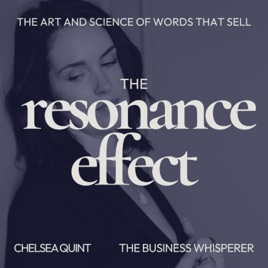
Advertise on podcast: The Resonance Effect: The art and psychology behind words that sell
Rating
5from
This podcast has
146 episodes
Language
EnglishExplicit
Yes
Date created
2018/12/30
Latest episode
2026/04/20
Average duration
45 min.
Release period
7 days
Description
You want to grow bigger, but honestly? Most advice about scaling feels like garbage... I’m Chelsea Quint, a writer and strategist obsessed with what actually makes people buy and fall in love with your work. On this show: messaging that brings in new clients consistently, sales psychology that converts without feeling manipulative, and how to become the voice your people can’t imagine living without. Expect real client breakdowns, live coaching, and frameworks for growth that actually feels sustainable, so you can build something profitable and human. [CLAIM:GSE8P25F]
Unlock The Resonance Effect: The art and psychology behind words that sell podcast Email contact info,
Listeners & Audience details
Email contact information
Direct podcast contact details

Listeners
Audience numbers & engagement insights

Audience details
Podcast Insights

Podcast episodes
Check latest episodes from The Resonance Effect: The art and psychology behind words that sell podcast
How to Sell Out Your Q2 Offers (Steal My Sales Campaign Strategy)
2026/04/20
EPISODE SUMMARY
Most founders plan their sales campaigns backwards. They start with "what should I post?" and "should I do a webinar?" before they've made a single strategic decision that would actually make those questions easy to answer.
This episode is the second installment in Chelsea's quarterly campaign planning series, and it goes deeper than Q1. You'll get the full process Chelsea uses with her own clients to map out a quarter of selling, from gathering data as both the artist and the strategist, to sequencing content across the buyer journey, to giving every platform a specific job so you stop second-guessing what goes where.
If you've ever stared at a blank content calendar wondering what you're supposed to be talking about this month, this is the episode that fixes that.
IN THIS EPISODE YOU'LL LEARN...
Why starting your campaign planning with "what should I post" almost guarantees decision fatigue and scattered resultsHow to think about your offer planning through two distinct lenses: you as the artist, and your ideal customer as your museThe three layers of data to gather from yourself before you map a single campaignWhy knowing what's actually happening in your people's lives in April, May, and June changes everything about how you position and sellWhat a seasonally relevant angle actually is, and how to use it to frame any offer at any time of yearHow to map what your people need to know, believe, and experience at each stage of the buyer journeyThe four campaign phases (orientation, invitation, decision, and integration) and how long to spend in eachWhy the waterfall method of content creation removes most of the day-to-day decision fatigue
KEY TAKEAWAYS AND CONCEPTS
Start with yourself, then your muse. Before you map a single campaign, gather data from two directions. First, you as the artist and founder, then, your ideal customer as your muse: what is specifically happening in their life in April, May, and June that shapes what they need, what they're worried about, and what they're ready to buy.Give every platform a single job.Every quarter, deliberately choose three platform types and assign each one a role. A visibility platform where new people find you. A trust and authority platform (usually long-form) where they can experience how you think. A sales-forward platform where you're actively making offers and moving people toward decisions. Map the buyer journey before you map the content. For each stage of awareness (problem unaware through decision-ready) ask: what does someone need to know, believe, or experience to move one step closer? That map becomes your content calendar. The waterfall method. Choose your primary platform and set all the topics there first. Then let the content waterfall down into your other channels, adapted for each platform's specific job. If email is your sales channel, start there. If it's your podcast, start there. Stop creating in all directions at once.
RESOURCES MENTIONED
How to Sell Out Your Q1 Offers (Part One of this series)Give Every Platform a Job (episode on choosing your marketing ecosystem)
WORK WITH CHELSEA
The Empathy Edge (1:1 Fractional CMO Retainer)
Your signature offers deserve more than word-of-mouth and make or break launches. Build a human-first sales system that balances strategy and nervous system safety. Learn to sell on evergreen, simplify your campaigns, and stay consistent, without launch stress or relying on referrals.
→ Learn More
Say Less Sales Campaign Sprint
A one-week sprint to fix stagnant or plateaued sales with emotionally intelligent, conversion-ready messaging that speaks to strangers, not just referrals.
→ Book a Sprint
Marked Up Copy Audit
Get detailed, personalized feedback on your sales page or email sequence so you can see exactly what’s working, what’s not, and what to say next.
→ Book an Audit
How to Get More Sales From the Content You're Already Publishing
2026/04/17
EPISODE SUMMARY
You're posting. You're emailing. You're showing up. And the sales still aren't moving the way you want them to.
Before you overhaul your offer, your platform, or your entire strategy, Chelsea wants you to check three things. In this solo episode, she walks through the Three S's framework, a quick audit you can run on any piece of content to find out why it's not converting, and what to do about it.
IN THIS EPISODE YOU'LL LEARN...
Why "salesy" has been unfairly demonized, and what it actually means to sell with directness and integrityHow to audit your own content and finally spot where you're softening, hedging, or talking around the thing you're trying to sellWhy specificity is what separates content that builds real trust from content that could have been written by anyone (including an AI)How sensory detail makes your writing feel human and alive, and why it's also the fastest shortcut to making your content more specificWhat it actually looks like when content's job is visibility versus conversion, and how to know the differenceWhy most founders are significantly less salesy than they think, even when it feels like they're being too pushyKEY TAKEAWAYS AND CONCEPTS
The Three S's FrameworkWhen your marketing is happening but sales feel slow, audit your content for these three qualities before changing anything else.
S1: SalesyNot the used-car-salesman version. Chelsea's definition: being direct and clear as you fill gaps, solve problems, and give people enough information to decide where they want to invest their time and money. If someone read only this one email, would they know you have an offer? Would they know what it does, who it's for, and how to take the next step? If not, it's not salesy enough.S2: SpecificVague content can be produced by anyone. Specific content, the kind that names what your people are actually experiencing, what they're clicking on, losing sleep over, or telling themselves at 11pm, builds the kind of trust that turns readers into buyers. Specificity is also what makes you memorable in a noisy market.S3: SensoryWeaving in what your reader sees, hears, smells, tastes, or feels (physically and emotionally) in the context of the problem you solve makes writing feel human. It's also, not coincidentally, what naturally makes content more specific. Focus on sensory detail and you often get both S's covered at once.Not every piece of content is supposed to sell. Some content's job is visibility, or trust, or getting someone to go deeper with you elsewhere. The Three S's still apply, but "salesy" in that context means being clear about what you're offering and why someone should want it, even if that offer is a podcast episode, a free resource, or a DM conversation.
Emotional Scheduling
HOW TO USE THIS IN YOUR BUSINESS THIS WEEK
Pull the last two to four weeks of content you've published (emails especially)For each piece, ask: if this was the only thing someone ever read from me, would they know I have an offer and what to do next?Flag anywhere you softened a CTA, buried the point, or made it genuinely unclear that you're selling somethingChoose one piece to rewrite with all three S's dialed up, and compare the before and afterWORK WITH CHELSEA
Marked Up Copy Audit
Get detailed, personalized feedback on your sales page or email sequence so you can see exactly what’s working, what’s not, and what to say next.
→ Book an Audit
The Empathy Edge (1:1 Fractional CMO Retainer)
Your signature offers deserve more than word-of-mouth and make or break launches. Build a human-first sales system that balances strategy and nervous system safety. Learn to sell on evergreen, simplify your campaigns, and stay consistent, without launch stress or relying on referrals.
→ Learn More
Say Less Sales Campaign Sprint
A one-week sprint to fix stagnant or plateaued sales with emotionally intelligent, conversion-ready messaging that speaks to strangers, not just referrals.
→ Book a Sprint
The Social Media Optional Business Owner's Guide to Instagram with KP of Jupiter Content Co.
2026/04/10
EPISODE OVERVIEW
This is the final episode of The Long Game series, and it's a fitting one. Chelsea brings in KP of Jupiter Content Co., an editorial content strategist, to close out the conversation with something most business owners resist thinking about: what actually happens to social media once you've committed to longer-form, higher-leverage marketing channels.
This episode is for founders who are already questioning whether their relationship with social media is working for them or against them, and who want a more intentional framework for what stays, what shifts, and what their platforms actually need to do. If you've been treating Instagram like a content treadmill, this conversation offers a different way to think about it entirely.
IN THIS EPISODE YOU'LL LEARN...
Why social media stays at the top of most business owners' priority lists even when it's clearly not the highest-leverage use of their timeThe difference between editorial strategy and social media strategy, and why conflating them keeps you stuck in reactive content modeWhat the "nine grid" approach to Instagram actually means, and how to use it as a static, always-working brand asset rather than a live content feedThe four things any service-based business needs to communicate on their Instagram profile, whether they're actively posting or notHow to think about values-based content without it feeling like a cornball manifesto or a list of diversity buzzwordsWhat "shit posting" actually means, why it works, and why forcing it usually backfiresHow long-form platforms create a Rube Goldberg effect in your marketing ecosystem, where touchpoints compound in ways you can't always trace but can absolutely engineerKEY TAKEAWAYS AND CONCEPTS
Social media is a tool. Most business owners are in a relationship with social media where the platform is using them more than they're using it. The shift this episode makes a case for isn't abandoning social entirely, it's consciously deciding what job you're actually asking it to do.Your nine grid is a permanent introduction, not a content calendar. KP makes a distinction that's easy to miss: your Instagram profile should function like a bulletin board that works even when you haven't posted in months. Who you are, what you do, your values, your personality, and how someone pays you. If those five things aren't legible in under a minute, the profile isn't doing its job.Editorial thinking is what makes every platform easier. When you're clear on what you actually have to say, the platform question becomes a matter of optimization, not reinvention. You're not starting from scratch for each channel. You're taking your thesis and adjusting how it's expressed. That's what makes building a content ecosystem feel sustainable instead of like you're feeding four different beasts.The long game works because it compounds in non-linear ways. A blog post from two years ago, a podcast guest spot, a pinned Instagram post, and a referral from a client can all converge at once to create a "yes." You rarely get to see the full Rube Goldberg machine in action, but you can build one deliberately. That's the entire point of investing in channels with longer content lifecycles.Personality content is often less about relatability and more about trust signals. When someone is deciding whether to hire you, especially for a high-touch service, they're trying to understand how you think and whether your worldview lines up with theirs. Slice-of-life content, stray observations, what you're reading, how you describe your work at a party: all of it feeds that decision in ways that purely educational or promotional content can't.CONNECT WITH KP
InstagramThreadsNine grid strategy and Content Constellation "Should you do a nine grid?" quiz
How to Turn Podcast Interviews Into Your Next Wave of Clients with Natalie Koussa
2026/04/03
EPISODE OVERVIEW
Chelsea is joined by podcast guesting strategist Natalie Koussa for a conversation about what it really looks like to use podcast guesting as a strategic, repeatable way to grow your audience and get clients.
Together, they unpack why so many founders keep putting podcast guesting off, what actually makes it work beyond “just getting booked,” and how to turn borrowed audiences into real trust, leads, and sales.
This episode is especially helpful for anyone who has tried podcast guesting before and didn’t see results, has been meaning to start but hasn’t followed through, or wants a more sustainable way to grow their audience without relying on constant content creation.
IN THIS EPISODE YOU'LL LEARN...
Why podcast guesting keeps getting pushed to the bottom of the to do listThe difference between visibility and actually converting listeners into clientsWhat “borrowing other people’s audiences” really means in practiceWhy podcast guesting builds trust faster than most other marketing channelsHow to think about podcast guesting as both a short term and long term strategyWhat makes a podcast pitch stand out and actually get acceptedHow to structure your interviews so listeners can connect the dots back to your workWhy most people don’t get results from podcast guesting (and how to fix it)What to offer as a next step so listeners actually move closer to working with youHow to turn podcast appearances into ongoing assets inside your sales ecosystemKEY TAKEAWAYS AND CONCEPTS
Podcast guesting is not just about visibility: Being featured on a podcast does not automatically translate into leads or clients. The real leverage comes from how intentionally you connect your message, your offer, and your next step inside the conversation.Trust is built faster in long form spaces: Podcast listeners are choosing to spend extended time with you, often in focused, habitual ways. This creates a level of familiarity and trust that is difficult to replicate with short form content alone.You are speaking to someone else’s audience, not promoting yourself: The most effective podcast pitches and interviews are framed around what the host’s audience will care about, not your credentials or your offer. Relevance and clarity matter more than positioning yourself as impressive.Your topic needs to connect directly to your work: A great conversation is not enough. If listeners cannot easily understand how what you are saying relates to what you sell, they are far less likely to take the next step.A strong next step is essential: Whether it is a private podcast, a lead magnet, or a direct invitation, listeners need a clear and compelling way to move closer to you. Without it, even a great interview often ends in passive awareness instead of action.Podcast guesting compounds over time: Each interview can continue bringing in new people for months, sometimes over a year. When those interviews are reused inside your email sequences and sales ecosystem, their value extends even further.
CONNECT WITH NATALIE KOUSSA
Private Podcast: Profitable Podcast Guest (free training on turning podcast interviews into clients)Trust Tour: Natalie’s done-with-you podcast tour experienceInstagramThreads
6 Things I Did to Book Out My Services Without Paid Ads, a Big Audience, or a Single Launch
2026/03/30
EPISODE SUMMARY
Someone asked Chelsea a question at a networking event that she couldn't stop thinking about: what actually changed to make your business this busy? This episode is her answer.
In the last nine to twelve months, Chelsea went from rebuilding her offer suite from scratch to a full pipeline, consistent weekly leads, and booked out services across multiple offers, all without paid ads, a large audience, or a single traditional launch. This solo episode breaks down exactly what she did, the specific decisions, the things she stopped doing, and the one stretch where she had a full month of zero sales and kept going anyway. If your business feels like it's running on friction, scattered energy, or the constant pressure to do more, this one is worth your full attention.
IN THIS EPISODE YOU'LL LEARN...
Why giving each marketing channel a single, specific job changes what you talk about and how you show up on every platform
How Chelsea finally broke up with Instagram strategically instead of impulsively, and what she put in place before she left
Why cleaning up your offer suite is only half the work, and what the other half (positioning and offer promise) actually requires
What campaign-style selling is, how it differs from launching or evergreen, and why it works especially well for founders who need novelty to stay consistent
How Chelsea handled a full month of zero sales without pivoting, and what she was telling herself to keep going
Why pricing low on purpose is a legitimate testing strategy, as long as you know your resentment threshold and have planned increases built in
The difference between quitting something because you hate it and quitting something because it's not the right fit for your ecosystem right now
Why leads don't have to be high volume to be healthy, and what a full pipeline actually looks like at a small audience size
KEY TAKEAWAYS AND CONCEPTS
Giving platforms a job makes strategy easier, not more restrictive. When Chelsea defined one channel for visibility, one for trust-building, and one for sales, everything else got simpler. What to say, how often to show up, and what results to expect from each platform stopped being guesswork.Resistance to pivoting is a skill. The hardest season of building any new offer is the one where you have no data yet. Chelsea had a month with no sales while actively selling. She stayed with it. Campaign-style selling works because it gives repetition a new frame. Selling the same offer across twelve months doesn't have to feel like saying the same thing over and over. Each campaign is built around what your buyer is experiencing right now, which changes how you talk about the offer even when the offer itself hasn't changed.Competitive pricing is a strategy, not a discount. Starting low with planned increases isn't a gimmick when it's grounded in real capacity, a clear resentment threshold, and a genuine intention to test and iterate. The urgency it creates is real because the constraint is real.A healthy business ecosystem can lose a limb and survive. That's how Chelsea knows it's working, not just the revenue or the leads, but the fact that no single channel, offer, or client relationship is holding the whole thing together.WORK WITH CHELSEA
The Empathy Edge (1:1 Fractional CMO Retainer)
Your signature offers deserve more than word-of-mouth and make or break launches. Build a human-first sales system that balances strategy and nervous system safety. Learn to sell on evergreen, simplify your campaigns, and stay consistent, without launch stress or relying on referrals.
→ Learn More
Say Less Sales Campaign Sprint
A one-week sprint to fix stagnant or plateaued sales with emotionally intelligent, conversion-ready messaging that speaks to strangers, not just referrals.
→ Book a Sprint
Marked Up Copy Audit
Get detailed, personalized feedback on your sales page or email sequence so you can see exactly what’s working, what’s not, and what to say next.
→ Book an Audit
How to Build a Brand People Crave in an “Unsexy” Industry
2026/03/27
EPISODE SUMMARY
Chelsea is joined by Meaghan, founder of Hot Girl CFO, for a conversation about identity, positioning, and what it really takes to sell financial services in a way that feels distinct, desirable, and deeply human.
This episode starts as a behind the scenes look at Meaghan’s experience inside Chelsea’s messaging sprint, specifically around the evolution of her CFO Snack offer. But the conversation quickly opens into something bigger: how founders grow into new identities, how service providers position themselves for the next level of business, and why finance is one of the most emotionally loaded and under-marketed categories in online business.
Together, Chelsea and Meaghan talk about why so many brilliant financial professionals struggle to communicate the real transformation they offer, how Megan’s brand evolved into something unforgettable, and why messaging work often matters even before an offer is fully launched or actively sold.
This is a rich conversation about aspiration, business building, money, self-concept, and the very real power of being supported by someone who can make finance feel safer, sexier, and more strategic.
IN THIS EPISODE YOU’LL LEARN…
Why Chelsea wanted to bring past sprint clients onto the podcastHow Meaghan evolved the CFO Snack from a simpler call-based offer into a much more premium conceptWhat it looks like to raise the price of an offer dramatically and reposition it for a different buyerWhy messaging work can still be valuable even if an offer gets paused or put on the back burnerHow Meaghan uses her Cravings Index to gauge market demand and internal resonance before building offersWhy financial professionals often undersell the true transformation of their workThe difference between selling deliverables versus selling the lived experience and outcomeHow identity shifts show up when founders move from freelancer energy into company-building energyWhy money shame and money trauma affect people across every background, including wealthy ones
KEY TAKEAWAYS AND CONCEPTS
Messaging work is not wasted just because an offer is paused.
The process of clarifying an offer can still give a founder language, confidence, positioning, and a stronger sense of who they are becoming. That can shape future offers, future launches, and the business as a whole.
Positioning matters even more in “unsexy” industries.
Bookkeeping, taxes, and finance support are often marketed in flat, functional ways. Meaghan's work stands out because she has built a brand that is emotionally resonant, memorable, and aspirational without losing strategic credibility.
Financial support is about far more than clean books.
Many founders do not realize what questions they can ask their financial professionals or how much strategic support is available. This conversation names the gap between what a service technically includes and what a client emotionally understands they are allowed to receive.
Founders have to decide what kind of business they actually want.
Not everyone wants to build a company. Not everyone wants to scale. But if someone does want growth, visibility, and broader impact, that usually requires new offers, stronger infrastructure, and a different relationship to leadership.
Money stories are never just about numbers.
This episode makes space for the emotional realities of wealth, shame, inheritance, aspiration, and self-worth. Money mindset is not reserved for one class of people. Everyone brings beliefs and emotional residue into the room.
Connect with Meaghan, founder of Hot Girl CFO, on:
Instagram
Threads
Website
Join the FinSalon
How to Turn YouTube Into a Low-Lift Lead Generation Channel with Jamar Diggs
2026/03/20
EPISODE OVERVIEW
Chelsea sits down with YouTube consultant Jamar Diggs to talk about why so many business owners keep putting off starting a YouTube channel and what it actually looks like to use YouTube in a sustainable, strategic way.
Together, they unpack the biggest misconceptions people have about YouTube, why the influencer blueprint is often the wrong one for coaches, consultants, and service providers, and how to approach the platform with a lower lift strategy that is built for lead generation, not just views.
This episode is especially helpful for anyone who has wanted to start a YouTube channel for years, has a dead channel they have not touched in a while, or has been wondering whether their podcast videos should just live on YouTube too.
IN THIS EPISODE YOU’LL LEARN…
Why YouTube keeps ending up at the bottom of so many founders’ to do listsThe difference between using YouTube like a business owner versus a content creatorHow Jamar helps clients use YouTube as a lead generation system in about four to five hours a monthWhy your YouTube strategy needs a lead magnet and a real next stepWhat metrics actually matter on YouTube if your goal is leads, not AdSenseWhy podcast content and YouTube content are not always interchangeableHow to think about YouTube as an attraction platform inside your broader marketing ecosystemThe simplest place to start if you are reviving a dead channel or starting from scratchThe most common mistakes people make when they finally start posting
KEY TAKEAWAYS AND CONCEPTS
YouTube is not just for content creators: Business owners do not need to use the same blueprint as influencers or celebrity entrepreneurs. The goal is not to maximize watch time for its own sake. The goal is to create strategic video assets that help strangers move closer to becoming leads and clients.Low lift does not mean low strategy: Jamar teaches a YouTube approach that only requires a few hours a month, but that does not mean it is casual. The strategy still relies on thoughtful topics, clear calls to action, and understanding what people need to hear before they are ready to take the next step.Views are not enough: Looking at views alone will not tell the full story. Click through rate, average viewer duration, how many people move from the video to the landing page, and how well the landing page converts all matter if the actual goal is lead generation.YouTube works best when it is part of a bigger system: This episode reinforces the idea that YouTube can be a powerful attraction platform, but it works even better when paired with email and a community based platform where people can continue building trust with you.Frequently asked questions are a smart place to start: If someone is overwhelmed by the idea of content strategy, Jamar recommends beginning with videos that answer the questions clients and prospects already ask all the time. That creates a practical foundation and helps YouTube understand what the channel is about.
CONNECT WITH JAMAR DIGGS
Low Lift Leads: Jamar’s free YouTube class on how busy entrepreneurs are using YouTube to generate leads without selling their soul to the algorithmLow Lift Club: Jamar’s membership and consulting support for business owners who want to launch or revive their YouTube channels with a lower lift strategyYouTube Starter Kit: a lower cost resource for people who want help optimizing and setting up their channels.YouTubeThreadsInstagramWebsite
How to Hit Your Highest Sales Months with Email Marketing
2026/03/06
This is part of The Long Game series on The Resonance Effect — conversations about the “boring” marketing channels that quietly build stability, authority, and sales over time.
Episode Overview
Email is one of the most make-or-break channels in my business.
In this episode, I’m joined by Kirsten Roldan (creator of Million Dollar Email) to talk about why email is still the most reliable sales engine for service-based businesses, especially in a world where social platforms change constantly and AI is making content easier to churn out.
We get into what it actually looks like to start (or restart) email in a way that’s sustainable, sales-forward, and genuinely helpful.
In This Episode You’ll Learn…
Why email is still the highest-performing marketing channel across industries
What to do if you have no list yet vs. a list you’ve been under-using
How quickly email can start working (including Kirsten’s “two subscribers” story)
Why “warming people up” can backfire and what to do instead
How to sell in a way that feels useful, not pushy
The difference between “how-to teaching” and sharing what people need to know so they can make a decision
What actually makes people run out of email ideas (and how to fix it)
Key Takeaways and Concepts
Email is low-lift in a way social isn’t. The user behavior is different: email is built for opening, reading, clicking, replying.
You can sell immediately. Not after 6 weeks of nurturing. Not after “warming them up.” Immediately.
Selling is value when it answers real questions. If your sales content makes decisions easier, it’s not annoying. It’s helpful.
You don’t need to give away the entire “how.” Share the what, name the framework/solution, and invite them into the implementation with you.
WHERE TO FIND KIRSTEN
Free Webinar: How to 2X Your Email List and Hit Your Highest Sales Month Join Million Dollar Email after March 17 2026Instagram
WORK WITH CHELSEA
The Empathy Edge (1:1 Fractional CMO Retainer)
Your signature offers deserve more than word-of-mouth and make or break launches. Build a human-first sales system that balances strategy and nervous system safety. Learn to sell on evergreen, simplify your campaigns, and stay consistent, without launch stress or relying on referrals.
→ Learn More
Say Less Sales Campaign Sprint
A one-week sprint to fix stagnant or plateaued sales with emotionally intelligent, conversion-ready messaging that speaks to strangers, not just referrals.
→ Book a Sprint
Marked Up Copy Audit
Get detailed, personalized feedback on your sales page or email sequence so you can see exactly what’s working, what’s not, and what to say next.
→ Book an Audit
How to Get Steady Visibility Without Posting Every Day (aka Pinterest magic with Meagan Williamson)
2026/02/27
EPISODE OVERVIEW
Pinterest often gets dismissed as a DIY or lifestyle platform — but for service providers, it can be a powerful search engine that works quietly in the background, freeing you up to do more of the work you love most.
Chelsea sits down with Pinterest strategist Meagan Williamson to unpack how Pinterest, blogging, and SEO form what Megan calls a “super stack.” Together, they explore why search-based platforms attract higher-intent buyers, how Pinterest supports authority-building content, and what you actually need in place before adding it to your marketing mix.
This conversation reframes Pinterest as a strategic visibility engine — not another algorithm to constantly feed.
IN THIS EPISODE YOU’LL LEARN…
Why Pinterest works differently from social media platformsHow Pinterest, SEO, and blogging strengthen each otherWhat “search intent” really means (and why it matters for conversion)The foundational pieces you need before investing in PinterestA realistic Pinterest timeline (what happens in months 1–3, 3–6, and beyond)How Pinterest can quietly send traffic long after you hit publishWhy AI search (AEO) is making long-form content even more valuable
KEY TAKEAWAYS & CONCEPTS
Search-Based Marketing: Platforms where users are actively looking for answers attract higher-intent buyers.
Solve What They Search: Create content that directly addresses the questions your audience is already asking.
Authority Signals: Blogging + Pinterest sends signals to Google and AI search engines that increase discoverability.
The Marketing Stack: Long-form content becomes the foundation; Pinterest amplifies and extends its lifespan.
Realistic Timeline: Pinterest is not instant, but measurable traction typically builds within 3–6 months and compounds significantly after one year.
BEFORE YOU ADD PINTEREST
According to Megan, make sure you have:
A website or Instagram account you can claim
Long-form content (blog posts, YouTube, etc.) worth amplifying
A basic understanding of how your audience converts
A clear idea of where Pinterest traffic will lead
Pinterest can’t fix a funnel problem — but it can dramatically amplify a strong content ecosystem.
WHERE TO FIND MEAGAN
Free Guide: How To Create Pins That Attract, Grow + Convert Your Audience
Blog: How Long Does It Really Take to Get Traffic (and Sales) From Pinterest?
Website
Threads
YouTube
WORK WITH CHELSEA
The Empathy Edge (1:1 Fractional CMO Retainer)
Your signature offers deserve more than word-of-mouth and make or break launches. Build a human-first sales system that balances strategy and nervous system safety. Learn to sell on evergreen, simplify your campaigns, and stay consistent, without launch stress or relying on referrals.
→ Learn More
Say Less Sales Campaign Sprint
A one-week sprint to fix stagnant or plateaued sales with emotionally intelligent, conversion-ready messaging that speaks to strangers, not just referrals.
→ Book a Sprint
Marked Up Copy Audit
Get detailed, personalized feedback on your sales page or email sequence so you can see exactly what’s working, what’s not, and what to say next.
→ Book an Audit
How to Make Your Blog Work Like a 24/7 Sales Team with Jana Osofsky
2026/02/20
EPISODE OVERVIEW
Chelsea sits down with content strategy genius Jana Osofsky to unpack why blogging keeps getting pushed to the bottom of founders’ to-do lists — and how it can actually save time instead of consuming it. Jana introduces her Capsule Blog framework: a small, intentional library of posts designed to convert readers into clients and fuel every other marketing channel.
This conversation reframes blogging as high-leverage infrastructure, not a forever content obligation — and offers a clear alternative to “blog consistently or don’t bother” advice.
IN THIS EPISODE YOU’LL LEARN…
Why you don’t need to blog consistently to get clients
What a Capsule Blog is and why 12–20 posts is enough
The difference between writing for conversion vs. writing for Google
How blogs can replace constant content creation on social
Common mistakes founders make when choosing blog topics
How to refresh and reuse blog content without rewriting everything
KEY TAKEAWAYS & CONCEPTS
Capsule Blog Library: A small set of conversion-focused posts that act as a source of truth for your marketing
High-Leverage Content: Long-form content designed to be repurposed repeatedly
Write for Buyers First: Blogging should support decision-making, not just visibility
Consistency Myth: You don’t need weekly posts — you need the right ones
Improve As You Share: Update posts lightly over time instead of “refreshing” from scratch
WHERE TO FIND JANA
Free Capsule Blog Training
Email list
Threads
WORK WITH CHELSEA
The Empathy Edge (1:1 Mentorship)
Your signature offers deserve more than word-of-mouth and make or break launches. Build a human-first sales system that balances strategy and nervous system safety. Learn to sell on evergreen, simplify your campaigns, and stay consistent, without launch stress or relying on referrals.
→ Learn More
Say Less Sales Messaging Sprint
A one-week sprint to fix stagnant or plateaued sales with emotionally intelligent, conversion-ready messaging that speaks to strangers, not just referrals.
→ Book a Sprint
Marked Up Copy Audit
Get detailed, personalized feedback on your sales page or email sequence so you can see exactly what’s working, what’s not, and what to say next.
→ Book an Audit
How to Attract Action-Takers with SEO Queen Brittany Herzberg
2026/02/13
This episode is part one of The Long Game, a special series on The Resonance Effect.
The Long Game explores marketing channels we often avoid — not because they’re harder, but because they feel heavier to start. SEO, email, blogging, and podcast guesting don’t demand constant output, yet they can work quietly in the background for years. Each episode stands alone, but together they point toward a steadier, more sustainable approach to growth.
EPISODE OVERVIEW
Chelsea kicks off The Long Game series with SEO strategist Brittany Herzberg to unpack why SEO keeps getting pushed to the bottom of founders’ lists, and why that hesitation is costing more time and energy than it saves.
Brittany shares how two clients found her via Google after a cross-country move, what SEO actually is (and isn’t), and how to get started without turning it into a massive overhaul.
This conversation reframes SEO as a simple tool, not a tech nightmare. One that helps attract action-takers, support long-term visibility, and reduce reliance on daily social media output.
IN THIS EPISODE YOU’LL LEARN…
Why SEO feels complicated even when it isn’tThe three foundational questions you must answer before touching keywordsHow SEO supports rebrands, pivots, and long-term positioningWhy niche keywords outperform broad onesWhat to optimize first on your website (and what to ignore for now)How SEO attracts action-takers, not just passive audience members
KEY TAKEAWAYS & CONCEPTS
SEO = Search Engine Optimization (or Search Everywhere Optimization)The Big 3 Questions: Who do you help? How do you help them? What do you want to be known for?Low Search Volume ≠ Low Value: Small numbers often mean higher buyer intentHome Base First: Optimize core website pages before blogs or social platformsSEO as Strategy: Prioritizing SEO doesn't just bring in leads, it also clarifies messaging, positioning, and long-term direction
WHERE TO FIND BRITTANY
InstagramThreadsThe Basic B PodcastResources mentioned:
Keysearch (affiliate link): — use code KSDISC for 20% offCecily’s SEO case studyPodcast on confronting the Big 3 questions
WORK WITH CHELSEA
The Empathy Edge (1:1 Mentorship)
Your signature offers deserve more than word-of-mouth and make or break launches. Build a human-first sales system that balances strategy and nervous system safety. Learn to sell on evergreen, simplify your campaigns, and stay consistent, without launch stress or relying on referrals.
→ Learn More
Say Less Sales Campaign Sprint
A one-week sprint to fix stagnant or plateaued sales with emotionally intelligent, conversion-ready messaging that speaks to strangers, not just referrals.
→ Book a Sprint
Marked Up Copy Audit
Get detailed, personalized feedback on your sales page or email sequence so you can see exactly what’s working, what’s not, and what to say next.
→ Book an Audit
How to Keep Selling When the World Is on Fire
2026/02/06
EPISODE SUMMARY
How are you supposed to show up and sell when the world feels like it’s on fire?
In this episode, Chelsea explores one of the hardest questions founders face during times of violence, instability, and collective grief: how to keep doing business without bypassing reality or abandoning your values.
This is a grounded, honest conversation about resourcing, nervous-system care, power, and why continuing to sell — thoughtfully and intentionally — is not a moral failure, but often a necessary act.
IN THIS EPISODE YOU'LL LEARN...
Why selling during times of violence and instability feels uniquely fraught
How financial instability and scarcity actually impact the brain and nervous system
Why being under-resourced serves systems of power — not your community
How to tend to yourself first when your system is in freeze or collapse
Ways to weave values and activism into your business without performative pressure
How to reconnect with why your work still matters right now
KEY TAKEAWAYS AND CONCEPTS
Under-resourcing is not neutral: scarcity impairs cognition, creativity, and decision-making
Selling ≠ moral failure when your work supports safety, agency, and community care
You have influence simply by running a business and being visible
Nervous-system regulation comes first when selling feels impossible
Duality is unavoidable: business and grief, urgency and care, action and rest coexist
Meaning makes selling possible — tactics stay the same, relationship to selling shifts
HOW TO USE THIS IN YOUR BUSINESS THIS WEEK
Tend to your nervous system before trying to create or sell
Name the duality instead of pretending it doesn’t exist
Let your values inform how you show up — not silence you entirely
Return to the deeper “why” behind your offer, especially in difficult times
If you need tactical support, pair this episode with upcoming episodes in the upcoming Long Game series, where Chelsea walks through sustainable marketing channels that reduce pressure and urgency over time.
WORK WITH CHELSEA
The Empathy Edge (1:1 Mentorship)
Your signature offers deserve more than word-of-mouth and make or break launches. Build a human-first sales system that balances strategy and nervous system safety. Learn to sell on evergreen, simplify your campaigns, and stay consistent, without launch stress or relying on referrals.
→ Learn More
Say Less Sales Messaging Sprint
A one-week sprint to fix stagnant or plateaued sales with emotionally intelligent, conversion-ready messaging that speaks to strangers, not just referrals.
→ Book a Sprint
Marked Up Copy Audit
Get detailed, personalized feedback on your sales page or email sequence so you can see exactly what’s working, what’s not, and what to say next.
→ Book an Audit
Feeling Behind in January? You're Not
2026/01/30
EPISODE SUMMARY
January comes with a lot of pressure — to reset, reinvent, optimize, and sprint into a “strong start.”
This episode is a pause button.
In this solo reflection, Chelsea unpacks why January isn’t a moral deadline, why feeling “behind” is often artificial, and how much agency we actually have over our relationship with time, momentum, and growth.
If you’ve been carrying pressure about not starting the year “right,” this episode is a permission slip to release it — and to begin again on your terms.
IN THIS EPISODE, YOU’LL LEARN…
Why January is often treated like a sales campaign, not a true beginning
How productivity culture and internalized capitalism shape our sense of urgency
What “starting behind” actually costs you energetically and emotionally
How to rethink timelines, quarters, and fresh starts in a way that honors your humanity
Why being resourced matters more than being optimized
KEY TAKEAWAYS AND CONCEPTS
January is an arbitrary marker, and you are allowed to decide when your year starts, when momentum counts, and when you begin again
Rest, slowness, and survival are valid seasons, especially in unstable times
Pressure can be useful, but only when it moves you toward what you want
Sales strategy and human capacity must coexist; one without the other eventually breaks
ASK YOURSELF
Where have you been telling yourself you’re “behind,” and who decided that timeline?
Is the pressure you’re feeling useful?
What would it look like to choose a new starting line that actually fits your life right now? What would need to shift?
WORK WITH CHELSEA
The Empathy Edge (1:1 Mentorship)
Your signature offers deserve more than word-of-mouth and make or break launches. Build a human-first sales system that balances strategy and nervous system safety. Learn to sell on evergreen, simplify your campaigns, and stay consistent, without launch stress or relying on referrals.
→ Learn More
Say Less Sales Messaging Sprint
A one-week sprint to fix stagnant or plateaued sales with emotionally intelligent, conversion-ready messaging that speaks to strangers, not just referrals.
→ Book a Sprint
Marked Up Copy Audit
Get detailed, personalized feedback on your sales page or email sequence so you can see exactly what’s working, what’s not, and what to say next.
→ Book an Audit
How to Sell Out Your Q1 Offers (Steal my 8-Week Campaign Strategy)
2026/01/23
EPISODE SUMMARY
If you want to sell out your Q1 offers without scrambling, guessing what to post, or reinventing your strategy every week, this episode gives you the full plan.
Chelsea walks through a repeatable eight-week campaign framework designed for service providers with limited spots — offers that are technically evergreen, but constrained by capacity. You’ll learn how to design a focused Q1 sales campaign using natural urgency, clear audience specificity, and a three-phase structure that removes decision fatigue and makes selling feel lighter, clearer, and more effective.
IN THIS EPISODE YOU’LL LEARN…
How to sell out limited-capacity offers without running a traditional launch
Why campaign-based selling works especially well for evergreen services
The three urgency levers that actually move buyers to act (without pressure tactics)
How to choose who you’re selling to for the next 8 weeks — and why specificity matters
The difference between warm-up, main, and close phases (and what each phase is for)
What kind of content to share at each stage of buyer awareness
How to reduce buyer fear, friction, and risk during the decision phase
Why making decisions upfront removes strategic and energetic exhaustion
How to reuse this campaign structure throughout the year
KEY TAKEAWAYS AND CONCEPTS
The Four Urgency Levers Podcast
The Three Types of Urgency To Use in this campaign:
Seasonal urgency: why solving this problem matters now
Results-based urgency: what improves in their life or business if they act
Incentive-based urgency (optional): bonuses or pricing that reward early action
Campaign-Based Selling: A focused sales period designed around urgency, capacity, and buyer readiness — not hype or constant launching.
Evergreen, With Constraints: Offers that are always technically available but limited by time, spots, or delivery capacity benefit most from this model.
The Power of Specificity
Choosing who you want to work with for this campaign makes messaging clearer, content easier to create, and conversions faster.
The Three Campaign Phases
Warm-Up: build problem awareness and curiosity
Main: introduce your solution, authority, and proof
Close: reduce risk, answer objections, and support decisions
Reducing Decision Fatigue (For You and Them)
Clear parameters, clear messaging, and clear timelines make selling less energetically expensive — on both sides.
WORK WITH CHELSEA
The Empathy Edge (1:1 Mentorship)
Your signature offers deserve more than word-of-mouth and make or break launches. Build a human-first sales system that balances strategy and nervous system safety. Learn to sell on evergreen, simplify your campaigns, and stay consistent, without launch stress or relying on referrals.
→ Learn More
Say Less Sales Messaging Sprint
A one-week sprint to fix stagnant or plateaued sales with emotionally intelligent, conversion-ready messaging that speaks to strangers, not just referrals.
→ Book a Sprint
Marked Up Copy Audit
Get detailed, personalized feedback on your sales page or email sequence so you can see exactly what’s working, what’s not, and what to say next.
→ Book an Audit
How to Become an It Girl with Vogue Fashion Photographer Olivia Bossert
2026/01/16
EPISODE SUMMARY
Chelsea sits down with brand photographer and artist Olivia Bossert for a rich conversation about identity, visual expression, and what it really means to be an “IT girl.” Together, they explore how visual identity can act as a catalyst for confidence, clarity, and creative leadership — especially at the start of a new year when goals, reinvention, and becoming are top of mind. This episode is a deep dive into identity work, embodiment, and why personal branding isn’t about becoming someone else, but about amplifying who you already are.
IN THIS EPISODE YOU’LL LEARN…
What the “IT girl” movement actually means (and how it can help you achieve your business goals in 2026)How Olivia redefined the concept of an IT girl into grounded, embodied identity workWhy brand photoshoots can function as powerful rituals for identity shiftsThe difference between transformation and excavation when it comes to personal brandingHow visual identity supports confidence, visibility, and leadership in businessWhy multi-passionate founders don’t need to fragment themselves to have a cohesive brandHow clothing, environment, and ritual can help you step into (and out of) different rolesWhy standing out visually is becoming more important in an oversaturated digital worldHow embodiment and self-expression can reduce comparison and strengthen boundaries
KEY TAKEAWAYS AND CONCEPTS
The IT Girl (Redefined): An IT girl isn’t someone unapproachable or polished to perfection — she’s someone fully embodied, self-trusting, and unapologetically herself.Identity Work Through Visuals: Brand imagery isn’t about becoming someone new; it’s about amplifying what’s already true and letting yourself be seen in it.Excavation vs. Reinvention: Great personal branding pulls from who you already are rather than layering on trends, archetypes, or expectations that don’t fit.Embodiment as Strategy: What you wear, how you move, and the rituals you use to start and end your workday all shape how you show up as a leader.Multi-Passionate Cohesion: A cohesive brand doesn’t come from hiding your interests — it comes from letting your humanity be the throughline.Visual Differentiation: In a world of identical “black blazer + laptop” brand photos, standing out visually becomes a signal of confidence, clarity, and authority.Ritual and Boundaries: Costume, clothing, and daily transitions help mark when you’re “on,” when you’re off, and protect your nervous system from being always visible.
WHERE TO FIND OLIVIA
You can explore Olivia’s work, writing, and the IT Girl universe here...
WebsiteInstagramEffortless Creativity SubstackDiscover Your It Girl ArchetypeFollow along for visual inspiration, It Girl identity work, long-form writing, and behind-the-scenes looks at her creative process.
WORK WITH CHELSEA
The Empathy Edge (1:1 Mentorship)
Your signature offers deserve more than word-of-mouth and make or break launches. Build a human-first sales system that balances strategy and nervous system safety. Learn to sell on evergreen, simplify your campaigns, and stay consistent, without launch stress or relying on referrals.
→ Learn More
Say Less Sales Messaging Sprint
A one-week sprint to fix stagnant or plateaued sales with emotionally intelligent, conversion-ready messaging that speaks to strangers, not just referrals.
→ Book a Sprint
Marked Up Copy Audit
Get detailed, personalized feedback on your sales page or email sequence so you can see exactly what’s working, what’s not, and what to say next.
→ Book an Audit
Podcast reviews
Read The Resonance Effect: The art and psychology behind words that sell podcast reviews
kloo45 2020/08/08
Love this show
I know and have worked with Chelsea personally as a client and I LOVE her work and LOVE this podcast. Always real, great advice for the spiritual busi...
Alissa Jameson 2019/12/26
Listen if you seek transformation + healing!
Chelsea’s podcast has given me so many tools and resources on my healing journey. Her authenticity is so refreshing and her shares make me feel more c...
aapmed 2019/11/17
Beautiful and raw
Chelsea is raw authenticity and wisdom. Love this podcast!
PaigeRhoades 2019/10/23
Pure Magic
Chelsea is a genius, you will not be disappointed listening to her wisdom. Thank you
Breeanna Joy 2019/09/17
✨yes✨
Love Chelsea’s style, vibe, words, insights, thoughts, space she holds, wisdom, vulnerability, giving heart, & more. Dream of one day aligning to be a...
mirabean 2019/06/24
Chelsea is a light!
This woman knows her stuff and is so smart and insightful. She incorporates spirituality, her authenticity, and once you listen to how much she’s grow...
Sarah Striffolino 2019/05/23
Must listen to Podcast!
I had the opportunity to get a chart reading done by Chelsea and from there started listening to her podcast. I love that she does full length episode...
Kierra🌸 2019/05/16
Got me hooked!
My friend shared Chelsea’s podcast with me & raved about how awesome they were... so I had to check them out for myself! I listened to 5 episodes in t...
MommyOverboard.com 2019/03/21
Love!
So inspiring, informative and uplifting! Chelsea is raw and authentic and not afraid to be vulnerable. She shares so many personal stories and antidot...
Shelbitheous 2019/03/06
Authentic and inspiring
I binged on the first 8 episodes of the podcast in two days and I am blown away by Chelsea’s authenticity and honesty. She is so inspiring and is a bi...
Podcast sponsorship advertising
Start advertising on The Resonance Effect: The art and psychology behind words that sell relevant audience podcasts
You may also like to advertise on these Podcasts

4.7162146
History of Southeast Asia
Charles Kimball

53191
Black Box
Ahmed & Jon

4.9214244
Protecting Your NEST with Dr. Tony Hampton
Dr. Tony Hampton
4.81343306
Cara Says It All
Cara Alwill

4.934913
We’re Alive: Scout’s Honor
Wayland Productions Inc
3.329610
In the Shadow of Princeton
NJ.com

4.7103314
West Cork
yarn fm
4.8225146
Real Tawk
Tommy Bracco, Anjelica Conti, Phil Bracco

4.914394
Steelers Realm Podcast
"JT", The Famous TA , Freight Train
4.9225262
Whiskey & Work Podcast
Kelsey Murphy