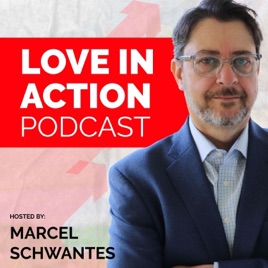
Advertise on podcast: Love in Action
Rating
4.9from
This podcast has
297 episodes
Language
EnglishPublisher
Marcel SchwantesExplicit
No
Date created
2019/03/13
Latest episode
2026/04/17
Average duration
40 min.
Release period
9 days
Description
The Love in Action Podcast—ranked #33 among the 100 Best Leadership Podcasts and in the top 2% of shows worldwide—is where leadership meets humanity. Hosted by global influencer, author, and executive coach Marcel Schwantes, the show features candid conversations with bestselling authors, visionary executives, and thought leaders who are redefining what it means to lead. Whether you want to sharpen your leadership skills, create a culture people love to work in, or grow your business by putting people first, you’ll find practical wisdom and inspiring stories to help you get there.
Unlock Love in Action podcast Email contact info,
Listeners & Audience details
Email contact information
Direct podcast contact details

Listeners
Audience numbers & engagement insights

Audience details
Podcast Insights


Podcast episodes
Check latest episodes from Love in Action podcast
The Most Important Decisions CEOs Must Make When Stepping Into a New Position, with Mike Robinson
2026/04/17
This episode is brought to you by Mitel. If you’re thinking about how communication impacts leadership and resilience in your own organization, Mitel works with more than 70 million users worldwide across critical industries to keep teams secure and connected. You can check them out at Mitel.com.
BIO:
Mike Robinson is a telecom and infrastructure veteran with extensive operating experience both as a CEO and CFO, leading business transformations across organic growth initiatives, mergers, acquisitions, and restructurings. He has held numerous leadership roles and served on the boards of technology and telecommunications companies. Mike joined Mitel’s Board of Directors in 2025 and shortly thereafter stepped into the role of CEO. With a strong focus on leadership, team building, effective communication, operational efficiency, and transparency, Mike and his leadership team guide Mitel with a collaborative, results-driven approach; aligning people, strategy, and purpose to drive impactful outcomes for customers and employees.
Quotes:
Leadership works best when people know they matter for more than a paycheck.
Culture becomes unstoppable when employees go home and tell a neighbor they genuinely like where they work.
The best strategy fails without the earned right to execute through trusted people and clear communication.
Customer loyalty is priceless because loyal customers will fight to keep you and look for new ways to grow with you.
Caring is not a side project; it is the operating system that drives top line, bottom line, and long-term relevance.
Takeaways:
Trust is built fastest through presence, transparency, and listening to employees, customers, and partners before making big moves.
Avoiding command and control leadership requires confidence in your people, a healthy capital runway, and data-driven, fair decision-making.
A strong culture is less about perks and more about belonging, recognition, development, and being heard.
Sustaining industry leadership demands relentless innovation, disciplined focus, and making it easy for others to do business with you.
Caring consistently, through small daily actions and genuine relationships, creates the discretionary effort that drives exceptional results.
Timestamps:
[00:00] Introduction and Overview of Mitel
[05:27] Mike Robinson’s Background and Leadership Philosophy
[08:09] Building Trust and Culture at Mitel
[20:57] The Role of Culture in Business Outcomes
[27:20] Sustaining Success and Innovation at Mitel
[33:14] Personal Leadership Qualities and Practices
[36:41] Leading with Love in Action
[39:03] Final Thoughts and Takeaways
Conclusion:
At the heart of this episode is a simple but radical idea: caring is a business strategy. Mike Robinson shows that when leaders are present, transparent, and genuinely human, people do not just comply, they commit. We see how culture, when rooted in trust and love in action, becomes the engine of innovation, loyalty, and long-term growth. If you want better numbers, you do not start with spreadsheets; you start with how people feel when they walk through the door. Listen in, take notes, and then go lead in a way that proves, inside your own company, that love really does win.
Links/Resources:
Mitel - www.Mitel.com
Mitel on LinkedIn - https://www.linkedin.com/company/mitel/
Mike Robinson on LinkedIn - https://www.linkedin.com/in/michaelkrobinson/
How the CEO of Smarsh Leads Her Global Workforce In a Complex Digital World
2026/04/11
This episode is brought to you by Smarsh. AI is transforming how businesses communicate, and compliance can’t fall behind. Smarsh is helping global organizations build defensible, future-ready compliance programs powered by AI. To learn more, visit smarsh.com or download their 2026 AI Insights Report.
Episode recap
Kim Crawford Goodman, CEO of Smarsh, shares her journey from growing up in Chicago during the Civil Rights Movement to leading a global technology company focused on preserving and protecting truth in digital communications. She explains Smarsh’s role in helping highly regulated industries manage and analyze communications across channels using AI-powered tools, and highlights the company’s commitment to accountability, innovation, and customer focus. Kim also reflects on leadership lessons around balancing technology with human connection, navigating change with transparency, and building inclusive teams grounded in integrity.
Bio:
Kim Crawford Goodman is Chief Executive Officer of Smarsh. Under her leadership, Smarsh has strengthened its position as a global leader in AI-powered communications intelligence, helping highly regulated organizations manage risk, modernize compliance, and unlock the value of communications data. With more than 25 years of experience, Goodman is known for leading with empathy and integrity to scale businesses and build high-performing global teams.
Quotes:
"Smarsh, first and foremost, preserves and protects the truth in a world where what is truthful is getting more elusive."
"We can't forget the human element. You can't let anything stand in the way of actually knowing your team, because that's what makes every other electronic interaction more efficient and more meaningful."
"As a leader, you're always balancing the need to innovate and move with the need to give consistency and stability to your people, and the way you hold that balance is through transparency and context."
Takeaways:
Trust is built fastest through presence, transparency, and listening to employees, customers, and partners before making big moves.
Avoiding command and control leadership requires confidence in your people, a healthy capital runway, and data-driven, fair decision-making.
A strong culture is less about perks and more about belonging, recognition, development, and being heard.
Sustaining industry leadership demands relentless innovation, disciplined focus, and making it easy for others to do business with you.
Caring consistently, through small daily actions and genuine relationships, creates the discretionary effort that drives exceptional results.
Timestamps:
[00:00:00] AI, Risk, and the Mission to Govern Conversations
[00:04:44] From South Side Chicago to Global CEO
[00:05:47] Smarsh’s Mission: Preserving and Protecting the Truth
[00:09:30] Inside Smarsh: AI Agents, Noise Reduction, and E‑Discovery
[00:16:25] Leading Culture in a World of Slacks, Texts, and AI
[00:19:31] Staying Obsessed with the Customer in a Noisy World
[00:24:25] Transparency, Psychological Safety, and Real Talk on Change
[00:25:07] Hitting Walls: Perseverance, Identity, and Non‑Linear Careers
[00:27:58] Integrity, Inclusion, and Building Diverse Teams That Win
[00:33:55] Know Yourself: Authentic Leadership from Campus to C‑Suite
[00:36:56] Unfiltered Advice for Women of Color Who Want to Lead
[00:36:56] Leading with Love: Know Your People, Know Yourself
[00:38:01] As Much as Things Change, Some Things Stay the Same
[00:39:23] Where to Find Kim and Final Love in Action Sign‑Off
Conclusion:
In a world where AI is accelerating every interaction, Kim Crawford Goodman reminds us that leadership still rises and falls on integrity. Her story shows that preserving truth in business isn’t just a technical challenge; it’s a moral and cultural one, lived out in daily decisions, not slogans. Through Smarsh, she demonstrates how AI can be harnessed to govern communication, reduce risk, and build confidence instead of chaos. Through her personal journey, she models how perseverance, self‑knowledge, and genuine care for people can carry leaders through disruption and disappointment. If you’re serious about leading in the age of AI, this episode will challenge you to build a culture where innovation moves fast—but truth, accountability, and love move faster.
Links/Resources:
Smarsh - https://www.smarsh.com/
Kim Crawford in LinkedIn - https://www.linkedin.com/in/kim-crawford-goodman-69703187/
Smarsh 2026 AI Insights Report – https://www.smarsh.com/reports/2026-compliance-horizon-insights-report
Substack: https://marcelschwantes.substack.com/
LinkedIn: https://www.linkedin.com/in/marcelschwantes/
Twitter/X: https://x.com/MarcelSchwantes
YouTube: https://www.youtube.com/channel/UC9fO2r_ZQ3wy5ie522f-DTQ
Instagram: https://www.instagram.com/marcel.schwantes/
How to Best Manage Yourself Before You Lead Others with Margaret C. Andrews
2026/03/27
Episode recap:
Marcel sat down with Margaret C. Andrews to discuss her book "Manage Yourself to Lead Others: Why Great Leadership Begins with Self-Understanding." Margaret discussed leadership derailment and self-awareness, emphasizing that the factors that got leaders to their current positions may not be sufficient for future success. She shared six key questions to help leaders understand themselves and highlighted the importance of self-management, noting that many leadership training programs focus more on technical skills than interpersonal skills.
Bio:
Margaret C. Andrews is a seasoned executive, academic leader, speaker, and instructor. She teaches leadership courses and professional and executive programs at Harvard University and is the founder of the MYLO Center, a private leadership development firm.
Quotes:
We judge ourselves by our intentions, but other people judge us by our behaviors.
Leadership emerges from your life story and your unique portfolio of experiences, not from a checklist of best practices.
What got you here won’t get you there, especially when you move from individual contributor to leading others.
People do not care how much you know until they know how much you care about them as human beings.
We are all a work in progress, continually riding new learning curves as we grow into the leaders we want to become.
Takeaways:
Self-understanding is the foundation of effective leadership, and without it, all the standard tips and tactics remain shallow.
Career derailment often happens right after a promotion when leaders fail to realize that their new role requires different behaviors, not just more effort.
High achievers commonly struggle with interpersonal relationships, team-building, and adaptability, which can ultimately sabotage their success.
Asking deep questions about who shaped you, what you value, and how your behavior impacts others is essential to building self-awareness.
Leading with love and care means treating people as human beings, not resources, and consistently managing your own behavior to match your best intentions.
Timestamps:
0:00 – Welcome, episode setup, and introduction of Margaret C. Andrews
2:59 – Margaret’s origin story and wake-up call about self-awareness
7:20 – How lack of self-awareness derails high achievers and careers
17:39 – Six foundational questions for self-understanding and self-management
25:39 – Roadblocks, vulnerability, and why leadership training must go deeper
28:24 – The MYLO process and what it means to lead with love in action
31:32 – Final lessons, being a work in progress, and where to find Margaret
Conclusion:
Today’s conversation showed that great leadership doesn’t begin with a job title or a promotion. It begins with you, with understanding your own story, your values, and even your blind spots. Margaret reminded us that we are all a work in progress, learning and growing as we practice new behaviors and step into the leaders we want to become. The challenge is simple to say but hard to live out: get honest about who you are, manage yourself with intention, and notice how your relationships and results start to shift.
Links/Resources:
Book on Amazon: https://a.co/d/0gzLmPl2
LinkedIn: https://www.linkedin.com/in/margaretcandrews/
Website: https://www.margaretandrews.com/
Substack: https://marcelschwantes.substack.com/
LinkedIn: https://www.linkedin.com/in/marcelschwantes/
Twitter/X: https://x.com/MarcelSchwantes
YouTube: https://www.youtube.com/channel/UC9fO2r_ZQ3wy5ie522f-DTQ
Instagram: https://www.instagram.com/marcel.schwantes/
How to Master Your Emotions to Become a Better Leader
2026/03/13
Episode recap
In this powerful conversation, Marcel sits down with Joshua Freedman, a global leader in emotional intelligence and the CEO of Six Seconds, to explore the ideas behind his new book, Emotion Rules. Drawing from 30 years of research and more than a million emotional intelligence assessments, Joshua shares why he believes we are living through an “emotional recession” and what leaders must do about it.
Joshua discusses how many leaders struggle with old patterns that no longer serve them, especially when moving from being a high-performing doer to a leader who must grow others. Marcel highlights two major shifts leaders must make: from knowing to learning, and from doing to being. The episode closes with a fast-paced speed round and reflections on what it truly means to lead with practical, actionable love in business.
Bio:
Joshua Freedman is CEO and cofounder of Six Seconds, the world’s largest emotional intelligence network. A pioneer in applying EQ to business and social impact, he directs The State of the Heart study, a landmark longitudinal analysis tracking global trends in emotional intelligence, which first identified the “Emotional Recession” – a sustained worldwide decline in emotional and relational capacities affecting wellbeing, engagement, and organizational resilience. His frameworks and tools are used by over a million people in 150+ countries, delivering measurable improvements in performance and culture.
Quotes
“There are no negative feelings. They’re all data.”
“Emotions are great advisors but horrible bosses.”
“Your feelings are here for a reason—your next step is to learn to trust them more.”
“Maybe the struggle isn’t the obstacle; maybe the struggle is the curriculum.”
“We must shift from knowing to learning, and from doing to being.”
Takeaways
Emotional wisdom goes beyond emotional intelligence—it’s the ability to use emotional signals to navigate ambiguity when there is no clear path or precedent.
We are in a global “emotional recession” where optimism, intrinsic motivation, and purpose are declining, yet higher EQ in these areas is strongly linked to better life and work outcomes.
All emotions are information, not problems; even uncomfortable feelings like fear or anxiety are messages about important needs and values that require attention.
Leaders often get stuck in old emotional patterns—like over‑controlling or withdrawing—that once helped them succeed but now block trust, growth, and empowerment in their teams.
Simple practices—such as choosing who you want to be each day and adopting a coach‑like, question‑driven approach—can transform leadership from transactional control to human‑centered connection and learning.
Timestamps
00:00:02 – Introduction & Joshua’s Background
00:04:11 – The Emotional Recession
00:07:42 – Emotional Intelligence vs. Emotional Wisdom
00:15:11 – Decline in Key EQ Capabilities
00:18:14 – Fighting Our Emotions
00:23:40 – Emotions as Data & Needs
00:31:04 – Emotions as Advisors, Not Bosses
00:34:24 – Patterns That Keep Leaders Stuck
00:43:03 – The To‑Be List Practice
00:46:22 – Wisdom Lives Within
00:52:39 – Leading with Love
00:54:39 – Final Takeaway
Conclusion
This episode ultimately makes the case that emotional wisdom is not about perfection or sentimentality, but about honestly listening to what our feelings are telling us so we can build more humane, resilient, and high‑performing lives and workplaces; when leaders stop fighting emotions, treat them as data, and model curiosity and courage, they unlock deeper engagement, stronger cultures, and a more sustainable way to navigate a chaotic world.
Links/Resources
Emotion Rules book: https://www.6seconds.org/emotionrules/
Six Seconds - https://www.6seconds.org/
Emotional Wisdom Wheel (Constellation Map): https://www.6seconds.org/emotionrules/wheel/
Episode #191 with Joshua Freedman: https://www.marcelschwantes.com/josh-freedman-emotional-intelligence-and-how-to-use-it-to-get-results-ep-191/
Social Media Links:
https://www.linkedin.com/company/six-seconds/
https://www.instagram.com/6secondseq/
https://www.facebook.com/sixseconds/
Substack: https://marcelschwantes.substack.com/
LinkedIn: https://www.linkedin.com/in/marcelschwantes/
Twitter/X: https://x.com/MarcelSchwantes
YouTube: https://www.youtube.com/channel/UC9fO2r_ZQ3wy5ie522f-DTQ
Instagram: https://www.instagram.com/marcel.schwantes/
Why Fear-Based Workplaces Need to Disappear with Marcel Schwantes
2026/03/06
Episode recap
Don’t forget Marcel’s special offer to join his Substack community for $8.00/month. Subscribe here: https://marcelschwantes.substack.com/subscribe
In this solo episode, Marcel Schwantes discussed the impact of fear in the workplace, explaining how it stifles creativity, innovation, and collaboration. He highlighted that fear-based environments lead to disengagement, turnover, and low morale, while human-centered leadership fosters psychological safety and trust. Marcel emphasized the importance of leaders addressing their blind spots and modifying behaviors to create a positive workplace culture. He stressed that hiring and developing leaders based on technical competence alone is insufficient, urging a focus on humanity and human-centered attributes. Marcel encouraged listeners to subscribe to his Substack for further insights on effective human-centered leadership.
Bio:
Marcel Schwantes is a leadership coach, speaker, author, and advocate for more humane workplaces. He partners with organizations tired of burnout, disengagement, and hollow cultures — and ready to build something better.
Marcel’s work includes:
Executive coaching
Leadership development programs for managers
Keynote speaking and workshops
Executive roundtables and culture strategy sessions
Marcel is the author of Humane Leadership: Lead with Radical Love, Be a Kick-Ass Boss. Whether coaching a CEO or training a leadership team, Marcel’s #1 goal is the same: To help leaders become the kind of people others want to follow.
Episode Timeline:
[00:03] Introduction: Why fear remains a workplace epidemic
[00:19] How fear kills creativity, collaboration, and profitability
[01:06] Silence in meetings: The hidden cost of fear
[01:58] Why fear stops innovation and risk-taking
[02:34] Fear shrinks organizations from the inside out
[03:51] Psychological safety and team performance (Harvard research)
[04:26] Why leaders still dismiss “soft skills”
[05:13] The cost of waiting for marching orders
[05:49] Burnout, turnover, and quiet disengagement
[06:03] What human-centered leadership looks like
[07:10] Surfacing problems early vs. kicking the can down the road
[08:10] Shared accountability and self-correcting teams
[09:40] Leadership blind spots and fear-driven management
[10:29] Burnout as the final warning sign
[11:30] Why technical skills alone no longer qualify someone to lead
[12:04] Raising human leadership capacity in the AI era
[12:31] Closing thoughts and call to action
Quotes:
“If you want to know why creativity dies, why collaboration stalls, why your most talented people are quietly quitting — look for one thing: fear.”
“When fear is prevalent, people protect themselves instead of serving the mission.”
“You cannot afford to choose leaders based only on technical competence or individual performance. Those days are over.”
Key Takeaways:
Fear Is Expensive - Fear doesn’t just hurt feelings — it damages profitability, innovation, and long-term growth.
Silence Is a Warning Sign - if meetings are full of nodding heads but no pushback, fear may be driving compliance instead of commitment.
Psychological Safety Drives Performance - When employees feel safe to speak up, admit mistakes, and challenge ideas, performance and productivity increase.
Human-Centered Leadership Solves Problems Early - Empowered teams raise concerns quickly, solve issues on the spot, and share accountability across levels.
Leadership Blind Spots Create Fear - Many fear-based environments stem from leaders who fear losing control or respect. Coaching and self-awareness are critical.
Technical Skills Aren’t Enough Anymore - In the age of AI and automation, the differentiator is human leadership capacity — the ability to help people flourish.
Conclusion:
Fear quietly shrinks organizations from the inside out. It limits creativity, slows innovation, and pushes good people toward burnout and disengagement. Marcel’s message is clear: if you care about performance, profitability, and long-term growth, you must care about human-centered leadership. The future of leadership isn’t louder authority or tighter control — it’s building environments where people feel safe enough to contribute their best thinking.
The question every leader must ask:
Am I creating safety — or am I creating fear?
Because that answer determines everything.
Resources:
The book: https://www.amazon.com/Humane-Leadership-Lead-Radical-Kick-Ass-ebook/dp/B0CWG3PTL4/
Substack: https://marcelschwantes.substack.com/
LinkedIn: https://linkedin.com/in/marcelschwantes/
X: https://x.com/MarcelSchwantes
YouTube: https://youtube.com/@MarcelSchwantes1
Instagram: https://instagram.com/marcel.schwantes/
Dr. James Doty Episode: https://www.marcelschwantes.com/dr-james-doty-the-neuroscience-of-manifestation/
Modeling Compassionate Leadership with Marcel Schwantes
2026/02/26
Episode recap
Don’t forget Marcel’s special offer to join his Substack community for $8.00/month. Subscribe here: https://marcelschwantes.substack.com/subscribe
In this solo episode, Marcel argued that compassion is a core leadership strength, not a soft extra, and that alleviating others’ pain and suffering is a leader’s real work. Through examples like Jeff Weiner and Phil Lynch during 9/11, he showed how leaders who prioritize people, communicate openly, and make space for emotion build stronger, more connected organizations. When leaders show up in hard moments, teams heal faster and perform better.
Bio
Marcel Schwantes is a leadership coach, speaker, author, and advocate for more humane workplaces. He works with organizations that are tired of burnout, disengagement, and hollow cultures — and ready to build something better.
Marcel’s work includes:
Executive coaching
Leadership development programs for managers
Keynote speaking and workshops
Executive roundtables and culture strategy sessions
Marcel is the author of Humane Leadership: Lead with Radical Love, Be a Kick-Ass Boss. Whether coaching a CEO or training a leadership team, Marcel’s #1 goal is the same: To help leaders become the kind of people others want to follow.
Timestamps
[00:03] Why “soft skills” like compassion are actually essential leadership skills
[01:05] Command-and-control vs. compassion: why old leadership models fail
[02:00] Jeff Weiner on compassion as a lifelong practice, not a buzzword
[02:52] Dr. James Doty’s definition of compassion and the science behind it
[03:45] What compassionate leadership looks like in practice
[04:32] 9/11 and Reuters: setting the scene for Phil Lynch’s defining moment
[05:25] “People first, then customers, then the business” — a new priority in crisis
[06:20] Keeping people informed, safe, and emotionally supported
[07:15] Making space for grief, fear, and honest emotions at work
[08:10] How compassion shaped Reuters’ culture and rippled to customers
[08:30] Final reflection: Are you willing to be present with people when they’re suffering
Key Quotes
“If you want to measure yourself against the highest standard of leadership, you have to measure yourself against what people call the ‘soft stuff’—because it’s actually the hardest to master.”
“Compassion is not weakness. Some of the strongest people I know are the most compassionate.”
“Compassion is recognizing someone’s suffering—and then doing what you can to help ease it. It’s not hippy-dippy; it’s evidence-based and deeply human.”
“In the middle of absolute mayhem, Phil Lynch gathered his team and said: ‘People first, then customers, then the business.’ That’s compassionate leadership in action.”
“Leaders who create space for sorrow, confusion, and grief help their organizations heal and reconnect much faster.”
Key Takeaways:
Compassion is an essential leadership skill, not a soft extra.
Compassion is often dismissed as “soft,” but it is one of the hardest and most strategic skills to master. It directly impacts engagement, trust, and long-term performance.
Compassion is both recognition and action.
It’s not enough to notice someone’s pain. Compassion means seeing the suffering and intentionally acting to alleviate it—in conversations, decisions, and policies.
Science backs the power of compassion.
Research highlighted by Dr. James Doty shows compassion is a powerful antidote to loneliness, depression, anxiety, and addiction, all of which show up at work.
People-first leadership is clearest in crisis.
During 9/11, Phil Lynch’s mantra—“People first, then customers, then the business”—became a north star for Reuters. Compassion isn’t theoretical; it’s how leaders rank their priorities when it matters most.
Emotional transparency but safety and trust.
By being open about what he and his team were feeling, Lynch gave others permission to feel and express their own grief and fear, creating psychological and emotional safety.
Compassion shapes emotional culture.
When leaders intentionally make room for grief, questions, and honesty, they shape a culture where people feel seen, heard, and valued—and are proud to belong.
Love in action is a leadership practice.
Compassionate leadership is ultimately love expressed through behavior: how you decide, how you listen, how you show up for people when they’re struggling.
Conclusion
Marcel’s message in this episode is straightforward and challenging: the future of leadership is compassion in action. In a world where mental health struggles and emotional pain are everywhere, leaders can no longer hide behind metrics and control.
The story of Phil Lynch shows that when leaders put people first, especially in the darkest moments, they create cultures of trust, pride, and deep human connection. Compassion is not about being nice for its own sake; it is about being courageously present with suffering and choosing actions that reduce it.
If you want your organization to come alive from the inside out, start with one question: How am I shaping the emotional culture around me—and am I willing to be present when people hurt? That’s where real leadership—and love in action—begins.
Resources:
Guest Mentioned:
Dr. James Doty – Neurosurgeon and compassion researcher; previously featured on the show (link to that episode will be added to the show notes)
People Referenced:
Jeff Weiner – Former CEO of LinkedIn, advocate for compassion as a core leadership skill
Phil Lynch – Former president of Reuters America, whose leadership during 9/11 exemplified compassion in crisis
The book: https://www.amazon.com/Humane-Leadership-Lead-Radical-Kick-Ass-ebook/dp/B0CWG3PTL4/
Substack: https://marcelschwantes.substack.com/
LinkedIn: https://linkedin.com/in/marcelschwantes/
X: https://x.com/MarcelSchwantes
YouTube: https://youtube.com/@MarcelSchwantes1
Instagram: https://instagram.com/marcel.schwantes/
Dr. James Doty Episode: https://www.marcelschwantes.com/dr-james-doty-the-neuroscience-of-manifestation/
How Hope Is the Key to the Future of Work, with Jen Fisher and Dr. Alex Lovell
2026/02/20
Episode recap
This episode focused on hope in the workplace, starting with a discussion with Dr. Alex Lovell, head researcher and vice president at the O.C. Tanner Institute, and covering a recent O.C. Tanner study that revealed a decline in employee hopefulness. Marcel transitioned to a lively conversation with Jen Fisher, author of Hope Is the Strategy, and one of the world's first chief well-being officers. They explored how leaders can cultivate hope by using language that builds rather than kills hope, emphasizing curiosity, empathy, and transparency. Jen explained that hope requires clear goals, acknowledgment of current reality, and identifying multiple pathways to achieve those goals. They also discussed the limitations of wellness programs alone in improving employee well-being and the need to address cultural and behavioral factors in the workplace. The conversation concluded with Jen encouraging listeners to become "hope dealers" by helping others identify possibilities and support their potential.
Bio:
Jen Fisher is a global authority on workplace well-being, the founder and CEO of The Wellbeing Team and the author of Hope Is the Strategy: The Underrated Skill That Transforms Work, Leadership, and Wellbeing.
Dr. Alex Lovell is the Vice President of the O.C. Tanner Institute and a political psychologist focused on the human side of work—specifically, how organizations can better foster appreciation, identity, belonging, and fulfillment to unlock human potential.
Quotes:
Alex Lovell
Employees are seven times more likely to be engaged when they feel hopeful
When people don’t see a path forward and don’t believe they can follow that path, there is no way they can get there
Recognition and belonging are one of the strongest antidotes to hopelessness
When teams aren’t inclusive, employees are 513 percent more likely to feel burned out
Our younger workers don’t see a future anywhere, not personally and not professionally
Jen Fisher
Hope is not an emotion; it is a cognitive and behavioral process
Do you want to lead a hopeful organization or a hopeless one?
People need to believe that your strategy will leave them better off tomorrow than they are today
Never in the history of telling someone not to worry have they not worried
Be a hope dealer and help people see possibilities
Takeaways:
Hope is a measurable leadership skill that requires clear goals, multiple pathways, and agency
Employees who feel hopeful are significantly more engaged and resilient
Gen Z workers are struggling to see a personal and professional future, making belonging and recognition essential
The language leaders use can either build hope or quietly destroy it
Transparency and telling the whole truth reduce anxiety and strengthen trust
Wellness programs alone cannot fix broken work design or culture
Rebuilding hope starts with identifying and taking the next small step
The future of work must intentionally preserve humanity alongside advancing technology.
Timestamps:
0:00 — Welcome to the Love and Action Podcast
0:33 — Topic Introduction: Hope
2:05 — Introducing Dr. Alex Lovell
4:06 — AI Helping Us to Find Solutions
8:20 — Key Findings: Hopelessness at Work
11:10 — Generational Divide in Hope
14:10 — Gen Z and the Need to Feel Seen
18:05 — Inclusion, Belonging, and Recognition
20:10 — Engagement Link: Hope Drives Performance
22:05 — Practical Solutions: Connection and Relationships
23:10 — Practical Solutions: Goals and Small Wins
24:05 — Where to Find the Report + Resources
23:30 — Jen’s Story: Burnout, Cancer, Caregiving
29:42 — Setting Clear Goals
32:11 — Be the leader Setting Examples
37:10 — Hope as Strategy: Goals, Pathways, Agency
40:10 — Hope in Practice: Leadership Communication
44:07 — Language of Hope: Builders vs Killers
46:00 — Hope Dealers and Possibility Thinking
48:13 — Leading with the Whole Truth
55:15 — Why Wellness Programs Aren’t Enough
55:15 — Human is the Path Forward in Leading Organizations
1:00:05 — Final Takeaways & Closing
Conclusion:
Hope is not wishful thinking, and it is not a soft leadership trait reserved for idealists. It is a disciplined, practical skill that drives engagement, fuels resilience, and restores belief in the future of work. From global research to personal recovery stories, this episode makes one thing clear: when leaders cultivate belonging, speak possibility, and tell the whole truth, people perform differently. In a time when burnout is rising and uncertainty is constant, hope becomes the competitive advantage. The leaders who choose to become hope dealers will not only transform their teams, but they will also shape the future of work itself.
Links/Resources:
Dr. Alexander Lovell: https://www.linkedin.com/in/alexanderlovell/
OC Tanner Global Culture Report: https://www.octanner.com/global-culture-report
Jen Fisher website: www.jen-fisher.com
Jen Fisher on LinkedIn: www.linkedin.com/in/jen-fisher-cwbo/
WorkWell Podcast with Jen Fisher: https://podcasts.apple.com/us/podcast/the-workwell-podcast/id1381561571
O.C. Tanner website: https://www.octanner.com/
O.C. Tanner Global Culture Report: https://www.octanner.com/global-culture-report
Inc. Article Summary: https://www.inc.com/marcel-schwantes/human-resources-hopelessness-epidemic-work-leadership/91246729
Episode #112 with Jen Fisher: https://www.marcelschwantes.com/jen-fisher/
Jen Fisher’s Book “Hope Is the Strategy: The Underrated Skill That Transforms Work, Leadership, and Well-Being”: https://a.co/d/0glJUsxN
Substack: https://marcelschwantes.substack.com/
LinkedIn: https://www.linkedin.com/in/marcelschwantes/
Twitter/X: https://x.com/MarcelSchwantes
YouTube: https://www.youtube.com/channel/UC9fO2r_ZQ3wy5ie522f-DTQ
Instagram: https://www.instagram.com/marcel.schwantes/
A Bold, Human-Centered Guide to Leading Change, with Frank Danna and Chris Pitre
2026/02/13
Episode recap
Don’t forget to subscribe to my Substack for exclusive access to tools, action plans, long-form articles, book content, and coaching resources to level up your leadership! Subscribe here.
In this episode, Marcel interviewed Frank Danna and Chris Pitre, co-authors of "Love as a Change Strategy," discussing their book's themes and their experience at Softway, a technology company that transformed from a toxic culture to a human-centered organization. The conversation explored how embracing discomfort, prioritizing relationships, and practicing empathetic curiosity can lead to successful organizational change. Frank and Chris shared personal stories about their own transformation journeys and how they apply these principles at Softway. They discussed the importance of leaders modeling change behavior and the role of AI in enhancing human connection at work. The authors emphasized that change should be led, not managed, and highlighted the need for leaders to be intentional with their words and actions.
Guest Bio
Chris Pitre is Vice President at both Culture+ and Softway. Chris has spent his career helping companies reimagine how they work, focusing on how they treat their people and communicate.
Frank Danna serves as the Marketing Director at Softway and is the Co-Founder of Culture+, where he helps leaders transform their leadership through love, empathy, and behavior-based change.
Quotes:
Chris Pitre: “Without a positive or strong culture, it's actually harder to bounce back. Adversity becomes that much scarier and that much more formidable.”
Chris Pitre: “If you are a leader who is about to implement change and you're not uncomfortable, that should be a scary thing.”
Frank Danna: “If you want to change, discomfort is the solution.”
Chris Pitre: “I truly believe that comfort is a privilege and change, and so if you are comfortable, that means that everybody else is paying for your comfort, and likely you are someone who is probably oppressing the team.”
Chris Pitre: “You get to decide at a certain point in your career who you will become: are you the boss that leaves a mark or a scar?”
Takeaways:
Real, sustainable change fails when it’s treated as a technical process instead of a deeply human, emotional experience.
The six principles of change—embracing discomfort, prioritizing relationships, practicing empathetic curiosity, wielding your influence, experimenting, and being effective—act as a flexible “middle layer” between rigid processes and long-term behavior change.
Leaders themselves are often the biggest blockers of transformation when they cling to titles, certainty, and comfort while expecting others to do the hard changing.
Resistance to change is frequently a signal that people feel unheard, and genuine empathetic curiosity can turn resistors into powerful champions.
AI, when introduced from a humane, people-first lens, can remove transactional work and actually create more room for empathy, collaboration, and truly human leadership.
Timestamps:
00:00:02 Introduction and Softway’s turnaround story
00:03:30 Welcoming guests Frank Danna and Christopher Pitre
00:03:55 Frank’s story: from imposter syndrome to belonging
00:05:26 Chris’s story: corporate “robot,” stroke, and the power of workplace community
00:11:36 What Softway does and its evolution to AI-focused transformation
00:15:02 What people get wrong about love as a change strategy and why change fails
00:21:53 The six principles of change
00:24:00 Embracing discomfort and why leaders must feel uneasy
00:27:12 How leaders become the blockers of change
00:31:06 Personal transformation, accountability, and resistance as unheard voices
00:36:21 Rabbit hole: traditional male leadership, narcissism, and the cost to culture
00:40:13 Can AI actually increase humanity and love in the workplace?
00:43:35 Have we missed any essential questions?
00:44:55 Practical ways to lead with love day in and day out
00:47:39 Final takeaways: be like the buffalo and don’t manage change—lead it
00:50:15 Teasing the third book in the series
00:51:08 Where to learn more about Softway, the books, and the podcast
Conclusion:
Love isn’t a soft extra in business—it’s the toughest, most practical strategy for real change. This episode shows how embracing discomfort, listening with empathy, and leading like a “buffalo” through the storm can turn a toxic culture into a place of belonging and growth. Frank and Chris prove that when leaders go first, drop their ego, and put people at the center, both performance and humanity rise. AI, handled with a humane-first mindset, becomes a catalyst—not a threat—for more meaningful, human work. Take what you’ve heard today and decide: will you manage change from a distance, or step in and lead it with love?
Links/Resources:
Softway: https://www.softway.com/
Culture+: https://www.culture-plus.com/
Love as a Strategy: https://www.loveasastrategy.com/
Softway LinkedIn: https://www.linkedin.com/company/teamsoftway/
Culture+ LinkedIn: https://www.linkedin.com/company/culture_plus/
Love as a Change Strategy: https://loveasachangestrategy.com/
Love as a Business Strategy: https://www.loveasabusinessstrategy.com/
Frank Danna on LinkedIn: https://www.linkedin.com/in/frankDanna/
Chris Pitre on LinkedIn: https://www.linkedin.com/in/chrispitre/
Episode 183 with the CEO of Softway, Mohammad Anwar: https://www.marcelschwantes.com/mohammad-anwar-love-as-a-business-strategy-ep-183/
Substack: https://marcelschwantes.substack.com/
LinkedIn: https://www.linkedin.com/in/marcelschwantes/
Twitter/X: https://x.com/MarcelSchwantes
YouTube: https://www.youtube.com/channel/UC9fO2r_ZQ3wy5ie522f-DTQ
Instagram: https://www.instagram.com/marcel.schwantes/
How Your Core Values Are the Key to Fulfillment at Work with Robert Glazer
2026/02/06
Episode recap
In this episode, Marcel talks with Robert Glazer, author of The Compass Within, about why core values are essential for effective leadership and meaningful work. Robert explains the difference between aspirational values and actionable core values—non-negotiable principles that guide real decisions and behavior. They explore how values alignment boosts employee engagement, strengthens trust in leaders, and reveals whether an organization’s stated values actually match what it rewards in practice.
The conversation also dives into authenticity, emotional honesty, and how early life experiences shape our values and sense of purpose. Robert shares a practical framework and reflective questions to help people clarify their true core values, arguing that clarity leads to better decisions, healthier leadership, and deeper personal fulfillment. The episode closes with Robert’s mission to help more people discover their “true north” and live with greater integrity and intention.
Bio:
Robert Glazer is a globally recognized entrepreneur, speaker, and author. He is the founder and former CEO of a $50M marketing agency with an award-winning, values-driven culture, and the author of multiple bestsellers, including Elevate and Elevate Your Team. His inspirational newsletter, Friday Forward, reaches over 200,000 readers weekly.
Quotes:
I define core values as the non-negotiable principles that decide your actions and behaviors, reflecting who you are, not who you wish you were.
Most of our purpose is tied to pain, but people are afraid to go there and look, even though those formative experiences are where their real values live.
If you can help people figure out their personal core values, you help them become better leaders, because they are going to lead from those values, whether they realize it or not.
Everyone wants the shortcut, but if you really want to figure out your core values, you have to be willing to do the work and spend time with the questions.
When you understand your core values, you gain a dramatic clarity that changes how you live and how you lead.
Takeaways:
Core values are intrinsic, non-negotiable decision rules that show up across all areas of life, not vague one-word aspirations like “integrity” or “family.”
Much of our purpose and many of our values are rooted in formative childhood experiences, especially painful or ignored parts of our story.
Alignment is impossible until you first clarify what you are actually aligning to, which is why defining values must come before trying to “live in alignment.”
Research shows that when people’s work aligns with their values, engagement, trust, life satisfaction, and retention all increase significantly.
Doing the structured inner work, like Robert’s six-question process and core values course, provides a practical pathway to make better long-term decisions about career, relationships, and leadership.
Timestamps:
00:00:00 – 00:02:30 Opening, sponsor message, and Marcel’s setup about authenticity and alignment
00:02:30 – 00:05:56 Introducing Robert Glazer and the story behind The Compass Within
00:05:56 – 00:07:12 Robert’s personal story and how purpose is tied to pain
00:07:12 – 00:14:46 Why this book now, tribalism, and what people get wrong about values
00:14:46 – 00:17:25 Core values, culture, and how companies really reward behavior
00:17:25 – 00:21:17 Data, research, and why values alignment matters at work and in life
00:21:17 – 00:31:43 The six core values questions and live exercise revealing Marcel’s value of authenticity
00:31:43 – 00:36:25 Robert’s own core values and how they play out in his life and leadership
00:36:25 – 00:36:58 The hardest parts of doing core values work and why there is no shortcut
00:36:58 – 00:39:13 Speed round: what makes Robert smile, who inspires him, and bold life choices
00:39:13 – 00:41:00 How to lead with love, Robert’s final takeaway, and where to find his work
Conclusion:
This episode makes one thing crystal clear: if you do not define your values, the world will do it for you. Robert Glazer shows that core values are not fluffy slogans, but the invisible rails that quietly direct every major choice you make. Once you illuminate those rails, you can stop bouncing off the walls of the tunnel and start driving your life and leadership with intention. The stories, data, and live coaching moment with Marcel prove that this inner work is both emotional and incredibly practical. Listen in, then dare yourself to turn on your own “compass within” and see what needs to change.
Links/Resources:
Website: https://robertglazer.com/
Book: https://robertglazer.com/compass/
Core Values Course: www.corevaluescourse.com
Get the Six Questions: https://robertglazer.com/six/
LinkedIn: https://www.linkedin.com/in/glazer
Why You Should Care for Your People Like Family with Bob Chapman and Raj Sisodia
2026/01/29
Episode recap
This episode is brought to you by Peak Performers, a nonprofit staffing agency that champions professionals with disabilities. Learn more at www.peakperformers.org.
This week on the Love in Action Podcast, I welcomed back Bob Chapman and Raj Sisodia for a powerful conversation about what happens when leadership is rooted in genuine care. We talk about the 10th anniversary edition of their seminal classic, Everybody Matters, and why the book and movement continue to resonate around the world. We break down why people-centered leadership is more urgent than ever, and how treating people with care, dignity, and respect isn’t just the right thing to do, it’s what builds strong, resilient organizations. If you care about creating workplaces where people actually thrive, this episode is for you.
BOB CHAPMAN is the chairman of Barry-Wehmiller. A sought-after speaker on human-centered leadership, business growth, sustained performance, and culture transformation, Chapman strives to use his business leadership platform to build a better world.
RAJ SISODIA is a cofounder of the Conscious Capitalism movement and a pioneering voice in the global business renaissance. He is the author or coauthor of 16 books, including The New York Times bestseller Conscious Capitalism (with John P. Mackey of Whole Foods Market).
Quotes:
We have a hunger for caring in the world, and this book addresses caring.
The way we lead impacts the way people live.
Business could be the most powerful force for good in the world if we simply knew how to care for the people we have the privilege of leading.
You cannot ask people to care for others; you must teach them the human skills of caring.
You cannot lead the people unless you love the people, and you cannot love the people unless you know the people.
Takeaways:
Truly Human Leadership reframes business from an economic relationship to a deeply human relationship where people are the purpose.
Caring is a learnable skill that must be intentionally taught, not just requested or assumed.
The person you report to at work can affect your health more than your family doctor.
Most business education still focuses on numbers and profit while bypassing the human heart and soul.
Conscious, caring leadership positively ripples into marriages, families, and even future generations.
Timestamps:
00:00:03 Opening and introduction of Bob Chapman and Raj Sisodia
00:02:33 Tenth anniversary of Everybody Matters and why it still matters
00:06:01 Origin story and why the book had to be written
00:08:02 Lessons from a decade of impact and stress testing through crisis
00:11:24 How leadership at work shapes health, marriage, and family life
00:16:15 What business schools still get wrong about leadership and purpose
00:21:08 How Everybody Matters deepened the idea of conscious capitalism
00:25:22 What Truly Human Leadership really means beyond just being nice
00:30:30 Stories of companies transformed by caring cultures
00:34:04 Why the wrong people often rise and how to rethink who becomes a leader
00:39:20 A message that can heal business, education, and society
00:44:18 Love, leadership, and practical caring in everyday management
00:46:00 Conclusion
Conclusion:
This conversation shows that leadership is not about titles or metrics, but about the lives entrusted to you. Bob and Raj reveal that when leaders choose to care, organizations do not just perform better; people become healthier, more hopeful, and more connected at home. They challenge the prevailing belief that profit must come before people and instead show how human dignity and strong business performance can reinforce each other. The episode also exposes how our education and promotion systems neglect the human side of work, and why teaching caring skills is no longer optional. In the end, listeners are invited to see business as a profound opportunity to practice love in action so that, in every workplace, everybody truly matters.
Links/Resources:
The Book: https://www.amazon.com/Everybody-Matters-Extraordinary-Caring-People/dp/1591847796/ref=tmm_hrd_swatch_0
Bob Chapman - https://www.linkedin.com/in/bob-chapman-89b936b8/
Raj Sisodia - https://rajsisodia.com/
Barry-Wehmiller - https://www.barrywehmiller.com/
Conscious Capitalism - https://www.consciouscapitalism.org/
Truly Human Leadership - https://www.barrywehmiller.com/blog
Bob Chapman, Episode #6: https://www.marcelschwantes.com/bob-chapman/
Raj Sisodia, Episode #36: https://www.marcelschwantes.com/raj-sisodia/
Substack: https://marcelschwantes.substack.com/
Catch People Doing Things Right with Martha C. Lawrence
2026/01/26
Episode recap
This episode is brought to you by Peak Performers, a nonprofit staffing agency that champions professionals with disabilities. Learn more at www.peakperformers.org
If you’ve ever wondered what shaped Ken Blanchard into one of the most trusted leadership voices of our time, this episode offers a rare behind-the-scenes look. I sat down with Martha Lawrence—Ken’s longtime friend, collaborator, and biographer—and what unfolded was a rich mix of humor, history, and heart. In her new book, “Catch People Doing Things Right: How Ken Blanchard Changed the Way the World Leads,” Martha reveal the real Ken. She walks through her own journey as well—how a post-9/11 turning point led her to Blanchard’s organization and eventually to writing the definitive biography that captures his wisdom, quirks, and quiet resilience.
Bio
A former editor at Simon & Schuster and Harcourt, Martha C. Lawrence has shaped the voices of some of the world’s most successful thought leaders. As executive editor at Blanchard, she has collaborated with Ken Blanchard for more than 20 years. Her editing credits include multimillion-copy bestsellers and #1 New York Times titles. Lawrence is passionate about leadership, storytelling, and capturing legacies that matter. She is the author “Catch People Doing Things Right: How Ken Blanchard Changed the Way the World Leads.”
Quotes:
I knew I could not have worked alongside a human being who not only was so innovative and intelligent and heart-centered, but who lived the same things he's teaching.
If one of the takeaways from the book is that you don't have to be perfect to be successful.
You want to lift people—you want to catch them doing things right.
Takeaways:
True leadership is based on humility, trust, and the authentic desire to lift others up.
Setbacks and personal challenges can become sources of strength and inspiration.
Servant leadership means supporting your team from the bottom up, not ruling from the top.
The best leaders are those who make others feel valued and recognized for their contributions.
Lifelong learning and collaboration can fuel both personal and organizational growth.
Timestamps:
0:00:00 — Sponsor Message & Podcast Welcome
0:01:30 — Marcel introduces Ken Blanchard's influence and today’s theme
0:02:30 — Introducing guest Martha C. Lawrence and her background
0:05:00 — Martha shares her story and career path
0:07:30 — Martha discusses overcoming personal adversity
0:10:54 — How Martha began working with Ken Blanchard
0:12:54 — Inspiration to write Ken’s biography
0:16:09 — Ken’s connections and meeting Dr. Martin Luther King Jr.
0:19:33 — How Ken’s parents shaped his leadership values
0:21:21 — The inverted pyramid and servant leadership explained
0:23:13 — Ken’s mentors, co-authors, and learning philosophy
0:25:07 — Ken’s personal and professional setbacks
0:27:38 — Ken’s humor and breaking the rules
0:31:26 — The evolution of Ken’s servant leadership philosophy
0:33:39 — "The One Minute Manager"—origins and impact
0:35:54 — Are the principles of "The One Minute Manager" still relevant?
0:37:51 — Research and surprises from Ken's archives
0:39:57 — Including love in leadership and chapter discussion
0:42:42 — What readers can gain from the book; catching people doing things right
0:45:08 — Distinguishing between care and love in leadership
0:47:39 — Speed Round: What makes Martha smile, her inspirations, and hopes
0:53:33 — The big takeaway: Leadership is love
0:54:25 — Where to find Martha and Ken’s resources online
0:55:01 — Closing gratitude and episode wrap-up
Conclusion:
The stories shared in this episode remind us that genuine leadership is shaped by humility, resilience, and compassion. Ken Blanchard’s journey proves that success is rooted as much in character as in achievement. Martha’s perspective brings to life the transformative effect of working alongside a true role model. Their experiences illustrate that lifting other and embracing authenticity can leave a legacy that outlasts any title. As you move forward, ask yourself: how can you lead with more heart in your own life and work?
Links/Resources:
www.marthalawrence.com
www.blanchard.com
www.kenblanchardbooks.com
Episode #3: https://podcasts.apple.com/us/podcast/love-in-action/id1456073489?i=1000433623822
Episode #122: https://www.marcelschwantes.com/ken-blanchard-2/
Inside Peak Performers: A New Standard for Disability Hiring and Inclusion with Bree Sarlati
2026/01/16
This episode is brought to you by Peak Performers, a nonprofit staffing agency that champions professionals with disabilities. Learn more at www.peakperformers.org
Episode recap:
Today’s guest is Bree Sarlati, President and CEO of Peak Performers, a nonprofit staffing agency that champions professionals with disabilities. Sarlati is leading Peak Performers’ mission to raise the standard of employment for people with disabilities. She breaks down the biases that still shape hiring and explains how Peak is proving that skilled talent is everywhere. We discuss how to build inclusive teams and how Peak is scaling nationally while staying deeply human-centered. Bree also shares their “Talent Without Limits” initiative and explains how her team is integrating AI into recruiting without losing empathy or accountability.
BIO:
Bree Sarlati is a pragmatic strategist known for turning complexity into clarity. As CEO of Peak Performers, Bree has led the organization's national expansion, modernizing operations, embracing new technology, and scaling its mission beyond Texas. Her focus on agility ensures that even as Peak grows, it never loses the human touch that defines its work. Bree has a talent for spotting potential that others miss and for connecting people with opportunities that move them forward. Passionate about disability employment and gender equity in leadership, she champions fair, future-ready systems and brings clarity, curiosity, and a people-first approach when the stakes are high.
Quotes:
Our mission as a non-profit has always been to set a higher standard of employment for people with disabilities.
We stay focused on the candidates who are going through one of the most stressful experiences of their lives, which is job searching. That's a time when we should be very aware of people's human-level needs.
A CEO always needs to be looking inward and asking, 'What skills do I need to add to take this organization to where I want it to go?
Takeaways:
Inclusive hiring unlocks hidden talent and drives organizational success.
Disabilities encompass many unseen conditions and should be understood broadly.
Technology can scale impact without sacrificing the human connection in recruiting.
Agile leadership starts with self-awareness and adapting to constant change.
Empathy and respect should guide all workplace interactions and decision-making.
Timestamps:
00:00:00 Introduction and Overview of Peak Performers
00:02:30 Bree Sarlati’s Journey and Passion for Storytelling
00:08:40 Peak Performers’ Mission and Redefining Disability Employment
00:14:20 Challenges and Evolution in Disability-Inclusive Hiring
00:21:00 The Importance of Agility and Leadership Self-Awareness
00:26:30 Building Agile, Human-Centered Teams
00:32:00 Leveraging Technology Without Losing the Human Touch
00:36:30 The “Talent Without Limits” Initiative
00:41:00 The Role of Empathy, AI, and Creativity in Modern Recruiting
00:45:30 Leading with Love, Key Takeaways, and Final Thoughts
00:49:00 Connecting with Bree Sarlati and Closing Remarks
Conclusion:
As this inspiring conversation draws to a close, reflect on how inclusive hiring can transform both businesses and lives. We have learned that true agility in leadership comes from embracing change with empathy and purpose. Peak Performers shows us that technology and human connection can coexist to build workplaces of belonging. The journey to future-ready teams begins by recognizing untapped potential and challenging our own assumptions. Let us carry these lessons forward and strive to create workplaces where everyone has the opportunity to thrive.
Links/Resources:
Peak Performers Website: https://www.peakperformers.org/
Peak Performers on LinkedIn (Company Page): https://www.linkedin.com/company/peak-performers-staffing-agency/
Bree Sarlati on LinkedIn: https://www.linkedin.com/in/bree-sarlati/
Why So Many Leaders Hit a Wall in Midlife (and What to Do About It) with Marcel Schwantes
2026/01/09
Don’t forget Marcel’s special offer to join his Substack community. Subscribe here:
https://marcelschwantes.substack.com/subscribe
Episode recap:
This episode explores a quiet but powerful turning point many high-achieving leaders face in midlife, when success no longer feels fulfilling. It names the real issue—not burnout, but misalignment between a leader’s outer accomplishments and inner values—and reframes it as a necessary recalibration rather than a crisis. Through reflection, values realignment, and intentional listening, leaders can reconnect with meaning, purpose, and a more authentic way of leading and living.
Bio:
Marcel Schwantes is a speaker, author, and acclaimed executive coach with a global following. Recognized by Inc. Magazine as one of the Top 50 Leadership and Management Experts in 2025, Marcel’s thought leadership reaches millions each month through global media like Inc., Time, Fast Company, Business Insider, and Forbes. Marcel delivers presentations, workshops, courses, and coaching programs about the human side of business and how cultures of care, connection, and belonging power companies to thrive and outperform the competition.
Quotes:
True fulfillment begins when you pause to listen to your inner voice, not just your outer achievements.
The greatest crisis we face in midlife is not failure but living a life out of alignment with who we truly are.
Success without meaning will always leave you feeling restless and incomplete.
When you dare to revisit your core values, you rediscover the energy and purpose that fuel your next chapter.
Your next breakthrough starts when you ask what decision moves you closer to who you are becoming.
Takeaways:
External accomplishments alone cannot bring lasting fulfillment without inner alignment.
Regular stillness and reflection are essential to connect with your true values and desires.
Midlife is not a crisis, but a powerful opportunity for recalibration and growth.
Simple daily questions and journaling can reveal the real story of who you are now.
Realigning your life with your authentic self opens the door to deeper joy, meaning, and impact.
Timestamps:
00:00:00 Introduction & The Hidden Question Behind Success
00:01:40 Success Achieved, Emptiness Remains
00:03:20 The Disconnect of “Going Through the Motions.”
00:05:00 Decades of Momentum & Inner Tiredness
00:06:40 Playing a Character & Seeking Deeper Meaning
00:08:20 Facing Burnout & The Concept of Misalignment
00:10:00 Rediscovering Values and Building Self-Awareness
00:11:40 Time to Pivot: Steps for Realignment
00:13:20 Grounding Yourself with Daily Questions
00:15:00 Journaling Exercise, Reflections & Outro
Conclusion:
True fulfillment starts when you stop chasing more and start tuning into what matters most within. The path to congruence is not about abandoning your achievements but about aligning them with your deepest values and desires. Remember, the discomfort you feel is really an invitation that serves as a wake-up call to a richer, more meaningful season of life. By embracing stillness, revisiting your core values, and asking powerful questions, you can chart a new course that feels genuinely right for you. Your next chapter is waiting, so are you ready to write it with purpose and passion?
Links/Resources:
Substack: https://marcelschwantes.substack.com/
LinkedIn: https://www.linkedin.com/in/marcelschwantes/
Twitter/X: https://x.com/MarcelSchwantes
YouTube: http://www.youtube.com/@MarcelSchwantes1
Instagram: https://www.instagram.com/marcel.schwantes/
Reset Your Definition of Leadership with Marcel Schwantes
2026/01/02
Episode recap:
Subscribe to Marcel’s Substack here:
https://marcelschwantes.substack.com/subscribe
Marcel Schwantes opens Season 10 with gratitude and a renewed call for better leadership. He previews more solo episodes in 2026 and emphasizes that a leadership strategy only works when a leader’s character and inner operating system are solid. He reframes authentic leadership as humility, self-honesty, and service. Authenticity starts with self-awareness, supported by a weekly reflection: where you lived your values, where you drifted, and what triggered it. He links authentic leadership to well-being by urging leaders to remove friction, create clarity, support mental health, and help people connect to purpose—since burnout often stems from a loss of meaning, not just workload.
Bio:
Marcel Schwantes is a speaker, author, and acclaimed executive coach with a global following. Recognized by Inc. Magazine as one of the Top 50 Leadership and Management Experts in 2025, Marcel’s thought leadership reaches millions each month through global media like Inc., Time, Fast Company, Business Insider, and Forbes. Marcel delivers presentations, workshops, courses, and coaching programs about the human side of business and how cultures of care, connection, and belonging power companies to thrive and outperform the competition.
Quotes:
"You become a far more effective leader the moment you stop performing leadership and start practicing it."
"Authentic leadership always, always starts with self-honesty."
"Humility is a performance enhancer, not just a personality trait."
"Great leaders aren't afraid of holding up the mirror; they invite feedback and treat it like data, not judgment."
"Real authentic leadership exists to meet real human needs."
Takeaways:
Authentic leadership begins with self-honesty and removing the mask.
Humility allows leaders to learn, grow, and truly connect with others.
Seeking and acting on feedback transforms workplace relationships.
Meeting the real needs of people is at the heart of effective leadership.
Redefining leadership with authenticity, humility, and service sets the stage for a thriving culture.
Timestamps:
00:00 Introduction & Podcast Purpose
03:26 2026 Podcast Direction & New Year Focus
06:00 Principles of Authentic Leadership
08:30 Practical Implementation Tips
14:45 Conclusion & Call to Action
Conclusion:
As we close out this episode, remember that real leadership begins with honesty, humility, and a genuine commitment to serving others. By embracing authenticity and staying true to your values, you create space for growth, trust, and lasting impact. Let this new year be your opportunity to lead with heart, listen deeply, and elevate the people around you. True change starts from within, and your leadership can set the tone for a better tomorrow.
Links/Resources:
Substack: https://marcelschwantes.substack.com/
LinkedIn: https://www.linkedin.com/in/marcelschwantes/
Twitter/X: https://x.com/MarcelSchwantes
YouTube: hhttps://www.youtube.com/@MarcelSchwantes1
Instagram: https://www.instagram.com/marcel.schwantes/
Building Emotionally Intelligent Teams that Outperform the Rest with Vanessa Druskat
2025/12/19
Episode recap
Vanessa Druskat, social and organizational psychologist and author of The Emotionally Intelligent Team, joined the Love In Action podcast to unpack what truly separates average teams from exceptional ones. Her decades of research reveal that it’s not brilliance at the top or superstar individual contributors that drive sustained performance. The real differentiator is a team’s emotional ecosystem—the shared norms, routines, and habits that create trust, belonging, and collaborative energy. By shaping the everyday habits discussed, leaders can create a culture where people feel safe, energized, and committed—conditions that ultimately drive exceptional performance.
Bio
Vanessa Druskat is an associate professor at the Peter T. Paul College of Business and Economics at the University of New Hampshire. As an internationally recognized leadership and team performance expert, Vanessa Druskat advises leaders and teams at over a dozen Fortune 500 and Fortune Global 500 companies. She is the recipient of multiple research and teaching awards. She is the author of The Emotionally Intelligent Team.
Quotes:
“We spend a lot of time trying to hire the best people or fix people, but we don’t spend enough time asking the collective what it needs to work better together.”
“To experience belongingness, a person must feel seen, known, understood, and supported by the entire team. We are wired to perform at our best under these conditions.”
“Leaders have the power to change their teams’ cultures and add practices that respect members’ universal human need to belong.”
Takeaways:
Emotionally intelligent teams thrive by creating routines that build trust, psychological safety, and belonging.
Successful collaboration is driven by helping team members succeed, improving constantly, and seeking new ideas.
Understanding teammates’ unique strengths and personalities is key to engagement and high performance.
Addressing unacceptable behavior with caring, actionable feedback strengthens team dynamics.
Leaders should assess team needs regularly and set collective norms to foster a culture of continuous improvement.
Timestamps:
0:00:02 Introduction & Episode Overview
0:02:40 Guest Welcome & Background
0:05:32 Motivations for Studying Teams
0:07:10 Defining Team Emotional Intelligence
0:10:40 Team Norms & Three Core Buckets
0:15:33 Helping One Another Succeed
0:16:37 Understanding Team Members
0:18:55 Demonstrating Caring
0:23:15 Addressing Unacceptable Behavior
0:29:43 Measuring Team Success
0:32:11 Groupthink & Decision Making
0:33:29 Speed Round: Personal Insights
0:36:26 Hopes for 2026
0:37:53 Leadership, Love, and Final Advice
0:40:53 Connecting with Vanessa Druskat
0:41:41 Closing Remarks
Conclusion:
As we wrap up this episode, remember that extraordinary teams aren’t built by perfect individuals—they’re powered by collective trust, curiosity, and care. Let today be your reminder to reach out, understand, and uplift those around you. When we lead with empathy and foster true connection, the results speak for themselves. Here’s to building teams where every voice matters, and collaboration leads the way.
Links/Resources:
LinkedIn - https://www.linkedin.com/in/vanessa-druskat/
Website - https://www.vanessadruskat.com/
Team EI Survey – https://www.vanessadruskat.com/survey
Book - https://www.amazon.com/dp/1647824877?tag=bk00010a-20&th=1&psc=1&geniuslink=true
University of New Hampshire - https://paulcollege.unh.edu/person/vanessa-druskat
Podcast reviews
Read Love in Action podcast reviews
sophiakosmas 2026/02/18
What’s Love Got To Do With It?
Thought provoking and emotionally honest, this show is a great reminder that business is inherently human. Thriving at work requires a human centered ...
Mysmartha 2026/02/02
A Powerful Reminder that Love Belongs in Leadership
Love in Action is a refreshing and deeply needed voice in the leadership space. Hosted by Marcel Schwantes, this podcast makes a compelling case that ...
Jaime Goff 2026/01/08
Thoughtful and Deeply Human
A thoughtful and deeply human podcast that explores what it really looks like to lead with care, courage, and accountability. My conversation with Mar...
Timberly2 2025/09/25
The Real Deal
I’ve been following Marcel’s podcast for years and have experienced his show both through a listener’s lens and as a guest. For many people human-cent...
DaniPGP 2025/08/20
Thoughtful approach to leadership
Marcel is contemplative and a calming presence. This podcast offers a thoughtful, generous approach to leadership with a capacity for increasing love ...
k.g.o.m.e.z. 2025/08/01
Perfect Podcast for Leaders!
Marcel Schwantes’ Love In Action podcast explores how compassionate leadership can transform workplaces. I love the insightful conversations with auth...
Dgraff0915 2025/07/07
Marcel had a knack for finding game changing guests
Been listening for a while - but this most recent episode with Caroline Fleck on validation really hit home. The skills we use to validate people in o...
dropinceo 2025/06/08
Love the Host
Great questions, deep listening and shines a light in the guest
Jeff Wetzler 2025/06/01
Awesome
Super engaging and informative conversations!
Academic in MA 2025/05/09
Well worth your time
Marcel hosts amazing, though-provoking conversations with fantastic people who really know what they are talking about. This is a must-listen podcast!
Podcast sponsorship advertising
Start advertising on Love in Action relevant audience podcasts
You may also like to advertise on these Podcasts

4.514565552
The Vanished Podcast
Audible

4.8211962
The Auto Detailing Podcast
Jimbo Balaam interviews guest like Barry Meguiar, Jason Rose, Yvan Lacroix,

4.9255217
The Pistons Pulse
The Pistons Pulse

4.563721455
Alison Rosen Is Your New Best Friend
Alison Rosen

4.813802000
Daily Tech News Show
Tom Merritt

4.82585500
God Awful Movies
Puzzle in a Thunderstorm, LLC

4.7322372
This Is So Awkward
Peoples Media, This Is So Awkward

4.41892000
Kim Komando Daily Tech Update
Kim Komando
4.6313657
Poured Over
Barnes & Noble

4.4218842
Intelligent Medicine
Dr. Ronald Hoffman