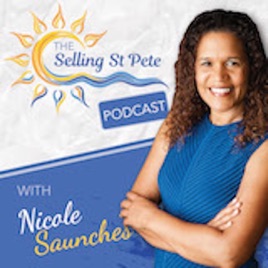
Advertise on podcast: Selling St Pete with Nicole Saunches
Rating
5from
This podcast has
81 episodes
Language
EnglishPublisher
Nicole SaunchesExplicit
No
Date created
2019/09/20
Latest episode
2026/09/25
Average duration
38 min.
Release period
28 days
Description
Your Go-To Resource for all things real estate and all things St Pete
Unlock Selling St Pete with Nicole Saunches podcast Email contact info,
Listeners & Audience details
Email contact information
Direct podcast contact details

Listeners
Audience numbers & engagement insights

Audience details
Podcast Insights

Podcast episodes
Check latest episodes from Selling St Pete with Nicole Saunches podcast
E081: Hurricane Deductibles, Storm Damage & Flood Insurance: What Florida Condo Owners Get Wrong
2026/09/25
In Florida, your hurricane deductible doesn't work like any other deductible on your policy. It's likely a percentage of your dwelling coverage, and it applies once per calendar year, not once per claim. After Helene and Milton hit two weeks apart in 2024, a lot of homeowners learned that the hard way.
In Part 2 of this conversation, Nicole Saunches is joined again by Jill Quinn of Florida All Risk Insurance, a licensed agent and former field adjuster. They break down how hurricane deductibles really behave in a bad storm season, and why you should document and report every storm, even when you know the damage won't reach your deductible. They also explain why flood insurance is always a separate policy, and what buyers relocating to Florida need to know about flood zones and wind pool coverage before they start touring condo buildings.
In this episode:
The difference between your all-other-perils (AOP) deductible and your hurricane deductibleWhy a hurricane deductible is a percentage, and why it applies per calendar yearHow damage from back-to-back storms (like Helene and Milton) can add up to meet one deductibleWhere to find your deductibles on your declarations pageWhy an adjuster's report on file can protect a future claim, even if the first one is deniedWhat good storm documentation looks like: timestamped photos and dated receiptsSecond homes, absentee owners, and who's responsible for mitigating damage in a condoWhy flood is never part of a standard homeowners policy, and why some coastal owners carry three policiesWhat relocating buyers should ask about flood before they tour, not after they're under contractA pre-offer insurance checklist for condo buyersCommon Florida hurricane deductibles today, from $500 to 10% of dwelling coverage
Chapters / Timestamps00:00 — The 2024 lesson: how hurricane deductibles really work01:30 — Hurricane deductible vs. all-other-perils (AOP) deductible03:00 — Why hurricanes get their own percentage deductible04:15 — Two storms, one year: Helene and Milton05:15 — Where to find your deductibles on your declarations page05:45 — Does a quiet hurricane season change anything?06:45 — Why you should document and report every storm08:40 — What good documentation looks like09:10 — Second homes and back-to-back storms10:45 — Flood insurance: why it's always a separate policy12:15 — Wind pool: when you may need three policies12:50 — Flood questions to ask before you tour a condo13:50 — Scenario: windows blown in at a downtown St. Pete high-rise14:40 — Your pre-offer condo insurance checklist16:20 — What current condo owners should review this year17:00 — The biggest insurance misconception17:40 — Common Florida hurricane deductibles: $500 to 10%18:50 — How to reach Jill Quinn
Quick Answers How does a hurricane deductible work in Florida? A Florida hurricane deductible is usually a percentage of your dwelling coverage, commonly 1% to 5% and sometimes up to 10%. It applies once per calendar year rather than once per claim. Florida law requires the dollar amount to be listed next to the percentage on your declarations page.
What is an all-other-perils (AOP) deductible? It's the flat-dollar deductible, often $1,000 to $2,500, that applies per claim to non-hurricane losses such as a kitchen fire, a burst pipe, or theft.
If two hurricanes hit in one year, do I pay two hurricane deductibles? No. The hurricane deductible applies once per calendar year, so damage from separate named storms (like Helene and Milton in 2024) can add up toward that single deductible.
Should I report storm damage if it's below my deductible? Jill recommends it. An adjuster's photos and estimate stay on file even if the claim is denied, which can protect you if a later storm causes more damage. She also notes that your carrier can't drop you for filing a hurricane claim, as long as you took reasonable steps to prevent further damage.
Does homeowners or HO-6 insurance cover flood? No. Flood (water coming from the outside in, such as storm surge, rising water, or overflowing canals) is excluded from standard policies. It's covered separately through the National Flood Insurance Program or private flood carriers.
Resources & LinksPart 1: Condo Master Policy vs. HO6 Insurance Explained Podcast: https://selling-st-pete-with-nicole-saunches.captivate.fm/episode/condo-master-policy-vs-ho6-insurance-florida/ Blog: https://www.sellingstpetefl.com/posts/condo-master-policy-vs-ho6-insurance-where-your-coverage-gap-really-is This episode's blog post: https://www.sellingstpetefl.com/posts/how-your-florida-hurricane-deductible-really-works-and-why-flood-is-a-separate-policyCondo Series hub: https://www.sellingstpetefl.com/posts/buying-a-florida-condo-in-2026-the-complete-guide-to-financing-legal-red-flags-insuranceHurricane Season hub: https://www.sellingstpetefl.com/posts/the-hurricane-season-guide-for-tampa-bay-buyers-sellers-insurance-flood-risk-mortgage-closings
Connect with Jill Quinn — Florida All Risk InsurancePhone: 727-315-1003Email: [email protected]: Jill Insures FloridaWeb: floridaallrisk.com
Connect with Nicole Saunches — Selling St. PetePhone: 719-201-5022Email: [email protected]: sellingstpetefl.com/posts
This episode is for educational purposes only and isn't insurance or legal advice. Coverage depends on your specific policy. Talk with a licensed agent about your situation.
E080: Condo Master Policy vs. HO6: The Insurance Coverage Gap That Catches Florida Buyers Off Guard
2026/09/18
If you own a Florida condo or you're buying one, there's a gap between what your association's master policy covers and what you're personally responsible for — and many owners don't find out where the gap is until it's too late to fix it. In this episode, host Nicole Saunches sits down with Jill Quinn of Florida All Risk Insurance — a 26-year insurance industry veteran with hands-on experience as a licensed catastrophe claims adjuster (including Hurricane Irma and Hurricane Michael) — to walk through exactly what a condo owner's individual policy needs to cover, line by line, and what's happening in the Florida insurance market right now.
About the GuestJill Quinn has spent 26 years in the Florida insurance industry — first as a licensed sales representative with Allstate and AAA, then as a state-licensed claims adjuster handling catastrophe property claims for carriers including State Farm and Tower Hill. She worked the field after Hurricane Irma (2017) and handled pre-litigation claims after Hurricane Michael (2018), later moving to the carrier side as a territorial sales manager overseeing 500+ agents across six Florida counties before returning to sales with Florida All Risk Insurance. Her background spans sales, claims, underwriting, and the carrier perspective — a rare combination in the industry.
Contact Jill Quinn:
Phone: 727-315-1003Facebook: Jill Insures FloridaWebsite: floridaallrisk.com
What's Covered (Timestamps Approximate)[00:00] Why the gap between the association's master policy and your own coverage matters more in Florida than almost anywhere else[01:00] Jill's 26-year path from sales to catastrophe claims adjuster to territorial sales manager[04:00] The current Florida insurance underwriting climate — 20+ new carriers, Citizens down to ~2% market share[06:00] What people relocating to Florida don't know to ask about (separate policies for separate perils)[07:30] Why premiums keep rising even in quiet storm years (rebuild costs, materials, reinsurance — not just storm losses)[09:30] Regulatory changes: shrinking claim-settlement timelines and the move away from assignment-of-benefits litigation[12:00] Master policy vs. HO6: where the association's coverage ends and yours begins[14:00] Flood damage vs. water damage — and why the distinction catches people off guard[16:00] Personal liability coverage, explained through a real condo scenario[17:30] Medical payments to others vs. liability — what's the difference[18:30] Personal property coverage and when to schedule high-value items separately[20:00] Additional living expenses (loss of use) — what it reimburses and why to save receipts[21:00] Loss assessment coverage: a real example using a hypothetical Hurricane Milton scenario and a $1M association deductible split across 100 units[23:30] The #1 misunderstanding that derails condo purchases or catches existing owners off guard[24:30] Wind mitigation inspections — how they work and how much they can save a condo unit owner[28:30] Buying into a condo building that hasn't completed its state-required milestone inspection
Key TakeawaysThe association's master policy covers the building's structure and common areas. Your own HO6 policy covers your unit's interior finishes, personal property, liability, and loss assessment.In a condo, water damage — not fire — is the most common claim, and it's frequently caused by a neighboring unit.Loss assessment coverage only responds to assessments tied to a covered loss, not every assessment your association issues — which is why knowing the master policy's hurricane deductible and the association's reserves matters.A wind mitigation inspection filed in the unit owner's name (not just the association's) can unlock discounts of $1,000 or more, especially tied to wind opening protection on doors and windows.Nearly 3,000 buildings statewide still haven't completed their post-Surfside milestone inspections — and that can affect whether a carrier will even write a policy on a unit in that building.
Related Episodes in This SeriesThis episode is the third in a three-part series on Florida condo ownership:
Florida Condo Financing in 2026: Why Your Mortgage Can Be Denied After You're Approved (with Doug Wagner, CrossCountry Mortgage) Podcast: https://selling-st-pete-with-nicole-saunches.captivate.fm/episode/florida-condo-financing-2026-mortgage-denied/ Blog: https://www.sellingstpetefl.com/posts/florida-condo-financing-in-2026-why-your-mortgage-can-be-denied-after-you-re-approvedWhat Changed Since SB 4D — and the Condo Red Flags Attorneys Actually Watch For (with David Reider, Berlin Patten Ebling) Podcast: https://selling-st-pete-with-nicole-saunches.captivate.fm/episode/what-changed-since-sb-4d-and-the-condo-red-flags-attorneys-actually-watch-for/ Blog: https://www.sellingstpetefl.com/posts/buying-a-florida-condo-in-2026-here-s-the-red-flag-checklist-an-attorney-actually-uses
Coming UpA future episode with Jill Quinn will cover hurricane deductibles in depth — how they work differently from standard deductibles, why documenting every storm matters even below your deductible, and what buyers relocating to Florida need to know about flood insurance before they start touring buildings.
E079: This $80,000 Grant Could Get St. Pete Hurricane Renters Into a Home — Even in a Flood Zone
2026/09/04
What is the Sunrise St. Pete program, in one sentence? Sunrise St. Pete is a HUD-backed, forgivable down payment assistance grant of up to $80,000 for renters who lived in St. Petersburg during Hurricane Idalia or Hurricane Helene, designed to help them transition from renting into homeownership — including in flood zones.
If you were renting in St. Petersburg during Hurricane Idalia or Hurricane Helene and assumed homeownership was out of reach, this episode is your reason to reconsider. Host Nicole Saunches sits down with Alexa Price of GO Mortgage — a lender who has spent three decades in the mortgage industry — to unpack the Sunrise St. Pete Homeowner Assistance Program, a HUD community development disaster recovery grant that offers eligible buyers up to $80,000 in forgivable down payment assistance.
What makes this program different from typical down payment assistance? Two things. First, it's genuinely forgivable — not a second mortgage you start repaying immediately, but a 0% interest lien that's forgiven at 20% per year, disappearing entirely after five years in the home. Second, and unusually for a program of this kind, it allows buyers to purchase in a flood zone — something the earlier, similar Pinellas Recovers program didn't permit. In a city surrounded by water on three sides, that single detail opens the door to a huge share of St. Pete's housing inventory that would otherwise be off-limits.
Alexa walks through exactly how the $80,000 figure is calculated (hint: it's tied to a front-end debt ratio between 35–37%, not a flat number everyone receives), who counts as a household for income purposes, how the program handles self-employed borrowers, and why there's no credit score minimum. She also addresses the biggest misconceptions buyers have — including why there's no pre-approval letter reserving funds, and why this program moves on a first-come, first-qualified basis.
Beyond the program mechanics, Alexa and Nicole dig into the bigger picture for renters sitting on the sidelines: why waiting for interest rates to drop is a losing strategy in a market where 71% of buyers are doing the same thing, how seller-paid rate buydowns can offset today's rates, and why the lending environment today has nothing in common with 2008. If you've been told by a well-meaning parent or friend that now isn't the time to buy, this conversation is worth sharing with them too.
Guest contact: Alexa Price, GO Mortgage — 727-409-3869 | [email protected]
FULL SHOW NOTES WITH TIMESTAMPS[00:00] Introduction — up to $80,000 available for St. Pete hurricane-impacted renters[00:01] Alexa Price's background: 30 years in mortgage lending, GO Mortgage branch in Palm Harbor[00:02] How Alexa connected to the program via the earlier Pinellas Recovers initiative[00:03] Grant structure explained: 0% interest, second lien, forgivable — not a typical repayable DPA[00:04] How the $80,000 figure is actually calculated (front-end ratio must stay between 35–37%)[00:05] How household income is determined, including minors and other household earners[00:06] What "0% interest, no monthly payment" means in practice[00:07] Forgiveness schedule: 20% forgiven per year, fully forgiven at year five[00:08] Residency requirement: proving you lived in St. Pete during Idalia/Helene (leases, utilities)[00:09] Income eligibility: up to 120% AMI (limited slots) vs. 80% AMI (more availability), with real dollar examples for a household of three[00:10–11] How the grant works alongside a conventional or FHA mortgage at today's rates[00:12] Stacking this grant with other down payment assistance programs[00:13] Property eligibility: must be within city limits; open question on single-family homes with ADUs[00:14] "Don't currently own another residential property" — nuances around estate planning and prior storm-era ownership[00:15] Flood zones are allowed — a major difference from Pinellas Recovers[00:16] Biggest misconception: there's no pre-approval reserving funds; approval happens during the transaction[00:17] City of St. Pete property inspection requirement, including lead-based paint review[00:18] No minimum credit score requirement[00:19] Why this is a "call a professional, not ChatGPT" situation[00:20–21] Why buyers shouldn't be afraid to call and ask questions — no aggressive follow-up[00:22] First step for an interested buyer: the Sunrise St. Pete address lookup tool at stpete.org, then a call to Alexa's team[00:23] Application is free; only a soft credit pull, no impact to credit score[00:24–28] Homeownership myths: "I can only afford a starter home," rate vs. rent math, and the value of just starting somewhere[00:29] The 71%-of-buyers-waiting-for-rates statistic and why that creates future competition[00:30–33] Rate buydown options (3-2-1, 2-1, 1-1) and how they compare to renting long-term[00:33–35] Why today's lending standards are nothing like 2008 — no-doc/neg-am loans no longer exist[00:36] How to reach Alexa Price directly[00:37] Closing thoughts
FREQUENTLY ASKED QUESTIONS What is the Sunrise St. Pete Homeowner Assistance Program? It's a HUD community development disaster recovery grant administered by the City of St. Petersburg, offering up to $80,000 in forgivable down payment assistance to eligible renters affected by Hurricane Idalia or Hurricane Helene.
How much money can I actually get? Up to $80,000, but the exact amount is calculated to keep your front-end debt-to-income ratio between 35% and 37% — so the award amount varies by buyer, not a flat number for everyone.
Is this really forgivable, or do I have to pay it back? It's forgiven at 20% per year over five years. If you stay in the home the full five years, the entire amount is forgiven. If you sell or move earlier, you'd owe the remaining unforgiven percentage.
Can I buy a home in a flood zone with this program? Yes — this is one of the program's biggest differentiators. The earlier, similar Pinellas Recovers program did not allow flood zone purchases; Sunrise St. Pete does.
Do I need good credit to qualify? There's no minimum credit score requirement. Eligibility comes down to whether you can qualify for an underlying mortgage product (FHA, conventional, etc.), not a set credit threshold.
Who determines household income for eligibility? The program reviews all income in the household, including working minors and other household members, up to 120% of Area Median Income (AMI) with limited availability, or up to 80% AMI with more availability.
Can I get pre-approved and have funds set aside for me? No. Unlike some other disaster recovery programs, Sunrise St. Pete does not issue pre-approval letters reserving funds. Buyers work with a lender, go under contract, and funds are confirmed as available at that stage.
What property types qualify? Condos, villas, townhomes, and single-family homes within St. Petersburg city limits, purchased as a primary residence. (Single-family homes with ADUs are still being clarified with the program at the time of this recording.)
How do I find out if my address qualifies? Use the address lookup tool on stpete.org under the Homeowner Assistance Program / Sunrise St. Pete section.
What's the first step if I think I qualify? Check your address on the Sunrise St. Pete lookup tool, then contact a participating lender — like Alexa Price at GO Mortgage — for a free application with only a soft credit pull.
KEY STATS & QUOTABLE FACTS Up to $80,000 in forgivable down payment assistanceForgiven at 20% per year over a 5-year periodFront-end debt-to-income ratio must stay between 35–37% to determine award sizeIncome eligibility up to 120% AMI (limited availability) or 80% AMI (more availability)No minimum credit score requirementFunded through a HUD Community Development Block Grant – Disaster Recovery (CDBG-DR) allocation to the City of St. PetersburgOn average, homeowners have 44% more net worth than renters at retirement (cited by host)71% of prospective buyers are reportedly waiting for interest rates to drop before purchasing
GUEST BIOAlexa Price is a mortgage professional with roughly three decades of lending experience, currently leading a branch of GO Mortgage based in Palm Harpor, Florida (offices in Palm Harbor and Largo). She previously worked extensively with the Pinellas Recovers disaster recovery down payment assistance program and now helps buyers navigate the Sunrise St. Pete Homeowner Assistance Program.
Contact Alexa Price:
Phone/Text:...
E078: Florida Condo Financing in 2026: Why Your Mortgage Can Be Denied After You're Approved
2026/08/27
Can you be fully approved for a mortgage and still have your condo loan denied? Yes. Mortgage expert Doug Wagner explains why the condominium building itself can determine whether a buyer can get financing, what changed August 3, 2026, how condo reserves and insurance affect financing, and what buyers and sellers should know before getting under contract.
If you're buying a Florida condo in 2026, there's an important question you need to ask before writing an offer:
Does the condo building qualify for financing?
In this episode of Selling St. Pete, Nicole Saunches talks with mortgage expert Doug Wagner of CrossCountry Mortgage about the changing world of Florida condo financing.
A buyer can have excellent credit, sufficient income, a down payment and a mortgage preapproval and still have a loan denied because of the condo project itself.
And that's why condo buyers and sellers need to understand more than just the price of the unit.
What you'll learnIn this episode, Doug explains:
• Why condo financing is different from financing a single-family home
• How Florida's post-Surfside condo changes are affecting lending
• Why the condo association can be just as important as the buyer
• What changed with Fannie Mae's Limited Review process on August 3, 2026
• Why putting more money down isn't necessarily the solution it once was
• How reserve allocations can affect condo financing
• The difference between money already sitting in reserves and money being allocated to reserves
• Why the upcoming January 4, 2027 reserve change matters to condo owners
• How insurance issues can derail a condo mortgage
• How structural problems, repairs and special assessments can affect financing
• What “warrantable” and “non-warrantable” mean
• Whether a non-warrantable condo can still be financed
• How portfolio and non-QM loans may provide alternatives
• How seller credits and interest-rate buydowns may help in some transactions
• Why a condo that wasn't financeable previously may become financeable later
• What buyers should ask for BEFORE writing an offer
• Why sellers should consider reviewing their condo documents before listing
• Why the lowest HOA fee isn't necessarily the best deal
The most important takeawayWhen you buy a condo, you're not just buying the unit. You're buying into the association.
The building's budget, reserves, insurance, repairs, litigation and other characteristics can affect whether financing is available.
That's why the condo should be reviewed early in the transaction rather than waiting until the buyer has already paid for inspections and an appraisal.
What should you ask before buying a Florida condo?Doug recommends asking about:
• The most recent approved budget
• Certificates of insurance
• Pending litigation
• Structural repairs or renovations
• Mandatory membership dues
• Recreational leases
• Hotel or condotel operation
• Recent and anticipated special assessments
And once you have the information, have a qualified mortgage professional review it.
Coming January 4, 2027The standard replacement-reserve allocation for applicable Full Review loans is scheduled to increase from 10% to 15%, subject to applicable requirements and alternatives.
For condo owners, boards, buyers and sellers, that makes understanding the association's budget and reserves especially important.
Listen to Part 1This episode is the financing side of a larger Florida condo conversation.
If you haven't already, listen to:
What Changed Since SB 4D — And the Condo Red Flags Attorneys Actually Watch For
Attorney David Reider explains the legal and document-review side of buying a Florida condo, including milestone inspections, Structural Integrity Reserve Studies, the condo rider and other important condo documents.
Read the companion articleBuying a Florida Condo in 2026? Here's the Red-Flag Checklist an Attorney Actually Uses
About Selling St. PeteSelling St. Pete with Nicole Saunches explores buying, selling, investing and living in St. Petersburg and throughout the Tampa Bay area, with a particular focus on Florida condos, waterfront property, relocation and the issues that can affect your real estate decision.
DisclaimerThis episode is for educational purposes only and is not mortgage, legal, tax, insurance or financial advice. Mortgage and condo project requirements can change. Always consult an appropriately licensed professional about your specific situation.
E077: What Changed Since SB 4D — And the Condo Red Flags Attorneys Actually Watch For
2026/08/20
In this episodeNicole sits down with David Reider — real estate attorney and partner at Berlin Patten Ebling, and a former licensed Florida real estate agent — to unpack everything that's changed in Florida condo law since the Surfside collapse and Senate Bill 4-D (SB 4D), and what it actually means for someone buying a condo in St. Pete right now.
David isn't just a real estate attorney — he holds a master's in public health and disaster relief, that combination is exactly why this conversation goes deeper than the standard "SB 4D explainer" you'll find elsewhere: it's a working attorney's actual checklist, built from doing 10–20 condo document reviews a week.
If you're buying a condo in Florida right now, there's a stack of paperwork behind that condo rider that didn't exist a few years ago — and it might be the most important part of your contract. In this episode, Nicole and David break down what's changed since SB 4D: milestone inspections, Structural Integrity Reserve Studies, the new 7-business-day document review window, and the specific red flags — flat HOA fees, missing inspections, active litigation — that should make any buyer stop and dig deeper before closing. Whether you're buying downtown in St. Pete or anywhere else in Florida, this is the episode for a buyer who thinks "the condo docs are just paperwork."
Show notes / full breakdown: https://www.sellingstpetefl.com/admin/posts/buying-a-florida-condo-in-2026-here-s-the-red-flag-checklist-an-attorney-actually-uses
Guest: David Reider, Real Estate Attorney, Berlin Patten Ebling, 727-822-2505
E076: Is That Musty Smell Mold? What Every Florida Homeowner Needs to Know
2026/08/06
Florida's heat, humidity, and rain make it one of the most mold-prone climates in the country — and today's episode breaks down what that actually means for your home. Host Nicole Saunches talks with Doug and Ryen Linder, the father-son team behind DR Mold Solutions, about the black mold myth, where mold hides that you'll never see, what a real mold inspection report looks like, EPA/FDA-approved fogging treatment, the ideal indoor humidity range, and a rapid-fire Myth or Fact segment. Whether you're buying, selling, or just living in a Florida home, this one's worth the listen.
Guests: Doug Linder & Ryen Linder, DR Mold Solutions (drmoldsolutions.com | 727-888-3858)
Topics covered: indoor air quality, mold types & the black mold myth, mold inspections, remediation & fogging treatment, HVAC maintenance, ideal home humidity, real estate due diligence, prevention tips
Chapters: 00:00 Intro | 03:30 Why Tampa Bay is a mold hotspot | 07:00 What indoor air quality really means | 12:00 The black mold myth | 17:00 A mold inspection, start to finish | 24:00 Remediation & fogging treatment | 36:00 Prevention & the #1 tip | 43:00 Ideal humidity range | 45:00 Myth or Fact | 52:00 How to reach DR Mold Solutions
Links: www.drmoldsolutions.com
Contact DR Mold Solutions: 727-888-3858
E075: Understanding VA Entitlements: Demystifying Assumable Mortgages for Veterans
2026/07/31
VA entitlement isn't a loan amount, a credit line, or a one-time coupon — and almost nobody explains it correctly. In this episode, Nicole Saunches sits down again with Nora Simpson of AssumeList to break down VA entitlement in plain terms: full vs. partial entitlement, why there's no real cap on what a veteran can borrow, how to hold two VA loans at once, and the biggest myth in the industry — that only veterans can assume a VA loan.
In this episode:
What VA entitlement actually is (and isn't)Full entitlement vs. partial entitlement, explainedOwning two homes with VA loans at the same timeWhy leaving entitlement in place can be the smarter moveWho can actually assume a VA loan (hint: not just veterans)How to calculate exactly how much entitlement you have leftRapid-fire true/false on the industry's biggest misconceptions
Links mentioned:
AssumeList: assumelist.comFree daily Q&A: homes.assumelist.com/learn (weekdays, 11 AM ET / 8 AM PT)Assumable Mortgage Hub: https://www.sellingstpetefl.com/posts/the-assumable-mortgage-guide-how-to-buy-or-sell-with-a-2-3-interest-rate-in-today-s-market
Connect with Nicole Saunches:
📧 [email protected] | 📱 Call/text: 719-201-5022
Veterans navigating a sale, purchase, or VA loan assumption in Tampa Bay — reach out directly. Buyers and investors wanting a free AssumeList sub-account, DM Nicole.
E074: Understanding Financing Options for Assumable Mortgages
2026/07/30
Assumable mortgages can be one of the biggest opportunities in today's real estate market, but one question stops many buyers before they even get started:"How do I pay the difference between what the seller owes and what the home is worth?"
In this episode of Selling St. Pete, Nicole Saunches sits down with Ryan Nelson of Barrett Financial, AssumeList's preferred lending partner, to explain exactly how buyers can finance the equity gap when purchasing a home with an assumable mortgage.
If you've been told you need hundreds of thousands of dollars in cash to assume a low-interest mortgage, this episode may completely change the way you think about the process.
In This Episode You'll LearnWhat the equity gap is and why it exists in almost every mortgage assumptionWhy financing the equity gap is a separate process from assuming the existing loanHow second mortgages and HELOCs can help buyers bridge the gapWhen assuming a mortgage makes financial sense—and when it doesn'tHow blended interest rates work when combining an assumable mortgage with secondary financingWhat buyers must do to qualify for an assumable mortgageCommon mistakes that can derail financing before closingWhy sellers with 2–3% mortgage rates may be sitting on an incredibly valuable assetThe biggest myths surrounding assumable mortgages
Key TakeawaysOne of the biggest misconceptions about assumable mortgages is that buyers must have enough cash to cover the seller's equity. In reality, qualified buyers may be able to obtain secondary financing to bridge that gap.
Ryan explains how fixed-rate second mortgages and home equity lines of credit (HELOCs) can work alongside an assumed mortgage, allowing buyers to take advantage of historically low interest rates while financing only the difference between the existing loan balance and the purchase price.
The conversation also emphasizes that every transaction should be evaluated individually. Sometimes assuming a mortgage creates enormous long-term savings. Other times, depending on the loan balance and equity, a traditional mortgage may actually be the better financial choice.
As Ryan says throughout the episode:
It's all about doing the math.
Myth vs. FactNicole closes the episode with a rapid-fire Myth or Fact segment covering:
Do you always need a second mortgage?Does assuming a mortgage eliminate underwriting?Can only the original lender finance the equity gap?Does Barrett Financial only work with AssumeList clients?
The answers may surprise you.
Featured GuestRyan Nelson
Barrett Financial Group
Ryan specializes in assumable mortgage financing, second mortgages, HELOCs, FHA, VA, conventional financing, and self-employed borrower solutions. He works with buyers nationwide to help structure financing options that make homeownership more affordable.
Connect with Ryan NelsonPhone: (480) 861-7841
Email: [email protected]
Resources MentionedAssumeListBarrett FinancialBlended Mortgage Rate Calculator (search "Blend Rate Calculator" online)
About Selling St. PeteSelling St. Pete is your trusted resource for real estate education throughout the Tampa Bay area. Host Nicole Saunches interviews industry experts to help buyers, sellers, investors, and homeowners better understand today's housing market, financing strategies, insurance, legal issues, and the many options available when making one of life's biggest financial decisions.
If you found this episode helpful, please subscribe, leave a review, and share it with someone who could benefit from learning more about assumable mortgages.
E073: Mortgage Assumption 101: How St. Pete & Tampa Buyers Are Landing 2–3% Rates in Today's Market
2026/07/15
Home prices are up, rates are up, and most buyers assume that means they're priced out. But some homes still carry a mortgage from 2020 or 2021 — with a rate of 3%, 2%, sometimes even lower — and in the right circumstances, a qualified buyer can simply take it over. It's called a mortgage assumption, and it might be the most underused tool in real estate right now.
In this episode of Selling St. Pete, host Nicole Saunches sits down with Nora Simpson, Head of Education at AssumeList, for "Mortgage Assumption 101." Nora breaks down which loans are actually assumable (VA, FHA, and USDA), how buyers can bridge the equity gap with as little as 10% down, why sellers with an assumable mortgage may be sitting on a goldmine for their sale price, and how AssumeList closes assumptions in 60 days or less with a perfect approval track record. Nora also joins Nicole for a rapid-fire "Myth or Fact" segment, busting six of the most common misconceptions about mortgage assumptions.
In this episode:
What a mortgage assumption actually is (and how it differs from "creative financing")Which loan types qualify — VA, FHA, and USDA — and the nuances of eachHow buyers cover the equity gap with a second mortgage and as little as 10% downWhy assumable listings can spark bidding wars and drive prices above listThe #1 reason assumptions stall (hint: it's not the loan type)Six mortgage assumption myths, debunked
Guest: Nora Simpson, Head of Education at AssumeList. Daily live Q&A, Monday–Friday, 11am ET / 8am PT at assumelist.com. Registration: homes.assumelist.com/learn. Email: [email protected].
Host: Nicole Saunches, Selling St. Pete — an AssumeList-trained agent serving the St. Petersburg–Tampa area.
🎧 Listen to the full episode: https://player.captivate.fm/episode/8949653c-340c-41ab-81d4-95a2089af562/ Also available on Spotify and Apple Podcasts.
E072: Is Now a Good Time to Buy or Sell in St. Pete? The Truth Behind the Headlines | with Doug Wagner, CrossCountry Mortgage
2026/06/23
Is the St. Pete real estate market actually slow — or is that just the national headline?
In this episode of Selling St. Pete, I sit down with Doug Wagner of CrossCountry Mortgage to unpack what's really happening in Pinellas County right now — and why the story here looks different from what you're seeing on the news.
Whether you bought in 2021 and feel trapped by your low interest rate, you're renting and wondering if now is the right time to buy, or you just want honest numbers, this conversation is for you.
What we cover:
Why existing home sales have been stuck near 4 million nationally — and what that means locallyHow COVID artificially pulled demand forward, and why rates returning to "normal" isn't bad newsThe absorption rate trend in Pinellas County that the media isn't talking aboutWhy 70% of real estate agents didn't sell a single home last year — and how to make sure yours didThe bridge loan strategy that lets equity-rich homeowners make non-contingent offersWhy renting is almost always more expensive than owning — and when the math finally tipsThe condo market split: why Downtown St. Pete (33701) is a seller's market while beach communities sit at 15 months of inventoryHow to use seller concessions and rate buydowns to improve affordability without waiting for rates to dropThe starter home strategy: why your first home doesn't have to be your forever home
Key stats from this episode:
Average net worth of a renter: ~$10,000Average net worth of a homeowner: ~$400,000Historical average 30-year mortgage rate: high 6% rangeDowntown St. Pete condo inventory: seller's market over $1M, buyer's market under $1 M (different dynamics)Beach community condo inventory: ~15 months
Connect with Doug Wagner: 📞 727-543-2897 | CrossCountry Mortgage | knowmyhomebudget.com
Selling St. Pete is your hyper-local guide to the St. Petersburg, Florida real estate market — hosted by luxury real estate advisor Nicole Saunches of Coastal Properties Group International and Forbes Global Properties.
E071: Using Home Warranties as a Strategic Negotiating Tool for Sellers
2025/12/11
In this episode of Selling St. Pete, host Nicole Saunches sits down with home warranty expert Tina Romanik from Home Warranty of America to discuss how sellers can leverage home warranties as powerful negotiating tools. Whether you're listing a property with aging mechanicals or simply want to stand out in a competitive market, learn how offering a home warranty up front can protect you from costly repair negotiations, give buyers peace of mind, and potentially help you close deals faster.
This episode is essential listening for sellers, listing agents, and anyone preparing to list a property in St. Petersburg or the Tampa Bay area.
About the GuestTina Romanik is a home warranty specialist with Home Warranty of America, where she works with real estate agents and homeowners throughout Florida to navigate home warranty coverage strategically. With deep expertise in how home warranties intersect with real estate transactions, Tina helps sellers protect their listings and buyers secure their investments through comprehensive service agreements.
Episode Highlights & TimestampsIntroduction (00:00 - 01:05)Nicole introduces the topic: home warranties as a negotiating tool for sellersOverview of what listeners will learn in this episode
What is a Home Warranty? (01:05 - 02:31)[01:21] Definition: Service agreement covering plumbing, electrical, appliances, HVAC[01:40] Key difference: Home warranties cover normal wear and tear[01:58] Homeowners insurance vs. home warranty: What each covers[02:10] Example scenarios: AC thermostat failure vs. water heater explosion damage
Understanding Plan Options (02:31 - 04:03)[02:39] Four plan tiers: Gold, Platinum, Diamond (buyer plans) and Seller's Coverage[02:54] Buyer plans: 13-month terms with various add-ons[03:09] Seller's coverage: 6-month term with focused protection[03:23] Available add-ons: Guest houses, pools, outdoor kitchens[03:44] Core components covered in seller's plans
Primary Residence vs. Investment Properties (04:03 - 05:29)[04:12] How warranties work for investors with multiple properties[04:34] Payment options: Closing integration or post-close credit card[04:43] Payment plans available at no additional cost[05:02] 30-day waiting period for non-transaction purchases[05:08] Why the waiting period exists: Preventing known issue coverage
Timing: When Should Sellers Purchase? (05:29 - 07:05)[05:44] Think of warranty purchase as a "reservation" in the transaction[06:01] Invoice process: Title agent, buyer's agent, and buyer notification[06:07] Payment happens at closing, not upfront[06:26] Strategic marketing advantage in competitive markets[06:53] Using warranties as backup strategy for inspection negotiations
Marketing Advantages of Offering a Home Warranty (07:05 - 09:27)[07:22] Signals quality: "Certified pre-owned" positioning for homes[07:38] Shows seller commitment to protecting the buyer[08:00] Creating a psychological edge in the market[08:15] Practical example: Declining HVAC repair credit for warranty coverage[08:54] Leveraging warranties in multiple offer scenarios[09:05] Using as tiebreaker when offers are financially equal
Protecting Sellers from Expensive Repairs (09:27 - 13:00)[09:38] Seller's coverage: Protection while property is listed[09:52] Case study: Preventing $4,000-$6,000 water heater replacement cost[10:15] Real scenario: AC unit failure before inspection[10:45] How immediate repairs keep deals moving forward[11:25] Strategic benefit: Avoiding back-to-market after contract falls through[12:15] Six-month window: Critical protection period for sellers[12:34] Lower service call fees during listing period
Creating Buyer Confidence (13:00 - 16:30)[13:15] How warranties address first-time buyer concerns[13:42] Buyer perspective: Safety net for unexpected breakdowns[14:08] Reducing anxiety about older home systems[14:35] Marketing language: "This home comes with peace of mind"[15:10] Converting warranty coverage from seller to buyer plan at closing[15:45] Building trust through seller-provided protection
Common Misconceptions About Home Warranties (16:30 - 20:45)[16:45] Myth: "Home warranties don't cover anything"[17:12] Reality: Understanding coverage limitations prevents disappointment[17:38] Proper maintenance requirements for coverage eligibility[18:05] Pre-existing conditions: What's covered and what's not[18:42] Home inspection reports: How they affect warranty claims[19:15] Documentation importance: Service records matter[19:48] Setting realistic expectations with clients
The Claims Process: What Sellers and Buyers Should Know (20:45 - 24:15)[21:00] Step-by-step: How to file a claim[21:25] Response timeframe: 24-48 hours for technician dispatch[21:58] Trade call fee structure: $100 standard, $75 add-on option[22:30] What happens during a service visit[23:05] Repair vs. replacement decisions[23:35] Coverage caps: Understanding policy limits[24:00] Communication with warranty company throughout process
Real-World Scenarios: Using Warranties in Negotiations (24:15 - 28:15)[24:30] Scenario 1: Aging HVAC system during inspection[25:05] Scenario 2: Multiple inspection repair requests[25:40] Scenario 3: Buyer asking for credits vs. warranty[26:15] Script for agents: How to present warranty as alternative to repairs[26:50] Negotiation strategy: Warranty + limited repairs[27:25] Converting repair requests into covered items[27:55] Managing expectations during due diligence period
What's NOT Covered: Important Limitations (28:15 - 30:08)[28:23] Function vs. features: Core coverage principle[28:35] Example: Refrigerator iPad screen vs. cooling function[29:01] Non-covered scenario: Kids' toys clogging drains[29:31] Pet damage: HVAC system urination example[29:45] Not normal wear and tear situations[30:00] Why understanding limitations protects the relationship with clients
Why Home Warranty of America Stands Out (30:08 - 32:38)[30:09] No age restrictions on mechanicals (with proper maintenance)[30:27] Local technician network advantage[30:40] Real example: Orlando techs sent to St. Pete (other companies)[31:02] Signature feature: 13-month coverage (not 12 months)[31:16] Competitive pricing: Under $900-$1,000 range[31:39] Plan consistency: No downgrades upon renewal[31:46] Hidden downgrade issue with other companies[32:00] Trade call fees: $100 standard, $75 add-on available[32:13] Strategy tip: Negotiate dollar limit for add-on inclusion
Multiple Trade Situations (32:38 - 33:00)[32:45] Each trade requires separate service call fee[32:58] Example: Refrigerator, washer/dryer, HVAC = three separate fees
Closing Thoughts (33:00 - 34:03)Nicole's summary of key benefits for sellersImportance of strategic home warranty usageCall to action for sharing the episode
Key Takeaways for St. Petersburg SellersHome warranties cover normal wear and tear - Unlike homeowners insurance, which covers disasters and catastrophic events, home warranties protect against everyday breakdowns of major systems and appliances.Seller's coverage is specifically designed for the listing period - Six-month terms with focused coverage on core home components while you're actively marketing your property.Offering a warranty upfront creates marketing advantages - Position your property as "certified" and demonstrate commitment to protecting buyers, making your listing stand out in competitive markets.Use warranties strategically during inspection negotiations - Instead of agreeing to expensive repairs or credits,...
E070: The Girl Boss Effect: Empowering Women, Building Wealth, and Creating Community
2025/10/23
In this inspiring episode of Selling St. Pete with Nicole Saunches, Nicole sits down with Sandy Bean, founder of the St. Pete Girl Boss Network — a 10,000+ member community of women entrepreneurs who are redefining what collaboration and connection look like in business.
Together, they explore how Sandy transformed personal challenges into a powerful movement centered around belonging, psychological safety, and abundance. The conversation dives into how the Girl Boss community empowers women to build authentic relationships, grow thriving businesses, and even reshape the local economy through collaboration and real estate investment.
Key ThemesThe divine inspiration behind St. Pete Girl Boss and how it became a citywide movement.Why belonging and psychological safety are the real foundations of success.How women can transform competition into collaboration — and build stronger businesses together.The connection between wealth, real estate, and women’s empowerment.The post-Hurricane Helene recovery: how the Girl Boss community came together to rebuild and protect homeowners.Innovative building solutions reshaping waterfront living in St. Pete.The shared mission of empowering women to own, invest, and lead in every arena.
Featured GuestSandy Bean – Educator, Consultant, Founder of St. Pete Girl Boss, and advocate for inclusive, purpose-driven entrepreneurship.
🌐 stpetegirlboss.com
📧 [email protected]
📸 Instagram: @stpetegirlboss
Connect with Nicole🎧 Listen to more episodes: Selling St. Pete Podcast
🏡 Explore listings: SellingStPeteFL.com
📸 Follow on Instagram: @SellingStPeteFL
E069: How Human Design & EFT Transform Business Success with Shakti Rios
2025/10/02
Episode OverviewJoin host Nicole Saunches in this powerful conversation with business coach and trauma expert Shakti Rios, founder of Phnx Legacy. Discover how human design and emotional freedom technique (EFT) can revolutionize your approach to business, helping you work in alignment with your natural wiring rather than against it.
In This Episode, You'll Learn:About Human Design:
What human design is and how it combines ancient wisdom systems like astrology, the I Ching, chakras, and the KabbalahHow understanding your unique energetic architecture can unlock your path to successWhy trying to follow everyone else's business strategies drowns out your originality and success potentialThe difference between living "correctly" (aligned with your design) versus operating against your nature
Business Strategy & Positioning:
The critical difference between marketing your services versus presenting a transformational offerHow to stand out in a crowded market and stop competing on price aloneWhy positioning determines the quality of clients you attractReal-world example: How specialization can make you incomparable in your industry
Emotional Freedom Technique (EFT):
How EFT can clear years of baggage in a single sessionThe neuroscience behind tapping and how it regulates your stress responseRemarkable success stories including helping clients with PTSD, brain injuries, and even Lou Gehrig's diseaseWhy EFT doesn't require you to relive traumatic experiences to heal from them
Guest BioShakti Rios is a first-generation Cuban-American entrepreneur, homeschooling mom of two, and master EFT practitioner with over 16 years of entrepreneurial experience. After spending over a decade as a trauma-focused massage therapist working with complex cases, she founded Phnx Legacy to help entrepreneurs understand their unique design and achieve success in alignment with their natural wiring.
Key Quotes"When you learn how to sell according to your nature, it's a game changer. They're just all of a sudden excited about it."
"Every type is really designed to succeed differently... one of the biggest mistakes we make is that we try to be like everybody else, especially when we're building businesses."
"Selling is a sacred experience when you are selling something that's really worthwhile and you're doing it in a way that is super full of integrity—you are changing someone's life in an instant."
Resources & LinksConnect with Shakti Rios:
Instagram: @shakti.riosWebsite: phnxlegacy.com
Mentioned in This Episode:
St. Pete Girl Boss networking groupHuman Design SystemEmotional Freedom Technique (EFT)
About the Selling St. Pete PodcastHosted by Nicole Saunches, the Selling St. Pete Podcast explores the vibrant entrepreneurial ecosystem of St. Petersburg, Florida—a mecca for small business owners and entrepreneurs. Each episode features conversations with local business leaders, coaches, and innovators who are building authentic, purpose-driven businesses.
E068: Homeowner’s Insurance 101: Coverage, Gaps & Money-Saving Tips with Clive Gavin
2025/09/18
Here’s a polished set of show notes that align with the style of your previous Selling St. Pete with Nicole Saunches episodes and integrate the transcript details you provided:
Selling St. Pete with Nicole SaunchesGuest: Clive Gavin, State Farm Insurance Agent (FL)
Contact: (727) 799-4665 • [email protected]
Episode SnapshotHomeowner’s insurance has become one of the hottest—and most confusing—topics in Tampa Bay real estate. In this episode, Nicole sits down with returning guest Clive Gavin of State Farm Insurance to break down exactly what you need to know about protecting your home. They dig into what a standard HO policy covers (and what it doesn’t), why liability limits matter more than most people think, flood insurance realities even in X-zones, and the biggest coverage mistakes that cost homeowners thousands.
Whether you’re a buyer, seller, investor, or snowbird, this episode is packed with insights on reducing risk, saving money, and staying properly insured in a rapidly shifting market.
Key Topics & TakeawaysWhat a Standard Policy Covers (and Doesn’t)Fire, theft, vandalism, wind/hurricane, sudden pipe breaks—and where riders or endorsements fill the gaps.Replacement Cost vs. ACVWhy you should insure your dwelling and personal property at replacement cost, not depreciated value.Liability Blind SpotsFrom dog bites to pool accidents—why Clive recommends $300K–$500K+ liability limits and when an umbrella policy is worth it.Primary vs. Rental PropertiesWhy landlords need higher liability coverage, Loss of Rents protection, and renters insurance requirements.Seasonal & Snowbird RisksHow to prevent small maintenance issues from becoming massive claims when you’re away.Condo vs. PUD PoliciesConfirming classification with the county appraiser before buying coverage—and reviewing HOA master policies carefully.Flood Insurance RealitiesThe 30-day wait, X-zone myths, and why NFIP vs. private market options matter (plus ALE limitations).Hurricane & Wind DeductiblesUnderstanding 2–10% deductibles and how they can impact your pocketbook after a storm.Inspections that Matter4-Point and Wind Mitigation reports can make or break eligibility—share clean reports with buyers.Roof Age & DronesHow carriers monitor roof condition, why permits matter, and how to get discounts for upgrades.Premium-Reduction TipsTree trimming, soft-washing roofs, updating your agent after upgrades, and when shopping around makes sense.Must-Have RidersWater/sewer backup, mold remediation, increased water-damage limits, personal articles coverage, and umbrella liability.Policy Right-SizingRe-run replacement cost after renovations—don’t rely on market value for coverage.
Bottom line: Preventive maintenance + right endorsements + adequate liability = protection for your biggest asset.
Chapter Guide00:00 – Welcome & why insurance is so confusing right now01:05 – What a standard HO policy covers (cause & effect)02:20 – Replacement cost vs ACV; liability blind spots04:15 – Citizens vs. private carrier liability recommendations05:10 – Rentals, Loss of Rents & renters insurance requirements06:40 – Seasonal owners & unattended property risks07:30 – Condo vs PUD & HOA master policy reviews09:35 – Affordability challenges, Citizens, flood mandates12:00 – Depopulation letters: what to do13:05 – Hurricane vs wind vs flood & % deductibles15:10 – X-zone myths & flood ALE limitations19:05 – Insurance trends impacting buyers & sellers20:50 – 4-Point/Wind-Mit’s effect on deals22:05 – Roof inspections, wind-mit savings & upgrade notifications24:05 – Opening-protection myths & condo wind-mit wins26:10 – Permits, claims & home warranties30:00 – When shopping coverage makes sense31:10 – Tree trimming, roof maintenance & premium savings32:20 – Market shifts, storms & legislation34:15 – Post-storm roof fraud warnings35:30 – Must-have riders & water damage buy-backs37:00 – Renovations & recalculating replacement cost38:00 – Why ACV is risky for homes39:00 – Jewelry, firearms & collectibles coverage40:30 – What upgrades actually impact premium42:00 – Insuring to rebuild cost vs market value43:30 – Closing thoughts & how to reach Clive
Resources MentionedClive Gavin, State Farm — (727) 799-4665 • [email protected] & Wind Mitigation Inspections — ask your inspector; typical bundle ~$100–$225County Appraiser Site — confirm PUD vs Condo classification before choosing policy typeNFIP Flood Insurance — expect a 30-day waiting period; consider policy transfer at purchase
Connect with Nicole🌐 SellingStPeteFL.com
🎙 Selling St. Pete with Nicole Saunches
📸 Instagram: @SellingStPeteFL
DisclaimerThis episode is for educational purposes only and is not legal, tax, or insurance advice. Policies vary by carrier and change over time—consult a licensed insurance professional for your specific situation.
Enjoyed this episode? Share it with a neighbor—especially one who still thinks “X-zone means no flood risk.”
E067: Auto Insurance 101: Protecting Yourself on Florida Roads with Clive Gavin
2025/09/11
In this episode of the Selling St. Pete Podcast, host Nicole Saunches sits down with Clive Gavin, a seasoned State Farm Insurance agent with over two decades of experience, to demystify the world of auto insurance. Whether you’re a daily commuter, a seasonal resident, or someone trailering a boat across Florida, understanding your coverage is essential—especially in a no-fault state like Florida.
Clive shares his journey from Ohio to Florida insurance management, and now running his own agency in St. Pete. Together, Nicole and Clive tackle the most common questions drivers face:
Why Florida’s no-fault system drives higher rates—and how lawsuits play a role.The key differences between liability, comprehensive, and collision coverage.What uninsured/underinsured motorist coverage really means for your family.How seasonal residents (“snowbirds”) can adjust their policies effectively.The discounts and programs many policyholders overlook—like multi-car, multi-line, and good student savings.Why shopping your policy at renewal can be smart, but loyalty may pay off more long-term.Quick tips to avoid costly mistakes when filing claims.
Plus, Clive explains how classic cars, boats, and even golf carts fit into the insurance equation, and what you should always check before buying a used vehicle in Florida.
By the end of this episode, you’ll walk away with practical knowledge to help you avoid surprises, protect your assets, and potentially save money on your auto insurance.
Guest InformationClive Gavin – State Farm Insurance Agent
📞 Call/Text: (727) 799-4665
📧 Email: [email protected]
📍 Office: 5505 Park St N, St. Petersburg, FL 33709
Resources & LinksSubscribe to the Selling St. Pete Podcast for more insights on real estate, lifestyle, and living well in Tampa Bay.Visit SellingStPeteFL.com for show notes, real estate resources, and more.
Podcast reviews
Read Selling St Pete with Nicole Saunches podcast reviews
st pete subscriber 2019/10/28
Very Informative
Nicole does a great job of communicating useful information for potential home owners. I look forward to the next episode.
The Loan Whisperer ! 2019/10/10
The Real Deal
I’m delighted to do this and offer an insight into an Independent and thoughtful lady . Her thinking is to look at the issue with solving . Well trave...
Podcast sponsorship advertising
Start advertising on Selling St Pete with Nicole Saunches relevant audience podcasts
You may also like to advertise on these Podcasts

4.858221909
Sara Gonzales Unfiltered
Blaze Podcast Network

4.827571695
Earn Your Happy
Lori Harder | YAP Media

4.549052000
The Daily Stoic
Daily Stoic | Backyard Ventures

4.847052000
Pat Gray Unleashed
Blaze Podcast Network

4.813262012
The Jeff Cameron Show ~ Warchant.com
Jeff Cameron Show

4.819462000
Football Ramble
Stak

4.861381091
The David Pakman Show
David Pakman

4.933781199
Tea Time UNFILTERED With Lovelyti
Lovelyti

4.921791077
The Carl Jackson Podcast
Salem Podcast Network

4.890581547
Fearless with Jason Whitlock
Blaze Podcast Network