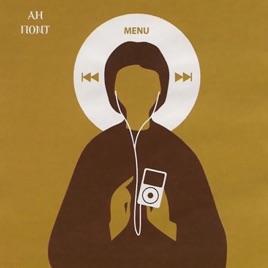
Advertise on podcast: Byzantium & Friends
Rating
4.8from
This podcast has
160 episodes
Language
EnglishPublisher
Byzantium & FriendsExplicit
No
Date created
2019/09/21
Latest episode
2026/10/08
Average duration
68 min.
Release period
22 days
Description
Conversations with experts in the history of Byzantium and surrounding fields, hosted by Anthony Kaldellis.
Unlock Byzantium & Friends podcast Email contact info,
Listeners & Audience details
Email contact information
Direct podcast contact details

Listeners
Audience numbers & engagement insights

Audience details
Podcast Insights

Podcast episodes
Check latest episodes from Byzantium & Friends podcast
160. Symeon the New Theologian: Queer desire in devotional poetry, with Derek Krueger
2026/10/08
A conversation with Derek Krueger (University of North Carolina at Greensboro) on homoerotic language and imagery in the works of Symeon the New Theologian (eleventh century). These passages are unusual enough that earlier editors and scholars were made uncomfortable about them. We discuss their devotional context but also the broader context of homoeroticism and homophobia in the monastic world of that time. The conversation is based on Derek's recent monograph, Monastic Desires: Homoeroticism, Homophobia, and the Love of God in Medieval Constantinople (Cambridge University Press 2026).
159. The art of the empire of Nicaea, with Naomi Pitamber
2026/09/24
A conversation with Naomi Pitamber (Clark University) about the art and architecture of the empire of Nicaea (Nikaia), the convention name of the Roman state that emerged in Asia Minor after the disaster of 1204. This art is often overlooked by scholars and overshadowed by the Palaiologan "Renaissance" that supposedly kicked in after the return to Constantinople in 1261. Naomi casts that development as a continuation of the art of Nikaia in her recent book Byzantium and the Landscapes of Loss: The Recreation of Constantinople in the Laskarid and Palaiologan Eras (Cambridge University Press 2026).
158. The Book of Daniel, the Four Kingdoms, and imperial eschatology, with Chris Bonura
2026/06/04
A conversation with Christopher Bonura (Mount St. Mary's University) about the apocalyptic tradition of identifying the Four Kingdoms prophesied in the Book of Daniel. Which one was the Roman empire? The fourth, scheduled to fall with the others, or something that came afterward (a tradition sometimes called imperial eschatology)? Among other topics we discuss Eusebios of Caesarea and the reign of Herakleios as possible turning points in this tradition. Christopher has published a monograph on one of the most important of these texts: A Prophecy of Empire: The Apocalypse of Pseudo-Methodius from Late Antique Mesopotamia to the Global Medieval Imagination (University of California Press 2025), though our discussion focuses more on two articles, 'Eusebius of Caesarea, the Roman Empire, and the Fulfillment of Biblical Prophecy,' Church History 90 (2021) 509-536; and 'Eschatology and Apocalypticism in the Age of Heraclius,' forthcoming.
157. Julian Augustus and the dream of a Platonic Roman empire, with Jeremy Swist
2026/05/21
A conversation with Jeremy Swist (Michigan State University) on the emperor Julian (361-363 AD) and how he tried to combine his love of philosophy with ruling the Roman empire. We talk about why Julian continues to excite such passions, how in some ways he may have been more Roman than Greek, and how he read Roman history in light of the theurgical Neoplatonism that he espoused. The conversation is based on Jeremy's recent book, Julian Augustus: Platonism, Myth, and the Refounding of Rome (Oxford University Press 2025).
156. The Menologion of Basil II, with Charlie Kuper
2026/05/07
A conversation with Charlie Kuper (University of Tennessee, Knoxville) about the Menologion of Basil II, a lavishly illustrated manuscript pairing brief notices about the saints with images of them and their ordeals, arranged according to the liturgical calendar. We talk about how this manuscript was made and how it can be read, specifically the texts in relation to the images. Charlie has just reedited those texts and made them available in translation in the DOML series (vol. 89): The Menologion of Basil II (2025). For a digitized version of the entire manuscript (Vat.gr. 1613), where you can see the images as well, go here. Look around in it, skim it, zoom in, enjoy!
155. The Dumbarton Oaks Medieval Library, with Nicole Eddy
2026/04/23
A conversation with Nicole Eddy (Dumbarton Oaks) about the Dumbarton Oaks Medieval Library, one of the most important publishing ventures of recent times when it comes to medieval texts and literature. DOML (as we call it) makes accessible a wide range of medieval texts in different genres and from different periods, translated into English from Greek, Latin, Old English, and the Iberian romance languages. We talk about how the series works, its mission and goals, and the challenges and decisions that Nicole faces in coordinating the whole thing. You can find the series' home page here.
154. How and why we teach Roman history, with Beth Digeser
2026/04/09
A conversation with Beth Digeser (University of California, Santa Barbara) about pedagogy, specifically about what we are hoping to accomplish by teaching Roman history. We talk about the limits of "influence" as a justification for it and the various ways that Rome is continually reinvented and made to speak to present concerns, from "Global Rome" to the special challenges posed by the world of late antiquity. Beth's research focuses on the reigns of Diocletian and Constantine and so she looks in both directions of Roman history, forward and backwards, from there.
153. Three heresiologists of the twelfth century: Zigabenos, Kamateros, and Choniates, with Alessandra Buccosi, Niccolò Zorzi, Marco Fanelli, and Ottavia Mazzon
2026/03/26
A conversation with Alessandra Bucossi (Ca' Foscari University of Venice) and Niccolò Zorzi (University of Padua) on three heresiological texts of the twelfth century, the challenges of publishing and studying them, and how their main concerns can be presented in a museum exhibition. Our discussion is followed by dedicated presentations on each of the three authors by Marco Fanelli (Ca’ Foscari University of Venice) on Zigabenos, Alessandra herself on Kamateros, and Ottavia Mazzon (University of Padua) on Choniates. For an open access catalogue of the museum exhibition organized by all the above, click here.
152. Heresiology in the twelfth century, with Alessandra Bucossi
2026/03/12
A conversation with Alessandra Bucossi (Ca' Foscari University) on the preoccupation with heresy in the twelfth century, which resulted in the production of a number of massive anti-heretical treatises. We discuss the historical context of their production, the empire's increasing engagement with the Latins and Armenians, whose Churches deviated from that of Constantinople in certain points, and the function of these works. The conversation is based on a team project on this topic that Alessandra headed up, which we will discuss in more detail in the sequel episode.
151. East Roman archaeology: goals and challenges, with Marica Cassis
2026/02/26
A conversation with Marica Cassis (University of Calgary) about the archaeological study of the east Roman world and how it interfaces with traditional, text-based historiography. What can archaeology see and what not? What challenges has it faced to emerge as a field and what are the prospects that it faces today? The conversation was inspired by Marica's introduction to Medieval Archaeology in the East Roman World (Leeds: Arc Humanities Press, 2024).
150. Why were pseudo-Arabic inscriptions placed on churches in Greece?, with Alicia Walker
2026/02/12
A conversation with Alicia Walker (Bryn Mawr College) on the pseudo-Arabic inscriptions (or pseudo-kufic) that appear on a number of tenth- and eleventh-century churches in Greece, most notably at the monastery of Hosios Loukas. What did the Arabic script signify in Orthodox culture at the time if not tension with Islam? The conversation is based on Alicia's essay 'Letters from the Edge: Mapping Pseudo-Arabic between Byzantium and the Near East,' in E. Bolman et al., eds., Worlds of Byzantium: Religion, Culture, and Empire in the Medieval Near East (Cambridge University Press 2024). Alicia also prepared a video version of our conversation with images of the places and objects we discuss: you can find it at https://www.youtube.com/watch?v=wqoBeFpWots
149. The Classical Near East, with Kevin van Bladel
2026/01/29
A conversation with Kevin van Bladel (Yale University) on his proposal regarding "The Classical Near East," a constellation of fields defined by the classical literary traditions of medieval Near Eastern cultures, including Byzantium. We talk about languages, fields, classical traditions, translations, and more. The conversation is based on Kevin's chapter 'The Classical Near East' in E. S. Bolman et al., eds., Worlds of Byzantium: Religion, Culture, and Empire in the Medieval Near East (Cambridge 2024) 79-97.
148. The survival of esoteric academic fields, with Jana Matuszak and Petra Goedegebuure
2026/01/15
A conversation with Jana Matuszak, a Sumerologist, and Petra Goedegebuure, a Hittitologist (both University of Chicago) about the prospects for the survival of smaller academic disciplines that require specialized language skills. What critical mass of experts is needed? How can these fields be combined with others? Byzantine Studies is still larger than Sumerology and Hittitology, but the numbers of our full-time faculty is shrinking. How can our fields navigate an uncertain future?
147. How the ninety percent experienced the Roman economy, with Kim Bowes
2026/01/01
A conversation with Kim Bowes (University of Pennsylvania) about her recent book, Surviving Rome: The Economic Lives of the Ninety Percent (Princeton University Press 2025), which presents a brilliant new model of the Roman imperial economy, specifically for how the majority of the population experienced it. We talk about the skeletal evidence, monetization, affluence and precariousness, and levels of consumption. This is only a taste of the many exciting new arguments made in the book, which all of you should go read.
146. Ezana of Aksum, the first Christian king in Africa, with Aaron Butts
2025/12/18
A conversation with Aaron Butts (University of Hamburg) on the conversion to Christianity of Ezana, the fourth-century king of Aksum (in modern Ethiopia and Eritrea). "Conversion" is a conventional term, but what Ezana's inscriptions and coins reveals is a complicated process of appealing to different groups and the coexistence of religions in his realm and the royal monuments. The conversation is based on Aaron's forthcoming paper 'Ezana of Aksum: The First Christian African King,' Aethiopica 28 (2025).
Podcast reviews
Read Byzantium & Friends podcast reviews
zagobago 2026/06/05
Great podcast!
Excellent podcast! I always learn a lot from its thoughtful and thought-provoking interviews. Thanks so much!
Vince Able 2026/02/17
Opens Late Rome to anyone
This is a fantastic public service. It makes cutting edge academic research on Late Roman topics available to anyone who cares to listen. Fascinatin...
Ioannes K 2026/02/04
Almost Great
I have personally met with Professor Kaldellis, and I really respect him for his contributions to the field. His expansion of Byzantine studies to wid...
Bill Der 2024/06/13
Engaging Podcast and Accessible Discussions with Amazing Guests
It was really cool listening to the late Bob Ousterhout discuss the history of the Hagia Sophia within the context of the wider religious and politica...
Bobert the ruler of all 2024/04/03
Refreshingly academic
I listen to a lot of history podcasts and almost all of them (naturally) focus on describing events and underlying causes. Heard Anthony interviewed o...
Sarah E Bond 2024/03/29
Amazing Breadth
Some of the best scholars out there writing today! What a learned and important resource for teaching, as well.
Dre the Dreamer 2023/12/27
A favorite!
Kaldellis is an excellent host and his podcast delves into all sorts of historical categories that we aren’t usually exposed to. Listening to Byzantiu...
mr.tdstone 2023/12/21
Fascinating podcast, excellent!
I’m really enjoying this - has a huge range of topics, all very interesting, mostly interviews with an expert on that subject.
amandaminorlee 2023/10/13
A fun and informative podcast
I wound up here thanks to Robin Pierson’s History of Byzantium, and I’m glad I did! Despite majoring in history in college, I never knew much about th...
Artsy freak 2023/09/27
Fascinating!
Keeping up with scholarly perspectives on Byzantium and other topics could not be more accessible or engaging! I am so thankful for this podcast and a...
Podcast sponsorship advertising
Start advertising on Byzantium & Friends relevant audience podcasts
You may also like to advertise on these Podcasts
4.913820737
THE ED MYLETT SHOW
Ed Mylett

4.682441287
The Daily Beast Podcast
The Daily Beast, Joanna Coles

4.890601557
Fearless with Jason Whitlock
Blaze Podcast Network

4.6125371187
10% Happier with Dan Harris
10% Happier
4.6137741977
The Rubin Report
Dave Rubin

4.3230972424
Joel Osteen Podcast
Joel Osteen, SiriusXM

4.6312991080
Wow in the World
Tinkercast

4.716482000
Morning Mindset Christian Daily Devotional Bible study and prayer
Carey Green
4.8224701789
The Andrew Klavan Show
The Daily Wire

4.897041431
The Graham Allen Show
Graham Allen