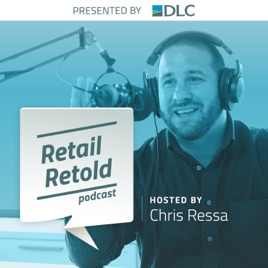
Advertise on podcast: Retail Retold
Rating
4.9from
This podcast has
397 episodes
Language
EnglishPublisher
DLC Management Corp.Explicit
No
Date created
2019/11/04
Latest episode
2026/10/02
Average duration
32 min.
Release period
8 days
Description
The Retail Retold Podcast highlights community retailer stories from across the country and gives a behind-the-scenes perspective from business leaders in both retail and real estate industries. The show’s episodes contain valuable insights that help solve the needs of entrepreneurs and real estate pros. Each week our guests share stories of what worked, what didn’t, the ups and downs – giving the audience a critical set of tools needed for business success. Join host Chris Ressa and new guests weekly for amazing insights and thought-provoking stories. Brought to you by DLC Management Corp.
Unlock Retail Retold podcast Email contact info,
Listeners & Audience details
Email contact information
Direct podcast contact details

Listeners
Audience numbers & engagement insights

Audience details
Podcast Insights

Podcast episodes
Check latest episodes from Retail Retold podcast
FunBox Bouncing Into a Vacant Box Near You
2026/10/02
What does it take to scale kids entertainment nationwide?Family entertainment has become a major part of the retail real estate conversation. But as the category gets more crowded, the concepts that grow will need more than a good idea.
Suat Gokmen, co-founder and part owner of FunBox, joins Chris Ressa to talk about the growth of the kids entertainment brand and what it takes to scale a concept in today’s retail environment. Built around large-scale inflatable play parks, FunBox primarily serves kids ages two to 10 and has found a particularly strong business in birthday parties.
The concept started outdoors following COVID before gradually moving indoors, a shift that opened the door to a much larger retail expansion strategy. Today, FunBox has eight operating locations, 10 under construction, six signed leases and more deals in the pipeline.
But growth brings a different set of questions.
As FunBox expands nationwide, the team has to balance the right markets, the right real estate and the right franchisees. A location can look great on paper and still not work. Gokmen still visits potential sites himself, combining data with what he sees and experiences on the ground before moving forward.
There is also a bigger shift happening across family entertainment. After years of rapid growth, Gokmen sees a category beginning to face some growing pains. Rather than respond by adding more attractions or complexity, FunBox is staying focused on the experience that built the business.
Ressa and Gokmen discuss what FunBox has learned as it scales, the realities of growing through franchising, what landlords should understand about the concept and where kids entertainment fits into the next phase of retail real estate.
What You’ll HearHow FunBox is scaling from outdoor parks to indoor retailWhy birthday parties are a major part of the businessHow FunBox evaluates new markets and locationsWhy a 16-foot ceiling opens up more retail opportunitiesHow franchising is shaping where FunBox expands nextWhy FunBox is staying focused as the FEC market gets crowded
Chapters01:04 — Meet Suat Gokmen and FunBox
Meet the entrepreneur behind FunBox and the experiences that led him to kids entertainment.
01:57 — From real estate and cars to FunBox
Suat shares his path through real estate, auto dealerships and other ventures before FunBox.
04:04 — How FunBox got its start
How an outdoor bounce park concept during COVID evolved into an indoor entertainment business.
06:09 — Finding FunBox’s core customer
Why FunBox stays focused on younger kids and the families bringing them through the door.
07:55 — Finding the right retail space
The size, ceiling heights and market characteristics that can make a location work.
10:00 — Scaling through franchising
How FunBox is using franchise growth to expand its footprint across the country.
12:09 — The economics behind FunBox
A look at startup costs, insurance and the economics that shape the model.
13:49 — Standing out in family entertainment
How FunBox thinks about competition as the family entertainment category gets more crowded.
16:03 — Proving the concept
How an early indoor location helped validate the model and create momentum for expansion.
18:00 — Getting the right locations
Why data matters in site selection, but seeing a potential location firsthand still matters too.
20:06 — Building the FunBox experience
How birthday parties and private events have become a major part of the business.
21:53 — What’s next for FunBox
Suat shares where FunBox is headed and his outlook on the future of family entertainment.
The People Are the Plot
2026/09/25
The People Are the Plot
What does it take to make a retail real estate deal work? Ask Chris Ressa, and he’ll tell you it starts with people.
In this episode, University of Alabama student Asa Moran, host of CRE Simplified, interviews Chris about the lessons he has learned across his career. Digging into the fundamentals of the business, Chris offers lessons for anyone working in commercial real estate.
Chris takes Asa inside a complicated grocery deal involving an underperforming store, two competing grocers, a pharmacy that had to remain open during construction, two new leases, and a refinancing. It took far more than finding replacement tenants. It took relationships, coordination, and a team that could keep every piece moving.
What stalls a deal? Chris points to an issue that can be easy to miss: knowing who actually has the authority to say yes. Even when the people negotiating agree, a deal can lose momentum if the final decision makers have not been part of the process. His advice applies whether you are working on your first lease or your hundredth.
Asa also asks Chris how he found his way into retail real estate, why he moved from leasing into leadership, and what he looks for in new hires. Chris shares the role mentors played in his career and the habits that helped him learn the business: reading widely, building relationships, working hard, and making life easier for his teammates.
It is a conversation grounded in the realities of getting deals done and building strong teams. Asa brings a student’s curiosity. Chris brings experience. Together, they get to the point that holds up at every stage of a career: behind every location are people making it work.
What You’ll HearWhy the people behind the real estate are what make it workWhat a complicated grocery deal taught Chris about relationships, coordination and getting to the finish lineHow Chris learned to shorten the learning curve through reading, relationships and curiosityWhy effort became the career advantage Chris knew he could controlWhat wrestling taught Chris about the danger of bad habits that still get resultsWhy having the right decision-makers involved can keep a deal from losing momentumWhat Chris has learned about building strong teams and spotting potential in young talent
Chapters00:38 — Real estate is a people business
Why Chris believes the people behind the property ultimately make the real estate work.
01:41 — Life as a COO
How teammates, real estate and clients shape Chris’s day-to-day role.
02:50 — From athlete to leader
How wrestling, coaching and mentorship influenced Chris’s move from leasing into management.
05:07 — Learning through complicated deals
Chris walks through a grocery transaction involving multiple tenants, a termination, refinancing and a pharmacy transition.
09:11 — Know who can actually make the decision
One of Chris’s biggest dealmaking lessons: understand the decision process before you get too far down the road.
11:10 — The danger of bad habits that work
Why getting results doesn’t always mean you’re doing things the right way.
14:13 — How Chris found commercial real estate
A first job at Sherwin-Williams unexpectedly turns into a career in the industry.
15:25 — Cut the learning curve
Why reading, networking and being intentional about learning can accelerate your career.
17:51 — Make yourself valuable
Chris explains why he focused early on making everyone else’s job easier.
19:46 — Books that shaped his leadership
Three recommendations that influenced how Chris thinks about people and teams.
21:00 — What Chris looks for in young talent
Humility, hunger, communication, adversity and the traits that stand out beyond experience.
24:01 — Why commercial real estate stuck
The appeal of an industry where the results of your work are visible and measurable.
Retail Retold Replay: One deal, 100 calls later
2026/09/18
Persistence, scarce retail space and the fundamentals behind the right deal.This Retail Retold replay brings us back to a conversation with Kevin Nassimi, Vice President of Real Estate at Nassimi Realty, about a question that still matters: Does America actually have enough physical retail space?
For years, the industry talked about the U.S. being over-stored. Chris Ressa and Kevin challenged that assumption, looking at the forces already reshaping retail supply, from intense demand for pad sites and limited big-box availability to former retail space being converted to multifamily, industrial, and self-storage.
It’s a conversation worth revisiting because the fundamentals behind it go beyond one market cycle.
Kevin shares what he was seeing across Nassimi Realty’s portfolio, including significant demand for freestanding pad sites and fewer available big-box spaces. Chris digs into why. Former 100,000-square-foot boxes have increasingly been divided among multiple tenants, expanding the pool of potential users while reducing the amount of true large-format space available.
They also discuss how limited new construction and the repurposing of obsolete retail have further constrained supply. As former retail properties are converted to multifamily, industrial, self-storage, and other uses, that square footage leaves the retail market altogether.
But the conversation isn’t only about supply and demand. Kevin shares the story behind bringing Burlington to a former Kmart space in Clifton, New Jersey, after reaching out close to 100 times over four years. The deal is a reminder that persistence matters, but so does knowing your asset, understanding the trade area, and recognizing when the right tenant belongs at the right property.
From changing store formats and limited supply to retailer demand and the fundamentals of dealmaking, this replay takes another look at a question retail real estate is still navigating: How much physical retail space do we actually need?
What You’ll HearWhy demand for retail pad sites has become so intenseHow big-box availability reached levels Kevin hasn’t seen in his careerWhy splitting former Kmart-sized boxes is changing retail supplyHow conversions to multifamily, industrial, and self-storage are removing retail space from the marketWhy high construction costs are making new retail supply even harder to deliverWhat nearly 100 calls over four years taught Kevin about persistence in leasingWhy knowing the asset and trade area matters more than accepting a retailer’s first “no”How a major wave of store closures could temporarily disrupt today’s fast leasing environmentWhy retailer optimism remains high despite broader economic uncertainty
Chapters0:00 — Meet Kevin Nassimi
Kevin shares his role at Nassimi Realty and the family-owned company’s approach to suburban shopping centers.
4:53 — Clear the Air
A difficult residential conversion, construction blind spots, and Kevin’s surprisingly generous philosophy on broker commissions.
9:12 — 100 calls later: the Burlington deal
Kevin explains why he kept pursuing Burlington for years—and what finally changed.
12:27 — Persistence only works if you know the real estate
Chris breaks down the fundamentals behind the Clifton deal, from trade-area knowledge to tenant critical mass.
15:27 — What’s happening in retail right now?
Kevin shares what he’s seeing across markets after reconnecting with retailers and brokers at ICSC.
15:59 — Why pad sites are king
Demand for freestanding buildings and drive-thru opportunities is creating fierce competition for limited space.
18:50 — Where did all the big boxes go?
Chris and Kevin examine why large-format availability has tightened and how former boxes are being divided among multiple tenants.
22:09 — Retail supply is disappearing
Conversions to industrial, multifamily, and self-storage are taking former retail square footage permanently out of the market.
22:35 — Is America under-stored?
Chris challenges the old assumption that the U.S. has too much physical retail.
23:00 — Smaller boxes, more tenants, less risk
Why breaking up former Kmart-sized spaces has expanded the tenant pool and diversified landlord exposure.
25:39 — The impact of the next major store closure
Chris and Kevin discuss why a large bankruptcy or closure wave could slow leasing activity far beyond the affected properties.
27:07 — Retailer optimism is still high
Despite economic uncertainty, Chris says the confidence among physical retailers at ICSC was hard to miss.
27:51 — RadioShack, Bloomingdale’s and a serious salt tooth
Kevin closes with the retailers he misses, how he shops, and the Target aisle
Retail Is Winning. Can Institutional Capital Keep Up?
2026/09/10
The case for more retail investment is getting harder to deny.Retail real estate has spent years proving its strength. Vacancy is tight, rents are growing and recent performance has outpaced other major commercial real estate asset classes. Yet retail still accounts for just 13% of institutional real estate holdings.
So why hasn’t capital caught up?
CBRE’s Karly Iacono and Chris Ressa look at the disconnect between retail’s compelling fundamentals and its relatively small share of institutional investment. The opportunity is there, but retail isn’t an easy asset class to understand from a spreadsheet.
Co-tenancy, exclusives, tenant sales, market rents and local dynamics all influence how a shopping center performs. Two centers across the street from each other can support very different rents based on traffic, tenant performance and the strength of the individual property. Understanding those differences requires more than access to data. It requires knowing what the data means and having the ability to act on it.
That’s where the operator becomes increasingly important.
As institutional investors look to increase their exposure to retail, operating partners can provide the market knowledge, retailer relationships and execution needed to turn an investment thesis into actual NOI growth. Chris argues that we’re in the “age of the operator,” where simply owning the right asset may not be enough.
And the fundamentals continue to strengthen the argument. Rent spreads are growing without sacrificing occupancy, quality retail inventory remains limited and there may still be significant room for rents and NOI to grow.
The fundamentals are there. Now it’s a matter of who knows how to capitalize on them.
What You’ll HearWhy retail remains underallocated despite stronger fundamentalsHow co-tenancy risk is changing for landlords and investorsWhy operational expertise is key to unlocking valueHow tenant sales and data shape market rentWhy local market knowledge can make or break a dealHow operating partners help institutions get comfortable with retailWhy retail may still have significant room to run
Chapters01:16 - Why is retail still underallocated?
Retail fundamentals are strong, but institutional ownership still trails multifamily and industrial.
04:42 - The 13% allocation gap
Retail represents just 13% of institutional holdings, even as recent performance has outpaced other asset classes.
07:45 - Is co-tenancy risk overstated?
Why the details inside the lease matter more than the presence of a co-tenancy clause itself.
12:16 - Where operational complexity creates value
The challenge isn’t simply running a retail asset. It’s executing the plan needed to unlock its upside.
16:04 - What is market rent, really?
How tenant sales and property performance can drive different rents at shopping centers across the street from each other.
18:46 - Having the data vs. understanding it
Why access to retail data only goes so far without the expertise to interpret and execute on it.
19:19 - Why local market knowledge matters
The opportunity in secondary markets, local tenants and the relationships that can’t always be captured in underwriting.
23:30 - The age of the operator
Why institutional investors are turning to operating partners and JVs to execute their retail investment strategies.
26:02 - What institutional capital wants to buy
From grocery-anchored centers to power centers, why deal type, location and quality still shape where capital moves.
29:35 - Does retail still have room to run?
Strong rent spreads, occupancy and NOI growth make the case for more institutional capital moving into retail
Working out solidcore's real estate growth strategy
2026/09/02
Prime retail space is hard to find. How does solidcore keep growing?Solidcore is scaling fast. The boutique fitness brand will have approximately 190 locations open by the end of the month, up from about 85 when Josh Rainey joined the company. It expects to reach roughly 240 locations by the end of next year.
The demand is there. The real estate is the harder part.
Josh, senior director of real estate and growth at solidcore, joins Chris Ressa to explain what it takes to expand a national fitness concept when nearly every growing retailer wants the same 1,800- to 3,000-square-foot spaces.
Solidcore is pursuing high-quality real estate across tier-one and tier-two markets, but it does not rely on one property type. The team studies how customers move through each trade area, what conveniences they expect, and which destinations already fit their routines. A street-front studio may work in New York. Surface parking could be critical in Texas. A grocery-anchored center can win when it offers the right mix of food, services, and daily traffic.
The larger lesson is that good real estate is not defined by a category. It is defined by the customer.
Josh also shares how solidcore doubled the size of a high-performing Chelsea studio by taking over the adjacent space. The expansion required the brand to revisit its lease, navigate a landmarked New York City building, and connect the two studios while closing for only 72 hours. What began as an unusual solution has become a model solidcore plans to replicate.
The conversation goes beyond finding available boxes. It examines how co-tenancy reinforces customer habits, why convenience changes from market to market, and how a retailer’s lease priorities evolve as the company matures.
For landlords, retailers, and investors, solidcore’s growth offers a clear takeaway: winning locations come from understanding how people actually use a place—and creating enough value to make them return.
What You’ll HearHow solidcore grew from approximately 85 studios to nearly 190 locationsWhy the 1,800- to 3,000-square-foot range has become one of retail’s most competitiveHow solidcore evaluates street retail, grocery-anchored centers, lifestyle projects, and freestanding locationsWhy customer behavior matters more than adhering to one preferred property typeHow food, beverage, and complementary co-tenants can reinforce a seven-visit-per-month fitness routineWhy parking expectations in Texas are different from those in Los Angeles or MiamiWhat the shift toward services, wellness, and specialized fitness means for retail real estateHow solidcore doubled the size of a successful Chelsea studioWhat a growing retailer can gain by reopening and restructuring an existing leaseWhy reliable rent payments, reinvestment, and a clear growth story matter to landlords
Chapters00:00 — Welcome to Retail Retold
Chris introduces Josh Rainey, senior director of real estate and growth at solidcore.
01:02 — Building a career in retail real estate
Josh shares how an early fascination with places and development led him to the retailer side of the business.
03:16 — Solidcore’s growth story
The brand has grown from approximately 85 locations to nearly 190, with more expansion ahead.
05:10 — Where fitness spending is moving
Josh explains why consumers continue to invest in health, wellness, services, and specialized workouts.
06:15 — Why boutique fitness keeps fragmenting
Smaller classes, specialized formats, recovery, and flexibility are reshaping the fitness landscape.
09:40 — Competing for retail’s most wanted space
Solidcore’s preferred size range puts the brand in direct competition with many other expanding concepts.
11:14 — Choosing the right type of real estate
Street retail, lifestyle centers, grocery-anchored properties, and freestanding buildings can all work under the right conditions.
13:34 — Co-tenancy that strengthens a routine
Josh breaks down how food, beverage, and complementary brands can make a center more valuable to solidcore customers.
15:00 — Convenience changes by market
Parking, transit, access, and local expectations influence what makes a location viable.
17:40 — The Chelsea expansion story
A high-performing studio needed more capacity, so solidcore looked through the wall instead of across the market.
20:46 — Renegotiating for growth
The brand blended the expanded premises into one lease while updating language that no longer matched its standards.
23:08 — Connecting two studios in 72 hours
Solidcore kept disruption to a minimum while creating a contiguous dual-studio location.
24:38 — A new brand and a larger ecosystem
Josh previews solidcore’s next concept and the company’s ambition to capture more of the customer’s wellness spending.
25:32 — Retail rapid fire
Josh makes the case for bringing back Burdines and Sharper Image—and admits where Chris would find him at Target.
A LiveView of technology, trust, and safer retail
2026/08/28
How do technology and trust create safer shopping centers?
Security is easy to notice after something goes wrong. The harder question is whether owners and operators are doing enough before that moment arrives.
Chris Ressa talks with Mark Bradshaw, vice president of property management at DLC, and Paul Ganz, vice president of business market development at LiveView Technologies, about how retail properties can reduce risk without making customers feel like they are entering a fortress.
The answer is not another camera. It is a layered security strategy built around deterrence, technology, property operations, law enforcement, and community relationships.
Ganz brings an unusually broad perspective. He spent 13 years as a police officer before moving into retail loss prevention, supply chain, store operations, and corporate security. Bradshaw brings the owner-operator view, including how DLC uses mobile security units for more than surveillance. The same equipment can help property managers monitor vendors, assess weather conditions, inspect work, and maintain visibility across a geographically dispersed portfolio.
The conversation also gets honest about artificial intelligence. AI can already identify loitering, unauthorized access, and other predefined behaviors without forcing someone to stare at a wall of screens. But the technology still cannot replace human judgment, direct a complete response, or build the local relationships that make security programs work.
That distinction matters now. Retail centers are private property designed for public use. Owners need to protect tenants and customers while preserving a welcoming environment. Deploy too little security, and risk grows. Deploy too much without a strategy, and customers may assume the property is unsafe.
The strongest takeaway is simple: security is not a product purchase. It is an operating discipline. The best results come when property owners, technology providers, guards, police departments, and local communities share information, test assumptions, and solve problems together before an incident forces the conversation at each retail property.
What you’ll hearWhy deterrence is difficult to measure—and still essential to a retail security strategyHow owners can “harden” a property without making it feel unwelcomingWhy cameras, guards, environmental design, and operating protocols must work togetherHow DLC uses mobile security units to monitor vendors, weather, property conditions, and security risksWhat AI can already identify, including loitering, unauthorized access, and suspicious behaviorWhere AI still falls short and why human judgment remains criticalHow relationships with police departments, local officials, HOAs, and customers can reveal security gapsHow mobile technology helped law enforcement combat illegal dumping across vacant county landWhy more visible security does not always make customers feel saferWhat separates a technology vendor from a true strategic partner
Chapters 02:17 — Meet Mark Bradshaw and Paul Ganz
The guests share their paths through property management, law enforcement, loss prevention, retail operations, and security.
03:46 — What LiveView Technologies does
Paul explains how mobile security units bring camera technology, analytics, and deterrence to locations without traditional infrastructure.
05:05 — Can deterrence actually be proven?
The group examines how owners measure the value of preventing an event that never occurred.
08:19 — Why mobile security towers were created
Construction theft and infrastructure gaps created the need for security technology that could operate remotely.
10:14 — Why retail security requires layers
Mark explains how cameras, guards, property design, alerts, and physical response work together.
12:17 — What happens when the system detects suspicious behavior
Paul breaks down the progression from flashing lights and audio warnings to alerts and human intervention.
14:43 — What AI can—and cannot—do
AI can recognize predefined behaviors, but its reliability and role within a broader security strategy still require scrutiny.
17:49 — How DLC uses LiveView beyond security
Mark discusses using mobile units to monitor vendors, inspect work, track weather, and provide visibility across DLC’s portfolio.
21:16 — Why community relationships matter
Mark shares how working with police, local leaders, HOAs, tenants, and customers helps owners identify and address problems.
25:40 — Helping law enforcement solve problems faster
Paul describes how LVT technology helped identify illegal dumping activity across thousands of acres of vacant land.
27:14 — Sharing camera access with police
The guests discuss evidence requests, property-owner authorization, and controlled access during active incidents.
28:50 — Can too much security backfire?
Visible technology can reassure customers—or signal that a property is unsafe if it is deployed without a clear strategy.
30:41 — The next real breakthrough for AI
Paul explains how AI could move from detecting activity to providing actionable information and anticipating similar risks.
33:28 — Why people will remain part of the solution
Mark and Paul make the case for combining technology with human judgment, local knowledge, and strategic partnership.
The Dark Horse of Consumer Spending: Is Retail Paying Attention?
2026/08/20
The Dark Horse of Consumer Spending
Retail is obsessed with the next consumer.
What does Gen Z want? How will younger shoppers change stores? Which brands, experiences, and trends will win their attention?
But while everyone looks ahead, retail may be overlooking one of the most powerful consumers in the market right now.
Gen X accounted for $15.2 trillion in global consumer spending in 2025 - that's more than the entire spending power of China
Gen X are in their peak earning years, but that’s only part of the story. Many are making purchasing decisions for households that stretch in both directions, from their children to their aging parents.
That makes Gen X more than a valuable demographic. It gives them outsized influence over where money is being spent and what consumers need from the places they visit.
And we may already be seeing the impact in retail real estate.
The growth of service tenants, demand for health and wellness concepts, the value placed on convenience and quality, and the evolution of shopping centers into places where consumers can accomplish multiple things in one trip all align with the needs of a generation with money to spend and very little time to waste.
“Gen X is the overlooked generation that is kind of a spending dark horse,” said Natalie Chambers, Executive Creative Director at The Dealey Group in her conversation on Retail Retold with Chris Ressa. “Retail real estate, in particular, should pay attention to what Gen X is looking for.”
Because understanding who is spending is only the beginning.
The bigger opportunity is understanding what that spending power changes: the brands that grow, the services consumers seek out, the tenant mixes that drive repeat visits, and ultimately, what makes a shopping center more relevant to the communities it serves.
Gen X may be the forgotten generation.
Retail can’t afford to forget about them.
What You’ll HearWhy Gen X is retail’s “dark horse”The power of the “sandwich generation”What’s driving the rise of services in retailWhy Gen X may be the bridge between analog life and AIThe connection between Gen X and the longevity boomThe growing value and influence of consumer reviewsHow shopping centers are evolving for multiple generationsWhy intentional spending is gaining ground
Chapters01:16 — The consumer signals worth watching
Natalie breaks down the Dealy Group’s mid-year trend work and the signals that put Gen X on the radar.
01:52 — Why Gen X is suddenly having a moment
From fashion to pop culture, Gen X influence is showing up in places marketers may not expect.
03:16 — The $15.2 trillion wake-up call
The spending data that changes the conversation about how much attention Gen X deserves.
04:51 — The consumer in the middle of everything
Why being the “sandwich generation” gives Gen X influence over spending across multiple age groups.
07:38 — What Gen X actually values
Quality, efficiency and clarity; and why “worth the money” may matter more than simply buying more.
09:02 — Is Gen X driving the rise of services?
Natalie connects Gen X behavior to service-oriented leasing, while Chris offers another explanation for the shift.
12:12 — Why repeat visits matter
How landlords are using service tenants to build retail ecosystems consumers need to visit again and again.
13:08 — The generation between analog and AI
Natalie argues Gen X occupies a unique cultural position. Chris challenges whether that advantage will last.
18:36 — Why analog is back
Vinyl, film, BMX bikes and nostalgia reveal a growing appetite for experiences outside the digital world.
25:01 — Longevity is becoming retail
Why wellness concepts focused on staying healthier longer could be another expression of Gen X demand.
27:24 — Do online reviews deserve our trust?
Chris and Natalie debate who actually writes reviews; and whether those people represent the consumers relying on them.
35:02 — Designing retail for three generations at once
Why green space, restaurants, services and gathering places can solve a very practical Gen X problem.
36:49 — Consumers are getting more intentional
Functional gifts, planning around sales and buying for utility point toward a more deliberate spending mindset.
37:43 — The Gen X opportunity
Natalie’s final argument: retail real estate should pay closer attention to what this overlooked but influential consumer wants.
Why Retail Rents Are Rising and New Supply Is Still Years Away
2026/08/13
Retailers want to grow. The question is what they’ll pay for the right space.Retailers want more stores. Vacancy remains historically low. And meaningful new retail development is still years away.
So what does that mean for the next five years of retail real estate? What are the forces today that are driving the future?
At the center of the August What’s in Store conversation between CBRE’s Karly Iacono and Chris Ressa is a fundamental supply and demand imbalance. Retailers continue to look for opportunities to grow, but the economics of large-scale new development remain challenging. Construction costs, land availability, interest rates and exit values all factor into the equation.
But there is one lever that ultimately has to move to make more projects pencil: rent.
And that shift is already underway.
The question is how far it can go, and what happens along the way.
Karly and Chris dig into what rising net effective rents and limited new supply could mean for existing retail real estate, and whether retailers have more room to pay for the locations they really want. They also explore why the physical store has become more valuable to retailers, not just as a place to generate sales, but as a critical part of how brands reach and serve their customers.
The changing market is influencing more than rents. Retailers are rethinking the traditional store prototype, using better data to make decisions about where to open, how big to go and which formats make sense in different markets. The result is a much more nuanced approach to expansion, from flagships and large-format stores to smaller concepts, outlets and pop-ups.
And as competition for the right space increases, the way deals get done is evolving too. Lease negotiations are changing, retailers are planning their pipelines years in advance, and both sides are looking for ways to move from opportunity to open store faster.
Where does all of this lead?
The conditions shaping retail real estate today could define the market for years to come. What’s changing now, what still needs to change, and what it could mean for the next five years.
What You’ll HearWhy rents need to rise before meaningful new retail development returnsHow low vacancy is making the right locations more valuableWhy retailers are getting more intentional about where and how they growHow better data is creating more conviction around store decisionsWhy physical stores matter more than the headlines suggestHow the landlord and tenant dynamic is shifting
Chapters03:10 - When does new retail development come back?
Chris explains why rent, not retailer demand, is the biggest hurdle standing between today’s market and meaningful new shopping center construction.
05:45 - The rent growth hiding in plain sight
Face rents don’t tell the whole story as TI packages, retailer investment and net effective rents reshape deal economics.
08:36 - Does geography change the development equation?
Land availability, Sun Belt growth, interest rates and construction costs determine where new projects have the best chance of penciling.
11:12 - The physical store is more valuable than the headlines suggest
Chris argues that the market still underestimates what stores do for retailers and their relationship with consumers.
12:03 - Retail’s one-prototype era is over
Retailers are using data to make smarter decisions about formats, distribution, clustering and market-specific store strategies.
16:41 - What younger consumers reveal about physical retail
Karly’s New York retail tour with her kids shows how pop-ups, flagships and social media can work together to drive real-world shopping.
21:09 - Lease negotiations are moving back toward balance
After years of tenant-friendly movement, landlords and retailers are becoming more pragmatic about non-monetary provisions and getting deals done.
24:24 - Why the store-opening timeline still needs work
Retailers are planning pipelines years in advance because leases, municipalities and multiple decision-makers make timelines difficult to compress.
27:02 - The lease provision seeing the biggest shift
Use restrictions have become significantly more flexible as shopping center tenant mixes continue to evolve.
29:28 - The local entrepreneur has changed
More founders are thinking about scale, franchising, private equity and monetization before they even open location number one.
The Real Value of the Bank Branch
2026/08/08
In a World Using Less Cash, Banks Keep Opening Branches! Why?Bank branches are everywhere, even as more of our banking happens online.
You can deposit a check from your phone, transfer money in seconds, and apply for a loan without ever walking into a bank. Yet some of the country’s largest banks and credit unions continue investing heavily in physical locations.
So what makes the bank branch so valuable?
The role of the branch has changed. Many of the routine transactions that once required a teller can now happen digitally. That leaves the physical location to do something more important: attract deposits, acquire customers, build trust, serve businesses, and create deeper relationships.
Chris Ressa sees a strong parallel to retail.
For years, ecommerce was expected to make physical stores less relevant. Then digital customer acquisition became more expensive, and retailers learned that stores could actually make their entire business stronger. Physical and digital weren’t competing. They were working together.
Banks are seeing the same thing.
A customer might open an account online and do most of their banking from a phone. But they still drive past their local branch. They know the name. They know where to go when they need help. That physical presence creates familiarity and trust that can turn one account into a much larger, longer relationship.
And that’s where the economics get interesting.
For landlords, investors, and anyone in retail real estate, foot traffic doesn’t tell the full story of a bank branch. Deposits, customer acquisition, retention, and long-term relationships can be far more important.
As banking becomes more digital, the branch isn’t disappearing. Its purpose is changing, and that helps explain why banks still want four walls on great corners.
What You’ll HearWhy banks still want physical branches in a digital worldHow technology actually changed the value of the bank branchWhy deposits and customer relationships matter more than foot trafficWhat banks are learning from the evolution of physical retailWhy the branch and the app are stronger togetherHow great real estate can become a customer acquisition tool
ChaptersChapters
00:00 — Why are banks opening new branches?
The contradiction between digital banking and continued investment in physical locations.
01:45 — The changing role of the bank branch
Technology has changed what happens inside a branch and where its value comes from.
03:15 — Moving toward higher-margin relationships
Why branches can focus less on routine transactions and more on valuable customer relationships.
04:10 — Why deposits drive the economics
Deposits are the raw material of banking, and physical relationships can make them stickier.
05:05 — Customer acquisition costs are the new rent
Why acquiring customers through physical locations can compete with increasingly expensive digital channels.
06:25 — What banks can learn from retail
The evolution of bank branches looks a lot like what physical retail experienced with ecommerce.
08:00 — Building deeper banking relationships
How branches can help turn one account into a long-term, multi-product relationship.
09:25 — The branch and the app work together
Why digital and physical banking can strengthen each other instead of competing.
10:30 — More than four walls in a community
How branches create trust, visibility, and a lasting physical presence in local markets.
11:19 — Why physical branches still matter
What continued investment in branches says about the value of physical banking.
Retail Retold Replay: The Store That Changed Five Below Forever
2026/07/29
What if one real estate decision changed the trajectory of an entire company?
Back in 2021, the retail industry was navigating supply chain disruptions, soaring construction costs, and an uncertain recovery. Today, this conversation with Five Below Vice President of Real Estate Zach Minteer feels less like a snapshot in time and more like a masterclass in building a resilient retail business.
This replay features Chris and Zach discussing one of retail's most remarkable growth stories. Before Five Below became a national retailer with thousands of locations, it was a startup learning hard lessons about growth, operations, and disciplined decision-making. Zach shares how one store in Downingtown, Pennsylvania became the turning point that helped shape the company's future.
The conversation explores why Five Below intentionally slowed its expansion after growing too quickly, completely reimagined its store prototype, and took a calculated risk on a larger format that ultimately became the blueprint for the brand's explosive growth. Zach walks through the real estate strategy, landlord negotiations, site selection process, and partnership required to make that first prototype store a reality.
It's also fascinating to revisit the industry's perspective on post-pandemic consumer demand, construction costs, supply chain disruptions, leasing momentum, and the rapid acceleration of omnichannel retail. Some challenges have evolved, while others remain just as relevant for retailers, owners, and investors.
Beyond the market discussion, Zach shares what it was like joining Five Below as one of the company's earliest employees, helping scale the business from just a few dozen stores to a publicly traded retailer, and why preserving company culture matters as much as opening new locations.
More than a time capsule, this conversation is a reminder that while retail continues to evolve, disciplined growth, strong partnerships, and thoughtful real estate decisions never go out of style.
What You’ll HearWhy Five Below paused its growth to build a stronger foundationThe story behind the prototype store that changed the company's futureLessons on scaling a retailer from startup to public companyHow landlords and retailers partnered through uncertain market conditionsWhy company culture becomes even more important as organizations growTimeless real estate and leadership lessons that still apply today
Chapters00:00 – Welcome to Zach Mintier
Chris welcomes the Five Below real estate leader and longtime industry friend.
09:20 – Retail's post-pandemic comeback
A look back at the surprisingly strong recovery, leasing activity, and consumer demand.
18:30 – Construction costs and supply chain challenges
Why retailers and landlords had to collaborate to keep deals moving.
27:45 – The story of Downingtown begins
How one Pennsylvania store became a defining moment for Five Below.
31:20 – Pressing pause to rethink growth
Why Five Below halted expansion, redesigned its stores, and changed course.
35:30 – Negotiating the impossible deal
Finding the right site, convincing leadership, and partnering with the landlord.
45:30 – Opening day changes everything
The launch of the first larger-format Five Below and the customer response.
48:45 – From startup to retail powerhouse
Zach reflects on scaling Five Below while preserving the culture that fueled its success.
51:30 – Retail wisdom
Favorite retailers, grilling, Target aisles, and Chris' signature rapid-fire qu
What Is Retail Traffic Really Telling Us?
2026/07/24
The consumer behaviors behind today's strongest retail trends and what they mean for retailers, landlords, and shopping centers.
Retail traffic is telling a very different story than most headlines suggest.
According to Ethan Chernofsky, Chief Marketing Officer at Placer.ai, consumers aren't abandoning stores. They're redefining how they use them.
One of the biggest shifts is happening inside everyday shopping trips. Consumers are visiting more retailers within the same category, particularly grocery, while spending less time in each store. Instead of trying to be everything to everyone, retailers with a clearly defined value proposition are winning over today's more intentional shopper.
Chris Ressa and Ethan explore why physical retail has become more valuable, not less. While ecommerce remains an essential part of the customer journey, stores are becoming even more important as fulfillment hubs, discovery engines, and places where brands can build lasting customer relationships. Stores remain the most profitable channel for many retailers while often delivering the best value for consumers. That alignment creates a powerful long term advantage that extends well beyond convenience.
Even mall traffic continues to surprise analysts, especially among younger shoppers. Gen Z is proving that physical retail still serves an important social function, reinforcing the growing importance of placemaking and creating destinations people actually want to visit.
Whether it's Starbucks extending pumpkin spice season, Dairy Queen creating a spring traffic surge with Free Cone Day, or retailers capitalizing on major cultural moments, the lesson is clear: great operators don't simply react to consumer behavior, they influence it.
For retailers, landlords, and anyone watching the future of physical commerce, the message is simple: stores matter more than ever. The retailers and shopping centers that understand changing consumer behavior, and respond with intentional experiences, convenience, and operational excellence, will be the ones that continue to outperform.
What You’ll HearWhy the smartest retailers create demand instead of waiting for itThe surprising shift in how consumers are shopping todayWhy physical stores are becoming more valuable, not lessHow Starbucks and Dairy Queen turn ordinary days into traffic driversWhy Gen Z is spending more time at mallsThe comeback stories proving great brands are hard to beat
Chapters00:00 – Meet Ethan Chernofsky
How Placer.ai uses location data to understand consumer behavior.
01:08 – The new rules of retail traffic
Why shoppers are making more trips while spending less time in stores.
04:58 – Why physical stores keep winning
The overlooked value physical retail creates for retailers and consumers alike.
09:41 – Discovery still happens in stores
Why the in-store experience continues to drive purchases and loyalty.
12:13 – Gen Z is bringing malls back
What younger shoppers reveal about the future of placemaking.
13:42 – Convenience vs. placemaking
When retailers should prioritize speed—and when they should encourage longer visits.
17:19 – Retail lessons from around the world
How culture shapes shopping behavior across global markets.
18:45 – Back-to-school traffic winners
The retailers and brands positioned to benefit this season.
20:48 – How great retailers create demand
What Starbucks, Dairy Queen, and other brands can teach every retailer.
23:24 – The traffic stories nobody saw coming
Unexpected trends shaping home improvement and retail performance.
26:12 – Never count out great brands
Why Target, Starbucks, and other leaders continue to find their way back.
27:23 – Looking ahead
What today's traffic trends could mean for the holiday shopping season.
A Culture of Curiosity
2026/07/17
The questions everyone new to retail real estate needs to ask.
Sometimes the best conversations start with someone willing to ask questions.
That's exactly what happened when Chris Ressa handed the microphone to DLC Marketing Coordinator Jordyn Levine.
Retail Retold usually features founders, CEOs, and industry leaders. This time, the conversation turned inward. Drawing on conversations with Chris, producing the podcast each week, and experiencing retail real estate through fresh eyes, Jordyn asked the questions many people outside the industry are curious about. Why do people think online shopping dominates retail? What actually creates value? Why do physical stores still matter? And how will AI reshape retail real estate?
The conversation is about more than the answers. It's a reflection of a culture where curiosity is encouraged, ideas can come from anywhere, and asking thoughtful questions is just as important as having the answers. That mindset leads to better conversations, stronger teams, and ultimately, better business.
Chris shares why physical retail continues to outperform common perception, why shopping centers are intentionally built as ecosystems rather than collections of stores, and why technology should enhance, not replace, human judgment. From social media and site selection to omnichannel retail and digitally native brands opening stores, the discussion explores the forces shaping retail today while keeping people at the center of every decision.
The conversation also offers advice for anyone entering retail real estate. Chris explains why understanding trade areas, developing strong people skills, and staying intellectually curious are more valuable than trying to have all the answers. His closing thought captures the spirit of both the discussion and the culture behind it: be curious before you're certain.
This isn't just a conversation about the future of retail. It's a reminder that the best ideas often begin with someone curious enough to ask the next question.
What You’ll HearWhy people overestimate the impact of e-commerce on retailWhether social media is changing where retailers choose to openWhat physical stores still offer that technology can't replaceHow landlords build shopping centers that work as complete ecosystemsWhere AI fits into the future of retail real estateChris's predictions for the next decade of retail
Chapters00:00 — A different kind of Retail Retold
Chris hands the microphone to DLC Marketing Coordinator Jordyn Levine for a conversation driven by curiosity.
02:08 — Why retail is more misunderstood than ever
Jordyn kicks off the conversation by exploring why consumers continue to overestimate the impact of e-commerce on physical retail.
08:34 — Is social media shaping the future of retail?
A discussion on how digital discovery is influencing consumer behavior and retail strategy.
15:16 — Why physical stores still matter
Chris explains what brick-and-mortar offers that technology can't replace.
22:48 — Building shopping centers that actually work
Jordyn shifts the conversation to what makes a shopping center successful and how landlords build complementary tenant mixes.
30:15 — Can AI pick the next great retail location?
Chris discusses where AI is transforming site selection and where human judgment still leads.
37:42 — Looking ahead
Chris shares the trends he believes will shape the next decade of retail.
44:50 — Closing thoughts
A conversation about curiosity, continuous learning, and the value of fresh perspectives.
Partnership as a Competitive Advantage
2026/07/09
Commercial real estate has entered a new era where execution, partnership, and long-term thinking have become the industry's greatest competitive advantages.
In commercial real estate, everyone talks about capital. Not enough people talk about partnership.
That's what makes the relationship between DLC and Temerity Strategic Partners different.
Recorded from DLC's new media studio in Elmsford, New York, this special episode of Retail Retold features guest host Adam Ifshin, Founder and CEO of DLC, in conversation with Bruce Cohen, Founder and Co-CEO of Temerity Strategic Partners.
Together, they explore how today's higher interest rate environment has reshaped commercial real estate, shifting the advantage from financial engineering to operational excellence. Bruce explains why Temerity was built to partner with proven operators rather than simply invest in real estate, while Adam shares the operator's perspective on creating long-term value through disciplined execution, relationships, and relentless focus on cash flow.
The conversation goes beyond the numbers. Adam and Bruce discuss how their partnership evolved from mutual skepticism into deep trust, why alignment between operators and capital partners has never been more important, and how culture, leadership, and succession planning have become meaningful competitive advantages.
The market will continue to change. But the firms that outperform won't simply have access to capital. They'll have the right partners, the right people, and the discipline to execute when it matters most.
Because capital can always find another deal.
Finding the right partner is much harder.
What You’ll HearWhy today's market rewards value creation over financial engineeringWhat sophisticated capital looks for in an operatorWhy retail remains one of the strongest sectors in commercial real estateHow the DLC–Temerity partnership was builtWhy culture, leadership, and execution drive long-term valueThe qualities that define companies built to last
Chapters01:43 — Welcome to the new studio
Adam Ifshin introduces Retail Retold's new podcast studio and welcomes Bruce Cohen.
03:06 — From capital allocator to operator advocate
Bruce explains why decades in capital markets led him to believe operators create the real value.
05:30 — Why Temerity exists
The entrepreneurial journey behind launching Temerity Strategic Partners.
10:07 — Solving operators' biggest capital challenge
Bruce explains the GP capital model and why operators need more than money.
15:14 — Why retail rose to the top
How Temerity's research process identified retail as one of the strongest sectors.
21:09 — What capital misunderstood about retail
Bruce shares how DLC changed his perspective on leasing, cash flow, and value creation.
23:51 — Why DLC became the partner
The process that turned skepticism into conviction.
28:28 — What culture revealed
Bruce explains what stood out after meeting the entire DLC leadership team.
34:56 — Three traits of elite operators
Bruce's framework for identifying firms built for long-term success.
39:04 — Building businesses that outlast their founders
A discussion about succession, the next generation, and creating enduring companies.
42:13 — When business becomes real partnership
How a capital relationship evolved into a lasting friendship.
47:23 — Closing thoughts
Adam reflects on the partnership and wraps up the conversation.
From Gas Stations to Shopping Centers: The Evolution of EV Charging
2026/07/02
Is EV charging becoming an essential retail amenity?
Electric vehicles have become impossible to ignore, but one of the biggest conversations isn't happening inside the car. It's happening in the parking lot.
As EV adoption continues to grow, retail real estate is becoming an increasingly important part of the charging network. Chris Ressa sits down with Scott Levitan, Executive Vice President of Growth, and Lane Chaplin, Head of Real Estate and Retail Portfolio Partnerships at EVgo, to discuss what it really takes to build and operate one of the nation's largest public fast charging networks.
Scott and Lane explain why shopping centers have emerged as the ideal home for fast charging, how customer behavior influences site selection, and why convenience means something entirely different in the EV world than it does at a traditional gas station. They also share how EVgo evaluates markets, partners with retailers and REITs, and navigates the challenges of permitting, utilities, and infrastructure that most consumers never see.
The conversation also explores the current state of EV adoption, including charging costs, battery longevity, range improvements, and the growing used EV market that is making electric vehicles more accessible than ever. Along the way, Scott and Lane address many of the misconceptions that continue to shape public perception of EV ownership.
For retail landlords, investors, and developers, the discussion offers valuable insight into what separates a sustainable charging operator from those that struggled during the industry's early years. From evaluating business models to understanding why some of the country's largest retailers and shopping center owners are expanding their EV strategies, this conversation highlights why charging infrastructure has become more than an amenity. It's becoming another way retail properties create value for both consumers and tenants.
What You’ll HearWhy shopping centers are becoming EV charging destinationsThe biggest myths about owning an electric vehicleWhy customer behavior drives site selectionHow EVgo chooses where to build nextWhat landlords should look for in a charging partnerWhy so many early charging companies failedThe rise of the used EV marketWhy the future of charging isn't the gas station
Chapters00:00 — Welcome to EVgo
Meet Scott Levitan and Lane Chaplin and learn how they entered the EV charging industry.
03:14 — How EVgo is building the charging network
An overview of EVgo's business and why retail real estate is central to its strategy.
04:15 — Is owning an EV really cheaper?
Charging costs, maintenance, range, and common misconceptions.
08:27 — Why so many charging companies failed
Government incentives, business models, and the industry's growing consolidation.
11:36 — Charging standards and industry maturity
How compatibility has evolved and why standardization is improving.
14:05 — The growth of the EV market
Used EVs, battery durability, affordability, and where adoption is headed.
23:42 — Why retail beats the gas station model
The connection between charging time, dwell time, and shopping centers.
30:15 — How EVgo chooses locations
Market selection, customer demand, and building a nationwide network.
35:14 — Rebuilding landlord trust
Lessons from early charging failures and what owners should look for today.
38:45 — How long does an EV charging deal take?
Construction timelines, utility delays, and power infrastructure.
42:19 — Advice for retail landlords
Choosing the right charging partner and why sustainable business models matter.
45:52 — What's next for EV charging?
Why leading retailers and REITs are expanding their EV strategies
Retail Retold Replay: Research, Data and Retail...AI!
2026/06/25
The market has evolved. The questions are just as relevant. A Retail Retold Replay looking back at retail in 2024.
We're throwing it back to ICSC 2024 with James Cook, Americas Director of Retail Research at JLL and host of the Where We Buy podcast.
From the DLC booth in Las Vegas, James and Chris Ressa shared a quick and impactful conversation on the trends shaping retail real estate, from the continued strength of open-air centers to the challenges created by historically low vacancy. While leasing activity has slowed, Cook explains why that's more a reflection of limited supply than weakening demand, and why he remains optimistic about the health of retailers and the consumer.
The conversation also explores where artificial intelligence could have the biggest impact on the industry. As AI tools become more sophisticated, the opportunity isn't a lack of technology. It's finding ways to apply it to an industry built on private data, complex lease structures, and physical assets.
They also touch on one of retail's more unexpected growth stories: celebrity-backed restaurants. Based on JLL's research, Cook shares why these concepts have surged in recent years and what that says about today's increasingly competitive restaurant landscape.
Whether you're catching this conversation for the first time or giving it another listen, this throwback to ICSC 2024 is a fast, insightful look at the ideas that continue to shape retail real estate today.
What You’ll HearWhy James Cook remains optimistic about retail despite higher interest rates and economic uncertaintyHow historically low vacancy is changing the retail leasing landscapeWhy slower leasing activity doesn't necessarily signal weaker retailer demandWhere artificial intelligence has the greatest potential in retail real estateThe biggest challenge preventing AI from transforming the industry overnightWhy celebrity-backed restaurant concepts have exploded in recent yearsWhat JLL's research reveals about the connection between branding and restaurant expansionHow today's retail trends compare to the expectations coming out of 2024
Chapters00:00 – Welcome to the replay
James Cook introduces his role leading retail research at JLL.
00:21 – Why James is optimistic about retail
Consumer demand and retailer expansion continue to support the market.
01:12 – The headwinds facing leasing
Lower absorption, limited vacancy, and what the numbers really mean.
01:43 – Would more available space lease quickly?
Chris and James discuss how different types of vacancies would perform.
02:19 – Can AI transform retail real estate?
The promise of artificial intelligence meets the realities of the industry.
03:36 – Why real estate is different
Physical assets, fragmented data, and why AI adoption won't be straightforward.
04:19 – The rise of celebrity-backed restaurants
James shares surprising research on one of retail's fastest-growing concepts.
05:51 – Retail, restaurants, and final thoughts
Favorite dining recommendations, industry research, and closing reflections.
Podcast reviews
Read Retail Retold podcast reviews
jlevine07 2026/09/16
Always learning something new
Retail Retold is my go to podcast!Chris is very knowledgeable and the guests have great stories to share. It’s a fantastic resource for anyone interes...
ShawnEl06 2026/08/12
Always Relevant & Informative
It’s always interesting, informative, and incredibly relevant. As someone in retail real estate, I love hearing from so many of the key players shapin...
Retail Real Estate Dealmaker 2026/03/20
Love the stories
One of the best podcasts in retail real estate right now. The storytelling is what makes it stand out. Real deals, real challenges, and real insight i...
Retail On My Mind 2025/10/24
The Best!
This podcast is a must-listen for anyone in retail real estate — insightful, current, and full of practical takeaways. The host does a fantastic job b...
jay jadley 2025/10/24
Great show
A unique and engaging podcast within the CRE space. Always an interesting take whether it’s about retail deal making, commercial operations or persona...
Robbiepolitico 2024/10/14
Human behavior architect
That was extra good.
J. Fishman 2021/12/14
Excellent Learning Tool With Great Content
As a CRE Broker starting out in retail/restaurant leasing, Retail Retold has been helpful in learning more about the business.
Our work may seem stra...
jacklyn702 2021/10/29
Amazing!
Hands down one of my favorite podcasts to listen to! Chris has a unique and powerful way of providing helpful insight in the retail CRE world. Every g...
Shlomo Aron 2021/10/08
The most informative podcast in the retail space
Chris gives such great insight into all the work put into the stores we shop in every single day. He makes it personal and gives the listeners the ins...
Sandiegomamma 2021/08/31
Retail Storytelling
Chris pulls so many insights from his guests and they are coming from so many different aspects of the retail world. It doesn’t matter what part of th...
Podcast sponsorship advertising
Start advertising on Retail Retold relevant audience podcasts
You may also like to advertise on these Podcasts

4.443351344
Something You Should Know
Mike Carruthers | OmniCast Media

4.7906254
Everything is Fine
Jennifer Romolini and Kim France

4.610766567
Serialously with Annie Elise
Annie Elise & Audioboom Studios

4.41171483
The Outlier Health Podcast
Matt Frazier, Matt Tullman, Isabelle Caputo, and Doug Hay

4.616078353
Giggly Squad
Hannah Berner & Paige DeSorbo

4.8219787
Imperfect Action
Steph Taylor
4.727420586
This Past Weekend w/ Theo Von
Theo Von
4.712982373
The Tim Dillon Show
The Tim Dillon Show
4.115921451
The Tucker Carlson Show
Tucker Carlson Network

4.827988446
Huberman Lab
Scicomm Media