Advertise on podcast: Doha Debates Podcast
Rating
4.8from
This podcast has
79 episodes
Language
EnglishPublisher
Doha DebatesExplicit
No
Date created
2019/12/20
Latest episode
2026/02/03
Average duration
75 min.
Release period
50 days
Description
What happens when disagreement is labeled disinformation? Can aging be cured—and should it be? After Gaza, who decides what justice looks like? The Doha Debates Podcast brings together global voices for Majlis-style debates on the ideas shaping our world. This season continues with the same rigorous, truth-seeking conversations in a live, in-person setting—with new episodes every Tuesday.
Unlock Doha Debates Podcast podcast Email contact info,
Listeners & Audience details
Email contact information
Direct podcast contact details

Listeners
Audience numbers & engagement insights

Audience details
Podcast Insights

Podcast episodes
Check latest episodes from Doha Debates Podcast podcast
Are superheroes the moral leaders of our time?
2026/02/03
Are superheroes moral leaders—or caped propagandists?
From comic books to billion-dollar blockbusters, superheroes have fascinated us for over a century. But what do these stories really teach us? Are they our moral guides or do they reinforce Western ideals, individualism and even militarism?
This debate explores why anti-heroes like the Joker captivate us, what it means when our moral icons are billionaires or kings created by entertainment giants, and whether superhero stories shape a new moral compass or uphold the status quo.
💬 Join the conversation in the comments.
Featuring:
Nnedi Okorafor: Award-winning novelist, Black Panther comics author
Hussein Rashid: Independent scholar of religion and pop culture
Keith Spencer: Author and social critic focused on culture, media, and tech
Have universities become bastions of ideology instead of truth?
2026/01/27
Over the past decade, critics argue that identity politics and censorship have stifled academic freedom, while others say these concerns are overstated. This debate explores whether initiatives for justice and inclusion of historically excluded voices actually strengthen academia’s truth-seeking mission or risk replacing critical inquiry with moral conformity—and what kind of intellectual culture universities should build for the future.
💬 Join the conversation in the comments.
Featuring:
Dorian Abbot: Professor of Geophysics at the University of Chicago
Pablo Avelluto: Former Minister of Culture of Argentina
Omer Bartov: Professor of Holocaust and Genocide Studies at Brown University
Mohammad Fadel: Professor of Law at the University of Toronto
After Gaza, who sets the rules of global justice?
2026/01/20
Can the West be trusted with global justice after Gaza?
Never has global justice faced a greater moral crisis than the destruction of Gaza, with the post-World-War-II moral order facing intense scrutiny. While Western-led institutions claim to champion human rights, when it comes to Gaza, do these institutions live up to their own ideals? In this episode of the Doha Debates Podcast, global experts debate whether the West can be trusted to promote global justice, and who should decide instead what moral framework guides the future of justice in a multipolar world.
💬 Join the conversation in the comments.
Featuring:
Bruno Maçães: Author and member of the European Council on Foreign Relations
David Oldroyd-Bolt: Historian and broadcaster, specializing in Anglosphere relations
Dr. Randa Slim: Foreign policy expert and non-resident fellow with Middle East Institute
Wadah Khanfar: Palestinian journalist and former director general of Al Jazeera
Should we embrace aging or try to engineer it away?
2026/01/13
Should we accept aging or reverse it?
While the search for eternal youth is not new, what does it mean to value youth above all else? What do we lose in the process?
Many argue that science should extend our lives and reduce suffering. Others believe there must be limits. In this episode, experts debate whether we should handle the aging process with acceptance or with scientific intervention.
Has disagreement become disinformation?
2026/01/06
The battle over online disinformation is usually framed as a fight for truth. But it is also a fight over power.
As platforms tighten policies, algorithms quietly shape visibility and experts step in as arbiters of credibility, a deeper question emerges: are these systems protecting open discourse or controlling it?
In this episode of the Doha Debates Podcast, we explore the rise of digital censorship and the growing assumption that the public cannot be trusted to think critically without supervision. Can harmful falsehoods be reduced without eroding the right to freely exchange ideas? And who decides where the line between protection and control is drawn?
Experts join moderator Mohamed Hassan to debate how truth is defined, who gets to define it and what ethical responsibilities come with that authority.
💬 Join the conversation in the comments.
Featuring:
Renée DiResta: Author and associate research professor at Georgetown University's McCourt School of Public Policy
Glenn Greenwald: Pulitzer Prize-winning journalist, former constitutional lawyer and New York Times bestselling author
Siva Vaidhyanathan: Professor of Media Studies and director of the Center for Media and Citizenship at the University of Virginia
A new season of the Doha Debates Podcast 🎙️
2025/12/30
Start the year 2026 with us as we discuss the questions shaping our world: What happens when disagreement is labeled disinformation? Can aging be cured — and should it be? After Gaza, who decides what justice looks like?
The Doha Debates Podcast returns with a bold, reimagined season, featuring Majlis-style debates that challenge you to think differently. Each week, our moderators sit down with experts to explore these big issues through a wide range of perspectives.
🗓️ First episode premieres Tuesday, January 6 🎧 New episodes every Tuesday 🔔 Subscribe and join the conversation!
Global order: Which principles should shape our future?
2024/12/17
Today, the global order is facing challenges from shifting power and ongoing conflicts around the world. In this moment of rapid change, our latest town hall sought to examine the competing values and principles that underpin our societies—and uncover fundamental truths about which philosophical building blocks are most essential to building a better, more equitable and peaceful world.
Expert guests Victor Gao, Hina Khar and Vali Nasr, together with an onstage audience of students and recent graduates, joined us to explore this urgent question: which principles should shape our future?
This Doha Debates town hall was moderated by journalist Femi Oke and produced in partnership with Doha Forum. It was filmed in Doha, Qatar on December 6, 2024.
Narrative Power: Are Western narratives promoting global justice?
2024/07/16
For the greater part of a century, conversations and narratives about global justice and free speech have been dominated by the West. From seminal works of history to newspapers of record to media networks to politics to public discourse, Western voices have often been louder than the rest.
And while the West has long claimed to act in the name of democracy, equality and freedom, some wonder whether it always lives up to its own ideals. Can the world rely on Western media, politics and public rhetoric to promote global justice, or is it simply furthering its own interests?
At the tenth Bradford Literature Festival, speakers Fatima Bhutto, Steve Clemons and Konstantin Kisin came together alongside an onstage audience of students and recent graduates for a lively town hall exploring how this narrative control plays out on the world stage.
This Doha Debates town hall was moderated by journalist Remona Aly and produced in partnership with Bradford Literature Festival. It was filmed at University of Bradford in Bradford, England on July 6, 2024.
Should everything be up for debate?
2024/05/28
At Doha Debates, we believe that debate can help solve some of the world's most challenging problems. But are there limits to what free speech and debate can accomplish?
Social media has allowed more people to connect and share their perspectives than ever before. That has led to an immense amount of learning and progress—but it's also led to an uptick in hate speech and misinformation, online and IRL. Today, anyone can have a platform—but should they? Is everything up for debate, or should some things be out of bounds?
Jacob Mchangama, founder and executive director of The Future of Free Speech think tank, argues that free speech and open debate are the only ways to build and secure open and tolerant societies. He thinks we should all be able to speak our minds, and says that engaging with people and perspectives we disagree with can help sharpen our own opinions or help us learn something new. Author and journalist David Stubbs says that unlimited free speech tends to favor extreme voices and that certain ideas, like climate denial, don’t deserve a platform and are “just plain wrong.” Listen to Doha Debates Podcast as these experts discuss the limits of debate and the future of free speech.
Going green: Can the global south develop without fossil fuel?
2024/05/14
Climate anxieties—and global temperatures—are on the rise. According to the United Nations, if the planet warms by 1.5 degrees Celsius, we’ll be facing irreversible climate damage. To stop that increase, we need to reach net zero emissions by 2050. Reaching such an ambitious goal means changing a lot of our behaviors, including cutting back on our use of fossil fuels. But should everyone, and every nation, be held to the same standard? Is it realistic to ask countries in the global south to shoulder equal responsibility for cutting carbon emissions?
Dr. Rahul Tongia, Senior Fellow at the Centre for Social and Economic Progress (CSEP) in New Delhi and non-resident Senior Fellow at the Brookings Institution, concedes that while we must be more innovative and aggressive when it comes to the development of green technology, it’s unrealistic to cut out fossil fuels entirely. He adds that we need to decouple the idea of “access” from “clean,” and make sure there is electrical wiring in every home across the globe before we focus on going green.
Zaki Mamdoo, South African environmental activist and coordinator of the StopEACOP (Stop East African Crude Oil Pipeline) campaign, says that it is entirely unnecessary to harm the environment in order to increase energy access. He says fossil fuels are actually anti-development, in that they not only pollute the air, land, water and livestock, but they destroy local economies, desecrate cultural sites and ruin labor systems and communities. He argues that all nations must refrain from new fossil-fuel use, leapfrog towards more renewable energy resources like wind and solar and embrace a just transition to a low-carbon economy.
Listen to these experts discuss and dissect the best pathways to a greener world on this episode of Doha Debates Podcast.
This special episode is inspired by Necessary Tomorrows, a podcast from Doha Debates and presented by Al Jazeera that combines fiction and fact to imagine better futures. To dig deeper into the core issues of environmentalism and the ethics of energy use and development, check out the episode “The Last Impala.” Listeners are thrust into a world in the near future where a climate refugee is on trial for murder—not for killing a human, but for killing an ecosystem.
Doha Debates Podcast is a production of Doha Debates and FP Studios. This episode is hosted by Karen Given. Thoughts on this conversation? Let us know! Follow us everywhere @DohaDebates and join the post-episode discussion in our YouTube comments.
Do race-based policies create a more equitable world?
2024/04/30
Dozens of countries have implemented race-based policies, which factor race into hiring decisions or school admissions, in an effort to address historical traumas. Critics say that affirmative action and similar policies are counterproductive. Is it time to consider color-blind policies instead?
Thandiwe Ntshinga, South African author and researcher, says it’s important to have policies that address the inequalities historically marginalized groups face in today’s world. She argues that the backlash to these policies is a result of white supremacy and a fear of losing power. Magatte Wade, Senegalese entrepreneur and prosperity activist, says that race-based policies tend to backfire and, in fact, produce more negative than positive outcomes. She argues that it’s more important to focus on the future rather than the past by prioritizing merit and economic prosperity. Listen to Doha Debates Podcast as they debate how parts of Africa are addressing race-based policies and the best way to combat racism.
Doha Debates Podcast is a production of Doha Debates and FP Studios. This episode is hosted by Joshua Johnson. Thoughts on this conversation? Let us know! Follow us everywhere @DohaDebates and join the post-episode discussion in our YouTube comments.
ENCORE: Rise of the Rest: Who should lead in a multipolar world?
2024/04/16
What does a shift in the balance of power mean for the world? For much of the last 100 years, Western countries have dominated the global order. But now, with many nations vying for power, new regional partnerships and middle powers are on the rise. Economically, strategic alliances like BRICS are bolstering the influence of non-Western countries. And in a world that’s more digitally connected than ever, the global rise of pop culture heavyweights like Bollywood, dizi and K-pop means there’s more soft power in the hands of countries outside the historical superpowers.
At the same time, conflict is on the rise globally. Last year, the UN said there were more ongoing conflicts than at any point since World War II. Now, more than ever, it’s crucial to think about who should lead.
Students, recent graduates and expert speakers—Jon B. Alterman, Sawsan Chebli and Wadah Khanfar—come together for this Doha Debates town hall event that breaks down today’s most urgent issues, examines the impact of shifting global powers and answers the question: Who should lead in a multipolar world?
This town hall was moderated by journalist Femi Oke and produced in partnership with Doha Forum.
Digging in: Should we mine in space?
2024/04/02
The business of space is booming: Humans are leaving Earth’s atmosphere to mine for precious minerals that could bring trillions of dollars in profit. But with only a handful of laws currently regulating the final frontier, will space mining deepen existing global inequalities or could it save humanity?
Alice Gorman, space archaeologist, says space is for all humanity, but right now space mining isn’t focused on sustainability or moral responsibility. She argues that greater government oversight is necessary before we commercialize space. Jose Acain, co-founder of asteroid mining company AstroForge, says space mining is necessary to sustain Earth’s supply issues. He argues that government regulation is needed in regards to space ownership, but worries that too much regulation will stifle potential advancements. Listen to Doha Debates Podcast as these experts discuss the best way to explore space, mitigate mining risks and build a better future.
This special episode is inspired by Necessary Tomorrows, a podcast from Doha Debates and presented by Al Jazeera that combines fiction and fact to imagine better futures. To dig deeper into the core issues and ethics of space exploration and cultivation, check out episode three of Necessary Tomorrows, “A Feast for Cobalt.” Listeners are thrust into the near future, where an asteroid is discovered with enough minerals for Earth to run entirely on green energy.
Doha Debates Podcast is a production of Doha Debates and FP Studios. This episode is hosted by Joshua Johnson. Thoughts on this conversation? Let us know! Follow us everywhere @DohaDebates and join the post-episode discussion in our YouTube comments.
ENCORE: Digital dilemma: Does AI help or harm the creative community?
2024/03/19
It can write emails, essays and even songs. It has created award-winning pieces of art, and it can take simple text prompts and generate eerily life-like videos. That’s right—we’re talking about artificial intelligence.
Generative AI programs such as ChatGPT, Sora and Midjourney are getting smarter and more powerful by the day—just this week, Nvidia, one of the world's leading AI companies, announced a powerful new chip that could supercharge AI's already rapid growth. This technology is already worrying artists of all kinds about the future of art. Is AI coming for artists’ jobs and livelihood, or is it a helpful tool pushing art to a new horizon?
Jason Allen used generative AI to create his work “Théâtre d'Opéra Spatial,” which won the Colorado State Fair’s annual fine art competition in 2022, making news headlines. He says artists should be excited and more open to working with AI as a new artistic medium that can help break down barriers and democratize art for everyone. On the other side, Molly Crabapple, award-winning artist and writer, says artists—and everyone—should be concerned about generative AI, arguing that these programs are not only stealing from, but “sucking the lifeblood,” from living artists. Additionally, she contends that the limited creativity of AI art programs will ultimately impoverish human culture. Listen to Doha Debates Podcast as our guests debate the controversy surrounding AI art, the economics of artificial intelligence and the future of art around the world.
Doha Debates Podcast is a production of Doha Debates and FP Studios. This episode is hosted by Joshua Johnson. Thoughts on this conversation? Let us know! Follow us everywhere @DohaDebates and join the post-episode discussion in our YouTube comments.
Is obesity a choice?
2024/03/05
Globally, 650 million people meet the threshold for obesity. With those numbers on the rise, we ask: Is obesity a matter of individual choice, or is it rooted in larger systemic problems?
Greg Doucette, a bodybuilder and health coach, says that obesity is a choice, and argues that everyone can lose weight if they follow a healthy diet and exercise regimen. While he concedes that genetic and environmental factors should not be ignored, he maintains that it can be discouraging and ultimately disempowering to say that managing our weight is beyond our own personal control. Professor Monika Arora, a public health scientist, argues that obesity is a systemic issue. She cites many outside factors—economic, environmental and even political—that have given rise to obesity rates across the globe. As a result, she argues that addressing obesity—and related health problems like high blood pressure and type 2 diabetes—requires policy solutions like sugar taxes as well as community health campaigns to bring about healthy societal change. Listen to Doha Debates Podcast as they debate individual versus government responsibility, the dangers of junk food and what a healthier world could look like.
Doha Debates Podcast is a production of Doha Debates and FP Studios. This episode is hosted by Karen Given. Thoughts on this conversation? Let us know! Follow us everywhere @DohaDebates and join the post-episode discussion in our YouTube comments.
Podcast reviews
Read Doha Debates Podcast podcast reviews
MoscowBureau 2023/07/11
Love these bi-weekly debates!
Great resource for debate and bridge building. Really enjoy listening to these.
Nika346q 2023/10/07
Wyo
Ok until they bring on the guests.
Guapa19 2022/03/25
Great way to teach current events!
I love this show for so many reasons! First- the host, Nelafur, is genuinely interested in every topic and every guest that she talks with. Her curios...
STW61534 2021/07/16
All urgent society issues in one channel
Hi Neulfar, you do a brilliant job here listing the opinions from the opposite end of the spectrum. And the documentary “The Traffickers” you produced...
William627288: 2021/05/21
One of my Favorite Podcasts
The production quality is top notch, and Nelufar does a great job providing both sides of an issue. The episode about cancel culture is my favorite as...
Grand Rapids Fan 2021/05/04
Great Host
This host does a wonderful job. I particularly liked the topics last season, like the episode on period poverty.
aajax 2021/03/25
Looks good.
Nelufar is a cool lady. Engaging and thoughtful, too. Loved her interview of her dad. He sounds like a cool dude, too. Now, where can I find Season 1?
non arabic Tony 2021/04/21
Two sides?
Do these episodes really have two sides or are they curated to pick people who mainly agree with the author/commentator, and those she feels confident...
cantstandstill218 2020/09/15
Excited for Season 2!
I was very happy to learn Doha Debates has a podcast. They are a great org that is tackling incredibly relevant issues, and this podcast is no excepti...
mini7209 2020/06/05
Great Podcast
Very insightful and delves into deep world problems, love the conversations between Nelufar and the speakers for each topic.
Podcast sponsorship advertising
Start advertising on Doha Debates Podcast relevant audience podcasts
You may also like to advertise on these Podcasts

4.826569
Christ Church Jerusalem
Christ Church Jerusalem

4.9137281
Gut Check Podcast
Ted Kluck and Zachary Bartels
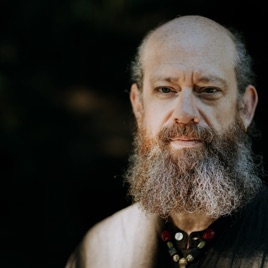
4.8123454
Living Zen
Teàrlach Eshū Kilgour
4.8113367
Drawn To The Flame
Frank and Peter

5228155
Holley Fueled Nutrition Podcast
Holley Samuel

544243
Find Joy with Joyan
Joyan Chan

4.813460
Snooker Scene Podcast
David Hendon
4.71621340
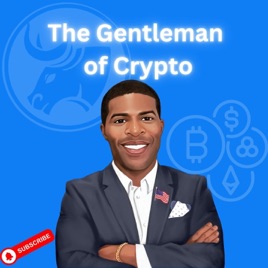
The Gentleman of Crypto
King Bless

4.824100
Mottek On Money with Frank Mottek
790 KABC | Cumulus Media Los Angeles
4.8212475
Mom and Mind | Pregnancy and Postpartum Depression & Anxiety
Katayune Kaeni, Psy.D., PMH-C