1493689090
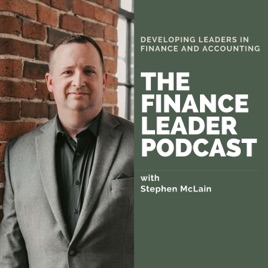
The Finance Leader Podcast

Advertise on podcast: The Finance Leader Podcast

Rating
★★★★★
4.9
from
12 reviews
This podcast has
250 episodes
Language
English
Explicit
No
Date created
2020/01/05
Latest episode
2026/02/03
Average duration
13 min.
Release period
14 days

Description

Organizations have a greater chance of success when Financial Planning and Analysis (FP&A), Accounting, Operations, and the Executive Senior Leadership are more strategically aligned. Developing Finance Leaders capable of growing partnerships across the organization and leading positive change are the goals for this podcast.  The host is Stephen McLain, a U.S. Army-Retired Finance Officer. After retirement, Stephen transitioned to working as a Business Consultant in Corporate FP&A and Accounting.  Topics will be dedicated to finance leadership development, "The CFO Mindset", improving processes like month-end close, and strengthening strategic alignment.  Please listen to the trailer so you can check it out. Thank you!

Unlock The Finance Leader Podcast podcast Email contact info,
Listeners & Audience details

Email contact information

Direct podcast contact details

Listeners

Audience numbers & engagement insights

Audience details

Podcast Insights

Podcast episodes

Check latest episodes from The Finance Leader Podcast podcast


When FP&A Translates Drivers, Strategy Finally Moves
2026/02/03
Send us a text Episode # 152: We show how finance becomes a real partner to operations by translating numbers into drivers, embedding FP&A in decisions before they are made, and aligning metrics and incentives to strategy. The result is faster execution, fewer surprises, and teams that own outcomes. • translating financials into operational drivers • replacing data dumps with clear operational stories • partnering early to frame trade‑offs and scenarios • aligning metrics, goals, and incentives to strategy • shifting from metric protection to outcome ownership • strengthening accountability while deepening trust • practical questions to assess team impact • getting out of the stovepipe to join project teams Please subscribe to the podcast on the platform you are currently listening to, and also subscribe to my weekly email. Please connect with me on: 1. Instagram: stephen.mclain 2. Twitter: smclainiii 3. Facebook: stephenmclainconsultant 4. LinkedIn: stephenjmclainiii For more resources, please visit Finance Leader Academy:  financeleaderacademy.com. Support the show
How Clear Priorities, Trust, And Timely Decisions Transform Performance
2026/01/13
Send us a text Episode # 151: Start the year with leadership that actually moves the needle. We walk through the strategic actions that make teams faster, clearer, and more resilient—without adding noise.  We begin with the culture you model when pressure hits, because people copy what you do, not what you say. Calm, integrity, and active listening create psychological safety and higher standards at the same time. From there, we narrow in on priorities: how to publish a short, ranked list, tie it to forecasts and analysis, and adjust in real time so finance and accounting stop guessing. You’ll hear practical ways to align tasks to business objectives using specified, implied, and essential work—an approach that reduces miscommunication and keeps execution honest. Governance becomes your engine for speed. We outline how to set clear escalation thresholds, run effective risk and operating reviews, and reward early warnings over last‑minute heroics. Then we tackle direct engagement and decision timeliness: structured operating rhythms, skip‑level listening, and defined decision rights that accelerate choices without micromanaging. The throughline is clarity—who decides, what matters now, and why trade‑offs are worth it—so people can move with confidence. By the end, you’ll have a checklist for today: model one cultural behavior, publish your priorities, and set a simple escalation path. Whether you lead FP&A, accounting, or the broader enterprise, these moves build trust and momentum that last beyond January.  Episode outline: Set a positive team culture,Establish clear priorities, transparency, and accountability,Encourage risk issue escalation with good governance, and Lead with more direct engagement and better decision timeliness.  Please connect with me on: 1. Instagram: stephen.mclain 2. Twitter: smclainiii 3. Facebook: stephenmclainconsultant 4. LinkedIn: stephenjmclainiii For more resources, please visit Finance Leader Academy:  financeleaderacademy.com. Support the show
Finance Leadership, Beyond The Numbers
2025/11/12
Send us a text Episode # 150: Leadership in finance isn’t a title—it’s a practice. We dive into what turns any role in accounting, FP&A, or audit into a force for strategic impact, starting with the four pillars that anchor meaningful change: influence, grow your people, deliver results, and see the future. Along the way, we unpack how to turn data into decisions, build trust with senior leaders, and convert operational friction—like a chaotic month end—into a reliable, learning-driven process. We start by reframing influence as earned alignment. You’ll hear how to show up with validated numbers, a sharp point of view, and a concise ask that respects executive time. Then we get practical about developing talent: mentoring for strategic thinking, cross-training on the business model, and running blameless reviews that raise the team’s ceiling. Execution takes center stage with tactics to speed the close, improve forecast accuracy, and translate variances into action. Finally, we step into forward-looking leadership—tracking external signals that matter, setting crisp scenarios, and aligning decisions to both profitability and purpose. If you’re ready to elevate your impact, this conversation will help you become the partner your organization needs: people-centered, data-driven, and ethically grounded.  Please connect with me on: 1. Instagram: stephen.mclain 2. Twitter: smclainiii 3. Facebook: stephenmclainconsultant 4. LinkedIn: stephenjmclainiii For more resources, please visit Finance Leader Academy:  financeleaderacademy.com. Support the show
Month-End Close Procedures Improvement by Using the Army's After-Action Review Process
2025/11/04
Send us a text Episode  #149: Month-end doesn’t have to feel like a rolling emergency. We walk through a proven, blame-free framework—the U.S. Army’s After Action Review—to turn your close into a reliable, data-driven process that gets faster and more accurate every cycle. If your calendar is packed and bottlenecks keep returning, this is the practical reset your team needs. We start by reframing performance reviews as a leadership habit that compounds. Then we break down the AAR into three simple stages: plan, prepare, execute. You’ll learn how to define clear success metrics for close, set roles and handoffs, and create a safe environment where facts matter more than opinions. We show how to gather evidence during the cycle—timelines, task logs, error heat maps—so the review pinpoints root causes and turns observations into action. From there, we dive into the backbone of a modern close: standardized processes, integrated systems, and tools that truly enable collaboration. Expect concrete ideas for automating data flow, reducing manual entries, and mapping end-to-end dependencies. We share ways to align accounting and FP&A early, cut late reclasses, and measure progress with a focused KPI set: close duration, on-time tasks, aged reconciliations, and post-close entries. Episode outline: The U.S. Army’s After-Action Review process,Let’s always focus on processes, systems, and tools, andUsing the After-Action Review system to evaluate our month-end close procedures. Please connect with me on: 1. Instagram: stephen.mclain 2. Twitter: smclainiii 3. Facebook: stephenmclainconsultant 4. LinkedIn: stephenjmclainiii For more resources, please visit Finance Leader Academy:  financeleaderacademy.com. Support the show
Aligning Finance Teams For Real Impact
2025/10/28
Send us a text Episode #148: Comfort feels safe, but it quietly taxes our careers and our teams. We take on complacency head-on and show how alignment, clear standards, and better conversations can turn routine finance work into strategic results. From setting the pace as a leader to running meetings that actually remove blockers, we break down the simple habits that keep momentum high without slipping into micromanagement. Walks through a practical framework: define success beyond compliance, link daily tasks to strategy, and give context that turns reports into decisions. We explore how leaders model urgency and integrity, why teams mirror the behaviors they see, and how recognition and coaching build trust that fuels ownership.  Celebrate the win, take real rest, then redirect energy to the next priority. Excellence is not a sprint; it is consistent, aligned action. If you’re aiming for bigger roles or simply a stronger function, use these tactics to build a culture of accountability, sharpen decisions, and protect focus. Episode outline: Leaders set the pace of the organization,Complacency is the opposite of alignment,What can we do to ensure that we create a culture of excellence. Please connect with me on: 1. Instagram: stephen.mclain 2. Twitter: smclainiii 3. Facebook: stephenmclainconsultant 4. LinkedIn: stephenjmclainiii For more resources, please visit Finance Leader Academy:  financeleaderacademy.com. Support the show
From Reporting to Relevance: Building Capacity through Alignment, Automation, and Development
2025/10/14
Send us a text Episode #147: Too many finance teams are stuck formatting data while the decisions fly by. We tackle a smarter way to work: build capacity by aligning effort to strategy, automating the grind, and developing the skills that turn reports into results. Stephen walks us through a practical approach for FP&A and accounting leaders who want to shield their teams from noise, prioritize what matters, and partner with IT to unlock automation without a costly tech overhaul. The focus is simple—reduce friction, raise insight, and spend more time advising than assembling. We start with clarity: how to map every role and deliverable to a strategic objective, choose the leading indicators that actually drive action, and say no to work that doesn’t move the needle. From there, we dig into process and systems—standardizing inputs, automating routine pulls and reconciliations, and using collaborative workspaces so knowledge isn’t trapped in inboxes. Along the way, we challenge the culture of daily fire drills and offer a guardrail: route ad-hoc requests through a priority gate so the team’s best hours aren’t lost to random tasks. Finally, we talk people. Coaching time management, building stronger analysis and storytelling skills, and running short, focused development sprints can transform morale and output. A tighter partnership with IT helps you ship quick wins—scheduled queries, clean templates, and self-serve dashboards—that free analysts to interpret trends and shape choices. Expect clear takeaways you can apply this week: an audit of calendars and tasks, a skills plan that sticks, and an automation backlog that delivers measurable time back. Episode outline: Clarify priorities and align with strategic goals,Leverage tools and automation, andBuild capacity through development. Please connect with me on: 1. Instagram: stephen.mclain 2. Twitter: smclainiii 3. Facebook: stephenmclainconsultant 4. LinkedIn: stephenjmclainiii For more resources, please visit Finance Leader Academy:  financeleaderacademy.com. Support the show
Strategic Accounting, Not Just Reporting
2025/09/30
Send us a text Episode 146: What if your accounting team did more than close the books—what if they helped shape outcomes before the month even ends? We explore how to evolve accounting from a reporting function into a true strategic partner that translates numbers into decisions. From building business acumen and storytelling skills to inserting accountants into high‑stakes projects, we lay out a practical path to unlock the insight already sitting inside your ledgers. We start by reframing the role: compliance and accurate reporting remain essential, but the next level is connecting transactions to the choices leaders face. You’ll hear how to turn variance reviews into narratives operators can act on, when to reset baselines so forecasts stop lying, and how to use simple visuals and clear language to remove guesswork. We also talk about freeing capacity—retire low-value reports, streamline reconciliations, and focus on work that changes outcomes—so your team can show up where decisions are made, not just after the fact. If you’re ready to move from ledgers to leverage, this conversation gives you clear steps to start today—train for communication, show up in project rooms, tell the story behind the numbers, and make accounting a catalyst for growth. Like what you heard? Follow, share with a colleague, and leave a review so more finance leaders can turn their teams into strategic partners. Episode outline: Evolve accounting from a reporting only entity,Looking beyond compliance and good bookkeeping, andIntegrating governance and risk into strategy. Please connect with me on: 1. Instagram: stephen.mclain 2. Twitter: smclainiii 3. Facebook: stephenmclainconsultant 4. LinkedIn: stephenjmclainiii For more resources, please visit Finance Leader Academy:  financeleaderacademy.com. Support the show
FP&A and Operations: Creating Powerful Partnerships for Strategic Growth
2025/09/23
Send us a text Episode # 145: What happens when your FP&A team operates in isolation from the people actually running your business? Nothing good. The gap between finance and operations isn't just an organizational issue—it's a strategic vulnerability that could be costing your company significant competitive advantage. Bridging this divide creates transformative opportunities. When finance professionals develop deep partnerships with operations teams, forecasting becomes dramatically more accurate, resource allocation improves, and the organization gains agility to respond to market changes. This alignment doesn't happen accidentally—it requires intentional leadership and cultural development focused on building mutual trust. A well-aligned FP&A team operates as a true strategic partner rather than just a reporting function. They maintain a forward-looking mindset using forecasting, scenario analysis, and sensitivity testing to guide decisions instead of merely reporting historical results. Processes become streamlined, data grows more accurate, and finance professionals proactively engage with department leaders to translate strategy into measurable financial plans. The alternative? Disconnected financial plans, unrealistic budgets, inefficient resource allocation, and the inability to respond quickly to changing market conditions. Operations may pursue initiatives that don't reflect financial constraints, while finance imposes limitations without understanding operational needs. Communication breakdowns reduce trust, weaken decision-making, and ultimately erode competitiveness. Ready to transform this relationship in your organization? Start by developing a common language that translates finance terms into operational impacts. Build trust by providing insights that help operations succeed rather than just highlighting problems. Know the micro-details of the metrics you analyze, and be willing to step away from your desk to understand what's really driving performance. Remember: finance leaders have both the ethical and fiduciary responsibility to move the business forward through powerful partnerships. Episode outline: The benefits of properly strategically aligning your FP&A team,What happens when FP&A is not aligned, andA few steps to get started. Please connect with me on: 1. Instagram: stephen.mclain 2. Twitter: smclainiii 3. Facebook: stephenmclainconsultant 4. LinkedIn: stephenjmclainiii For more resources, please visit Finance Leader Academy:  financeleaderacademy.com. Support the show
Manipulative Leadership: When Positivity Becomes a Weapon
2025/09/17
Send us a text Bonus Episode #97: Ever wonder if your relentless optimism is actually harming your team? Drawing from Mita Mallik's Harvard Business Review article "Does your Boss Practice Toxic Positivity," this eye-opening episode explores how excessive positivity can become a manipulative weapon in the workplace. Find the article here: "Does Your Boss Practice Toxic Positivity?" The line between motivation and manipulation is thinner than we think. When leaders push unrealistic goals without providing adequate resources, they're not inspiring greatness—they're setting their teams up for burnout and failure. As finance professionals, we face tremendous pressure to deliver results regardless of constraints. But demanding performance without acknowledging reality isn't leadership; it's denial wrapped in a smile. Ready to transform your leadership approach? Listen now and discover how balancing optimism with realism builds the trust and respect that drives sustainable success. Then share your experiences with manipulative positivity and how you've addressed it in your workplace. Episode outline: The weaponization of being too positive,Be more realistic in your leadership style, and Validate your team members’ concerns, which can lead to better solutions.  Please connect with me on: 1. Instagram: stephen.mclain 2. Twitter: smclainiii 3. Facebook: stephenmclainconsultant 4. LinkedIn: stephenjmclainiii For more resources, please visit Finance Leader Academy:  financeleaderacademy.com. Support the show
Finance Leader Learning Priorities Now
2025/09/09
Send us a text Bonus episode #96: This episode delivers a concise, actionable guide to the three most crucial learning priorities for finance leaders in the coming year: 1) using artificial intelligence to elevate your analysis, 2) performing a sensitivity analysis to make better strategic decision, and 3) applying financial risk management. Please connect with me on: 1. Instagram: stephen.mclain 2. Twitter: smclainiii 3. Facebook: stephenmclainconsultant 4. LinkedIn: stephenjmclainiii For more resources, please visit Finance Leader Academy:  financeleaderacademy.com. Support the show
Revisiting Coaching Effort: How Did the Las Vegas Aces Perform?
2025/09/02
Send us a text Bonus episode #95: What happens when a leader stops coaching effort and starts demanding it? The transformative power of high expectations takes center stage in this eye-opening exploration of leadership principles that transcend industries. Drawing inspiration from WNBA coach Becky Hammond's bold approach with the Las Vegas Aces, we examine how her refusal to "coach effort" led to an impressive turnaround - from a mediocre record to eleven consecutive victories and a secured playoff position. The lesson? When leaders establish non-negotiable expectations for commitment and performance, they free themselves to focus on strategy, skills development, and team synergy. For finance leaders, this philosophy presents a compelling alternative to traditional coaching methods. While we can't simply "bench" underperforming team members, we have our own toolkit - strategic assignments, development opportunities, promotions, and bonuses. But implementing this approach requires nuance. We must recognize the varying levels of experience, ability, and motivation across our teams while still maintaining core standards of excellence. Please connect with me on: 1. Instagram: stephen.mclain 2. Twitter: smclainiii 3. Facebook: stephenmclainconsultant 4. LinkedIn: stephenjmclainiii For more resources, please visit Finance Leader Academy:  financeleaderacademy.com. Support the show
Change Is Not Just Inevitable—It's Your Competitive Edge
2025/08/26
Send us a text Bonus Episode #94: Change isn't just knocking at your door—it's already in your house, rearranging the furniture. As finance leaders, our ability to navigate and drive transformation determines whether our organizations thrive or merely survive in today's dynamic business landscape. The most dangerous position for any finance professional is complacency. That comfortable position you've worked so hard to reach? It could disappear tomorrow if you're not constantly evolving your skills and mindset. Your competition isn't resting, and neither should you. As Amelia Earhart wisely noted, "The most difficult thing is the decision to act. The rest is merely tenacity." This wisdom applies perfectly to how we must approach change—with decisive action and unwavering persistence. Leading change requires addressing two critical fronts simultaneously: your personal career development and your organization's adaptability. On the personal side, continuous learning is non-negotiable as our profession transforms through technological advancements like AI and regulatory shifts. For your organization, proactive change leadership means conducting regular team-based SWOT analyses, challenging assumptions, updating processes, and ensuring your technology remains current. The CFO plays a pivotal role by allocating resources that signal commitment to transformation initiatives while maintaining transparency with teams to build trust during periods of change. Please connect with me on: 1. Instagram: stephen.mclain 2. Twitter: smclainiii 3. Facebook: stephenmclainconsultant 4. LinkedIn: stephenjmclainiii For more resources, please visit Finance Leader Academy:  financeleaderacademy.com. Support the show
Forensic Accounting: The World of Financial Detectives
2025/08/19
Send us a text Episode 144: Dive into the fascinating world of financial detective work as we explore the specialized field of forensic accounting. Ever wondered who tracks down financial criminals or how complex fraud schemes are uncovered? This episode pulls back the curtain on a career path that combines investigative prowess with accounting expertise. We examine how forensic accountants serve as financial sleuths, tracing illicit transactions and identifying misappropriated assets for government agencies, insurance companies, and legal firms. Unlike traditional auditors who verify financial health, these specialists specifically search for irregularities with the presumption that misconduct may be present. Their work requires not just accounting knowledge, but also investigative techniques, legal understanding, and meticulous documentation skills. Could this be your next career move? If you enjoy analyzing data, identifying patterns, and solving complex financial puzzles, don't overlook this rewarding specialization. Find the Advance Your Career Course: more information here Episode outline: What is the purpose of forensic accounting,The process of detecting fraud, and Career opportunities for forensic accountants. Please connect with me on: 1. Instagram: stephen.mclain 2. Twitter: smclainiii 3. Facebook: stephenmclainconsultant 4. LinkedIn: stephenjmclainiii For more resources, please visit Finance Leader Academy:  financeleaderacademy.com. Support the show
Developing an Effective Audit Strategy to Support Business Objectives
2025/08/12
Send us a text Episode 143: Financial integrity isn't optional—it's essential. That's why developing a structured, effective audit plan stands as one of the most critical responsibilities for finance leaders today.  This episode unveils a nine-step framework for creating audit plans that deliver genuine value. From understanding your business environment and conducting thorough risk assessments to defining clear audit scopes and establishing communication protocols, each element works together to create a process that leadership can trust. We explore how to effectively present technical findings to leadership teams in ways that drive action, not confusion. Most importantly, we examine why leadership commitment fundamentally determines whether an audit becomes a transformative tool or merely a compliance exercise. Conflict Management Course information: find more information here Episode outline: How to structure an effective audit plan,Presenting the findings to the leadership team, andWhy leadership is essential for the auditing function. Please connect with me on: 1. Instagram: stephen.mclain 2. Twitter: smclainiii 3. Facebook: stephenmclainconsultant 4. LinkedIn: stephenjmclainiii For more resources, please visit Finance Leader Academy:  financeleaderacademy.com. Support the show
Protecting Financial Health Through Strategic Risk Analysis
2025/08/05
Send us a text Find the downloadable skills guides here: Finance Leader Academy Episode 142: Financial risk assessment stands as the cornerstone of effective auditing—the crucial process that separates calculated risk-taking from reckless decision-making. This deep dive into organizational risk management provides finance leaders with a strategic framework for protecting company assets and ensuring financial integrity. At its core, proper risk assessment requires a cross-functional approach. By bringing together expertise from legal, treasury, accounting, and financial planning departments, organizations can conduct robust SWOT analyses that reveal potential vulnerabilities. The process continues with identifying key metrics related to areas of concern, scoring and ranking these metrics, and evaluating the effectiveness of existing internal controls. This methodical approach ensures that audit resources focus first on the areas presenting the greatest risk to financial health and operational integrity. The significance of this process cannot be overstated. By systematically identifying weaknesses in internal controls and operational policies, finance leaders can build audit plans that address real vulnerabilities rather than perceived threats. This validation process provides confidence to all stakeholders—from employees and suppliers to creditors and potential investors—that the organization maintains financial stability and follows a viable strategic course. Whether you're managing compliance risk, credit and liquidity challenges, market uncertainties, or operational vulnerabilities, a well-designed risk assessment protocol serves as your first line of defense against financial irregularities. Take time today to evaluate your risk management system and ensure it effectively engages internal experts to assess your organization's most pressing risks. Your company's long-term success may depend on it. Episode outline: Analyzing various risk metrics will help identify areas with the weakest internal controls, Why financial risk is the foundation of the audit plan, andProperly integrating risk into what you audit.   Please connect with me on: 1. Instagram: stephen.mclain 2. Twitter: smclainiii 3. Facebook: stephenmclainconsultant 4. LinkedIn: stephenjmclainiii For more resources, please visit Finance Leader Academy:  financeleaderacademy.com. Support the show

Podcast reviews

Read The Finance Leader Podcast podcast reviews


4.9 out of 5
12 reviews
★★★★★
livandluna 2024/06/17
Leadership development for finance pros!
This podcast is an incredible resource for finance and accounting executives who want to expand to the next level. His strategies and advice are pract...
★★★★★
forsario 2024/06/13
Great content!
Love smart goals! He breaks it down in such simple and actionable ways.
★★★★★
stellardoor_ 2020/12/01
Stellardoor
Great content
★★★★★
Yeebin_8 2020/07/09
Educational
This podcast gives great value for up-and-coming finance leaders. Highly recommend for those interested in that field.
check all reviews on apple podcasts

Podcast sponsorship advertising

Start advertising on The Finance Leader Podcast relevant audience podcasts


What do you want to promote?