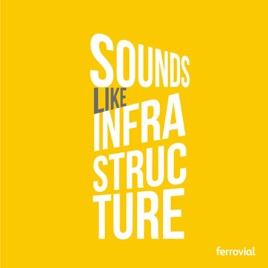
Advertise on podcast: Sounds Like Infrastructure by Ferrovial
Rating
5from
This podcast has
22 episodes
Language
EnglishPublisher
FerrovialExplicit
No
Date created
2020/03/13
Latest episode
2023/11/29
Average duration
21 min.
Release period
76 days
Description
When working well, the infrastructure we use is all but invisible. Its seamless integration into our daily lives means we rarely stop to think "How did this get here?" Sounds Like Infrastructure reveals the secrets and stories behind some of the world’s biggest infrastructure projects. Learn more at Ferrovial.com Hosted on Acast. See acast.com/privacy for more information.
Unlock Sounds Like Infrastructure by Ferrovial podcast Email contact info,
Listeners & Audience details
Email contact information
Direct podcast contact details

Listeners
Audience numbers & engagement insights

Audience details
Podcast Insights

Podcast episodes
Check latest episodes from Sounds Like Infrastructure by Ferrovial podcast
18 - Hurricane Season: How to Be Informed and Prepared | Ferrovial
2023/11/29
During the hurricane season in the Atlantic, a period that runs from June 1 to November 30 each year, the tropical cyclones that head towards the US and Caribbean coasts test the management and strength of all constructions and infrastructures. Meteorologist Albert Martinez explains how to predict the path of a hurricane and the deadlines citizens have to prepare for potential hazards.
Edgar Acosta, Design Build Estimating Manager at Webber, and Daniel Morrow, Construction Manager at Webber, tell us how Hurricane Harvey impacted the Houston area in 2017 and how neighbors organized to help rebuild the damaged homes.
We also hear from Paul Staton, Business Director at Webber, and Ryan McCalla, Vice President of Civil Works Operations at Webber, as they explain how engineering helps manage these emergencies, taking us through the Port Miami underwater tunnel and two large bridges near Houston, specially designed to facilitate evacuations and ensure the safety of the population.
Sounds of Infrastructure is a collaboration between Ferrovial and Yes We Cast. Our team includes Francisco Izuzquiza, Alberto Espinosa, Sergio F. Núñez, Luciano Branca, Kevin Garcia King, José García Guaita, Arantxa Gulias, Claudia Castañón Piqueras, Amanda Loro, Bethany Ashcroft and Fatima Gracia De Vargas.
In addition to the podcast, we have a great blog with so many more stories about infrastructure projects. https://blog.ferrovial.com/en/.
If you enjoyed this episode, check out the other episodes on the official Ferrovial Podcast page. We also have a Spanish Podcast channel.
Hosted on Acast. See acast.com/privacy for more information.
17 - Skyscrapers: Engineering Reaches New Heights | Ferrovial
2023/07/31
We have always been struck by the incredible height of skyscrapers. Do you know how tall the tallest building in the world is? The current record is 2,717 feet, over half a mile. Nonetheless, we are sure that somewhere in the world, an even taller one is already being planned. Have you ever wondered how tall they are downwards? How many feet would they have had to build underground, to support such a height above?
And how is the tallest building in the world built?
In this episode of Sounds Like Infrastructure, we dive, or rather climb, to the tallest building in the world. We want to discover what it takes to build a skyscraper and how they have evolved throughout history. We are joined by Eduardo Ortega, head of the architecture department within the technical management of Ferrovial Construction, Benjamín Juárez, Director of safety, health and wellbeing at Ferrovial, and Jorge Iglesis, architect and professor at the University of Chile.
Sounds of Infrastructure is a collaboration between Ferrovial and Yes We Cast. Our team includes Francisco Izuzquiza, Alberto Espinosa, Sergio F. Núñez, Luciano Branca, Kevin Garcia King, José García Guaita, Arantxa Gulias, Claudia Castañón Piqueras, Amanda Loro, Bethany Ashcroft and Fatima Gracia De Vargas.
In addition to the podcast, we have a great blog with so many more stories about infrastructure projects. https://blog.ferrovial.com/en/.
If you enjoyed this episode, check out the other episodes on the official Ferrovial Podcast page. We also have a Spanish Podcast channel.
Hosted on Acast. See acast.com/privacy for more information.
16 - State-Of-The-Art Construction | Ferrovial
2023/03/15
In 1765 the Scotsman James Watt invented the steam engine. In 4500 BC, humans from way back then invented the wheel.
More than six thousand years of difference between one invention and the other, but both completely transformed society at the time and all that was to come.
On a smaller scale, construction, engineering and architecture evolve thanks to the accumulation of experience and the arrival of new technologies that drive change. In this episode of Sounds of Infrastructure, we delve into how innovation has pushed the wheel of evolution to keep turning: sustainability, digital development, new forms of construction worldwide... Various examples of how human beings keep reinventing themselves and guarantee progress.
Sounds of Infrastructure is a collaboration between Ferrovial and Yes We Cast. Our team includes Francisco Izuzquiza, Alberto Espinosa, Sergio F. Núñez, Luciano Branca, Kevin Garcia King, José García Guaita, Arantxa Gulias, Claudia Castañón Piqueras, Amanda Loro, Bethany Ashcroft and Fatima Gracia De Vargas.
In addition to the podcast, we have a great blog with so many more stories about infrastructure projects. https://blog.ferrovial.com/en/.
If you enjoyed this episode, check out the other episodes on the official Ferrovial Podcast page. We also have a Spanish Podcast channel.
You can also find out more about us at www.ferrovial.com
Hosted on Acast. See acast.com/privacy for more information.
15 - AIVIA and the Future of Smart Highways | Ferrovial
2022/05/24
Imagine the highways of the future with faster drive times, fewer accidents and reliable, instant safety alerts that are navigated by a mixture of connected and autonomous vehicles (CAVs). As vehicles are getting smarter, so as the roads in which they circulate in thanks to emergence of new technologies like 5G, C-V2X and real-time sensing which are being retrofitted into the existing infrastructure.
In this episode, Cintra's Senior Innovation Manager, Jen Duthie, explains the concept of smart highways, using Cintra's AIVIA Smart Roads initiative (Smart Roads Technology Solution - Cintra’s AIVIA (aiviasmartroads.com)) as an example, together with the technologies around it and how mobility solutions like these will make our roads safer and more reliable for all users.
Sounds Like Infrastructure is a collaboration between Ferrovial and Veleta Media. Our team includes Craig Lawless, Kevin García King, José García Guaita, Arantxa Gulias, Bethany Ashcroft, Fátima Gracia de Vargas and Paloma González de Canales Díaz. Editing by Craig Lawless.
In addition to the podcast, we have a great blog with so many more stories about infrastructure projects. https://blog.ferrovial.com/en/.
If you enjoyed this episode, check out the other episodes on the official Ferrovial Podcast page. We also have a Spanish Podcast channel. You can also find out more about us at www.ferrovial.com and at www.aiviasmartroads.com.
Hosted on Acast. See acast.com/privacy for more information.
14 - Plaza Mayor Madrid | Ferrovial
2022/04/22
On a warm August night in 1790, Madrid’s Plaza Mayor was home to one of the worst fires the city had ever seen. Over the course of nine days, the fire not only burned most of the square, but also wreaked havoc outside of it too.
After the fire was finally put out, the king commissioned the architect Juan de Villanueva to rebuild the square. His task? To make sure it never burned down again.
On this episode of Sounds Like Infrastructure we tell you the story behind Madrid’s most famous square and the work Ferrovial took on to bring the square back to its former glory.
Sounds Like Infrastructure is a collaboration between Ferrovial and Veleta Media. Our team includes Craig Lawless, Kevin García King, José García Guaita, Arantxa Gulias, Bethany Ashcroft, Fátima García de Vargas and Paloma González de Canales Díaz. Editing by Craig Lawless.
In addition to the podcast, we have a great blog with so many more stories about infrastructure projects. https://blog.ferrovial.com/en/.
If you enjoyed this episode, check out the other episodes on the official Ferrovial Podcast page. We also have a Spanish Podcast channel.
You can also find out more about us at www.ferrovial.com
Hosted on Acast. See acast.com/privacy for more information.
13 - Can a City Really Run Out of Water? | Ferrovial
2022/03/21
This World Water Day, we take a look at what cities across the world are doing to diversify their water supplies and make sure they don’t face their very own ‘Day Zero’ - the apocalyptical sounding event that threatened Cape Town in early 2018.
Peter Bailey guides us through Houston’s plan to diversify from groundwater and stop the city from sinking, and Eva Muñoz Manzanera explains how the Spanish city of Águilas is using desalination to help irrigate the region.
Sounds Like Infrastructure is a collaboration between Ferrovial and Veleta Media. Our team includes Craig Lawless, Kevin García King, José García Guaita, Arantxa Gulias, Bethany Ashcroft, Fátima García de Vargas and Paloma González de Canales Díaz. Editing by Craig Lawless.
In addition to the podcast, we have a great blog with so many more stories about infrastructure projects. https://blog.ferrovial.com/en/.
If you enjoyed this episode, check out the other episodes on the official Ferrovial Podcast page. We also have a Spanish Podcast channel.
You can also find out more about us at www.ferrovial.com
Hosted on Acast. See acast.com/privacy for more information.
12 - Conversations: Diversity, Inclusion and How to Implement Them in the Workplace | Ferrovial
2022/03/08
Diversity and inclusion are terms we’ve been hearing a lot more of recently. But although their definitions are pretty straightforward, we don’t always know exactly what they mean when it comes to their use in the world of business.
To help celebrate International Women’s Day, we’ve decided to dig a little deeper into what these two words mean. We talk to Webber’s Chelsea Russo about her experiences working in often male dominated fields, and how that has influenced her perception of diversity in different companies and her day to day work. We also chat about the Women of Webber program and ask whether enough is being done to push diversity and inclusion in workforces across the globe.
Sounds Like Infrastructure is a collaboration between Ferrovial and Veleta Media. Our team includes Craig Lawless, Kevin García King, José García Guaita, Arantxa Gulias, Bethany Ashcroft and Paloma González de Canales Díaz. Editing by Craig Lawless.
In addition to the podcast, we have a great blog with so many more stories about infrastructure projects. https://blog.ferrovial.com/en/.
If you enjoyed this episode, check out the other episodes on the official Ferrovial Podcast page. We also have a Spanish Podcast channel.
You can also find out more about us at www.ferrovial.com
Hosted on Acast. See acast.com/privacy for more information.
11 - Formula 1: Bad Surfaces (And How to Fix Them) | Ferrovial
2022/02/09
On this episode of Sounds Like Infrastructure we get to grips with Formula 1 surfaces. We get to the root of the problem of what made the asphalt feel like ice at the Turkish Grand Prix in 2020, ask what caused a disastrous resurfacing of Silverstone in 2018, and find out what it takes to formulate the perfect asphalt for the perfect circuit.
Thanks to our F1 experts Damien Smith and Chris Medland and our asphalt experts Fernando Moreno and José Javier García for chatting to us for this episode.
Sounds Like Infrastructure is a collaboration between Ferrovial and Veleta Media. Our team includes Craig Lawless, Kevin García King, José García Guaita, Arantxa Gulias, Bethany Ashcroft and Paloma González de Canales Díaz. Editing by Craig Lawless.
In addition to the podcast, we have a great blog with so many more stories about infrastructure projects. https://blog.ferrovial.com/en/.
If you enjoyed this episode, check out the other episodes on the official Ferrovial Podcast page. We also have a Spanish Podcast channel.
You can also find out more about us at www.ferrovial.com
Hosted on Acast. See acast.com/privacy for more information.
10 - Megaprojects II | Hoover Dam | Ferrovial
2022/01/11
The part of the story about Hoover Dam that most people don’t know is that the dam itself nearly didn’t happen at all.
On this episode of Sounds Like Infrastructure, we talk to the author and LA Times journalist Michael Hiltzik, who’s book ‘Colossus’ details the history of the dam.
We find out how Herbert Hoover finally convinced the seven states to come to an agreement, learn about the construction methods invented to pull off the project and ask what the future holds for the dam and the region it serves.
Sounds Like Infrastructure is a collaboration between Ferrovial and Veleta Media. Our team includes Craig Lawless, Kevin García King, José García Guaita, Arantxa Gulias, Bethany Ashcroft and Paloma González de Canales Díaz. Editing by Craig Lawless.
In addition to the podcast, we have a great blog with so many more stories about infrastructure projects. https://blog.ferrovial.com/en/.
If you enjoyed this episode, check out the other episodes on the official Ferrovial Podcast page. We also have a Spanish Podcast channel.
You can also find out more about us at www.ferrovial.com
Hosted on Acast. See acast.com/privacy for more information.
09 - Megaprojects I | Building the Golden Gate: The Impossible Bridge | Ferrovial
2021/10/27
The bridge that we see today is not the bridge that chief engineer Joseph Strauss had in mind when he first pitched his idea for the Golden Gate. His 1921 design was big and clunky. Like one of those old metal railway bridges you see in the movies. Not something that would fit in with the surroundings of the San Francisco Bay.
But Strauss had designed his bridge (a mix of a cantilever and suspension bridge) like this for one reason: No suspension bridge had ever spanned a gap as big as the Golden Gate before.
It would take over 10 years of planning, hundreds of sketches and an almost complete redesign, but the bridge many people said would be impossible to build, was about to be built.
On this episode of Sounds Like Infrastructure, we go beyond the iconic image of the Golden Gate bridge and ask ‘how did they actually build it?’. We talk to Luis Martín Tereso, one of Ferrovail’s most experienced bridge engineers, and to the author Henry Petroski, to find out how a suspension bridge actually works, how construction workers battled with the elements of the San Francisco bay, and how Strauss used pioneering safety and construction methods to pull it all off.
Sounds Like Infrastructure is a collaboration between Ferrovial and Veleta Media. Our team includes Kevin García King, José Luis García Guaita, Arantxa Gulias Valverde, Manuel Sánchez Medina and Craig Lawless. Editing by Craig Lawless.
In addition to the podcast, we have a great blog with so many more stories about infrastructure projects. https://blog.ferrovial.com/en/.
If you enjoyed this episode, check out the other episodes on the official Ferrovial Podcast page. We also have a Spanish Podcast channel.
You can also find out more about us at www.ferrovial.com
Hosted on Acast. See acast.com/privacy for more information.
08 - IoT and Connected Highways | Ferrovial
2021/09/30
Of all of the buzzwords to come out of the tech world over the last 20 years, there’s one in particular that’s really stuck around. IOT: The Internet of Things.
Although you’ve probably heard of it, it’s a technology that never really got the red carpet treatment. And yet these days, it seems to be everywhere you look.
Now, Ferrovial is working on a new project to turn its highways into connected highways, using a variety of different sensors and the internet of things.
On this episode of Sounds Like Infrastructure, we take a look at the pilot tests Ferrovial is working on right now, and find out how the system will automatically share information like traffic conditions, incidents and potential hazards with drivers on the highway, in real time.
We find out what the connected highway will look like in the world of autonomous vehicles and ask how marketing will work in the world of autonomous and connected vehicles.
Sounds Like Infrastructure is a collaboration between Ferrovial and Veleta Media. Our team includes Kevin García King, José Luis García Guaita, Arantxa Gulias Valverde, Manuel Sánchez Medina and Craig Lawless. Editing by Craig Lawless.
In addition to the podcast, we have a great blog with so many more stories about infrastructure projects. https://blog.ferrovial.com/en/.
If you enjoyed this episode, check out the other episodes on the official Ferrovial Podcast page. We also have a Spanish Podcast channel.
You can also find out more about us at www.ferrovial.com
Hosted on Acast. See acast.com/privacy for more information.
07 - The Floating Building: CaixaForum Madrid | Ferrovial
2021/08/16
The Caixaforum Madrid is a building that makes you stop for one reason: it looks like it’s floating. Even after staring at it for a couple of minutes, it’s difficult to figure out. There are so many design decisions that just don’t seem to make sense. And that’s exactly what makes it beautiful.
On this episode of Sounds Like Infrastructure, we see how Ferrovial took the iconic Herzog and De Meuron design and made it happen. The team would need to make this old industrial power station five times its original size and completely re-engineer the structural integrity of the building. And this design, paired with a 460 square metre vertical garden, would become one of Madrid’s most photographed buildings and one of Ferrovial’s most iconic projects.
Sounds Like Infrastructure is a collaboration between Ferrovial and Veleta Media. Our team includes Kevin García King, José Luis García Guaita, Theresa Beno, Arantxa Gulias Valverde, Manuel Sánchez Medina and Craig Lawless. Editing by Craig Lawless.
In addition to the podcast, we have a great blog with so many more stories about infrastructure projects. https://blog.ferrovial.com/en/.
If you enjoyed this episode, check out the other episodes on the official Ferrovial Podcast page. We also have a Spanish Podcast channel.
You can also find out more about us at www.ferrovial.com
Hosted on Acast. See acast.com/privacy for more information.
Podcast reviews
Read Sounds Like Infrastructure by Ferrovial podcast reviews
VikasR07 2020/03/25
Really Informative Podcast
This podcast cleared lot of things and helps to clear some air. Keep doing these informative podcasts
Geeohhx3 2020/03/20
5 Stars
Would highly recommended this podcast. Very informative!
Mikevaldes13 2020/03/20
Good information and overall good listen
This was a great listen. Learned some things I had no idea about “The Great Stink”. Overall great commentary by Craig and I love the music and sound o...
Camino kat 2020/03/20
Very interesting!
Great job of making this subject interesting, even for non engineers. Well done!
Morgan Kendal 2020/03/20
Thumbs Up 👍🏾
What an informative podcast ! Very interesting to hear about the history of the design of the sewage/water system and how infrastructure/lack of prope...
Frostynole 2020/03/18
A good listen!
This is a cool podcast if your into history and infrastructure. The hosts also have great accents!
The NEHB 2020/03/18
BEST NEW PODCAST
If you love learning about history and making connections with what's around you today while having a good laugh, this the podcast to listen to. Great...
jlf2199 2020/03/18
Very interesting and informative!
If you are looking for a podcast that reveals the intricacies of the Infrastructure studies by one of the most successful infrastructure management an...
Podcast sponsorship advertising
Start advertising on Sounds Like Infrastructure by Ferrovial relevant audience podcasts
You may also like to advertise on these Podcasts

4.4371061566
The Megyn Kelly Show
SiriusXM
4.888901269
Fearless with Jason Whitlock
Blaze Podcast Network

4.8118931000
Mind Pump: Raw Fitness Truth
Sal Di Stefano, Adam Schafer, Justin Andrews, Doug Egge
4.8102131585
Tara Brach
Tara Brach

4.541561215
Something You Should Know
Mike Carruthers | OmniCast Media

4.513841343
Strictly Anonymous Confessions
Kathy Kay

4.8292781897
Fantasy Footballers - Fantasy Football Podcast
Fantasy Football

4.62382612
Football Weekly
The Guardian

4.45387666
Two Judgey Girls
Two Judgey Girls
3.8258501152
The Viall Files
Nick Viall