Advertise on podcast: Teamcast
Rating
4.8from
This podcast has
83 episodes
Language
EnglishPublisher
Mission Critical Team InstituteExplicit
Yes
Date created
2020/04/04
Latest episode
2026/10/05
Average duration
55 min.
Release period
14 days
Description
Dr. Preston Cline, Dr. Dan Dworkis, Dr. Art Finch and Harry Moffit of the Mission Critical Team Institute share research and explore the questions vexing the most elite teams in the world, from Special Operations soldiers to Firefighters, from Trauma Medics to Professional Athletes, and from Astronauts to Tactical Law Enforcement.
Unlock Teamcast podcast Email contact info,
Listeners & Audience details
Email contact information
Direct podcast contact details

Listeners
Audience numbers & engagement insights

Audience details
Podcast Insights

Podcast episodes
Check latest episodes from Teamcast podcast
S6 Ep 20 Communities of Practice with Sharon Ravitch (Recast)
2026/10/05
Dr. Sharon M. Ravitch is a Professor of Practice at the University of Pennsylvania's Graduate School of Education - and the person who chaired Preston's dissertation committee. In this conversation, originally released in January 2023, Sharon joins Preston to talk about communities of practice: historically, a craftsman's model (carpenters, ironworkers, silversmiths), and MCTI's model that describes instructor cadres — groups who build shared language and expertise around a particular kind of problem.
Sharon reframes it as hybridized expertise because everyone in the room is already an expert of their own experience. New knowledge gets created when practitioners come together to examine what they do every day — not when it's handed down from the academy.
From there the conversation moves through the significance of connection, reflection as a muscle that atrophies without white space in the curriculum (Viktor Frankl's "space between stimulus and response" comes up), and trading risk rather than mitigating it.
We're posting this Recast now because it's part of the iterative process behind Preston's recent white paper, The Fourth Generation of Military Special Operations Selection & Assessment. Communities of practice is exactly the concept the paper builds on and then pushes past: where a community of practice is organized around a shared subject (psychologists as one community, instructor cadre as another), a community of praxis is what happens when distinct communities, i.e., academics, cadre, and leadership, stop working in parallel and work together toward a common outcome. You can hear Preston and Art Finch talk through that model directly in S6 Ep5.
If you find value in this discussion, the best way to support our work and stay up to date on future episodes is to subscribe and leave us a quick rating or review. It helps us reach more people who need to hear these conversations.
S6 Ep19 Dr. Derek Donegan on Orthopedic Trauma & Metacognition
2026/09/21
Dr. Derek Donegan is an orthopedic trauma surgeon and Associate Professor at the University of Pennsylvania, a healthcare entrepreneur, co-founder of ORtelligence, and a national leader with the Orthopedic Trauma Association, where his work centers on well-being, moral injury, and advocacy.
Dan and Derek start with the distinction that elective joint replacement is planned, optimized, and predictable weeks out, while orthopedic trauma is a patient you've never met and can't prepare for. The two paths have the same training pipeline, same residency spots, but somewhere along the way some surgeons catch the "trauma bug" and start looking for chaos to organize instead of variables to eliminate.
From there they dig into what Derek calls his "Spidey sense", the signal that a case is turning before he could point to why, and his reputation for going quiet in the OR exactly when things get hardest. They use cognitive load theory to get at why that instinct resists being taught even when everyone in the room wants it taught.
This conversation was released in partnership with The Emergency Mind Podcast.
If you found value in this discussion, the best way to support our work and stay up to date on future episodes is to subscribe and leave us a quick rating or review. It helps us reach more people who need to hear these conversations.
S6 Ep18 Harry & Peter Ward on SOG Selection, Leadership, and Fatigue (Recast)
2026/09/07
Recorded in 2020 during Melbourne's COVID lockdowns, this episode opens on what that stretch demanded of a tactical policing workforce that couldn't pause: fatigue management, disrupted home lives, and the added risk of infection in a workplace that had to keep running. From there, host Harry Moffitt and Superintendent Peter Ward move into a conversation that holds up well beyond lockdown.
At the time of recording, Peter Ward was Divisional Commander of the Security Services Division at Victoria Police, overseeing the Special Operations Group (SOG), the Critical Incident Response Team (CIRT), the Bomb Response Unit, and the Protective Services Unit — a 30-year career that includes operator and team leader roles in the SOG, the Port Arthur arrest team in 1996, and training alongside the FBI and LAPD SWAT.
Harry and Peter trace his path from SOG selection through the "privilege of suffering" bond among the final survivors, to the career-defining feedback that leadership means bringing your people with you, not just chasing the task. They close on his current work modernizing selection, opening tactical policing to women, and confronting the mental health toll of the job head-on.
Book mentioned: Legacy by James Kerr.
If you find value in this discussion, the best way to support our work and stay up to date on future episodes is to subscribe and leave us a quick rating or review. It helps us reach more people who need to hear these conversations.
S6 Ep17 The Myth of Suffering at Work
2026/08/24
Diane Malaspina is a psychologist, performance coach, and longtime yoga teacher who specializes in stress and burnout recovery, nervous system regulation, and optimal performance. She coaches frontline medical professionals, military human performance psychologists, executives, and athletes, and has worked extensively with medical students and residents through Arena Labs.
In this conversation with Dan Dworkis, Diane makes the case for a strengths-based approach to burnout: instead of asking what's broken in the 65% of people who report burnout, look at what the 35% who don't are doing right. They cover reframing stress as a challenge rather than a threat, plus two of the fastest levers for shifting your nervous system in real time—sleep and breath.
This conversation was released in partnership with The Emergency Mind Podcast and originally aired on April 27, 2026.
If this conversation was useful, subscribe and leave a quick rating or review — it helps us reach the teams that need to hear these conversations most.
S6 Ep16 Dr. Anna Simons: The Anthropology of Mission Critical Teams (Recast)
2026/08/10
This week we're recasting Preston's conversation with Dr. Anna Simons from May 2023. Anna retired as a Professor of Defense Analysis at the Naval Postgraduate School. She holds a PhD in Social Anthropology from Harvard University and an A.B. from Harvard College.
She is the author of Networks of Dissolution: Somalia Undone and The Company They Keep: Life Inside the U.S. Army Special Forces. She is also the co-author of The Sovereignty Solution: A Commonsense Approach to Global Security. Her fieldwork began in Somalia in the late 1980s, embedded with a Special Forces mobile training team, years before most Americans had heard of the country. This work marked the start of a career devoted to studying the ties that bind operators together and the forces that pull them apart.
Preston and Anna range widely: why assessment and selection should simulate the actual conditions operators will face rather than test for a generic standard; "warrior" branding and tribal emblems, and what it signals when a unit needs more mystique than its mission alone provides; the difference between interchangeability and neurodiversity, and why teams need both depending on whether the problem in front of them is technical or adaptive; and the concept of communitas.
Asked what advice she'd give the people responsible for assessing, selecting, and educating MCTs today, Anna recommends holding people to high standards and communicating your expectations. She also makes a book recommendation of her own: Chris Miller's Soldier Secretary, which she read cover to cover the day it was published in 2023.
If you find value in this discussion, the best way to support our work and stay up to date on future episodes is to subscribe and leave us a quick rating or review. It helps us reach more people who need to hear these conversations.
S6 Ep15 Sara (Mills) Kerr - Once a Bushfire Volunteer, Now an AI Researcher
2026/07/27
Sara (Mills) Kerr is a firefighter with Fire and Rescue New South Wales and a PhD candidate at the University of Newcastle, researching the trustworthiness of AI-generated information in disaster and emergency management decision-making. Before the fire service, she worked as an e-commerce data analyst, until Australia's 2019/2020 Black Summer bushfires redirected her path. Instead of returning to her normal work, she entered the Emergency Services Academy.
Harry and Sara talk about what fourteen weeks at the Academy built in her, and what it didn't. They get into why "overthinking" is often mislabeled: vigilance is a protective mechanism, not a weakness, and only becomes a problem when it overwhelms rather than informs.
That gap between training and readiness eventually pointed Sara toward research into AI and disaster management, and eventually the PhD. AI, in her framing, is a cognitive aid that should enhance operator judgment, never replace it. She's also recruiting participants for that research - anyone using AI operationally in Australian disaster and emergency management, frontline or otherwise is invited to reach out to Harry for a connection: [email protected].
Their conversation also covered how why diversity strengthens a team's shared operating picture, and Sara walks through her Inner Command framework she built out of her own early struggles and the framework's 5 C's: Calm, Control, Competence, Confidence, Courage.
Advice for Monday: weaponize your vigilance, and give yourself credit for what you do well.
If you found value in this discussion, the best way to support our work and stay up to date on future episodes is to subscribe and leave us a quick rating or review. It helps us reach more people who need to hear these conversations.
S6 Ep14 A Better Approach to After-Action Reviews
2026/07/13
A few years ago, senior FBI SWAT team leader Matt Hoffman called Preston after a fatal operation. To assist the team in working through the loss, Preston and Matt used a process that went beyond the standard after-action review by incorporating narrative inquiry. The goal was to let a fractured team's story come back together before anyone examined what went wrong, rather than extracting lessons first.
Later, Preston worked with Matt and Dr. Angus Fletcher — Professor and Director of the Leadership Initiative at Ohio State's Fisher College of Business — to write up what they learned. Their paper, "A Better Approach to After-Action Reviews," was published in Harvard Business Review.
This summer Matt and Angus joined Preston to discuss Angus's research, why traditional AARs work when they're done right, and narrative competence over narrative allegiance.
The three of them dig into why a story lands in the brain differently than a data point does, why the breakfast that follows a hard AAR isn't a throwaway ritual but an active repair, and why naming the discomfort in the room, not necessarily fixing it, is often the whole job of a leader. Advice for Monday: stop chasing lessons learned first. Get the full story. The lessons will surface on their own.
If you found value in this discussion, the best way to support our work and stay up to date on future episodes is to subscribe and leave us a quick rating or review. It helps us reach more people who need to hear these conversations.
S6 Ep13 Christine Stead on Systems of Innovation in ECMO
2026/06/29
Christine Stead is the CEO of ELSO: the Extracorporeal Life Support Organization. ELSO is the premier global nonprofit for ECMO and ECLS, connecting providers, researchers, and regulatory agencies across 66 countries and nearly 800 contributing centers worldwide.
Earlier this year, Dan's conversation with Thomas Preston explored trust and communication at the bedside. They discussed what it takes for a single ECMO team to function in a single room under pressure. On this Teamcast, released in collaboration with The Emergency Mind Podcast, Christine joins Dan to talk about how ELSO held the field together during COVID: a live registry built in weeks, a global capacity map, real-time coordination running patient-by-patient across time zones. Getting information out mattered more than getting it perfect, because withholding it presented a different kind of risk.
They also get into ELSO's founding philosophy, the systems-of-systems challenge in out-of-hospital cardiac arrest, and an upcoming center certification program that has been two years in the making. If you find this episode useful, the best way to support the work is to subscribe and leave a quick rating or review.
S6 Ep12 The Neuroscience of Operator Development (Recast)
2026/06/15
This conversation originally aired December 6, 2022.
Dr. Michael Platt is a Professor of Neuroscience, Psychology, and Marketing at the University of Pennsylvania and holds joint appointments at the Perelman School of Medicine, the School of Arts and Sciences, and the Wharton School. He is the founder of the Wharton Neuroscience Initiative and the author of The Leader's Brain.
Preston and Michael work through the neuroscience underneath three questions: Why do emotional interventions sometimes produce learning, and sometimes just produce resentment? What does it actually mean to have a "social brain," and what happens to it when you cut people off from each other? And what are the neurological precursors to the thing teams call flow?
Listen to learn the marble metaphor for habit and development, the default mode network as a muscle that atrophies without boredom, the role of synchrony in what rowers call "swing," and a standing challenge to the introverts in the audience (go talk to your neighbors).
Michael's closing recommendations are three things most likely to keep your brain and your team's brains healthy under pressure.
S6 Ep11 Marius Aleksa on Why Curiosity is Key for Human Performance
2026/06/01
We're continuing our conversation on human performance by asking why some performers keep improving under pressure while others hit a ceiling. One of the most powerful answers is curiosity. In this Teamcast, released in partnership with The Emergency Mind Podcast, Dan talks with Marius Aleksa, a performance advisor who has coached elite performers across professional baseball, special operations, medicine, and high-level athletics. Together, they explore how curiosity helps people recognize their strengths, uncover hidden leverage points, and build the kind of solid foundation that supports growth at the edge of their ability.
S6 Ep10 Character, Creativity, and the Machine
2026/05/18
Andy Walshe has spent his career at the frontier of human performance, from Australia's post-Sydney Games high-performance system, through a decade at Red Bull, to his current work with Liminal Collective across elite sport, government programs, and executive development. His assessment of where the field actually stands: about a ten out of a hundred.
Harry and Andy dig into what that means. They cover the challenge of building operator-centered performance programs inside organizations still stuck on the basics; why character and creativity are the two most important elements most programs underweight; and how the rise of AI is forcing a reckoning with what makes humans irreplaceable. Andy's term for it is Imagineering: the capacity to generate the questions worth asking, not just consume the answers the machine provides.
They close on the cognitive warrior as the emerging frontier: why cyber and analyst communities, starting from scratch, may end up leading the DOD in human performance, and what Monday could look like for anyone building high performance programming.
If you find value in this discussion, the best way to support our work is to subscribe and leave a quick rating or review — it helps us reach the teams that need to hear these conversations most.
S6 Ep9 Denis Leary on Residue, Six Years On
2026/05/04
Six years ago this week, on May 7, 2020, we released our first Teamcast on Residue. In that episode, Preston shared a conversation with Coleman Ruiz on the psychological and emotional substance left behind after choosing the hard path. The episode, and the paper that grew out of it, traveled further than we expected. Eight operators have since told us that paper is the reason they are still here.
In 2018, at a Wounded Warriors event in Alexandria, Tom Hardy introduced the idea of Residue to Preston. Preston then turned to FDNY Chief David Morkal, who pointed him toward Denis Leary. Denis's response became an essential part of MCTI's paper.
Six years later, this is the first time Preston and Denis have actually talked in person. They get into what method actors and mission critical operators share, the difference between trauma and burden, dark humor as survival, the Clark Kent–at-the-barbecue experience, and why music does the work that nothing else quite does, as evidenced by Denis singing in the car on the way to the recording. Denis's response to our Monday morning question is in there, too.
If this conversation is useful, the best way to support our work is to subscribe and leave a quick rating or review. It helps us reach the people who need to hear it most.
S6 Ep8 Adam Milano on Teamwork as Ensemble Art
2026/04/20
What do theater, crisis response, military service, and social work have in common? More than you might guess. Adam Milano, faculty at UNC's School of Social Work, a military veteran, and theater-trained performer, joins Dan Dworkis to discuss how high-performance teamwork under pressure looks a lot like ensemble art.
In this episode:
You can't turn off the human part — and you shouldn'tInvisible excellence: the best work goes unnoticedYour job is to make your teammates look brilliantYour third emergency today is someone else's first
This conversation was released in partnership with The Emergency Mind Podcast and originally aired on February 16, 2026. If this conversation was useful, the best thing you can do is subscribe and leave a quick rating or review — it helps us reach the teams that need to hear these conversations most.
S6 Ep7 Coach, Don't Profess: Theory-to-Practice Transfer in Mental Performance
2026/04/06
Ceci Craft has worked inside two of the most demanding performance cultures in the world — Army Special Operations and Major League Baseball. She's currently the Philadelphia Phillies' Director of Mental Performance, Life Skills, and Education, leading a staff of seven coaches across their MLB affiliates and the organization's academy in the Dominican Republic.
When she made the move from working with Operators to working in baseball, she thought she had her bearings -- "No one's being shot at, and no one's died, so I'm fine." -- It took her a while to recalibrate her perspective from the special ops world and to recognize that losses in the athletic world are different kinds of losses, but still real ones.
Preston and Ceci dig into the gap between how mental performance practitioners are trained and what the job actually requires — the ethical conundrums no ethics course prepares you for, the difference between a clinical model built on client readiness and a performance context that operates on its own timeline, and why "coach, don't profess" is harder to practice than it sounds.
They use imagery as a case study — exploring habituation, audience fit, and how to teach live skills more effectively. They examine what Ceci calls "healthy versus junk food confidence": the difference between confidence that holds up versus confidence that collapses under real pressure. And they close with one of the more honest conversations about identity and transition: what it actually costs to walk out of a high-performance tribe, and what helps.
If this conversation is useful, the best way to support our work is to subscribe and leave a rating or review. It helps us reach the people who need these discussions.
S6 Special Episode: Commander Reid Wiseman on Transitioning from Training to Action (Recast)
2026/03/31
To celebrate NASA’s Artemis II test flight, scheduled for launch on Wednesday, April 1st, we're re-casting Preston's conversation with NASA astronaut Reid Wiseman from May 2023. The Artemis II test flight will be crewed by Commander Reid, Pilot Victor Glover, Astronaut Christina Koch, and Canadian Astronaut Jeremy Hansen for the 10-day lunar flyby mission, which will test the Orion spacecraft's life-support systems for the first time with humans aboard.
In this Teamcast episode, originally aired on May 24, 2023, Preston and Reid discuss the transition from extensive training to real operations and why it is inevitably chaotic in mission critical work. Wiseman describes arriving on the ISS after four years of training and initially feeling “useless,” emphasizing mastery and learning rapidly rather than expecting perfection. They explore selection for “rate of learning,” humility, mentorship, shared situational awareness across small crews, and mission control. They also address human-machine automation, the need for human override, the integration of new team members, and curriculum elements such as small-team work in unpredictable natural environments, repeated rehearsals with failures, and getting comfortable being uncomfortable.
Commander Reid Wiseman is an American astronaut, engineer, and naval aviator. He served as Chief of the Astronaut Office until November 14, 2022. He was a member of the Expedition 40/41 crew, which launched to the International Space Station on May 28, 2014, and returned on November 10, 2014.
If you find value in this discussion, the best way to support our work and stay up to date on future episodes is to subscribe and leave us a quick rating or review. It helps us reach more people who need to hear these conversations.
Podcast reviews
Read Teamcast podcast reviews
Bull973 2025/09/08
A must listen
Preston and the MCTI team have done amazing work and share it here for all to learn from. 10/10. This is not just a show for them to talk, but every c...
Poseidon0311 2023/03/12
Skip this podcast
This dude needs to let people talk and tell the story rather than running him boasting about his background/experience and running his mouth. I barely...
crabe001 2023/01/29
A great hidden podcast for those wanting to get better individually or train a team
Love this podcast. Wish I’d had access to this knowledge while I was still in the military. Should be required listening to service members, especiall...
Tim211318 2020/09/12
Must listen
Exactly what the world needs right now.
lbanchor 2020/07/30
Real World and Relevant
Being a business owner I understand our decisions doesn’t result in loss of life, just money. The topics and guests still provide a load of useful ins...
Ben Eaves 2020/07/20
For Learners, Doers & those who Serve
Appreciate every minute of these discussions. Keep asking and exploring these important topics so we all grow through the conversation. Thank you
Dr. Dunnski 2020/05/20
Really Enjoyable
Fascinating interviews and conversations surrounding important topics that need to be talked about. Great balance of cerebral and real approach to int...
Steve R., PJ Doc 2020/05/15
SR
Exceptional, unique, and filling a void .
1KWL 2020/04/19
Terrific - - > MCTI on your short list
Leadership. Teamwork. Decision making. Time constraints. This is the place to be and actively listen. Thank you for sharing your experience and wisdom...
Podcast sponsorship advertising
Start advertising on Teamcast relevant audience podcasts
You may also like to advertise on these Podcasts
4.838292000
Entrepreneurs on Fire
John Lee Dumas of EOFire
4.732641943
The President's Daily Brief
The First TV
4.6221642000
Mark Levin Podcast
Cumulus Podcast Network
4.92001922
The Wright Report
Bryan Dean Wright

4.98391800
The Adam Mockler Show
MeidasTouch Network
4.813842000
Daily Tech News Show
Tom Merritt
4.8121061000
Mind Pump: Raw Fitness Truth
Sal Di Stefano, Adam Schafer, Justin Andrews, Doug Egge

4.818382000
The Cabral Concept
Dr. Stephen Cabral

4.810941750
Warchant Podcasts featuring Seminole Headlines
Warchant.com
4.824761865
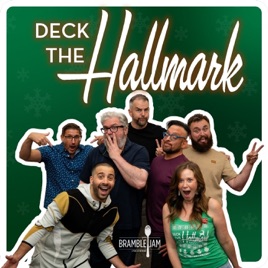
Deck The Hallmark
Bramble Jam Podcast Network