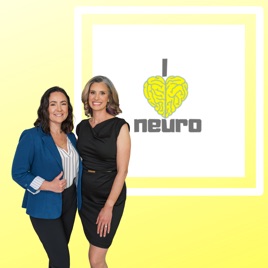
Advertise on podcast: I Love Neuro
Rating
5from
This podcast has
100 episodes
Language
EnglishPublisher
Erin Gallardo and Claire McLeanExplicit
No
Date created
2020/05/02
Latest episode
2026/04/20
Average duration
41 min.
Release period
7 days
Description
We are a couple of neurologic physical therapists on the quest to keep the passion, commitment, and possibilities alive for those who love neuro rehab and wellness like us, without burnout and overwhelm. This show is great for neuro therapists and trainers looking to stay up to date and make a greater impact. Join us in this important movement to elevate healthcare!
Unlock I Love Neuro podcast Email contact info,
Listeners & Audience details
Email contact information
Direct podcast contact details

Listeners
Audience numbers & engagement insights

Audience details
Podcast Insights

Podcast episodes
Check latest episodes from I Love Neuro podcast
314: Get Advanced Real-Time Gait Analytics With NUSHU With Erica Demarch, PT
2026/04/20
In this episode, hosts Erin Gallardo, PT, DPT, NCS and Claire McLean, PT, DPT, NCS interview physical therapist and inventor Erica Demarch, PT, MSPT about her work at the intersection of neuro rehab, motor learning, and wearable technology. Erica shares how her background founding her company, Step and Connect where she developed the Balance Matters system led her to join Magnes, a Swiss company that created NUSHU, a smart shoe with embedded sensors and vibrotactile feedback designed to analyze and improve gait in real time. She explains how the shoes capture over 35 gait parameters, support both assessment and treatment, and can be used in the clinic or at home, particularly for people with Parkinson's disease and those experiencing freezing of gait. Erica discusses current and ongoing research, practical clinical use cases, challenges like individual variability in vibration perception, and the need to individualize cueing strategies. She also describes implementation models for clinics, emerging possibilities for remote monitoring, and her efforts to train and collaborate with clinicians through demos, courses, and networking events to further refine and expand the clinical applications of this technology.
[email protected]
Learn more at: magnes.ch
Follow on IG: @magnes_nushu
313: Vision, Autonomics & Neuro Rehab: What PTs and OTs Should Know Now
2026/04/13
Eager to learn more about vision rehab in neuro? In this episode, host Erin Gallardo, PT, DPT, NCS talks with optometrist Melissa Zarn, OD, FAAO, FNAP and occupational therapist David Katz, OTR/L, CBIS about current advances in neuro-visual rehabilitation and updates within the Neuro Optometric Rehabilitation Association (NORA). They describe how NORA's clinical skills fellowship program has evolved into a hybrid model with asynchronous online coursework plus in-person hands-on training across three levels, increasingly emphasizing interdisciplinary collaboration among OTs, PTs, speech therapists, and neuro-optometrists. A major focus of the conversation is the role of the autonomic nervous system in post-brain injury visual symptoms such as light sensitivity, headaches, dizziness, and sensory overwhelm, and how tools like tinted lenses, environmental modifications, and team-based care can help calm the system and improve function. They also highlight new opportunities for PTs and OTs to deepen their vision rehab skills through NORA's annual conference, the growing community of practice within AOTA around neuro-visual remediation, and starter resources like NeuroCollaborative's vision rehab course for clinicians who want to go further in this specialty area.
Learn more about Neuro Optometric Rehabilitation Association (NORA) here: https://noravisionrehab.org/
Learn about NORA's annual conference:
https://noravisionrehab.org/about-nora/annual-conferences/2026-annual-conference
email: [email protected]
Practical Vision Therapy for Neurologic Conditions Course
312: Upleveling Vestibular Rehabilitation With The Vertigenius
2026/04/06
Vestibular rehabilitation is incredibly effective at treating dizziness, yet barriers exist. Just to name a few - access to expert care, scheduling, ability for patients to adhere to home programs and billing. What if there were a device that helped not only with all of those issues while also helping clinicians get vestibular patients better? The Vertigenius may just be the answer! In this episode, host Erin Gallardo, PT, DPT, NCS interviews experienced physiotherapist and Vertigenius inventor and founder, Dr. Dara Meldrum, PhD as well as Sparky and neuro biz owner using Vertigenius in practice, Hilary Register, PT, DPT, NCS, AVPT, NCPT to explore how it works. Dara explains how the FDA‑listed medical device combines a small head sensor worn behind the ear, a patient app, and a clinician portal. Vertigenius offers clinicians the opportunity to prescribe precisely dosed gaze, balance, gait, and habituation exercises with real‑time color‑coded feedback, while capturing objective data on symptoms and adherence. She shares the origin story of the technology, its validation against gold‑standard measures, and its role in expanding access to care and supporting both novice and expert clinicians, especially in telehealth and remote therapeutic monitoring. As an experienced vestibular rehab clinician and researcher herself, she ensures the device is completely evidence-based and constantly evolving as the research grows. Hilary describes how she uses Vertigenius in private practice and concussion rehab to reduce in‑person visit burden, track meaningful functional gains patients often don't recognize, offer high touch points to progress plans of care and design cost‑effective care packages that still feel highly personalized. Together, they highlight how this digital platform can improve outcomes, clinician efficiency, and patient empowerment in managing dizziness, vertigo, and imbalance.
Learn more and set up a demo:
https://vertigenius.com
FaceBook: Vertigenius
IG: @vertigenius
LinkedIn
311: How To Add Personal Training To Expand Your Neuro Biz And Improve Client Outcomes
2026/03/30
Are you a business owner looking to increase revenue streams and add more cash-based services into the mix? In this episode host Erin Gallardo, PT, DPT, NCS and NeuroBiz coach Emily Duval Ledger explore how personal trainers can significantly strengthen neuro-focused businesses by offering wellness sessions that complement therapy. This is a 100% collaboration over competition focus and you'll learn exactly who to look for to hire in your neuro biz. The benefits to having personal trainers is that this service can clearly separate insurance-based medically necessary care from ongoing cash-based wellness, improve client outcomes, and dramatically increase client lifetime value. Emily shares her 20-year journey as a self-employed fitness professional working with people with Parkinson's and older adults, emphasizing that trainers bring a distinct strength and conditioning lens that complements PT expertise. Together, Erin and Emily dive into practical considerations like how to price and pay trainers sustainably, who the ideal hires are, and how to write job descriptions that attract people who genuinely love working with older adults and neuro populations. They also discuss membership and package models to create consistent revenue and foster client commitment, stressing the importance of honest, direct conversations about what it truly takes for clients to see meaningful change. They close by encouraging neuro business owners to embrace their uniqueness, think creatively about integrating trainers, and reach out with questions or ideas as they grow their own "unicorn" practices.
310: The Evidence-Based Approach To Dementia Care With Rachel Wiley, MS, OTR/L
2026/03/23
Working with people with dementia and their care partners can be complicated and confusing. What does the evidence say is the best approach? Is it rehabilitative or habilitative?? In this episode, hosts Erin Gallardo, PT, DPT, NCS and Claire McLean, PT, DPT, NCS interview occupational therapist and Dementia Collaborative founder Rachel Wiley, MS, OTR/L about her approach to working with people with dementia and their care partners. Rachel shares how past experiences with conflicting recommendations between professionals—and the confusion and mistrust this caused for families—motivated her to create a more advanced, evidence-based program that gets teams using the same language and approaches, especially around topics like rehabilitation vs. habilitation, assistive devices, responsive behaviors, and fall risk. She explains her practical, detective-style framework for understanding and managing responsive behaviors (like waking at night or agitation) by identifying triggers and using strategies such as acknowledge–reassure–redirect and meaningful routines. The episode also touches on the complexities of billing, maintenance care, and determining medical necessity in a progressive condition, emphasizing person-centered, ethical care that balances evidence, function, safety, and the realities of caregiving. Rachel recently launched the beta cohort of her new Certified Dementia Clinician (CDCn) Course, a 20-module, interdisciplinary training designed for OTs, PTs, SLPs, social workers, and other clinicians working with people living with dementia.
www.dementiacollaborative.com
www.daybydaydementiaconsulting.com
www.rachelwileyot.com
https://www.linkedin.com/in/rachel-wiley-ms-otrl-cdp-80521079/
309: Using Dry Needling To Reset The Nervous System With Tyler Niemack, PT, DPT, OCS
2026/03/16
This is the episode that will help you understand the opportunities and functionality of dry needling! Host Erin Gallardo, PT, DPT, NCS interviews Tyler Niemack, PT, DPT, OCS, Functional Dry Needling Certified Specialist about how dry needling can be used not just to relax tight muscles, but to "reset" the neuromuscular system and improve function. Tyler, who teaches Dry Needling Certification courses for Evidence In Motion explains how PTs approach dry needling differently from acupuncturists, using their orthopedic and neurological assessment skills to decide whether to target spinal segments, peripheral nerves, or specific muscles. Through examples ranging from rotator cuff issues to stroke, spasticity, and Parkinson's disease, he describes using dry needling as not just a treatment tool but also a diagnostic. He also shares his 3 R's approach to treatment: Reset, Reinforce and Reload. They discuss fascia, pain perception, emerging research on how needling changes the brain's pain maps, and ongoing legal barriers in states where PTs still cannot perform dry needling. Tyler encourages clinicians to think of themselves as neuro-orthopedic specialists and to use neuroanatomy and sound clinical reasoning to get the most from this very promising intervention.
**Apologies for some tech malfunctions that occurred in the recording. They don't take away from the learning, but wanted to mention there are a couple of glitchy spots. Thank you for understanding!
Get in touch with Tyler here:
https://www.toetouchpt.com/
IG @toetouchpt
Email: [email protected]
Sign up for a dry needling course with EIM here
308: How NeuroLab 360 Uses A Nonprofit Model To Deliver High Intensity Neuro Rehab
2026/03/09
Interested in looking at how a nonprofit clinic operates for neuro rehab? In this episode hosts Erin Gallardo, PT, DPT, NCS and Claire McLean, PT, DPT, NCS interview co-founder Meagan George, PT, DPT, NCS about how she and her partners built a nonprofit, cash-based neuro clinic in Encinitas, California. After feeling constrained by insurance limitations in hospital systems, the trio incorporated as a 501(c)(3) in 2021 with a mission to deliver intensive, goal-oriented PT, OT, and wellness services regardless of a person's financial situation. NeuroLab 360 operates using a scholarship program—reviewed and approved by their board of directors—to make care accessible, with about 30–40% of patients receiving financial support and everyone paying something to maintain commitment and value. Meagan shares how they've grown from three founders to a team of nine therapists, outfitted their gym-like clinic with donated and grant-funded specialty equipment like an AlterG and driving simulator, and built strong community ties through support groups, free and low-cost classes, and collaborations with local hospitals, researchers, and nonprofits. She also opens up about the real challenges of running a nonprofit—especially grant writing, budgeting with variable donations, and preventing burnout—while still staying true to their core mission of providing high-quality, high-intensity neuro rehab that isn't dictated by insurance.
www.neurolab360.com
https://www.instagram.com/neurolab360/
307: Research Update: Treadmill VS Overground Walking In Persons With MS With Herb Karpatkin, PT, DSc, NCS, MSCS
2026/03/02
In this episode host Erin Gallardo, PT, DPT, NCS interviews Multiple Sclerosis specialist and researcher Dr. Herb Karpatkin, PT, DSc, NCS, MSCS to discuss how therapy for people with multiple sclerosis must be fundamentally different from approaches used for stroke, spinal cord injury, or TBI. In his research Herb discovered an incidental finding that led to more questions that he and his team wanted to investigate: does treadmill walking carry over to overground walking in persons with MS? In the show he explains the nuances of treadmill walking for persons with MS vs healthy controls and when to use it or not. Herb shares his framework on intermittent, high-intensity interval walking and strength training, which allow people with MS to push hard, rest, and achieve meaningful aerobic gains and functional improvements without excessive fatigue. Instead of telling people with MS they can't work hard or lift heavy, his research finds that to be absolutely untrue. Herb and Erin also discuss a couple of past patients who wanted to complete the MS Society 5k walk and what the training looked like and what could have been done differently. The topic of cooling came up and how to effectively implement this technique to allow persons with MS to do more without overheating.
Check out episode 233 with Herb
MS: Update on evidence based interventions to improve gait and balance 1.5 hour Mini Course
306: Clients Can Maximize Hand Function And Foot Drop At Home With Motus Nova
2026/02/23
In this episode, host Erin Gallardo, PT, DPT, NCS interviews the Motus Nova clinical team—occupational therapists Jamie Kurtz, MS, OTR/L, Keisha Burrous, OTR/L, CBIS, Amie Canning, MS, OTR/L, and Mirasol Jacobs, PT, DPT — about the Motus Hand and Motus Foot robotic devices for neurorehabilitation. The team explains how these FDA Class I medical devices provide active-assistive, game-based training at home to help patients achieve the high repetition doses (500–600 reps per day) needed for neuroplastic change, without replacing traditional therapy. Built on pneumatic "artificial muscle" technology, the devices adapt in real time to the user's movement, address tone and spasticity, and can be customized for a wide range of neurologic conditions, from stroke and MS to Parkinson's disease and Guillain-Barré. The conversation covers who is appropriate for the devices, how they integrate with inpatient and outpatient care, real-world success stories—including improved gait, grip strength, and mental health—and the practical steps for clinicians to refer patients, arrange demos, and navigate the 13‑month rental-to-own DME model now supported by a dedicated Medicare code, which means patients can get the device through their insurance and it does not impact their ability to get other durable medical equipment (DME). Overall, the episode highlights Motus Nova as an accessible way to extend evidence-based neuro rehab beyond the clinic and into patients' homes. You will likely have a patient (or several) who come to mind while listening to this, so check it out and learn more today!
Keisha Burrous LinkedIN
Motus Nova https://motusnova.com
Therapists! Contact Motus Nova with questions, schedule an inservice, or refer a patient here: [email protected]
305: How To Overcome The Fear Of Falls Training With Naomi Casiro
2026/02/16
Do you work with people who have falls? Maybe you've seen that just training fall prevention isn't quite doing enough. In this episode hosts Erin Gallardo, PT, DPT, NCS and Claire McLean, PT, DPT, NCS talk with physiotherapist Naomi Casiro, founder of NeuroFit BC and creator of the Functional Movement and Falls training paradigm about why adding falls training to an overall balance plan is imperative. We explore why traditional fall prevention—focused mainly on prevention—has not been enough, and why a two-part approach that includes both prevention and explicit "how to fall" training is crucial, especially for people with Parkinson's disease and older adults who are still falling at high rates. Naomi explains how teaching patients to roll, dissipate force, and land safely allows therapists to challenge them more intensively and functionally in rehab, while also preserving autonomy and true informed choice around mobility and assistive devices. They discuss how falls training progresses from simple, low-level skills on the mat rather than immediately falling from standing, the importance of repetition (even for those with cognitive impairment), and the central role of addressing anxiety. We also discuss how often providers themselves are scared to perform this training and what to do about it. Naomi shares how her background in martial arts and clinical experience with frequent fallers led to her "aha" moment about falls training, and previews upcoming opportunities to learn her approach through the NeuroFit Academy, an online Functional Movement and Falls Training Foundations course with NeuroCollaborative, live Q&A follow-ups, and a practical hands-on session at the World Parkinson Congress.
You can reach out to Naomi and learn more about the fall training courses she teaches for healthcare professionals here:
www.neurofitbc.com
www.neurofitbc.com/courses
Free exercise videos: www.neurofitbc.com/move
[email protected]
304: Dry Needing For Spasticity With Chris McElderry, PT, DPT, NCS
2026/02/09
In this episode host, Erin Gallardo, PT, DPT, NCS speaks with Chris McElderry, PT, DPT, NCS about how dry needling can be used in neuro rehab, particularly for people post-stroke. Chris explains why he pursued dry needling, how using it in PT differs from acupuncture, and walks through what a typical session looks like, including safety, side effects, and billing considerations. He shares clinical examples of using dry needling to address spasticity, hypertonicity, pain, and range of motion limitations, and discusses current research on short-term effects for spasticity and pain reduction. Erin and Chris also clarify the differences between spasticity and hypertonicity, touch on contracture management, and highlight where dry needling can be a useful adjunct—not a standalone cure—in helping neuro clients move and feel better.
Follow Chris McElderry, PT, DPT, NCS @theneuroguy_dpt
Ebrahimzadeh M, Nakhostin Ansari N, Abdollahi I, Akhbari B, Dommerholt J. Changes in Corticospinal Tract Consistency after Dry Needling in a Stroke Patient. Case Rep Neurol Med. 2024 Sep 14;2024:5115313. doi: 10.1155/2024/5115313. PMID: 39309410; PMCID: PMC11416164.
Fakhari Z, Ansari NN, Naghdi S, Mansouri K, Radinmehr H. A single group, pretest-posttest clinical trial for the effects of dry needling on wrist flexors spasticity after stroke. NeuroRehabilitation. 2017;40(3):325-336. doi: 10.3233/NRE-161420. PMID: 28222554.
Fernández-de-Las-Peñas C, Pérez-Bellmunt A, Llurda-Almuzara L, Plaza-Manzano G, De-la-Llave-Rincón AI, Navarro-Santana MJ. Is Dry Needling Effective for the Management of Spasticity, Pain, and Motor Function in Post-Stroke Patients? A Systematic Review and Meta-Analysis. Pain Med. 2021 Feb 4;22(1):131-141. doi: 10.1093/pm/pnaa392. PMID: 33338222.
Núñez-Cortés R, Cruz-Montecinos C, Vásquez-Rosales P, et al.
Effectiveness of dry needling in the treatment of spasticity in stroke patients: A systematic review. J Body Mov Ther. 2020;24(3):113-122.
Suputtitada A, et al. Emerging theory of sensitization in post-stroke muscle spasticity: Implications for dry needling and other interventions. Front Rehabil Sci. 2023;4:1169087.
Valencia-Chulián R, Heredia-Rizo AM, Moral-Munoz JA, Lucena-Anton D, Luque-Moreno C. Dry needling for the management of spasticity, pain, and range of movement in adults after stroke: A systematic review. Complement Ther Med. 2020 Aug;52:102515. doi: 10.1016/j.ctim.2020.102515. Epub 2020 Jul 16. PMID: 32951759.
303: Hybrid Assistive Limb (HAL) + Neuroplasticity = Improved Outcomes For Individuals With Neurologic Conditions
2026/02/02
In this episode, Erin Gallardo, PT, DPT, NCS interviews physical therapist Mariah King, PT, DPT from RISE Healthcare Group and Hiroki (Hiro) Kimura from Cyberdyne about the HAL (Hybrid Assistive Limb) robotic exoskeleton and its role in neurologic rehabilitation. They discuss how the HAL system reads patients' intent to move via surface EMG signals and converts those signals into assisted movement to drive neuroplasticity and functional recovery for people with spinal cord injury, stroke, TBI, Parkinson's disease, and progressive neuromuscular disorders such as MS, SMA, and muscular dystrophy. Mariah explains RISE's one-on-one outpatient model, how patients are evaluated for HAL use, typical dosing (2–3x/week over about 2 months), and the outcome measures they track, including 10-Meter Walk, 2-Minute Walk, 30-Second Sit-to-Stand, and TUG. She shares powerful case examples, including a person with MS who relies on a wheelchair for mobility progressing to prolonged standing and assisted gait, and another individual with MS whose falls dropped from several per month to just one across four months. Hiro digs into what makes HAL unique compared to other exoskeletons: its emphasis on intention-based control, the ability for therapists to visualize and shape EMG patterns (for example, reducing co-contraction), and asymmetric or joint-specific assistance tailored to each limb. They also touch on the different HAL configurations (lower limb, single-joint, lumbar), its current status as a clinic-based rehab device (not take-home), billing considerations, the new pediatric version and forthcoming wrist device, as well as opportunities for students, clinicians, and clinic owners to get involved with RISE's HAL programs.
Website: www.risehealthcaregroup.com
Instagram: risehealthcaregroup
Facebook: risehealthcaregroup
YouTube: https://www.youtube.com/@risehealthcaregroup7766
Cyberdyne USA Inc.
https://www.cyberdyne.jp/english/
[email protected]
302: Applying A New Calculation For Max Heart Rate In PD
2026/01/26
In this episode, hosts Erin Gallardo, PT, DPT, NCS and Claire McLean, PT, DPT, NCS discuss a new research article, "Refining maximal heart rate estimation to enhance exercise recommendations for persons with Parkinson's disease." Parkinson's is a multi-system condition and changes to the function of the autonomic nervous system are common. At times this can present as a person with PD having trouble reaching aerobic heart rate zones calculated based on age while they're performing high intensity exercise. Claire explains the challenges they've faced using standard heart rate formulas and color-zoned monitoring apps when many clients appear stuck in a "gray zone," likely due to this autonomic dysfunction and chronotropic incompetence common in Parkinson's. After exploring but struggling to access cardiopulmonary exercise testing (CPET)—the gold standard for determining true maximal heart rate—Claire finds this new study, which uses CPET data from a cycling trial to derive a more accurate regression-based equation for people with Parkinson's: 166 − (1.15 × age) + (0.60 × resting heart rate). She describes how they are now applying this formula in practice by calculating individualized max heart rates, manually updating values in their OnBeat app, and offering a public calculator via their website so people with Parkinson's and clinicians can easily generate appropriate training zones. This shift should make target zones more realistic, motivating, and safer. Listen to the show to easily incorporate this research into your practice today!
Pull up the article here (free full text available): https://pubmed.ncbi.nlm.nih.gov/40194736/
Use Claire's calculator that uses the research-based formula here: https://www.roguept.com/cardio
301: Multi-System Approach To Treating Individuals With Long COVID Currently With Jennifer Lazaro, PT, DPT, NCS
2026/01/19
In this episode of the I Love Neuro podcast, host Erin Gallardo, PT, DPT, NCS interviews physical therapist and neuro rehab residency coordinator Jennifer Lazaro, PT, DPT, NCS about evaluating and treating people with long COVID and dysautonomia. Jennifer notes the similarities in presentation for individuals who have post-COVID those with other conditions affecting the autonomic nervous system, like concussion with cognitive fog, severe fatigue, post‑exertional malaise, dizziness, and orthostatic intolerance. She walks through practical assessment strategies such as active stand testing, symptom‑mediated exercise testing, and multi‑system screening to differentiate vestibular, cardiac, pulmonary, and autonomic drivers. Jennifer outlines how she starts with education on the autonomic nervous system, diaphragmatic breathing, and strict pacing, then progresses patients from supine conditioning through graded dysautonomia protocols like the Adapt protocol, emphasizing heart rate parameters, symptom monitoring, and buy‑in to "doing less to do more." She highlights the importance of interdisciplinary care with OT, speech, cardiology, neurology, and mental health, shares a powerful success story of a college student who returned to school after structured rehab, and offers real‑world strategies for self‑management using wearables, pacing tools, and lifestyle changes in sleep, hydration, and daily routines.
300: Clinical Takeaways From Dendrite Expansion Days You Can Apply Today
2026/01/12
In this 300th episode, hosts Erin Gallardo, PT, DPT, NCS and Claire McLean, PT, DPT, NCS invited long-time collaborator JJ Mowder-Tinney, PT, PhD, NCS to join so we could recap the best takeaways from Dendrite Expansion Days (DED), NeuroSpark's three-day, fully experiential education event for OTs and PTs. We share how Naomi Castro's "falling well" course progressed clients from floor work to standing falls in one session, describe hands-on equipment stations featuring frictionless sheets, BlazePod, Rifton, Saebo, UprightVR, and more, and highlight real client stories—especially Connor, a young man with severe ataxia who gained new independence and freedom using a transfer pole and the Rifton Pacer overground gait trainer. The conversation emphasizes why equipment can be a powerful ally in neuro rehab, the importance of collaborating with vendors and fellow clinicians, and how community events like DED spark practical, immediately applicable ideas for improving outcomes and patient autonomy. You'll gain insights to use in your practice today!
Podcast reviews
Read I Love Neuro podcast reviews
Dr. Mike Studer 2024/12/31
Always Informative
Approaching 300 episodes while remaining fresh, relevant and informative! Thank you both so much for your contributions…!
jgshimer 2024/09/19
I love this podcast
So much great information! This is a great resource.
JMowtin 2020/05/10
Love neuro!
If you are a physical or occupational therapist and treat people with neurological deficits you will love this podcast! Passion, inspiration and dedi...
Podcast sponsorship advertising
Start advertising on I Love Neuro relevant audience podcasts
You may also like to advertise on these Podcasts
4.41317133
Scream!
Ash & Alaina & Caleb | Morbid Network
4.846302000
Pat Gray Unleashed
Blaze Podcast Network

4.7535420
Religion on the Mind
Dan Koch

4.7952562
Ride the Lightning: Tesla and EV Podcast
Ryan McCaffrey
4.420131306
History Daily
History Daily

4.414755969
The Bossticks
Lauryn Bosstick and Michael Bosstick / Dear Media

4.748681017
Forever35
Doree Shafrir & Elise Hu

4.3246500
Locked On Reds - Daily Podcast On The Cincinnati Reds
Locked On Podcast Network, Jeff Carr, Steven Offenbaker

3.44591090
Palace Intrigue : Royal Family gossip
Caloroga Shark Media / The Daily Royal Family Podcast

4.71923553
The StoryBrand Podcast
StoryBrand.com