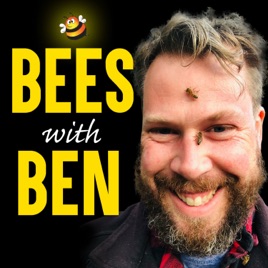
Advertise on podcast: Bees With Ben
Rating
5from
This podcast has
135 episodes
Language
EnglishPublisher
BenExplicit
No
Date created
2020/05/11
Latest episode
2025/07/15
Average duration
39 min.
Release period
56 days
Description
For any of you that know me, I love a good yarn. One the of the best things about my job is getting out and about with local people, sharing the knowledge I have about bees, the environment, produce, gardening and healthy living. And I have lots of experience getting on my soapbox! For years now, I have been a representative at local and international conferences. I have appeared on popular TV and radio programs (including The Project, ABC radio, Network Ten News, and Channel Nine’s reality show, Dream Job). I have launched educational programs and am excited to launch my new podcast!
Unlock Bees With Ben podcast Email contact info,
Listeners & Audience details
Email contact information
Direct podcast contact details

Listeners
Audience numbers & engagement insights

Audience details
Podcast Insights



Podcast episodes
Check latest episodes from Bees With Ben podcast
Episode 128: One Last Buzz... For Now 🐝
2025/07/15
All good things must (sometimes) pause... and after an incredible journey of conversations, laughter, learning, and buzzing with brilliant guests, this is the final episode of Bees with Ben – at least for a while.
In today’s episode, I reflect on the wild ride this podcast has been – from talking bees and biosecurity to sharing stories from the paddock, the lab, and everywhere in between. I’ve had the honour of chatting with amazing beekeepers, scientists, enthusiasts, and friends from around the world – and you, the listeners, have been a huge part of that journey.
The truth is, life’s gotten very busy. Between the hives, the honey, the pest control, and being a dad (and sometimes a part-time tow-truck driver when I get bogged on avocado farms), something had to give. And for now, the podcast is taking a well-earned rest.
This isn’t goodbye forever – just a little smoke break. So keep the mic warm for me, and who knows – a surprise episode might pop up when you least expect it.
Thanks for every listen, share, message, and moment. Keep supporting your local bees, your local beekeepers, and stay curious.
With gratitude and a sticky handshake,
– Ben 🐝
Episode 127: Norm Collins, 7 Decades of Beekeeping Wisdom!
2025/06/21
Guest: Norm Collins – Seven Decades in Beekeeping
In this special episode, I chat with Norm Collins, a true pioneer in Australian beekeeping. Once the largest beekeeper in Victoria, Norm recently turned 80, and he joins me to reflect on a lifetime of working with bees.
We take a journey back to when Norm received his very first box of bees at just seven years old, and explore how much the world of beekeeping has changed over the past seventy years. From the way hives are managed, to shifting environmental pressures and evolving industry challenges, Norm shares his knowledge, experiences and a few great stories along the way.
This episode is a tribute to the past, a nod to the resilience of beekeepers, and a reminder of how much we can learn from those who have spent a lifetime in the field.
Listen now wherever you get your podcasts. Subscribe, leave a review, and share this episode with your beekeeping community.
https://collinshoney.com.au
🎙️ Episode 126 – I’m Back! (Yes, Really!)
2025/06/01
🎙️ Episode 126 – I’m Back! (Yes, Really!)
Welcome back to Bees with Ben – and yes, you heard right… I’M BACK!
It’s been a buzzing 12 months since the last episode, and I want to start by saying a huge thank you to everyone who’s stayed subscribed, messaged, or asked, “Where’s the podcast, Ben?” Life got wild – as it often does when you’re juggling bees, business, family, and everything in between – but the mic is back on, and the hive mind is reactivating.
In this short but heartfelt solo episode, I check in, catch up, and share what’s been happening behind the scenes. Plus, I give you a sneak peek into what’s coming over the winter months: incredible guests, fascinating beekeeping stories, and some brand-new topics I can’t wait to explore with you.
Whether you’re a beekeeper, a bee-lover, or just someone who loves a good yarn – thanks for sticking around. Let’s get this hive humming again. 🐝
What’s Inside:
Where I’ve been and what I’ve been up to
The current state of bees and beekeeping in Australia
Sneak peek at the interviews and topics coming this winter
A personal thank you to all the listeners and supporters
Don’t forget to follow, rate, and share the podcast – and as always, keep buzzing!
Episode 125: On the Road to Shepparton: A Rambling Bee Journey
2024/06/22
Join me on a unique episode of "Bees with Ben" as I take you on a journey to Shepparton!
Recorded on the road, this episode captures the spontaneous and unfiltered thoughts I navigate through my beekeeping job, whilst on the road!
Expect a delightful ramble covering a variety of topics, from the intricacies of beekeeping in different environments to amusing anecdotes from the road.
'"Ben's on-the-go recording brings an authentic and immersive experience, making you feel like you're right there with him". Tune in for a mix of beekeeping insights, personal stories, and a touch of road trip charm.
Episode 124: A Sweet Success with Meli Honey, Sam and Nicholas Grivas, Melbourne
2024/06/11
In this episode, I chat with Sam and Nicholas, the dynamic father-son duo behind Meli Honey. Their journey is a testament to passion, family, and the pursuit of quality. We dive into their fascinating story of importing premium Greek honey to Australia, and how their love for this golden elixir has translated into a thriving business. Just after we wrapped up recording, Sam and Nicholas received the incredible news that Meli Honey had won gold at the London Honey Awards! This accolade is a significant milestone for them and a testament to the exceptional quality of their honey.
https://www.melihoney.com.au
https://www.instagram.com/melihoney1/
Episode 123: Liam Gavin from Gavin's Apiaries, Northland, New Zealand
2024/05/24
The Story of Gavin's Apiaries with Liam Gavin In the lush, sub-tropical landscape of Northland, New Zealand, lies a testament to tradition, resilience, and a deep-rooted passion for beekeeping. Gavin's Apiaries, a fourth-generation family business, traces its origins back to 1912 when James John Gavin embarked on a journey that would shape the family's legacy for generations to come. In a recent episode of the Bees With Ben podcast, host Ben caught up with Liam Gavin, a member of the Gavin family and a torchbearer of their storied beekeeping tradition. Liam's connection to the land and the bees runs deep, as he shared insights into the rich history and enduring values that define Gavin's Apiaries today. The journey began over a century ago when James John Gavin rode his horse through the picturesque Mangakahia Valley, chasing a swarm of bees—a humble yet pivotal moment that marked the inception of Gavin's Apiaries. Fast forward to the present day, and the family's commitment to honey production and community engagement remains unwavering.
Beyond the buzzing hives and golden honey, Liam reflects on the pride and philosophy that underpin the family business. At Gavin's Apiaries, it's not just about honey production; it's about fostering a sense of community and stewardship for the environment. Through sustainable beekeeping practices and a genuine connection to the land, the Gavins strive to leave a positive impact on their surroundings.
Through their unwavering commitment to excellence and their deep-seated values, the Gavins continue to inspire beekeepers and enthusiasts alike, both locally and beyond. In a world that often moves at breakneck speed, the story of Gavin's Apiaries serves as a poignant reminder of the importance of tradition, resilience, and the profound connection between humanity and the natural world. As Liam Gavin aptly concludes, "In the end, it's not just about the honey—it's about the journey, the legacy, and the enduring passion that fuels our love for beekeeping." Tune in to the Bees With Ben podcast to hear more captivating stories from the world of beekeeping and beyond, as we continue to celebrate the remarkable individuals and traditions that make our world a sweeter place to be
https://www.instagram.com/gavinshoney_/
Episode 122: Kevin Simons from Edgecomb Honey, Whakatane, New Zealand
2024/05/14
In Episode 122 of the Bees with Ben podcast, host Ben chats with the experienced commercial beekeeper Kevin Simons from Edgecomb Honey, nestled in the scenic North Island Bay of Plenty in Whakatane, New Zealand. Kevin has been a part of the beekeeping industry since 1984, witnessing firsthand the dramatic shifts in the landscape of apiculture, particularly with the advent of varroa mites. This episode delves into his enduring passion for beekeeping, the early days free from varroa, and his current relentless fight against this devastating pest.
Kevin's journey into the world of bees began in 1984, sparked by a fascination with the natural world and the intricate society bees form within their hives. He recalls the simpler times in beekeeping when the absence of varroa mites meant fewer threats to hive health and a stronger focus on honey production and natural hive growth. These were the days when beekeepers could rely more on the resilience of their bees and less on intervention to maintain healthy colonies. However, the tranquility of beekeeping shifted dramatically with the arrival of varroa mites in New Zealand. Kevin describes the initial shock and rapid adaptation needed as beekeepers nationwide faced significant losses and battled to understand and manage this new enemy. For Kevin, it was a pivot from natural beekeeping methods to developing a more aggressive and vigilant approach to hive management.
Today, with over a thousand hives under his care, Kevin's beekeeping routine involves an extensive and meticulously planned program to combat the varroa mite. He shares some of his strategies on the podcast, including regular monitoring, the use of chemical treatments, and natural control techniques that together form an integrated pest management system. His goal is not just to keep the mites at bay but to ensure his bees thrive despite their presence.
Looking toward the future, Kevin is cautiously optimistic. He acknowledges the ongoing challenges posed by varroa mites but also highlights the resilience of beekeepers and the innovations in the field that continue to evolve. His story is a testament to the dedication and resilience required in modern beekeeping, emphasizing that the battle against pests like varroa is ongoing but not insurmountable.
Episode 121: Revolutionizing Bee Hive Lifting: A Conversation with Jai Stafford of Ezy Loaders
2024/05/10
Revolutionizing Bee Hive Lifting: A Conversation with Jai Stafford of Ezy Loaders
In this episode, we explore the innovative world of Ezy Loaders with none other than Jai Stafford, the driving force behind these game-changing material handling devices. Join us as we delve into how Ezy Loaders are making loading processes easier, safer, and more efficient across various industries but mostly the lifting of bee hives.
https://ezyloader.com
The Genesis of Ezy Loaders: Jai shares the inspiration and the initial challenges in the development of Ezy Loaders. The discussion on the technology and design principles that make Ezy Loaders stand out. How Ezy Loaders are transforming material handling in sectors like agriculture, construction, and logistics. Real-life examples and testimonials from businesses that have benefited from adopting this technology. Looking at the safety features integrated into Ezy Loaders and how they contribute to workplace safety. The efficiency gains realized by companies using Ezy Loaders, supported by data and case studies. Jai discusses upcoming innovations and potential new markets for Ezy Loaders with a new product that is just about to be launched!
Episode 120: Steve Sammut, Steve's Queens, Western Australia
2024/04/28
Welcome to another buzzing episode of the "Bees With Ben" podcast! In this instalment, Ben chats with Steve, an avid beekeeper from Western Australia whose journey into the world of bees began through a unique blend of friendship and curiosity.
Discover how Steve was introduced to beekeeping when his regular fishing buddy had too many beehives to manage, leading to less time for their fishing adventures. Hear Steve's initial impressions when he first inspected the bee colonies and how this experience sparked his interest in beekeeping. Learn about the creative ways Steve involved his two young sons, aged 8 and 6, in beekeeping. From painting an internal wall with whiteboard paint for brainstorming to conducting market and product research, find out how Steve made beekeeping a fun and educational family project. "Levi & Elek’s" Honey Label: Steve shares the story behind purchasing 20 x 5 frame nucs from a breeder who would later become a good friend and mentor.
Explore the steps taken to establish their own honey brand, “Levi & Elek’s,” and what it means to them.
Rottnest Island Bees: The episode also delves into the fascinating world of Rottnest Island bees. Steve discusses the unique characteristics and challenges of beekeeping in this location. Join Ben and Steve as they explore the personal and profound impacts of beekeeping, from fostering family bonds to embarking on new business ventures. Whether you're a seasoned beekeeper or just curious about starting, this episode is packed with insights and inspiring stories that highlight the joys and challenges of beekeeping.
https://www.stevesqueens.com.au/
https://www.facebook.com/steves.queensaus
Episode 119: A Conversation on Mental Health with Rae Bonney. Melbourne.
2024/01/14
With more than 10 years’ experience, developing, designing and delivering workplace mental health and wellbeing programs, Rae works with a broad range of organisations, industries and settings with a special skill in crisis and suicide response. A qualified counsellor trained in Rogerian theory – Rae draws on her authenticity, genuineness, and empathy to create environments of trust and safety. She has a focus on men and boy’s health, offering confidential in person and online sessions for individuals, couples and groups. For a decade, she’s been a volunteer Ambassador for Beyond Blue and also donates her time to community organisations and settings where the smallest acts of kindness and care can be lifechanging. She’s well known for her enthusiastic advocacy in the men’s health space, where she believes that a male friendly approach to support and resources could have a positive impact for everyone. The first female board member of the Australian Men’s Health Forum, she compliments this with a recent election to the board of Global Action on Men’s Health. You can also tune into Rae’s radio show on 94.1FM 3WBC, “What does it feel like, being you today”, where she interviews people from all over the world, asking that question.Rae Bonney's website at (https://www.raebonney.au), and join us in this ongoing conversation to bring about change and hope.
https://au.linkedin.com/in/raebonney
Episode 118, The Mystery of Toxic Honeys with Dr. Andrew Knill, Australia
2023/12/14
The Mystery of Toxic Honeys with Dr. Andrew Knill"**
Welcome to another buzzing episode of "Bees with Ben," a podcast where we delve into the fascinating world of bees and their impact on our ecosystem. This week, we're joined by renowned scientist Dr. Andrew Knill, who brings his expertise to a rather intriguing topic: toxic honeys and the effects of Patterson's Curse nectar in honey.
**A Deep Dive into Toxic Honeys:**
Dr. Knill starts by exploring the broader concept of toxic honeys, a phenomenon that has intrigued scientists and beekeepers alike. He explains how certain plants, when foraged by bees, can lead to the production of honey with unusual properties. These honeys, while rare, can range from being mildly psychoactive to potentially harmful.
Patterson's Curse – A Blessing or a Curse?
Our focus then shifts to Patterson's Curse, a plant known for its vibrant beauty and its controversial role in honey production. Dr. Knill discusses the dual nature of this plant - how it's both a bane for farmers and a boon for beekeepers in certain regions. He delves into the chemistry of Patterson's Curse nectar and how it influences the honey produced.
Dr. Knill shares insights from his recent research on how bees interact with Patterson's Curse and how they are affected by its nectar. The conversation takes an intriguing turn as we discuss the effects of this honey on human health. Dr. Knill breaks down the myths and realities, providing a balanced view on the potential risks and benefits.
Don't forget to subscribe for more insightful episodes of "Bees with Ben." We'd love to hear your thoughts on this episode, so feel free to leave a comment or reach out on our social media platforms. Stay tuned for our next episode, where we'll explore another fascinating aspect of beekeeping and the wonders of the bee world.
Episode 117, Brent Nixon, Nixon Queen Bees, Victoria
2023/07/11
This week’s episode of the Bees with Ben podcast features a question-and-answer session between Ben and his special studio guest, Brent Nixon, who has driven down from Ballarat South for the occasion.
Naturally, Ben’s first question for Brent is how he started out with bees? Brent explains that he grew up in a family of cattle breeders and wanted to breed something for himself. He studied genetics at university, including the pioneering work of Gregor Mendel, the father of modern genetics. Many people don’t realize that Mendel, who was a monk, also conducted research with bees, which were often kept at monasteries to produce beeswax candles, in addition to honey. Mendel was attempting to breed bees using a cage, which wasn’t really effective, but his early work was taken up by Brother Adam of Buckfast Abbey in the UK - the creator of the ‘Buckfast bee’. Brent became fascinated with breeding bees, but although he had the theoretical knowledge, he had never been inside a hive.
Then about 8 years ago, his wife’s uncle, who was a beekeeper, found him a swarm - located about 10 metres up a tree. Brent was given a half suit and positioned under the swarm, with instructions to catch the bees in a box, while the uncle clambered up the tree to dislodge the insects. Somehow, Brent managed to catch the queen, and the beekeeper told him to put the box down, and that the rest of the swarm would soon follow, which they did.
Today, Brent has his own podcast called ‘Breeding the Honey Bee’, which is named after the famous book written by Brother Adam. He has recorded 11 episodes to date, including an interview with the head beekeeper at Buckfast Abbey.
Ben is quizzed about the development of his business and the transition from part-time to his main source of income. He says he started off slowly and built his business on diversification; he vividly remembers making beeswax candles in his kitchen and struggling to clean the wax off the lino floor (Brent interjects that he thinks he ruined the plumbing in his first house as some beeswax went down the sink). Ben goes on to say that one of the main problems is that the business is so seasonal, and that he struggled to get through the winter in the early years. He cautions that he has seen beekeeping businesses go too hard and too quick, and ultimately fall over.
https://nixonqueenbees.com.au/?fbclid=IwAR3LekNglAfD_R-psKhjH102qzkBorcgBHJqcJ6D8e5NAqiyKgroh9sFL1k
https://nixonqueenbees.com.au/pages/podcast?fbclid=IwAR0vDUhGW0Axip2VCqp4TEi7tK6rQa06rWOAC-XQINwri6qXuSUUdeXn3G8
https://www.facebook.com/groups/1150361712418055
Episode 116, Steve Fuller, All Round Bee Guru! NSW
2023/07/01
In this week’s episode of the Bees with Ben podcast, Ben is fortunate to have as his guest a man with a wealth of experience in all areas of the beekeeping industry, with a glittering array of credentials! Steve Fuller is an Executive Councillor of the NSW Apiarists’ Association Inc., President of the Northern Coast branch of NSWAA, an Advisory panel member for Agrifutures’ Australia (Honey Bee and Pollination), Secretary of the Crop Pollination Association of Australia, and a participant in the 5 BEES programme run by Wheen Bee. Phew! Along with his brother Wayne, he owns and operates Bee Services in northern NSW, which has been in business for more than 40 years producing organic honey and offering pollination services for a wide variety of crops. The company currently manages about 5,000 hives and has around 20 employees.
Steve outlines his fascinating journey in the beekeeping industry, and his absolute love for bees, but it is his unique perspective as an industry leader, and business owner, with respect to the varroa outbreak in NSW last year that dominates the podcast. Steve reveals that prior to the discovery of varroa in Australia on 22 June last year he was already prepping his business for the possibility of a varroa incursion, because he thought it was likely to happen sooner rather than later. Incredibly, although he was told of the outbreak as soon as it was discovered, he was not able to say anything about it for 3 days, until sufficient infrastructure was in place. On day 4, after attending a conference in Queensland, Steve drove to the Local Command Centre (LCC) in Maitland
The bee industry had plans in place for many years, but Steve stresses that a plan, no matter how detailed or effective, is not the same as the real thing. Plus, most of the people in bee organizations are volunteers with their own businesses to think about. Early on the DPI engaged the services of rural firefighters, who have considerable experience managing disasters. Steve was working 7 days straight before being forced to have 2 days off.
Steve says that inspecting hives in those early days wasn’t a problem; the problem was identifying where hives were, so that there was a real chance of encircling and eventually eliminating the outbreak. He tells Ben that feral hives are the hardest to control because they can be anywhere, and that baiting is not effective unless the bees have no other food source. By September 2022, Steve was already conceding that total elimination of the mites may not be possible. The stark reality is that just one mite on the back of a truck can spread the infestation anywhere in the country, as female mites are already pregnant when they leave the cells in brood comb.
Steve was still working at the LLC when he was told of the discovery of varroa in his own backyard - in the berry producing area around Coffs Harbour. For those who think life is easy as a beekeeper,
Steve lost 1,400 hives in the bushfires, then 200 more in the north coast floods the following year, and another 800 in further flooding. He had 300 hives euthanized in a red zone of the varroa outbreak and lost another 2-300 due to mismanagement associated with the outbreak. Although he was reimbursed for the hives that were euthanized, he was only paid what the hives were worth, and not recompensed for the income that they would have generated. He had another 600 hives in the purple zone, and reckons he lost about $1 million by having bees caught up in that area.
Episode 115: Corinne Jordan from The Bee Lady Apiaries, QLD
2023/06/15
Today’s very special guest on the Bees with Ben podcast is Corinne Jordan from The Bee Lady
Apiaries (visit honeybeelady.com). Corinne founded this family-owned business in 2008 after initially
researching beekeeping as a potential vocation for her son (who subsequently proved to be allergic
to bee venom) and then developing a passion for honey bees herself! Located about halfway
between Brisbane and the Gold Coast, at the mouth of the Logan River, she is blessed with near
perfect weather and an extended beekeeping season. This suited her interest in breeding queens,
and around 2012 she decided to refocus from honey production (with an apiary containing 50-100
hives) to selective breeding and queen production. In her ideal climate, queen breeding can take
place just about all year round.
Corinne says it takes determination, resilience, good record keeping and keen observational skills to
be a successful queen breeder, as well as fine motor control, and that the bees must always come
first. She says that it requires a lot of effort for little financial reward, but that the greatest rewards
are derived through resultant stock improvements. She tells Ben that breeding is an evolving activity,
since it is impossible to focus on a range of traits at any one time; she is currently working on
resistance to chalkbrood and EFB. All her breeding is conducted by instrumental insemination. She
catches the drones on their return from mating flights, then extracts the semen and inserts this into
virgin queens that have been first anaesthetised with carbon dioxide. The queens generally start to
lay just 5 days later. Corinne produces an average of about 150 queens per season, and still to this
day struggles with introducing the artificially inseminated queens to their hives, as colonies often do
not recognise them as they would a queen that has undergone a normal mating flight.
In her short down season (usually between May to July), one of Corinne’s pastimes is to catch up on
bee research around the world. It was in this way that she discovered the work of Dr Kaira Wagoner
(of the University of North Carolina) on varroa sensitive hygiene. Essentially, this refers to the ability
of some bees to detect the presence of the varroa mite in brood, whereupon they uncap the cells
and remove infected larvae, thereby breaking the mites’ breeding cycle. One of the difficulties in
selecting for varroa resistance in Australia has always been that we have had no active mite
population, however, Corinne remained intrigued by the prospect of breeding resistant stock (she
had been selecting for hygienic behaviour in general since 2014), in part since she was convinced
that varroa would one day inevitably reach Australia. Dr Wagoner’s research identified elevated
levels of 2 hydrocarbons in brood infected with varroa; she managed to synthesize these compounds
and produce a spray which could be applied to brood capping. Bees which exhibit varroa sensitive
hygiene (VSH) will recognise the odour of these chemicals just as if varroa was present and eliminate
the brood accordingly. This is something of a game changer since it does not require the presence of
the mites to test for VSH. Corinne subsequently reached out to Dr Wagoner and has been included in
field tests for the spray. Initial tests indicate that about 4% of honey bee colonies exhibit VSH,
however Corinne is now seeking funding for large-scale trials - she estimates it will cost about
$250,000 for the first year, and has set up a special website for the project, beegenetics.com
Corinne is well placed to conduct this research with a number of unique assets. She has a proven
track record, insemination skills and an apiary with high quality stock. She has the support of
industry groups as well as 'Flow' and will donate the resultant queens to raise further funds.
If you are able to assist with this vital project, please head to beegenetics.com for further d
Episode 114: Simon Wynn-Taylor from Steritech, Merrifield, VIC
2023/06/06
Ben’s guest in this episode of the Bees with Ben podcast is Simon Wynn-Taylor from Steritech. The
company’s website (steritech.com.au) details some of the history of this family-owned Australian
business, which emerged in Melbourne in the 1970s as the pioneer for gamma irradiation processing
and has continued to pave the way for sterilization and decontamination processing. Steritech now
operates 3 gamma irradiation plants and 6 ethylene oxide sterilization chambers across 4 sites in
Melbourne, New South Wales and Queensland, and is the most prominent contract sterilization and
decontamination processor in the Asia-Pacific region, and one of the world’s largest. The business
services an extensive variety of industries and companies worldwide and routinely processes over
1,000 different products.
For the agricultural sector, this means the safe and effective elimination of contamination and pests,
in order to meet biosecurity and quarantine requirements and allow export both within Australia
and overseas. Steritech introduced the first whole pallet irradiator customised to treat fresh fruits
and vegetables in the world, located in Queensland. The facility provides phytosanitary treatments
for fresh produce that does not require the cold chain to be broken during treatment and is a
valuable tool for pursuing the highest possible quality and freshness.
Similarly, Steritech’s sterilization processes have important applications in the fields of medicine,
pharmaceuticals and cosmetics by minimizing any risks associated with microbiological
contamination. The company provides essential treatments for imported goods, as well as assisting
to keep a large range of pet foods and packaging also free from contamination.
But what about beekeepers? Well, gamma radiation has been proven to be the most effective
method of eliminating pathogens and insects from contaminated equipment, meaning that in many
instances beekeepers can avoid the costly exercise of replacing hives. Gamma irradiation kills small
hive beetle, American foulbrood and European foulbrood, amongst other pests, and is used by many
beekeepers as an important form of regular maintenance.
Incidentally, it was back in 1982, during a large outbreak of AFB, that Steritech was involved in the
first commercial gamma irradiation of bee boxes in the world, when 1,400 boxes were treated as an
alternative to simply burning them. Since then, Steritech has successfully treated hundreds of
thousands of hives, and the process is recognized by all relevant state departments as a proven
method of eliminating AFB and EFB. Unlike chemical treatments, which may not reach every part of
the equipment, gamma irradiation penetrates all areas of the bee equipment and leaves no
residues.
Ben says he gets about half a dozen pallets ‘zapped’ per year and has been using the process for
many years. Simon operates from the relatively new facility in Maryfield, on the northern outskirts
of Melbourne, which is situated about 20 minutes from the large fresh produce market at Epping.
Sterilization treatments are particularly instrumental in preventing the spread of fruit fly and thereby
ensuring that local produce can be exported to other important markets. Simon says the concrete
bunker at Maryfield which ensures that all radiation is contained has walls up to 5 metres thick, and
that the amount of concrete used in its construction was equivalent to one concrete truck every 30
minutes for 30 days! He says it is important to remember that Steritech is happy to service all
customers - down to the smallest of beekeepers. And the strangest thing he has had to treat? It’s
hard to beat the Swedish metal band whose guitars had to be irradiated since they were covered in
animal blood! For further details visit steritech.com.au
Podcast reviews
Read Bees With Ben podcast reviews
Nonturdburglar1 2021/09/05
Winner
This podcast is excellent. Ben’s boundless positivity and experience beekeeping meets extremely knowledgeable and fascinating apiarists from around th...
Podcast sponsorship advertising
Start advertising on Bees With Ben relevant audience podcasts
You may also like to advertise on these Podcasts
4.9352639
Wealthy and Well-Known Podcast
Rory & AJ Vaden
4.4190100
O'Connor & Company
WMAL | Cumulus Media Washington

4.4542003
Oilers NOW with Bob Stauffer
CHED / Curiouscast
4.7242167
Hall of Fame with Booker T & Brad Gilmore
Podcast Heat
4.8213368
That Witch Podcast
That Witch Next Door
3.8163212
Positively Dog Training - The Official Victoria Stilwell Podcast
Victoria Stilwell
4.86124
Maul or Nothing
Maul Or Nothing

4.810411362
Lakers Nation Podcast
LakersNation.com

4.94372228
The PoliticsGirl Podcast
Meidas Media Network, Leigh McGowan

3.72601310
The Game
The Times