1515154055
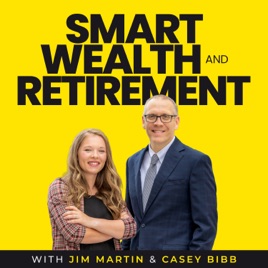
Smart Wealth and Retirement

Advertise on podcast: Smart Wealth and Retirement

Rating
★★★★★
4.6
from
40 reviews
This podcast has
100 episodes
Language
English
Explicit
No
Date created
2020/05/25
Latest episode
2026/04/20
Average duration
25 min.
Release period
7 days

Description

Smart Wealth and Retirement is your go-to podcast for clear, actionable guidance to build your dream retirement. Hosted by experienced Dave Ramsey SmartVestor Pros, each episode simplifies the complexities of retirement planning and wealth management, giving you strategies you can confidently implement today. Whether you’re nearing retirement or already there, we’ll cover crucial topics such as creating sustainable retirement income, managing taxes strategically, making smart investment decisions, maximizing your Social Security benefits, and much more. Our goal is simple: help you achieve financial clarity and peace of mind, so you can spend retirement focused on what truly matters. Tune in weekly to get straightforward advice, timely insights, and practical answers to your biggest retirement questions. It’s time to secure your financial future—start listening to Smart Wealth and Retirement and make informed decisions that help you retire with confidence.

Unlock Smart Wealth and Retirement podcast Email contact info,
Listeners & Audience details

Email contact information

Direct podcast contact details

Listeners

Audience numbers & engagement insights

Audience details

Podcast Insights

Podcast episodes

Check latest episodes from Smart Wealth and Retirement podcast


Should You Put Gold in Your IRA?
2026/04/20
In this episode of the Smart Wealth & Retirement Podcast, financial advisors and retirement planners Jim Martin & Casey Bibb of Martin Wealth Solutions discuss a question many investors hear when markets feel uncertain: Should you own gold inside your IRA? Jim and Casey break down the appeal of gold and other precious metals, especially during times of market volatility, inflation concerns, or economic uncertainty. They explain why gold is often marketed as a “safe haven,” but also discuss its limitations, lack of income generation, and how it fits — or doesn’t fit — into a diversified retirement portfolio. Rather than chasing headlines or fear-driven strategies, this episode focuses on thoughtful portfolio construction and helping investors understand whether gold truly plays a meaningful role in long-term retirement planning. http://retirewithmartin.com/ ← Learn about working with us www.planwellretirehappy.com Episode Breakdown 00:00 Introduction to Today’s Episode 01:30 Why gold gets attention during uncertain markets 03:02 The history of gold as a store of value 04:40 Why some investors want gold in their IRA 06:18 Gold vs. productive investments 08:00 The problem with “fear-based” investing 09:46 Diversification and asset allocation considerations 11:32 Inflation protection: myth vs reality 13:10 Liquidity and practical considerations 14:56 Marketing tactics often used around gold investments 16:22 When precious metals might make sense in a portfolio 18:00 How gold fits into a balanced retirement plan 19:46 Questions to ask before investing in gold 21:08 Key takeaways and final thoughts Disclaimer Opinions expressed herein are solely those of Martin Wealth Solutions, unless otherwise specifically cited. Material presented is believed to be from reliable sources, but no representations are made by our firm as to another parties’ informational accuracy or completeness. Content provided herein is for informational purposes only and should not be used or construed as investment advice or a recommendation regarding the purchase or sale of any security. There is no guarantee that any statements, opinions or forecasts provided herein will prove to be correct. All information or ideas provided should be discussed in detail with an advisor, accountant or legal counsel prior to implementation. Past performance may not be indicative of future results. Indices are not available for direct investment. Any investor who attempts to mimic the performance of an index would incur fees and expenses which would reduce returns. Securities investing involves risk, including the potential for loss of principal. There is no assurance that any investment plan or strategy will be successful.
4 Ways People Fail at Retirement (And How to Avoid Them)
2026/04/13
In this episode of the Smart Wealth & Retirement podcast, financial advisors and retirement planners Jim Martin & Casey Bibb of Martin Wealth Solutions discuss four common ways people unintentionally fail in retirement — and how thoughtful planning can help avoid these pitfalls. They explore how poor preparation, unrealistic spending expectations, tax surprises, and emotional investing decisions can derail even well-funded retirement plans. Jim and Casey walk through the real-world mistakes they see retirees make and explain how proactive planning, disciplined investing, and a well-structured income strategy can help retirees stay on track. This episode offers practical insight for anyone approaching retirement who wants to avoid common financial traps and build a retirement plan designed to last. http://retirewithmartin.com/ ← Learn about working with us www.planwellretirehappy.com Episode Breakdown  00:00 Introduction to Today’s Episode 01:32 Why some retirements fail despite good savings 03:10 Failure #1: Taking too much too soon 05:28 How income planning differs from saving 07:18 Failure #2: Ignoring taxes in retirement 09:46 How taxes can quietly erode retirement income 11:32 Failure #3: Letting emotions drive investment decisions 13:52 The impact of panic selling and market timing 15:24 Failure #4: Poor investor behavior  17:48 Balancing lifestyle goals with financial sustainability 19:42 How proper planning helps prevent these mistakes 21:08 Key takeaways for building a stronger retirement plan 22:40 Conclusion and final thoughts Disclaimer Opinions expressed herein are solely those of Martin Wealth Solutions, unless otherwise specifically cited. Material presented is believed to be from reliable sources, but no representations are made by our firm as to another parties’ informational accuracy or completeness. Content provided herein is for informational purposes only and should not be used or construed as investment advice or a recommendation regarding the purchase or sale of any security. There is no guarantee that any statements, opinions or forecasts provided herein will prove to be correct. All information or ideas provided should be discussed in detail with an advisor, accountant or legal counsel prior to implementation. Past performance may not be indicative of future results. Indices are not available for direct investment. Any investor who attempts to mimic the performance of an index would incur fees and expenses which would reduce returns. Securities investing involves risk, including the potential for loss of principal. There is no assurance that any investment plan or strategy will be successful.
What to Do With Your Old 401(k): Your Options Explained
2026/04/06
In this episode of the Smart Wealth & Retirement Podcast, financial advisors and retirement planners Jim Martin & Casey Bibb of Martin Wealth Solutions break down one of the most common retirement planning questions: What should you do with your old 401(k) after leaving a job? Jim and Casey walk through the four primary options — leaving it with your former employer, rolling it into a new employer’s plan, transferring it to an IRA, or cashing it out. They explain the pros and cons of each choice, including tax implications, investment flexibility, fees, and long-term planning considerations. This episode helps listeners understand how to make an informed decision that aligns with their broader retirement goals, rather than defaulting to a choice without fully understanding the impact. http://retirewithmartin.com/ ← Learn about working with us www.planwellretirehappy.com Episode Breakdown 00:00 Introduction: The old 401(k) dilemma 01:46 Why this decision matters more than you think 03:22 Option 1: Leave it with your former employer 05:40 Pros and cons of staying in the old plan 07:48 Option 2: Roll it into a new employer’s 401(k) 10:02 When consolidation makes sense 12:04 Option 3: Roll it into an IRA 14:28 Investment flexibility and control 16:32 Fee considerations and hidden costs 18:40 Option 4: Cashing out — and why it’s risky 20:54 Taxes and penalties explained 23:06 Common mistakes to avoid 25:14 Coordinating your 401(k) with your retirement income plan 26:23 Key takeaways and final thoughts Disclaimer Opinions expressed herein are solely those of Martin Wealth Solutions, unless otherwise specifically cited. Material presented is believed to be from reliable sources, but no representations are made by our firm as to another parties’ informational accuracy or completeness. Content provided herein is for informational purposes only and should not be used or construed as investment advice or a recommendation regarding the purchase or sale of any security. There is no guarantee that any statements, opinions or forecasts provided herein will prove to be correct. All information or ideas provided should be discussed in detail with an advisor, accountant or legal counsel prior to implementation. Past performance may not be indicative of future results. Indices are not available for direct investment. Any investor who attempts to mimic the performance of an index would incur fees and expenses which would reduce returns. Securities investing involves risk, including the potential for loss of principal. There is no assurance that any investment plan or strategy will be successful.
6 Retirement Moves to Make Right Now
2026/03/30
In this episode of the Smart Wealth & Retirement Podcast, financial advisors and retirement planners Jim Martin & Casey Bibb of Martin Wealth Solutions outline six strategic retirement moves you can make immediately to strengthen your financial future. Jim and Casey explain that successful retirement planning isn’t about timing the market or reacting to headlines — it’s about making proactive, disciplined decisions. From evaluating your savings rate and tax strategy to reassessing risk and income planning, they walk through practical steps that can meaningfully improve your retirement outlook. Whether you’re approaching retirement or already there, this episode provides clear, actionable guidance to help you make smarter financial decisions right now. http://retirewithmartin.com/ ← Learn about working with us www.planwellretirehappy.com Episode Breakdown 00:00 Introduction: Why taking action now matters 01:38 Move #1: Revisit your retirement timeline 03:20 Move #2: Increase or optimize your savings rate 05:06 Move #3: Improve tax efficiency before retirement 06:54 Move #4: Stress-test your income plan 08:40 Move #5: Reassess your portfolio risk and allocation 10:26 Move #6: Reduce or eliminate unnecessary debt 12:14 How small adjustments create long-term impact 14:00 Avoiding common retirement planning mistakes 15:50 Prioritizing which move to tackle first 17:42 Balancing growth with protection 19:30 Building flexibility into your plan 21:20 Key takeaways and practical next steps 23:48 Final thoughts and encouragement Disclaimer Opinions expressed herein are solely those of Martin Wealth Solutions, unless otherwise specifically cited. Material presented is believed to be from reliable sources, but no representations are made by our firm as to another parties’ informational accuracy or completeness. Content provided herein is for informational purposes only and should not be used or construed as investment advice or a recommendation regarding the purchase or sale of any security. There is no guarantee that any statements, opinions or forecasts provided herein will prove to be correct. All information or ideas provided should be discussed in detail with an advisor, accountant or legal counsel prior to implementation. Past performance may not be indicative of future results. Indices are not available for direct investment. Any investor who attempts to mimic the performance of an index would incur fees and expenses which would reduce returns. Securities investing involves risk, including the potential for loss of principal. There is no assurance that any investment plan or strategy will be successful.
Should you buy an annuity ? What Retirees Need to Know
2026/03/23
In this episode of the Smart Wealth & Retirement Podcast, financial advisors and retirement planners Jim Martin & Casey Bibb of Martin Wealth Solutions break down one of the most debated topics in retirement planning: annuities. Jim and Casey explain what annuities are, how they work, and the different types available — including fixed, indexed, and variable annuities. They discuss the potential benefits of guaranteed income, tax deferral, and downside protection, along with the trade-offs such as fees, liquidity limitations, and complexity. Rather than taking a blanket “for” or “against” stance, this episode focuses on helping listeners understand when annuities may fit into a broader retirement income strategy — and when they may not. http://retirewithmartin.com/ ← Learn about working with us www.planwellretirehappy.com Episode Breakdown 00:00 – Introduction: Why annuities spark strong opinions 01:40 – What is an annuity? 03:18 – Different types of annuities explained 05:12 – The appeal of guaranteed income 07:04 – How annuities generate retirement income 08:56 – Tax deferral and long-term planning 10:38 – Fees and cost considerations 12:20 – Liquidity restrictions and surrender periods 14:06 – Who annuities may be appropriate for 16:02 – Situations where annuities may not make sense 18:14 – Comparing annuities to other income strategies 20:04 – Common misconceptions about annuities 22:10 – Questions to ask before purchasing 24:18 – Key takeaways and final thoughts Disclaimer Opinions expressed herein are solely those of Martin Wealth Solutions, unless otherwise specifically cited. Material presented is believed to be from reliable sources, but no representations are made by our firm as to another parties’ informational accuracy or completeness. Content provided herein is for informational purposes only and should not be used or construed as investment advice or a recommendation regarding the purchase or sale of any security. There is no guarantee that any statements, opinions or forecasts provided herein will prove to be correct. All information or ideas provided should be discussed in detail with an advisor, accountant or legal counsel prior to implementation. Past performance may not be indicative of future results. Indices are not available for direct investment. Any investor who attempts to mimic the performance of an index would incur fees and expenses which would reduce returns. Securities investing involves risk, including the potential for loss of principal. There is no assurance that any investment plan or strategy will be successful.
10 Smart Money Moves the Wealthy Make
2026/03/16
In this episode of the Smart Wealth & Retirement Podcast, financial advisors and retirement planners Jim Martin & Casey Bibb of Martin Wealth Solutions break down 10 strategic money moves commonly used by wealthy individuals — and how everyday investors can apply the same principles. Jim and Casey explain that building wealth isn’t about flashy investments or insider tips. Instead, it often comes down to disciplined habits, intentional tax planning, risk management, diversification, and long-term thinking. They walk through practical steps listeners can implement, regardless of income level, to strengthen their financial foundation and retirement readiness. This episode focuses on smart decision-making, avoiding common pitfalls, and building a strategy that supports sustainable wealth over time. http://retirewithmartin.com/ ← Learn about working with us www.planwellretirehappy.com Episode Breakdown 00:00 – Introduction: What wealthy investors do differently 01:42 – Move #1: Prioritize long-term planning 03:16 – Move #2: Focus on tax efficiency 05:02 – Move #3: Diversify strategically 06:46 – Move #4: Manage risk intentionally 08:34 – Move #5: Control lifestyle inflation 10:18 – Move #6: Maintain liquidity and flexibility 12:06 – Move #7: Invest consistently 13:52 – Move #8: Avoid emotional investing 15:36 – Move #9: Use professional guidance strategically 17:26 – Move #10: Think in decades, not years 19:12 – Why discipline matters more than income 21:04 – Common mistakes people make trying to “get rich” 23:02 – Applying these principles at any wealth level 25:06 – Key takeaways and action steps 27:18 – Final thoughts and closing Disclaimer  Opinions expressed herein are solely those of Martin Wealth Solutions, unless otherwise specifically cited. Material presented is believed to be from reliable sources, but no representations are made by our firm as to another parties’ informational accuracy or completeness. Content provided herein is for informational purposes only and should not be used or construed as investment advice or a recommendation regarding the purchase or sale of any security. There is no guarantee that any statements, opinions or forecasts provided herein will prove to be correct. All information or ideas provided should be discussed in detail with an advisor, accountant or legal counsel prior to implementation. Past performance may not be indicative of future results. Indices are not available for direct investment. Any investor who attempts to mimic the performance of an index would incur fees and expenses which would reduce returns. Securities investing involves risk, including the potential for loss of principal. There is no assurance that any investment plan or strategy will be successful.
Should You Work Part-Time in Retirement?
2026/03/09
In this episode of the Smart Wealth & Retirement Podcast, financial advisors and retirement planners Jim Martin & Casey Bibb of Martin Wealth Solutions explore a question many retirees wrestle with: Should you work part-time in retirement? Jim and Casey break down the financial and lifestyle implications of part-time work after leaving a full-time career. They discuss how part-time income can affect Social Security benefits, taxes, Medicare premiums, and long-term retirement sustainability. They also talk about the non-financial side — including purpose, fulfillment, flexibility, and avoiding burnout. Whether you’re considering consulting, seasonal work, passion projects, or simply keeping busy, this episode helps you think through how part-time work fits into a well-structured retirement plan. http://retirewithmartin.com/ ← Learn about working with us www.planwellretirehappy.com Episode Breakdown 00:00 – Introduction: The idea of working in retirement 01:34 – Why more retirees are considering part-time work 03:10 – Financial benefits of working part-time 05:02 – How part-time income affects retirement withdrawals 06:46 – Social Security earnings limits explained 08:38 – Tax considerations and income stacking 10:20 – Medicare premiums and income-related adjustments 12:08 – Lifestyle benefits: purpose and structure 13:56 – Potential downsides and burnout risk 15:40 – When part-time work makes strategic sense 17:26 – How to incorporate part-time income into your plan 19:18 – Questions to ask before committing 20:30 – Key takeaways and final thoughts Disclaimer Opinions expressed herein are solely those of Martin Wealth Solutions, unless otherwise specifically cited. Material presented is believed to be from reliable sources, but no representations are made by our firm as to another parties’ informational accuracy or completeness. Content provided herein is for informational purposes only and should not be used or construed as investment advice or a recommendation regarding the purchase or sale of any security. There is no guarantee that any statements, opinions or forecasts provided herein will prove to be correct. All information or ideas provided should be discussed in detail with an advisor, accountant or legal counsel prior to implementation. Past performance may not be indicative of future results. Indices are not available for direct investment. Any investor who attempts to mimic the performance of an index would incur fees and expenses which would reduce returns. Securities investing involves risk, including the potential for loss of principal. There is no assurance that any investment plan or strategy will be successful.
How to Retire and Travel Without Running Out of Money
2026/03/02
In this episode of the Smart Wealth & Retirement Podcast, financial advisors and retirement planners Jim Martin & Casey Bibb of Martin Wealth Solutions explore what it really takes to retire with travel as a top priority. Jim and Casey discuss why travel-focused retirements require intentional planning around income, cash flow, taxes, healthcare, and flexibility. They explain how travel goals can change spending patterns, why budgeting for experiences looks different than traditional retirement assumptions, and how to build a plan that supports both adventure and long-term financial security. Whether travel is an occasional goal or the centerpiece of your retirement lifestyle, this episode helps listeners understand how to plan realistically so travel enhances retirement — without creating financial stress later on. http://retirewithmartin.com/ ← Learn about working with us www.planwellretirehappy.com Episode Breakdown 00:00 – Introduction: Why travel is a top retirement goal 01:44 – What “retiring to travel” really looks like 03:28 – How travel changes retirement spending patterns 05:16 – Budgeting realistically for travel 07:08 – Income planning for flexible lifestyles 09:02 – Cash flow timing and liquidity considerations 10:58 – Taxes and travel-heavy retirement plans 12:44 – Healthcare planning while traveling 14:36 – Domestic vs. international travel considerations 16:24 – Longevity planning and pacing your travel goals 18:10 – Common mistakes travel-focused retirees make 20:04 – Building flexibility into your retirement plan 22:02 – Key questions to ask before retiring to travel 24:06 – Final thoughts and encouragement Disclaimer Opinions expressed herein are solely those of Martin Wealth Solutions, unless otherwise specifically cited. Material presented is believed to be from reliable sources, but no representations are made by our firm as to another parties’ informational accuracy or completeness. Content provided herein is for informational purposes only and should not be used or construed as investment advice or a recommendation regarding the purchase or sale of any security. There is no guarantee that any statements, opinions or forecasts provided herein will prove to be correct. All information or ideas provided should be discussed in detail with an advisor, accountant or legal counsel prior to implementation. Past performance may not be indicative of future results. Indices are not available for direct investment. Any investor who attempts to mimic the performance of an index would incur fees and expenses which would reduce returns. Securities investing involves risk, including the potential for loss of principal. There is no assurance that any investment plan or strategy will be successful.
Weatherproofing Your Retirement: How to Prepare for Life’s Financial Storms
2026/02/23
In this episode of the Smart Wealth & Retirement Podcast, financial advisors and retirement planners Jim Martin & Casey Bibb of Martin Wealth Solutions discuss what it really means to “weatherproof” your retirement plan. Jim and Casey explain why retirement success isn’t about predicting the future — it’s about building a plan that can withstand market volatility, unexpected expenses, health issues, tax changes, and major life transitions. They walk through the key components of a resilient retirement strategy, including income diversification, risk management, flexibility, and proactive planning. This episode helps retirees and pre-retirees understand how to create a retirement plan that remains strong and steady, even when conditions change. http://retirewithmartin.com/ ← Learn about working with us www.planwellretirehappy.com Episode Breakdown 00:00 – Introduction: What does it mean to “weatherproof” retirement? 01:38 – Why uncertainty is inevitable in retirement 03:12 – Market volatility and income planning 05:02 – Preparing for unexpected expenses 06:56 – Healthcare, long-term care, and rising costs 08:58 – Inflation and purchasing power over time 10:46 – Diversifying income sources 12:42 – Risk management and portfolio structure 14:38 – Flexibility as a retirement planning advantage 16:26 – Common mistakes that weaken retirement plans 18:20 – Stress-testing your retirement strategy 20:08 – Practical steps to build resilience 22:06 – Key takeaways and next actions Disclaimer Opinions expressed herein are solely those of Martin Wealth Solutions, unless otherwise specifically cited. Material presented is believed to be from reliable sources, but no representations are made by our firm as to another parties’ informational accuracy or completeness. Content provided herein is for informational purposes only and should not be used or construed as investment advice or a recommendation regarding the purchase or sale of any security. There is no guarantee that any statements, opinions or forecasts provided herein will prove to be correct. All information or ideas provided should be discussed in detail with an advisor, accountant or legal counsel prior to implementation. Past performance may not be indicative of future results. Indices are not available for direct investment. Any investor who attempts to mimic the performance of an index would incur fees and expenses which would reduce returns. Securities investing involves risk, including the potential for loss of principal. There is no assurance that any investment plan or strategy will be successful.
How to Plan for Retirement If You’re Single or Widowed
2026/02/16
In this episode of the Smart Wealth & Retirement Podcast, financial advisors and retirement planners Jim Martin & Casey Bibb of Martin Wealth Solutions address the unique challenges and considerations that come with retiring single or after the loss of a spouse. Jim and Casey discuss how retirement planning can change when you’re relying on a single income stream and making decisions on your own. They cover important topics such as Social Security strategies, income planning, tax considerations, estate planning updates, and managing risk — all while navigating the emotional side of major life transitions. This episode is designed to help single and widowed retirees move forward with clarity, confidence, and a plan that supports both financial security and peace of mind. http://retirewithmartin.com/ ← Learn about working with us www.planwellretirehappy.com Episode Breakdown 00:00 – Intro: Retirement planning when you’re on your own 01:52 – Why retiring single or widowed requires a different approach 03:26 – Emotional and financial shifts after loss or separation 05:12 – Income planning with a single household budget 07:08 – Social Security considerations for single and widowed retirees 09:12 – Survivor benefits and claiming strategies 11:18 – Managing taxes with one income stream 13:06 – Estate planning updates and beneficiary reviews 15:02 – Risk management and insurance considerations 17:06 – Building a reliable retirement income plan 19:04 – Common mistakes single and widowed retirees make 21:10 – Creating a trusted support team 23:04 – Practical steps to regain confidence and control 25:12 – Key takeaways and encouragement 27:00 – Final thoughts and closing Disclaimer Opinions expressed herein are solely those of Martin Wealth Solutions, unless otherwise specifically cited. Material presented is believed to be from reliable sources, but no representations are made by our firm as to another parties’ informational accuracy or completeness. Content provided herein is for informational purposes only and should not be used or construed as investment advice or a recommendation regarding the purchase or sale of any security. There is no guarantee that any statements, opinions or forecasts provided herein will prove to be correct. All information or ideas provided should be discussed in detail with an advisor, accountant or legal counsel prior to implementation. Past performance may not be indicative of future results. Indices are not available for direct investment. Any investor who attempts to mimic the performance of an index would incur fees and expenses which would reduce returns. Securities investing involves risk, including the potential for loss of principal. There is no assurance that any investment plan or strategy will be successful.
Should You Really Max Out Your 401(k)?
2026/02/09
In this episode of the Smart Wealth & Retirement Podcast, financial advisors and retirement planners Jim Martin & Casey Bibb of Martin Wealth Solutions tackle a popular piece of financial advice: “Always max out your 401(k).” Jim and Casey explain why this rule of thumb can be helpful in some situations — but harmful in others. They walk through how tax brackets, employer matches, cash flow needs, future tax uncertainty, and account diversification all play a role in determining whether maxing out a 401(k) actually makes sense for you. This episode encourages listeners to move beyond blanket advice and instead focus on intentional retirement planning that aligns savings strategies with long-term goals, flexibility, and tax efficiency. http://retirewithmartin.com/ ← Learn about working with us www.planwellretirehappy.com Episode Breakdown 00:00 – Introduction: The “max out your 401(k)” question 01:30 – Why this advice is so commonly given 03:02 – The benefits of maxing out a 401(k) 04:58 – Employer match vs. full max contributions 06:22 – Tax brackets and future tax uncertainty 08:10 – When maxing out doesn’t make sense 10:06 – Balancing retirement savings with cash flow 12:02 – 401(k)s vs. Roth and taxable accounts 14:04 – Flexibility and access to funds before retirement 16:06 – Building a diversified savings strategy 18:00 – Closing and final thoughts Disclaimer Opinions expressed herein are solely those of Martin Wealth Solutions, unless otherwise specifically cited. Material presented is believed to be from reliable sources, but no representations are made by our firm as to another parties’ informational accuracy or completeness. Content provided herein is for informational purposes only and should not be used or construed as investment advice or a recommendation regarding the purchase or sale of any security. There is no guarantee that any statements, opinions or forecasts provided herein will prove to be correct. All information or ideas provided should be discussed in detail with an advisor, accountant or legal counsel prior to implementation. Past performance may not be indicative of future results. Indices are not available for direct investment. Any investor who attempts to mimic the performance of an index would incur fees and expenses which would reduce returns. Securities investing involves risk, including the potential for loss of principal. There is no assurance that any investment plan or strategy will be successful.
The Retirement Tax Window: Preparing for 2025 Filing and Planning Ahead for 2026
2026/02/02
In this episode of the Smart Wealth & Retirement Podcast, financial advisors and retirement planners Jim Martin & Casey Bibb of Martin Wealth Solutions break down key tax planning considerations for retirees coming out of 2025 and heading into 2026. Jim and Casey discuss why taxes remain one of the biggest — and most controllable — risks in retirement. They cover topics such as changing tax brackets, required minimum distributions (RMDs), Roth strategies, capital gains planning, and how proactive tax decisions can significantly improve long-term outcomes. Rather than focusing on predictions, this episode emphasizes flexibility, planning, and awareness, helping retirees and pre-retirees understand where opportunities and pitfalls may exist in the coming years. http://retirewithmartin.com/ ← Learn about working with us www.planwellretirehappy.com Episode Breakdown 00:00 – Introduction: Why tax planning matters more in retirement 01:36 – Why retirees need to think differently about taxes 03:02 – Current tax brackets and why future changes matter 04:56 – The role of RMDs in retirement tax planning 06:42 – Roth conversions: when they make sense (and when they don’t) 08:34 – Managing taxable vs. tax-deferred accounts 10:18 – Capital gains planning and investment taxation 12:04 – How Social Security benefits are taxed 13:52 – Medicare premiums and tax-related surcharges 15:24 – Coordinating income sources to reduce tax drag 17:06 – Common tax planning mistakes retirees make 18:56 – Action steps to consider for 2025–2026 20:24 – Final thoughts and closing Disclaimer Opinions expressed herein are solely those of Martin Wealth Solutions, unless otherwise specifically cited. Material presented is believed to be from reliable sources, but no representations are made by our firm as to another parties’ informational accuracy or completeness. Content provided herein is for informational purposes only and should not be used or construed as investment advice or a recommendation regarding the purchase or sale of any security. There is no guarantee that any statements, opinions or forecasts provided herein will prove to be correct. All information or ideas provided should be discussed in detail with an advisor, accountant or legal counsel prior to implementation. Past performance may not be indicative of future results. Indices are not available for direct investment. Any investor who attempts to mimic the performance of an index would incur fees and expenses which would reduce returns. Securities investing involves risk, including the potential for loss of principal. There is no assurance that any investment plan or strategy will be successful.
Do You Really Need a Financial Advisor? Here’s How to Decide
2026/01/26
In this episode of the Smart Wealth & Retirement Podcast, financial advisor and retirement planner Jim Martin of Martin Wealth Solutions is joined by special guest Linwood Fraher to tackle a common question many investors and retirees wrestle with: When does it make sense to hire a financial advisor? Jim and Linwood discuss the moments in life when DIY investing can become risky — such as major life transitions, retirement planning, tax complexity, or managing emotions during volatile markets. They explain what a good advisor actually does beyond picking investments, how fiduciary advice differs from sales-driven guidance, and how working with the right advisor can bring clarity, confidence, and coordination to your entire financial life. Whether you’re managing things on your own or already working with an advisor, this episode helps you evaluate when professional guidance can add real value. http://retirewithmartin.com/ ← Learn about working with us www.planwellretirehappy.com Episode Breakdown 00:00 – Introduction: The question of hiring an advisor 00:49 – Meet Jim Martin & special guest Linwood Fraher 01:44 – Why so many people try to manage finances on their own 03:18 – Life events that often trigger the need for advice 05:06 – Retirement planning complexity vs. DIY investing 06:58 – Taxes, income planning, and coordination challenges 08:52 – Emotional decision-making and market volatility 10:46 – What a good financial advisor actually does 12:34 – Fiduciary advice vs. product-driven sales 14:28 – How an advisor adds value beyond investments 16:22 – Signs it may be time to get professional help 18:20 – Questions to ask before hiring an advisor 20:16 – Red flags to watch out for 22:18 – Key takeaways and next steps Disclaimer Opinions expressed herein are solely those of Martin Wealth Solutions, unless otherwise specifically cited. Material presented is believed to be from reliable sources, but no representations are made by our firm as to another parties’ informational accuracy or completeness. Content provided herein is for informational purposes only and should not be used or construed as investment advice or a recommendation regarding the purchase or sale of any security. There is no guarantee that any statements, opinions or forecasts provided herein will prove to be correct. All information or ideas provided should be discussed in detail with an advisor, accountant or legal counsel prior to implementation. Past performance may not be indicative of future results. Indices are not available for direct investment. Any investor who attempts to mimic the performance of an index would incur fees and expenses which would reduce returns. Securities investing involves risk, including the potential for loss of principal. There is no assurance that any investment plan or strategy will be successful.
Retiring Before 60: What It Really Takes to Make It Happen
2026/01/19
In this episode of the Smart Wealth & Retirement Podcast, financial advisors and retirement planners Jim Martin & Casey Bibb of Martin Wealth Solutions break down what it truly takes to retire before age 60 — and why it’s more about planning and discipline than luck or extreme investing. Jim and Casey discuss the key building blocks of early retirement, including savings rates, tax strategy, healthcare planning, income flexibility, and lifestyle design. They also address common misconceptions about retiring early, the trade-offs involved, and how to build a plan that supports long-term sustainability rather than short-term freedom. Whether early retirement is a firm goal or simply a possibility you want to keep open, this episode provides a realistic framework to help you decide if retiring before 60 is achievable — and what steps to take next. http://retirewithmartin.com/ ← Learn about working with us www.planwellretirehappy.com Episode Breakdown 00:00 – Introduction: Why retiring before 60 appeals to so many people 01:38 – What “retiring before 60” really means 03:06 – The biggest misconceptions about early retirement 05:02 – Savings rate vs. rate of return 06:58 – Tax strategy and account positioning 08:56 – Healthcare planning before Medicare 10:48 – Income flexibility and withdrawal planning 12:42 – Lifestyle expectations and trade-offs 14:28 – How early retirement changes risk management 16:16 – Common mistakes early retirees make 18:06 – Key questions to ask if early retirement is your goal 20:01 – Final thoughts and encouragement Disclaimer Opinions expressed herein are solely those of Martin Wealth Solutions, unless otherwise specifically cited. Material presented is believed to be from reliable sources, but no representations are made by our firm as to another parties’ informational accuracy or completeness. Content provided herein is for informational purposes only and should not be used or construed as investment advice or a recommendation regarding the purchase or sale of any security. There is no guarantee that any statements, opinions or forecasts provided herein will prove to be correct. All information or ideas provided should be discussed in detail with an advisor, accountant or legal counsel prior to implementation. Past performance may not be indicative of future results. Indices are not available for direct investment. Any investor who attempts to mimic the performance of an index would incur fees and expenses which would reduce returns. Securities investing involves risk, including the potential for loss of principal. There is no assurance that any investment plan or strategy will be successful.
Caring for Aging Parents Without Sacrificing Your Retirement
2026/01/12
In this episode of the Smart Wealth & Retirement Podcast, financial advisors and retirement planners Jim Martin & Casey Bibb of Martin Wealth Solutions discuss the growing reality many families face: supporting aging parents while protecting your own retirement plan. Jim and Casey walk through the emotional, financial, and logistical challenges that arise when parents begin needing help. They cover how to start difficult conversations, understand care options, coordinate finances, and avoid common mistakes that can strain relationships and derail long-term plans. The conversation offers practical guidance for navigating caregiving responsibilities with clarity, compassion, and confidence. http://retirewithmartin.com/ ← Learn about working with us www.planwellretirehappy.com Episode Breakdown 00:00 – Introduction: When caring for parents becomes part of your plan 02:02 – Why more families are facing caregiving decisions 03:34 – The emotional impact of helping aging parents 05:22 – Starting the conversation with Mom & Dad 07:14 – Understanding care options: in-home, assisted living, and beyond 09:26 – Financial considerations families often overlook 11:42 – Coordinating siblings and shared responsibilities 13:58 – How caregiving can affect your own retirement goals 16:04 – Planning ahead to avoid crisis-driven decisions 18:22 – Legal and documentation considerations 20:14 – When professional help may be needed 22:06 – Common mistakes families make 24:10 – Key takeaways for caregivers and planners Disclaimer Opinions expressed herein are solely those of Martin Wealth Solutions, unless otherwise specifically cited. Material presented is believed to be from reliable sources, but no representations are made by our firm as to another parties’ informational accuracy or completeness. Content provided herein is for informational purposes only and should not be used or construed as investment advice or a recommendation regarding the purchase or sale of any security. There is no guarantee that any statements, opinions or forecasts provided herein will prove to be correct. All information or ideas provided should be discussed in detail with an advisor, accountant or legal counsel prior to implementation. Past performance may not be indicative of future results. Indices are not available for direct investment. Any investor who attempts to mimic the performance of an index would incur fees and expenses which would reduce returns. Securities investing involves risk, including the potential for loss of principal. There is no assurance that any investment plan or strategy will be successful.

Podcast reviews

Read Smart Wealth and Retirement podcast reviews


4.6 out of 5
40 reviews
★★★★★
bc2051 2025/07/29
Easy to apply this stuff!
This just hits different
★☆☆☆☆
Uniquify me 2025/08/30
Not much substance
Just basic ideas then a suggestion that you should call for more information.
★★★★★
RENEEPOFF 2025/03/09
Great info!
Excellent information! Definately learned new information
★★★★★
ROBINBIBB 2025/03/04
Great podcast
This was very informative and worth a listen!
★★★★★
SoccerDad1212 2025/03/03
Great show!
Great show, love all the information they give out. Casey seems pretty funny.
★★★★★
JujuClaireSwag 2025/03/03
Easy to digest for beginners
As someone not well-versed in the financial world but always wanting to learn, this podcast is perfect for me as a novice. The banter between the co-h...
★★★★★
TLM 80 2025/03/03
Great insight!
Really helpful and insightful information about retirement, planning and adjusting the plan as our lives change.. A little humor as well!
★★★★★
CBibb-24 2024/06/04
Great podcast!
This show is very informative and easy to listen to! Highly recommend!
★★★★★
J.I. Hall 2024/05/21
Great Show!
I like listening to this show because you can tell that Jim really cares about your financial future. I feel more confident in my future retirement be...
★☆☆☆☆
nolajim 2024/01/19
Too much promoting service
Literally half of the time is promoting his services. Should he offer his services in the show? Yes of course he should. But it's incessant. I live i...
check all reviews on apple podcasts

Podcast sponsorship advertising

Start advertising on Smart Wealth and Retirement relevant audience podcasts


What do you want to promote?