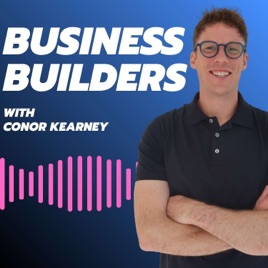
Advertise on podcast: Business Builders
Rating
5from
This podcast has
150 episodes
Language
EnglishPublisher
Conor KearneyExplicit
No
Date created
2020/06/22
Latest episode
2026/08/17
Average duration
72 min.
Release period
7 days
Description
I created Business Builders as a weekly interview series to have honest conversations with business owners, entrepreneurs, and investors about their journeys; their successes, setbacks, and the lessons they’ve learned along the way. As a growing business builder myself, I want to learn directly from my guests and share those insights with you. My goal is to provide listeners with practical takeaways, fresh perspectives, and real inspiration to help you on your own path to building and growing a business.
Unlock Business Builders podcast Email contact info,
Listeners & Audience details
Email contact information
Direct podcast contact details

Listeners
Audience numbers & engagement insights

Audience details
Podcast Insights

Podcast episodes
Check latest episodes from Business Builders podcast
€50m Turnover in 5 Years | Liam Kearney, Revive Group
2026/08/17
THE ROOM | 23 OCTOBER 2026
Theme: Belief
Applications are now open for a limited number of places at the first gathering of The Room. Attendance is limited to experienced business owners and investors and is subject to approval.
Join me for a private morning of live interviews with Vincent Carton, former CEO of Manor Farm, and Nick Keegan, Founder & CEO of Mail Metrics, exploring the role belief has played in their businesses and lives, followed by audience Q&A.
Nothing is recorded.
Friday, 23 October | 10am–12pm | Windmill QTR, Dublin
Tickets are €285 + VAT.
Find out more and book your place: https://www.theroom.salon/event
------------------------
Liam Kearney explains why the most successful businesses are often built in industries nobody talks about, why entrepreneurs should think five and even ten years ahead, and how the lessons he learned from financial collapse, corporate burnout and personal tragedy helped him build Revive Group into one of Ireland's fastest-growing manufacturing companies.
Liam Kearney joins Business Builders to share the story of building Revive Group from the ground up, transforming decades of experience in specialist municipal engineering into a global manufacturing and technology business that expects to exceed €50 million in turnover this year, with ambitions to surpass €100 million in the next three years and eventually reach half a billion euro in revenue.
Liam reflects on losing a successful business during the financial crisis, being forced to leave Ireland, rebuilding his career in Denmark and ultimately returning home to start again. He explains why corporate life almost destroyed his entrepreneurial spirit, why he deliberately chose an industry that remains resilient during economic downturns, and how Revive is evolving from a traditional manufacturer into a data-driven technology company.
The conversation also explores Liam's experiences growing up with dyslexia, being told he'd never achieve anything, and losing both of his parents in separate accidents. He discusses how those experiences shaped his ambition, why he isn't motivated by money, the importance of building world-class teams, and why creating opportunities for people through employability initiatives has become one of the most meaningful aspects of his leadership journey.
This is a conversation about entrepreneurship, manufacturing, engineering, leadership, resilience, scaling, industrial technology, data, innovation, globalization, dyslexia, ambition, founder mindset, team building, employability, Irish industry, personal tragedy, business failure, corporate culture and building global businesses from rural Ireland.
"My reward is success. Taking something that didn't exist and turning it into a global organization."
🎧 In this episode, you'll learn:
• How Liam rebuilt his career after losing a successful business during the financial crisis
• Why he left corporate life to become an entrepreneur again
• How Revive Group grew into a business approaching €50 million in annual turnover
• Why sewer infrastructure became the foundation of a global manufacturing company
• Why Liam deliberately chose an industry that can survive any economic downturn
• How Revive is transitioning from manufacturing equipment to harvesting and monetizing data
• Why the best founders think five and even ten years ahead
• How dyslexia shaped Liam's approach to business and leadership
• Why Liam believes success has nothing to do with money
• How personal tragedy strengthened his determination to build something meaningful
⏱️ Timestamps
00:00 - Cold open
00:39 - What is Revive Group?
02:20 - Liam's previous business and the financial crash
04:09 - The story of buying a chicken factory on a train
07:16 - Losing a successful business
08:28 - Rebuilding in Denmark
15:40 - Why corporate life almost broke him
17:59 - Thinking five and ten years ahead
19:28 - Starting Revive Group during Covid
20:42 - Why data is more valuable than the machines
23:04 - Choosing a recession-proof industry
24:12 - Building the Warrior Project
25:34 - Building a world-class leadership team
27:06 - Do CEOs need technical expertise?
30:11 - Why Liam brought the business back to Ireland
32:56 - Building completely off-grid factories
33:19 - The Danish manufacturing model
38:04 - Growing towards €50 million in turnover
40:01 - The biggest challenge: cash
46:10 - Transitioning from manufacturing to data
55:17 - Where ambition comes from
57:49 - Growing up with dyslexia
01:01:14 - Why money doesn't motivate Liam
01:01:50 - Losing both parents in separate accidents
01:05:25 - Leadership, employability and giving back
01:12:01 - The three things Liam is most proud of
01:16:08 - The personal cost of ambition
01:17:14 - Advice for his younger self
01:21:50 - The Enterprise Ireland programme that changed his thinking
Topics covered:
Entrepreneurship, Liam Kearney, Revive Group, manufacturing, engineering, industrial technology, sewer infrastructure, municipal engineering, leadership, resilience, scaling, business growth, globalization, data, Industry 4.0, entrepreneurship in Ireland, founder mindset, dyslexia, employability, team building, innovation, Denmark, Irish manufacturing, business failure, ambition, leadership development, Enterprise Ireland.
From Professional Rugby To Building A €100m+ Business | Shane Leahy, Oxygen8
2026/08/10
Shane Leahy explains why rapid growth can become one of a business's biggest challenges, why great leaders build teams around their own weaknesses, and how the lessons he learned building Oxygen8 into a €100m+ global technology group are now helping him scale humanitarian aid in some of the world's most dangerous conflict zones.
Shane Leahy joins Business Builders to share his journey from professional rugby into telecoms and entrepreneurship, eventually helping grow Oxygen8 from a €30 million business into a global technology group generating more than €100 million in turnover, with operations spanning Africa, the Middle East, Southeast Asia, Australia, the US and beyond.
Shane reflects on the leadership lessons he carried from professional sport into business, why different people require completely different styles of management, and how recognising his own weaknesses helped him build stronger teams around him. He also discusses the challenges created by rapid international growth, a fraud of more than $10 million that forced the group to restructure, the importance of learning from failure, and why putting the right management structures in place became essential as Oxygen8 scaled.
The conversation also explores Shane's decision to step back from the day-to-day running of his businesses and establish One for Humanity. Using the same proof-of-concept and scaling principles he learned in business, Shane and his team have helped establish 19 hospital units along the front lines in Ukraine and deliver more than $200 million worth of medicine, while also supporting humanitarian projects in Gaza and elsewhere.
This is a conversation about entrepreneurship, leadership, professional sport, scaling, international business, failure, resilience, team building, self-awareness, humanitarian aid, purpose, Ukraine, Gaza, technology, organisational structure, founder mindset, and using business experience to make an impact far beyond business.
"You learn a hell of a lot more from your failures than you do from the successes."
🎧 In this episode, you'll learn:
• How Shane went from professional rugby into business and telecoms
• How Oxygen8 grew from €30 million to more than €100 million in turnover
• Why Shane believes great leaders need to manage different people differently
• How to identify your weaknesses and build a team that complements them
• Why rapid growth can expose weaknesses in a company's structure
• How Oxygen8 responded after suffering a fraud of more than $10 million
• Why failure can teach you more than success
• How Shane applied business principles to humanitarian aid
• How One for Humanity helped establish 19 hospital units in Ukraine
• Why Shane believes simply showing up for people can make a profound difference
⏱️ Timestamps
00:00 - Cold open
01:18 - What is Oxygen8?
04:17 - From professional rugby to business
06:38 - What rugby taught Shane about leadership
08:19 - Building a team around your weaknesses
11:06 - Why failure teaches you more than success
11:58 - The challenges of building a global business
12:19 - The $10 million fraud that changed Oxygen8
14:51 - When rapid growth becomes a problem
16:09 - Expanding across the world
19:14 - The opportunity in mobile payments
20:27 - Setting goals for growth
22:09 - Stepping back from the business
22:57 - Why Shane became involved in Ukraine
25:08 - Scaling One for Humanity
28:19 - Finding a new purpose in life
30:14 - Building frontline hospital units
32:03 - Delivering millions of dollars of medicine every month
32:57 - Taking the humanitarian model into Gaza
37:12 - Learning from failure in humanitarian work
38:34 - What life is like on the Ukrainian front line
41:21 - Why Shane continues to put himself in danger
43:12 - Hope and determination in Ukraine
46:51 - Applying a business mindset to humanitarian aid
54:29 - How the experience changed Shane's perspective on life
56:45 - Ireland's position in an increasingly uncertain world
01:05:38 - "It's the best thing I've ever done"
01:07:08 - The final message from Shane's father
Topics covered:
Entrepreneurship, Shane Leahy, Oxygen8, leadership, professional rugby, business growth, scaling, international business, telecoms, mobile payments, Africa, team building, organisational culture, management, resilience, failure, founder mindset, self-awareness, business strategy, One for Humanity, humanitarian aid, Ukraine, Gaza, frontline medicine, purpose, technology, Irish business.
How To Build A Business That Survives Anything | Pat Byrne, CityJet
2026/08/03
Pat Byrne explains why great businesses fail when leaders stop challenging themselves, why resilience matters more than avoiding failure, and how CityJet evolved from a small challenger airline into one of Europe's leading regional aviation operators.
Pat Byrne joins Business Builders to share the story of founding CityJet, transforming it from a startup airline challenging the Dublin–London monopoly into an international aviation business that grew to operate almost 50 aircraft across Europe through innovative wet leasing partnerships with some of the world's largest airlines.
Pat reflects on building and selling multiple businesses over a career spanning more than five decades, including Cornmarket and CityJet, recounts how a cold call to Richard Branson led to a partnership with Virgin, and explains why the biggest breakthroughs often come from challenging conventional thinking. He also discusses surviving constant crises in aviation, overcoming failure, building customer relationships instead of transactions, creating high-performing teams, avoiding the dangers of groupthink, and why the most successful founders never stop transforming themselves or their businesses.
This is a conversation about entrepreneurship, aviation, leadership, resilience, transformation, business strategy, innovation, customer experience, scaling, organisational culture, founder mindset, sales, marketing, change management, and building businesses that can survive constant uncertainty.
"The real risk is not being prepared to take one."
🎧 In this episode, you'll learn:
• How Pat built CityJet from a startup into a major European regional airline
• The cold call that led to a partnership with Richard Branson and Virgin
• Why the airline industry is one of the hardest businesses in the world
• How one customer conversation transformed Cornmarket into a market leader
• Why selling is about relationships, not transactions
• How to lead teams through constant uncertainty and crisis
• Why founders become prisoners of consensus—and how to avoid it
• The dangers of groupthink in business
• How Pat approaches failure and bounces back from setbacks
• Why great businesses are built through continuous transformation
⏱️ Timestamps
00:00 - Cold open
00:56 - Building CityJet from scratch
04:28 - Why airlines are such difficult businesses
06:37 - Surviving constant crisis as a founder
11:00 - Building Cornmarket from one customer insight
18:16 - Why relationships beat transactions in business
20:01 - Selling Cornmarket and starting again
23:15 - Challenging convention and avoiding groupthink
24:34 - How Pat partnered with Richard Branson
31:24 - The mindset behind making bold decisions
40:09 - Selling CityJet to Air France
43:52 - Why Pat returned to CityJet years later
53:04 - Building a career through transformation
56:33 - Pat's philosophy on failure and resilience
59:11 - Helping businesses transform today
01:11:44 - Final thoughts
Topics covered:
Entrepreneurship, CityJet, aviation, airlines, Richard Branson, Virgin, Cornmarket, leadership, resilience, business strategy, transformation, sales, customer relationships, marketing, innovation, founder mindset, scaling, organisational culture, failure, risk-taking, change management, consulting, business growth, Irish business.
How We Scaled From €3M To €20M By Starting Over | Oltian Dervishi, Forte Pespa
2026/07/27
Oltian Dervishi explains why every growing business eventually hits a ceiling, why founders must keep taking risks long after they've found success, and how Forte Pespa transformed itself from a traditional contractor into one of Ireland's fastest-growing offsite manufacturers.
Oltian Dervishi joins Business Builders to share the story of building Forte Pespa from a small construction business into Ireland's largest aluminium balcony manufacturer, growing from €3 million to €20 million in turnover after completely reinventing the company and its business model.
Oltian reflects on the difficult early years of entrepreneurship, including going nine months without taking a salary, explains why rebuilding the business from scratch became the only way to scale, and shares the lessons that transformed both his leadership and the company's trajectory. He discusses the importance of timing, learning through failure, hiring ahead of growth, building a culture driven by hunger rather than credentials, taking on private equity, and surrounding yourself with people who force you to think much bigger than you thought possible.
This is a conversation about entrepreneurship, manufacturing, leadership, innovation, scaling, risk-taking, company culture, hiring, private equity, business strategy, offsite construction, and building a high-growth manufacturing business from Ireland.
"You can't teach hunger."
🎧 In this episode, you'll learn:
• How Forte Pespa grew from €3 million to €20 million by reinventing its entire business
• Why every growing business eventually reaches a ceiling—and how to break through it
• The advice from Oltian's father that completely changed how he thinks about risk
• Why going nine months without a salary was worth it
• How failure became his greatest business teacher
• Why ambition matters more than talent
• How hiring ahead of growth helped the business scale faster
• Why the best founders learn to let go of control
• How private equity accelerated Forte Pespa's next stage of growth
• Why surrounding yourself with bigger thinkers changes your own ambitions
⏱️ Timestamps
00:00 - Cold open
01:18 - What is Forte Pespa?
02:17 - The €3 million ceiling that changed everything
05:42 - Finding the opportunity that started the business
07:13 - Landing the first €1 million contract
08:10 - Surviving without a salary
11:02 - Why timing is everything in business
12:13 - Rebuilding the company from scratch
15:17 - Lessons from Oltian's father
16:21 - Why entrepreneurship beat the 9-to-5
18:02 - Why ambition matters more than talent
19:16 - Learning through failure
22:15 - Hiring before you can afford to
26:07 - Why every team needs spare capacity
27:22 - Reinventing the business to scale
30:16 - Growing from €3 million to €20 million
34:08 - Building a leadership team
36:15 - Creating a winning company culture
37:16 - Why Oltian hires for hunger, not CVs
40:25 - Controlling the entire supply chain
43:00 - Thinking bigger after EY Entrepreneur Of The Year
45:59 - Building a business that's impossible to compete with
48:18 - Why success hasn't changed his mindset
50:10 - Final thoughts
Topics covered:
Entrepreneurship, business growth, scaling, manufacturing, offsite construction, innovation, leadership, founders, company culture, hiring, ambition, risk-taking, failure, private equity, operations, strategy, engineering, construction, aluminium, supply chain, acquisitions, productivity, Irish business, EY Entrepreneur Of The Year, Forte Pespa.
From CTO to CEO | John Corley, Spanish Point Technologies
2026/07/20
John Corley explains why great products still fail, why ambition matters more than most founders realise, and how Spanish Point Technologies became a global software company powering the music industry.
John Corley joins Business Builders to share the story of building Spanish Point Technologies from a small Irish software consultancy into an international technology company employing more than 120 people, generating €27 million in annual revenue, and providing the software behind music royalty systems across the world.
John reflects on the costly lessons learned after investing millions into a product that received a standing ovation from Microsoft but ultimately failed commercially, and explains why distribution, market focus and go-to-market strategy matter just as much as building a great product. He also discusses bootstrapping for nearly two decades, transitioning from services to software products, embracing AI to solve real-world problems, preserving company culture during rapid growth, and why founders shouldn't be afraid to think much bigger than they're comfortable admitting.
This is a conversation about entrepreneurship, software, AI, leadership, product strategy, scaling, company culture, ambition, bootstrapping, and building a global technology business from Ireland.
"Building a great product isn't enough."
🎧 In this episode, you'll learn:
• How Spanish Point Technologies grew into a €27 million global software business
• Why a standing ovation from Microsoft still wasn't enough to make a product succeed
• The difference between building a great product and building a great business
• Why bootstrapping helped shape the company's long-term success
• How AI is transforming the music industry and royalty payments
• Why founders need the confidence to think and communicate more ambitiously
• How to scale a business without losing its culture
• Why hiring curious people beats hiring experienced people
• How John transitioned from CTO to CEO after twenty years
• Why some of the most valuable business lessons come from failure
⏱️ Timestamps
00:00 - Cold open
01:28 - What is Spanish Point Technologies?
05:03 - Is AI changing software forever?
07:02 - Using AI to transform the music industry
14:12 - How the music software business began
17:11 - Bootstrapping the company from day one
18:50 - Winning Microsoft's Worldwide Partner of the Year
21:42 - Turning down venture capital
22:55 - Building products instead of selling services
24:05 - The €3 million product that failed
26:42 - The lessons that changed the business forever
28:15 - Building software for the global music industry
31:44 - Learning to think bigger as a founder
33:52 - Hiring and developing great people
37:23 - Scaling culture as the company grows
38:49 - Becoming CEO after twenty years as CTO
41:03 - Leadership without changing who you are
43:33 - Learning confidence and public speaking
46:59 - What entrepreneurs have in common
48:28 - Growing the company through ambition
49:29 - Why Spanish Point took private equity investment
52:09 - Starting the business with no investors
55:04 - What's next for Spanish Point Technologies?
Topics covered:
Entrepreneurship, software, SaaS, AI, artificial intelligence, leadership, scaling, business growth, founders, bootstrapping, software engineering, Microsoft, startups, company culture, hiring, CTO, CEO, product strategy, go-to-market strategy, music industry, music royalties, digital transformation, private equity, Irish business, Spanish Point Technologies.
How An Irish Entrepreneur Cracked The American Market | Dermot O’Shea, Taoglas
2026/07/13
Dermot O’Shea explains why sales beats fundraising, why America rewards ambitious founders, and how he built Taoglas into a $100 million global technology company.
Dermot O’Shea joins Business Builders to share the remarkable story of building Taoglas from a two-person startup into a global leader in antenna technology, employing more than 350 people across ten international locations and generating over $100 million in annual revenue.
After starting the business with little more than determination, supportive families and a relentless focus on sales and cashflow, Dermot explains why he ignored the startup obsession with fundraising and instead concentrated on winning customers. He reflects on breaking into the American market, why the US business culture helped accelerate Taoglas’ growth, and why resilience has been the defining characteristic of his entrepreneurial journey.
Dermot also discusses building a high-performance culture, hiring people who believe in your vision, dealing with toxic employees, trusting your instincts as a leader, transitioning to private equity ownership, and why purpose - not money - is what continues to drive him more than twenty years into the business.
This is a conversation about entrepreneurship, sales, resilience, leadership, company culture, global expansion, private equity, purpose, and building a business that lasts.
“We were focused on selling. Everyone else was focused on fundraising.”
🎧 In this episode, you’ll learn:
• How Dermot built Taoglas into a $100 million global technology business
• Why sales and cashflow mattered more than fundraising in the early years
• How an Irish company successfully expanded into the American market
• The biggest differences between doing business in Europe and the US
• Why resilience is one of an entrepreneur’s greatest competitive advantages
• How to build trust with customers and win long sales cycles
• Why company culture becomes more important as your business grows
• How to identify and deal with toxic employees
• What Dermot learned from partnering with private equity
• Why purpose becomes more important than money over time
⏱️ Timestamps
00:00 - Cold open
01:06 - What is Taoglas?
04:42 - How Taoglas was founded in Taiwan
09:54 - Winning the first customers
14:16 - Starting with no salary and no funding
17:12 - Growing from $1M to $100M
18:21 - When nobody believed the business would succeed
20:52 - Why sales beats fundraising
22:22 - Why great sales is built on trust
25:23 - Expanding into America
28:29 - Europe vs America: two very different business cultures
35:22 - The mindset America taught Dermot
41:41 - Growing from two people to 350 employees
43:47 - Why toxic employees can destroy a company
49:42 - Resilience as a founder’s greatest strength
53:00 - Working less and leading differently
55:09 - Money, purpose and private equity
01:03:00 - Why Dermot may never retire
Topics covered:
Entrepreneurship, sales, business growth, scaling, leadership, resilience, company culture, startups, founders, cashflow, fundraising, global expansion, American business, European business, private equity, acquisitions, manufacturing, technology, Taoglas, antenna technology, B2B sales, customer trust, CEO mindset, hiring, business strategy, Irish business.
Your Business Can’t Outgrow The Leader You’re Willing To Become | Brendan Mcgurgan, Simple Scaling
2026/07/06
🔔🔔 Brendan McGurgan explains why your business can’t outgrow the leader you’re willing to become; and why scaling starts with self growth first 🔔🔔
Brendan McGurgan joins Business Builders to share the lessons from scaling CDE Global from a 15-person engineering company into a global market leader operating across six continents, before founding Simple Scaling to help ambitious business owners grow with purpose.
After spending nearly two decades leading one of Northern Ireland’s biggest business success stories, Brendan now coaches founders on the mindset, systems and leadership required to build companies that can scale beyond their dependence on the owner. He explains why most founders become the bottleneck in their own business, why delegation is a leadership skill rather than a management tactic, and why your business will only ever grow as far as you do.
Brendan also reflects on navigating the global financial crisis, building a culture that thrives through adversity, creating a compelling vision that people genuinely want to follow, and why success should never come at the expense of your health, relationships or sense of purpose.
This is a conversation about leadership, scaling, mindset, culture, delegation, purpose, and building a business that creates lasting impact.
“Leaders will only ever scale to the ceiling of their own belief system.”
🎧 In this episode, you’ll learn:
• How Brendan helped scale CDE Global from 15 people to a global business
• The mindset shifts every founder must make to keep growing
• Why founders become trapped working in their business instead of on it
• The power of delegation, systems and eliminating low-value work
• How to build a culture that thrives through uncertainty and change
• What the global financial crisis taught Brendan about leadership
• Why vision is one of a leader’s most important responsibilities
• How to inspire people by connecting business goals to personal goals
• Why every stage of growth creates new challenges
• How to scale without sacrificing your health, relationships or wellbeing
• Why purpose-driven businesses create greater long-term impact
⏱️ Timestamps
00:00 – Cold open
01:57 – What is Simple Scaling?
04:27 – Why founders become trapped in their own business
08:09 – Delegation, systems and your zone of genius
10:25 – The mindset that stops founders scaling
13:13 – Why leadership starts with changing yourself
17:28 – Scaling CDE Global from 15 people to a global business
21:22 – Leading through the global financial crisis
27:08 – The principles behind successful scaling
30:05 – How to inspire people with a compelling vision
36:17 – Creating long-term business vision
44:05 – Where founders get stuck
49:39 – Every level has a new devil
51:33 – Balancing business with family life
01:00:27 – Why Brendan founded Simple Scaling
01:10:02 – Why you have an obligation to scale
01:12:16 – Where to learn more
Topics covered:
Scaling, business growth, leadership, founder mindset, entrepreneurship, SMEs, delegation, business systems, company culture, vision, purpose, leadership development, personal growth, scaling businesses, coaching, change management, resilience, business strategy, founder bottlenecks, Northern Ireland business, CDE Global, Simple Scaling, scale-ups, high-performance teams, business leadership
How to Build a Business That Survives Every Crisis | Charlie Hamilton, Canadia Flooring
2026/06/29
🔔🔔 Charlie Hamilton explains how he led a business through the financial crash and Covid; and why the best leaders never stop dealing with reality 🔔🔔
Charlie Hamilton joins Business Builders to share the story of Canadia Flooring, one of Ireland’s leading flooring suppliers, and the leadership lessons he’s learned from three decades of building the business.
Starting as an accountant before joining the company in its earliest days, Charlie worked his way from sales to Managing Director before eventually completing a management buyout and becoming owner. Along the way, he led the business through the global financial crisis, expanded into the UK when the Irish market collapsed, and later navigated the uncertainty of Covid.
Charlie explains why he believes the most dangerous thing a leader can do is ignore reality, why surrounding yourself with experienced people matters, and how building the right team has been the foundation of Canadia Flooring’s success.
He also reflects on the management buyout process, the importance of independent boards for SMEs, finding work you genuinely enjoy, and why entrepreneurship is often about spotting opportunities that others don’t see.
This is a conversation about leadership, resilience, long-term thinking, business growth, and building a company that lasts.
“The real danger is that you don’t deal in reality, and you don’t deal with the facts that are in front of you.”
🎧 In this episode, you’ll learn:
• How Charlie grew from accountant to owner of Canadia Flooring
• The lessons from leading through the financial crisis and Covid
• Why expanding into the UK transformed the business
• The reality of completing a management buyout (MBO)
• Why good advice is worth paying for
• How an independent board helped grow the company
• Why entrepreneurs see opportunities differently
• How to build a resilient leadership team
• Why listening to customers is a competitive advantage
• The importance of planning years ahead, not just months
• Why doing work you genuinely enjoy changes everything
• What the next decade looks like for Canadia Flooring
⏱️ Timestamps
00:00 - Cold open
01:03 - Introducing Charlie Hamilton and Canadia Flooring
02:41 - The story behind Canadia Flooring
09:25 - Building a nationwide business
11:22 - From accountant to flooring
13:16 - Becoming Managing Director before the financial crash
14:35 - Surviving the recession by expanding into the UK
16:09 - Finding work you genuinely love
18:12 - The confidence to lead
22:24 - Leading through crisis
25:06 - Why EO and great advisors matter
27:25 - Why every SME should consider a board
29:39 - Listening to customers
35:30 - Completing the management buyout
42:39 - Becoming an entrepreneur
44:40 - The future of Canadia Flooring
48:46 - 30 years in business
49:41 - Where to learn more
Topics covered:
Entrepreneurship, leadership, management buyouts, MBO, business growth, SMEs, Irish business, family business, recession, financial crisis, Covid, resilience, leadership mindset, boards, governance, strategy, customer experience, sales, scaling a business, construction, flooring, importing, entrepreneurship in Ireland, Canadia Flooring, business ownership, founder mindset
The Hidden Problem Facing Women in Leadership | Hannah Wrixon, KELLA
2026/06/22
🔔🔔 Hannah Wrixon explains why the most successful women are often the least supported; and why she’s building a global network to change that 🔔🔔
Hannah Wrixon joins Business Builders to share the story behind Keller and why she believes one of the biggest challenges facing women in leadership is something few people talk about.
After building and exiting multiple businesses, Hannah noticed a surprising pattern. While countless initiatives exist to support startups and emerging leaders, many of the women who had already “made it” were quietly carrying enormous responsibilities with very little support themselves. The executives and founders mentoring everyone else often had nobody to turn to when they faced their own challenges.
That insight led Hannah to launch KELLA, a private global community for senior women leaders and entrepreneurs designed around peer-to-peer support, leadership development, and meaningful connections.
Alongside the story of Keller, Hannah reflects on building and selling Get the Shifts, navigating Covid, understanding her own strengths as an entrepreneur, and why ambition and personal fulfilment are not always the same thing.
She also shares her experiences as a woman entering heavily male-dominated industries in the 1990s, the importance of risk-taking, and why she proudly describes herself as “unapologetically ambitious”.
This is a conversation about entrepreneurship, leadership, ambition, identity, and what success really means.
“That’s all wonderful. But who’s mentoring you? Silence. Full stop.”
🎧 In this episode, you’ll learn:
• Why the most successful women are often the least supported
• The story behind founding Keller and its mission to support women leaders
• Why Hannah’s first attempt at building Keller went badly wrong
• The costly mistake she made with Builder.ai
• How she built and exited Get the Shifts
• Why she sold the business after Covid
• The challenges of balancing ambition with family life
• Why knowing your strengths matters as a founder
• How a conversation with her son changed how she thinks about identity
• Why she believes women should be unapologetically ambitious
• What success means to her today
• How Keller plans to become a global network for women leaders
⏱️ Timestamps
00:00 - Cold open
01:03 - Introducing Hannah Wrixon and Keller
02:55 - Why she founded Keller
05:18 - “Who’s mentoring you?”
05:47 - The mistakes she made building Keller
08:38 - Why the original tech platform failed
10:27 - Losing money on Builder.ai
12:08 - How Keller works today
18:47 - Expansion into the UK and global ambitions
22:45 - The story behind Get the Shifts
27:34 - The reality of entrepreneurship and cash flow
29:50 - The bank almost stopped payroll
32:21 - Covid and reinventing the business
36:21 - Why she sold the company
37:37 - “You’re my hardest-working, poorest friend”
38:48 - Why entrepreneurs don’t work normally
39:14 - Work addiction and identity
41:07 - Her relationship with her son Callum
43:02 - Why selling the company felt disappointing
46:22 - Finding purpose through Keller
50:34 - Being told there were no jobs for women in engineering
55:03 - The challenges women leaders still face
58:19 - Becoming an accidental entrepreneur
59:37 - Why she isn’t afraid of failure
01:01:10 - Being “unapologetically ambitious”
01:02:47 - What she wants written on her gravestone
Topics covered:
Women in business, women in leadership, entrepreneurship, startups, founder mindset, leadership, ambition, purpose, identity, work-life balance, business exits, scaling companies, peer networks, executive leadership, female founders, mentoring, gender equality, confidence, family, personal development, business growth, Keller, Get the Shifts, leadership development, founder psychology.
From Grief To Purpose: Building ADHD Now | Danny Buckley
2026/06/15
🔔🔔 Danny Buckley shares how grief, purpose, and an ADHD diagnosis at 32 led him to build one of Ireland’s fastest-growing healthcare businesses 🔔🔔
Danny Buckley joins Business Builders to share the remarkable story behind ADHD Now and how a series of deeply personal experiences transformed both his life and his career.
For much of his life, Danny believed there was something wrong with him. Undiagnosed ADHD left him struggling with anxiety, emotional regulation, and self-understanding, while family health crises and the devastating loss of his wife forced him to confront some of life’s hardest challenges.
After receiving his own ADHD diagnosis at the age of 32, Danny discovered that understanding himself was only the beginning. Determined to ensure others wouldn’t face the same barriers he had encountered, he set out to build ADHD Now — an online service designed to provide fast access to diagnosis and meaningful support beyond it.
What began with a mission to help others has quickly grown into a thriving healthcare business employing almost 100 people, alongside the launch of Autism Care and a broader vision to improve access to neurodiversity and mental health services across Ireland.
In this episode, Danny reflects on grief, faith, purpose, emotional resilience, and why success means far more than money. He also explains how building a mission-driven business has helped turn pain into something that positively impacts thousands of lives.
This is a conversation about entrepreneurship, loss, personal transformation, and the power of finding purpose through adversity.
“I thought there was something wrong with me my whole life.”
🎧 In this episode, you’ll learn:
• How Danny’s own ADHD diagnosis at 32 changed his life
• Why diagnosis is only the beginning — and why aftercare matters
• How losing his wife inspired him to pursue entrepreneurship
• Why emotional awareness transformed his mental health
• The story behind founding ADHD Now and Autism Care
• How the business scaled to almost 100 staff in just a few years
• Why purpose matters more than profit
• The importance of structure and discipline for people with ADHD
• How Danny thinks about success, grief, and happiness
• Why Ireland can become a world leader in neurodiversity and mental health support
⏱️ Timestamps
00:00 - Cold open
00:40 - Introducing Danny Buckley
01:20 - The vision behind ADHD Now
03:00 - Why diagnosis isn’t enough
07:20 - Growing up undiagnosed
08:30 - Family health struggles and adversity
09:50 - His wife’s illness and cardiac arrest
11:00 - The conversation that changed everything
12:20 - Grief and discovering ADHD
14:00 - Receiving his diagnosis at 32
15:00 - Building ADHD Now
17:30 - The role of faith and purpose
20:20 - Emotional regulation and self-awareness
23:00 - Why children need better support
25:50 - Redefining success
27:00 - Faith, entrepreneurship and the “magic formula”
29:00 - Scaling ADHD Now
35:00 - Leadership and knowing your strengths
37:00 - Why he no longer has bad days
38:30 - Parenting, support and family
41:00 - EY Entrepreneur Of The Year
45:00 - Imposter syndrome and self-belief
48:00 - The future of ADHD Now and mental health in Ireland
49:30 - Final thoughts
Topics covered:
ADHD, entrepreneurship, neurodiversity, autism, mental health, grief, resilience, purpose, leadership, emotional regulation, startups, healthcare, personal development, parenting, faith, business growth, founder mindset, emotional intelligence, Ireland, ADHD diagnosis, Autism Care, entrepreneurship and purpose.
Building A Global Kids Brand With Disney, Lego & Netflix | Emmet O'Neill, StoryToys
2026/06/08
🔔🔔 Emmet O’Neill reveals how StoryToys nearly collapsed after years of venture capital funding, how he cut the business from 45 people to 15, and how that turnaround ultimately led to a €35 million children’s media company with more than 300 million app downloads 🔔🔔
Emmet O’Neill joins Business Builders to share the remarkable story behind StoryToys, one of Ireland’s most successful digital media companies and the creator of educational children’s apps based on brands including Disney, Lego, Marvel, Pixar, Star Wars, Bluey, The Very Hungry Caterpillar, and more.
Starting his career as an illustrator before moving into digital media, Emmet spotted the opportunity created by the arrival of the iPad and helped pioneer a new category of interactive storytelling for children.
But the journey was anything but straightforward.
After raising significant venture capital and scaling rapidly, StoryToys found itself growing too fast in too many directions. Burn rates soared, the business came close to collapse, and difficult decisions had to be made. Emmet shares the painful reality of cutting the team from 45 people to 15, taking over leadership during the company’s darkest period, and rebuilding the business around profitability rather than fundraising.
What followed was a remarkable turnaround.
By refocusing on high-quality licensed content for preschool children, securing partnerships with brands such as Lego and Disney, and maintaining a relentless focus on product quality, StoryToys transformed from a struggling startup into a highly profitable global business generating €35 million in annual revenue.
Along the way, Emmet reflects on working alongside his brother, the challenges of venture capital, product-market fit, acquisitions, leadership during crisis, creativity in business, licensing major intellectual property, and why he believes great businesses are built by enabling talented people to do their best work.
The conversation also explores the future of children’s media, Netflix’s growing games strategy, AI’s impact on creative industries, autism-friendly product design, and why creating products that genuinely improve children’s lives remains at the heart of StoryToys’ mission.
This is a conversation about creativity, entrepreneurship, leadership, resilience, product-market fit, and building a business that survives long enough to become extraordinary.
🎧 In this episode, you’ll learn 🎧:
• How StoryToys grew from a small Dublin startup into a €35 million business
• Why Emmet believes many startups become addicted to venture capital
• The mistakes that nearly caused StoryToys to collapse
• How cutting the team from 45 people to 15 saved the company
• Why profitability changed everything for the business
• The story behind securing partnerships with Disney, Lego and Netflix
• How StoryToys creates educational alternatives to addictive mobile games
• Why creativity can be a powerful advantage in business leadership
• The lessons Emmet learned working alongside his brother
• How to identify and nurture talent inside an organisation
• Why product-market fit matters more than growth at any cost
• The realities of scaling a venture-backed business
• How StoryToys was acquired and why Emmet stayed on as CEO
• What makes successful acquisitions work after the deal is signed
• The changing economics of children’s media and entertainment
• Why Netflix is becoming an important gaming platform
• How AI is being used inside StoryToys today
• Why Emmet is less worried about AI than he was five years ago
• How StoryToys designs products for autistic children and families
• Why meaningful impact matters more than download numbers
⏱️ Timestamps
00:00 - Cold open
01:00 - What StoryToys does and the children’s app market
04:00 - Educational games versus addictive mobile apps
10:00 - From illustrator to digital entrepreneur
14:00 - Joining StoryToys and working with family
17:00 - Creativity as a business advantage
20:00 - Building products and securing major licences
26:00 - The Very Hungry Caterpillar and children’s storytelling
31:00 - Venture capital, growth and near-collapse
37:00 - Returning to profitability and saving the business
43:00 - Pandemic growth and finding product-market fit
46:00 - Selling the company and lessons from VC funding
50:00 - Acquisition by Team17 and continued growth
56:00 - The future of children’s media and gaming
59:00 - AI, creativity and the future of software
01:04:00 - The challenges facing children’s content creators
01:08:00 - Building products for autistic children
01:15:00 - Creating meaningful impact through technology
Topics covered:
Entrepreneurship, startups, venture capital, StoryToys, children’s media, educational technology, mobile apps, app development, product-market fit, Disney, Lego, Netflix, intellectual property, licensing, acquisitions, leadership, business turnaround, scaling companies, profitability, creative entrepreneurship, digital media, gaming industry, children’s entertainment, AI, artificial intelligence, autism, neurodiversity, company culture, product design, business growth, Irish startups, technology business.
“I Turned a $20M Company Into a $1.45 Billion Exit” | Cathal Friel, Raglan Capital
2026/06/01
🔔🔔 Cathal Friel explains how he built five public companies, turned a $20 million business into a $1.45 billion exit, and why IPOs may be making a comeback for ambitious entrepreneurs 🔔🔔
Cathal Friel joins Business Builders for a fascinating conversation on entrepreneurship, IPOs, public markets, distressed assets, investing, AI, and building companies across multiple industries.
Cathal is a serial entrepreneur, investor, and company builder who has launched five public companies over the past fourteen years. His ventures have spanned sectors including oil and gas, pharmaceuticals, life sciences, renewable energy, and biotechnology.
But this conversation is about far more than stock markets and finance.
Cathal explains the repeatable model he has developed for identifying opportunities, acquiring distressed assets, raising capital, and building fast-growing public companies. He shares the story of how a struggling oil and gas company ultimately evolved into Amryt Pharma, which was later sold for $1.45 billion.
Drawing on decades of experience as both an entrepreneur and investor, Cathal breaks down the realities of IPOs, why many founders misunderstand public markets, and why he believes going public can be a powerful alternative to private equity.
Along the way, he reflects on being forced into the family business at sixteen, the lessons learned from rebuilding debt-ridden companies, the importance of rejection, networking, and continuous learning, and why entrepreneurship is a skill that can be developed rather than something people are simply born with.
The conversation also explores AI, the future of work, Europe’s economic outlook, leadership, parenting, and why Cathal remains as excited about building businesses at sixty-one as he was decades ago.
This is a conversation about entrepreneurship, reinvention, opportunity, resilience, and building businesses that create long-term value.
🎧 In this episode, you’ll learn 🎧:
• How Cathal built five public companies in fourteen years
• The story behind a $1.45 billion pharmaceutical exit
• Why IPOs are often misunderstood by entrepreneurs
• The key differences between private equity and public markets
• How distressed assets can become valuable businesses
• Why investors care more about trust than ideas
• The lessons Cathal learned from oil, pharma, biotech and renewables
• How public companies can grow through acquisitions
• Why rejection is a critical entrepreneurial skill
• The importance of networking and building relationships
• Why entrepreneurship is a learnable skill
• The lessons Cathal learned from running his family business at sixteen
• How to think about risk, opportunity and capital allocation
• Why AI will reshape work and entrepreneurship
• The future of IPOs in Ireland and the UK
• Why continuous learning remains one of Cathal’s biggest advantages
• The importance of balancing business success with family life
• Why he believes Europe is entering a major period of opportunity
⏱️ Timestamps
00:00 - Cold open
01:00 - Introducing Cathal Friel
02:00 - Building companies through IPOs
07:00 - How Cathal spots market opportunities
12:00 - The story behind Amryt Pharma
18:00 - Distressed assets and creating value
24:00 - Why IPOs differ from private equity
31:00 - Investing in small-cap companies
37:00 - Building businesses through acquisitions
44:00 - The future of public markets
49:00 - Rejection, confidence and entrepreneurship
58:00 - Running the family business at sixteen
01:05:00 - Networking, business cards and relationships
01:12:00 - AI, learning and the future of work
01:21:00 - Europe, geopolitics and opportunity
01:33:00 - Parenting, success and long-term thinking
01:38:00 - Final reflections and advice
Topics covered:
Entrepreneurship, IPOs, investing, public companies, private equity, distressed assets, business growth, capital markets, pharmaceuticals, biotech, renewable energy, venture building, acquisitions, leadership, networking, AI, future of work, investing strategy, family business, business resilience, startup funding, innovation, company building, European business, entrepreneurship mindset, scaling businesses.
A Big Exit, Confidence & Resilience Ciarán Mulligan, Yes Insurance
2026/05/25
🔔🔔 Ciarán Mulligan explains how he built and sold Blue Insurance, why crises create opportunities in business, and how becoming a father completely changed his perspective on success 🔔🔔Ciarán Mulligan joins Business Builders for a powerful and deeply personal conversation on entrepreneurship, marketing, scaling businesses, resilience, identity, surrogacy, and what really matters after success.
Ciarán is the founder of Blue Insurance, the business he built into one of Ireland’s best-known insurance brands before selling in a reported multi-million euro deal. Now, he’s building again with YES Insurance - but this conversation goes far beyond insurance.
He explains how Blue Insurance scaled by moving quickly, spotting opportunities during crises, and staying aggressive while competitors pulled back. From exploiting cheap advertising during recessions to building niche insurance products before competitors saw the opportunity, Ciarán shares the mindset that helped grow the company from a small operation into a major international business.
He also reflects on the realities of entrepreneurship: negotiating relentlessly, staying lean, surviving economic crashes, dealing with uncertainty, and knowing when the right time to sell actually is.
But this episode also becomes something much more personal.
Ciarán speaks openly about growing up gay in Ireland, being bullied in school, building confidence over time, and why authenticity mattered to him as a leader. He also shares the emotional story of his surrogacy journey with his husband Brian, including the devastating loss of their first son Connor, the battle to bring him home from Georgia, and how becoming a father ultimately reshaped his priorities and outlook on life.
Along the way, the conversation explores marketing psychology, hiring, scaling teams, founder mentality, innovation, customer care, travel, wealth, ambition, and why business success alone is never the full story.
This is a conversation about entrepreneurship, resilience, family, identity, leadership, and building a meaningful life beyond business.
🎧 In this episode, you’ll learn 🎧:
Why Ciarán kept advertising during economic crashes while competitors stoppedHow Blue Insurance scaled from a small startup into a multi-million euro companyWhy diversification was critical to surviving crisesThe marketing strategies that helped Blue Insurance dominate its nicheWhy being “lean” became a core operating philosophyHow to negotiate aggressively during downturnsThe importance of spotting opportunities before competitorsWhy founders need to stop micromanaging as companies growThe biggest lessons Ciarán learned scaling teams and hiring peopleWhy communication skills are essential in businessHow working nightlife jobs helped build his confidence and people skillsHis perspective on leadership, customer care, and company cultureThe realities of selling a business after years of building itWhy making money didn’t fundamentally change who he wasThe emotional story behind his family’s surrogacy journeyThe devastating loss of his son Connor and the fight to bring him homeWhy becoming a father changed his priorities completelyWhat success means to him now after business success and personal lossWhy YES Insurance is his next big chapter
(RE-RELEASE) “Why So Many SMEs Get Stuck at €1M–€5M Revenue” | Ed Murphy, Greentech HQ
2026/05/19
🔔🔔 Ed Murphy explains why most businesses fail to scale, what franchising taught him about systems and growth, and why founders themselves are often the bottleneck inside their own companies 🔔🔔
Ed Murphy joins Business Builders for a fascinating conversation on scaling businesses, franchising, entrepreneurship, systems thinking, and the realities of building sustainable companies over decades.
Ed is the founder of GreenTech HQ and one of Ireland’s most experienced franchise operators, having helped scale major businesses including Snap Printing and Home Instead Senior Care across Ireland.
But this conversation is about far more than franchising.
Ed explains why so many SMEs get stuck between €1m and €5m revenue, why great founders often struggle to scale their own companies, and why businesses without proper infrastructure inevitably hit a ceiling.
Drawing on decades of experience building franchise systems, Ed breaks down the hidden mechanics behind scalable companies: systems, structure, operations, incentives, accountability, leadership, and repeatable processes.
He also reflects on the rise and fall of PrintOrigin during the dot-com bubble, the lessons he learned from taking VC investment too early, and why today’s AI boom reminds him of the early internet era.
Along the way, Ed shares practical insights on hiring, property, founder psychology, partnerships, incentives, and why sometimes the bravest decision in business is knowing when to stop.
The conversation also explores what success actually means after decades in business, and why helping other people succeed ultimately became more fulfilling than chasing money itself.
This is a conversation about systems, scaling, leadership, long-term thinking, and building businesses that can grow beyond the founder.
🎧 In this episode, you’ll learn 🎧:
Why most businesses fail to scale properly
The hidden infrastructure every growing business needs
Why many founders become the bottleneck inside their own company
How franchising taught Ed to build repeatable systems
Why systems matter more than hustle when scaling
The biggest mistakes SMEs make between €1m–€5m revenue
Why some founders had to “sack themselves” as general manager
How to structure a business so it can grow beyond you
The practical lessons Ed learned scaling Snap Printing across Ireland
Why property can become a trap for business owners
The story behind PrintOrigin and the dot-com crash
Why Ed believes founders should approach AI carefully but seriously
His advice for businesses adopting AI today
The importance of partnerships, accountability, and shared decision-making
Why “fail fast” is often the bravest thing an entrepreneur can do
What success actually means after decades in business
Why helping others succeed became his biggest motivation
How GreenTech HQ is helping create jobs and startups in the southeast of Ireland
⏱️ Timestamps
00:00 - Cold open
01:00 - Introducing Ed Murphy and GreenTech HQ
02:00 - Why SMEs struggle to scale
05:00 - Finding the gaps inside growing businesses
09:00 - Why founders sometimes become the bottleneck
13:00 - Discovering franchising in America
16:00 - Building Snap Printing across Ireland
20:00 - The hard realities of scaling franchise businesses
25:00 - What non-franchise businesses can learn from franchising
30:00 - Why systems create scalable companies
35:00 - The rise and fall of PrintOrigin during the dot-com era
43:00 - AI, technology bubbles, and founder advice
47:00 - The entrepreneurial “7-year itch”
49:00 - Building Home Instead in Ireland
51:00 - Adapting international franchises for local markets
58:00 - Risk, systems, and healthcare businesses
01:00:00 - Failure, ego, and knowing when to stop
01:02:00 - Goal-setting, partnerships, and accountability
01:09:00 - Why Ed eventually moved on from franchising
01:11:00 - Building GreenTech HQ in Wexford
01:14:00 - What success actually means
01:20:00 - Why helping others succeed matters more than money
01:27:00 - The future of GreenTech HQ and the southeast
Topics covered:
Entrepreneurship, franchising, business systems, scaling businesses, SME growth, leadership, founder mindset, AI, startups, operational systems, business infrastructure, franchising models, Home Instead, Snap Printing, GreenTech HQ, business partnerships, startup growth, innovation, management, business strategy, founder psychology
“Why So Many SMEs Get Stuck at €1M–€5M Revenue” | Ed Murphy, Greentech HQ
2026/05/18
🔔🔔 Ed Murphy explains why most businesses fail to scale, what franchising taught him about systems and growth, and why founders themselves are often the bottleneck inside their own companies 🔔🔔
Ed Murphy joins Business Builders for a fascinating conversation on scaling businesses, franchising, entrepreneurship, systems thinking, and the realities of building sustainable companies over decades.
Ed is the founder of GreenTech HQ and one of Ireland’s most experienced franchise operators, having helped scale major businesses including Snap Printing and Home Instead Senior Care across Ireland.
But this conversation is about far more than franchising.
Ed explains why so many SMEs get stuck between €1m and €5m revenue, why great founders often struggle to scale their own companies, and why businesses without proper infrastructure inevitably hit a ceiling.
Drawing on decades of experience building franchise systems, Ed breaks down the hidden mechanics behind scalable companies: systems, structure, operations, incentives, accountability, leadership, and repeatable processes.
He also reflects on the rise and fall of PrintOrigin during the dot-com bubble, the lessons he learned from taking VC investment too early, and why today’s AI boom reminds him of the early internet era.
Along the way, Ed shares practical insights on hiring, property, founder psychology, partnerships, incentives, and why sometimes the bravest decision in business is knowing when to stop.
The conversation also explores what success actually means after decades in business, and why helping other people succeed ultimately became more fulfilling than chasing money itself.
This is a conversation about systems, scaling, leadership, long-term thinking, and building businesses that can grow beyond the founder.
🎧 In this episode, you’ll learn 🎧:
Why most businesses fail to scale properly
The hidden infrastructure every growing business needs
Why many founders become the bottleneck inside their own company
How franchising taught Ed to build repeatable systems
Why systems matter more than hustle when scaling
The biggest mistakes SMEs make between €1m–€5m revenue
Why some founders had to “sack themselves” as general manager
How to structure a business so it can grow beyond you
The practical lessons Ed learned scaling Snap Printing across Ireland
Why property can become a trap for business owners
The story behind PrintOrigin and the dot-com crash
Why Ed believes founders should approach AI carefully but seriously
His advice for businesses adopting AI today
The importance of partnerships, accountability, and shared decision-making
Why “fail fast” is often the bravest thing an entrepreneur can do
What success actually means after decades in business
Why helping others succeed became his biggest motivation
How GreenTech HQ is helping create jobs and startups in the southeast of Ireland
⏱️ Timestamps
00:00 - Cold open
01:00 - Introducing Ed Murphy and GreenTech HQ
02:00 - Why SMEs struggle to scale
05:00 - Finding the gaps inside growing businesses
09:00 - Why founders sometimes become the bottleneck
13:00 - Discovering franchising in America
16:00 - Building Snap Printing across Ireland
20:00 - The hard realities of scaling franchise businesses
25:00 - What non-franchise businesses can learn from franchising
30:00 - Why systems create scalable companies
35:00 - The rise and fall of PrintOrigin during the dot-com era
43:00 - AI, technology bubbles, and founder advice
47:00 - The entrepreneurial “7-year itch”
49:00 - Building Home Instead in Ireland
51:00 - Adapting international franchises for local markets
58:00 - Risk, systems, and healthcare businesses
01:00:00 - Failure, ego, and knowing when to stop
01:02:00 - Goal-setting, partnerships, and accountability
01:09:00 - Why Ed eventually moved on from franchising
01:11:00 - Building GreenTech HQ in Wexford
01:14:00 - What success actually means
01:20:00 - Why helping others succeed matters more than money
01:27:00 - The future of GreenTech HQ and the southeast
Topics covered:
Entrepreneurship, franchising, business systems, scaling businesses, SME growth, leadership, founder mindset, AI, startups, operational systems, business infrastructure, franchising models, Home Instead, Snap Printing, GreenTech HQ, business partnerships, startup growth, innovation, management, business strategy, founder psychology
Podcast sponsorship advertising
Start advertising on Business Builders relevant audience podcasts
You may also like to advertise on these Podcasts
4.736011303
The Bonfire with Big Jay Oakerson and Robert Kelly
SiriusXM
4.92471943
The 1000 Hours Outside Podcast
1000 Hours Outside
4.6253402000
The Glenn Beck Program
Mercury Radio Arts
4.922321830
The Ten Minute Bible Hour Podcast
Matt Whitman

4.916151617
The Kristian Harloff Show
Kristian Harloff

4.853512000
Men In Blazers
Men In Blazers
4.847052000
Pat Gray Unleashed
Blaze Podcast Network
4.920391996
Brant & Sherri Oddcast
Brant Hansen

4.672732000
Timcast News
Timcast Media
4.6221662000
Mark Levin Podcast
Cumulus Podcast Network