1530833055
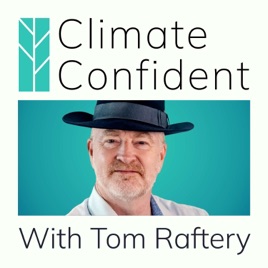
Climate Confident

Advertise on podcast: Climate Confident

Rating
★★★★★
5
from
25 reviews
This podcast has
271 episodes
Language
English
Publisher
Tom Raftery
Explicit
No
Date created
2020/09/07
Latest episode
2026/04/22
Average duration
37 min.
Release period
6 days

Description

Climate Confident is the podcast for business leaders, policy-makers, and climate tech professionals who want real, practical strategies for cutting emissions and building a resilient low-carbon future. Every Wednesday at 7am CET, I sit down with the people doing the work, executives, engineers, scientists, founders, and policymakers, to unpack what’s actually driving climate progress across energy, transport, industry, supply chains, food, finance, and more. This isn’t about vague pledges or greenwash. It’s about what’s working, what isn’t, and what leaders need to understand now to make better decisions faster. Expect conversations on: scalable solutions in energy, mobility, food, industry, and financethe politics, markets, and policies shaping the transitionthe technologies and tools improving climate accountability, resilience, and risk managementhard truths, hidden bottlenecks, bold ideas, and real-world success storiesSubscribers also get Bonus episodes, including highlight reels, analysis, emerging themes I’m seeing across conversations, and other subscriber-only extras. You can still listen to the most recent episodes for free, and if you want to go deeper, subscription gives you more Climate Confident in your feed. Want to shape the conversation? Drop me a line anytime at [email protected], whether it’s feedback, a guest suggestion, or just a hello. Ready to stop doomscrolling and start climate-doing? Hit follow and let’s get to work.

Unlock Climate Confident podcast Email contact info,
Listeners & Audience details

Email contact information

Direct podcast contact details

Listeners

Audience numbers & engagement insights

Audience details

Podcast Insights

Podcast episodes

Check latest episodes from Climate Confident podcast


As Grids Get Cleaner, Building Materials Become the Real Climate Problem
2026/04/22
Send me a message Concrete alone accounts for around 7-8% of global emissions. So what happens when the real climate problem in buildings is no longer just energy, but the materials themselves? In this episode of Climate Confident, I’m joined by Alexander Sexsmith, architect and founder of Sexsmith Architects, to unpack what regenerative architecture means when stripped of the fluff. We look at the climate challenge hiding in plain sight across the built environment: embodied carbon, toxic materials, weak resilience, and the fact that standard construction often performs badly when fire, water, and heat hit. If we’re serious about decarbonisation, net zero, and the energy transition, this matters now. You’ll hear why cleaner grids are changing the climate maths for buildings, and why materials like concrete, petrochemical foams, and conventional drywall deserve a lot more scrutiny. We dig into how fast-grown bio-based materials such as hemp, straw, and cork could cut emissions reduction timelines, improve indoor air quality, and strengthen resilience. And you might be shocked to learn that some of the materials people still dismiss as fringe are already proving themselves on fire performance and commercial-scale construction. We also get into the harder bit: scale. Cost, code, skills, supply, consumer awareness, and policy all matter. Because climate tech alone won’t fix construction unless markets, standards, and incentives move with it. 🎙️ Listen now to hear how Alexander Sexsmith and Sexsmith Architects are rethinking climate tech, decarbonisation, policy, and resilient design in the race to cut emissions from the built environment. Sign up to Climate Confident+ for deep dive analysis of the major climate and energy stories of the day. Support the show Podcast subscribers I'd like to sincerely thank this podcast's amazing subscribers: Anita KrajncCecilia SkarupaBen GrossJerry SweeneyAndreas WernerStephen CarrollRoger ArnoldAnd remember you too can Subscribe to the Podcast  - it is really easy and hugely important as it will enable me to continue to create more excellent Climate Confident episodes like this one, as well as give you access to the entire back catalog of Climate Confident episodes. Contact If you have any comments/suggestions or questions for the podcast - get in touch via direct message on LinkedIn.  If you liked this show, please don't forget to rate and/or review it. It makes a big difference to help new people discover the show.
Most Food Waste Never Reaches a Plate
2026/04/15
Send me a message What if one of the most effective climate tech moves in hospitality isn’t flashy at all, but simply wasting less food with far better data? In this episode, I’m joined by Olaf van der Veen, co-founder of Orbisk, to unpack a climate tech story that sits right at the intersection of decarbonisation, operational control, and the energy transition. We talk about food waste, but this is bigger than leftovers. It’s about hidden system failure, margin pressure, emissions reduction, and why cutting waste may be one of the most practical net zero levers available to commercial kitchens right now. You’ll hear why food waste in restaurants, hotels, cruise ships, and corporate dining is often less about bad habits and more about broken forecasting, poor process design, and weak visibility. We dig into how Orbisk uses AI, computer vision, and IoT to show kitchens exactly what is being wasted, when, and why, and how that turns a vague sustainability ambition into something measurable and fixable. You might be shocked to learn how often the real losses happen before food ever reaches a plate. We also get into the harder-edged business case: why food waste is pure bottom-line loss, why economics still drive most action faster than policy, and how the smartest operators are linking profitability and sustainability instead of pretending they sit on opposite sides of the ledger. No fluff. No green gloss. Just real-world climate solutions that cut costs, improve control, and reduce emissions. 🎙️ Listen now to hear how Olaf van der Veen and Orbisk are turning food waste into a serious climate tech and decarbonisation opportunity. Sign up to Climate Confident+ for deep dive analysis of the major climate and energy stories of the day. Support the show Podcast subscribers I'd like to sincerely thank this podcast's amazing subscribers: Anita KrajncCecilia SkarupaBen GrossJerry SweeneyAndreas WernerStephen CarrollRoger ArnoldAnd remember you too can Subscribe to the Podcast  - it is really easy and hugely important as it will enable me to continue to create more excellent Climate Confident episodes like this one, as well as give you access to the entire back catalog of Climate Confident episodes. Contact If you have any comments/suggestions or questions for the podcast - get in touch via direct message on LinkedIn.  If you liked this show, please don't forget to rate and/or review it. It makes a big difference to help new people discover the show.
The Infrastructure Was Built for the Climate We Had. Not the Climate We’re Getting
2026/04/08
Send me a message Heat is becoming a business risk in plain sight. And if cooling demand is set to soar, the energy transition has a problem most people still aren’t talking about. In this episode, I’m joined by Rob Atkin, co-founder and CEO of Pirta, a climate tech company developing passive cooling coatings and additives. We dig into a part of decarbonisation and the energy transition that gets far too little attention: how we keep buildings, warehouses, data centres, and infrastructure cool in a warming world without driving up electricity demand, emissions, and cost.  You’ll hear why Rob says “sustainability doesn’t sell itself”, and why that blunt truth matters for every founder, policymaker, and business leader chasing net zero. We dig into how Pirta is trying to turn passive cooling from clever materials science into something customers will actually buy, deploy, and scale. And you might be surprised to learn that air conditioning already accounts for about 15% of global electricity demand, with that figure set to triple by 2050.  We also get into the hidden role of titanium dioxide, why reducing it matters for emissions reduction, and where passive cooling could have the biggest impact first, from affordable housing to warehouses to AI-era data centres.  One of the sharpest insights in this conversation is that some climate solutions win not because they sound noble, but because, as Rob puts it, “a paint’s not gonna break down.” Grimly practical. Exactly the point.  🎙️ Listen now to hear how Rob Atkin and Pirta are pushing climate tech towards real-world adoption. Sign up to Climate Confident+ for deep dive analysis of the major climate and energy stories of the day. Support the show Podcast subscribers I'd like to sincerely thank this podcast's amazing subscribers: Anita KrajncCecilia SkarupaBen GrossJerry SweeneyAndreas WernerStephen CarrollRoger ArnoldAnd remember you too can Subscribe to the Podcast  - it is really easy and hugely important as it will enable me to continue to create more excellent Climate Confident episodes like this one, as well as give you access to the entire back catalog of Climate Confident episodes. Contact If you have any comments/suggestions or questions for the podcast - get in touch via direct message on LinkedIn.  If you liked this show, please don't forget to rate and/or review it. It makes a big difference to help new people discover the show.
Why Fossil Fuel Dependence Is a Terrible Business Model
2026/04/03
Send me a message What if fossil fuels aren’t just polluting, but a standing threat to economic stability? This episode makes the case that the energy transition is now as much about security and cost as it is about climate. In this solo Climate Confident+ episode, I dig into a brutal truth too many policymakers and business leaders still avoid: fossil fuels don’t merely drive emissions, they drive volatility, fragility, and geopolitical risk. At a moment when war, price shocks, and supply disruption are once again rattling global markets, I unpack why this matters for climate tech, decarbonisation, and the wider energy transition. You’ll hear why fossil dependence acts like “instability in a bottle”, and why renewables, storage, EVs, heat pumps, and grid upgrades are increasingly the smarter response, not just environmentally, but economically. We dig into how fuel shocks ripple through inflation, trade, competitiveness, and public finances. And you might be shocked to learn just how much fossil import dependence is still costing countries, businesses, and households, even before you count the pollution, health damage, and wider social harm. This is also a clear-eyed episode. I’m not pretending renewables solve everything by magic. We need grids, storage, flexibility, better policy, and faster deployment. But that’s precisely the point: those are infrastructure challenges we can solve. Perpetual exposure to volatile fossil fuels is not a strategy. It’s a liability. 🎙️ Listen now to hear why climate tech, policy, and electrification are becoming central to real-world decarbonisation, energy security, net zero, and long-term emissions reduction. Support the show Podcast subscribers I'd like to sincerely thank this podcast's amazing subscribers: Anita KrajncCecilia SkarupaBen GrossJerry SweeneyAndreas WernerStephen CarrollRoger ArnoldAnd remember you too can Subscribe to the Podcast  - it is really easy and hugely important as it will enable me to continue to create more excellent Climate Confident episodes like this one, as well as give you access to the entire back catalog of Climate Confident episodes. Contact If you have any comments/suggestions or questions for the podcast - get in touch via direct message on LinkedIn.  If you liked this show, please don't forget to rate and/or review it. It makes a big difference to help new people discover the show.
Carbon Markets as Outsourced Mitigation: Smart Climate Strategy or Convenient Fiction?
2026/04/01
Send me a message What if voluntary carbon markets are either a vital climate tool... or a polished excuse to delay real decarbonisation? In this episode of Climate Confident, I’m joined by Dr Jennifer Jenkins, Chief Science Officer at Rubicon Carbon, to unpack one of the most contested questions in climate tech and net zero strategy: what role, if any, should voluntary carbon markets play in real-world emissions reduction? At a time when companies are under pressure to decarbonise, prove integrity, and navigate fast-moving policy shifts, this debate matters more than ever. We dig into why some firms see carbon credits as a practical way to close the gap between ambition and operational reality, and why others see them as a dangerous distraction. You’ll hear why quality, additionality, MRV, and long-term offtake agreements are becoming central to the future of the market, and why high-integrity supply may be far tighter than many buyers realise. Jennifer also explains how buyers like Microsoft are shaping demand, how voluntary and compliance markets may be starting to converge, and why policy tools like CBAM could reshape the market faster than most people expect. You might be shocked to learn that one of the clearest ways to think about this space is as outsourced mitigation, a framing that makes the economics easier to grasp, but also exposes the credibility problem at the heart of the whole system. 🎙️ Listen now to hear how Jennifer Jenkins and Rubicon Carbon see the future of decarbonisation, climate tech, policy, and net zero. Sign up to Climate Confident+ for deep dive analysis of the major climate and energy stories of the day. Support the show Podcast subscribers I'd like to sincerely thank this podcast's amazing subscribers: Anita KrajncCecilia SkarupaBen GrossJerry SweeneyAndreas WernerStephen CarrollRoger ArnoldAnd remember you too can Subscribe to the Podcast  - it is really easy and hugely important as it will enable me to continue to create more excellent Climate Confident episodes like this one, as well as give you access to the entire back catalog of Climate Confident episodes. Contact If you have any comments/suggestions or questions for the podcast - get in touch via direct message on LinkedIn.  If you liked this show, please don't forget to rate and/or review it. It makes a big difference to help new people discover the show.
Why Turbine Shortages Could Slow AI, Data Centres, and Decarbonisation
2026/03/25
Send me a message AI may be booming, but the real bottleneck to it's growth may be turbines. And if firm power can’t scale fast enough, parts of the energy transition hit a wall. In this episode, I’m joined by Brad Hartwig, Co-founder and CEO of Arbor Energy, to unpack a part of the climate tech and energy transition story that gets far too little attention: the physical machinery needed to deliver reliable, round-the-clock power. Arbor is developing modular supercritical CO2 turbines with integrated carbon capture, aimed at tackling one of the hardest problems in decarbonisation: how to provide firm, scalable electricity while still driving emissions reduction and keeping net zero in view. We dig into why turbine shortages are becoming a serious constraint on hyperscale data centres, utilities, and industrial electrification, and you’ll hear why Brad believes this is now a critical choke point for both AI infrastructure and climate progress. You might be surprised to learn how stretched the traditional turbine supply chain has become, and why legacy manufacturers may be structurally mismatched to meet the moment. We also get into oxy-combustion, methane leakage, biomass, carbon sequestration, long-duration storage, and the awkward reality that wind, solar, batteries, and grid expansion, while essential, may still leave gaps when it comes to firm power. This is a grounded conversation about climate tech, policy, energy transition strategy, and what serious infrastructure thinking looks like when the easy slogans run out. 🎙️ Listen now to hear how Brad Hartwig and Arbor Energy are rethinking firm power for a faster, tougher, more honest climate transition. Sign up to Climate Confident+ for deep dive analysis of the major climate and energy stories of the day. Support the show Podcast subscribers I'd like to sincerely thank this podcast's amazing subscribers: Anita KrajncCecilia SkarupaBen GrossJerry SweeneyAndreas WernerStephen CarrollRoger ArnoldAnd remember you too can Subscribe to the Podcast  - it is really easy and hugely important as it will enable me to continue to create more excellent Climate Confident episodes like this one, as well as give you access to the entire back catalog of Climate Confident episodes. Contact If you have any comments/suggestions or questions for the podcast - get in touch via direct message on LinkedIn.  If you liked this show, please don't forget to rate and/or review it. It makes a big difference to help new people discover the show.
The Iran War, the Strait of Hormuz, and the Real Cost of Fossil Dependence
2026/03/20
Send me a message War doesn’t just kill people. It also blows up energy security, drives up emissions, and exposes fossil fuels for the liability they’ve always been. In this first Climate Confident+ bonus episode, available exclusively to subscribers, I unpack the unnecessary, illegal, and profoundly ill-advised war being waged by the US and Israel on Iran, and why its fallout matters far beyond the battlefield. This is not just a military crisis. It is an energy transition, climate tech, decarbonisation, and policy story with real consequences for emissions reduction, net zero, inflation, and industrial resilience. In this episode, I look at how attacks on energy infrastructure and disruption in the Strait of Hormuz have once again exposed the fragility of fossil-fuelled “energy security”.  You’ll hear why fossil dependence is no longer a security strategy, but geopolitical exposure. I dig into how roughly $88.7bn was burned in the first 17 days of the conflict, and why the Pentagon’s reported $200bn request to Congress shows just how grotesque the opportunity cost has become. We also dig into the emissions impact, including how gas shortages in India are already pushing parts of the economy back towards coal, kerosene, and biomass. And crucially, I lay out why electrification, renewables, storage, and stronger grids are now central to real energy security. Climate Confident+ is just €5, and gives you regular access to in-depth, timely analysis like this. 🎙️ Subscribe and listen now to hear why the clean energy transition is no longer just a climate imperative, but a resilience strategy. Support the show Podcast subscribers I'd like to sincerely thank this podcast's amazing subscribers: Anita KrajncCecilia SkarupaBen GrossJerry SweeneyAndreas WernerStephen CarrollRoger ArnoldAnd remember you too can Subscribe to the Podcast  - it is really easy and hugely important as it will enable me to continue to create more excellent Climate Confident episodes like this one, as well as give you access to the entire back catalog of Climate Confident episodes. Contact If you have any comments/suggestions or questions for the podcast - get in touch via direct message on LinkedIn.  If you liked this show, please don't forget to rate and/or review it. It makes a big difference to help new people discover the show.
Geothermal Isn’t Just HVAC. It’s Grid Infrastructure
2026/03/18
Send me a message What if one of the biggest climate problems in our buildings isn’t power generation, but the fact we’re still burning fuel in the basement? In this episode, I’m joined by Dan Yates, CEO of Dandelion Energy, to unpack why geothermal may be one of the most overlooked tools in climate tech today, and why building decarbonisation deserves far more attention in the wider energy transition debate. If we’re serious about net zero and real emissions reduction, we need to stop treating heating as a side issue.  Dan lays out a blunt truth: heating and cooling account for the vast majority of emissions from buildings, yet much of the conversation still fixates on EVs, solar, and batteries. You’ll hear why some forms of electrification can create a nasty unintended consequence by driving winter peak demand through the roof, and why geothermal flips that logic on its head. We dig into how ground-source systems can cut energy use, slash peak load, and potentially reduce the need for expensive new grid infrastructure.  You might be shocked to learn that this isn’t just an HVAC story. It’s a grid story. A policy story. A housing story. We also get into cost, leasing, incentives, data, and why Dan believes geothermal should be seen as distributed infrastructure hiding in plain sight. If you want a clearer view of what practical climate action looks like beyond the usual talking points, this one’s worth your time.  🎙️ Listen now to hear how Dan Yates and Dandelion Energy are pushing a smarter, more strategic path to decarbonisation. Sign up to Climate Confident+ for deep dive analysis of the major climate and energy stories of the day. Support the show Podcast subscribers I'd like to sincerely thank this podcast's amazing subscribers: Anita KrajncCecilia SkarupaBen GrossJerry SweeneyAndreas WernerStephen CarrollRoger ArnoldAnd remember you too can Subscribe to the Podcast  - it is really easy and hugely important as it will enable me to continue to create more excellent Climate Confident episodes like this one, as well as give you access to the entire back catalog of Climate Confident episodes. Contact If you have any comments/suggestions or questions for the podcast - get in touch via direct message on LinkedIn.  If you liked this show, please don't forget to rate and/or review it. It makes a big difference to help new people discover the show.
Why Science Alone Won’t Deliver Climate Action
2026/03/11
Send me a message What if the real barrier to climate action isn’t a lack of science, but a lack of pressure? And what happens when climate risk collides with political instability, fossil fuel dependence, and public anger in real time? In this episode, I’m joined by Professor Dana Fisher of American University, author of Saving Ourselves and one of the sharpest thinkers on climate activism, policy, and public mobilisation. We get into what she calls apocalyptic optimism: being brutally honest about the scale of the climate crisis, the democratic backsliding around it, and the need to act anyway. Because the stakes now are painfully clear. Emissions are still rising, climate impacts are becoming impossible to ignore, and the push for decarbonisation is being slowed by vested interests just as the cost of delay keeps rising. You’ll hear why Dana argues that science is necessary but insufficient for decision-making, and why public pressure is so often the real driver of climate policy, decarbonisation, and net zero progress. We dig into how repression can backfire, why climate shocks can shift public opinion, and why attempts to slow climate action may end up intensifying the response instead. We also explore why this conversation feels especially urgent now. As conflict, energy insecurity, and policy disruption expose the fragility of fossil fuel dependence, the case for clean energy starts to look less like idealism and more like common sense. From balcony solar to broader questions of power, protest, and public pressure, this episode looks at why the energy transition is about far more than technology. It’s about resilience, accountability, and who gets heard when the system is under strain. Dana's newsletter is at: https://danarfisher.com/apocalyptic-optimist/ And you can find her TED talk at: https://go.ted.com/danarfisher  🎙️ Listen now to hear how Dana Fisher reframes climate action, public pressure, and the real forces that move decarbonisation forward. Sign up to Climate Confident+ for deep dive analysis of the major climate and energy stories of the day. Support the show Podcast subscribers I'd like to sincerely thank this podcast's amazing subscribers: Anita KrajncCecilia SkarupaBen GrossJerry SweeneyAndreas WernerStephen CarrollRoger ArnoldAnd remember you too can Subscribe to the Podcast  - it is really easy and hugely important as it will enable me to continue to create more excellent Climate Confident episodes like this one, as well as give you access to the entire back catalog of Climate Confident episodes. Contact If you have any comments/suggestions or questions for the podcast - get in touch via direct message on LinkedIn.  If you liked this show, please don't forget to rate and/or review it. It makes a big difference to help new people discover the show.
Fashion’s 10% Emissions Problem, And the Utilisation Fix
2026/03/04
Send me a message What if the biggest climate lever in fashion isn’t better materials, but simply wearing clothes longer? The fashion industry accounts for roughly 10% of global carbon emissions and 20% of industrial water pollution. In this episode of Climate Confident, I’m joined by Phoebe Tan, co-founder of Taelor, a menswear rental subscription service using AI-driven styling and real-world garment data to rethink how we consume clothing. The challenge isn’t just fabric choice. It’s overproduction, underutilisation, and a system optimised for churn instead of longevity. We dig into how rental models can increase garment utilisation and reduce emissions by extending lifecycle wear. You’ll hear why durability data, wear rates, damage rates, wash cycles, may be more powerful than sustainability marketing. Phoebe explains how Taelor feeds performance insights back to brands, effectively becoming a live testing lab for quality and circularity. And we explore a hard truth: convenience often drives behaviour change faster than climate messaging ever will. If net zero requires rethinking consumption systems, fashion is a revealing case study. This isn’t about trends. It’s about utilisation density, supply chain feedback loops, and whether circular fashion can scale beyond a niche audience. 🎙️ Listen now to hear how Phoebe Tan and Taelor are challenging overproduction and pushing practical decarbonisation in climate tech and the energy transition. Sign up to Climate Confident+ for deep dive analysis of the major climate and energy stories of the day. Support the show Podcast subscribers I'd like to sincerely thank this podcast's amazing subscribers: Anita KrajncCecilia SkarupaBen GrossJerry SweeneyAndreas WernerStephen CarrollRoger ArnoldAnd remember you too can Subscribe to the Podcast  - it is really easy and hugely important as it will enable me to continue to create more excellent Climate Confident episodes like this one, as well as give you access to the entire back catalog of Climate Confident episodes. Contact If you have any comments/suggestions or questions for the podcast - get in touch via direct message on LinkedIn.  If you liked this show, please don't forget to rate and/or review it. It makes a big difference to help new people discover the show.
You Can’t Photograph CO₂: The Visual Bias Distorting the Energy Transition
2026/02/25
Send me a message Coal produces 4,000–8,000x more waste per MWh than wind. But you can’t take a photo of CO₂, so we ignore it. In this episode, I’m joined by climate futurist and long-term decarbonisation modeller Michael Barnard. We cut through headlines to examine where the energy transition is actually heading - from electrification and maritime shipping to mass timber, industrial relocation, and grid efficiency. The stakes? Whether we build a cheaper, cleaner energy system, or cling to fossil-era assumptions. You’ll hear why electrifying everything could cut primary energy demand by up to half. We dig into how 40% of global shipping may simply disappear as fossil fuel trade declines. And you might be shocked to learn why solar panels and wind turbines create thousands of times less waste per MWh than coal, yet attract far more outrage. We also explore how cheap renewables are reshaping industrial geography, why Spain’s sunshine could outcompete former gas hubs, and how making electricity cheaper than fossil fuels changes everything. Interestingly, Seville’s iconic wooden “Setas” isn’t just architecture, it’s proof that mass timber can replace steel and concrete at scale, locking carbon into buildings instead of the atmosphere. This is climate tech grounded in physics, economics, and human behaviour, not hype. 🎙️ Listen now to hear how Michael Barnard reframes decarbonisation, net zero, and the real trajectory of the energy transition. Sign up to Climate Confident+ for deep dive analysis of the major climate and energy stories of the day. Support the show Podcast subscribers I'd like to sincerely thank this podcast's amazing subscribers: Anita KrajncCecilia SkarupaBen GrossJerry SweeneyAndreas WernerStephen CarrollRoger ArnoldAnd remember you too can Subscribe to the Podcast  - it is really easy and hugely important as it will enable me to continue to create more excellent Climate Confident episodes like this one, as well as give you access to the entire back catalog of Climate Confident episodes. Contact If you have any comments/suggestions or questions for the podcast - get in touch via direct message on LinkedIn.  If you liked this show, please don't forget to rate and/or review it. It makes a big difference to help new people discover the show.
AI Energy Demand, Grid Constraints & Decarbonisation
2026/02/18
Send me a message AI’s energy demand isn’t a future problem. It’s straining grids today. And most companies aren’t ready. In this episode, I’m joined by Beatrice Clark, Vice President of Sustainability and Social Impact at Turtle and Hughes, a North American electrical distributor and systems integrator working at the sharp edge of the energy transition. We unpack what surging AI and data centre growth means for infrastructure, resilience, and real-world decarbonisation - not in theory, but on the ground. You’ll hear why energy demand from AI is now “on the tip of everybody’s tongue”, and how utilities and independent producers are scrambling to keep up. We dig into the tension between diesel reliability and microgrid ambition, and why hybrid redundancy may be the uncomfortable truth of the transition. You might be surprised to learn how fleet electrification looks when you’re moving heavy loads across unpredictable routes. It’s not ideology. It’s maths, logistics, and physics. We also explore double materiality, Scope 3 collaboration, and why sustainability only works when it strengthens operational performance. Net zero isn’t achieved in PowerPoint. It’s delivered through infrastructure, policy, and accountability across the value chain. If you care about climate tech, grid transformation, emissions reduction, and what decarbonisation actually looks like inside energy-intensive businesses, this conversation cuts through the noise. Listen now to hear how Beatrice Clark and Turtle and Hughes are navigating the hard realities of the energy transition. Sign up to Climate Confident+ for deep dive analysis of the major climate and energy stories of the day. Support the show Podcast subscribers I'd like to sincerely thank this podcast's amazing subscribers: Anita KrajncCecilia SkarupaBen GrossJerry SweeneyAndreas WernerStephen CarrollRoger ArnoldAnd remember you too can Subscribe to the Podcast  - it is really easy and hugely important as it will enable me to continue to create more excellent Climate Confident episodes like this one, as well as give you access to the entire back catalog of Climate Confident episodes. Contact If you have any comments/suggestions or questions for the podcast - get in touch via direct message on LinkedIn.  If you liked this show, please don't forget to rate and/or review it. It makes a big difference to help new people discover the show.
Designing Buildings for a Climate That No Longer Exists
2026/02/11
Send me a message What if the biggest mistake in climate action is that we’re still designing buildings for a climate that no longer exists? In this episode of the Climate Confident Podcast, I’m joined by David Sellers, principal architect at Hawaii Offgrid Architecture & Engineering. David designs net-zero and off-grid buildings on Maui, not as an experiment, but because the climate he’s designing for is already shifting. Faster than most regulations, models, or assumptions can keep up. Buildings account for a huge share of global emissions, energy demand, and climate risk. Get the design wrong today, and we lock in higher emissions, higher costs, and lower resilience for decades. This conversation is about how to stop doing that. We dig into why designing with historical climate data is quietly undermining net zero goals, and why buildings completed today will spend most of their lives in a climate no human has experienced before. David explains how shifting wind patterns, rising temperatures, water scarcity, and fire risk are already breaking “best practice” design rules. You’ll hear why off-grid no longer means uncomfortable or compromised, and how advances in solar, batteries, heat pumps, and building envelopes have changed the economics completely. We also talk about fire-resistant construction after the Lahaina fires, reusing waste surfboard foam to create ultra-insulated building blocks, and why resilience that only the wealthy can afford isn’t resilience at all. This is a grounded, experience-driven look at climate tech, decarbonisation, and the energy transition, without the fantasy timelines or glossy nonsense. 🎙️ Listen now to hear how David Sellers is rethinking buildings for a future climate we can no longer ignore. Sign up to Climate Confident+ for deep dive analysis of the major climate and energy stories of the day. Support the show Podcast subscribers I'd like to sincerely thank this podcast's amazing subscribers: Anita KrajncCecilia SkarupaBen GrossJerry SweeneyAndreas WernerStephen CarrollRoger ArnoldAnd remember you too can Subscribe to the Podcast  - it is really easy and hugely important as it will enable me to continue to create more excellent Climate Confident episodes like this one, as well as give you access to the entire back catalog of Climate Confident episodes. Contact If you have any comments/suggestions or questions for the podcast - get in touch via direct message on LinkedIn.  If you liked this show, please don't forget to rate and/or review it. It makes a big difference to help new people discover the show.
Why Heat Pumps, Not Cars, Will Cut Urban Emissions Fastest
2026/02/04
Send me a message Heating cities by opening windows is not a joke. It’s how many buildings still control temperature in winter, and it’s a climate disaster hiding in plain sight. In this episode, I’m joined by Drew Maggio, Technical Director at Highmark Building Efficiency, to unpack why buildings are one of the biggest, most underestimated levers in the climate transition, especially in dense cities like New York. Buildings account for roughly 70% of New York City’s emissions, yet much of the stock was designed for an era of cheap fossil fuels, crude controls, and worst-case thinking. Drew works at the sharp end of fixing that. We talk about what actually breaks when you try to electrify old buildings, and why bad assumptions, not bad technology, are slowing progress. You’ll hear why oversizing heat pumps for rare freezing days drives up costs and kills projects. We dig into how treating heat as a resource, not waste, unlocks massive gains, from wastewater heat recovery to capturing subway heat that currently just bakes tunnels to 100º F. And you might be surprised by how much energy can be recovered before it ever leaves a building. We also get into Local Law 97, New York’s landmark building emissions regulation, and why it’s forcing real-world change instead of glossy pledges. This is a grounded, practical conversation about decarbonisation, climate tech, policy, and the uncomfortable reality that many “heritage” systems are simply uncontrolled systems we’ve tolerated for too long. 🎙️ Listen now to hear how to turn building decarbonisation from a compliance headache into a genuine climate solution. Sign up to Climate Confident+ for deep dive analysis of the major climate and energy stories of the day. Support the show Podcast subscribers I'd like to sincerely thank this podcast's amazing subscribers: Anita KrajncCecilia SkarupaBen GrossJerry SweeneyAndreas WernerStephen CarrollRoger ArnoldAnd remember you too can Subscribe to the Podcast  - it is really easy and hugely important as it will enable me to continue to create more excellent Climate Confident episodes like this one, as well as give you access to the entire back catalog of Climate Confident episodes. Contact If you have any comments/suggestions or questions for the podcast - get in touch via direct message on LinkedIn.  If you liked this show, please don't forget to rate and/or review it. It makes a big difference to help new people discover the show.
How Long-Duration Storage Makes Clean Energy Reliable
2026/01/28
Send me a message Europe is drowning in cheap clean power, and still wasting it. The problem isn’t renewables. It’s what happens when the grid can’t cope with abundance. In this episode of the Climate Confident Podcast, I’m joined by Oonagh O’Grady, Vice President of International Origination at Hydrostor, a global leader in long-duration energy storage. We dig into one of the most under-discussed blockers of the energy transition: what happens after wind and solar scale, but before the grid is ready. Oonagh explains why short-duration batteries, while essential, aren’t enough once renewables reach 40–50% of the system. We unpack why grids are hitting curtailment, negative pricing, and instability, and why eight to twenty-four hours of long-duration energy storage is fast becoming the backbone of a reliable, net-zero power system. You’ll hear why advanced compressed air energy storage can deliver fossil-free, utility-scale flexibility for decades, how it compares with batteries and pumped hydro on cost and performance, and why inertia and grid stability are suddenly back in the spotlight after recent European outages. We also get into the policy side: what leading regions like California, Australia, and the UK are getting right, and what Europe must do now if it wants secure, affordable, decarbonised electricity in the 2030s. This is a grounded, evidence-led conversation about climate tech that actually works at scale - and a reminder that without long-duration storage, the energy transition stalls just when it should be accelerating. 🎙️ Listen now to hear how Hydrostor and long-duration energy storage can unlock the next phase of the energy transition. Sign up to Climate Confident+ for deep dive analysis of the major climate and energy stories of the day. Support the show Podcast subscribers I'd like to sincerely thank this podcast's amazing subscribers: Anita KrajncCecilia SkarupaBen GrossJerry SweeneyAndreas WernerStephen CarrollRoger ArnoldAnd remember you too can Subscribe to the Podcast  - it is really easy and hugely important as it will enable me to continue to create more excellent Climate Confident episodes like this one, as well as give you access to the entire back catalog of Climate Confident episodes. Contact If you have any comments/suggestions or questions for the podcast - get in touch via direct message on LinkedIn.  If you liked this show, please don't forget to rate and/or review it. It makes a big difference to help new people discover the show.

Podcast reviews

Read Climate Confident podcast reviews


5 out of 5
25 reviews
★★★★★
shellfish biologist 2022/03/10
Fascinating podcast! Highly recommend
I discovered this podcast in late 2021 and it’s become my go-to. There’s so many stories here that have to do with hope, technology, economy, humans a...
★★★★★
Pauls mini 2021/07/23
Great sustainability blog
Really appreciate the breadth of your guests experiences. Keep up rhe great work!
★★★★★
perchpod 2021/07/23
Great podcast
Excellent podcast on the most critical issue of our time. Tom is an excellent and insightful host.
★★★★★
kadeche 2021/07/23
Love Tom and his provocative POV
Tom is a leading expert in making connections across technology, innovation, the climate emergency, and global supply chains. If you’re curious about ...
★★★★★
Scrlvr535 2021/03/11
Excellent interviews at intersection of climate, energy, and business
Glad that I learned of and put Climate 21 on the list of podcasts for listening to on long walks. The intersection of climate, energy, tech, business ...
check all reviews on apple podcasts

Podcast sponsorship advertising

Start advertising on Climate Confident relevant audience podcasts


What do you want to promote?