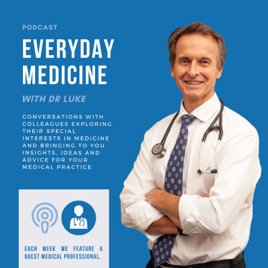
Advertise on podcast: Everyday Medicine with Dr Luke
This podcast has
202 episodes
Language
EnglishPublisher
Dr Luke CrantockExplicit
No
Date created
2020/09/14
Latest episode
2026/01/27
Average duration
37 min.
Release period
21 days
Description
Conversations with colleagues exploring their special interests in medicine and bringing to you Insights, ideas and advice for your medical practice.
Unlock Everyday Medicine with Dr Luke podcast Email contact info,
Listeners & Audience details
Email contact information
Direct podcast contact details

Listeners
Audience numbers & engagement insights

Audience details
Podcast Insights

Podcast episodes
Check latest episodes from Everyday Medicine with Dr Luke podcast
Episode 185 - Pandemics - A Repeating History with Dr Robert M Kaplan
2026/01/27
A pandemic is defined as a new disease or new strain of an existing disease spreading worldwide. An ‘outbreak’ refers to a localised epidemic – something that affects hundreds, sometimes thousands; an ‘epidemic’ refers to an illness or infection that is in excess of normal, and ‘pandemic’ is an epidemic that occurs over a very wide area, crosses international boundaries, and touches thousands or millions.
The enormous health and financial impacts of epidemics and pandemics are made worse through human foibles like fear, denial, panic, complacency, hubris, and self-interest. Experts advise we can end epidemics by facing up to them and by applying concrete actions ensuring, building resilient health systems, fortifying 3 lines of defence against disease including prevention detection and response, and ensuring timely and accurate communication, investing in smart innovation and spending wisely to prevent disease before an epidemic strikes.
Pandemics have far reaching effects as we have recently witnessed with Covid -19, and I was curious to reflect on the way we responded to this threat as a community from the psychological perspective. Humans have had to respond to many pandemics over the course of recoded history, notably the so-called black plagues or black death spread by rats carrying yersinia pestis infected fleas hidden within their pelt.
A series of black death pandemics dramatically and profoundly affected European and Middle Eastern populations both in the 6–8th century plague of Justinian and 14th–19th century, killing up to half the local population (over 100 million people), but paradoxically bringing about cultural and economic renewal.
Before this was a deadly smallpox pandemic called the Antonine Plague during the time of Marcus Aurelius around 160–180 AD, killing an estimated 25–30 % of the Roman population and no doubt far more through Eurasia (between and 5 and 20 million). In the 16 th century between 1545 and 1548, the so called Cocoliztli epidemic in Mexico and Central America, caused by an unidentified pathogen, reportedly killed 5–15 million.
Fast forward to 1918 – Spanish Flu caused by influenza H1N1 with between 17–100 million dead, the HIV epidemic responsible for approximately 44 million deaths with fortunately treatments now available, and not forgetting bird flu and swine flu, our most recent pandemic experience with Covid 19 claiming 7–36 million lives.
When I came across Dr Robert Kaplans excellent article in the May edition of the GUT REPUBLIC discussing pandemics and the often-flawed human response where fear, emotion and disinformation easily crowd perspective, I was keen to invite him to talk on this subject on Everyday Medicine.
Rob is a forensic psychiatrist and clinical associate professor at Western Sydney University, as well as a keen historian and author with a sharp wit and eye for the arcane. His latest book is The King who Strangled his Psychiatrist and Other Dark Tales, but he also has a deep catalogue of publishing including the books Medical Murder: Disturbing tales Of Doctors Who Kill and The Exceptional Brain and How It Changed the World amongst others.
He is a sort after speaker and key thinker in forensic psychiatry and serves on the Professional Advisory Panel Victim’s Services. Please welcome Rob to the Podcast.
References
Dr Robert Kaplan: www. rkaplan.com.au
The End Of Epidemics. Dr Jonathan D Quick. Scribe Publications 2018The Little Book of History. www.dk.com Wikipedia
Podcast 184. Memory with Dr Natalie Grima
2025/12/16
Memory is the cognitive process of acquiring, storing and retrieving information. It's the mind's ability to encode, store and recall experiences and knowledge, allowing for learning, adaptation, and the formation of personal identity. There are different types of memory, including short-term memory, where information is held briefly and long-term memory, where information is held for extended periods. There is sensory memory where information relating to senses such as sight, sound and smell are retained, explicit memory recalling memories or facts and events and implicit memory that influences our behaviour without conscious awareness; for example, like riding a bike or driving your car.
Memory storage involves multiple brain regions, but the hippocampus is crucial for forming new memories, especially long-term memories and acts as a gateway for encoding and consolidating memories. The cerebral cortex and prefrontal cortex also participate in memory storage and retrieval.
Without memory, our enjoyment of life’s wonderful pleasures and diversity is severely compromised. Unfortunately, memory loss is also a key feature of dementia and is often cited as an early clinical marker of cognitive decline in a patient who is starting to have difficulty coping with the complexity of life, their medication schedule, shopping lists and daily tasks.
I was curious to understand how we may improve and maintain our own memories whilst also providing advice in terms of exercises that may benefit our patients coping with early cognitive decline. The history of memory recall starts in Greece with Simonides of Ceos in ~500 BC. Simonides is credited with developing the ‘method of loci’ or ‘room method ‘of memory recall after an earthquake collapsed the roof at a banquet he had just attended, killing all inside. Relying on his visual memory, he was able to accurately identify the corpses by precisely recalling their seating arrangements as he had noticed them while he was reciting poetry to the guests. This method, now popularised by many teaching memory techniques, highlights the value of linking things we need to remember together to enhance their recall. It is also interesting that memory for music and songs is often retained until late in cognitive decline.
In an attempt to explore the ideas behind the complex subject of memory in more detail, it was an honour to have Dr Natalie Grima accept an invitation for the podcast. Natalie is a clinical neuropsychologist based in Melbourne and the founder of Neuro Psychological Counselling Australia. She is a senior clinical neuropsychologist at Monash Health and has published widely, completing her doctorate at Monash University and undertaking advanced clinical training at Harvard Medical School. Natalie has a special interest in the diagnosis of dementia, psychiatric conditions and cognitive rehabilitation following acquired brain injuries. She also has an expert knowledge on the subject of memory. Please welcome her to the podcast.
References:
Dr Natalie Grima: www.neuropychconsulting.com.au
https://mocacognition.com/
Simonides of Ceos-Wikipedia
Episode 183. Obesity Redefined with Dr Melissa Beitner
2025/11/20
Obesity has reached crisis levels in Australia, with 67% of Australians classified as being overweight or obese (2022 data). BMI measurements have been used in epidemiological studies to define overweight individuals with a measurement of 25 kilograms per metre squared and obese individuals with a BMI measurement of more than 30 kilograms per metre squared. It is now recognised, however, that BMI-based measures of obesity may both underestimate or overestimate adiposity and provide inadequate information about health at the individual level and subsequently undermine medically sound approaches to healthcare and policy. A recent Commission of 58 experts in this field reported a consensus in The Lancet defining obesity as "a condition characterised by excess adiposity, with or without abnormal distribution or function of adipose tissue and with causes that are multifactorial and still incompletely understood". They subsequently teased out the diagnosis of obesity to include preclinical and clinical definitions, where:
Pre-clinical obesity is defined by excess fat accumulation as measured by direct means with DEXA or indirect anthropometric measurements such as waist to height, waist circumference or waist to hip ratio measurement. This group of patients have no clinical disease or end-organ damage or symptoms as yet, but an increased risk of developing clinical obesity and conditions such as type 2 diabetes, cardiovascular disease and some neoplasms. The treatment focus in this group includes counselling and the introduction of measures to prevent progression to the next subgroup, which is clinical obesity.
Clinical Obesity is defined as a chronic, systemic illness characterised by alterations in the function of tissues, organs, the entire individual, or a combination thereof, due to excess adiposity. Clinical obesity can lead to severe end-organ damage, causing life-altering and potentially life-threatening complications. The main focus of management for this cohort is to improve end-organ dysfunction as a priority rather than to focus on weight loss alone. Treatment options include lifestyle modification through diet and counselling, and rely on established pharmacology such as GLP-1 receptor agonists, which are likely to be used as a long-term treatment strategy. For a select number of patients, however, these medications can induce nausea, vomiting, diarrhoea, constipation and reflux. In more serious cases gastro paresis and pancreatitis are described. Non-responsiveness and high cost may be a limiting factor amongst some patients. Consequently, surgery remains the cornerstone for safely and effectively managing obesity and includes both gastric sleeve and bypass operations.
To discuss this new definition of obesity and approach to thinking about obesity, as well as to review surgical options, I was curious to open a discussion with Dr Melissa Beitner. Melissa is a fellow of The Royal Australasian College of Surgeons; she is American Board of Surgery certified, a fellow of the American Society of Metabolic and Bariatric Surgery and is a diplomat of the American Board of Obesity Medicine. Melissa is incredibly well credentialed, having undertaken bariatric surgery fellowships at Mount Sinai Hospital in New York, Royal Brisbane and Women's Hospital and St. George Hospital, Sydney. She has special areas of interest in bariatric surgery and obesity medicine, and is also highly skilled in hiatus hernia and anti-reflux surgery, cholecystectomy and general surgical removal of lumps and bumps. Please welcome Meissa to the podcast.
References:
Dr Beitner, Weight Loss Solutions: www.360surgery.com.au
Definition and Diagnostic Criteria of Clinical Obesity, F Rubino et al. The Lancet Diabetes and Endocrinology Commission. Vol 13, Issue 3, P221-262, March 2025
Episode 182. Molecular Pathology with Dr Pranav Dorwal
2025/10/28
Molecular pathology combines molecular analysis with traditional morphology and immunohistochemistry to understand disease at its most fundamental level. The field continues to evolve as new discoveries enter clinical practice.
Through molecular pathology, our knowledge of genetic mutations and targeted therapies has expanded. It is now rare for a tumour report to omit genetic findings. This discipline, while distant from daily clinical work, underpins treatment algorithms and prognostic models.
The ten hallmarks of cancer include: genome instability and mutation, resistance to cell death, sustained proliferative signalling, evasion of growth suppressors, replicative immortality, angiogenesis, invasion and metastasis, altered metabolism, tumour-promoting inflammation, and immune evasion.
Normal DNA contains proto-oncogenes that promote growth and tumour suppressor genes that restrain it. When balanced, they regulate healthy proliferation. Mutations in either disturb this balance, driving uncontrolled growth.
Germline mutations are inherited and present in every cell, while somatic mutations are acquired, often influenced by smoking, ultraviolet exposure, or diet. When proto-oncogenes mutate, they become oncogenes.
The RAS and BRAF oncogenes are key in molecular pathology. RAS controls upstream signalling that triggers cell growth, differentiation, and survival. Mutated RAS genes cause constant activation, leading to excessive signalling. The three RAS genes, HRAS, KRAS, and NRAS, are found in 20 to 25 percent of all human tumours and in 90 percent of pancreatic cancers. The BRAF gene, on chromosome 7, regulates downstream signalling and cell growth. BRAF mutations occur in about 10 percent of colorectal cancers, up to 50 percent of papillary thyroid cancers, and 27 to 67 percent of melanomas.
Other oncogenes include MYC, EGFR, and HER2. HER2 amplification is seen in some breast and ovarian cancers. These findings are vital as targeted treatments, such as JAK inhibitors and monoclonal antibodies, act on these pathways. A single mutation can activate an oncogene.
Tumour suppressor genes perform repair functions including correcting DNA mismatches, regulating the cell cycle, and promoting apoptosis. As telomeres shorten with age, mismatch repair errors increase. Mutated genes lose this ability, causing abnormal protein synthesis. Reports often describe mismatch repair proficient (no mutation) or mismatch repair deficient (mutation present), particularly in colon cancer.
Key tumour suppressor genes include BRCA1, BRCA2, and the Lynch syndrome genes MLH1, MSH2, MSH6, and PMS2. When mutated, they increase the risk of breast, ovarian, prostate, colon, uterine, and pancreatic cancers. While often inherited, mutations can also arise spontaneously or through epigenetic silencing. Each gene has two copies; both must be affected before suppression is lost. This two-hit hypothesis, proposed by Knudson in 1971, explains tumour development with ageing.
Methylation, sometimes noted in reports, refers to chemical modification of CpG (cytosine-phosphate-guanine) sites within a gene, often influenced by epigenetic factors. Abnormal methylation disrupts DNA repair, leading to failed tumour suppression.
This is a brief overview of a complex and evolving field.
Joining me is Dr Pranav Dorwal, Molecular and Anatomical Pathologist at Monash Health, also working in Diagnostic Genomics. Dr Dorwal is an examiner for molecular pathology, researcher, and author of over 60 publications. He has held positions at MD Anderson Cancer Center (Houston, USA) and Memorial Sloan Kettering Cancer Center (New York, USA), completed a fellowship at ANU Canberra, and received the Chancellor’s Gold Medal for Clinical Pathology.
Please welcome Dr Pranav Dorwal to the podcast.
References:
Dr Pranav Dorwal – www.monashhealth.org | www.genomicdiagnostics.com.auOncology at a Glance, Graham Dark, Wiley-Blackwellwww.pmc.ncbi.nlm.nih.gov
Episode 181. Ovarian Cancer with Professor Thomas Jobling
2025/10/06
Each year in Australia, there are about 1,800 new diagnoses of ovarian cancer and over 1,000 deaths, making ovarian cancer the fifth most common cause of death from cancer in women. The lifetime risk is about 1.6%, increasing to 5% if a first-degree relative is affected, and 45% and 25% respectively if the BRCA1 or BRCA2 mutation is present.
The median age of diagnosis is 63 years, with two-thirds of patients diagnosed at 55 years or older.
Histologically, tumour cells may arise from the outer epithelial lining cells of the ovary (60%), the germ cells (30%), or sex cord stromal cells (8%). Epithelial tumours of the high-grade serous type are now thought to spread to the ovarian surface after arising from secretory cells at the fimbria of the fallopian tubes, acquiring a TP53 mutation there before metastasising to the ovary as clinically evident ovarian cancer.
Serous carcinomas represent the vast majority of primary malignant ovarian tumours (75%–80%) and are composed of columnar cells with cilia. These tumours are subdivided into high-grade and low-grade serous carcinomas, which has particular relevance for BRCA-associated ovarian tumours.
As with many internal diseases, clinical presentation may be late, with vague pelvic discomfort giving way to pain and bloating, followed by more systemic symptoms as the disease advances.
The tumour marker CA 125 may only be elevated 50% of the time in early disease, rising to 80% in advanced cancer; however, false positives may occur with benign ovarian disease, leiomyomas, and endometriosis. As with tumour markers used in the follow-up of other cancers, its utility in screening and early diagnosis is limited.
The disease is advanced in 75% of cases at the time of diagnosis. Five-year survival is about 41% when local spread is detected, reducing to 30% or less with distant metastases, compared to 89% survival or above with early detection when the disease is localised.
Given the importance of this condition, I was curious to consult Professor Thomas Jobling once more on current practices of surveillance, approaches to detection and management, and how to manage risk in first-degree relatives. How should we approach an ovarian cyst found incidentally during abdominal imaging? What symptoms should we, as clinicians, be mindful of in triggering our suspicion to investigate further?
I know you will find this conversation with Professor Thomas Jobling interesting. Tom is a gynaecological oncologist, ex-AFL footballer, and medical researcher with a highly respected reputation in Melbourne and internationally. He has extensive experience with minimally invasive surgery, including robotic surgery, for gynaecologic cancer. His main research area is ovarian cancer, for which he received an Order of Australia Medal in 2017, and he is currently Head of Gynaecological Health and VMO at Peter MacCallum Hospital.
Please welcome Professor Jobling to the podcast.
References:
Professor Tom Jobling: [email protected]
Ovarian Cancer: Cancer Australia
Pathobiology of Ovarian Carcinomas, Chinese Journal of Cancer, 2016 Jan; 34
Ovarian Cancer Research Alliance: https://ocrahope.org/
Episode 180. Hyperbaric Oxygen Therapy with Dr Neil Banham
2025/09/15
On a recent vacation to Exmouth on Western Australia’s far North coast, home to the amazing Ningaloo National Park, I had the pleasure of meeting Anaesthetist and outdoor adventurer Dr Neil Banham.
I discovered that when Neil wasn’t kiteboarding, his daytime job was Director of Hyperbaric Medicine at Fiona Stanley Hospital in Perth.
Our conversation exposed my deep ignorance of the potential use of HBOT beyond the management of air and gas embolism and piqued my interest in the various conditions that ay assis
Hyperbaric Oxygen Treatment (HBOT) exposes an individual to near 100% oxygen inside a treatment chamber at pressures higher than sea level. For clinical purposes, the pressure must equal or exceed 1.4 atmospheres absolute (ATA). Most HBOT in Australasia is performed at 2 ATA.
HBOT was first used in the early 20th century and by the US Navy in the 1940s to treat decompression sickness (“the bends”). In the 1960s it was used for carbon monoxide poisoning, and its use has since expanded. There are currently 15 approved indications accepted by the Undersea and Hyperbaric Medical Society. These fall under urgent and non-urgent conditions, and the Medicare Benefits Schedule includes specific item numbers for many of them.
Urgent conditions include: air embolism, central retinal artery occlusion, carbon monoxide poisoning, clostridial myonecrosis (gas gangrene), compromised surgical grafts and flaps, crush injuries and compartment syndromes, acute arterial insufficiency, decompression sickness, intracranial abscess, necrotizing soft tissue infections, exceptional blood loss anaemia, specific acute thermal burns, and idiopathic sudden sensorineural hearing loss.
Non-urgent conditions include delayed radiation injuries (soft tissue or osteoradionecrosis). HBOT for radiation cystitis has proven effective in over 80% of cases in published literature. A typical course is 30 sessions (2.5 hours per day, five days a week for six weeks) – a significant commitment. HBOT is also indicated for radiation proctitis, chronic refractory osteomyelitis, and some problematic wounds such as grade 3–4 diabetic foot ulcers.
There is growing interest in its application in inflammatory bowel disease, including ulcerative colitis and Crohn’s disease. A recent systematic review and meta-analysis of 118 patients treated with HBOT for perianal fistulizing Crohn’s demonstrated clinical response and remission rates of 75% and 55% respectively, warranting further consideration. Several studies also show improvements using HBOT as adjunctive therapy for hospitalised ulcerative colitis flares, and its role here will be watched with interest.
Contraindications include untreated pneumothorax, uncontrolled hypertension, congestive cardiac failure with ejection fraction below 35%, claustrophobia, congenital spherocytosis, uncontrolled diabetes, chronic sinus conditions, and advanced emphysema (“blue bloater”). Other factors include avoiding disulfiram, which blocks superoxide dismutase, and doxorubicin.
As in every field of medicine, delving into specialty subjects highlights deep knowledge and expertise. With curiosity at a high, I was privileged to hold this conversation with Neil about practical issues of HBOT, how it works, and its value across many indications. There is much to learn and reflect on in relation to the clinical problems we face.
Please welcome Neil to the podcast.
References:Dr Neil Banham: [email protected] of hyperbaric oxygen therapy in patients with inflammatory bowel disease: Kaur et al. www.co-gastroenterology.comHyperbaric oxygen therapy for refractory perianal Crohn’s disease: Tome et al, Gastroenterology & Hepatology, Vol 20, Issue 4, April 2024Hyperbaric Patient Selection: DuBose et al: StatPearls, July 31, 2023. www.ncbi.nlm.gov/books
Episode 179. Oncology in General Practice with Dr Michael Fernando
2025/09/01
Cancer is one of the biggest health challenges worldwide. In 2021, about 15% of all deaths were cancer-related. In Australia, there are approximately 624 cases of cancer per 100,000 people, an incidence which has increased by about 7 % over 20 years, with an estimated 43 % of people being diagnosed by the age of 85 years. On a positive note, improved oncological medicine and care have reduced mortality by about 25 % which is very reassuring. The top ten cancers diagnosed in Australia, starting with the most common, are Prostate Cancer, followed by Breast Cancer, Melanoma, Colorectal Cancer, Lung Cancer, Non-Hodgkin Lymphoma, Kidney Cancer, Pancreatic Cancer, Thyroid Cancer and Uterine Cancer. From this group, deaths are more common with Lung Cancer, followed by Colorectal cancer and then Pancreatic and Breast cancer.
Often, a primary practitioner will make the diagnosis or suspect changes in his/her patient that lead to a diagnosis being established. Whilst most treatment regimens are initiated by Oncologists, radiotherapists or Surgeons, the primary practitioner is very frequently saddled with managing many of the day-to-day issues arising from therapy and the emotional trauma associated with cancer treatment. I was interested to explore oncology in general practice more with my colleague, Oncologist Dr Michael Fernando, who generously joins us today on the podcast. Michael is beginning his journey in medicine and brings a huge amount of compassion, maturity and enthusiasm with him. He also jointly runs a podcast called Oncology for the Inquisitive Mind, which has been very well received, and I strongly recommend it to you.
Please welcome Michael to the conversation.
References.
Dr Michael Fernando. Epping Specialist Group. www.eppingspecialistgroup.com
Oncology for the Inquisitive Mind: podcasts.apple.com
Episode 178. Uterine and Cervical Cancer with Professor Thomas Jobling
2025/08/18
Uterine cancer is the fifth most common cancer in females and the most common cancer of the female genital tract in Australia, with about 3,300 cases annually and 660 deaths. The major prevalence is in women between 50 and 70 years, and the quoted major risk factors include: early onset menarche and late menopause, obesity, nulliparity, unopposed oestrogen treatments, polycystic ovaries with prolonged anovulation, extended use of tamoxifen for breast cancer treatment and Lynch syndrome, which confers a 30 % lifetime incidence. Presenting with abnormal PV bleeding or prolonged post-menopausal bleeding, other presentations may include dyspareunia, pelvic pressure, weight loss, anaemia and in later stages, possibly pelvic pain. Whilst a PAP smear will frequently be negative, pelvic imaging revealing a suspicious endometrium and subsequently hysteroscopy and biopsy guide the diagnosis. Patients with more than 50 % myometrial invasion have a six-to-seven-fold higher prevalence of pelvic lymph node metastases and advanced surgical stage compared with women with less than 50 % invasion. With current management the five-year survival has improved over the past 40 years to 83 %.
In contrast to endometrial cancer, which has seen an increasing incidence since 1982 of about 0.9 % per year, Cervical cancer prevalence has reduced from 14 per 100,000 in 1982 to 7 per 100,000 in 2017, influenced by the introduction of the HPV vaccine Gardesil in 2007. Gardesil 9 is the HPV vaccine used in Australia’s National HPV Vaccination Program, providing 100 % protection against HPV strains 6,11,16,18,31,33,45,52 and 58, which are known to cause genital warts and cervical and other HPV -related cancers. Types 16 and 18 cause most of the HPV -associated cancers. This vaccine is recommended for all children aged 12 to 13 years and is free for all Australians aged 12 to 25 years. The vaccine is estimated to prevent up to 90% of cervical cancers and 96% of anal cancers.
I was fortunate in this podcast to have a conversation with Professor Thomas Jobling regarding the risks and management of endometrial and cervical cancer. Tom is a gynaecological oncologist, ex-AFL footballer and medical researcher with a very respected reputation in Melbourne and internationally. He has extensive experience with minimally invasive surgery, including robotic surgery, for gynaecologic cancer. His main research area is ovarian cancer for which he received an Order of Australia Medal in 2017, and he is currently Head of Gynaecological Health and VMO at Peter MacCallum Hospital.
Please welcome Professor Jobling to the podcast.
References :
Professor Tom Jobling: [email protected]
Endometrial Cancer Treatment-NCI
Endometrial Cancer-Cancer Australia
Episode 177. Sleep Hygiene with Josh Leota
2025/08/05
The pace of modern life may not give many of us the time to stop, rest and recover with a good night’s sleep, yet sleep is as important for good health as diet and exercise. Regular healthy sleep improves brain performance, mood and health. Poor sleep hygiene is associated with increased risk of heart disease, stroke, obesity, impaired immune and cognitive function.
Sleep consists of two distinct states as shown by EEG: REM sleep (rapid eye movement sleep), where dreaming occurs, and non-REM sleep, which is divided into 4 stages. Sleep is cyclical, with four or five REM periods during the night, accounting for about 1/4 of total sleep. Initial REM periods are shorter than later ones. During REM sleep, information is believed to be cemented into memory.
Stage 4 sleep is the deepest, during which blood pressure, heart rate and breathing slow, muscles relax, and both growth and repair processes are believed to occur. Stage 4 usually occurs in the first several hours of sleep. Variations in sleep may be due to shift work, travel or individual patterns. Creativity and responsiveness to unfamiliar situations are impaired by sleep loss.
Alcohol, smoking and stimulants such as caffeine, cold remedies and cocaine can reduce sleep time. Benzodiazepines tend to increase total sleep time with variable effects on non-REM sleep. Antidepressants tend to decrease REM sleep, with rebound on withdrawal in the form of nightmares.
For most adults, 7–9 hours of uninterrupted sleep is recommended — a little less for older adults and more (8–11 hours) for teenagers, with even more needed for infants and toddlers. Sleep dysfunction is common and includes short sleep (less than 6 hours for under 65s, or 5 hours for older adults), long sleep (longer than recommended), poor sleep quality (frequent waking, difficulty falling asleep), and disorders such as sleep apnoea, restless leg syndrome and insomnia.
Doctor-diagnosed sleep disorders affect about 1 in 5 adults, and 48% of adult Australians report at least two sleep-related problems. Up to 19% report not getting enough sleep. Shift workers (around 16% of the Australian workforce) are at higher risk, with 1 in 3 experiencing sleep disorders, including falling asleep at work and having a 60% higher risk of accidents compared to non-shift workers.
An Australian survey of 1,050 adults revealed that sleeping pills were being used by 37%, 14% were using melatonin, and the majority were taking a range of hypnotics, including benzodiazepines and non-benzodiazepine products (e.g. Zopiclone from the cyclopyrrolone group or orexin receptor antagonists).
I wondered if this high level of prescribing indicates that our general approach to advising patients on sleep should change in favour of promoting more natural ways of achieving sleep hygiene. To satisfy my curiosity and gain insights into healthy sleep patterns and how to achieve this naturally, we are joined by senior research scientist Josh Leota from Monash University’s School of Psychological Sciences.
Josh is actively involved in sleep research, especially regarding the effects of sleep on athletic performance, and is currently studying a cohort of elite female athletes competing locally and after travelling through time zones interstate. I was very pleased to welcome Josh to share smart insights into understanding sleep cycles, how poor sleep may impact health, and advice on achieving sleep without pharmacological assistance.
References:
Josh Leota, Research Fellow. School of Psychological Sciences, Monash University, 270 Ferntree Gully Rd, Notting Hill, Vic 3168
Sleep problems as a risk factor for chronic conditions: www.aihw.gov.au
https://www.nature.com/articles/s41467-025-58271-x
Episode 176. Death from the Feet Up with Mr Allan Abbott
2025/07/14
Falls in the elderly are associated with significant morbidity and, after a serious fall, indeed predict the transition within a year of 10-15% of seniors to long-term care facilities. Additionally, the one-year and three-year mortality for seniors is 16.4 % and 40.5% following a report of more than one fall in the past 3 months (about double the average). When a hip fracture complicates the fall, the all-cause mortality is three times higher than for the average population and as high as 27% in one year in some studies.
Many factors are at play in the deterioration of senior patients experiencing falls and mobility decline. Faltering stability may arise from inadvertent overmedicating with hypotensive agents and beta-blockers, or the consequences of previous cerebrovascular accidents, Parkinson's disease and myopathies. Excluding these more overt and obvious conditions, one of the greatest determinants of falls is toe strength. Toe strength affects stability, which is a problem in an estimated 1:4 people over the age of 65 years.
The problem of falls relating to toe strength, foot proprioception and distal muscular control piqued my interest and led to a curiosity to explore this issue further with expert physiotherapist Allan Abbott. Allan is known for pushing the boundaries of knowledge and learning, and for providing a fresh perspective on many functional issues affecting us that one may not have considered previously in any detail. In an earlier podcast, Allan helped us explore breathing techniques designed to enhance physiologic function, and I would commend these episodes, including 139,140, as well as 153 and 154, to you.
The concept of dying from the feet up warrants careful examination and thorough understanding. Hopefully, after listening to this podcast, you will believe, as I do, that we could all benefit from the ideas Allan explores.
I was keen to learn more about the major factors contributing to foot problems, the exercises we should be considering and recommending as well as performing regularly ourselves to improve toe strength, balance and dexterity. The role of footwear and how one may select “good” foot support in terms of orthotics is also of significant importance and interest.
If you are interested in improving foot function and limiting morbidity both for your patients and yourself, please join me with Allan as he navigates this fascinating topic.
References:
Mr Allan Abbott - Physiotherapists http://www.healthinnovations.net.com/
The prognosis of falls in elderly people living at home: Donald et al. Age and Ageing. Vol 28. March 1999.
Mortality and cause of death in hip fracture patients aged 65 or older - a population-based study
Panuka et al.BMC Muskuloskeletal Disorders. May 20, 2011
Older adults and balance problems. Sep 2022. www.nia.nih.gov
Episode 174. Volume Exercise and the Heart with Dr Maria Brosnan
2025/06/16
The Greek messenger Pheidippides famously ran 42 kilometres from Marathon to Athens delivering news of victory in battle before dropping dead, still a young man. Pheidippides was undoubtedly fit and an accomplished runner as he had been a Greek herald messenger his entire life. Was his untimely death due to excessive exercising or unforeseen preexisting cardiac risk factors? This stand-out story mirrors the sad death last year of champion athlete and Queensland iron man Dean Mercer, aged 47 years, from an acute cardiac event after an early morning swim session. Was his death a consequence of his extraordinary training schedule or preexisting cardiac disease? The famous Australian Carney sisters were both forced to retire from world triathlon competition and their elite standing with life-threatening cardiac disease, similar to world champion triathlete Greg Welch. Notable athletes such as American marathon runner Ryan Shay succumbed from a fatal cardiac event at 28 years during Olympic Marathon trials and athlete authors Christopher McDougall known for his book ‘Born to Run’ died alone on a trail run in New Mexico aged 58 years similar to Jim Fixx who wrote ‘The Complete Book of Running’ and died in 1984 at the age of 52 from an acute cardiac event. These notable cases raise questions about the insidious impact of elite endurance sport and volume exercise and raise concerns about cardiac rhythm disturbances and coronary arterial plaque rupture, as well as chronic inflammation in a condition some refer to as “Athletes’ Heart”.
As compelling as this diagnosis may seem, the proposed condition “Athletes’ Heart”, however, is not widely accepted and indeed, quoting Andre La Gerche, who is an expert sports cardiologist at the Baker Heart and Diabetes Institute, there is no proven link between endurance sport and sudden death. To the contrary, Athletes live longer. Endurance athletes and gold medallists live the longest; however, endurance athletes are about 2-5 % more likely than the general population to develop heart problems, including rhythm disorders such as Atrial Fibrillation”.
Dr La Gerche urges us to remember the importance of separating public health from individual risk and reminds us that exercise in all forms reduces the risk of cardiovascular disease and diabetes and extends life. Any individual can have a heart attack; there are 20,000 deaths from heart disease per year in Australia -one every 10 minutes. Common things happen commonly, and about 1 per 100,000 people die of heart attacks during marathons; no conclusion can be drawn as a preexisting condition in such cases was likely.
The question remains whether moderate exercise should be the goal with caution for those entering elite high-volume endurance training regimes. As noted, studies are progressing, but to answer some of these questions, I was joined by cardiologist Dr Maria Brosnan. Maria is an elite athlete herself, having competed widely, and has a strong interest in arrhythmias as well as cardiac physiology in elite athletes. She works at St Vincent's Heart Centre and The Baker Institute as well as the National Centre for Sport Cardiology. She serves as a consultant for Tennis Australia, The AFL draft, Rowing Australia and several professional cycling teams. Please welcome her to the podcast.
References:
D Maria Brosnan: St Vincent’s Heart Centre, www.stvheart.com and nationalsportscardiology.com
Competitive Sports and the Heart: Benefit or Risk ?. https://pmc.ncbi.nih.gov
Athletes and Heart Disease: Why Does It Happen? www.mountelizabeth.com
Episode 173. Artificial Intelligence and Medicine with Anders Sorman-Nilsson
2025/06/03
Artificial intelligence is a wide-ranging branch of computer science concerned with building smart machines capable of performing tasks that typically require human intelligence. It is widely accepted that artificial intelligence computer systems will be used extensively in Medical Sciences. Common applications are likely to include illness diagnosis, end-to-end drug discovery and development, improving communication between physicians and patients, transcribing medical documents, including history note taking and writing prescriptions. It is probable that as technology advances, doctors and allied health professionals will be replaced in certain roles by artificial intelligence computers.
Artificial intelligence is not new and has been an important enabler within the technology industry, built into our handheld phone computer devices, enabling new business innovation, including web search content recommendations, product recommendations, targeted advertising and autonomously driven vehicles. Humans reap the benefits of artificial intelligence systems every day.
In medical practice, there are many advantages offered from embracing artificial intelligence, with the expectation that diagnostic accuracy and patient care will be the beneficiaries, whilst providing an excellent second opinion or co-collaborator with the physician, increasing medical efficiency and confidence in applying treatment strategies.
I was curious to learn more about the likely trends this technology might bring to health management and was fortunate to meet Anders Sorman- Nilsson at a recent medical conference where he provided our audience with a thought-provoking, entertaining and informative lecture on the future, including the possible integration of AI in medicine. As a global futurist and innovative strategist, Anders gave us a wonderful glimpse into a new world.
Anders has degrees in both law and political science as well as an EMBA, has keynoted at TED X in the United States and Australia and shared the stage with Hillary Clinton. He was nominated to the World Economic Forum's young global leaders in 2015 and has authored 3 books, including Seamless, Thinque Funky and Digilogue, as well as contributing to After Shock, edited by John Schroeter. Noting how meticulously researched and energetic his lecture was at our conference, I could strongly recommend Anders to anyone seeking an excellent keynote speaker who will provoke searching questions and prompt some deep thinking, possibly inspiring a new and creative approach to how you conduct business and prepare for the future.
In this podcast, I was keen to explore the possible place of artificial intelligence in medicine, including how it could impact diagnostic assistance, drug discovery, provide virtual health assistance, enhance personalised medicine, as well as improve robot-assisted surgery. Other areas of interest extend to its place in influencing medical education and training, clinical trial optimisation, natural language processing for health records and how it may assist in both the sequencing of genomes and coping strategies for those requiring mental health support. It was a great privilege to speak to Anders today. Please welcome him to the podcast.
References:
Anders Sorman-Nilsson found at: anderssorman-nilsson.com
Artificial Intelligence: How is it Changing Medical Science and Its Future? Basu et al. https://www.ncbi.nlm.nih.gov
Episode 172. Oral Medicine with Dr Asef Anwar
2025/05/22
Good oral health is fundamental to overall health and well-being, and a person's quality of life is compromised without it. By Oral health, we are referring to the condition of a person's teeth and gums, as well as the health of the muscles and bones in their mouth. Tooth decay, gum disease and tooth loss affect many Australian children and adults and contribute 4.5% of all the burden that non-fatal diseases place on the community. Most oral health conditions are largely preventable, and it is estimated by the World Health Organization that oral diseases affect close to 3.5 billion people worldwide, with three out of four people affected living in middle-income countries. Many factors contribute to poor oral health, including consumption of sugar, tobacco and alcohol as well as a lack of good oral hygiene and regular dental checkups. Additionally, a lack of fluoridation in some water supplies and a lack of access and availability to dental care impact adversely. There are also recognised links between poor oral health and chronic diseases, including cardiovascular disease, cerebrovascular disease, diabetes, oral cancers, pulmonary conditions and adverse pregnancy outcomes. Socially disadvantaged and indigenous Australians are more likely than others to experience untreated dental and oral disease, which negatively impacts their health outcomes.
This important subject is certainly worthy of further discussion, and it was a pleasure to meet Dr Asef Anwar, a registered Dental Surgeon with a passion for oral medicine. He is a graduate of the University of Sydney Dental School and has degrees as a Bachelor of Medical Science as well as being a Doctor of Dental Medicine. He has worked across private practices in both New South Wales and Victoria and has special interests in complex Full Mouth Rehabilitation, Dental Implants, Oral Surgery and Cosmetic Dentistry. He is committed to continuing education and research and is extending his knowledge and studies as the Oral Medicine Registrar at the University of Melbourne. It was a real pleasure to conduct a conversation with him today on the subject of Oral Medicine, exploring its interface with the practice of general medicine. I was curious to learn more about the relationship between oral mucosal and dermatological conditions, oral manifestations of systemic conditions, orofacial pain management and oral cancers. Another area of interest I was keen to explore related to the treatment of obstructive sleep apnea with mandibular advancement and dental splints, as well as broaching the subject of dental implants. With these points in mind, please welcome Dr Asef Anwar to the podcast.
References :
Dr Asef Anwar, MBedSci, DMD, FRACDS, FICOI. https://www.drasef.com.au
Australian Institute of Health and Welfare. aihw.gov.au
Australian Dental Association. https://ada.org.au
Episode 171. Questions in Cardiology with Dr James Sapontis (Part 2)
2025/05/06
Cardiovascular disease is a major cause of mortality in Australia, responsible for around one in four (24%) of all deaths. On average, around 120 people in Australia die from CVD each day - equivalent to one person every 12 minutes. 40% more men die from CVD compared to women. With these statistics in mind, it is perhaps as well that the field of cardiology appears to be galloping toward the future with exciting treatments to manage this substantial burden of disease. We are witnesses to the development of incredible percutaneous interventions, including coronary stenting, valve replacements and repairs, watchman devices, radio frequency ablations as well as enhanced diagnostic tools and pharmacologic choices. At times, I have found the pace of change difficult to stay current with and was interested in putting some questions forth to my colleague, Dr James Sapontis to clarify my understanding and build my knowledge base. I was curious about the protocols around dual platelet therapy and their combination with DOACS, a combination I have observed leading to increased occult and overt gastrointestinal bleeding and the escalating use of iron infusions to correct deficiency states and Capsule studies to determine oozing sites. I was also interested in the indication for the use of mitraclips, the place of B-type Natriuretic peptide test in the elucidation of heart failure, as well as many more developments that have solidified their place in the clinical world of cardiology.
Please join me with the ever-patient and erudite cardiologist James Sapontis as we explore these points in more detail.
References:
Dr James's Sapontis : www.jamessapontis.com
Cardiac Society of Australia and New Zealand. Guidelines for the management of antiplatelet therapy in patients with coronary stents undergoing non-cardiac surgery.
Royal Australian College of General Practitioners (RACGP)
https://www.racgp.org.au › afp CSANZ
https://www.csanz.edu.au
Episode 170. New Treatment Modalities for Cardiogenic Shock with Dr James Sapontis (Part 1)
2025/04/21
One in five people will develop heart failure in their lifetime. Half will have preserved ejection fraction- HFpEF, which is becoming increasingly prevalent, the other half have heart failure with reduced ejection fraction- so-called HFrEF.
Separate to these two entities an extreme form of heart failure is cardiogenic shock. This most commonly occurs after acute myocardial infarction (AMI) and complicates AMI’s in 5-10% of cases. Cardiogenic shock is a clinical syndrome characterised by decreased cardiac output resulting in end-organ hypoperfusion and tissue ischemia. Patients presenting with ST-elevation myocardial infarction (STEMI) are 2-fold more likely to present with cardiogenic shock than those presenting with a non-STEMI. Cardiogenic shock carries a poor prognosis and is the leading cause of death in patients with acute myocardial infarction. About 80% of patients with cardiogenic shock die despite optimal treatment, usually from complications including dysrhythmias, cardiac arrest, renal failure, ventricular aneurysm, stroke and thromboembolism.
Treatment modalities include medical resuscitation and pharmacologic management, primary percutaneous coronary intervention, urgent coronary artery bypass grafting and artificial circulatory support, drawing upon intra-aortic balloon pumps and extracorporeal membrane oxygenation (ECMO). Additionally, there are non-intra-aortic balloon pump percutaneous mechanical devices as well as cardiac transplantation to consider.
These treatments have reduced in hospital mortality yet, cardiogenic shock patients who survive to reach hospital discharge still have a higher rate of mortality post-discharge than uncomplicated AMI patients.
Some exciting new developments are afoot however with the recent introduction into clinical practice in Australia of the micro axial pump device. I was curious to learn more about this subject and new approach to management and was privileged to have this conversation on the subject with expert cardiologist Dr James Sapontis. James has been involved with some of the steering committees related to cardiogenic shock management and works actively as an interventionalist at many sites in Melbourne including St John of God Berwick and Victorian Heart Hospital. Please welcome James to the podcast.
References:
Dr James's Sapontis : www.jamessapontis.com
https://www.ncbi.nlm.nih.gov › articles › PMC9930986 .Cardiogenic Shock Among Patients with Acute ST-Segment Elevation
Podcast reviews
Read Everyday Medicine with Dr Luke podcast reviews
Podcast sponsorship advertising
Start advertising on Everyday Medicine with Dr Luke relevant audience podcasts
You may also like to advertise on these Podcasts

4.131061265
No Filter With Zack Peter
Zack Peter

4.81107858
Limited Resources
Marshall Sutcliffe

4.9167572000
The GaryVee Audio Experience
Gary Vaynerchuk

4.9244351271
Unashamed with the Robertson Family
Tread Lively

4.619412736
All Ears English Podcast
Lindsay McMahon and Michelle Kaplan

4.742561602
Dan Snow's History Hit
History Hit

4.6121851045
10% Happier with Dan Harris
10% Happier

4.8815227
ArtCurious Podcast
Jennifer Dasal/ArtCurious

4.664698752
The Charlie Kirk Show
Charlie Kirk
4.619252083
Busted Open
SiriusXM