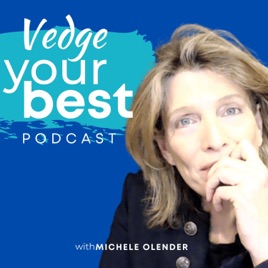
Advertise on podcast: Vedge Your Best, Vegan Ideas for Everyone At Any Age
Rating
5from
This podcast has
320 episodes
Language
EnglishPublisher
Michele OlenderExplicit
No
Date created
2020/09/15
Latest episode
2026/10/13
Average duration
31 min.
Release period
7 days
Description
There has never been a more important time to be Vegan. Vedge Your Best is the only podcast aimed at teaching midlife women how to limit and eliminate the consumption of animal products without feeling deprived, overwhelmed or unsupported, even if no one you know is Vegan. Life Coach Michele Olender will show you how living Vegan is the superpower that will unlock your possibilities and give you the confidence to take on your next impossible goal, by doing it YOUR way. Vedge YOUR Best and there’s nothing you can’t do.
Unlock Vedge Your Best, Vegan Ideas for Everyone At Any Age podcast Email contact info,
Listeners & Audience details
Email contact information
Direct podcast contact details

Listeners
Audience numbers & engagement insights

Audience details
Podcast Insights

Podcast episodes
Check latest episodes from Vedge Your Best, Vegan Ideas for Everyone At Any Age podcast
319: Vacationing While Vegan — Athens
2026/10/13
Visiting Athens as a vegan?
My favorite meals weren’t at vegan restaurants.
Beautiful seasonal vegetables, greens, split peas, tomatoes, zucchini, potatoes and mushrooms are the basis of Greek cuisine.
In this episode:
My number-one vegan travel tip.
Vegan food on Emirates to Athens
Why I like to have the first dinner of a trip planned in advance
Eating vegan at traditional Greek restaurants
Vegan restaurants in Athens: Veganaki, Winners—and a giant raw vegan tiramisu
Why “no problem” is the answer that makes me nervous.
Protein while traveling
A small rant about cameras and selfies at museums and historic sites
Mentioned in this episode:Le Basque / City Roots Hospitality in NYCManiMani AthensVeganaki AthensWinners AthensPantos Kairoy Piraeus
Subscribe & Review:
If you enjoyed this episode, please subscribe and leave a review on your favorite podcast platform. Your feedback helps us grow and share the message of plant-based living with more listeners.
For more information, to submit a question or topic, or to book a free 30 minute Coaching session visit veganatanyage.com or email [email protected]
Music, Production, and Editing by Charlie Weinshank. For inquiries email: [email protected] Virtual Support Services: https://proadminme.com/
318: The Best Way to Go Vegan? That’s the Wrong Question
2026/10/06
86 days left in 2026! Does that make you think, " Time is running out.” Or "I'll just start fresh in January.” That's all-or-nothing thinking.
What IS the best way to go vegan? It’s not by planning for open consistent days full of supportive friends and family. The next three months are likely to be full of travel, family, holidays, guests, meals out, and a lot less structure.
Then we spend some time on protein, because it's having a “moment" and because "beans don't agree with me" is one of the most common reasons I hear from folks that they just… can't.
In this episode:
• Why "time is running out" and "I'll start in January" are the same mistake• The case for "All or Something"• Naming the friction you're anticipating in the next three months• Building bean tolerance slowly, with lentils or hummus• Soy foods, hemp seeds, nuts and quinoa when beans don't work for you• The oat milk to soy milk swap• Three behaviors: I ask, I decide ahead of time, I come back at the next meal• Why a sustainable practice still has a shape when life gets crowded
Subscribe & Review:
If you enjoyed this episode, please subscribe and leave a review on your favorite podcast platform. Your feedback helps us grow and share the message of plant-based living with more listeners.
For more information, to submit a question or topic, or to book a free 30 minute Coaching session visit veganatanyage.com or email [email protected]
Music, Production, and Editing by Charlie Weinshank. For inquiries email: [email protected] Virtual Support Services: https://proadminme.com/
317: Finding Room on Your Vegan “Dance Card."
2026/09/29
No more room on your "dance card" today. This week we take one idea from the Harada Method and use it to make "being vegan" feel a lot more manageable. Instead of one giant goal, a chart full of small, learnable skills.
If you know why you want to eat fewer (or no) animal products, you've read the books and watched the documentaries, and you're STILL struggling, this episode is for you. Maybe you don't have a vegan problem. Maybe you have an empty square on your chart.
IN THIS EPISODE
Why "go vegan" sounds like one thing and is actually fifty or a hundred things. Maybe more depending on where you are starting.
The Harada Method, the 64-square chart, and the one idea underneath it that changes how you look at your goal
TRY THIS WEEK
Take a piece of paper. At the top write: WHAT WOULD MAKE MY VEGAN LIFE EASIER? Start by listing 20 very specific things you could learn, practice, decide or solve. That's your chart. Then pick one, not the most important one, just one that would make your life a little easier, and pencil it in.Inspired by the Harada Method, developed by Japanese track-and-field coach Takashi Harada. If you want to go deeper, search "Harada Method" or "Open Window 64"; there are videos on it for every kind of goal you can imagine.
LET'S TALK
Email me or DM me on Instagram and tell me.
If you'd like support with your own chart, I'm happy to chat by phone or email.
Subscribe & Review:
If you enjoyed this episode, please subscribe and leave a review on your favorite podcast platform. Your feedback helps us grow and share the message of plant-based living with more listeners.
For more information, to submit a question or topic, or to book a free 30 minute Coaching session visit veganatanyage.com or email [email protected]
Music, Production, and Editing by Charlie Weinshank. For inquiries email: [email protected] Virtual Support Services: https://proadminme.com/
316: Find the Friction: Identifying the Drag on Your Vegan Journey.
2026/09/22
The late Thomas Leonard, the grandfather of life coaching, developed the idea of “tolerations.” Those everyday annoyances that wear you down or distract you. The drawer that sticks. The tap that drips. The email you're not answering. The monthly card game you no longer want to be part of. The windshield-washer fluid light that keeps coming on. (Ask me how I know.) None of them is big enough to force your hand, and that's exactly how they survive. But they aren't neutral. Each one is running in the background, taking a sliver of your energy, your attention and your confidence.
Most of us assume the fix for a stalled goal is more discipline, more willpower, more grit. Doubling down on the goal. But, very often the real problem is that the runway is cluttered. You can have the best engine in the world and still not take off if there are tolerations littering the path or dragging you down.
In this episode:
Why working through tolerations was the first thing I ever did in coaching, and why I still do a version of it, which I call "find the friction," with my own clients
How a closet full of clothes that no longer fit became the friction I'd stopped noticing, and how naming it out loud turned it into a decision with a plan.
Why the same thing applies to a plant-based practice.
The "pick one thing" idea from coach Natalie Bacon that stopped me from turning one small goal into twenty.
A note before you listen: this episode touches on weight loss and dieting, a subject some of us find triggering. I don't go into much detail, and it's really just my example of a distraction I decided to deal with, but if it's a topic you'd rather avoid, please skip this one and take good care of yourself.
I'd love to hear the friction or toleration you named while you were listening. You don't have to tell me what you're going to do about it. Naming it is the first move. Email me or DM me on Instagram, and we can always have a chat by phone or email.
I want your runway clean and clear, so that you can Vedge YOUR Best.
Mentioned in this episode
Thomas Leonard, coach and founder of the modern coaching profession, and his concept of "tolerations"
Natalie Bacon, coach, and her "pick one thing" approach to goals
Subscribe & Review:
If you enjoyed this episode, please subscribe and leave a review on your favorite podcast platform. Your feedback helps us grow and share the message of plant-based living with more listeners.
For more information, to submit a question or topic, or to book a free 30 minute Coaching session visit veganatanyage.com or email [email protected]
Music, Production, and Editing by Charlie Weinshank. For inquiries email: [email protected] Virtual Support Services: https://proadminme.com/
315: Food Grief: What Are You Actually Afraid of Losing?
2026/09/15
What are we really afraid of losing when we change the way we eat?
Sometimes it's the taste or smell of a favorite food. But often, the foods we worry about giving up are connected to something much bigger: a grandmother's recipe, a holiday table, a favorite place, a travel experience, or even our identity as someone who is adventurous, easygoing, or willing to eat anything.
In this episode of Vedge Your Best, Michele explores the idea of food grief—the sense of loss that can come with developing a vegan or plant-based practice.
Food carries an extraordinary amount of our lives with it. A smell can take us back to a kitchen we haven't stood in for decades. A cookie can mean Christmas. A bowl of soup can remind us of being cared for as a child. So when we change what's on our plate, it's understandable that it can feel as though we're changing something much bigger.
But we don't have to rush to solve that feeling—or convince ourselves that nothing has been lost.
Instead, we can get curious.
In this episode:
Why food grief isn't necessarily about missing the food itself
The difference between missing a taste and missing the story surrounding it
Why being the person who “eats anything” can become part of our identity
The unexpected loss of being a low-maintenance guest or adventurous traveler
Why family recipes can feel like edible heirlooms
What an old story about Grandma's roasting pan can teach us about tradition
Why we don't need to minimize what we're giving up to make a compelling case for what we're choosing
How we can experience food grief before we've actually given anything up
Why trying to solve the feeling too quickly can keep us from understanding it
How thinking of veganism as a practice gives us permission to learn as we go
Instead of asking, “How do I convince myself I'm not losing anything?” try asking:
What do I feel like I'm losing? What am I actually grieving?
And once you understand that:
What do I want to do?
Sometimes we preserve the tradition and change the food. Sometimes we preserve the connection and change the ritual. Sometimes we find a wonderful substitute. And sometimes we simply acknowledge that something we valued is different now.
That's not a failure of your plant-based practice.
That's part of developing one.
You know what to do, Just Vedge Your Best.
Subscribe & Review:
If you enjoyed this episode, please subscribe and leave a review on your favorite podcast platform. Your feedback helps us grow and share the message of plant-based living with more listeners.
For more information, to submit a question or topic, or to book a free 30 minute Coaching session visit veganatanyage.com or email [email protected]
Music, Production, and Editing by Charlie Weinshank. For inquiries email: [email protected] Virtual Support Services: https://proadminme.com/
314: The Consistency Fantasy
2026/09/08
September energy is back.
Use that energy. But watch out for the consistency fantasy: the idea that before we begin, we need to know how we’re going to keep doing this from now on.
Consistency isn’t something you can accomplish today. Today, you can only do the thing.
Yes consistency is important, but our desire to be consistent can sometimes keep us from getting started at all—especially when we’re trying to move in a vegan or plant-based direction.
Instead of trying to solve December before you’ve even tried Tuesday, I’m offering three questions:
• What could I actually do today?Not every day forever. Today.
• What would be worthwhile even if I only did it once?Try the vegan dinner. Experiment with tofu. Ask about the plant-based option at a favorite restaurant. Try the oat milk. Even something you don’t like gives you information you didn’t have yesterday.
• What’s already working that I don’t want to mess with?New-season energy can convince us that everything needs an upgrade. It doesn’t. Notice what’s already working, protect it, and use your energy where it can actually help.
Your assignment this week isn’t just to pick one thing. It’s to only pick one thing.
Make one choice. Try one thing. Learn one thing.
Because vegan and plant-based momentum isn’t built by standing at the starting line wondering what your life will look like three months from now. It’s a practice you build day by day choice by choice.
Subscribe & Review:
If you enjoyed this episode, please subscribe and leave a review on your favorite podcast platform. Your feedback helps us grow and share the message of plant-based living with more listeners.
For more information, to submit a question or topic, or to book a free 30 minute Coaching session visit veganatanyage.com or email [email protected]
Music, Production, and Editing by Charlie Weinshank. For inquiries email: [email protected] Virtual Support Services: https://proadminme.com/
313: Can You Be Committed Without Being Certain?
2026/09/01
Do you need to know that you can live vegan forever before you take one action today?
Last week, we talked about practical uncertainty in a vegan practice: restaurant plans, backup meals, and the possibility of ending up with romaine lettuce and French fries for dinner.
This week, we go one level deeper.
What happens when you ask your future self to guarantee that you will follow through perfectly for the rest of your life?
Michele often hears people say, “I’m not like you. I don’t stick with things. I don’t have discipline.”
That’s usually not even true..
In this episode:
Why commitment is a direction—not a prediction or guarantee
How uncertainty can make behavior change more curious, experimental, and even more fun
The three certainty traps from Simone Stolzoff’s book How to Not Know: comfort, hubris, and control
Why “I could never” is a remarkably confident prediction about a future that has not happened
A little Stoic encouragement from Seneca and Marcus Aurelius
Why “Can I do this forever?” is an unfair test for someone deciding what to eat on Tuesday
How coaching helps us work with the person we actually are instead of waiting to become an imaginary, perfectly disciplined person
Your September Experiment
Complete these three sentences:
For September, I am committed to __________.
Right now I do not need to know __________.
This week, I am going to learn or practice __________.
Keep the commitment meaningful, but make the experiment small enough to give you real information. At the end, you do not need to give yourself a grade. Ask what worked, what did not, and what you would like to try next.
Not knowing is not a problem. It means the answer is still open—and an open answer gives you room to learn, change, and surprise yourself.
You can be serious about your values and curious about your methods. You can be committed without being certain.
Book mentioned:How to Not Know: The Value of Uncertainty in a World That Demands Answers by Simone Stolzoff
Subscribe & Review:
If you enjoyed this episode, please subscribe and leave a review on your favorite podcast platform. Your feedback helps us grow and share the message of plant-based living with more listeners.
For more information, to submit a question or topic, or to book a free 30 minute Coaching session visit veganatanyage.com or email [email protected]
Music, Production, and Editing by Charlie Weinshank. For inquiries email: [email protected] Virtual Support Services: https://proadminme.com/
312: Vegan Certainty Principle
2026/08/25
How much certainty does your vegan practice actually need? It’s hard to know what being vegan will look like until you get tarted. My job is to help you “stay in the game” long enough to get some traction, gain some skills and have some fun.
After Episode 309 on having a "Plan B," many of you reached out.. Turns out none of us is simply "comfortable" or "uncomfortable" with uncertainty. The unknowns that barely register for one person can take up enormous space for another — and two people with the very same goal may need completely different kinds of support.
In this episode:
Your "uncertainty profile" — and why knowing yours changes everythingTwo kinds of Plan B: logistical (what will I actually eat?) and emotional (what will I tell myself when it's hard?)Two ideas from Simone Stolzoff's new book How to Not Know: the certainty anchor, and building small experiments in order to learnWhy one-size-fits-all advice ("prepare more!" "be flexible!") misses the real problem — and how coaching finds itThe Best-Case-Scenario Audit: a four-question exercise to try this week
The four audit questions:
What has to go right for my current plan to work?Which part of the uncertainty actually bothers me most?Does this problem need better logistics, more emotional resilience, or some of each?What stays true even when the plan changes? (That's your certainty anchor.)
Mentioned in this episode:
How to Not Know: The Value of Uncertainty in a World That Demands Answers by Simone Stolzoff — https://simonestolzoff.com/how-to-not-knowWhat kind of uncertainty doesn't bother you much — and what kind makes you panicky? Let me know!
Subscribe & Review:
If you enjoyed this episode, please subscribe and leave a review on your favorite podcast platform. Your feedback helps us grow and share the message of plant-based living with more listeners.
For more information, to submit a question or topic, or to book a free 30 minute Coaching session visit veganatanyage.com or email [email protected]
Music, Production, and Editing by Charlie Weinshank. For inquiries email: [email protected] Virtual Support Services: https://proadminme.com/
311: Install Your Vegan Program — Why Willpower Isn’t the Problem
2026/08/18
You know why you want to eat more plant-based. So why do you keep returning to old choices?
It’s not be a willpower problem. More likely, it’s a programming problem.
For most of our lives, we have repeated the same food choices within our families, communities, celebrations, restaurants, and daily routines. Those choices eventually become automatic. When we try to override decades of habit through determination alone, it can feel like pushing a boulder uphill—especially when life becomes stressful.
In this episode, I explore how old food programming operates beneath our conscious intentions and why familiar choices can return so quickly during travel, illness, fatigue, family gatherings, or an ordinary difficult day.
More importantly, I share two simple tools for beginning to install a different program: the redo and the rehearsal.
A redo helps you revisit a moment that did not go the way you wanted and calmly practice another possible response. A rehearsal lets you imagine handling an upcoming restaurant meal, family gathering, work event, or stressful evening as the person you are becoming.
You do not have to fight the old program or make one enormous decision. Through awareness, repetition, and practice, plant-based choices can gradually become more familiar, natural, and automatic.
Try This: A 60-Second Rehearsal
Choose one moment tomorrow that could be challenging.
Perhaps you will be tired at dinnertime, eating with family, attending an event, or looking at a menu with few obvious vegan choices.
Relax your shoulders. Unclench your jaw. Take a full breath.
Now imagine yourself moving through that moment calmly. See yourself asking simply for what you need or choosing the food that supports your plant-based practice. Let the choice feel ordinary rather than dramatic.
You are giving your brain a new possibility to practice.
The Key Takeaway
You are not the old program.
You can notice the patterns that have been running automatically and begin installing patterns that better support the way you want to live. With repetition, today’s awkward and unfamiliar actions can become second nature tomorrow.
Subscribe & Review:
If you enjoyed this episode, please subscribe and leave a review on your favorite podcast platform. Your feedback helps us grow and share the message of plant-based living with more listeners.
For more information, to submit a question or topic, or to book a free 30 minute Coaching session visit veganatanyage.com or email [email protected]
Music, Production, and Editing by Charlie Weinshank. For inquiries email: [email protected] Virtual Support Services: https://proadminme.com/
310: Vegan “Drift"
2026/08/11
Drifting" away from your plant-based intentions? Here's how to gently turn back toward what you value.
Maybe you started the year strong and now it's August and there's cheese back in the fridge? This one's for you.
Inspired by the Gottman Institute's famous relationship research (hat tip to Maggie Reyes of The Marriage Life Coach Podcast), this episode borrows a powerful idea: relationships rarely end in explosive fights. They drift — slowly, silently, through a failure to connect in tiny everyday moments. Your relationship with your vegan intentions works exactly the same way. The gap between where you meant to be and where you are isn't failure. It's drift.
In this episode:
How the Gottman Institute's "drift" research applies to your plant-based practice (and your fitness, finances, and relationships too)The currents that move all of us: busy weeks, travel, family reunions, the path of least resistance with Parmesan on itWhy noticing you've drifted is good news — it means you're paying attentionLook where you want to go: what skiing, and driving teach us about target fixation and steering toward your futureData, not drama: borrowing the scientist's lab coat so your meals become data points, not a moral report cardWhy every plant-based meal counts even if you're not fully vegan — three plant-based dinners a week is 150+ meals a year, and consistency compounds.If "vegan" feels overwhelming as an identity, make it an action instead: just vedge your best
I'd love to hear from you: Where did you notice yourself drifting this summer — and what's one turn you made back toward what you want? Send me a message; your answer might make it into a future episode.
If this episode helped you, please share it with someone who could use a soft place to land this August — and leave a rating or review to help others find the show.
Subscribe & Review:
If you enjoyed this episode, please subscribe and leave a review on your favorite podcast platform. Your feedback helps us grow and share the message of plant-based living with more listeners.
For more information, to submit a question or topic, or to book a free 30 minute Coaching session visit veganatanyage.com or email [email protected]
Music, Production, and Editing by Charlie Weinshank. For inquiries email: [email protected] Virtual Support Services: https://proadminme.com/
309: Plan B — Decide It BEFORE You Need It
2026/08/04
One thing almost every great goal is missing? A Plan B.
Whether you're going vegan, strength training, starting a business, or cutting back on alcohol, most of us have only ever had Plan A: perfection. And when it cracks — it always does — we don't slow down. We stop.
Stop planning only for perfection. Start planning in advance for reality - YOUR reality. Just like professional educators.
Mentioned in this episode
• Sid Garza-Hillman — MOTT: "most of the time”
• Marcus Aurelius: "You have to assemble your life yourself, action by action.”
• Day-tight compartments (Dale Carnegie)
• The abstinence violation effect (relapse research)
• Rigid vs. flexible dietary restraint
Having a clear Plan B isn't planning to fail — it's the reason you won’t. Plan B is there to jump in the moment you'd usually give up so you keep making progress.
Subscribe & Review:
If you enjoyed this episode, please subscribe and leave a review on your favorite podcast platform. Your feedback helps us grow and share the message of plant-based living with more listeners.
For more information, to submit a question or topic, or to book a free 30 minute Coaching session visit veganatanyage.com or email [email protected]
Music, Production, and Editing by Charlie Weinshank. For inquiries email: [email protected] Virtual Support Services: https://proadminme.com/
308: A More Powerful To-Do List
2026/07/28
Does your to-do list say things like doctor, camp, garden, library, tofu—or simply dump?
Those words may remind you that something needs attention, but they don’t tell you what to do next. Often, a vague item keeps moving from list to list because it isn’t actually a task yet. It may be a project, an unresolved question, a missing decision, or something that requires another person’s help.
In this practical end-of-July episode, Michele shares how to turn vague reminders into specific next actions your future self can actually use.
You’ll learn:
• Why one-word list items are often topics or projects rather than tasks• Four questions to ask when something keeps getting postponed• Why asking, deciding, researching, and delegating all count as progress• How to add the context your future self will need• Why action verbs such as call, ask, choose, schedule, log in, buy, and order make a list more useful• How context-based next actions can help you organize tasks by where, when, or with whom they can be completed• How the “one big, two medium, three small” approach can make an overwhelming day more manageable
Michele also applies the idea to plant-based living. Instead of writing vegan or tofu, your real next action might be finding a vegan lasagna recipe, adding extra-firm tofu to the grocery order, asking a restaurant server about vegan options, or calling your doctor to discuss appropriate bloodwork.
Try this
Find three vague items that have been sitting on your list. For each one, ask:
What did I mean when I wrote this?
Is there something I still need to know, find out, or decide?
Does someone else need to be involved?
What is the next action I can actually complete?
Then put that specific action on your list, your calendar—or, when appropriate, someone else’s calendar.
You don’t need a new planner, a complicated system, or color-coordinated markers. You need a list that helps you make progress.
Mentioned in this episode
April Perry and LearnDoBecome’s work on Context-Based Next Actions Lists:
https://learndobecome.com/episode63-2/
This week’s reminder
Your to-do list should not be a collection of mysterious documents for your future self to puzzle over. Make it specific enough to show you where to begin—and then take the next small step toward vedging your best.
Subscribe & Review:
If you enjoyed this episode, please subscribe and leave a review on your favorite podcast platform. Your feedback helps us grow and share the message of plant-based living with more listeners.
For more information, to submit a question or topic, or to book a free 30 minute Coaching session visit veganatanyage.com or email [email protected]
Music, Production, and Editing by Charlie Weinshank. For inquiries email: [email protected] Virtual Support Services: https://proadminme.com/
307: My Vegan “Personal Curriculum” - Peter Singer's Animal Liberation Now.
2026/07/21
What happens when you stop letting the algorithm choose what you learn and start building your own course of study?
In the first installment of my summer" personal curriculum," I open Peter Singer’s Animal Liberation Now: The Definitive Classic Renewed, the updated 2023 edition of his influential 1975 book, Animal Liberation.
Why start here? Singer’s work supplied much of the vocabulary and philosophical framework still used in conversations about animals today. We break down speciesism, sentience, utilitarianism, and the difference between animal welfare and animal rights—without assuming you already speak the language of philosophy. ( Because I don’t.)
We look at factory farming and animal experimentation, how Singer weighs a human preference for taste or price against an animal’s interest in avoiding suffering, and why the question of plant sentience does not necessarily weaken the vegan case.
There are criticisms of Singer’s work, including disability-rights objections to his views on euthanasia and profound cognitive disability.
This episode is neither a blanket endorsement nor a takedown.
It is an invitation to read critically, understand some of the ideas that helped shape modern animal ethics, and decide what holds up for you.IN THIS EPISODE
What a personal curriculum is—and why it can be an antidote to fragmented, algorithm-driven learningWhy Animal Liberation Now is the first book in my vegan personal curriculum• Speciesism and the equal consideration of interests• Utilitarianism explained in plain EnglishThe difference between animal welfare and animal rightsFactory farming, laboratory research, and the scale of animal suffering• Singer’s most controversial arguments and disability-rights criticismWhy plant sentience does not necessarily undermine the vegan caseFood, memory, displacement, and the Viennese recipes that close the bookCONTENT NOTE
This episode includes discussion of factory farming, animal experimentation, animal suffering, euthanasia, disability rights, and ethically complex questions involving infants with profound, life-limiting disabilities.
What subject would you choose for a personal curriculum of your own? And how does this new series land for you—intriguing, too academic, or exactly the nudge you needed? Reach out and let me know.The next personal-curriculum book episode will arrive in a couple of weeks. Until then, I’ll be here every week to cheer you on as you Vedge Your Best.
Subscribe & Review:
If you enjoyed this episode, please subscribe and leave a review on your favorite podcast platform. Your feedback helps us grow and share the message of plant-based living with more listeners.
For more information, to submit a question or topic, or to book a free 30 minute Coaching session visit veganatanyage.com or email [email protected]
Music, Production, and Editing by Charlie Weinshank. For inquiries email: [email protected] Virtual Support Services: https://proadminme.com/
306: You’ve Seen Cowspiracy. Now Build Your Own Vegan Curriculum.
2026/07/14
What would it look like to build your own Personal Curriculum around veganism, animal advocacy, and our relationships with other animals?
This week, Michele introduces a summer reading series centered around her Personal Curriculum for the summer of 2026 and invites the listeners to join her.
Shared references can help us have better conversations — more precise, more thoughtful, and more useful — especially in a world where we are often working from different facts, different frameworks, and different emotional starting points.
Documentaries like Cowspiracy, Earthlings, The Game Changers, and Dominion have helped bring countless people into the vegan and plant-based conversation. But books offer something different: the chance to slow down, build an argument, question assumptions, take notes, push back, and develop a more durable intellectual framework.
Deep reading can help us become harder to fool, better able to name what we are seeing, and more equipped to understand the language used around food, animals, “humane” labels, sustainability, health, and ethics. Maybe reading is an important form of activism.
What books have shaped YOUR thinking? What belongs in a shared set of references for vegan and animal advocacy conversations? What perspectives are missing from the usual lists? What have you read recently that challenged you, changed you, frustrated you, or helped you think more clearly?
Books Michele is considering for her personal curriculum:
Animal Liberation by Peter Singer
Why We Love Dogs, Eat Pigs, and Wear Cows by Melanie Joy
Eating Animals by Jonathan Safran Foer
The Sexual Politics of Meat by Carol J. Adams
Dominion: The Power of Man, the Suffering of Animals, and the Call to Mercy by Matthew Scully
Some We Love, Some We Hate, Some We Eat by Hal Herzog
Michele wants to hear from you:
What books belong in this conversation? Particularly those from a non-white, indigenous or colonialized perspective.
Which books shaped your vegan, vegetarian, plant-based, or animal advocacy practice?
Which arguments have helped you? Which ones have not?
You can leave a short voicemail through SpeakPipe, DM Michele on Instagram at @Vedge_Your Best, or send an email to [email protected]
By leaving a voicemail, you are giving permission for your message to potentially be played on a future episode of Vedge Your Best podcast.
No mandatory homework. No quizzes. No pressure to keep up. Just an invitation to read, think, question, take notes, and connect over some shared references — one chapter at a time.
Links:
SpeakPipe voicemail: https://www.speakpipe.com/VedgeYourBest
Subscribe & Review:
If you enjoyed this episode, please subscribe and leave a review on your favorite podcast platform. Your feedback helps us grow and share the message of plant-based living with more listeners.
For more information, to submit a question or topic, or to book a free 30 minute Coaching session visit veganatanyage.com or email [email protected]
Music, Production, and Editing by Charlie Weinshank. For inquiries email: [email protected] Virtual Support Services: https://proadminme.com/
305: What If Vegan Backlash Is a Good Sign?
2026/07/07
This week on Vedge Your Best podcast, we revisit the Save Our Bacon Act and the 2026 US Farm Bill, and ask what backlash against veganism, animal welfare, and plant-based change actually mean? There’s still time to communicate with the Senate here.
It can feel discouraging when vegan, plant-based, and animal advocates are trolled online or dismissed as extreme. But what if some of that backlash is also a sign that compassionate food movements are becoming visible enough to challenge powerful systems?
We explore how social change happens, why we may not need everyone to agree all at once, and what we can learn from research on active participation, coalition-building, and visible support. Drawing on Erica Chenoweth’s work on nonviolent movements and the “3.5% idea,” we see why visibility matters, why purity debates can shrink movements, and how widening the on-ramp can help more people take meaningful action.You’ll hear about:• How visible participation helps others feel less alone• Why backlash can be a signal that a movement is being noticed• What vegan and animal advocacy can learn from the anti-smoking movement• Why coalitions matter, even when people do not agree on every tactic• How schools, restaurants, hospitals, and laws can build better “infrastructure” for compassionate choices• Why imperfect participation can still move us forward• Practical ways to show up more visibly without burning outMaybe we don’t need everyone to do everything. We need more people doing something, more visibly, together, over time.
Subscribe & Review:
If you enjoyed this episode, please subscribe and leave a review on your favorite podcast platform. Your feedback helps us grow and share the message of plant-based living with more listeners.
For more information, to submit a question or topic, or to book a free 30 minute Coaching session visit veganatanyage.com or email [email protected]
Music, Production, and Editing by Charlie Weinshank. For inquiries email: [email protected] Virtual Support Services: https://proadminme.com/
Podcast reviews
Read Vedge Your Best, Vegan Ideas for Everyone At Any Age podcast reviews
chefboye 2025/12/10
My episode
Michele was an amazing host. Thank you so much for the thoughtful convo we had. Wishing you much success in all you do.
AngelaCrawford 2025/11/03
Powerful and empowering
Love Michele’s interview style and how she brings a unique slant to how we can thrive with a vegan lifestyle- in ways that truly empower and are doabl...
charmedlifelady 2025/04/14
Quality information relevant to me
I’m not a gushy reviewer because I’m a podcaster myself and I like to think I have high standards. On this occasion, however, I will gush. This podcas...
Chrisxyz124 2024/12/23
Quality
I love the content as well as the clarity of message. I wish more people knew about this podcast!
Susan M 🌱 2024/12/23
Excellent content for a vegan lifestyle.
Michele offers excellent and solid content in a very relatable way. She generously shares her knowledge, wisdom and encouragement to anyone who is cur...
Kimssv 2024/10/07
One of my favorites and the best voice on the planet
The Vedge your Best podcast is without a doubt one of my favorite vegan podcasts. Michele has such a grounded perspective and her experience as a coac...
TracyHoth 2024/08/28
❤️ A favorite…and I’m not even vegan!
Thank you Michele! You are a true expert on all things habits, vegan, plant-based, and more. Plus you are so relatable. I love all the little nuggets ...
coufacyn 2024/08/28
Everything you need to know!
You often think it is too late to be Vegan in midlife! It is not too late! Michele helps it seem so much easier!
Danielle Thienel 2024/08/28
Who knew?!
Who knew that it could be easier than I was making it out to be. Now that I’m 50 I’ve wanted to be more actionable with my health goals and this podca...
Smileabunch 2024/08/28
Everything You Need To Know
Everything you need to know to start living a vegan life in a way that works for you!
Podcast sponsorship advertising
Start advertising on Vedge Your Best, Vegan Ideas for Everyone At Any Age relevant audience podcasts
You may also like to advertise on these Podcasts

4.922672003
First15 Devotional
First15
4.838332000
Entrepreneurs on Fire
John Lee Dumas of EOFire

4.890611563
Fearless with Jason Whitlock
Blaze Podcast Network
4.827601703
Earn Your Happy
Lori Harder | YAP Media

4.8121051000
Mind Pump: Raw Fitness Truth
Sal Di Stefano, Adam Schafer, Justin Andrews, Doug Egge
4.8104512000
Steve Deace Show
Blaze Podcast Network

4.853532000
Men In Blazers
Men In Blazers

4.917101554
DarrenDaily On-Demand
Darren Hardy LLC

4.861411101
The David Pakman Show
David Pakman

4.732641948
The President's Daily Brief
The First TV