1531925530
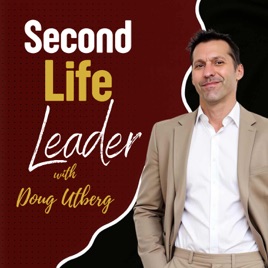
Second Life Leader

Advertise on podcast: Second Life Leader

Rating
★★★★★
4.9
from
35 reviews
This podcast has
402 episodes
Language
English
Publisher
Doug Utberg
Explicit
No
Date created
2020/09/15
Latest episode
2026/04/20
Average duration
38 min.
Release period
4 days

Description

From Setback to Sovereignty. This platform is for founders, executives, and rebuilders who’ve been knocked down by layoffs, burnout, betrayal, or failure—and refuse to stay down. I’m Doug Utberg. I rebuilt my career, my finances, and my identity from zero, and now I have raw conversations with leaders who’ve walked through fire and rebuilt stronger. Every episode cuts directly into the moments that forge a leader: Career reinvention and self-leadership Burnout recovery and nervous system restoration Ethical entrepreneurship in a post-growth world Systems thinking, AI, and automation for sovereign execution No hype. No guru scripts. Just clarity, truth, and the architecture required to rebuild a life—and a company—that cannot be taken from you. 🔧 CFO Operator Clinic If you lead a finance function, this is where we dismantle the chaos and build real structure: KPI trees Universal journals Transformation architecture Decision systems Semantic-layer design This is the tactical advantage most CFOs never get—and it’s where operators rise. 📍 Book your spot at SecondLifeLeader.com 📩 Go Deeper The show sparks the rebuild. But the newsletter is the operating system—your weekly cadence for clarity, structure, and execution. 👉 Subscribe at DougUtberg.com www.dougutberg.com

Unlock Second Life Leader podcast Email contact info,
Listeners & Audience details

Email contact information

Direct podcast contact details

Listeners

Audience numbers & engagement insights

Audience details

Podcast Insights

Social media

Check Second Life Leader social media presence


Podcast episodes

Check latest episodes from Second Life Leader podcast


Employee Disengagement, Failing Systems, and Why Leadership Is the Real Bottleneck
2026/04/20
Enterprise systems leader Kevin Patrick joins me to unpack a problem most companies underestimate—and pay for heavily: employee disengagement. We started with a stat that should stop any executive cold. Roughly 70% of ERP implementations fail to hit their goals. At the same time, employee disengagement globally accounts for an estimated $8.8 trillion in lost productivity every year. Those two numbers aren’t separate problems. They’re the same problem. Kevin brings a unique perspective from years in enterprise resource planning and customer success, where failure isn’t just technical—it’s human. Systems don’t fail because of software. They fail because the people using them are disconnected, undervalued, or mentally checked out. We dig into why traditional work models—“I pay you X, you do Y”—are breaking down, and what replaces them. Why employees no longer default to going above and beyond. And why leadership decisions driven by short-term optics (layoffs, cost-cutting, hierarchy protection) quietly destroy long-term value. This is a conversation about what actually drives performance: not pressure, not perks—but genuine engagement. And why most organizations are structurally designed to prevent it. TL;DR * Employee disengagement is a trillion-dollar problem—not an HR issue * Most system failures are human failures, not technical ones * The old work contract (“pay for output”) no longer creates loyalty or effort * Disengaged employees do the minimum; engaged employees create exponential value * Leadership decisions often optimize short-term optics at long-term cost * Engagement comes from being seen, supported, and developed—not managed * Small, personal progress creates massive organizational impact Memorable Lines * “Systems don’t fail—people disengage.” * “You don’t fix disengagement with perks—you fix it with connection.” * “Most companies treat people like liabilities instead of assets.” * “Engaged employees solve problems you didn’t even know existed.” * “It’s not complicated—if you want engaged employees, engage them.” Guest Kevin Patrick — Director of Professional Services & Customer Success ERP leader focused on improving implementation success through human-centered engagement, retention strategies, and organizational alignment. Why This Matters Most companies are trying to solve performance problems with systems, tools, or restructuring. But performance isn’t primarily a systems issue. It’s an engagement issue. When employees feel disconnected, everything downstream suffers—execution slows, innovation dies, and turnover increases. When they feel invested, the opposite happens: problems get solved early, ideas surface faster, and organizations move with less friction. The gap between those two states isn’t technology. It’s leadership. Because the companies that win long-term won’t be the ones with the best systems. They’ll be the ones that know how to get the best out of the people using them. This is a public episode. If you would like to discuss this with other subscribers or get access to bonus episodes, visit www.dougutberg.com
Break the Mindset Funk & Rebuild Stronger
2026/04/10
Entrepreneur and marketing strategist Kalen Cotto joins me to unpack what really happens when life, business, and identity all start collapsing at once—and how you actually rebuild from there. Most conversations about success focus on strategy, tactics, and growth curves. This one doesn’t. Kalen and I dig into the uncomfortable middle—the part where things fall apart, confidence drops, income disappears, and you’re left trying to figure out what comes next. From losing momentum in business and rebuilding from almost nothing, to navigating personal setbacks, reputation damage, and starting over as a single parent, Kalen shares what resilience actually looks like beyond motivational clichés. We explore why mindset isn’t just a buzzword, how environment shapes recovery, and why most people stay stuck longer than they need to. This is a candid conversation about identity, comparison, burnout, rebuilding income streams, and learning how to move forward when there’s no clear roadmap. The lesson isn’t blind positivity. It’s learning how to interrupt negative cycles, rebuild momentum, and keep showing up—even when results aren’t immediate. TL;DR * Mindset isn’t fixed—it’s something you actively manage * Environment shifts can break negative mental loops * Most people quit during the “invisible effort” phase * Comparison kills progress faster than failure * Testing and iteration matter more than perfection * Income instability is part of building something real * Confidence is rebuilt through action, not waiting Memorable Lines * “You can’t serve people if you’re stuck in your own head.” * “Break the environment, break the pattern.” * “It’s not failure—it’s part of the testing phase.” * “Someone less experienced is already selling what you’re afraid to.” * “You don’t need certainty—you need momentum.” Guest Kalen Cotto — Founder of KMC DigitalMarketing strategist helping businesses refine messaging, positioning, and scalable growth strategies. Experienced in working with both small businesses and larger corporate clients, with a focus on practical execution over theory. Why This Matters The modern career path isn’t linear anymore. Businesses stall. Income fluctuates. Confidence dips. What separates people who rebuild from those who stay stuck isn’t talent—it’s the ability to manage their mindset, adapt quickly, and keep moving without guaranteed outcomes. For founders, freelancers, and professionals navigating uncertainty, this episode reframes “feeling stuck” not as failure—but as a phase that can be broken with the right actions. This is a public episode. If you would like to discuss this with other subscribers or get access to bonus episodes, visit www.dougutberg.com
Polarity, Power, and the Quiet Truths Leaders Avoid
2026/04/03
Founders, operators, and executives talk endlessly about strategy, data, and execution—but avoid the deeper forces shaping every decision they make. In this episode of Second Life Leader, Doug Utberg sits down with Asha LaCount to explore what happens when leadership goes beyond surface-level EQ—and into the uncomfortable, often unspoken realities of energy, identity, and polarity. This is not a typical leadership conversation. Asha shares her journey from high-performing consultant to confronting personal health, relationship, and identity breakdowns—despite outward success. What followed was a deeper exploration into emotional intelligence, energy dynamics, and the hidden patterns that quietly influence leadership performance. Doug and Asha unpack the “quiet parts” most leaders avoid: unresolved emotional patterns, validation-seeking behaviors, and the impact of suppressed identity on decision-making. Because when those remain unaddressed, they don’t disappear—they scale. From executive environments to personal relationships, they explore how polarity—masculine and feminine dynamics—affects clarity, performance, and connection. Ignore it, and you operate with half the system. Understand it, and you unlock a different level of leadership. This conversation challenges conventional leadership development and asks a harder question:What are you not saying out loud—and how much is it costing you? TL;DR * Leadership isn’t just strategic—it’s deeply emotional and energetic * The “quiet part” leaders avoid is often the highest leverage point * Suppressed identity and unresolved patterns scale across teams * Polarity (masculine/feminine dynamics) impacts decision-making and performance * Money and success often mask deeper misalignment * Validation-seeking drives burnout more than workload * Real transformation starts with internal clarity, not external tactics Memorable Lines * “Your team isn’t slow—your systems are.” * “What’s the quiet part you’re not saying out loud?” * “If you ignore half the system, you’ll never solve the full problem.” * “Money is an amplifier, not a solution.” * “You don’t need more validation—you need more clarity.” Guest Asha LaCount — Leadership consultant, hypnotherapist, and founder of Beyond EQSpecializes in integrating emotional intelligence, energy dynamics, and leadership performance through a deeper lens of human behavior and identity. Why This Matters Most leadership models are built on logic, frameworks, and performance metrics. But people don’t operate that way. Decisions are emotional first, rational second. Culture is shaped by unspoken dynamics, not just stated values. And leaders don’t just manage systems—they are the system others respond to. For anyone rebuilding after burnout, failure, or misalignment, this episode reframes leadership as an inside-out process. Because the real constraint isn’t strategy.It’s what leaders avoid facing within themselves. This is a public episode. If you would like to discuss this with other subscribers or get access to bonus episodes, visit www.dougutberg.com
Grief, Work, and Rebuilding Meaning After Loss
2026/04/02
Founder and creative professional Preston Zeller joins me to unpack a conversation most workplaces avoid—but everyone eventually faces: grief, and how it reshapes the way we work, lead, and live. This episode starts with a moment that changes everything. In early 2019, Preston lost his brother unexpectedly to a drug overdose. At the same time, he was navigating intense professional pressure during a major company merger, supporting a young family, and trying to function in environments that had no real framework for processing loss. What follows isn’t a polished narrative—it’s a raw look at what happens when your internal world collapses while external expectations keep moving. We explore the disconnect between how grief actually works and how culture expects it to work. It doesn’t follow timelines. It doesn’t resolve neatly. And it doesn’t stay separate from your performance, your relationships, or your identity. Preston shares how this experience forced him to confront emotional suppression, anger, and the limits of “pushing through.” Instead of defaulting to distraction through work, he committed to a daily creative practice—painting every day for a year—as a way to process what couldn’t be verbalized. That process became more than personal therapy. It evolved into a documentary, a framework for self-reflection, and ultimately a shift in how he led teams and approached empathy in the workplace. We also dig into a reality most leaders don’t want to confront: people don’t leave their personal lives at the door. Grief, trauma, and emotional strain show up in productivity, decision-making, and team dynamics—whether acknowledged or not. Ignoring it doesn’t protect performance. It erodes it. This is a candid conversation about loss, emotional awareness, creative processing, and what it actually means to support people—not just as employees, but as humans navigating difficult realities. TL;DR Grief doesn’t follow a schedule—and it doesn’t stay outside of work.Emotional suppression shows up as anger, burnout, or disconnection.Creative expression can process what logic can’t.“Pushing through” often delays—not resolves—pain.Empathy in leadership isn’t soft—it’s practical.People don’t need solutions in grief—they need space and presence.Workplaces that ignore human realities pay for it in performance. Memorable Lines “Grief isn’t one emotion—it’s all of them at once.”“You can’t schedule when something hits you—but you can choose how you process it.”“People at work aren’t distracted—they’re carrying something.”“Empathy isn’t fixing—it’s being willing to sit in it.”“What you don’t process doesn’t disappear—it leaks.” Guest Preston Zeller — Creative professional, former Chief Growth Officer, and abstract artistCreator of a year-long painting project and documentary exploring grief, emotion, and creative processing Why This Matters Most organizations are built for output, not reality. But reality always wins. Loss, stress, and emotional strain don’t pause for deadlines or KPIs. Leaders who understand this—and adapt—build stronger teams, deeper trust, and more sustainable performance. For founders, operators, and executives, this episode reframes empathy as a strategic advantage. Not because it feels good—but because it works. The goal isn’t to eliminate hardship. It’s to build systems—and people—capable of carrying it without breaking. This is a public episode. If you would like to discuss this with other subscribers or get access to bonus episodes, visit www.dougutberg.com
This Isn’t the AI You Think—And That’s the Point
2026/04/01
Commercial cleaning and AI don’t naturally belong in the same sentence. At least, not at first glance. But that’s exactly why this conversation matters. In this episode of Second Life Leader, Doug Utberg sits down with Adam Povlitz to break down what it actually looks like to build an AI-first mindset inside a very human, operationally messy business. Because the future of AI in service industries isn’t robots replacing people—it’s systems supporting them where failure is inevitable. What This Conversation Really Explores Most businesses obsess over delivering perfect experiences. But in reality, especially in service industries, mistakes are guaranteed. Adam flips the model:Instead of trying to eliminate failure, design systems that respond to it faster, smarter, and more transparently. In commercial cleaning, there are only two outcomes:• You don’t notice anything (everything works)• Or something is wrong There’s no “wow” moment—only silent success or visible failure. So the real competitive edge?How quickly and effectively you recover when things go wrong. The Shift: From Automation → AI What’s already in place:• Real-time issue reporting via a simple web app• Built-in translation to remove communication barriers• Escalation systems to ensure accountability• Data tracking by location and issue type But where it’s going is more interesting:• Automated retraining triggered by repeated mistakes• AI-driven learning modules replacing manual oversight• Customer “health scores” that create radical transparency• Closed-loop systems that don’t just fix problems—but prevent repeats This isn’t flashy AI.It’s operational AI. The Bigger Insight Most companies misunderstand where AI creates value. It’s not in the obvious places.It’s in the invisible ones:• Back-office workflows• Customer issue resolution• Training and compliance• Pattern recognition across small failures The kind of work people don’t want to do—but that defines whether a business scales or stalls. TL;DR • AI won’t replace service businesses—it will restructure how they operate• Mistakes are inevitable; recovery systems are optional• Speed of resolution beats perfection every time• Automation handles tasks; AI improves decisions• The real leverage is in back-end systems, not front-end hype Memorable Lines “It’s not about preventing every mistake—it’s about what happens next.”“In our industry, no news is good news.”“Let the painter paint and let the chef cook.”“AI isn’t replacing people—it’s removing the friction around them.”“Perfection doesn’t scale. Systems do.” Guest Adam Povlitz — CEO, Antigo CleaningOperator focused on scaling service businesses through systems, franchising, and now AI-driven infrastructure. Why This Matters There’s a misconception that AI transformation only applies to tech companies. It doesn’t. The businesses that win over the next decade won’t be the ones with the most advanced tools—They’ll be the ones that redesign their operations around reality: People make mistakes.Systems catch them.Great companies learn from them. If you’re building, scaling, or rebuilding—this is the playbook. This is a public episode. If you would like to discuss this with other subscribers or get access to bonus episodes, visit www.dougutberg.com
How Your Expertise Is Making You Unlikable (And Costing You Business)
2026/03/27
Founder and PR strategist Bryce North joins me to break down a counterintuitive truth: the more you try to look like the smartest person in the room, the less people trust you—and the less business you close. Most professionals believe authority comes from showcasing intelligence, credentials, and polished expertise. This episode challenges that assumption. Bryce unpacks why over-positioning yourself as “the expert” often creates distance instead of trust—and how relatability, humor, and authenticity outperform perfection in real-world business. We explore the gap between attention and conversion, why viral content doesn’t equal revenue, and how most founders misunderstand platforms like LinkedIn. From cold outreach strategies that actually get replies to the psychology behind why people hire those they like over those who look impressive, this conversation reframes what credibility really looks like in today’s market. This isn’t about dumbing yourself down. It’s about understanding that trust—not brilliance—is what closes deals. TL;DR * Being “the smartest person in the room” often makes you less relatable—and less trusted * Attention ≠ revenue; viral posts don’t guarantee business * People hire those they feel comfortable with, not those who intimidate them * Humor and authenticity disarm skepticism faster than polished expertise * LinkedIn content is a credibility layer—not the primary conversion engine * Cold outreach works best when it’s human, not templated * Trust first → then sell transformation Memorable Lines * “People don’t trust the smartest person in the room—they feel threatened by them.” * “If everyone is the best… then no one is.” * “You don’t win by being different in your offer—you win by being trustworthy.” * “Disarm with personality, then prove with competence.” * “People buy better versions of themselves—but only after they trust you.” Guest Bryce North — Founder & CEO, Don’t Be Little PitchPR strategist helping founders, startups, and tech companies earn attention through authenticity and unconventional outreach. Why This Matters Modern business isn’t a credentials game—it’s a trust game. In a world flooded with AI-generated content, recycled “thought leadership,” and templated outreach, the edge no longer comes from sounding smarter. It comes from sounding real. For founders, operators, and executives trying to grow in crowded markets, this episode reframes visibility and credibility. The goal isn’t to impress—it’s to connect. Because the fastest path to a deal isn’t proving you’re the best. It’s proving you understand—and care. If you rely only on expertise, you risk being ignored.If you combine expertise with authenticity, you become undeniable. This is a public episode. If you would like to discuss this with other subscribers or get access to bonus episodes, visit www.dougutberg.com
Enlightened Nihilism, Purpose, and the Freedom to Let Go
2026/03/26
Entrepreneur and author Tero Moliis joins me to explore a deceptively simple idea: if nothing lasts, what actually matters? This conversation starts with Tero’s philosophy from his book Life Is a Sandcastle—the idea that everything we build eventually disappears. The question isn’t whether the wave comes. It’s what you do knowing that it will. Most people interpret nihilism as hopeless: nothing matters, so why try? This episode flips that. If nothing is permanent, you’re free to build, experiment, fail, and rebuild—without attaching your identity to the outcome. We unpack why purpose is often misunderstood, how social media distorts authenticity, and why many people confuse validation with meaning. Tero argues that real purpose is quiet—something you’d pursue even if no one ever noticed. I push on that and explore whether purpose is necessary at all, or if it’s simply a construct we use to avoid confronting uncertainty. The conversation gets personal when Tero reflects on the recent loss of his mother—despite decades of mental preparation, the experience still challenged his identity and beliefs. It’s a reminder that no philosophy survives reality unchanged. We also dig into: * Why defining happiness as outcomes leads to frustration * The difference between inputs (what you control) and outputs (what you don’t) * How expectations create disappointment—and how to let go of both * Why most “success advice” ignores responsibility toward others * The hidden cost of living for appearances instead of alignment This isn’t a conversation about having all the answers. It’s about learning how to move forward without needing them. TL;DR * Nothing lasts—and that’s what makes action meaningful * Purpose isn’t performance; it’s what you’d do without recognition * Happiness comes from inputs, not outcomes * Expectations create most of our suffering * You don’t need to solve life—just keep moving through it * A “good life” is built on simple fundamentals: food, sleep, and relationships Memorable Lines * “If nothing matters, you’re free to do what actually matters to you.” * “A real purpose doesn’t need an audience.” * “Expectations are premeditated disappointments.” * “You can’t control outcomes—only your inputs.” * “Everything is temporary. Build anyway.” * “If you don’t love it enough to do it yourself, remove it from your life.” Guest Tero Moliis — Author of Life Is a SandcastlePhilosopher of “enlightened nihilism” focused on impermanence, self-awareness, and living without attachment to outcomes. Why This Matters Modern life is built on the illusion of permanence—careers, identities, reputations, even beliefs. But reality doesn’t cooperate. Things break. Plans collapse. People change. This episode reframes that instability as freedom. For founders, operators, and executives navigating uncertainty, the goal isn’t to eliminate risk or avoid failure. It’s to detach from outcomes enough that you can keep building—without losing yourself when things fall apart. Because in the end, the wave always comes. The only question is whether you’re willing to build again. This is a public episode. If you would like to discuss this with other subscribers or get access to bonus episodes, visit www.dougutberg.com
Preventing Capital Gains Tax “Armageddon” — And Why Inaction Is the Real Risk
2026/03/25
Capital gains taxes don’t usually sound like the beginning of a collapse story—but in this episode, they are. Brett Swarts, founder of Capital Gains Tax Solutions, joins me to break down a hidden risk many investors and entrepreneurs overlook: getting trapped between tax exposure, debt, and timing. What starts as a smart growth strategy can quietly turn into a situation where selling isn’t viable, holding is dangerous, and doing nothing becomes the default. We unpack the story of “Steve,” a real estate investor who built a $50M portfolio during the boom years—only to lose everything when he couldn’t exit without triggering massive tax consequences. With no clear path forward, he held. The market turned. The outcome was financial collapse, bankruptcy, and personal fallout that extended far beyond money. This conversation explores why capital gains taxes often act as a psychological barrier—not just a financial one—and how that hesitation can lead to catastrophic inaction. Brett walks through the limitations of traditional tools like 1031 exchanges, especially for highly leveraged investors, and introduces alternative strategies built around installment sales and structured exits designed to create flexibility, liquidity, and time. But this episode isn’t just about tax strategy. It expands into a broader conversation about capital allocation, incentives, and the systems shaping real estate, entrepreneurship, and wealth transfer over the next decade. We also go head-on into the tension between economic growth and social stability—housing shortages, regulation, capital flows, and whether current systems actually serve the people they’re supposed to support. This is a conversation about decisions under pressure—what happens when the playbook stops working, and why waiting can be the most dangerous move you make. TL;DR Inaction is still a decision—and often the most expensive one.Capital gains taxes can trap investors into holding risky positions.1031 exchanges don’t solve for liquidity, debt, or diversification.Structured exits can create flexibility, timing, and cash flow.Debt amplifies risk when markets shift.Tax strategy is really about control—over timing, capital, and decisions.Housing and capital allocation are deeply connected.Economic incentives shape behavior more than policy intent. Memorable Lines “Inaction is still a decision.”“You don’t lose everything at once—you lose your options first.”“Tax pressure doesn’t just cost money—it distorts decisions.”“Liquidity is freedom. Timing is leverage.”“The system rewards movement—but punishes hesitation.” Guest Brett Swarts — Founder, Capital Gains Tax SolutionsReal estate broker turned capital gains strategist specializing in tax deferral, structured exits, and wealth transition planning. Why This Matters Most financial advice focuses on growth—how to build, scale, and maximize returns. But far fewer conversations focus on how to exit intelligently. The reality is, markets change. Liquidity disappears. Debt compounds. And tax structures can lock you into decisions you wouldn’t otherwise make. For founders, operators, and investors, the real edge isn’t just knowing how to win—it’s knowing how to reposition before you’re forced to. This episode reframes tax strategy as something bigger than compliance. It’s about maintaining control when conditions shift—and avoiding the kind of forced decisions that lead to irreversible outcomes. This is a public episode. If you would like to discuss this with other subscribers or get access to bonus episodes, visit www.dougutberg.com
From Rock Bottom to Reinvention: Why Your Mindset Shapes Your Comeback
2026/03/20
Entrepreneur and speaker Stephen Linton joins me to unpack what it really takes to climb out of the bottom—and why most people misunderstand what drives success in the first place. It’s easy to look at successful people and assume luck, timing, or some hidden advantage. What you don’t see is the frustration, setbacks, and years of uncertainty behind the scenes. In this episode, Stephen and I break down the reality of rebuilding from nothing—financial struggle, career dead ends, and the mental shift required to turn things around. Stephen shares his journey from earning $400 every two weeks as a struggling pilot to building a six-figure-per-month business. But the turning point wasn’t a tactic or opportunity—it was a shift in mindset. We explore how personal responsibility, self-development, and disciplined thinking patterns create the foundation for long-term success. This conversation goes beyond surface-level motivation. We dig into the mechanics of belief systems, why most people stay stuck, and how changing the way you think directly impacts the results you get. From “you get what you are” to the power of reframing failure, this episode is about doing the internal work required to produce external results. The lesson isn’t blind positivity or wishful thinking. It’s understanding that success starts internally—and then gets built through consistent action, iteration, and resilience. TL;DR * There is no such thing as an “overnight success”—just long timelines people don’t see * Personal responsibility is the foundation of any comeback * You don’t get what you want—you get what you are * Mindset shifts must be paired with consistent action * Success often requires multiple pivots, not one perfect plan * Limiting beliefs quietly dictate outcomes until you challenge them * Nobody is coming to save you—ownership changes everything Memorable Lines * “It was a 25-year overnight success.” * “You don’t get what you want—you get what you are.” * “Nobody’s coming to save you.” * “If you want different results, change your frequency.” * “Everything in life is on you.” * “Success is simple—but not easy.” Guest Stephen Linton — Entrepreneur, speaker, and author of The Frequency of SuccessCreator of the FLIGHT Method focused on mindset, personal development, and performance transformation. 🔗 TheFrequencyOfSuccess.com Why This Matters Most people aren’t stuck because they lack opportunity—they’re stuck because of how they think about themselves and their circumstances. Careers stall. Plans fail. Markets shift. None of that is new. What separates people who stay stuck from those who rebuild is the ability to take ownership, adjust internally, and keep moving forward—even when progress is slow or unclear. For founders, operators, and anyone navigating uncertainty, this episode reframes success as something you build from the inside out. The real advantage isn’t avoiding failure—it’s becoming the kind of person who can recover, adapt, and keep going no matter what. This is a public episode. If you would like to discuss this with other subscribers or get access to bonus episodes, visit www.dougutberg.com
Losing Everything in 90 Days—and Rebuilding from the Inside Out
2026/03/19
Entrepreneur and leadership pioneer Robert White joins me to unpack what happens when success doesn’t just slow down—it collapses all at once. Most business conversations celebrate scale, status, and wins.This episode goes in the opposite direction. Robert White built one of the largest leadership training companies in the world, with operations across Asia and the U.S. He had the house, the jet, the global footprint, and what looked like complete freedom. Then, in a 90-day span, it unraveled. His top leadership team walked out overnight—taking people, clients, and intellectual property with them.At the same time, his marriage ended.The result: a $30M loss, a damaged reputation, and a complete reset. This conversation isn’t about the mechanics of rebuilding.It’s about what breaks internally—and what has to change to come back stronger. We explore the hidden cost of success, the danger of tying identity to status, and why even those who teach personal responsibility can fall into victimhood when everything falls apart. One turning point changed everything:Not blame. Not strategy.But a single question— “Would it be useful to take 100% responsibility for all of this?” From there, the conversation shifts into something deeper: What it actually means to take ownership.Why letting go of identity can be more painful than losing money.And how rebuilding starts with who you are being—not just what you are doing. This is a candid look at loss, ego, recovery, and the discipline of reclaiming control when everything familiar disappears. TL;DR * Massive success can hide fragile foundations * Collapse often happens faster than expected * Victimhood can exist even in high performers * Personal responsibility is a practical tool—not a philosophy * Identity loss is often harder than financial loss * Recovery starts with “being,” not just “doing” Memorable Lines * “Would it be useful to take 100% responsibility for all of this?” * “When you own it, you get your power back.” * “Success built on identity can collapse with it.” * “You can be a more sophisticated version of a victim.” * “Who you are being matters more than what you are doing.” Guest Robert White — Entrepreneur, leadership trainer, and founder in the human potential spaceBuilt one of the largest leadership training organizations globally, with decades of international experience across the U.S. and Asia. Why This Matters Success isn’t stability—it’s often leverage built on invisible dependencies. Teams leave. Relationships end. Markets shift.And when they do, what’s left isn’t your strategy—it’s your identity. For founders, operators, and executives, this episode reframes collapse as something deeper than failure.It’s a forced separation from who you thought you were. The real advantage isn’t avoiding the fall.It’s rebuilding without clinging to what no longer serves you. This is a public episode. If you would like to discuss this with other subscribers or get access to bonus episodes, visit www.dougutberg.com
A Thousand Setbacks, One Decision to Keep Going
2026/03/18
Call center entrepreneur Richard Blank joins Doug Utberg to unpack what it really takes to build—and survive—25 years in one of the most volatile industries in business. This isn’t a clean success story. It’s a conversation about attrition, lost clients, rebuilding from zero, and making the decision to keep going when quitting would be easier. Richard shares how he built a call center in Costa Rica from scratch, scaling through secondhand infrastructure, constant turnover, and unpredictable clients. From losing employees overnight to watching deals collapse, he explains why resilience in people-driven businesses isn’t optional—it’s the business model. They explore the mechanics behind churn, the reality of outbound calling in a world that claims it’s “dead,” and how systems—not luck—create stability over time. The conversation also dives into leadership philosophy: why promoting from within builds stronger teams, how empathy becomes a competitive advantage, and why transparency with clients prevents bigger failures later. At its core, this episode is about a single defining moment: choosing to continue when everything suggests you should stop. Because long-term success isn’t built on avoiding setbacks—it’s built on surviving them. TL;DR * Every business with people has churn—plan for it or fail * Outbound calling isn’t dead, but it demands higher skill * Systems reduce chaos, but never eliminate it * Promoting from within builds trust and long-term stability * Transparency with clients prevents downstream failure * Resilience is built through repetition, not motivation * The hardest moment is deciding whether to continue Memorable Lines * “It’s two steps forward and three steps back—but still forward.” * “You need to buy 30 seconds—no one gives you 10 minutes.” * “If you never get past the pitch, you never get to pitch.” * “You can lose money and recover—but losing self-respect is different.” * “Don’t drown trying to save someone who won’t swim.” Guest Richard Blank — Call center founder and operator25+ years building and scaling a Costa Rica–based call center in a high-churn, high-competition industry. Known for his focus on culture, internal growth, and long-term client relationships. 🔗 https://costaricascallcenter.com Why This Matters Most businesses fail not because of one big mistake—but because of constant small disruptions they weren’t built to handle. Employees leave. Clients churn. Systems break. Markets shift. For founders and operators, the real skill isn’t avoiding these realities—it’s building something that can withstand them. This episode reframes setbacks not as exceptions, but as the baseline. The advantage goes to those who prepare for instability, stay consistent under pressure, and keep moving forward—especially when it’s hardest. This is a public episode. If you would like to discuss this with other subscribers or get access to bonus episodes, visit www.dougutberg.com
Taking Control of Your Narrative on the Crazy Train
2026/03/13
Storytelling strategist and pitch expert Donna Griffith joins me to unpack how leaders, founders, and professionals can take control of their narrative during moments of chaos—and why the ability to rewrite your story may be the most valuable skill in the AI era. Most conversations about disruption focus on technology. This one focuses on something more human: how people interpret change, adapt to it, and reposition themselves when the world shifts underneath them. Donna has spent over two decades helping entrepreneurs, executives, and startup founders transform raw information—data, facts, features, and technical language—into compelling narratives that move investors, customers, and teams to action. But storytelling isn’t just a presentation skill. It’s a survival skill. In this conversation, we explore how narrative shapes the way people respond to major disruptions—from economic crashes and industry shifts to global events like 9/11, the financial crisis, and COVID. Donna shares how each of those moments forced her to reinvent her own professional story, pivoting from corporate training to startup storytelling and ultimately becoming one of the leading pitch strategists in the startup ecosystem. We also explore what may be the next massive narrative shift: the rise of AI. As automation compresses traditional organizational hierarchies and reshapes knowledge work, many professionals will need to rethink their roles, redefine their value, and tell a new story about what they do. The people who succeed won’t necessarily be the ones with the best resumes. They’ll be the ones who can translate their skills into a story the market understands. This episode is about resilience, reinvention, and why narrative—not credentials—is often the real driver of opportunity. The lesson isn’t blind optimism. It’s learning how to rewrite your story when the plot changes. TL;DR • Narrative determines how people interpret chaos and opportunity• Economic shocks often create new industries and new professional paths• Storytelling transforms raw information into messages that move people to act• Career pivots often emerge from crisis moments• AI will compress corporate hierarchies and reshape knowledge work• Professionals who control their narrative adapt faster than those who don’t• Reinvention requires aligning skills with what the market needs now• The future belongs to people who can translate expertise into compelling stories Memorable Lines • “You can walk through life telling the story of your problems—or leave them at home and go live.”• “Storytelling turns bits, bytes, and facts into messages that drive results.”• “AI is a sous-chef. You’re still the executive chef.”• “The world doesn’t just change your circumstances—it changes the story you need to tell.”• “Reinvention starts when you ask what the world needs now.” Guest Donna Griffith — Corporate Storyteller, Pitch Alchemist, and Startup Narrative Expert For more than 20 years, Donna has helped startups, executives, and global companies transform complex information into powerful narratives that secure funding, drive sales, and influence decision-makers. She is widely recognized for her work helping startups craft investor pitch stories and has supported companies that collectively raised billions in funding. 🔗 Website: https://www.donnagriffitth.com🔗 LinkedIn: Donna Griffith Why This Matters The modern career is no longer linear. Economic shocks, technological revolutions, and industry disruptions repeatedly reset the landscape. Roles disappear. New markets emerge. Entire professions evolve in a matter of years. In this environment, the most valuable professional skill may not be technical expertise alone—but the ability to reinterpret your experience and communicate it in a way the market understands. Storytelling is often treated as a presentation technique. In reality, it’s a framework for reinvention. For founders, operators, and executives navigating uncertainty, this episode offers a simple but powerful insight: You can’t always control the disruption. But you can control the story you tell about it. This is a public episode. If you would like to discuss this with other subscribers or get access to bonus episodes, visit www.dougutberg.com
Why Smart People Become Narcissist Magnets — and How to Break the Pattern
2026/03/12
Psychologist and relationship specialist Dr. Sage Breslin joins me to unpack a question many successful people quietly ask themselves: Why do I keep attracting the same destructive personalities? Most conversations about narcissistic relationships focus on blaming the narcissist or shaming the person who stayed. This episode does neither. Dr. Breslin and I walk through the deeper dynamics behind what many people describe as the “narcissist magnet” phenomenon — the repeated pattern of high-achieving, empathetic, capable individuals finding themselves in relationships with manipulative or emotionally exploitative partners. From love-bombing and emotional mirroring to gaslighting and dependency cycles, Dr. Breslin explains how narcissistic personalities secure emotional leverage long before their behavior becomes obvious. By the time the pattern becomes visible, many people are already deeply invested — emotionally, financially, and often through family commitments. We also explore why intelligent, successful professionals are often more vulnerable, not less. Empathy, resilience, and a strong sense of responsibility can unintentionally create openings for manipulative personalities looking for validation and emotional fuel. Dr. Breslin shares her own personal journey through toxic relationships, health crises, and eventually the insights that led her to develop a framework for helping others recognize and break these cycles. This isn’t a conversation about labeling people or diagnosing ex-partners. It’s about understanding the unconscious dynamics that keep people stuck in repeating patterns — and learning how to reclaim agency, boundaries, and self-trust. The lesson isn’t blaming yourself for what happened. It’s recognizing the pattern clearly enough to make sure it doesn’t happen again. TL;DR • Narcissistic relationships often begin with intense validation and emotional mirroring• Love-bombing and manipulation typically appear long before obvious abuse• Highly empathetic and successful people are often targeted for emotional “fuel”• Many people don’t recognize the pattern until they are deeply invested• Gaslighting and psychological manipulation gradually disempower the partner• Breaking the cycle requires rebuilding self-trust and clear boundaries• Healing involves reconnecting with personal identity after emotional dependency• Awareness is the first step toward ending repeating relationship patterns Memorable Lines “Most people don’t realize they’re in a narcissistic relationship until they’re already deeply committed.” “Narcissists aren’t looking for love — they’re looking for fuel.” “Empathy without boundaries becomes an open door.” “Manipulation doesn’t start with cruelty. It starts with connection.” “Breaking the pattern begins when you trust your own instincts again.” Guest Dr. Sage Breslin — Psychologist and relationship specialist Licensed psychologist focused on helping professionals, particularly women in leadership roles, recover from toxic relationship dynamics and rebuild personal power. Why This Matters High performers often assume intelligence and success will protect them from destructive relationships. In reality, many of the same qualities that make someone effective in leadership — empathy, responsibility, persistence — can also make them vulnerable to manipulation when boundaries are unclear. Understanding these dynamics isn’t about blaming victims or diagnosing partners. It’s about recognizing patterns early enough to prevent them from repeating. For leaders, entrepreneurs, and professionals navigating complex personal and professional relationships, this conversation offers a clear reminder: awareness and boundaries are not weaknesses. They’re survival skills. The real freedom comes from recognizing the pattern — and choosing not to repeat it. This is a public episode. If you would like to discuss this with other subscribers or get access to bonus episodes, visit www.dougutberg.com
If You Get Dead, Walk It Off — Military Transitions, Sales Pressure, and Reinventing Your Career
2026/03/11
Marine veteran and recruiting entrepreneur Bob Howard joins me to unpack a simple but brutal metaphor: “If you get dead, walk it off.” It’s a line Marines joke about with each other — part dark humor, part survival mindset. But it’s also an accurate description of what career transitions often feel like. In this conversation, Bob and I walk through the realities behind one of the most misunderstood roles in the military: Marine Corps recruiting. On the surface, recruiters look polished and professional. Behind the scenes, the job is a relentless sales environment with uncompromising quotas, long nights, and constant pressure to perform. Bob spent years navigating that system while also dealing with the unexpected reality that his own Marine Corps career would end sooner than expected due to injury. That meant managing the demanding recruiting pipeline while simultaneously trying to figure out how to transition into civilian life on a compressed timeline. We unpack what that pressure looks like from the inside: selling one of the toughest military commitments to skeptical teenagers and their parents, operating under strict eligibility standards, and hitting monthly quotas where past success doesn’t buy you future forgiveness. But the conversation goes deeper than military recruiting. Bob shares how the consultative selling skills he learned in the Marine Corps became the foundation for his civilian career in recruiting and talent consulting. Understanding motivation, asking better questions, and aligning offers with what people actually want — those lessons translate far beyond military service. We also explore the psychological reality of career transitions. Many professionals assume organizations will take care of their long-term path. The truth is more uncomfortable: no one manages your career better than you. Bob’s story highlights the messy middle between structured institutions and the unpredictable civilian world — a period filled with hard lessons, misaligned expectations, and eventually, reinvention. This episode isn’t about military nostalgia. It’s about resilience, adaptability, and learning how to rebuild direction when the plan you thought you had suddenly disappears. The lesson isn’t pretending the hit didn’t happen. It’s learning how to stand back up and keep moving. TL;DR • Marine Corps recruiting is one of the most demanding sales jobs in the military• Recruiters operate under strict quotas and relentless monthly performance pressure• Military career transitions often happen faster than expected• Consultative selling skills translate directly into civilian entrepreneurship• Understanding what people truly want is the core of effective sales• Many professionals assume organizations will manage their career paths• The reality: long-term career responsibility belongs to the individual• Reinvention often comes from adapting hard-earned skills to new environments Memorable Lines “If you get dead, walk it off.” “Past performance doesn’t buy you forgiveness in recruiting — every month starts at zero.” “No one will ever take care of your career better than you.” “Understanding what motivates someone is the key to selling anything.” “Preparedness isn’t about predicting the future — it’s about being ready when it changes.” Guest Bob Howard — Founder of Magic Talent Solutions Former Marine Corps recruiter turned talent consultant helping professionals and companies navigate hiring, career development, and interview preparation. 🔗 https://magictalentsolutions.com🎙 Podcast: Cammies to Cackies Why This Matters Career transitions rarely happen on comfortable timelines. In today’s economy, roles disappear, organizations restructure, and industries evolve faster than most people expect. The assumption that institutions will provide long-term security often proves false. Understanding how to translate your skills, adapt your mindset, and take ownership of your career path is no longer optional. It’s survival. For veterans, founders, operators, and professionals navigating uncertainty, Bob’s story illustrates a broader truth: resilience isn’t built during calm periods. It’s built when the plan breaks — and you figure out how to keep moving anyway. This is a public episode. If you would like to discuss this with other subscribers or get access to bonus episodes, visit www.dougutberg.com
Developing the Right to Lead in an AI World
2026/03/06
Healthcare executive and leadership author Jim Carlo joins me to unpack a deceptively simple idea: leadership isn’t granted by a title — it’s earned through trust. In many organizations, the path to management still looks the same. A strong individual contributor performs well, gets promoted, and suddenly finds themselves responsible for leading people without any real preparation for what leadership actually requires. This conversation explores what happens in that transition. Jim Carlo reflects on 35+ years in the healthcare industry, including lessons from his earliest leadership roles where, by his own admission, he made many of the mistakes new leaders make. Moving from authority-based management to trust-based leadership is rarely immediate — it’s something leaders grow into through experience, humility, and reflection. We talk through the psychological hurdles that show up when people step into leadership for the first time, including imposter syndrome and the pressure to immediately prove competence. Jim argues that the instinct to start talking and directing is often the wrong move. The most effective leaders begin by listening, observing, and learning how their teams actually operate. The conversation also explores how leadership itself is evolving as organizations adapt to new technologies like artificial intelligence. While AI may automate processes and flatten hierarchies, the human dimensions of leadership — empathy, trust, emotional awareness, and stability — remain irreplaceable. Where machines can optimize outputs, leaders must understand people. Jim shares the framework he’s developing to help leaders earn the “right to lead,” built around principles like transparency, emotional intelligence, consistency, and integrity. These are not soft skills. They are the foundation of trust, and without trust, leadership collapses into authority without followership. This episode is a candid discussion about leadership maturity, organizational culture, and why the most important skill for modern leaders may simply be learning how to show up — consistently, transparently, and human. The lesson isn’t about commanding authority. It’s about becoming someone people genuinely want to follow. TL;DR • Leadership is not granted by a title — it’s earned through trust• New managers often struggle with imposter syndrome and overcompensation• The best leaders begin by listening before directing• AI may automate processes, but it cannot replace human leadership• Emotional intelligence and empathy are becoming more important, not less• Stability and consistency from leaders create psychological safety for teams• Leadership development is a lifelong process, not a one-time promotion Memorable Lines “Leadership isn’t about authority — it’s about followership.” “The first thing a new leader wants to do is talk. The best thing they can do is listen.” “Integrity is non-negotiable. Without trust, leadership doesn’t exist.” “AI can measure performance, but it can’t understand people.” “Leadership evolves because people and environments evolve.” Guest Jim Carlo — Healthcare executive, leadership author, and speaker A 35-year veteran of the healthcare industry, Jim has worked across insurance and healthcare technology while developing leadership frameworks designed to help organizations build trust-driven leadership cultures. 🔗 Website: jimcarlo.com🔗 LinkedIn: Jim Carlo Why This Matters Many organizations still promote managers based on technical performance rather than leadership readiness. The result is predictable: talented professionals step into leadership roles without the tools or frameworks needed to lead effectively. As technology reshapes how organizations operate, the human side of leadership becomes even more important. Teams need leaders who can create trust, interpret emotional signals, and maintain stability in uncertain environments. Titles may grant authority. But the right to lead is something people choose to give you. This is a public episode. If you would like to discuss this with other subscribers or get access to bonus episodes, visit www.dougutberg.com

Podcast reviews

Read Second Life Leader podcast reviews


4.9 out of 5
35 reviews
★★★★★
ScottCBowman 2026/02/09
Great listen and experience!
Doug is both an excellent interviewer and a genuinely lovely person to talk to. The podcast puts a bit of a different spin on business related intervi...
★★★★★
Speaking247 2025/09/30
stimulating listening in the car
Doug is a wonderful interviewer, as I always appreciate the insights and growth hacks offered by him and his guests. This is stimulating listening in ...
★★★★★
Jack Kammer 2025/05/10
Smart
Doug Utberg is a smart, well-read man. It was fun to be challenged by him in his friendly way about some of the things I was saying. So we had a good ...
★★★★★
Lisa Marie Platske 2024/01/31
Great conversation
It was an honor to join Doug on his podcast and share insights about fulfilling life's purpose by letting go of outcomes and societal expectations, em...
★★★★★
Polite police 2023/05/12
I Dig Doug
People First Leaders, is an incredibly informative and inspiring resource for anyone interested in leadership and personal growth. Doug's engaging int...
★★★★★
Stop And Stare Media 2022/11/29
Amazing Show!
I love the consistency of this show, not only episode count, but quality as well! Doug and his guest are extremely knowledgeable.
★★★★★
Bronson Hill 2022/11/17
Great show!!
Doug is awesome! He’s always adding value to the conversation. I highly recommend this show!
★★★★★
RP Productions 2022/11/11
Great!
This show gives great financial advice and breaks down how to stay motivated. I really enjoyed the episode on burn out. Very real and honest but gives...
★★★★★
Forward Thinking Insights 2022/08/22
Superb Host!
Doug served as a personable host that truly has his listeners needs at the forefront! Thank you for being a friendly, professional host. Andrea White...
★★★★★
Banditrider7 2022/07/21
Much Knowledge to be Gained Here!
Doug does a great job building rapport with his guests and showing interest in their stories. With this approach, he gets the most out of expert guest...
check all reviews on apple podcasts

Podcast sponsorship advertising

Start advertising on Second Life Leader relevant audience podcasts


What do you want to promote?