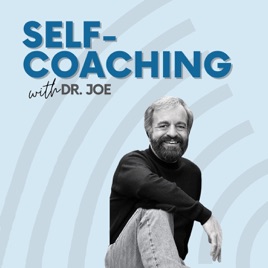
Advertise on podcast: Self-Coaching
Rating
5from
This podcast has
231 episodes
Language
EnglishPublisher
Dr. Joe LucianiExplicit
No
Date created
2020/09/28
Latest episode
2026/01/28
Average duration
20 min.
Release period
17 days
Description
A revolutionary, new approach to alleviating life’s emotional struggles
Unlock Self-Coaching podcast Email contact info,
Listeners & Audience details
Email contact information
Direct podcast contact details

Listeners
Audience numbers & engagement insights

Audience details
Podcast Insights



Podcast episodes
Check latest episodes from Self-Coaching podcast
Why therapy doesn’t always work
2026/01/28
Therapy works. It can reduce suffering, offer clarity, and help people feel less alone in their pain. And yet, many thoughtful, self-aware people quietly ask a question they’re almost embarrassed to voice: If I understand myself so well, why hasn’t my life really changed? In this episode, I explore why therapy doesn’t always work—not because it fails outright, but because relief, insight, and safety are often mistaken for transformation. Feeling better is real progress, but it isn’t the same as living differently.
In this Self-Coaching episode, we’ll look at how therapy can unintentionally become palliative—soothing distress without interrupting the habits that keep recreating it—why insight alone rarely sets us free, and how understanding the past can sometimes delay change in the present. This isn’t an attack on therapy. It’s an honest examination of its limits, and a conversation for anyone who’s been “doing the work” and still feels stuck. If you’ve ever wondered whether therapy is helping you cope—or helping you change—this episode is for you.
Why everything feels harder than it should
2026/01/13
Life often feels hard, not because something is wrong, but because we carry more into each moment than the moment requires. We’re rarely just living; we’re evaluating, interpreting, and judging how we’re doing while we live. That constant self-monitoring turns ordinary tasks into tests and quietly drains energy, leaving us tired even when nothing is falling apart.
In this Self-Coaching episode, I explore why much of our struggle comes not from life itself, but from the overlay of insecurity we add to it. When we stop treating every moment as a measure of our worth, something lightens. Life doesn’t become easy—but it becomes more manageable, more honest, and less exhausting.
Why time seems to fly the older you get
2026/01/05
This podcast explores the psychology behind why time seems to fly as we get older. We don’t experience time directly—we experience moments. When life becomes routine and automatic, those moments blur together, and time appears to disappear.
But when we’re present, attentive, and engaged, moments leave an imprint—and time expands. This Self-Coaching episode looks at how attention, memory, and presence shape our experience of time, and how reclaiming even small moments can change the way life feels.
The winter mind: How shorter days distort our perspective
2025/12/11
In this Self-Coaching episode, I explore what I call the “winter mind”—the subtle psychological shift that occurs as daylight shrinks and our internal sense of possibility shrinks with it. Shorter days don’t just affect our energy; they quietly distort our interpretations, making ordinary stresses feel heavier and old insecurities feel more convincing. I discuss how this seasonal contraction interacts with the habit of insecurity, why our thoughts sound more personal in the quiet of winter, and how small acts of intentional warmth—what Norwegians call koselig—can counter the distortion and restore perspective. Through practical Self-Coaching steps, I show how to meet winter’s narrowing with clarity, steadiness, and renewed trust in your capacity to navigate life as it is, not as the season would have you believe.
Thanksgiving Therapy
2025/11/23
This isn’t your typical “holiday episode.” Thanksgiving has a surprising way of slowing us down, even when we try to outrun it. The gathering, the familiar faces, the rituals—we don’t realize how much they interrupt our usual rushed, distracted rhythm. For one day, life pulls us back into connection, memory, and emotional reality.
In this Self-Coaching episode, I explore why Thanksgiving hits harder than any other day of the year and how it quietly resets us. The warmth, the chaos, even the bittersweet moments all bring us back to what truly matters. It’s a rare chance to step out of autopilot, feel the day, and reconnect with the people and traditions that help us remember who we are.
Compared to Others, How Do I Know If I’m Okay Enough? Normal Enough?
2025/11/10
In this Self-Coaching episode we explore the quiet, relentless habit of measuring ourselves against everyone around us. Whether it’s feeling outmatched in a conversation, watching how easily others seem to navigate life, or seeing social-media posts that make your own progress feel small, comparison turns ordinary moments into silent self-judgments. But these doubts aren’t really about being “normal”—they’re about seeking reassurance that we’re okay, worthy, and not falling behind. Using Self-Coaching principles, we break down why comparison feels so instinctive, how it distorts our sense of self, and how to shift from external measuring sticks to internal self-trust. You don’t become “enough” by matching others—you become enough by reclaiming your own path.
Ending the habit of self-criticism
2025/10/13
You know that little voice in your head—the one that never seems to miss a chance to remind you of what you did wrong, what you should’ve said, or how you’ll probably mess up again? That’s self-criticism, or worse, self-rejection. And for many of us, it’s not just an occasional visitor—it’s a full-time companion. We’ve gotten so used to berating ourselves that we mistake it for motivation, as if tearing ourselves down will somehow push us to do better. But it never does. It only deepens our insecurity and distances us from our authentic self.
The truth is, self-criticism is a learned habit—an internalized voice of fear and self-doubt that’s been running unchecked for years. Maybe it started as a way to protect yourself from failure or rejection—“If I’m hard on myself, no one else can hurt me.” But over time, that protective instinct turns cruel. It becomes the habit of self-rejection, a quiet betrayal of who you really are.
In today’s episode, we’ll explore where this voice comes from, why it feels so powerful, and most importantly—how to begin breaking free from it. Because ending the habit of self-criticism isn’t about becoming perfect or endlessly positive—it’s about reclaiming your right to be human, to be imperfect, and to treat yourself with the same compassion you’d offer anyone you love.
Behind closed eyes: What dreams reveal
2025/10/01
What really happens when we close our eyes at night? Why does the brain weave vivid stories that can make us laugh, cry, or wake up in a cold sweat? In this Self-Coaching episode, we’ll explore the fascinating science of dreaming—what goes on in the sleeping brain, why humans evolved to dream, and how those nighttime narratives may help us process emotions, solve problems, and rehearse for survival.
We’ll dive into the hidden language of the unconscious—exploring the role insecurity plays in shaping our dreams.
4 ways you’re making yourself neurotic
2025/09/10
In this Self-Coaching podcast, I explore the four most common controlling strategies of insecurity—worrying, rumination, catastrophizing, and overanalyzing, also known as analysis-paralysis. These strategies are our reflexive attempts to compensate for insecurity—at its core, the fear that we can’t handle life as it unfolds. Over time, we come to rely on these strategies in an effort to feel safe and in control.
The problem is, what starts as a coping mechanism quickly becomes a habit. And although these strategies may give the illusion of control, they inevitably generate stress. That stress, in turn, fuels ongoing emotional struggle.
How vulnerability and insecurity can ruin your life
2025/08/18
Have you ever walked into a room and instantly felt all eyes on you? That tightness in your stomach, the heat rising to your face—you feel exposed, judged, vulnerable. It’s a universal experience. But here’s the thing: vulnerability by itself isn’t the problem. The real problem begins when vulnerability turns into insecurity—when self-doubt, fear, and the feeling of ‘I’m not good enough’ take over. That’s when life starts to shrink. Relationships suffer, careers stall, happiness fades.
In today’s Self-Coaching episode, I want to show you how vulnerability and insecurity, left unchecked, can quietly ruin your life. We’ll delve into the origins of these feelings, explore why they’re ingrained in us, and, most importantly, discover how awareness can help them take a backseat. Understanding the vulnerability-insecurity loop may change the way you look at your struggles forever.
Impostor Syndrome: Why You Never Feel Good Enough
2025/08/04
Have you ever had that nagging feeling that you don’t really belong? Where everyone around you seems smarter, more capable, more together—and it’s only a matter of time before they find out you’re a fraud? That’s not just self-doubt talking. That’s something called Impostor Syndrome—and you’re not alone.
In this Self-Coaching episode, I break down what this nefarious syndrome is, how it became part of your life in the first place, and the real, ironic reason it continues to hold you back.
Self-criticism—why do we beat ourselves up?
2025/07/21
Have you ever caught yourself thinking something like… ‘I’m so stupid…I can’t do anything right… everyone else has it together—why don’t I?’ If so, you’re not alone. Most of us talk to ourselves in ways we’d never speak to a friend. We push, criticize, blame, and shame ourselves—often without even realizing it. But why? Why are we so hard on ourselves?Both Self-criticism and what’s called negative bias are inherent aspects of the human psyche that evolved to protect us from reckless behavior. When, however, insecurity gets involved, then rather than protecting us, self-criticism becomes a psychological cudgel leading to stress, anxiety, and depression.
In this week’s Self-Coaching podcast, we’re digging into the psychology behind self-criticism—where it comes from, how it affects us, along with 5 steps to help you start being a little kinder to yourself.
You don’t need to be fearless; you need to fear less–7 signs you might be too fearful
2025/07/07
Fear is a natural, protective part of life. Without fear, our species would long ago have become extinct. In this Self-Coaching podcast, I discuss not how to become fearless (that would be dangerous) but how to fear less.
How do you know if you’ve become too fearful? I offer seven signs to help you differentiate between realistic, unavoidable fear, versus your level of neurotic, unnecessary fear. It’s important to understand that neurotic fear has a systemic, corrosive effect on your happiness, your mental health, and your physiology.
How to stop procrastinating
2025/06/23
What’s so bad about procrastinating? For starters, procrastination slowly erodes the quality of your life by turning your days into a series of missed opportunities and mounting stress. When you delay important tasks, you trade long-term growth and peace of mind for short-term comfort. Over time, this leads to constant pressure, guilt, and a lingering sense that you’re falling behind. Goals remain unfulfilled, relationships suffer from broken promises, and your confidence takes a hit as unfinished responsibilities pile up. What begins as a harmless habit quietly chips away at your time, your potential, and ultimately, your sense of purpose.
Procrastination isn’t a character flaw; it’s a habit. In this Self-Coaching podcast, join me as I discuss ways to overcome the needless tendency to avoid handling life more directly, in the moment, rather than kicking the can of responsibility down the road toward some vague future.
What to do when boredom hijacks your life
2025/06/09
Maybe you’re not depressed and you’re getting along as well as can be expected, but maybe you’re feeling aimless, unfulfilled, or disconnected from a sense of purpose. Or maybe you’re holding out for some clear, passionate, lightning-bold kind of ‘ah-ha’ revelation that will rescue you from your ho-hum life. If this sounds like you, then perhaps this Self-Coaching podcast is just the ticket for understanding how boredom has become nothing more than a habit that can be challenged and replaced with your innate potential for living a more stimulating life.
Podcast sponsorship advertising
Start advertising on Self-Coaching relevant audience podcasts
You may also like to advertise on these Podcasts

4.41317133
Scream!
Ash & Alaina & Caleb | Morbid Network
4.846302000
Pat Gray Unleashed
Blaze Podcast Network

4.7535420
Religion on the Mind
Dan Koch

4.7952562
Ride the Lightning: Tesla and EV Podcast
Ryan McCaffrey

4.420131306
History Daily
History Daily

4.414755969
The Bossticks
Lauryn Bosstick and Michael Bosstick / Dear Media

4.748681017
Forever35
Doree Shafrir & Elise Hu

4.3246500
Locked On Reds - Daily Podcast On The Cincinnati Reds
Locked On Podcast Network, Jeff Carr, Steven Offenbaker

3.44591090
Palace Intrigue : Royal Family gossip
Caloroga Shark Media / The Daily Royal Family Podcast

4.71923553
The StoryBrand Podcast
StoryBrand.com