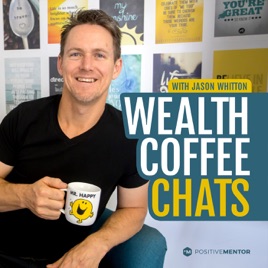
Advertise on podcast: Wealth Coffee Chats
This podcast has
1016 episodes
Language
EnglishPublisher
Jason WhittonExplicit
No
Date created
2020/12/09
Latest episode
2026/04/23
Average duration
21 min.
Release period
3 days
Description
Looking for a daily update on creating the wealth of your dreams? Do you want property investment explained in a simple language? Do you want to learn it whilst sipping on your coffee? Then you’re in the right place! Join me for a daily coffee and chat about all things wealth. With a strong focus on real estate wealth, you’ll cut through the confusion and overwhelm that stops most people in their investment tracks. For the live edition of the episode, where I can answer your questions live, join me on Facebook
Unlock Wealth Coffee Chats podcast Email contact info,
Listeners & Audience details
Email contact information
Direct podcast contact details

Listeners
Audience numbers & engagement insights

Audience details
Podcast Insights

Podcast episodes
Check latest episodes from Wealth Coffee Chats podcast
Millionaires by Patience and the 2026 Rate Hike Reality Check
2026/04/23
They say the fastest way to become a millionaire in Australia was to buy a house in 1995 and simply stop checking the price for 30 years. But in April 2026, the "buy and wait" strategy is facing a new gauntlet of economic pressure. With the RBA signaling that rates aren't high enough and Westpac predicting a climb to a 4.85% cash rate by August, the "noise" in the market is louder than ever. This Finance Friday edition of Wealth Coffee Chat cuts through the panic to focus on what you can actually control: your loan structure. We break down why the "cheapest rate" is often a trap and how the right combination of offsets, splits, and debt recycling can protect your portfolio even if the RBA pulls the trigger on three more hikes.
What We Covered
The 2026 RBA Forecast: A breakdown of the current warnings from Deputy Governor Andrew Hauser and the diverging predictions between the Big 4—ranging from one more hike to Westpac’s aggressive three-hike outlook for May, June, and August.
The Spending Paradox: Why March data shows mortgage holders are actually spending at double the rate of non-mortgage holders, and the vulnerability this creates as the labor market tightens.
The Rise of Non-Bank Lenders: Why investors are migrating away from the Big 4 to maximize borrowing capacity as traditional servicing buffers become too restrictive.
Fixed vs. Variable vs. Split: Strategies for "hedging your bets" by fixing a portion of your debt for cash flow certainty while keeping a variable split for aggressive repayment.
The Offset vs. Redraw Showdown: A deep dive into why an offset account is technically and strategically superior to a redraw facility, focusing on bank control, liquidity, and daily interest calculation.
Principal & Interest vs. Interest-Only: How the shift from 30-year to 5-year interest-only terms impacts your borrowing power and why you should align your cash flow with long-term acquisition goals.
Debt Recycling 101: A step-by-step look at taking cash savings, paying down non-deductible home debt, and redrawing it for investment purposes to convert "bad debt" into "good, tax-deductible debt."
3 Takeaways
Structure Trumps Rate: A "basic" loan with a low rate might seem like a win, but if it lacks an offset account or the ability to split, it could cost you thousands in lost flexibility and tax-deductible opportunities. Don't let a 0.10% rate difference blind you to a poor structural fit.
Control Your Cash with Offsets: Avoid the "Redraw Trap." In a crisis, banks can (and have) frozen redraw facilities because they technically control those funds. An offset account keeps the money in your name and under your control while providing the exact same interest-saving benefits.
Be Proactive with Debt Recycling: If you have 200,000 in an offset account for a future deposit, you are missing a massive tax trick. By paying that money into your home loan and redrawing it as a separate split, you transform that portion of your mortgage into an investment loan with a home loan rate—a double win for your tax return and your interest bill.
The EOFY Countdown: Why Your Accountant Needs Your Advisor in the Room
2026/04/23
With only two months left in the 2026 financial year, the window for proactive tax planning is closing fast. In this episode of Coffee Chats, Alex breaks down why waiting until July to see your accountant is the most common mistake investors and business owners make. We explore the critical "middle ground" between minimizing tax and maintaining the borrowing power needed for future property acquisitions. As the May 12 Federal Budget approaches, this episode provides a high-level framework for finishing the year strong and ensuring your tax outcome aligns with your long-term wealth goals.
What We Covered
The Planning Window: Why April and May are the "Action Months," and why doing anything in July is strictly record-keeping rather than planning.
The Advisor-Accountant Collaboration: How a financial advisor bridges the gap by looking at future acquisitions while the accountant focuses on historical compliance.
The Lending Trap: A warning on "over-minimizing" tax. Why a perfect tax return can accidentally destroy your borrowing capacity and prevent you from settling on new investment properties.
Deduction Nuances: A look at the "Repair vs. Improvement" rule using the hot water system example—and why your expectations for a deduction might not match the ATO's definition.
Implementation Deadlines: The "Two-Week Rule" for superannuation and bank transfers to ensure funds land before the June 30 cutoff.
The 2026 Budget Impact: Preparing for the May 12 announcements and how they might necessitate a last-minute refinement of your EOFY strategies.
Record Keeping & Tech: A discussion on software alignment (like Xero) and the importance of digital receipt capture to prevent "leakage" at the end of the year.
3 Takeaways
Don't Let Tax Savings Kill Your Loans: If you plan on purchasing property in the next 12 months, tell your accountant before they minimize your taxable income. You need a balance between paying less tax and showing enough income to satisfy your broker’s lending criteria.
Respect the "Two-Week" Buffer: June 30 is the legal deadline, but June 15 is the practical one. Bank transfers and super contributions that don't "land" in the recipient's account by midnight on the 30th will not count for this financial year.
Repair vs. Improvement Clarity: Before spending money on an investment property, understand that "maintaining" an asset is usually an immediate deduction, while "upgrading" it is a capital cost that is depreciated over time. Knowing the difference changes your cash flow forecast.
The "Ghost Profit" Trap: Navigating Tax and Tensions in the 2026 Energy Shock
2026/04/20
We are entering a "genuinely interesting" economic moment—the kind where an accountant’s phone call usually starts with bad news. With the conflict in the Middle East escalating and the Strait of Hormuz effectively restricted, oil prices and freight costs are surging just as inflation was beginning to cool. This episode breaks down the "leading edge" of this crisis: the dangerous mismatch between your 2025 profits and your 2026 cash flow. Your tax bill is based on a version of your business that no longer exists, and if you haven't built a buffer, the ATO is about to become your most expensive creditor.
What We Covered
The 2026 Macro Reality: A look at how record-high oil prices and shipping disruptions are flowing through to the "invoice stack," creating a lag that catches businesses off guard.
The Timing Mismatch: Why tax is calculated on last year's profit, collected from this year’s cash, and paid under today’s tightening conditions.
The Five Exposed Weaknesses: * No Tax Buffer: The danger of using tax money as working capital when revenue begins to slow.
Over-Reinvestment: Why hiring ahead of demand and expansion leaves you with zero liquidity for fuel and freight shocks.
Messy Structures: How undocumented inter-entity loans and Division 7A exposures become big red flags during economic tightening.
Late Lodgments: Why the belief that you’ll "catch up later" draws the ATO’s attention exactly when you least want it.
No Forward Planning: The high cost of reactive decisions when you haven't modeled worst-case scenarios.
The ATO's Sharp Focus: Understanding why compliance focus sharpens in a crisis and the very real risk of Director Penalty Notices.
The Offensive Opportunity: How maintaining a "boring" buffer allows you to stay liquid and find acquisitions, talent, and entry points while your competitors are frozen in damage control.
3 Takeaways
Lodge Even if You Can't Pay: Maintaining compliance is "goodwill" with the ATO. A late lodgment is a crisis, while an on-time lodgment without payment is a manageable conversation. Keeping your paperwork up to date stops penalties from accumulating and keeps you under the radar of automated compliance triggers.
Vary Your PAYG Installments Immediately: If your 2026 conditions are materially harsher than 2025, do not pay "ghost tax" based on last year’s peak. Work with your accountant to proactively vary your installments down to protect your current cash flow.
Run a 30-Minute Crisis Test: Map out exactly what happens to your margins and tax position if fuel/freight costs rise by 15% and revenue drops by 20%. Knowing the unpleasant reality now prevents you from being forced into expensive, reactive decisions under pressure later.
The 18-Year Property Cycle: Navigating the CGT Cliff and Market Noise
2026/04/20
It’s Monday, April 20, 2026, and the property market is buzzing with speculation. With the May 12 budget looming, rumors are swirling about a significant reduction in the Capital Gains Tax (CGT) concession—potentially dropping from 50% to 25%. In today’s Wealth Coffee Chat, Emily breaks down why this "noise" is nothing new when viewed through the lens of the 18-year property cycle. We take a look back at the "Blackboard of Challenges" from 2008 to today and explain why the fundamentals of a good asset always outweigh the headlines of the day.
The CGT Concession Shift: A deep dive into the prospective budget changes. If you hold an asset for more than 12 months, your 50% tax concession may soon be slashed in half.
The 18-Year Property Cycle: Understanding the macro-cycle that began with the GFC in 2008 and is slated to find its current "end" around 2026–2027.
The Blackboard Retrospective: A look at the gauntlet investors have run over the last two decades:
2008: The Global Financial Crisis (GFC).
2016: Previous CGT reform threats.
2017: The Royal Commission into Banking.
2019: The "Credit Squeeze."
2020: The COVID-19 pandemic.
2022–2024: 13 consecutive interest rate rises.
Time in the Market vs. Timing the Market: Why exiting the market during "uncertainty" (like 2019 or 2022) has historically cost investors hundreds of thousands in missed capital growth.
Brisbane Case Study (2022): Emily shares a personal story of purchasing a Brisbane property at the "top of the market" right before rate rises began—and why that property has already doubled in value despite the negative headlines.
The 4X Growth Plan: Reaffirming the importance of buying into areas with low supply and high demand, regardless of current policy shifts.
The property market rarely moves in a straight line. By understanding the typical stages of a long-term cycle, investors can avoid making "blinkered" decisions based on short-term fear.
Don't Let the Tax Tail Wag the Investment Dog: While CGT changes are important for your "exit strategy," they don't change the quality of an asset. If a property is fundamentally sound, a tax tweak shouldn't stop you from building wealth.
Short-Term Memory is an Investor's Enemy: We have survived rate rises, pandemics, and global crashes before. Each time the media says "it's the end," the market eventually finds its feet and continues its upward trajectory.
Hindsight vs. Foresight: It is easy to look back at 2020 and say, "I should have bought." It is much harder to look at 2026 and say, "I will buy." Focus on the long-term fundamentals (location, schools, infrastructure) rather than the "bleeding" headlines.
The 2026 May Budget Collision: Interest Rates, CGT Cuts, and the LMI Strategy
2026/04/17
As we head into the "Twin Dates" of May 2026—the predicted RBA hike to 4.35% and a potentially landscape-shifting Federal Budget—investors are facing a crossroads. In this Finance Friday edition, we break down why the "old rules" of saving a 20% deposit might actually be costing you more in the long run. We explore the tactical use of Lenders Mortgage Insurance (LMI), the impending changes to CGT and negative gearing for residential property, and how a Family Guarantee can help the next generation bypass the banks' high-risk premiums.
What We Covered
The May Countdown: Why the 4.35% rate rise is seen as "guaranteed" by economists, effectively undoing all of 2025's rate cuts in just five months.
Federal Budget Alert: Preparing for the proposed cuts to the CGT discount and potential caps on negative gearing.
LVR Math: Why an 88% loan (with 2% capitalized LMI) is often more cost-effective and structurally sound than a flat 90% borrow.
The LMI "Protection" Myth: Understanding that you are paying to protect the lender, not yourself—and why that is sometimes a price worth paying to avoid "deposit-saving purgatory."
Medical Professional Warning: A look at high-LVR loans (up to 110%) and how banks often "blend" rates to hide higher costs in split structures.
Family Guarantees: How to leverage a parent’s equity to hit 100% borrowing while avoiding LMI entirely, including the risks involved for the guarantor.
Opportunity Cost: Why waiting 18 to 24 months to save a full 20% deposit often results in "chasing a moving target" as property values climb faster than your savings.
3 Takeaways
Time in Market Beats Timing the Market: LMI is a one-off fee. In a growing market, the capital growth you achieve by entering 12 to 24 months earlier often far outweighs the cost of the insurance premium.
Strategy Over Sentiment: Even if negative gearing rules are tweaked in the upcoming budget, the core strategy remains the same: Buy well and hold. CGT changes only impact you if you intend to sell.
Discipline is a Data Point: Banks value "Genuine Savings" over gifted funds because it proves you have the behavioral discipline to manage a mortgage. If you use gifted funds, be prepared to show at least 3 months of consistent savings to satisfy the "First Filter."
The "Money In, Money Out" Blueprint: Mastering Your 2026 Cash Flow
2026/04/16
After a brief tech-induced hiatus, Alex is back to bring the high-level economic talk back down to base: your personal budget. In an era of $3.50 fuel and international volatility, it’s easy to feel like you’ve lost control of your finances. This episode simplifies the "dreaded" budget into a basic mechanical tool. Using a 2026 household example with a $177,000 income, Alex demonstrates how to find an extra $5,000 in monthly cash flow by using a "generous" budgeting style. We move away from restrictive, "tired-ass" accounting and toward a simple, three-account system designed to offset interest and build a war chest for future investments.
What We Covered
The Simplicity Mantra: Why a budget isn't a restriction, but a simple map of "Money In vs. Money Out."
The MoneySmart Tool: Utilizing the federal government’s budget planner to establish a baseline before making any strategic investment moves.
The $1,500 "Life Buffer": Why you must allow for "random things" (coffee, gifts, repairs) in your budget to avoid "analysis paralysis" or abandonment of your strategy.
The 177k Case Study: A breakdown of a typical 2026 couple’s income, showing how $15,000/month is allocated across mortgages, health insurance, and discretionary spending.
The Three-Account Strategy: 1. The Offset Hub: Where all income lands to minimize mortgage interest.
2. The Investment Account: For consistent transfers into shares or property equity.
3. The War Chest: A dedicated liquidity bucket for emergencies and holidays.
Consistency vs. Timing: Why the recent 7% market rebound proves that consistent investing beats trying to "time" global conflicts or inflation peaks.
The Offset Advantage: Why 9 out of 10 clients benefit from an offset account as their primary financial hub.
3 Takeaways
Budget for a Real Life: Don't be too harsh on your discretionary spending. If your budget is so strict that you can’t buy a cup of coffee, you won't stick to it. Give yourself a generous buffer so the "surplus" is a realistic number you can actually invest.
Simplicity Over Complexity: You don’t need 17 bank accounts. A three-bucket system (Offset, Investment, War Chest) is manageable, transparent, and more effective for long-term wealth building.
Know Your Numbers Before Your Project: Just as you wouldn't start a bathroom renovation without a quote, don't start a property portfolio without a budget. Knowing your exact net cash flow prevents you from underestimating your potential or overextending your risk.
The Car vs. Castle Trap: Why Your 2026 Upgrade Could Cost You a Property
2026/04/13
In this Monday morning edition of Wealth Coffee Chats, Rosie and Jared tackle one of the biggest "wealth killers" in a property investor's journey: the depreciating car. While we all love the smell of a new car—and Jared has his eyes on a Lamborghini—the reality is that car finance "smashes" your borrowing power. In this episode, we discuss the power of delayed gratification, including Jared’s personal story of his family driving a beat-up hatchback while acquiring five properties, and why a "cool" novated lease might be the very thing stopping you from securing your next $350k+ investment.
What We Covered
Need vs. Want: Distinguishing between the car you need to get from A to B and the "ego upgrade" that stalls your portfolio.
Delayed Gratification: Jared's case study on how keeping a 26-year-old runaround allowed his family to focus cash flow on bricks and mortar during their acquisition phase.
The Borrowing Power Multiplier: A critical rule of thumb: having an extra $5,000 in your bank account can increase your borrowing capacity by approximately $30,000.
The Hidden Cost of Finance: Why a $35,000 car often ends up costing $50,000 once interest and bad debt are factored in over a 7-year term.
The Novated Lease Trap: Real-world examples of clients who took on a lease for tax benefits, only to find they were no longer eligible for the investment property they actually wanted.
Good Debt vs. Bad Debt: Understanding why banks view a car loan as a high-risk liability while viewing property as an appreciating asset.
Goal Shifting: How to move "luxury purchases" further down your 10-year plan so they are funded by property equity rather than your hard-earned salary.
3 Takeaways
Prioritize Acquisition First: If you are in your property-building phase, a new car is a handbrake. Aim to acquire your target number of properties before upgrading to a luxury vehicle.
Run the Numbers, Not the Emotions: Before signing any car finance or lease, talk to your coach or broker. A "small" monthly car payment can reduce your potential property loan by six figures.
Assets Over "Dust Collectors": Be willing to sell the caravan or the "weekend car" to bridge the gap for a property deposit. Turning a depreciating item into a deposit can bring your retirement goals forward by years.
The First Filter: Why Your Credit Score is the Key to Surviving the 4.1% Market
2026/04/10
Welcome to this Finance Friday edition of Wealth Coffee Chat. As we navigate the post-Easter landscape of April 2026, the "variable rate" has become the bill that arrives every time a group of economists meets. With the cash rate sitting at 4.1% and a May hike predicted to undo all of 2025’s relief, mortgage affordability is hitting a critical 30–40% of after-tax income. In this episode, we pull back the curtain on the bank’s "First Filter": your credit score. We explore how "Comprehensive Credit Reporting" has changed the game, why "window shopping" for loans online can accidentally tank your borrowing power, and the hidden traps waiting for business owners in their company credit files.
What We Covered
The 2026 Rate Reality: Analyzing the current 4.1% environment and why the upcoming May RBA meeting could effectively erase last year's rate cuts.
The 40% Threshold: A look at the "new normal" where Sydney residents are now committing nearly half of their take-home pay to mortgage repayments.
Credit Score vs. Behavior: Why lenders prioritize your "numeric reflection of risk" over simple income figures and how small habits have outsized effects.
Comprehensive Credit Reporting (CCR): How banks now see a rolling 24-month history of your "on-time" payments—turning your positive behavior into a negotiation lever.
The Inquiry Trap: Why performing your own "research" via online lender forms can register as multiple credit inquiries and disqualify you from top-tier rates.
The No-Credit Paradox: Why having zero debt history (prepaid phones, no credit cards) can actually make you "un-lendable" to major banks.
The Business Owner’s Blindspot: The importance of checking non-trading company credit files to ensure "ghost" debts from years ago don't stall your current personal applications.
Non-Conforming "Pathways": How to use high-interest, non-conforming lenders as a 6–12 month bridge to repair a damaged credit file.
3 Takeaways
Inquiries are Not Research: Every time you hit "submit" on a lender's website to check your borrowing power, you risk a permanent mark on your credit file. Use a broker to protect your score while you shop around.
CCR is Your Best Friend (or Worst Enemy): Under Comprehensive Credit Reporting, every single on-time payment for a mobile phone or utility bill acts as a "vote" for your reliability. Consistency is the primary way to fix a low score.
Check Every Entity: If you are a business owner, your personal credit file is only half the story. One forgotten $50 bill in an old, unused company entity can trigger an automatic "no" from a lender’s automated system.
Stagflation 2026: The "Hidden" Economic Threat and Why Your Strategy Shouldn't Change
2026/04/02
In this episode of Wealth Coffee Chats, Alex dives into the economic phenomenon that many investors haven’t seen since the 1970s: Stagflation. While we are all familiar with inflation and the looming threat of recession, stagflation is a far more complex "neutral" trap—combining stagnant growth, high inflation, and a softening labor market. With the Middle East conflict pushing fuel prices toward $3.50/L, Alex unpacks how this energy-driven shock is creating a bottleneck in everything from construction levies to grocery prices, and what it means for your portfolio when traditionally "safe" assets like bonds and gold are under pressure.
What We Covered• Defining Stagflation: A breakdown of the triple-threat: weak real growth, elevated inflation, and a softening labor market.• The 1970s Mirror: Why current conditions (Middle East disruptions and oil shocks) are drawing direct parallels to the last major stagflationary period in Australia.• The Central Bank Dilemma: Why stagflation is harder to fight than a standard recession; raising rates helps inflation but risks crushing an already weak job market.• The $3.50 Fuel Reality: How the current oil spike isn't just a pump price issue, but a systemic cost that flows through "essential ingredients" like plastics, food, and construction delivery levies.• Asset Class Performance: Why equities, bonds, and even crypto are struggling simultaneously in the current environment, leaving very few places for capital to "hide."• The "Sell" Fallacy: Why selling out of investments during a downturn often solidifies losses and leaves your capital exposed to the value-eroding effects of high inflation.
3 Takeaways1. Stagflation Changes the Rules: Unlike a recession, which typically pressures interest rates down, stagflation forces central banks to keep rates high to fight rampant inflation, even as unemployment begins to rise.2. Energy is the Essential Ingredient: The current volatility is a "supply-side" shock. Because fuel is a component in almost every consumable, its price spike acts as a mandatory tax on the entire economy that interest rate hikes can't easily fix.3. Strategy Over Sentiment: When markets "yo-yo" and assets underperform, the most dangerous move is to abandon a long-term strategy. Holding cash during high inflation is a guaranteed loss of purchasing power; staying the course ensures you participate in the eventual market uplift.
Div 296 is Now Law: The $3M & $10M Super Tax Survival Guide
2026/03/31
In this final wrap-up of the Division 296 superannuation tax, financial advisor Anthony Wolfenden breaks down the legislation that officially passed Parliament on March 10, 2026. We move past the speculation to look at the final law, which has fortunately abandoned the controversial taxation of unrealized gains. This episode provides a technical roadmap for high-balance members and SMSF trustees, focusing on critical deadlines for cost-base resets and strategic balance reductions before the first mandatory measurement on June 30, 2027.
What We Covered
• The Legislative Timeline: Key dates including the July 1, 2026 commencement and the June 30, 2027 measurement date that determines your first tax liability.
• The Two-Tiered Threshold: How the tax applies to balances above $3 million (additional 15% tax on earnings) and balances above $10 million (additional 25% tax on earnings).
• Threshold Indexation: A major win for taxpayers—unlike previous proposals, the $3M and $10M limits will now be indexed to the CPI in $150,000 and $500,000 increments respectively.
• The "Jack" Case Study: A step-by-step calculation showing how a $15 million balance with $1 million in earnings results in a new personal tax liability of $153,333.
• The June 30, 2026 Cost-Base Reset: Why SMSF trustees must act before the end of this fiscal year to reset asset values and shield historical growth from future Div 296 taxes.
• Personal vs. Fund Liability: Understanding that this tax is levied against the member personally, with 84 days to pay from personal cash or by nominating the super fund.
• Strategic Alternatives: Comparing the effective tax rates of Super (up to 40% for the top tier) against bucket companies and investment structures for balances exceeding $10 million.
3 Takeaways
1. The Cost-Base Reset is Urgent: SMSF trustees have a one-time opportunity as of June 30, 2026, to lock in historical gains. Failing to reset your cost base could mean paying Div 296 tax on growth that occurred years before the law existed.
2. FY27 is a "Grace Year" for Balances: Because the ATO is only measuring the balance at the end of the first year (June 30, 2027), members have roughly 15 months to strategically reduce balances below the thresholds to avoid the tax entirely.
3. Super is Still the "Best" Under $10M: Despite the new tax, an effective rate of 30% for balances between $3M and $10M is still significantly lower than the top marginal tax rate of 47%, making Super a viable holding vehicle for most.
Black Swan Events: Navigating Property Growth During Global Crises
2026/03/30
In this episode, property coach Megan Wolfenden breaks down the "Black Swan" theory and explains why unpredictable global events—from the GFC and COVID-19 to the 2026 fuel crisis—often serve as the ultimate catalyst for property price and rent surges. By analyzing over 30 years of historical cycles, we explore why the period immediately following a crisis is often the most lucrative window for building a resilient portfolio and why investors must learn to distinguish between media-driven fear and data-driven opportunity.
What We Covered
The Black Swan Defined: An exploration of unpredictable events that fall outside normal expectations but carry severe, market-altering impacts.
Psychology vs. Math: Understanding the "Timeline of Emotions" in a property cycle and why the point of maximum fear often aligns with maximum financial opportunity.
The Failure of Predictions: Why major bank forecasts of "market bloodbaths" (like the 20–30% drop predicted in 2020) are frequently corrected by aggressive government stimulus and V-shaped recoveries.
The Post-Crisis Rental Surge: How lockdowns and supply chain disruptions stall construction, leading to the record-low vacancy rates and high yields we see in the 2026 market.
Hyper-Growth Windows: A look at how capital growth can accelerate to 10% in as little as six months during the "Optimism Phase" following a global reset.
Inflation & Fuel in 2026: Analyzing the 1% impact on headline inflation caused by rising fuel costs and why this triggers non-demand-led interest rate hikes.
Portfolio Stress-Testing: Why investors should focus on lowering household expenses today to secure cash flow and long-term wealth for tomorrow.
3 Takeaways
Crises Act as Market Resets: While Black Swan events cause initial panic, they typically trigger a reset that leads to steeply accelerating property values and rental yields in the recovery phase.
Data Trumps Headlines: Media-driven fear often ignores the long-term resilient upward curve of Australian property; successful investors stay focused on historical trends rather than short-term shocks.
Preparation is the Best Defense: Wealth is protected by stress-testing your portfolio against higher interest rates and accepting "short-term pain for long-term gain" through disciplined cash flow management.
RBA Rate Rise 2026: Borrowing Power & Cash Flow Tips
2026/03/27
In this episode of Wealth Coffee Chats, we break down what the latest interest rate rises mean for mortgage holders, property investing, and your overall wealth strategy. The conversation covers why the official cash rate has climbed, how inflation and global pressures are affecting finance, and why property prices may still keep rising despite tighter lending conditions. You’ll also learn how lenders assess borrowing power, why cash flow matters more than income alone, and what practical steps you can take to strengthen your position.
EV Novated Lease Explained: Save Tax or Cost You More?
2026/03/26
With fuel prices surging, many Australians are asking whether an EV novated lease is now a smarter finance strategy. In this episode, we break down how novated leasing works, the tax benefits of buying an electric vehicle with pre-tax income, and the real numbers behind ownership costs. It is a practical look at finance, cash flow, tax savings, borrowing power, and wealth strategy so you can make a more informed decision before committing.
Renters Reality Check: Why Rents Are Rising & What Investors Must Know
2026/03/25
Rents are rising—and the data is backing it up. In this episode, we unpack the latest rental market insights, including tightening vacancy rates, supply shortages, and shifting tenant expectations around lifestyle and location. Discover why A-grade properties are outperforming, how migration and demand are driving competition, and what this means for both renters and property investors looking to maximise cash flow and long-term returns.
ATO Trust Crackdown Explained: Hidden Tax Risks That Could Cost You Millions
2026/03/24
The ATO is cracking down on trusts—and the biggest risk isn’t what you’re doing next, it’s what you’ve already done. In this episode, we break down how family trusts work, why they’ve become a target for regulators, and the serious consequences of getting it wrong. Learn how past trust distributions, outdated advice, and poor documentation could trigger massive tax bills, and what you should be doing right now to stay protected.
Podcast reviews
Read Wealth Coffee Chats podcast reviews
Podcast sponsorship advertising
Start advertising on Wealth Coffee Chats relevant audience podcasts
You may also like to advertise on these Podcasts

4.96735333
Past Gas
Donut Media

4.831091251
The Late-Round Fantasy Football Podcast
iHeartPodcasts

4.62902000
On Texas Football
Bobby Burton

4.131061265
No Filter With Zack Peter
Zack Peter

4.81107858
Limited Resources
Marshall Sutcliffe

4.9167572000
The GaryVee Audio Experience
Gary Vaynerchuk

4.9244351271
Unashamed with the Robertson Family
Tread Lively

4.619412736
All Ears English Podcast
Lindsay McMahon and Michelle Kaplan

4.742561602
Dan Snow's History Hit
History Hit

4.6121851045
10% Happier with Dan Harris
10% Happier