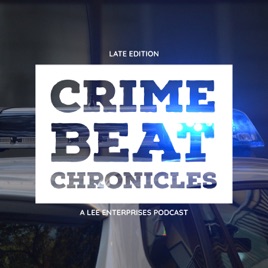
Advertise on podcast: Late Edition: Crime Beat Chronicles
Rating
4.7from
This podcast has
68 episodes
Language
EnglishPublisher
Lee EnterprisesExplicit
No
Date created
2020/12/21
Latest episode
2024/02/05
Average duration
20 min.
Release period
14 days
Description
Late Edition: Crime Beat Chronicles, a product of Lee Enterprises, is a collection of limited anthology style episodes exploring true stories as told by journalists from regional newspapers around America.
Unlock Late Edition: Crime Beat Chronicles podcast Email contact info,
Listeners & Audience details
Email contact information
Direct podcast contact details

Listeners
Audience numbers & engagement insights

Audience details
Podcast Insights

Podcast episodes
Check latest episodes from Late Edition: Crime Beat Chronicles podcast
The Orangeburg Massacre: A peaceful protest met with violence, who was held responsible and how the victims are remembered
2024/02/05
In 1968, a peaceful civil rights protest turned deadly in Orangeburg, South Carolina. Known as the Orangeburg Massacre, it became known as one of the most violent events of the civil rights movement, but details aren't widely known. Host Nat Cardona is again joined by subject matter expert Dr. William Heine to discuss how peaceful protestors were met with violence, what happened to the victims, and who was- or wasn't- held responsible for the bloodshed. The two also discuss how the victims are remembered today.
Listen to Episode 1 of the Orangeburg Massacre
Read more here and here and here.
Episode transcript
Note: The following transcript was created by Adobe Premiere and may contain misspellings and other inaccuracies as it was generated automatically:
Welcome to Late Edition Crime Beat Chronicles. I'm your host Nat Cardona. In the last episode, we discuss the climate leading into the 1968 Orangeburg Massacre in Orangeburg, South Carolina. If you haven't listened to that episode, please go back and listen. There's a link in the show notes to help make it easier for you to find. In this week's episode, I'm again joined by Dr. William Heine. He's a former history professor at South Carolina State University. We discuss in detail how the peaceful protest by students was met with violence from law enforcement. We also go into who was or wasn't held responsible for the deaths of three students and the wounding of more than 20 others. And with that, let's get to it.
So you have this pressure cooker of tensions for the handful of years nights before the actual event happens. What's the tipping point? What's the the other shoe that drops to turn from. You know, a lot of tension to violence. What were the what was the thing that happened that night? That's that's that's it. There was nothing. I mean, they were they're they're fronted each other and went back and forth or time. As I mentioned, there was a bonfire that was was put out.
People continued to throw things at one point and officer of the highway patrol, a man named Shelly, got it. Looked like he'd been shot almost literally between the eyes. He went down at least semi-conscious for a period of time, bleeding profusely, and it appeared as if he had been been shot from the direction of the students. As it turned out, he had not been shot.
He'd been hit with a heavy piece of timber. It had opened a wound on his forehead. They took him off after the hospital and at least another 10 minutes or more elapsed after Shelly was hit with the with the timber. A lot of people were at the time and sense under the mistaken impression, well surely got hit and then the highway patrolman opened fire.
It didn't happen. It did not happen that way. They opened fire with no announcement that they were going to fire. Nobody said lock and load or know you have one minute or and 80 seconds to retreat or we're going to open fire. It wasn't announced. They just simply started shooting. Not all the highway patrolman shot. There were 66 of them aligned along the embankment and kind of curled around at right angles toward an unoccupied house next next door to the campus there.
Some opened fire, some did not. Most of the students were hit in the back as they turned to run from the shotgun blast and more than 30 were were hit and three were killed and at least 28 were injured, some superficially, some very seriously. Note that there was no ready, aim, fire. It was just a spontaneous opening of a fire.
The later it was, it was determined that apparently one of the highway patrol officers had fired a warning shot into the air with his sidearm and others not realizing that opened fire. You're hearing a a weapon go off. That's been about the best determination of how the highway patrolman came to open fire that night, roughly 10:30, 10:45 on February eight.
Okay. So you have a bunch of these young people wounded. Three young men ultimately are massacred or killed. Can you talk a little bit a
How The Monkees ended up with an FBI file
2024/01/08
Marvin Gaye. Jimi Hendrix. The Beatles. John Denver. The Monkees. All successful musical acts… with FBI files. In this week’s episode of Late Edition: Crime Beat Chronicles, the Tulsa World’s Randy Krehbil joins show producer/editor Ambre Moton to take a look at how the city of Tulsa was central to The Monkees hitting the FBI’s radar as persons of interest.
Episode transcript
Note: The following transcript was created by Adobe Premiere and may contain misspellings and other inaccuracies as it was generated automatically:
Boy bands are pretty popular nowadays, and most people probably credit the Beatles for the creation of the phenomenon. But some people remember the Monkees, a group often referred to as the Pre-Fab Four, a U.S. pop band that was created in 1968 for a television show of the same name that originally aired for two seasons and then went on to become a legitimate pop band in its own right.
Welcome to Late Edition Crime Beat Chronicles, a Lee Enterprises Podcast. I'm Ambre Moton, the show's producer and editor. Back with another story that you may not think of as a traditional true crime case.
Okay. The band, it consisted of Micky Dolanz, Davy Jones, Michael Nesmith and Peter Tork. The show played well to both fans and critics and performed well in its original run and through syndication and Saturday morning repeats.
The show is a scripted comedy, all about the four bandmates struggling to make it in the music business. And of course, the hijinks that ensued while a manufactured band. The music really did catch on, and they eventually toured to sold out crowds on a cool OC. But how did the creators of Daydream Believer and I'm a Believer, a song brought back into the lexicon by the band Smash Mouth for the Shrek soundtrack, Lend themselves the subject of a true crime podcast?
Well, would you be surprised to learn that the Monkees were the subject of an FBI investigation? The group's final surviving member, Micky Dolenz, sued the FBI in 2022 to obtain any files on him. The band and his bandmates, after submitting a Freedom of Information Act request in June of that year and failing to receive anything more than an automated response within the 20 days that federal agencies are obligated to respond.
Randy Krehbiel, you may remember from the series of episodes we did with the Tulsa World about the Osages during the Reign of Terror, joins me in this episode to explain how the pop band came to the attention of the FBI. And of course, the tie to Tulsa.
Randy, it is great to have you back on the podcast, so thank you so much for doing this.
It's with you!
You wrote an article about The Monkees, the band, and a tie to the FBI. But let's kind of start a little bit with who the Monkees were. I remember them... when I was little, I think around when I was four, MTV was airing reruns of their TV show, which was a sitcom, if I remember correctly, and I absolutely adored it. Can you just kind of talk about the history of The Monkees?
Sure. So I was kind of the Monkees target audience when they came out. But in the 1960s, when they you know, we had the British invasion then and sort of pop music and rock music was really exploding onto the scene. Some TV producers got the idea of creating a band and making a television series about the band.
And initially the band was not going to be performing their own music. I think the idea was they actually would do the singing but not play the instruments. And the show turned out to be like a lot of music in that era that the band became rapidly popular and almost as rapidly faded from the scene. But at any rate, they they became proficient enough, I guess you would say.
Basically, they just insisted that they were going to be the band, that they didn't need all these other people. So they went out on tour. They had at least a couple of them and well, actually they had more than that, I think. But they went out on tour and they were quite successful. Like I found
Update on the Susan Negersmith case
2023/12/19
Welcome back to Late Edition Crime Beat Chronicles, a Lee Enterprises podcast with host Nat Cardona. On this podcast, you’ll hear true crime stories as told by journalists from regional newspapers across the country.
This week's episode is an update on a cold case that was featured in May, the murder of Susan Negersmith in Wildwood, New Jersey Memorial Day weekend in 1990.
Get caught up on those episodes here:
Episode 1
Episode 2
Episode 3
Read more about the case
Cape May County judge dismisses charges against man accused in Negersmith cold case (April 20, 2023)
Man charged in Wildwood cold case released following case dismissal (March 30, 2023)
See omnystudio.com/listener for privacy information.
The impact of the double murders on Richmond and Cloverleaf Mall
2023/12/12
In November of 1996, Cloverleaf Mall in Richmond, Virginia was the site of the still-unsolved double murder of Cheryl Edwards and Charlita Singleton, two mall employees found stabbed to death in the back office of the dollar store where they worked. In 2004, investigators briefly thought they'd uncovered new leads... that don't appear to have resulted in progress on the case. In the latest episode of Late Edition Crime Beat Chronicles, host Nat Cardona speaks with Scott Bass of the Richmond Times-Dispatch who extensively covered the mall's fallout from the double homicide and the impact it had on the surrounding community.
Episode transcript
Note: The following transcript was created by Adobe Premiere and may contain misspellings and other inaccuracies as it was generated automatically:
Hello and welcome to Late Edition Crime Beat Chronicles. I'm your host, Nat Cardona, and I'm happy to be back after a little bit of a hiatus. The last time you listened, I introduced you to the unsolved case of the Cloverleaf Mall stabbings in Richmond, Virginia. This week, I'm talking with Richmond Times Dispatch opinion editor Scott Bass, who extensively covered the mall's fallout from the double homicide and the impact it had on the surrounding community.
Tell me a little bit about yourself, your career now and when you first laid your hands on this topic and coverage and what you were doing then, because I know it's like 15 plus years ago, right? As far as what you were.
It was a long time. Right. I'm the Opinion Page editor at the Times Dispatch in Richmond. I've only been here for about a year. In essence, I've been a journalist in the Richmond area for almost 30 years now. Almost 30 years. So I've just kind of jumped around from place to place. I worked in magazine journalism for probably the bulk of my career.
Richmond Magazine There was a publication here as an alternative weekly called Style Weekly, where I worked for about ten years. Prior to that, I worked at the Small Daily out in Petersburg, Virginia, the Progress-Index, for about two years. And then, oddly enough, I started my career as a business reporter for a monthly that a weekly business journal called Inside Business.
And when the homicides took place in 96, I was I had just kind of started my career as a business journalist. Wasn't very good. Still learning. So most of my focus was kind of on the development side of things. In this particular mall was Richmond's first. The Richmond area's first sort of regional shopping destination was a reasonable shot.
We didn't have anything like it, and it kind of replaced in the Richmond area, you know, in most a lot of cities where, you know, the main shopping district was downtown in Richmond, it was Broad Street. And Broad Street had the military roads. It had a big, tall Hammer's big, beautiful department stores. It's where everyone kind of collected during the holidays.
It was the primary sort of retail shopping district. And then somewhere around, starting in the mid fifties, early sixties, shopping malls started to replace downtown retail districts as whites that not white flight, but as sort of the great suburban explosion took place after World War Two. Everyone moved out of urban areas into suburban the suburbs, and the retail sort of followed back.
And this was Cloverleaf Mall was our first sort of big regional shopping destination that was outside of East Broad Street, downtown.
And sort of a big deal.
Yeah, we were a little late. Like Richmond was always kind of wait things. So, you know, this opened and the first mall Cloverleaf opened in 1972. But right about this time, within three or four years, several malls had been kind of built, were built right after Regency or excuse me, right after Cloverleaf Mall was built in 72, the Regency Mall, which was a bigger, much nicer facility.
It was two stories that was built in 74 five. And then, oddly enough, Cloverleaf, which is located south of Richmond and Che
Cloverleaf Mall murders remain unsolved nearly 30 years later
2023/11/28
The latest episode of Late Edition: Crime Beat Chronicles is centered on the unsolved 1996 stabbing murders of Cheryl Edwards and Charlita Singleton at the Cloverleaf Mall in Richmond, Virginia. In this episode, host Nat Cardona gives an overview of the crimes and the location where they took place.
Episode transcript
Note: The following transcript was created by Adobe Premiere and may contain misspellings and other inaccuracies as it was generated automatically:
If a case isn't solved within the first 72 hours, the chances of solving that crime becomes exponentially lower. The case we're going to start on today is a cold case that's remained unsolved for 27 years. I'm Nat Cardona and welcome to Late Edition Crime Beat Chronicles. In this episode, we take a look at the Cloverleaf Mall murders from November of 1996.
And November 7th, 1996, 25 year old Cheryl Edwards and 36 year old Charlita Singleton were working at the all for one store at Cloverleaf Mark's out of Richmond, Virginia. Early the next day, Charlita's family called the police to report her missing after she failed to return home from work. The two women were found stabbed to death, their bodies discovered in the office at the rear of the store.
Now some background on the mall. Cloverleaf was like so many other malls in that golden age of malls in America. It opened in August of 1972 and was the largest in Richmond, Virginia. 42 stores in over 750,000 square feet of retail space. And again, like so many other malls, and it was anchored by retailers like JCPenney and Sears.
The mall was designed by local architects and featured a center court with a 20 foot pool, crystal trees and falling water. It was named Cloverleaf because of its proximity to the Cloverleaf intersection at Chippenham Parkway and Midlothian Turnpike. Cloverleaf Mall was the place to be. Teens hanging out in common areas on weekends. Movie fans taking in a show at the Multiplex theater and families having lunch.
Any good suburbanites version of downtown.
Back to November of 1996. By the time the two women were working at the mall, many of Cloverleaf Best customers women with disposable income to spend at the malls. More than 20 women's clothing stores were choosing other malls for their shopping. The then mall manager, Jay LaFleur, said at the time that people were starting to see kids with huge baggy pants and jeans hanging off their belts and people were intimidated.
Details about the double murder are scarce, not surprising for a decades old unsolved murder case. What we do know is that the Singleton family called the police early on November 8th to report that Charlita was missing, and both families met the first patrol officer in the mall parking lot around 5:15 a.m.. Lieutenant Robert Skowron of the Chesterfield County Police, used a key from story management to enter the back door of the All for $1 store.
That door opened from the parking lot into the store's office. When reflecting about the incident, the lieutenant said he felt uneasy as he approached that locked door scar and recalled with both of their vehicles out front. He strongly suspected that foul play was involved. He opened the door and he found Cheryl Edwards and Charlita Singleton's body stabbed multiple times in the safe open, presumably with money missing.
The lieutenant returned to the parking lot to tell the families in the mall was closed for the day so that law enforcement could scour the crime scene in the surrounding areas for evidence. Family members of both women were quickly cleared of suspicion. They only. We need to take a quick break, so don't go too far with you on on.
Investigators believe that the killer or killers seemingly entered through the back door of the store's mall was closing or already close at the time that they approximate the murder to have happened. However, the police were never able to determine a motive. So typical victimology work the understanding that victims tend to know
A deeper look at the crimes committed against the Osage during the Reign of Terror | Bonus episode
2023/11/14
The latest episode of Late Edition: Crime Beat Chronicles is in partnership with the Tulsa World to introduce the story of the Osage Reign of Terror and the feature film Killers of the Flower Moon. In this bonus episode, show producer Ambre Moton is joined by two writers from the Tulsa World, Randy Krehbiel and Tim Stanley to dig a little deeper into some of the crimes committed during the Reign of Terror.
More coverage
Read all of the coverage of the film Killers of the Flower Moon and related stories here.
All episodes from this series can be found here.
Also, for more on the movie, listen to the latest episode of Streamed & Screened: Martin Scorsese's 'Killers of the Flower Moon' might be the best film you see this year.
Episode transcript
Note: The following transcript was created by Slack and may contain misspellings and other inaccuracies as it was generated automatically:
Welcome to Late Edition Crime Beat Chronicles, a Lee Enterprises podcast. I'm Ambre Moton, the producer and editor of the show, filling in for Nat Cardona who is taking some well-deserved time off with the help of the reporters from the Tulsa World Crime Beat Chronicles spent the month of October telling the story of the Osage's and the reign of terror in the 1920s.
Here's a bonus episode with the paper's Tim Stanley and Randy Krehbiel going into a little more detail about some of the crimes that took place.
You know, one particular case that it's not mentioned in our story, but that I'm aware of and it was certainly mentioned in David Grann's book, was the the Case of William Stepson, a tribal member who died under mysterious circumstances and whose who's grandson is still alive in Osage County is a former Osage tribal court chief justice named Marvin Steps and William steps in.
Apparently from from what we know. I mean, he'd gone out with some friends, came in later that night and laid down in his bed and and died. And he'd been out. I think he'd probably been drinking. This is you know, this is another way that, you know, this could have happened is, again, considering the historical context and the era of prohibition.
Unregulated alcohol, bootleg whiskey, moonshine. I mean, everybody consumed this stuff. It was unregulated. Was not uncommon for someone to get, you know, a bad batch of alcohol, of moonshine and die from it. This was another way that you could potentially kill someone if you wanted to is just spike their whiskey. That may be what happened to William stepson is that he he got some bad whiskey.
And, you know, his his grandson, Marvin, who who believes based on what he knows, he believes that it was strychnine, which was a poison that was very common and easy to come by and very, very effective. But it just it made no sense. Still makes no sense to Marvin that, you know, this perfectly otherwise healthy young man. His you know, his grandfather, William, just went out for a night.
Everything was fine, comes home and does in bed in his sleep. Yeah. In a lot of the lists that you see, of the 24 victims, you will see William Stepson's name. I think it's been pretty commonly accepted among the people who've looked into this that we know enough in the case of William Steps and to to to declare him a victim, although again, like in other similar deaths, his was never investigated as a homicide that you know, that's you know, there's just so many so many opportunities to kill someone discretely.
I don't know if it's the right word, but you don't have to shoot somebody. Fact, if you're going to shoot him, maybe, you know, it's hard to say why. You know, Henry Roane and some of the others were were killed as violently as they were, which would draw attention. You know, the fact is something was amiss that the killer was afoot unless it was to inspire terror.
But so many of these other ones that were not are not necessarily connected to the two William Hale and his conspirators, maybe a marvin stepson, you know, or others. It's
'Killers of the Flower Moon' and the Reign of Terror's place in pop culture
2023/10/31
The latest episode of Late Edition: Crime Beat Chronicles is in partnership with the Tulsa World to introduce the story of the Osage Reign of Terror and the feature film Killers of the Flower Moon. In this episode, show producer Ambre Moton is joined by two writers from the Tulsa World, Randy Krehbiel and Jimmie Tramel to discuss the film Killers of the Flower Moon as well as the film and the Reign of Terror's places in pop culture.
More coverage
Read all of the coverage of the film Killers of the Flower Moon and related stories here.
All episodes from this series can be found here.
Also, for more on the movie, listen to the latest episode of Streamed & Screened: Martin Scorsese's 'Killers of the Flower Moon' might be the best film you see this year.
Episode transcript
Note: The following transcript was created by Slack and may contain misspellings and other inaccuracies as it was generated automatically:
Welcome to Late Edition Crime Beat Chronicles, a Lee Enterprises Podcast. I'm Ambre Moton, the producer and editor of the show, filling in for Nat Cardona who's taking some well-deserved time off.
If you haven't listened to the first three episodes and our latest series about the Osage reign of terror, please go back and listen to those before starting this one.
So far, we've talked about the history of the Osage tribe and how they ended up in what became the state of Oklahoma, their oil rich land, and how those rights to that land led to the horrible series of suspicious deaths. Kidnapings and the general environment of fear that made up the reign of terror. We've talked about the blue eyes, investigation and eventual conviction of those who are found guilty of the crimes.
In this episode, we talk about the place in history and in pop culture that the reign of terror holds. This episode was recorded prior to the release of the film The Killers of the Flower Moon. Those age reign of terror may not have a prominent spot in the United States history curriculum, but it has established its place in popular culture with multiple books, plays, radio shows, films and more created about the events that went on during the 1920s.
Most recently, the film Killers of the Flower Moon, based on a book by David Grann, was released on October 20th, 2023. Martin Scorsese directed and Leonardo DiCaprio and Lily Gladstone star in the film. The Tulsa World's pop culture reporter Jimmy Trammell and I talked about the place the reign of terror holds in pop culture, and a little more about the film.
Why should people go see the movie, especially our true crime fans?
I can't think of a reason that they should not go to see the movie. It's one of the. From a true crime standpoint, it's one of the biggest crimes in our nation's history that really has not been expounded on. It's crazy. This happened 100 years ago. And as far as us knowing about it, as far as the story being fleshed out, that it never really came to light nationally at all until David Grann's fantastic book became a bestseller.
And then and then Scorsese's movie is going to take it to the next level. And I should tell you that initially the movie was going to be, here comes the FBI to solve these murders. And then Scorsese. DiCaprio I think that huddled and decided to pivot. And now this movie is not going to be strictly about FBI coming in.
It's going to be. It's going to be wrapped around the marriage of DiCaprio's character and Lily Gladstone's character. It's going to focus on this very personal story. And by the way, we're going to wrap it in to the Osage reign of terror, which I think is a fantastic way of going about it in a personal story is always going to resonate more than a story of another kind.
Completely agree that everyone is giving Martin Scorsese, the director, props 100% because he didn't just come in and say, I have adopted this book. We're going to make a movie at every step along the way. He has incorporated and involved and consulted the Osa
Investigating the perpetrators of the Reign of Terror
2023/10/24
The latest episode of Late Edition: Crime Beat Chronicles is in partnership with the Tulsa World to introduce the story of the Osage Reign of Terror and the feature film Killers of the Flower Moon. In this episode, show producer Ambre Moton is joined by three writers from the Tulsa World, Randy Krehbiel, Jimmie Tramel and Tim Stanley, to discuss how the Bureau of Investigation came to investigate the killings, the handling of the case, the people held responsible for the killings and why the federal government had jurisdiction.
More coverage
Read all of the coverage of the film Killers of the Flower Moon and related stories here.
All episodes from this series can be found here.
Also, for more on the movie, listen to the latest episode of Streamed & Screened: Martin Scorsese's 'Killers of the Flower Moon' might be the best film you see this year.
Episode transcript
Note: The following transcript was created by Slack and may contain misspellings and other inaccuracies as it was generated automatically:
Welcome to Late Edition Crime Beat Chronicles, a Lee Enterprises Podcast. I'm Ambre Moton, the producer and editor of the show, filling in for Nat Cardona who's taking some well-deserved time off.
If you haven't listened to the first two episodes of our series about the Osage reign of terror, please go back and listen to those before starting this one. So far, we've talked about the history of the Osage tribe and how they ended up in what became the state of Oklahoma.
Their oil rich land. And how those rights were divided. And the horrible series of murders or suspicious deaths. Kidnappings and the environment of fear that made up what historians and journalists call the reign of terror. This week we're talking about the investigations into the crimes, what they found and more. Randy Krehbiel of The Tulsa World reminds us about how difficult it was to get proper investigations into the deaths of the Osage community.
Who hired a private detectives to find the cause for the suspicious deaths? The Osage Tribal Council finally petitioned the federal government to send investigators, and in April of 1923, the Bureau of Investigation, the precursor to the FBI, assigned agents to the case. Here's what Randy had to say about the investigation.
Well, it was called the reign of terror, because people just lived in terror. They were afraid to to talk. And when the FBI came in there in 1923 to try and sort things out in their in their letters and reports and so forth from that time, you know, they talk about how people are just terrified to talk and and they would not talk to outsiders at all.
And, in fact, this is just been talked about a lot with with this book and movie. They wound up putting some some men undercover to try and insinuate themselves into the community so they could get information because people were afraid if they if they told what they knew or what they thought and they were honest about it, they they'd be killed.
And and this and this was true of a lot of a lot of people. And, you know, I think Mollie Burkhart, at one time, she told her priest that she was afraid. People just, you know, people people who were not part of the and even some of them who were part of the these these organizations that were that were doing these things were afraid to talk about it.
And sometimes they were afraid to talk about it because they were involved, too. You know, but but they often they were afraid to talk about it because of repercussions against themselves.
Tulsa World's Jimmy Trammel commented about the investigation's primary target. Who were the the FBI, you know, kind of focusing on or suspecting of all these crimes?
Well, Jesse Plemons plays the FBI character, I think, in the in the film. And as far as the actual suspects, you had some other people had kind of amateurish early tried to be the detective or figured this out or, you know, paid to find things out. What ended up happening was the gentleman w
The environment of fear and crimes that made up the Reign of Terror
2023/10/19
The latest episode of Late Edition: Crime Beat Chronicles is in partnership with the Tulsa World to introduce the story of the Osage Reign of Terror and the upcoming film Killers of the Flower Moon. In this episode, show producer Ambre Moton is joined by two writers from the Tulsa World, Randy Krehbiel and Tim Stanley, to discuss the motives for the murders and detail some of the crimes and the environment of fear that the Reign of Terror caused in the Osage community.
More coverage
Read all of the coverage of the film Killers of the Flower Moon and related stories here.
All episodes from this series can be found here.
Also, for more on the movie, listen to the latest episode of Streamed & Screened: Martin Scorsese's 'Killers of the Flower Moon' might be the best film you see this year.
Episode transcript
Note: The following transcript was created by Slack and may contain misspellings and other inaccuracies as it was generated automatically:
Welcome to Late Edition Crime Beat Chronicles, a Lee Enterprises Podcast. I'm Ambre Moton, the producer and editor of the show, filling in for Nat Cardona who's taking some well-deserved time off. If you haven't listened to the last episode introducing our latest topic, The Osage Reign of Terror. Go check it out before listening to this one.
Today, we're continuing our look at the series of suspicious deaths in the 1920s of members of the Osage tribe in Oklahoma in the early 1900s.
Oil was found on the land that the Osage is had purchased, but the Tulsa World's Randy Krehbiel explains more.
The story is that for a long, long time, Indians had known that there were these oil seeps. You know, we're seeing oil would seep out of the ground and it'd be in springs and things like that. But through most of the 1800s, there wasn't really a lot of use for that. Well, they they actually they would use it for like rim remedies and things like that.
It was considered medicinal. And so, of course, it wasn't until the invention of things like kerosene lamps and the internal combustion engine that that oil became more valuable. And so the first the first commercial oil well in Oklahoma or what became Oklahoma, this was completed in 1897, just outside the Osage Reservation, just on the eastern edge of it.
And a couple of years later, the first well then was drilled in Oklahoma and about that time. And so this was around, you know, around 1900. And that was about the time we were starting to see motor vehicles and and again, kerosene was already pretty popular. People tend to forget that the first use of oil as as we think of it today, was actually kerosene and to use in lamps and things like that.
So anyway, that was in the early 1900s, around 1900. And by O 1905 or 1906, they knew they had, you know, quite a bit right around the time of World War One is when it really picked up from like about, you know, about the mid 19 teens through around 1929 was kind of the height of the oil boom.
And the Osage nation, the Osage is actually had relative little control over their own affairs. Almost all of that was handled by what now is the Bureau of Indian Affairs or or by the guardians that were appointed. You know, a lot of a lot of them had somebody who was appointed to handle their business affairs because they were not thought to be competent to handle their business affairs.
So a lot of that was out of their hands. And also, I think a lot of them, especially the older ones, probably didn't even really completely understand what was going on. But when they first moved there, they probably mainly wanted to just be left alone and and it pretty became pretty soon became apparent that they were not going to be able to do that.
When did the Osage reign of terror really begin?
There's not really a definite date. So the killers of the Flower Moon, basically the book follow the is a period from about 1921 to about 1929. But there were probably people dying as early as 1912, 1910 or something li
How the Osage Tribe became rich before the Reign of Terror
2023/10/10
The latest episode of Late Edition: Crime Beat Chronicles is in partnership with the Tulsa World to introduce the story of the Osage Reign of Terror and the upcoming film Killers of the Flower Moon. In this episode, show producer Ambre Moton is joined by two writers from the Tulsa World, Randy Krehbiel and Jimmie Tramel, to explore the history of the Osages and what led to the crimes committed against them.
Read all of the coverage of the film Killers of the Flower Moon and related stories here.
Episode transcript
Note: The following transcript was created by Slack and may contain misspellings and other inaccuracies as it was generated automatically:
Welcome to Late Edition Crime Beat Chronicles, a Lee Enterprises podcast. I'm Ambre Moton, the producer and editor of the show, filling in for Nat Cardona, who is taking some well-deserved time off.
Our next few episodes are going to take us back to the late 1800s through the 1920s to Osage County in Oklahoma. With the help of and in partnership with reporters from the Tulsa World, the daily newspaper for the City of Tulsa, Oklahoma, and primary paper for the northeastern and eastern parts of the state.
Before we dive into those conversations, a tiny bit of background over the next set of episodes we're going to cover the Osage reign of terror, a series of murders of members of the Osage tribe and those who supported them that took place in the 1920s. By all accounts, these crimes are committed by people attempting to gain control of the Osage as oil rights and the profits from it.
We'll cover some of the history of the tribe, the crimes themselves, the investigation by the be a lie, which later became the FBI, and later a look at the crimes place and pop culture captured in books, newspapers and the soon to be released Martin Scorsese film Killers of the Flower Moon, which was filmed in the same area that the events took place.
But back to the beginning, I spoke with Randy Krehbiel of the Tulsa World, someone we'll hear from several times as we tell this story about how the Osage tribe ended up in what is now Oklahoma.
My name is Randy Krehbiel. I've been at the Tulsa World since 1979. I came here as a sportswriter, did that for about 13 years, switched over to news. And over the years, I've written a lot of things. I've written about a lot of different subjects, but I've written a lot about history and the history of this area era.
I actually published the book several years ago on the 1921 race massacre, and I've written a book on the history of the Tulsa World and the city of Tulsa. And so all of these things are really interesting to me. And and some things, you know, you kind of know about for a while and some things you don't. My main job actually is covering state and federal government.
What kind of led you to writing about the Osage tribe, the the reign of terror and everything that goes into the story of killing of the flower moon?
You know, I had actually written a little bit about it probably 15 years ago or something like that. And there's nothing in-depth like, you know, the book or the David Green book or some of the other books that have been written about it. And I got into it and, it's just like a lot of other things. It's, you know, part of our our story.
It's part of how we we got here and, you know, I think I was probably somewhat fascinated, if that's the right word, by just just how terrible some of these people were. And also, you know, the people who were victimized by them, too, you know. So it's you know, it's part of who we are. And not only, you know, in Oklahoma, but really across the country.
And it's it's part of it's part of the history that, you know, we probably don't like to think about as much It does it doesn't make us feel as good as 4th of July.
Kind of, I guess, on that topic. I think people obviously in Oklahoma, but people of a certain age, I guess I should say, because I'm not sure that it's necessarily being taug
What causes wives and mothers to kill?
2023/09/19
This episode continues the conversation with Dianne Berg, author of What's behind our enduring fascination with wives and mothers who kill. In this episode, Nat Cardona and Diane talk about what causes wives and mothers to commit murder and how the public, judicial system and medical fields contribute and/or react to these criminal events.
To listen to the first half of the interview with Dianne, click here.
To learn more about Dianne Berg, click here.
Episode transcript
Note: The following transcript was created by Slack and may contain misspellings and other inaccuracies as it was generated automatically:
Welcome to Lee Enterprise's Late Edition Crime Beat Chronicles. I'm your host Nat Cardona. In this episode, we're continuing the exploration of a niche area of true crime stories, the obsession that fans seem to have with killer wives and mothers. We're back with Diane Berg, a professor at Clark University and author of the article What's behind our enduring fascination with wives and mothers who kill? She is very much an expert on this complex topic. If you haven't listened to the first episode, go back and listen to the first half of my interview, please. Otherwise, we pick up the conversation back up by discussing some causes of what makes mothers and wives kill.
I'm a mother myself and I'm, I'm actually pregnant.
So I'm gonna have a baby in four weeks.
I'm actually pregnant, but I'm having a baby in four weeks. Thank you. So I'm kind of like, you know, going through all these things and, you know, very much in the, you know, what makes me different from these other women who have done this historically or in more recent history.
But the thing that comes to mind is there is just something so grabbing about when women do this, because you carry the child for so long and you birth the child and it's so much more intimate than the father who's removed and can kind of clean his hands in the sense of when there is a murder, you can go.
You know, and that's because he's not involved. So in the natural process of pregnancy and birth. So, yeah, when there are these women historically or modern day that do this, it's like, well, you know, you just sit there and go, how how could this happen? How could this happen? And you do. The next point I want to get at is the openness nowadays that we have about talking about postpartum depression, because there seems to be a link with that postpartum psychosis.
And you mentioned it's Lynsey Clancy who's kind of the most recent with that. So in your research and I is something you mentioned, I just want to clarify. Have you you've seen a difference between, let's say, 20, 30 years ago media coverage and nowadays media coverage of like like just jump into that.
Okay. I mean, I kind of want to take those in order, if I may. So, yeah. First, going back to what you were talking about, how okay, when a man does it. Yes, that's terrible and bad and they're they're bad people. But when a woman does it, when a mother does it, especially, there's all this kind of language of the unnatural and the monstrous.
And again, going back to, you know, right now, I've been rereading Euripides Medea all week to get ready for this class, because Medea is like the her murderous mother. Right. And a lot of times these these early modern mothers who kill their children, who, as you point out statistically are fewer than men who kill their children. It is then is now like men commit way more domestic violence than women do.
But women do it. It gets more attention. And it's because of this unnatural list. Right? Women mothers are supposed to be, as you say, it's the natural process whereby we actually think we incubate the child. And there's a lot of that kind of language of like, how could she like a bloody like a bloody tiger? A tiger wouldn't do a thing like this.
A snake wouldn't do a thing like this. The child that she nursed in her body for 40 weeks and fed with her breasts, and there's
The true crime fascination with killer wives and mothers
2023/09/05
The Pew Research Center found in 2022 that nearly 25% of top-ranked podcasts were true crime-related. In the next set of episodes, host Nat Cardona speaks with Dianne Berg, college professor and author of What's behind our enduring fascination with wives and mothers who kill, to explore why this niche of true crime fascinates so many.
In this first episode, we discuss the history of the public's nearly-fanatical interest in mothers and wives who commit murder and why societies are particularly fascinated by these stories.
To learn more about Dianne Berg, click here.
Episode transcript
Note: The following transcript was created by Slack and may contain misspellings and other inaccuracies as it was generated automatically:
Hey there, as a listener of this podcast, you must be at least somewhat into the whole true crime genre.
But did you know that True Crime is the most common topic among top ranked podcasts?
To be specific?
The Pew Research Center reports that in 2022 almost a quarter of top podcasts are primarily about true crime.
Welcome to Lee Enterprise's Late Edition Crime Beat Chronicles.
I'm your host Nat Cardona.
In the next two episodes, we're going to explore a very niche area of true crime stories.
The obsession that fans seem to have with killer wives and mothers.
But how does one even begin to tackle such a complex topic?
Enter Dianne Berg.
She's a professor at Clark University and the author of the article, what's behind our enduring fascination with wives and mothers who kill her?
Research traces this phenomenon back to literature from the 15 hundreds and 16 hundreds with clearly printed details of the early fascination that people had with murderesses.
And here's my interview with Dianne just to kick things off.
Why don't you just tell me a little bit about yourself and your background and what you do?
Nowadays.
Ok.
I, that's kind of hard to answer.
I mean, where he, ok.
Well, once upon a time before I decided to become an academic, I, was, the education program manager at a Museum of Medieval and Renaissance Arms and Armor, in Worcester, Massachusetts, called the Higgins Armory Museum, which is now sadly defunct.
I left years before, it, it went out, sort of went out of business. But while I was there, I learned a great deal about, armor and, and weapons and warfare and medieval politics and things.
I was always very interested in medieval renaissance, history and literature. But not so much that side of it. But it kind of opened up, a different window in, into these things for me doing that work.
And when I left there, I realized that what I had enjoyed most about that job was researching and developing education programs.
So, essentially, you know, going down research rabbit holes and writing things up.
So I went and I got a master's degree and I did the master's degree basically to see if I wanted to get a phd.
And after I had finished that, then I decided that I did indeed want to get a phd.
So, my dissertation, my doctoral dissertation focused on kind of, literary representations of true crime between about 1550, 1650.
And it was very interesting because the thing that jumped out at me when the project first started, the sort of germ of the project came about by accident when I was researching something completely different.
And I came across this pamphlet about a woman named Margaret Vincent.
And in 1616, she strangled two of her Children.
She had 31 was away at the wet nurse and so was spared and she did so because she believed that she was saving them, she was saving them.
She was taking them out of a sinful world.
And her reason for this was that she wanted to convert to Roman Catholicism.
And she thought if they didn't do that, then they were going to be damned.
And her husband was not on board with that because basically being a Catholic was illegal was essentially illegal in early 17th century England.
So she did this bad thing for what she believed
Podcast reviews
Read Late Edition: Crime Beat Chronicles podcast reviews
Tuesday's Jewel 2022/01/16
Fantastic Podcasts
I especially liked the beginning where you talk about what was happening in 1977! Really really a fantastic podcast I have been studying this case sin...
lolamortimer2 2022/09/20
Step up your efforts
This podcast could be great if Lee Enterprises put some effort into it. Instead it is a couple of men literally reading newspaper articles out loud an...
Okie1094 2021/08/13
Tremendous Promise, Hope For More Episodes
I love the premise of this and the first 2 cases have been so fascinating. I just wish the episodes were produced more regularly.
I’m a transplant to...
Samshappymom 2021/04/22
Excellent
The Omaha World Herald did a great job reporting on this case. Might I suggest also the murder of Amy Stahlecker. I remember the World Herald also d...
hq197 2021/01/28
As for DNA
The results that have been collected more than a decade ago indicate a 3 out of 5 hit for Hart. They could also indicate a close relative. At the time...
HowBoutZ 2021/01/12
Oklahoma cold case makes for an interesting podcast
Glad I subscribed. Anxious to listen to more episodes!
SRPatro 2021/01/21
Girl Scout Murders
The DNA that was collected from the girls need to be sent to Parabon Nanolabs. The police may be lucky enough to trace the DNA through ancestry collec...
nikiken5115 2021/01/09
Awesome new podcast
Can’t wait for episode two!
Podcast sponsorship advertising
Start advertising on Late Edition: Crime Beat Chronicles relevant audience podcasts
You may also like to advertise on these Podcasts

4.76431067
11 O'Clock Comics Podcast
11 O'Clock Comics

4.81029101
Talking Elite Fitness
Tommy Marquez & Sean Woodland
4.9885982
KEMPIRE
KEMPIRE RADIO NETWORK

4.4474147
Nerdrotic
Gary Buechler
4.7554132
Alone in the Woods
Eeriecast Network

4.9219229
Italian Grammar Made Easy
Italian Matters

4.8658369
CruiseTipsTV Unplugged - Cruise Tips and More
Sheri from CruiseTipsTV

4.5199200
Ham Radio Workbench Podcast
Ham Radio Workbench

4.923183
Missing Pieces - NPE Life
Don Anderson

4.9316326
Ruslan KD Podcast
Ruslan KD