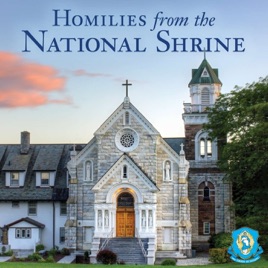
Advertise on podcast: Homilies from the National Shrine
Rating
4.9from
This podcast has
1937 episodes
Language
EnglishPublisher
The Marian FathersExplicit
No
Date created
2021/02/15
Latest episode
2026/10/17
Average duration
18 min.
Release period
2 days
Description
These difficult times demand that we turn back to the beautiful mystery of who God is and what it means to be His cherished children. Listen in to the daily homilies from the Marian Fathers at the National Shrine of The Divine Mercy, including Fr. Chris Alar, Fr. Kaz Chwalek, and many more. May they help you to live by God’s will that you may play an active and effective role in a world whose wellbeing requires authentic Christian witness!
Unlock Homilies from the National Shrine podcast Email contact info,
Listeners & Audience details
Email contact information
Direct podcast contact details

Listeners
Audience numbers & engagement insights

Audience details
Podcast Insights

Podcast episodes
Check latest episodes from Homilies from the National Shrine podcast
The Catholic Church Was Founded by Jesus Christ! | Fr. Daniel Klimek
2026/10/17
In this powerful teaching, Fr. Daniel Klimek challenges Protestant Christians to confront the historical evidence of the early Church. The testimony of St. Ignatius of Antioch, a bishop and martyr of the first and second centuries, reveals that the Catholic Church, the authority of bishops, apostolic succession, and belief in the Real Presence of Jesus Christ in the Eucharist were deeply rooted in Christianity long before the Protestant Reformation. Around A.D. 107, St. Ignatius declared, “Wherever Jesus Christ is, there is the Catholic Church.” This extraordinary historical witness raises a profound question for every Protestant: If the Catholic Church existed in the earliest centuries of Christianity, where was your denomination before the Reformation? The writings of the early Church Fathers provide compelling evidence of continuity between the apostolic Church and the Catholic faith today.
The Catholic Church is not a human invention of later centuries. Fr. Daniel Klimek invites us to rediscover this sacred inheritance through history, Scripture, apostolic tradition, and the supernatural reality of Christ's presence. When Jesus proclaimed, “This is my body” and “This is my blood,” the earliest Christians understood the Eucharist as a sacred reality, not merely an ordinary symbol. The Catholic faith preserves this profound mystery alongside centuries of testimonies concerning miracles, healings, apparitions, and extraordinary manifestations of God's grace. History challenges us to seek the truth, honor the faith of the first Christians, and recognize the living presence of Jesus Christ in His Church. For those sincerely searching for the origins of Christianity, the witness of St. Ignatius can become a powerful invitation to discover the fullness of the Catholic faith.
Readings for October 17th 2026: https://bible.usccb.org/bible/readings/101726.cfm
© 2026 Marian Fathers of the Immaculate Conception. All rights reserved.
Fair Use Policy: https://www.thedivinemercy.org/house/fair-use-policy
⭐️ Support our Ministries:
https://www.thedivinemercy.org/donate...
✝️ Explore Divine Mercy on Divine Mercy Plus! https://divinemercyplus.org/?source=YT
⛪️ Plan Your Visit to the National Shrine of The Divine Mercy!
https://www.shrineofdivinemercy.org/?...
Follow Us on Social Media!
📸 Instagram: / thedivinemercy
🔵 Facebook: / divinemercyofficial
【ꚠ】TikTok: / marianfathers
Download our AD FREE app Divine Mercy Plus: https://divinemercyplus.org/our-apps
★ Support this podcast ★
The Greatest Gift of Love: The Heart of Jesus | Fr. Anthony Gramlich, MIC
2026/10/16
On the Memorial of St. Margaret Mary Alacoque, Fr. Anthony Gramlich, MIC, shares a beautiful reflection on the greatest gift of love—the Sacred Heart of Jesus.
What is the greatest gift we can give someone we love? We can give our possessions, our time, or everything we own, but the greatest gift is to give our very heart. And to give our heart completely means giving our very life. This is exactly what Jesus did for us on the Cross. He gave His life so that we could receive the infinite love and mercy flowing from His Sacred Heart.
The Heart of Jesus is not an ordinary heart. Jesus is both fully human and fully divine. His Sacred Heart reveals the depth of His human love united with His infinite divine love. He offers us not just something precious, but His very Self.
Yet, how often do we feel unworthy of such a great gift? We look at our sins, failures, weaknesses, and brokenness and wonder how Jesus could love us so much. But His love is not something we can earn. It is a gift freely given to us.
Fr. Anthony reminds us of an important spiritual truth: Take your eyes off yourself and fix them on Jesus! When we focus only on our unworthiness, we can forget how great His mercy truly is. Instead of allowing fear or shame to keep us away, we must turn toward His loving Heart with confidence.
Do not be afraid of His love. Do not be afraid of His mercy. Jesus has already given you His Heart. Will you open yours to Him?
Readings for October 16th 2026: https://bible.usccb.org/bible/readings/101626.cfm
© 2026 Marian Fathers of the Immaculate Conception. All rights reserved.
Fair Use Policy: https://www.thedivinemercy.org/house/fair-use-policy
⭐️ Support our Ministries:
https://www.thedivinemercy.org/donate...
✝️ Explore Divine Mercy on Divine Mercy Plus! https://divinemercyplus.org/?source=YT
⛪️ Plan Your Visit to the National Shrine of The Divine Mercy!
https://www.shrineofdivinemercy.org/?...
Follow Us on Social Media!
📸 Instagram: / thedivinemercy
🔵 Facebook: / divinemercyofficial
【ꚠ】TikTok: / marianfathers
Download our AD FREE app Divine Mercy Plus: https://divinemercyplus.org/our-apps
★ Support this podcast ★
Jesus' Warning to Religious Scholars Still Applies Today! | Fr. Daniel Klimek
2026/10/16
On the Memorial of St. Teresa of Ávila, Fr. Daniel Klimek reflects on Jesus’ powerful challenge to the religious scholars who distorted His teachings and took away the “key of knowledge,” preventing others from discovering the truth of who He is. Through the example of St. Teresa of Ávila, the first woman declared a Doctor of the Church, and St. John of the Cross, we discover that true knowledge of Christ goes beyond intellectual understanding. It comes through a profound life of prayer, perseverance, and intimate communion with God, even amid suffering, opposition, and spiritual trials.
Fr. Daniel reminds us that the goal of the spiritual life is not extraordinary mystical experiences, recognition, or attention, but a deep and loving union with Jesus Christ. Inspired by St. Teresa’s teachings, we are called to cultivate humility, practice detachment from worldly attachments, embrace fasting as an expression of love for Jesus crucified, and remain faithful to a disciplined life of prayer. True holiness is found not simply in knowing about Jesus, but in knowing Him personally, loving Him deeply, and allowing His presence to transform our hearts.
© 2026 Marian Fathers of the Immaculate Conception. All rights reserved.
Fair Use Policy: https://www.thedivinemercy.org/house/fair-use-policy
⭐️ Support our Ministries:
https://www.thedivinemercy.org/donate...
✝️ Explore Divine Mercy on Divine Mercy Plus! https://divinemercyplus.org/?source=YT
⛪️ Plan Your Visit to the National Shrine of The Divine Mercy!
https://www.shrineofdivinemercy.org/?...
Follow Us on Social Media!
📸 Instagram: / thedivinemercy
🔵 Facebook: / divinemercyofficial
【ꚠ】TikTok: / marianfathers
Download our AD FREE app Divine Mercy Plus: https://divinemercyplus.org/our-apps
★ Support this podcast ★
Can We Love God Without Forgiving Others? | Fr. Scott Foley
2026/10/14
n today’s Gospel reflection, Fr. Scott Foley reminds us how Jesus confronted the Pharisees for focusing on outward religious practices while neglecting justice, mercy, and love for others. Jesus challenges us to examine our own hearts: Are we quick to judge others but slow to show compassion? Do we truly love our neighbors, especially those who have hurt us? Scripture reminds us that if we cannot love the people we see, how can we claim to love God whom we cannot see? True faith is not simply about prayer and religious observances but about allowing God's love to transform the way we treat one another.
This beautiful teaching connects with the message Jesus gave St. Faustina in her Diary (742), revealing three ways to practice mercy: by deed, by word, and by prayer. These are the ways we demonstrate our love for God. Fr. Foley's reflection invites us to ask ourselves: Do we pray for our enemies? Are we willing to forgive those who have wounded us? If God continually extends His forgiveness and mercy to us, how can we withhold forgiveness from others? May we learn to love without judging, forgive without holding resentment, and become living witnesses of God's Divine Mercy in our daily lives. Jesus, I trust in You!
Readings for October 14th 2026: https://bible.usccb.org/bible/readings/101426.cfm
© 2026 Marian Fathers of the Immaculate Conception. All rights reserved.
Fair Use Policy: https://www.thedivinemercy.org/house/fair-use-policy
⭐️ Support our Ministries:
https://www.thedivinemercy.org/donate...
✝️ Explore Divine Mercy on Divine Mercy Plus! https://divinemercyplus.org/?source=YT
⛪️ Plan Your Visit to the National Shrine of The Divine Mercy!
https://www.shrineofdivinemercy.org/?...
Follow Us on Social Media!
📸 Instagram: / thedivinemercy
🔵 Facebook: / divinemercyofficial
【ꚠ】TikTok: / marianfathers
Download our AD FREE app Divine Mercy Plus: https://divinemercyplus.org/our-apps
★ Support this podcast ★
The Miracle of the Sun and the Conversion of Souls | Fr. Anthony Gramlich, MIC
2026/10/13
In this powerful teaching, Fr. Anthony Gramlich, MIC, reflects on the timeless message of Our Lady of Fatima and its connection to the Gospel. From the Angel of Peace in 1916 to the apparitions and Miracle of the Sun in 1917, Our Lady called humanity to prayer, repentance, conversion, and reparation. Her prophetic warnings about wars, the spread of communism, and the persecution of the Church remind us that the message of Fatima remains relevant today. The three visions of St. Joseph with the Child Jesus, Our Lady of Sorrows, and Our Lady of Mount Carmel also invite us to reflect on the protection of marriages and families, the dignity of children and the unborn, and the suffering of persecuted Christians throughout the world.
Fr. Anthony reminds us that true conversion begins within our hearts, where we acknowledge our need for God's love and mercy. As the world faces violence, division, attacks on family life, and spiritual challenges, Our Lady calls us to pick up our Rosaries, go to Confession regularly, receive the Holy Eucharist, practice the First Five Saturdays devotion, and make reparation for sins. The message of Fatima is not only about past prophecies but also a call to action today. Pray, convert, and make reparation! Let us respond with faith and trust in Our Lady's promise: "In the end, my Immaculate Heart will triumph," and a period of peace will be granted to the world.
#OurLadyOfFatima #FrAnthonyGramlichMIC #FatimaMessage #FirstFiveSaturdays #ImmaculateHeartOfMary #HolyRosary #CatholicFaith #PrayerAndReparation
Readings for October 13th 2026:https://bible.usccb.org/bible/readings/101326.cfm
© 2026 Marian Fathers of the Immaculate Conception. All rights reserved.
Fair Use Policy: https://www.thedivinemercy.org/house/fair-use-policy
⭐️ Support our Ministries:
https://www.thedivinemercy.org/donate...
✝️ Explore Divine Mercy on Divine Mercy Plus! https://divinemercyplus.org/?source=YT
⛪️ Plan Your Visit to the National Shrine of The Divine Mercy!
https://www.shrineofdivinemercy.org/?...
Follow Us on Social Media!
📸 Instagram: / thedivinemercy
🔵 Facebook: / divinemercyofficial
【ꚠ】TikTok: / marianfathers
Download our AD FREE app Divine Mercy Plus: https://divinemercyplus.org/our-apps
★ Support this podcast ★
Are We Also an Evil Generation?
2026/10/12
Fr. David Gunter, MIC, teaches about the importance of being freed from the slavery of sin and remaining faithful to Jesus Christ and His Gospel. Reflecting on Matthew 12:38–45, he explains that Jesus warned the evil generation of His time because many rejected His message despite witnessing God's works. Although this warning originally referred to the first-century generation, the same spiritual lesson applies to us today. Through Baptism, our souls are cleansed and prepared to receive God's grace. However, if we reject the Gospel, neglect our faith, and allow sin to return, we risk opening our hearts to evil influences. Jesus' teaching about the unclean spirit returning to an empty house reminds us that it is not enough to have our souls cleansed; we must keep them filled with God's presence.
Fr. Gunter reminds us that every generation faces the temptation to turn away from Christ, and we must examine whether we are truly living according to His Word. Those who hear the Gospel, accept it, and faithfully follow Jesus are blessed. To protect ourselves from evil and remain spiritually strong, he encourages us to pray the Holy Rosary, spend time in Eucharistic Adoration, receive Holy Communion worthily, and continually seek God's mercy through repentance and Confession. Our hearts must never remain spiritually empty but should always be filled with the Holy Spirit, God's Word, and His love. True freedom from the slavery of sin comes through a living relationship with Jesus Christ and our daily commitment to follow Him.
Readings for October 12th 2026:https://bible.usccb.org/bible/readings/101226.cfm
© 2026 Marian Fathers of the Immaculate Conception. All rights reserved.
Fair Use Policy: https://www.thedivinemercy.org/house/fair-use-policy
⭐️ Support our Ministries:
https://www.thedivinemercy.org/donate...
✝️ Explore Divine Mercy on Divine Mercy Plus! https://divinemercyplus.org/?source=YT
⛪️ Plan Your Visit to the National Shrine of The Divine Mercy!
https://www.shrineofdivinemercy.org/?...
Follow Us on Social Media!
📸 Instagram: / thedivinemercy
🔵 Facebook: / divinemercyofficial
【ꚠ】TikTok: / marianfathers
Download our AD FREE app Divine Mercy Plus: https://divinemercyplus.org/our-apps
★ Support this podcast ★
God Wants to Marry You | Fr. Tyler Mentzer, MIC
2026/10/11
God is inviting each of us to an eternal wedding feast of divine love. In this powerful teaching, Fr. Tyler Mentzer, MIC, explains how Jesus Christ, the Divine Bridegroom, gives Himself completely to His Bride, the Church. Through His sacrifice on the Cross and His Real Presence in the Eucharist, Christ invites us into an intimate covenant of love, holiness, and eternal communion with God.
But will we accept His invitation? The Parable of the Wedding Feast reminds us that our response has eternal consequences. Through Baptism, Confession, and a life of faithfulness, we are clothed in Christ and called to live according to our divine dignity. Accepting God's invitation means more than believing—it means transforming our lives, bearing the fruits of holiness, and responding wholeheartedly to His infinite love.
Readings for October 11th 2026: https://bible.usccb.org/bible/readings/101126.cfm
© 2026 Marian Fathers of the Immaculate Conception. All rights reserved.
Fair Use Policy: https://www.thedivinemercy.org/house/fair-use-policy
⭐️ Support our Ministries:
https://www.thedivinemercy.org/donate...
✝️ Explore Divine Mercy on Divine Mercy Plus! https://divinemercyplus.org/?source=YT
⛪️ Plan Your Visit to the National Shrine of The Divine Mercy!
https://www.shrineofdivinemercy.org/?...
Follow Us on Social Media!
📸 Instagram: / thedivinemercy
🔵 Facebook: / divinemercyofficial
【ꚠ】TikTok: / marianfathers
Download our AD FREE app Divine Mercy Plus: https://divinemercyplus.org/our-apps
★ Support this podcast ★
Are You Doing the Will of the Father? | Fr. David Gunter, MIC
2026/10/11
Are we truly doing the will of the Father? In today’s reflection, Fr. David Gunter, MIC reminds us that the Christian life is not meant to be lived according to our own will. God calls us to be guided by the Holy Spirit, who leads us to the Father and helps us discern what the Lord desires for our lives. God has set us free so that we can follow Him with faith, confidence, and trust in His mercy.
When we try to live only for ourselves, we risk losing the fullness of the life God wants to give us. We must not allow evil, distractions, or our own desires to pull us away from His will. When we surrender ourselves to God and allow the Holy Spirit to guide us, we discover what it means to be truly alive—walking confidently in the freedom, love, and mercy of God.
Readings for September 11th 2026: https://bible.usccb.org/bible/readings/090526.cfm
© 2026 Marian Fathers of the Immaculate Conception. All rights reserved.
Fair Use Policy: https://www.thedivinemercy.org/house/fair-use-policy
⭐️ Support our Ministries:
https://www.thedivinemercy.org/donate...
✝️ Explore Divine Mercy on Divine Mercy Plus! https://divinemercyplus.org/?source=YT
⛪️ Plan Your Visit to the National Shrine of The Divine Mercy!
https://www.shrineofdivinemercy.org/?...
Follow Us on Social Media!
📸 Instagram: / thedivinemercy
🔵 Facebook: / divinemercyofficial
【ꚠ】TikTok: / marianfathers
Download our AD FREE app Divine Mercy Plus: https://divinemercyplus.org/our-apps
★ Support this podcast ★
Mary’s Example of Hearing and Living God’s Word | Fr. Scott Foley
2026/10/10
Fr. Scott Foley reminds us that no one followed the will of God more faithfully than the Blessed Virgin Mary, except Jesus Himself. Jesus spent approximately 33 years of His earthly life with Mary, while His time in active ministry with the Apostles was much shorter.
When Jesus said, “Blessed are those who hear the word of God and observe it” (Luke 11:28), He was not diminishing His mother. Rather, He was honoring Mary, because she was the perfect example of someone who listened to God's Word, embraced it, and lived it faithfully.
Fr. Foley teaches that understanding Mary's love and obedience helps us understand the depth of God's love and the graces that flow from that love.
To grow in love and holiness, we must learn to be attentive:
- Be attentive to others. Truly listen, notice their needs, and respond with kindness and love.
- Be attentive to God's Word. Read Scripture carefully, reflect on its meaning, and allow it to guide your actions.
- Be attentive to God's will. Like Mary, do not simply hear God's Word, but put it into practice in everyday life.
Readings for October 10th 2026: https://bible.usccb.org/bible/readings/101026.cfm
© 2026 Marian Fathers of the Immaculate Conception. All rights reserved.
Fair Use Policy: https://www.thedivinemercy.org/house/fair-use-policy
⭐️ Support our Ministries:
https://www.thedivinemercy.org/donate...
✝️ Explore Divine Mercy on Divine Mercy Plus! https://divinemercyplus.org/?source=YT
⛪️ Plan Your Visit to the National Shrine of The Divine Mercy!
https://www.shrineofdivinemercy.org/?...
Follow Us on Social Media!
📸 Instagram: / thedivinemercy
🔵 Facebook: / divinemercyofficial
【ꚠ】TikTok: / marianfathers
Download our AD FREE app Divine Mercy Plus: https://divinemercyplus.org/our-apps
★ Support this podcast ★
The Battle Between Light and Darkness | Fr. Anthony Gramlich, MIC
2026/10/09
Fr. Anthony Gramlich, MIC, teaches that the battle between the children of darkness and the children of light is an ongoing spiritual struggle between the kingdom of hell and the Kingdom of Heaven. This battle is evident in our world through wars, violence, moral confusion, and even modern developments such as genetic manipulation. Behind these struggles lies a deeper spiritual conflict between good and evil. Many people pursue happiness in the wrong direction, seeking fulfillment only in earthly pleasures, material possessions, and worldly success rather than in God. Although earthly happiness has its place, true and lasting joy comes from finding a proper balance between our earthly responsibilities and our ultimate destination in Heaven.
Fr. Anthony also reminds us that although the challenges of each century may change, the spiritual battle remains the same. The forces of darkness continue to tempt humanity away from God, while the angels and the forces of light guide us toward truth, holiness, and salvation. The problems we face today may look different from those of previous generations, but the spiritual solution remains unchanged: faith in Jesus Christ, prayer, repentance, trust in God's Divine Mercy, and living according to His commandments. As children of light, we are called to reject darkness, choose goodness over evil, and seek eternal happiness in God's Kingdom rather than temporary satisfaction in this world.
Readings for October 9th 2026: https://bible.usccb.org/bible/readings/100926.cfm
© 2026 Marian Fathers of the Immaculate Conception. All rights reserved.
Fair Use Policy: https://www.thedivinemercy.org/house/fair-use-policy
⭐️ Support our Ministries:
https://www.thedivinemercy.org/donate...
✝️ Explore Divine Mercy on Divine Mercy Plus! https://divinemercyplus.org/?source=YT
⛪️ Plan Your Visit to the National Shrine of The Divine Mercy!
https://www.shrineofdivinemercy.org/?...
Follow Us on Social Media!
📸 Instagram: / thedivinemercy
🔵 Facebook: / divinemercyofficial
【ꚠ】TikTok: / marianfathers
Download our AD FREE app Divine Mercy Plus: https://divinemercyplus.org/our-apps
★ Support this podcast ★
The Grace of God Is Everything | Fr. David Gunter, MIC
2026/10/08
God's grace is present in everything, even in our weaknesses, struggles, and miseries. When we recognize our imperfections, we are invited to return to God with humility, acknowledging that we cannot overcome our weaknesses by our own strength alone. We all struggle with the tendency to follow evil rather than live in God's grace. Yet God continually calls us to leave behind the captivity of sin and live in the freedom of the Holy Spirit. Through His grace, our minds and hearts can be transformed and renewed. But when was the last time we truly sat in silence to listen to God's voice? In the stillness of our hearts, God speaks, guides, heals, and reminds us that His grace is sufficient for every struggle.
Every moment carries a grace from God, even the most difficult and painful moments of our lives. Nothing is wasted when our hearts remain connected to Him in love and trust. Our sufferings can become opportunities for humility, spiritual growth, and a deeper union with God. Instead of resisting life's challenges, we are invited to accept each moment with faith, gratitude, and even joy, knowing that God's love is always present. The present moment is a gift of grace when we surrender our hearts to Him. Trust in His divine providence, embrace what each moment brings, and allow His grace to transform your life. When we live in God's love, every moment becomes an opportunity to encounter Him.
Readings for October 8th 2026: https://bible.usccb.org/bible/readings/100826.cfm
© 2026 Marian Fathers of the Immaculate Conception. All rights reserved.
Fair Use Policy: https://www.thedivinemercy.org/house/fair-use-policy
⭐️ Support our Ministries:
https://www.thedivinemercy.org/donate...
✝️ Explore Divine Mercy on Divine Mercy Plus! https://divinemercyplus.org/?source=YT
⛪️ Plan Your Visit to the National Shrine of The Divine Mercy!
https://www.shrineofdivinemercy.org/?...
Follow Us on Social Media!
📸 Instagram: / thedivinemercy
🔵 Facebook: / divinemercyofficial
【ꚠ】TikTok: / marianfathers
Download our AD FREE app Divine Mercy Plus: https://divinemercyplus.org/our-apps
★ Support this podcast ★
From Israel to the Church: God’s Plan for Our Salvation
2026/10/04
Fr. Mark Baron, MIC, reflects on Jesus’ parable of the vineyard as a powerful summary of salvation history and a warning against hardness of heart. The vineyard represents God’s chosen people, the servants are the prophets, and the beloved Son is Jesus Christ, who is rejected and killed. Christ then entrusts His Church to the apostles, with Peter as the rock, forming the new tenants called to bear fruit. The word “Catholic” means “universal,” pointing to God’s plan to gather all peoples into Christ and to make the Church a fruitful people responsible for sharing His grace with the world.
This responsibility continues through the sacramental life of the Catholic Church. In Christ, the true Vine, we become branches called to bear the fruits of faith, charity, mercy, and holiness. Through the sacraments—especially Confession and the Eucharist—sinners can be reconciled, restored, and nourished by the grace of God. The Eucharist is at the center of this mystery because Jesus is truly present and gives Himself to us so that we may remain in Him and bear fruit. The parable ultimately asks each of us whether we are cooperating with grace, helping others return to God, and living as faithful branches united to Christ.
Readings for October 4th 2026:https://bible.usccb.org/bible/readings/100426.cfm
© 2026 Marian Fathers of the Immaculate Conception. All rights reserved.
Fair Use Policy: https://www.thedivinemercy.org/house/fair-use-policy
⭐️ Support our Ministries:
https://www.thedivinemercy.org/donate...
✝️ Explore Divine Mercy on Divine Mercy Plus! https://divinemercyplus.org/?source=YT
⛪️ Plan Your Visit to the National Shrine of The Divine Mercy!
https://www.shrineofdivinemercy.org/?...
Follow Us on Social Media!
📸 Instagram: / thedivinemercy
🔵 Facebook: / divinemercyofficial
【ꚠ】TikTok: / marianfathers
Download our AD FREE app Divine Mercy Plus: https://divinemercyplus.org/our-apps
★ Support this podcast ★
The Power of the Rosary, a Path to Heaven | Fr. Tyler Mentzer,MIC
2026/10/03
Fr. Tyler Mentzer, MIC reflects on Mary as the first disciple of Christ and the loving Mother who always leads us to Jesus. In a special way, October—the Month of the Rosary—invites us to rediscover the power of this prayer. From the victory at the Battle of Lepanto and the Feast of Our Lady of the Rosary on October 7, to Pope Leo XIII’s call to dedicate the month of October to the Rosary, the Church has continually encouraged the faithful to turn to Mary in prayer. Fr. Tyler also emphasizes the importance of the First Saturday devotion as an act of reparation for offenses against the Immaculate Heart of Mary, offering our prayers in love and consolation for our own sins and those of others.
The Rosary is a prayer of peace, conversion, and deep union with Christ. When prayed from the heart and with love, it bears abundant spiritual fruit, as seen throughout Marian pilgrimages and apparitions where Our Lady repeatedly calls the faithful to pray fervently each day. Fr. Tyler reminds us to live the Eucharist, embrace the Christian faith with intensity, and allow Mary to guide us always toward her Son. She leads us on the path to heaven and stands with us in the spiritual battle against sin and evil.
Readings for October 3, 2026: https://bible.usccb.org/daily-bible-reading
© 2026 Marian Fathers of the Immaculate Conception. All rights reserved.
Fair Use Policy: https://www.thedivinemercy.org/house/fair-use-policy
⭐️ Support our Ministries:
https://www.thedivinemercy.org/donate...
✝️ Explore Divine Mercy on Divine Mercy Plus! https://divinemercyplus.org/?source=YT
⛪️ Plan Your Visit to the National Shrine of The Divine Mercy!
https://www.shrineofdivinemercy.org/?...
Follow Us on Social Media!
📸 Instagram: / thedivinemercy
🔵 Facebook: / divinemercyofficial
【ꚠ】TikTok: / marianfathers
Download our AD FREE app Divine Mercy Plus: https://divinemercyplus.org/our-apps
★ Support this podcast ★
“Never Forget the Angel God Assigned to You” | Fr. Anthony Gramlich, MIC
2026/10/02
Fr. Anthony Gramlich, MIC, teaches us to remember the holy guardian angel whom God has assigned to each of us. Our guardian angel remains with us throughout our earthly journey, protecting us in danger, inspiring us toward what is good, and helping direct our hearts toward God. We should not forget this faithful heavenly companion, who accompanies us from this life toward our eternal home and continually encourages us to remain close to the Lord.
According to Fr. Anthony Gramlich, MIC, our guardian angel is a gift of God’s loving care and a reminder that heaven is never far from us. We can call upon our guardian angel in prayer, especially when we are traveling, facing difficulty, or in need of guidance and protection. By remembering the angel assigned to us and asking for heavenly assistance, we are reminded of our ultimate destination: to be guided safely home to heaven and to live forever in the presence of God.
Readings for October 2nd 2026:https://bible.usccb.org/bible/readings/100226.cfm
© 2026 Marian Fathers of the Immaculate Conception. All rights reserved.
Fair Use Policy: https://www.thedivinemercy.org/house/fair-use-policy
⭐️ Support our Ministries:
https://www.thedivinemercy.org/donate...
✝️ Explore Divine Mercy on Divine Mercy Plus! https://divinemercyplus.org/?source=YT
⛪️ Plan Your Visit to the National Shrine of The Divine Mercy!
https://www.shrineofdivinemercy.org/?...
Follow Us on Social Media!
📸 Instagram: / thedivinemercy
🔵 Facebook: / divinemercyofficial
【ꚠ】TikTok: / marianfathers
Download our AD FREE app Divine Mercy Plus: https://divinemercyplus.org/our-apps
★ Support this podcast ★
A Good Confession Is a Victory: The Power of Divine Mercy | Fr. Scott Foley
2026/09/30
In this homily, F. Scott Foley reflects on the difference between worldly power and prestige and the true freedom found in surrendering our hearts to Jesus. He reminds us that Christ desires our hearts so that His grace can transform our lives and bring healing not only to us, but also to our families, communities, and the wider world.
A central focus of the homily is the Sacrament of Reconciliation, where we encounter the mercy of God in a powerful and personal way. F. Scott Foley encourages anyone who has been away from confession to return with faith, reminding us that it is never too late to seek God’s forgiveness. A sincere confession is a victory over sin and temptation, a step toward holiness, and a witness to the transforming power of Divine Mercy.
Readings for September 30th 2026: https://bible.usccb.org/bible/readings/093026.cfm
© 2026 Marian Fathers of the Immaculate Conception. All rights reserved.
Fair Use Policy: https://www.thedivinemercy.org/house/fair-use-policy
⭐️ Support our Ministries:
https://www.thedivinemercy.org/donate...
✝️ Explore Divine Mercy on Divine Mercy Plus! https://divinemercyplus.org/?source=YT
⛪️ Plan Your Visit to the National Shrine of The Divine Mercy!
https://www.shrineofdivinemercy.org/?...
Follow Us on Social Media!
📸 Instagram: / thedivinemercy
🔵 Facebook: / divinemercyofficial
【ꚠ】TikTok: / marianfathers
Download our AD FREE app Divine Mercy Plus: https://divinemercyplus.org/our-apps
★ Support this podcast ★
Podcast reviews
Read Homilies from the National Shrine podcast reviews
DME_Ski 2025/11/14
Changed My Life
I cannot tell you how deeply grateful I am for these wonderful priests and the amazing homilies that Jesus speaks through them. I was away from the C...
DJ Eddie 76 2024/02/28
Father Gunter
Can you please post his homily on February 20. It’s missing and I would love to hear it. He’s is one of my favorites at the Shrine. I wish we could ha...
143Lisa 2023/08/11
Daily Mass
I love this.. I can’t attend daily mass and this at least gives me a feeling like I can (minus the Eucharist -unfortunately). Thank you fathers!
Paardvrouw 2023/07/07
New insights
Hearing reflections on daily readings I hear new insights to familiar passages. I also like listening to Sunday homilies for this reason.
Danofsales 2023/05/07
Father Chris Alar 5/3/2023 Homily a must listen
Thank you for your 5/3/2023 Homily. Every American needs to hear it especially those of us who believe in the One True God, Father Son and Holy Spirit...
GreggBritta 2023/03/30
Great stuff
Amazing homily on the trans cult. March 29, 2023.
MGDRRR 2023/02/23
Fr Chris Alar Talk
Do not miss episode Number 692, February 22nd, 2023. Fr Chris returns with a most important message to the world after a visit with Pope Francis and I...
Family4Faith 2022/10/11
No words
Listening to the jokes of a sainted pope makes me understand the tears of mothers
po po thuj 2021/12/30
Father Chris is awesome
His homilies and teachings are honest, complete and I learn things that I didn’t growing up. Love love love him!!!! Thank you Father Chris!
mjcrichards 2021/08/14
Thank you!
I learn something new everyday.
Podcast sponsorship advertising
Start advertising on Homilies from the National Shrine relevant audience podcasts
You may also like to advertise on these Podcasts

4.52256742000
The Joe Rogan Experience
Joe Rogan

4.498957912
Morbid
Ash Kelley & Alaina Urquhart

4.6908522
You Can Heal Your Life ™
Hay House

4.41164993
Extratime
Major League Soccer

4.8815227
ArtCurious Podcast
Jennifer Dasal/ArtCurious

4.9328151393
REAL AF with Andy Frisella
Andy Frisella

49002560
20/20
ABC News

4.91363710
The Learning Leader Show With Ryan Hawk
Ryan Hawk

4.92112500
the bossbabe podcast
Natalie Ellis

4.3385661986
The Megyn Kelly Show
SiriusXM