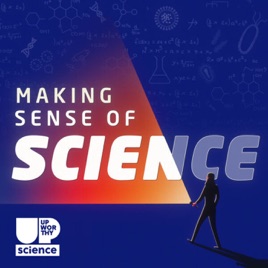
Advertise on podcast: Making Sense of Science
Rating
5from
This podcast has
67 episodes
Language
EnglishPublisher
Upworthy ScienceExplicit
No
Date created
2021/02/26
Latest episode
2024/01/29
Average duration
38 min.
Release period
29 days
Description
Making Sense of Science features interviews with leading medical and scientific experts about the latest developments in health innovation and the big ethical and social questions they raise. The podcast is hosted by science journalist Matt Fuchs
Unlock Making Sense of Science podcast Email contact info,
Listeners & Audience details
Email contact information
Direct podcast contact details

Listeners
Audience numbers & engagement insights

Audience details
Podcast Insights

Podcast episodes
Check latest episodes from Making Sense of Science podcast
How to Use the Immune System Against Cancer and Alzheimer's, with Dr. Paul Song
2024/01/29
On today’s episode of Making Sense of Science, I’m honored to be joined by Dr. Paul Song, a physician, oncologist, progressive activist and biotech chief medical officer. Through his company, NKGen Biotech, Dr. Song is leveraging the power of patients’ own immune systems by supercharging the body’s natural killer cells to make new treatments for Alzheimer’s and cancer.
Whereas other treatments for Alzheimer’s focus directly on reducing the build-up of proteins in the brain such as amyloid and tau in patients will mild cognitive impairment, NKGen is seeking to help patients that much of the rest of the medical community has written off as hopeless cases, those with late stage Alzheimer’s. And in small studies, NKGen has shown remarkable results, even improvement in the symptoms of people with these very progressed forms of Alzheimer’s, above and beyond slowing down the disease.
In the realm of cancer, Dr. Song is similarly setting his sights on another group of patients for whom treatment options are few and far between: people with solid tumors. Whereas some gradual progress has been made in treating blood cancers such as certain leukemias in past few decades, solid tumors have been even more of a challenge. But Dr. Song’s approach of using natural killer cells to treat solid tumors is promising. You may have heard of CAR-T, which uses genetic engineering to introduce cells into the body that have a particular function to help treat a disease. NKGen focuses on other means to enhance the 40 plus receptors of natural killer cells, making them more receptive and sensitive to picking out cancer cells.
Dr. Song is the grandson of the late Sang Don Kim, who was the first popularly elected Mayor of Seoul, South Korea. Dr. Song serves as the co-chair for a Campaign for a Healthy California. In 2013, he was named and served as the very first visiting fellow on healthcare policy in the California Department of Insurance. In addition, Dr. Song serves on the executive board of Physicians for a National Health Program California, People for the American Way, Progressive Democrats of America, Healthcare NOW, The Eisner Pediatric and Women's Center, and the Asian Pacific American Institute for Congressional Studies. Dr. Song graduated with honors from the University of Chicago, received his M.D. from George Washington University and completed his residency in radiation oncology at the University of Chicago. He sees Medicaid and uninsured patients at Dignity California Hospital.
With Dr. Song’s leadership, NKGen’s work on natural killer cells represents cutting-edge science that’s resulting in key findings about two of humanity’s most intractable diseases – contributing important pieces of the puzzle for treating them.
Making Sense of Science features interviews with leading medical and scientific experts about the latest developments in health innovation and the big ethical and social questions they raise. The podcast is hosted by science journalist Matt Fuchs
Leading XPRIZE Healthspan and Beating Negativity, with Dr. Peter Diamandis
2023/12/06
A new competition by the XPRIZE Foundation is offering $101 million to researchers if they discover therapies that allow seniors to perform like when they were 10 to 20 years younger.
For today’s episode, I talked with Dr. Peter Diamandis, XPRIZE’s founder and executive chairman. Under Peter’s leadership, XPRIZE has launched 27 previous competitions with over $300 million in prize purses.
The lastest contest aims to enhance healthspan, or the period of life when older people can play with their grandkids without any restriction, disability or disease. The biggest prize for this competition, called XPRIZE Healthspan, is $81 million for improvements that restore cognition, muscle and immunity by two decades. Sponsors include Hevolution Foundation, a nonprofit, and Chip Wilson, the founder of Lululemon and the nonprofit SOLVE FSHD.
In our conversation, Peter explains why exponential technologies make the current era the most exciting time in human history. We discuss the best mental outlook for becoming truly innovative; how to overcome the negativity bias in ourselves and in mainstream media; how Peter has shifted his own mindset to become more positive; his personal recommendations for healthy lifestyle; the future of education; and the importance of democratizing tech and innovation, among many other topics.
In addition to Peter’s role with XPRIZE, he's the Executive Founder of Singularity University. In 2014, Fortune named him one of the “World’s 50 Greatest Leaders.” He has started over 25 companies in health-tech, space, venture capital and education. Peter is the author of multiple New York Times bestselling books, linked below, and holds degrees in molecular genetics and aerospace engineering from MIT, as well as an M.D. from Harvard University.
Show links
New XPRIZE Healthspan
Peter Diamandis bio
27 XPRIZE competitions and counting
Peter Diamandis books
Singularity University
Life Force by Peter Diamandis and Tony Robbins
Peter Diamandis Twitter
Longevity Insider newsletter – AI identifies the news
Peter Diamandis Longevity Handbook
Making Sense of Science features interviews with leading medical and scientific experts about the latest developments in health innovation and the big ethical and social questions they raise. The podcast is hosted by science journalist Matt Fuchs
New psychedelics that rewire the brain for more well-being, with Doug Drysdale
2023/11/29
A promising development in science in recent years has been the advance of technologies that take something natural and use technology to optimize it. This episode features a fascinating example: using tech to optimize psychedelic mushrooms.
These mushrooms have been used for religious, spiritual and medicinal purposes for thousands of years but only in the past several decades have scientists brought psychedelics into the lab to enhance them and maximize their therapeutic value.
Today’s podcast guest, Doug Drysdale, is doing important work to lead this effort. Drysdale is the CEO of a company called Cybin that has figured out how to make psilocybin more potent, so it can be administered in smaller doses without side effects.
Cybin isn’t Drysdale’s first go around at this. He has over 30 years of experience in the healthcare sector. During this time he’s raised around $4 billion of both public and private capital, and has been named Ernst and Young Entrepreneur of the Year. Before Cybin, he was the founding CEO of a pharmaceutical company called Alvogen, leading it from inception to around $500 million in revenues, across 35 countries. Drysdale has also been the head of mergers and acquisitions at Actavis Group, leading 15 corporate acquisitions across three continents.
In this episode, Drysdale walks us through the promising research of his current company, Cybin, and the different therapies he’s developing for anxiety and depression based not just on psilocybin but another psychedelic compound found in plants called DMT. He explains how they seem to have such powerful effects on the brain, as well as the potential for psychedelics to eventually support other use cases, including helping us strive toward higher levels of well-being. He goes on to discuss his views on mindfulness and lifestyle factors - such as optimal nutrition - that could help bring out the best in psychedelics.
Show links:
Doug Drysdale full bio
Doug Drysdale twitter
Cybin website
Cybin development pipeline
Cybin's promising phase 2 research on depression
Johns Hopkins psychedelics research and psilocybin research
Mets owner Steve Cohen invests in psychedelic therapies
Making Sense of Science features interviews with leading medical and scientific experts about the latest developments in health innovation and the big ethical and social questions they raise. The podcast is hosted by science journalist Matt Fuchs
Fast for Longevity, with Less Hunger, with Dr. Valter Longo
2023/10/27
You’ve probably heard about intermittent fasting, where you don’t eat for about 16 hours each day and limit the window where you’re taking in food to the remaining 8 hours.
But there’s another type of fasting, called fasting-mimicking diet, with studies pointing to important benefits for health and longevity. For today’s episode, I chatted with Dr. Valter Longo, a biogerontologist at the University of Southern California about all kinds of fasting, and particularly the fasting-mimicking diet, and strategies for making these approaches especially beneficial while minimizing really bad hunger as much as possible.
If you’ve ever spent more than a few minutes looking into fasting, you’ve almost certainly come upon the name Valter Longo. Dr. Longo is the author of the bestselling book, The Longevity Diet, and he is the best known researcher of how to do a fasting-mimicking diet, as well as researching the benefits.
A quick primer is helpful background for listening to this episode: with intermittent fasting, your body might begin to switch up its fuel type. Your body’s usually running on carbs you get from food, which gets turned into glucose, but without food, your liver starts making something called ketones, which are these molecules that are more efficient than glucose and good for the body in various other ways.
But in addition to intermittent fasting, there’s an alternative that could offer more benefits to your health and boost your longevity. This is the fasting-mimicking diet, the one researched by Dr. Longo, where you go for several days eating only the types of food that, in a way, keep themselves secret from your body. So at the level of your cells, the body still thinks that it’s fasting. This is the best of both worlds – you’re not completely starving because you do get to have some food, and you’re getting some of the amazing benefits that come with letting a fast run longer than you’d have with intermittent fasting.
This episode really explores the science of fasting. Dr. Longo talks about his extensive research on why this might be one of the best things you can do for health. He’s the director of the Longevity Institute in USC’s Leonard Davis School of Gerontology, and the director of the Longevity and Cancer program at the IFOM Institute of Molecular Oncology in Milan. In addition, Dr. Longo is the founder and president of the Create Cures Foundation in L.A., which focuses on nutrition for the prevention and treatment of major chronic illnesses. He authored the bestelling book, The Longevity Diet. v2 In 2016, he received the Glenn Award for Research on Aging, which was based on the discovery of both genes and dietary interventions able to regulate aging and prevent diseases, among many other awards. Dr. Longo received his PhD in biochemistry from UCLA and completed his postdoc in the neurobiology of aging and Alzheimer’s at USC.
Check out the episode page to see the show links - www.leaps.org/heart-healthy-diet/
Making Sense of Science features interviews with leading medical and scientific experts about the latest developments in health innovation and the big ethical and social questions they raise. The podcast is hosted by science journalist Matt Fuchs
A New Clue in Fighting Alzheimer's, with Dr. Michael Glickman
2023/10/17
In recent years, researchers of Alzheimer’s have made progress in figuring out the complex factors that lead to the disease. Yet, the root cause, or causes, of Alzheimer’s are still pretty much a mystery.
In fact, many people get Alzheimer’s even though they lack the gene variant we know can play a role in the disease. This is a critical knowledge gap for research to address because the vast majority of Alzheimer’s patients don’t have this gene variant.
A new study provides key insights into what’s causing the disease. The research, published in Nature Communications, points to a breakdown over time in the brain’s system for clearing waste, an issue that seems to happen in some people as they get older.
I asked Michael Glickman, a biologist at Technion University in Israel, who helped lead this research, to tell me about his approach to studying how this breakdown occurs in the brain, and how he tested a treatment that has potential to fix the problem at its earliest stages.
Altered ubiquitin signaling induces Alzheimer’s disease-like hallmarks in a three-dimensional human neural cell culture model - https://www.nature.com/articles/s41467-023-41545-7Making Sense of Science features interviews with leading medical and scientific experts about the latest developments in health innovation and the big ethical and social questions they raise. The podcast is hosted by science journalist Matt Fuchs
How to Use Thoughts to Control Computers with Dr. Tom Oxley
2023/09/13
Tom Oxley is building what he calls a “natural highway into the brain” that lets people use their minds to control their phones and their computers. The device, called the Stentrode, could improve the lives of hundreds of thousands of people living with spinal cord paralysis, ALS and other neuro degenerative diseases.
Leaps.org talked with Dr. Oxley for today’s podcast. A fascinating thing about the Stentrode is that it works very differently from other “brain computer interfaces” you may be familiar with, like Elon Musk’s Neuralink. Surgeons implant the some BCIs directly into a person’s brain, but the Stentrode is much less invasive. Dr. Oxley’s company Synchron opts for an ingenious “natural” approach, using stents in blood vessels to access the brain, with some major advantages for a handful of people who’ve already started using the Stentrode.
The audio improves about 10 minutes in. There was a minor headset issue early on but everything is audible throughout.
In our conversation, Dr. Oxley talks about what it means to have a “Bluetooth brain,” the critical role played by AI in the present and future of BCIs, how BCIs compare to voice command technology, regulatory frameworks for revolutionary technologies, specific people with paralysis who’ve been able to regain some of their independence thanks to the Stentrode, what it means to be a neurointerventionist, how to scale BCIs so that more people can use them, the risks of BCIs malfunctioning, organic implants, and how BCIs help us understand the brain, among other topics.
Dr. Oxley received his PhD in neuro engineering from the University of Melbourne in Australia. He is the founding CEO of Synchron and an associate professor and head of the vascular bionics laboratory at the University of Melbourne. He’s also a clinical instructor in the Deepartment of Neurosurgery at Mount Sinai Hospital. He’s completed more than 1,600 endovascular neurosurgical procedures on patients, including those with aneurysms and strokes, and has authored over 100 peer reviewed articles.
Dr. Oxley’s work opens up game-changing opportunities for many patients, and his views on the present and future of BCIs are must listening for anyone who cares about health and technology.
Links:
Synchron - https://synchron.com/
Tom Oxley social links
https://www.linkedin.com/in/tomoxl
https://twitter.com/tomoxl?lang=en
Tom Oxley TED talk and website
https://www.ted.com/talks/tom_oxley_a_brain_implant_that_turns_your_thoughts_into_text?language=en
https://tomoxl.com/
Novel brain implant helps paralyzed woman speak using digital avatar - https://engineering.berkeley.edu/news/2023/08/novel-brain-implant-helps-paralyzed-woman-speak-using-a-digital-avatar/
Edward Chang lab - https://changlab.ucsf.edu/
BCIs convert brain activity into text at 62 words per minute - https://med.stanford.edu/neurosurgery/news/2023/henderson-brain-implant-speech-als
Making Sense of Science features interviews with leading medical and scientific experts about the latest developments in health innovation and the big ethical and social questions they raise. The podcast is hosted by science journalist Matt Fuchs
Will Eating Insects Go Mainstream by 2030?
2023/08/18
In today’s podcast episode, Leaps.org Deputy Editor Lina Zeldovich speaks about the health and ecological benefits of farming crickets for human consumption with Bicky Nguyen, who joins Lina from Vietnam. Bicky and her business partner Nam Dang operate an insect farm named CricketOne. Motivated by the idea of sustainable and healthy protein production, they started their unconventional endeavor a few years ago, despite numerous naysayers who didn’t believe that humans would ever consider munching on bugs.
Yet, making creepy crawlers part of our diet offers many health and planetary advantages. Food production needs to match the rise in global population, estimated to reach 10 billion by 2050. One challenge is that some of our current practices are inefficient, polluting and wasteful. According to nonprofit EarthSave.org, it takes 2,500 gallons of water, 12 pounds of grain, 35 pounds of topsoil and the energy equivalent of one gallon of gasoline to produce one pound of feedlot beef, although exact statistics vary between sources.
Meanwhile, insects are easy to grow, high on protein and low on fat. When roasted with salt, they make crunchy snacks. When chopped up, they transform into delicious pâtes, says Bicky, who invents her own cricket recipes and serves them at industry and public events. Maybe that’s why some research predicts that edible insects market may grow to almost $10 billion by 2030. Tune in for a delectable chat on this alternative and sustainable protein.
Further reading:
More info on Bicky Nguyen
https://yseali.fulbright.edu.vn/en/faculty/bicky-nguyen/index.html
The environmental footprint of beef production
https://www.earthsave.org/environment.htm
https://www.watercalculator.org/news/articles/beef-king-big-water-footprints/
https://www.frontiersin.org/articles/10.3389/fsufs.2019.00005/full
https://ourworldindata.org/carbon-footprint-food-methane
Insect farming as a source of sustainable protein
https://www.insectgourmet.com/insect-farming-growing-bugs-for-protein/
https://www.sciencedirect.com/topics/agricultural-and-biological-sciences/insect-farming
Cricket flour is taking the world by storm
https://www.cricketflours.com/
https://talk-commerce.com/blog/what-brands-use-cricket-flour-and-why/
Making Sense of Science features interviews with leading medical and scientific experts about the latest developments in health innovation and the big ethical and social questions they raise. The podcast is hosted by science journalist Matt Fuchs
We Can Age Later, with Dr. Nir Barzilai
2023/06/29
In today’s podcast episode, I talk with Nir Barzilai, a geroscientist, which means he studies the biology of aging. Barzilai directs the Institute for Aging Research at the Albert Einstein College of Medicine.
My first question for Dr. Barzilai was: why do we age? And do we have to age? His answers were encouraging. We can’t live forever, but there are a few things we can do to age later, as he argues in the book.
He explained that centenarians differ from the rest of us because they have unique gene mutations that help them stay healthy longer. For most of us, the words “gene mutations” spell trouble—we associate these words with cancer or neurodegenerative diseases, but apparently not all mutations are bad.
Centenarians may have essentially won the genetic lottery, but that doesn’t mean the rest of us are predestined to have a specific lifespan and health span—the amount of time spend living productively and enjoyably. “Aging is a mother of all diseases,” Dr. Barzilai told me. And as a disease, it can be targeted by therapeutics. Dr. Barzilai’s team is already running clinical trials on such therapeutics—and the results are promising.
More about Dr. Barzilai: He is scientific director of AFAR, American Federation for Aging Research. He is also the author of Age Later. As part of his work, Barzilai studies families of centenarians and their genetics to learn how the rest of us can learn and benefit from their super-aging. He also organizing a clinical trial that is testing a specific drug that may slow aging.
Show Links
Age Later: Health Span, Life Span, and the New Science of Longevity https://www.amazon.com/Age-Later-Healthiest-Sharpest-Centenarians/dp/1250230853
American Federation for Aging Research https://www.afar.org
https://www.afar.org/nir-barzilai
https://www.einsteinmed.edu/faculty/484/nir-barzilai/
Metformin as a Tool to Target Aging
https://www.ncbi.nlm.nih.gov/pmc/articles/PMC5943638/
Benefits of Metformin in Attenuating the Hallmarks of Aging https://www.ncbi.nlm.nih.gov/pmc/articles/PMC7347426/
The Longevity Genes Project https://www.einsteinmed.edu/centers/aging/longevity-genes-project/
Making Sense of Science features interviews with leading medical and scientific experts about the latest developments in health innovation and the big ethical and social questions they raise. The podcast is hosted by science journalist Matt Fuchs
Meet Dr. Renee Wegrzyn, the First Director of President Biden's New Health Agency, ARPA-H
2023/05/31
In today’s podcast episode, I talk with Renee Wegrzyn, appointed by President Biden as the first director of a federal agency created last year called the Advanced Research Projects Agency for Health, or ARPA-H. It’s inspired by DARPA, the agency that develops innovations for the Defense department and has been credited with hatching world changing technologies such as ARPANET, which became the internet.
Time will tell if ARPA-H will lead to similar achievements in the realm of health. That’s what President Biden and Congress expect in return for funding ARPA-H at 2.5 billion dollars over three years.
How will the agency figure out which projects to take on, especially with so many patient advocates for different diseases demanding moonshot funding for rapid progress.
I talked with Dr. Wegrzyn about the opportunities and challenges, what lessons ARPA-H is borrowing from Operation Warp Speed, how she decided on the first ARPA-H project which was just announced recently, why a separate agency was needed instead of trying to reform HHS and the National Institutes of Health to be better at innovation, and how ARPA-H will make progress on disease prevention in addition to treatments for cancer, Alzheimer’s and diabetes, among many other health priorities.
Dr. Wegrzyn’s resume is filled with experience for her important role. She was a program manager at DARPA where she focused on applying gene editing and synthetic biology to the goal of improving biosecurity. For her work there, she was given the Superior Public Service Medal and, just in case that wasn’t enough ARPA experience, she also worked at another ARPA that leads advanced projects in intelligence, called I-ARPA. Before that, she was in charge of technical teams in the private sector working on gene therapies and disease diagnostics, among other areas. She has been a vice president of business development at Gingko Bioworks and headed innovation at Concentric by Gingko. Her training and education includes a PhD and undergraduate degree in applied biology from the Georgia Institute of Technology and she did her postdoc as an Alexander von Humboldt Fellow in Heidelberg, Germany.
As Dr. Wegrzyn told me, she’s “in the hot seat” - the pressure is on for ARPA-H especially after the need and potential for health innovation was spot lit by the pandemic and the unprecedented speed of vaccine development. We'll soon find out if ARPA-H can produce something in health that’s equivalent to DARPA’s creation of the internet.
Show links:
ARPA-H - https://arpa-h.gov/
Dr. Wegrzyn profile - https://arpa-h.gov/people/renee-wegrzyn/
Dr. Wegrzyn Twitter - https://twitter.com/rwegrzyn?lang=en
President Biden Announces Dr. Wegrzyn's appointment - https://www.whitehouse.gov/briefing-room/statements-releases/2022/09/12/president-biden-announces-intent-to-appoint-dr-renee-wegrzyn-as-inaugural-director-of-advanced-research-projects-agency-for-health-arpa-h/
Leaps.org coverage of ARPA-H - https://leaps.org/arpa/
ARPA-H program for joints to heal themselves - https://arpa-h.gov/news/nitro/ -
ARPA-H virtual talent search - https://arpa-h.gov/news/aco-talent-search/
Making Sense of Science features interviews with leading medical and scientific experts about the latest developments in health innovation and the big ethical and social questions they raise. The podcast is hosted by science journalist Matt Fuchs
Friday Five: New Eye Scans Could Show How Fast You're Aging
2023/04/07
The Friday Five covers five stories in research that you may have missed this week. There are plenty of controversies and troubling ethical issues in science – and we get into many of them in our online magazine – but this news roundup focuses on new scientific theories and progress to give you a therapeutic dose of inspiration headed into the weekend.
Here are the stories covered this week:
- The eyes are the windows to the soul - and biological aging?
- What bean genes mean for health and the planet
- This breathing practice could lower levels of tau proteins
- AI beats humans at assessing heart health
- Should you get a nature prescription?
Making Sense of Science features interviews with leading medical and scientific experts about the latest developments in health innovation and the big ethical and social questions they raise. The podcast is hosted by science journalist Matt Fuchs
Friday Five: Go to This Type of Event to Improve Well-Being, Research Suggests
2023/03/24
The Friday Five covers five stories in research that you may have missed this week. There are plenty of controversies and troubling ethical issues in science – and we get into many of them in our online magazine – but this news roundup focuses on new scientific theories and progress to give you a therapeutic dose of inspiration headed into the weekend.
Go the web page for in this week's Friday Five, here.
This episode includes an interview with Dr. Helen Keyes, Head of the School of Psychology and Sports Science at Anglia Ruskin University.
- Attending sports events is linked to greater life satisfaction
- Identifying specific brain tumors in under 90 seconds with AI
- LSD - minus hallucinations - raises hopes for mental health
- New research on the benefits of cold showers
- Inspire awe in your kids and reap the benefits
Making Sense of Science features interviews with leading medical and scientific experts about the latest developments in health innovation and the big ethical and social questions they raise. The podcast is hosted by science journalist Matt Fuchs
Are You Having a Healthy Change of Heart? An HRV Sensor Can Tell You
2023/03/22
This episode is about a health metric you may not have heard of before: heart rate variability, or HRV. This refers to the small changes in the length of time between each of your heart beats.
Scientists have known about and studied HRV for a long time. In recent years, though, new monitors have come to market that can measure HRV accurately whenever you want.
Five months ago, I got interested in HRV as a more scientific approach to finding the lifestyle changes that work best for me as an individual. It's at the convergence of some important trends in health right now, such as health tech, precision health and the holistic approach in systems biology, which recognizes how interactions among different parts of the body are key to health.
But HRV is just one of many numbers worth paying attention to. For this episode of Making Sense of Science, I spoke with psychologist Dr. Leah Lagos; Dr. Jessilyn Dunn, assistant professor in biomedical engineering at Duke; and Jason Moore, the CEO of Spren and an app called Elite HRV. We talked about what HRV is, research on its benefits, how to measure it, whether it can be used to make improvements in health, and what researchers still need to learn about HRV.
*Talk to your doctor before trying anything discussed in this episode related to HRV and lifestyle changes to raise it.
Show notes
Spren - https://www.spren.com/
Elite HRV - https://elitehrv.com/
Jason Moore Twitter - https://twitter.com/jasonmooreme?lang=en
Dr. Jessilyn Dunn on Twitter - https://twitter.com/drjessilyn?lang=en
Dr. Dunn's study on HRV, flu and common cold - https://jamanetwork.com/journals/jamanetworkopen/fullarticle/2784555
Dr. Leah Lagos - https://drleahlagos.com/
Dr. Lagos on Star Talk - https://www.youtube.com/watch?v=jC2Q10SonV8
Research on HRV and intermittent fasting - https://pubmed.ncbi.nlm.nih.gov/33859841/
Research on HRV and Mediterranean diet - https://medicalxpress.com/news/2010-06-twin-mediterranean-style-diet-heart-function.html#:~:text=Using%20data%20from%20the%20Emory,eating%20a%20Western%2Dtype%20diet
Devices for HRV biofeedback - https://elitehrv.com/heart-variability-monitors-and-elite-hrv-compatible-monitors
Benefits of HRV biofeedback - https://pubmed.ncbi.nlm.nih.gov/32385728/
HRV and cognitive performance - https://www.frontiersin.org/articles/10.3389/fnins.2021.691988/full
HRV and emotional regulation - https://pubmed.ncbi.nlm.nih.gov/36030986/
Fortune article on HRV - https://fortune.com/well/2022/12/26/heart-rate-variability-improving-your-bodys-response-to-stress/
Making Sense of Science features interviews with leading medical and scientific experts about the latest developments in health innovation and the big ethical and social questions they raise. The podcast is hosted by science journalist Matt Fuchs
Podcast reviews
Read Making Sense of Science podcast reviews
drM212 2022/12/23
5 stars
Excellent science update!! Thank you!!!
Podcast sponsorship advertising
Start advertising on Making Sense of Science relevant audience podcasts
You may also like to advertise on these Podcasts

4.7249876
Shout! A football podcast on the Buffalo Bills with Matt Parrino and Ryan Talbot
Advance Media New York - NYUP.com

4.8187167
those F%#KING fangirls
Christine Riccio & Natasha Polis

4.5848763
Run to the Top Podcast | The Ultimate Guide to Running
RunnersConnect : Running Coaching Community
4.54623219
The Alien Adventures of Finn Caspian: Science Fiction for Kids
GZM Shows

4.7188199
Country Club Adjacent
CCA Productions
4.820492
SAPIENS: A Podcast for Everything Human
SAPIENS
4.96419552
The Secret To Success with CJ, Karl, Jemal & Eric Thomas
The Resonance Network

4.7252568
Retro Warriors
Justin Baker

4.917153
Bring Birds Back
BirdNote

4.88871
Wake Of Corrosion
Shadow & Static