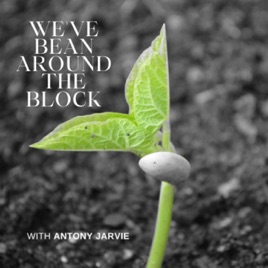
Advertise on podcast: We've Bean around the Block
Rating
5from
This podcast has
20 episodes
Language
EnglishPublisher
Antony JarvieExplicit
No
Date created
2021/03/07
Latest episode
2023/12/06
Average duration
24 min.
Release period
79 days
Description
We've bean around the block is a podcast that will discuss topics of interest to the soybean and dry bean industries in South Africa
Unlock We've Bean around the Block podcast Email contact info,
Listeners & Audience details
Email contact information
Direct podcast contact details

Listeners
Audience numbers & engagement insights

Audience details
Podcast Insights

Podcast episodes
Check latest episodes from We've Bean around the Block podcast
Episode 2 of 23: Nematodes in Soybean production
2023/12/06
Episode 2 of 23: Nematodes in soybean production
In this episode of ‘We’ve bean around the block’, we catch up with world renowned nematologist Prof Driekie Fourie and discuss the nematodes that are problematic to soybean production in South Africa. The root knot nematodes (Meloidogyne spp.) are considered the biggest nematode problem in South Africa, but the lesion nematodes (Pratylenchus spp.) are very widely distributed across all the soybean production areas in the country. The cyst nematode (Heterodera) is not currently found in the country, but Prof Fourie sounded the warning that it had recently been detected in neighbouring Zambia. Control of nematode numbers in our soils and population dynamics are discussed and the conclusion is drawn that an integrated strategy involving poor host plant species in rotation, resistant cultivars, cultural practices and new era chemical active ingredients are required to build soil health and suppress nematode populations in our soybean production.
Episode 1 of 23: Cane in pain
2023/02/02
Episode 1 of 23
Cane in pain
In this episode of ‘We’ve bean around the block’, we re-visit the topic of dry beans in rotation with sugarcane. This episode follows a previous podcast (Episode 5 of 21) with advanced thinking of how to incorporate beans into a rotation with sugarcane. Host Antony Jarvie discusses rotation ideas and practicalities with forward thinking cane farmer, Deon Schröder. The problem with incorporating dry beans into a sugarcane rotation is always going to be the herbicide residues from the cane component. The shrinking crushing capacity in the industry is forcing a reduction in sugarcane output, which for the first time, provides an incentive for a multi-year and or a multi-crop rotation strategy. The idea to bring in glyphosate tolerant hybrid maize as a first rotation crop and then to follow this with beans in the second season, as a way to avoid the effects of sugarcane herbicide residues, is discussed at length. The practical aspects of turning a sugarcane operation into a more diverse farming unit is also discussed. The podcast was recorded with Deon Schröder, but it followed a workshop discussion that included input from Dave Wilkinson, Shaun Carroll, Marcel Ortmann and Andrew Braithwaite.
Adopting Success: Zamukele
2022/10/05
Episode 6 of 22
Adopting Success: Zamukele
In this episode of ‘We’ve bean around the block’, host Antony Jarvie discusses the Zamukele project with Success Mdluli of the Schoeman Group. Zamukele is a Zulu word that means ‘adopt’, and it is a platform that the Schoeman Group have developed to adopt small-scale farmers into their canning bean enterprise. After an initial screening process, successful applicants to the scheme are assisted with agronomic support, seed and fertilizer inputs to begin their small white canning bean production. Once the harvested crop is delivered back to the Schoeman Group, the costs of the inputs are paid off and the profit is returned to the farmer. It is in essence a private sector initiative to assist small-scale farmers to access finance for their production. Without land ownership, small-scale farmers have no access to the formal banking sector for production loans. This remains a hurdle that the government has been unable to address adequately. Agribusinesses wishing to support the Schoeman Group by carrying some of the risk related to inputs in this project, can get in contact with Success Mdluli via email ([email protected]) for details.
Episode 5 of 22: Agronomic strategies for following a wet season
2022/08/23
Episode 5 of 22
Agronomic strategies for following a wet season
In this episode of ‘We’ve bean around the block’, host Antony Jarvie and experienced agronomist Grant Pringle explore the prospects for the 2022/23 summer cropping season. In this podcast, the agronomic strategies that should be considered are explored in a crop agnostic fashion. The very wet preceding two seasons, which by many accounts has been largely positive for agriculture in South Africa, now lays a foundation for increased crop disease risks. The need for rotation is discussed, as well as increasing the length of the rotation and the obligation to protect the most vulnerable crop within the rotation. Cultivar choices which emphasize yield stability are important, as is the need to prioritise disease resistance. Current disruptions to global supply chains could mean that important inputs like fungicides may not be freely available, which accentuates the need for comprehensive defensive trait packages in the cultivar choices made for the season. Seed treatment considerations are discussed, as is the need for certified or disease-free seed in crops such as dry beans. Lastly, the call for patience at planting time is made to ensure that the soil conditions are ideal at planting. While this podcast assesses agronomic strategies for the next season, Wandile Sihlobo the highly acclaimed agricultural economist, has captured the economic drivers that have shaped the agricultural outlook for the 2022/23 season in his new podcast channel. This is well worthwhile listening to in conjunction with this episode.
Episode 4 of 22: Nitrogen Fixation
2022/05/17
Episode 4 of 22: Nitrogen fixation
In this episode of ‘We’ve bean around the block’, host Antony Jarvie discusses nitrogen fixation with UKZN’s Professor Mark Laing. The discussion is centred around nitrogen fixation in soybeans, but it broadens into a discussion that covers legumes and non-legume crops. The fragile Bradyrhizobium japonicum used in soybean production is not indigenous to South African soils, so it needs to be inoculated at planting. The importance of out-competing other microbes and wild strains of rhizobia is discussed, as is the need to inundate the rhizosphere with the desired highly efficient N-fixing strains. The most widely used rhizobia strain (WB74) has been deployed for more than 20 years, and current soybean cultivar selection has been optimised on this strain. With climate change, soil environment conditions are changing rapidly, and there was much debate around the requirement for strain improvement to meet these changes. There are allied microbes that we should be developing alongside the rhizobia to buffer their exposure to harsh conditions. Professor Laing went on to introduce the topic of nitrogen fixation by free-living microbes. The examples given included N-fixation in sugar cane, cereals such as wheat and maize and in forestry. His own ground-breaking research is poised to commercialize a N-fixing Bacillus species, which could contribute towards reducing agriculture’s reliance on fertilizer nitrogen. For those interested in this topic, the links provided below offer some peer-reviewed scientific articles on the topic.
https://www.tsnf.org.uk/wp-content/uploads/2019/08/Cocking-and-Dent-2017.pdf
https://pubs.acs.org/doi/pdf/10.1021/acssynbio.1c00049
Episode 3 of 22: Grant us technology, in abundance
2022/03/28
Episode 3 of 22: Grant us technology, in abundance
Peering down the Corteva soybean pipeline is a bit like overhearing a farmers’ prayers… grant us technology, in abundance. In this episode of ‘We’ve bean around the block’, host Antony Jarvie brings you both Grant and technology. The guest for this episode is Pannar agronomist Grant Pringle, who shepherds the discussion through the soybean technology on its way to the South African producer through the Corteva pipeline. The new trait package is called Conkesta E3, abbreviated to CE3, which includes three herbicide resistant genes (2.4D, glyphosate & glufosinate) stacked with two Bt proteins (Cry1Ac, Cry1F) for lepidopteran insect control. There is a configuration of this package just called E3, which only includes the three herbicide resistances that may be used as a stand-alone trait package or as refuge for the CE3. Both E3 and CE3 are designed to be used with the Enlist herbicide system. Enlist is the new choline formulation of the herbicide 2.4D, which is used in a tank mix with either glyphosate or glufosinate for exceptional weed control. This new trait development will change soybean production in South Africa for good.
Episode 2 of 22: Seedling disorders
2022/03/21
Episode 2 of 22: Seedling disorders
In this episode of ‘We’ve bean around the block’ host Antony Jarvie talks to product agronomist Grant Pringle about seedling disorders in dry beans. Often poor germination and emergence are blamed on seed quality, but as Grant explains, there are a host of reasons why the germination percentage on the seed bag may not align with what is experienced in field. The cool wet conditions faced this season has resulted in poor germination, un-even emergence, and variable maturation. The effects of moisture, temperature, compaction are discussed and expanded to their interaction with fertilizer, herbicides and soil pathogens. The major soil-borne pathogens that are mentioned include Pythium, Rhizoctonia and Fusarium.
Episode 1 of 22: 2021 year in review
2022/01/20
Episode 1 of 22: 2021 year in review
Questions from the mail bag
‘We’ve bean around the block’ podcast host Antony Jarvie invites an avid listener, Colin Prince, to critically review the channel and to assist with listener questions. Colin, who is a seasoned enthusiast of podcasts and claims to have listened to all the WBATB episodes, discusses the pros and cons of show length, frequency and seasonality. He then goes on to pose questions raised by listeners. The End Point Royalty discussed in Episode 7 of 21 raised two important questions. Should farmers who buy seed still be liable for the EPR, and is a differential royalty rate for different cultivars a possibility? Episode 5 of 21 featured the investigation of rotating sugar cane with dry beans. This episode attracted the question of how would one get started with such a rotation? A question that followed Episode 11 of 21 on the insect pests of soybean was centered around new insect resistance technologies. Would Bt soybeans be as popular as Bt maize, and when could we expect to see this technology in the field? The last question was about show content for 2022. To ask questions yourself or suggest topics for discussion, contact the show via [email protected]
Episode 11 of 21: What is bugging you, Marlene?
2021/11/12
Episode 11 of 21: What is bugging you, Marlene?
Common insect pests of soybean
‘We’ve bean around the block’ podcast host Antony Jarvie interviews Dr Marlene van Rooyen, entomologist at Corteva Agriscience, about the most common soybean pests. The podcast starts off with cutworm- a ubiquitous soil pest plaguing soybean production in South Africa. This polyphagous insect is a common pest to many crops and the best strategy to control plant population loss using an integrated practice of combining cultural and chemical methods of control is debated. Stink bugs and their potential to cause quality losses in grain are discussed. The sporadic nature of leaf and pod feeding larvae are dealt with, by discussing both loopers and bollworm and their control. Finally, the insect resistance portion of the new soybean trait CE3 is discussed. Bt resistance to lepidopteran pests is on its way to soybean producers in South Africa, and the deployment of this will be incorporated into current control practices to lower risks of production in the future.
Episode 10 of 21: Deidre and the 4 decades
2021/09/25
Episode 10 of 21: Deidre and the 4 decades
We’ve bean around the block host Antony Jarvie interviews Dr Deidre Fourie to celebrate the last four decades of bean research at the Grain Crops Research Institute in Potchefstroom. Deidre has recently retired from leading the team, and the interview covers the last 4 decades of bean research, organized in eras and covers the major decisions, developments and achievements. The intent of the show is to give credit the characters that have dedicated their lives to bean improvement in southern Africa.
The Willem Vermeulen era
Establishment of the disease-free certification scheme, which is the bed-rock of our current industry. The diseases which were included in the scheme and the seed production areas and protocols that still stand today are discussed.
The Liebenberg era
The brave decision to deploy the ‘I’ gene (more on this is published on the Plant Breeders website). The building of an amazing breeding team, with Andries Liebenberg leading this with his agronomy background. Further including Brian Edington with a genetics background, Meri Liebenberg with her mycology expertise and Deidre Fourie with her bacteriology background.
The Fourie era
Following the retirement of Andries and Meri, Deidre took over the helm. She has been able to (single handedly) maintain the plant breeding momentum built over several decades and still develop and release new and innovative products. Her retirement leaves the GCRI at a crossroads in its history. What can the GCRI do to maintain the momentum of the last 40 years? Some funding ideas are shared.
The show is wrapped up with two plant breeding stories, explaining how some of South Africa’s favorite bean cultivars were developed.
Episode 9 of 21: Soybean maturity
2021/08/19
Episode 9 of 21: Soybean maturity
In this episode of ‘We’ve bean around the block’, host Antony Jarvie and Grant Pringle wrestle with the topic of soybean maturity. It is such an influential factor in soybean cultivar adaptation, that it warrants detailed discussion. Maturity in soybean is dictated by both genotype and environment and the complex interactions that govern the expression, commonly causes uncertainty in production. The effect of latitude is demonstrated by comparing two locations with similar temperatures but differing latitudes. Then a similar comparison is made between locations that have the same latitude but differ in altitude. Latitude affects daylength and altitude affects temperature. Both variables interact to trigger flowering, and the speed at which the crop runs through the reproductive stage is driven by heat unit accumulation during the season. A discussion on how Relative Maturity grouping is calculated and the importance of accuracy in this ensues. Finally, Grant discusses the uniquely concise way in which Pannar group their varieties for the purpose of cultivar recommendation.
Episode 8 of 21: Sclerotinia: White mould in soybeans
2021/07/26
Episode 8 of 21: Sclerotinia, White mould in soybeans
In this episode of ‘We’ve bean around the block’, podcast host Antony Jarvie talks to Dr Lisa Rothmann about Sclerotinia, which is without doubt the most serious pathogen limiting soybean production in South Africa. Lisa is a plant pathologist and researcher associated with the UFS, specializing in Sclerotinia sclerotiorum, commonly known as white mould. Sclerotinia is a major disease of many important agronomic crop species, including dry beans and sunflower but the discussion in this episode is quite soybean centric. In a ten-year survey commissioned by the Crop Estimates Committee, the prevalence of Sclerotinia in different seasons was as low as 7% and as high as 55%. Different regions also varied in prevalence, but it was important in all the major soybean production regions. The life cycle of the pathogen is discussed concentrating on sclerotia, the melanised structure that allows the white mould to survive in debris or soil for many seasons and to re-infect crops in the future. Germinating sclerotia form small fruiting structures called apothecia, which release ascospores that infect susceptible host plants. Soybeans are most susceptible to infection during their flowering period, and as the infection progresses, characteristic white mould colonises the plant. Sclerotia are formed when the white mycelia harden and may remain embedded in the infected stems of the plants or dispersed on the soil surface during the harvesting process. Sclerotia are often of similar size to soybean grain, which means that they could potentially land up in amongst seed, if the conditioning processes are not sensitive enough to remove them. In order to prevent seed from being a major source of re-infection of fields, the South African seed certification scheme limits the presence of sclerotia in certified seed bags to 0.2%. Beside using good quality seed, producers can also limit the impact of Sclerotinia on their crop by rotating with a grass species crop like maize, utilizing cultural practices like plant population and row width to make conditions less favourable for infection. The pros and cons of tillage and cultivar maturity and habit are discussed. Any action that is aimed at reducing the number, viability or lifespan of sclerotia should be considered because it is a long-term solution that targets the problem, not just the symptom. Scouting for apothecia during the season assists in establishing the crop risk, helping with the decision of whether to spray or not to spray. Recognising the apothecia could be aided by the photos on the Sclerotinia Research Network. This website also has a hotline, and you may use this to contact the experts directly for specialist opinion.
Further reading: There are several good local articles on Sclerotinia in soybean, the one in SAGrain Mag by Hanlie du Plessis offers great insights.
Podcast sponsorship advertising
Start advertising on We've Bean around the Block relevant audience podcasts
You may also like to advertise on these Podcasts

517363
F*ck Your Comfort Zone with Margie Haber
Margie Haber Studio

3.8140231
The Shade Of It All: A Rucast Podrace for RuPaul's Drag Race
Alex Koll, Katie Compa, Kyle-Steven Porter, and Sharron Paul

4.91601472
Marketer of the Day with Robert Plank: Get Daily Insights from the Top Internet Marketers & Entrepreneurs Around the World
Robert Plank

4.8211168
The Real Life Caddie Golf Podcast
Glorified Donkey

4.9235145
Life in The World to Come
lifeintheworldtocome

4.9197500
Coach Josh
Joshua Eze

53125
The Tech Leaders Podcast
bedigital

4.91821125
Fantasy Baseball Today Express
CBS Sports, Fantasy Baseball, MLB, Baseball, Fantasy Sports, Fantasy Rankings, Prospects

54152
Krush Performance
Jeff Krushell

4.817171997
The Positive Head Podcast
Brandon Beachum