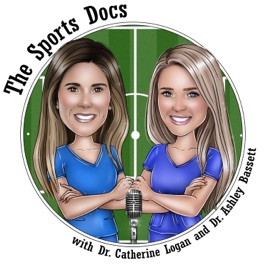
Advertise on podcast: The Sports Docs Podcast
Rating
4.9from
This podcast has
197 episodes
Language
EnglishPublisher
SportsDocsPodExplicit
No
Date created
2021/03/08
Latest episode
2026/10/05
Average duration
28 min.
Release period
7 days
Description
Sports medicine is a constantly evolving field, with hundreds of new articles published each month on the topic. This ever-growing wealth of information can make it challenging to stay updated on the newest approaches and techniques, and to know which data should actually change your practice. Join orthopedic surgeons, Dr. Catherine Logan and Dr. Ashley Bassett, as they chat about the most recent developments in sports medicine and dissect through all the noise. On each episode of The Sports Docs podcast, the hosts will tackle a specific injury – from ACL tears to shoulder instability – and review the top research from various high-impact journals that month, including The American Journal of Sports Medicine, Arthroscopy: The Journal of Arthroscopic and Related Surgery, Sports Health, Journal of Shoulder and Elbow Surgeons, and more. The Sports Docs will also be joined by experts in the field of sports medicine – orthopedic surgeons, nonoperative sports medicine specialists, athletes, physical therapists, athletic trainers and others – to provide a fresh and well-rounded perspective based on their unique experiences. The Sports Docs – Dr. Logan & Dr. Bassett – are friends & former co-residents from the Harvard Combined Orthopaedic Residency Program, who went onto esteemed sports medicine fellowships at The Steadman Clinic and The Rothman Institute, respectively. Dr. Logan practices in Denver, CO, and serves as Team Physician for Men's USA Lacrosse & as a Team Physician for U.S. Ski & Snowboard. Dr. Bassett is the director of the Women’s Sports Medicine Center at the Orthopedic Institute of New Jersey and practices across northern NJ, primarily in Morris and Sussex Counties. Together, they will bring monthly conversations on how to care for athletes of all ages and levels of play, with a healthy mix of cutting-edge science and real-world application.
Unlock The Sports Docs Podcast podcast Email contact info,
Listeners & Audience details
Email contact information
Direct podcast contact details

Listeners
Audience numbers & engagement insights

Audience details
Podcast Insights

Podcast episodes
Check latest episodes from The Sports Docs Podcast podcast
197: Dr. Kenneth Hunt - Modern Management of Ankle Instability (Part I)
2026/10/05
On today’s episode of The Sports Docs Podcast, we’re joined by Dr. Kenneth Hunt, Professor of Orthopedic Surgery and Chief of Foot and Ankle Surgery at the University of Colorado, Director of the UCHealth Foot and Ankle Center, and team physician for University of Colorado Athletics and the Denver Nuggets.
In Part I, we take a comprehensive look at lateral ankle sprains and chronic ankle instability. We discuss how to evaluate the athlete with an acute ankle injury, red flags that should prompt consideration of associated pathology, and when advanced imaging is warranted.
Dr. Hunt walks us through his approach to early treatment, including the role of bracing, progressive weight bearing, and rehabilitation. We discuss what makes an effective ankle brace, when athletes should continue bracing after returning to sport, and why bracing should complement—not replace—proprioceptive and neuromuscular training.
We also review the factors that may predict progression from a first-time ankle sprain to chronic ankle instability, including impaired jumping and landing ability and persistent deficits in dynamic balance.
The conversation then shifts to management of chronic instability. Dr. Hunt explains when persistent instability becomes a surgical problem and how the Broström procedure has evolved from traditional anatomic repair to modern techniques incorporating arthroscopy, contemporary anchor technology, and, in selected patients, internal brace augmentation.
We discuss:
Evaluation of the acute lateral ankle sprainRed flags for associated ankle pathologyWhen to obtain MRI or other advanced imagingBracing during acute recovery and return to sportProprioception, balance, and neuromuscular rehabilitationRisk factors for chronic ankle instabilityReturn-to-play considerations and the PAASS frameworkIndications for surgery in chronic lateral ankle instabilityModern Broström repairInternal brace augmentation: who may benefit and whether every Broström needs itPart II: High Ankle Sprains & Osteochondral Lesions of the Talus
In Part II, we will continue our conversation with Dr. Hunt and turn our attention to syndesmotic—or “high”—ankle sprains and osteochondral lesions of the talus.
We examine the evolving management of syndesmotic injuries, including evidence comparing suture-button fixation with traditional syndesmotic screws. We discuss the potential advantages of dynamic fixation, including improved functional outcomes, fewer implant-related complications and hardware removals, and lower rates of malreduction.
Finally, we tackle osteochondral lesions of the talus, reviewing diagnosis and treatment options ranging from nonoperative management to microfracture, cartilage and bone grafting, and newer cartilage-restoration strategies.
Articles Discussed
Recovery From a First-Time Lateral Ankle Sprain and the Predictors of Chronic Ankle Instability
American Journal of Sports Medicine, 2016
Brace for Impact: A Retrospective Analysis of the Modified Broström-Gould Procedure With and Without Internal Brace Augmentation
Cureus, 2023
Suture Button Versus Syndesmotic Screw for Syndesmosis Injuries: A Meta-analysis of Randomized Controlled Trials
American Journal of Sports Medicine, 2019
Evaluation and Management of Osteochondral Lesions of the Talus
Cartilage, 2017
Modified Broström vs Suture Tape Augmentation: A Systematic Review
Journal of Foot and Ankle Surgery, 2025
Internal Brace Augmentation Versus Modified Broström-Gould Procedure for Chronic Lateral Ankle Instability: A Systematic Review and Meta-analysis of Functional and Radiographic Outcomes
Journal of Orthopaedic Surgery and Research, 2026
Subscribe to The Sports Docs Podcast on Apple Podcasts, Spotify, Amazon Music, and YouTube. You can also find us on Instagram @thesportsdocspod or reach us at [email protected].
www.cloganmd.com
www.cosportsmedicine.com / https://orthopedicnj.com/physicians/ashley-bassett
196: Adding the LET: Does Graft Protection Come at a Cost?
2026/09/28
On today’s episode of The Sports Docs Podcast, we’re discussing the 2026 Orthopaedic Journal of Sports Medicine article, “The Impact of Lateral Extra-Articular Tenodesis on Knee Range of Motion After Pediatric Anterior Cruciate Ligament Reconstruction,” by Hamad and colleagues from UCLA.
The use of lateral extra-articular tenodesis (LET) alongside ACL reconstruction continues to increase, particularly in young athletes at high risk for reinjury. While growing evidence suggests that LET can improve rotational stability and reduce ACL graft failure, questions remain about whether adding an extra-articular restraint may increase the risk of postoperative stiffness.
In this retrospective cohort study, the authors evaluated 412 pediatric ACL reconstructions, including 167 patients who underwent ACL reconstruction with LET. The primary outcome was restricted range of motion at three months, defined as a ≥5° extension deficit or ≥15° flexion deficit compared with the contralateral knee.
We discuss several key findings:
Restricted range of motion at three months occurred in 16.8% of ACLR + LET patients compared with 10.2% following isolated ACL reconstruction.After adjustment for patient and surgical factors, LET was associated with approximately twice the odds of restricted postoperative motion.Female sex was the strongest predictor identified, with more than four times the odds of restricted motion.Most motion deficits involved flexion rather than extension.Although most patients with early motion loss did not require another procedure, 4.2% of the LET group underwent manipulation under anesthesia and/or lysis of adhesions compared with 0.4% of the isolated ACL group.We also discuss why these findings should not discourage surgeons from performing LET in appropriately selected athletes.
Instead, the study highlights a potential trade-off between graft protection and early postoperative motion, reinforcing the importance of appropriate patient selection, careful LET positioning and tensioning, early restoration of knee motion, and close postoperative surveillance.
Finally, we review the limitations of this retrospective study and discuss how evolving LET indications, graft selection, fixation techniques, rehabilitation adherence, and surgical technique may influence these findings.
The takeaway: LET provides meaningful protection for the ACL graft in young, high-risk athletes—but surgeons and rehabilitation teams should remain vigilant about restoring motion and identifying patients who begin to fall behind early in recovery.
Article
Hamad et al. The Impact of Lateral Extra-Articular Tenodesis on Knee Range of Motion After Pediatric Anterior Cruciate Ligament Reconstruction. Orthopaedic Journal of Sports Medicine. 2026.
Thanks for listening to The Sports Docs Podcast!
Subscribe on Apple Podcasts, Spotify, Amazon Music, and YouTube to stay up to date on the latest developments in sports medicine.
If you enjoy the podcast, please consider leaving us a review or comment.
Email: [email protected]
Instagram: @thesportsdocspod
195: From the OR to the Octagon (Part 2): Cub Swanson’s Endoscopic Spine Journey with Guests Cub Swanson and Dr. Sohrab Gollogly
2026/09/21
In this special Athlete Highlight episode, we are back with Cub Swanson & Dr. Sohrab Gollogly - bringing together two sides of the surgical experience: the athlete who underwent surgery and the surgeon who performed it.
Professional mixed martial artist and UFC Hall of Famer Cub Swanson joins his surgeon, orthopedic spine specialist Dr. Sohrab Gollogly, for a conversation about endoscopic spine surgery—from the athlete’s perspective and the surgeon’s point of view.
In This Episode: Part Two
In the next episode, we’ll continue the discussion and shift our focus to postoperative recovery and return to play following endoscopic spine surgery.
What does recovery look like for a professional fighter? When can an athlete begin training again? And what does it take to get back to the highest level of competition?
Meet Our Guests
Cub Swanson
Cub Swanson is a veteran professional mixed martial artist and one of the most respected featherweights of his generation.
Swanson turned professional in 2004 and became a standout in the WEC before making his UFC debut in 2011. Known for his exciting and aggressive fighting style, he has faced many of the biggest names in MMA and has built a professional career spanning more than two decades.
He was inducted into the UFC Hall of Fame’s Fight Wing in 2022.
Outside the Octagon, Cub is a father of three and is passionate about mentoring the next generation of fighters and giving back to the sport that helped transform his life.
Dr. Sohrab Gollogly
Dr. Sohrab Gollogly is a fellowship-trained, board-certified orthopedic spine surgeon with more than 20 years of experience treating spinal disorders.
Based in Monterey, California, Dr. Gollogly specializes in minimally invasive and endoscopic spine surgery, with particular interests in motion preservation and avoiding unnecessary fusion surgery.
He completed his medical training at the University of Washington, orthopedic surgery residency at the University of Utah, and advanced fellowship training in adult spine surgery in Lyon, France, as well as pediatric spine surgery in San Diego.
Dr. Gollogly is also a founding member of the EndoSpine Academy at Balgrist University Hospital in Zurich, where he is involved in surgeon education and the advancement of endoscopic spine techniques.
Why This Conversation Matters
Endoscopic spine surgery continues to evolve, and for athletes, the potential advantages of minimally invasive approaches extend beyond the operating room.
For a professional fighter, the goals may include more than relieving pain or treating a structural problem. Motion, strength, function, recovery time, and the ability to return to a high-demand sport all matter.
By hearing directly from both the athlete and surgeon, this episode explores what happens when those goals intersect—and what the decision-making process looks like when the stakes are a professional career.
The Sports Docs Podcast
Hosted by Dr. Ashley Bassett and Dr. Catherine Logan
Subscribe on Apple Podcasts, Spotify, Amazon Music, and YouTube to stay up to date on the latest in sports medicine.
If you enjoy the podcast, please consider leaving us a review or comment—it helps other sports medicine professionals and athletes find the show.
Have feedback or a topic you'd like us to cover?
Email: [email protected]
Instagram: @thesportsdocspod
194: From the OR to the Octagon (Part 1): Cub Swanson’s Endoscopic Spine Journey with Guests Cub Swanson and Dr. Sohrab Gollogly
2026/09/14
In this special Athlete Highlight episode, we’re bringing together two sides of the surgical experience: the athlete who underwent surgery and the surgeon who performed it.
Professional mixed martial artist and UFC Hall of Famer Cub Swanson joins his surgeon, orthopedic spine specialist Dr. Sohrab Gollogly, for a conversation about endoscopic spine surgery—from the athlete’s perspective and the surgeon’s point of view.
In This Episode
Why spinal injuries can be particularly challenging for professional combat athletesCub Swanson’s experience with a spinal condition that threatened his ability to continue competingWhat led to the decision to pursue endoscopic spine surgeryHow minimally invasive endoscopic techniques may offer an alternative to more traditional spine proceduresThe surgeon’s perspective on patient selection, motion preservation, and avoiding unnecessary fusionWhat it is like to make a surgical decision when your career depends on your physical performanceThe importance of balancing surgical treatment with an athlete’s goals, expectations, and desire to return to competitionThe evolving role of endoscopic techniques in sports medicine and spine careMeet Our Guests
Cub Swanson
Cub Swanson is a veteran professional mixed martial artist and one of the most respected featherweights of his generation.
Swanson turned professional in 2004 and became a standout in the WEC before making his UFC debut in 2011. Known for his exciting and aggressive fighting style, he has faced many of the biggest names in MMA and has built a professional career spanning more than two decades.
He was inducted into the UFC Hall of Fame’s Fight Wing in 2022.
Outside the Octagon, Cub is a father of three and is passionate about mentoring the next generation of fighters and giving back to the sport that helped transform his life.
Dr. Sohrab Gollogly
Dr. Sohrab Gollogly is a fellowship-trained, board-certified orthopedic spine surgeon with more than 20 years of experience treating spinal disorders.
Based in Monterey, California, Dr. Gollogly specializes in minimally invasive and endoscopic spine surgery, with particular interests in motion preservation and avoiding unnecessary fusion surgery.
He completed his medical training at the University of Washington, orthopedic surgery residency at the University of Utah, and advanced fellowship training in adult spine surgery in Lyon, France, as well as pediatric spine surgery in San Diego.
Dr. Gollogly is also a founding member of the EndoSpine Academy at Balgrist University Hospital in Zurich, where he is involved in surgeon education and the advancement of endoscopic spine techniques.
Why This Conversation Matters
Endoscopic spine surgery continues to evolve, and for athletes, the potential advantages of minimally invasive approaches extend beyond the operating room.
For a professional fighter, the goals may include more than relieving pain or treating a structural problem. Motion, strength, function, recovery time, and the ability to return to a high-demand sport all matter.
By hearing directly from both the athlete and surgeon, this episode explores what happens when those goals intersect—and what the decision-making process looks like when the stakes are a professional career.
Up Next -- Part Two
In the next episode, we’ll continue the discussion and shift our focus to postoperative recovery and return to play following endoscopic spine surgery.
What does recovery look like for a professional fighter? When can an athlete begin training again? And what does it take to get back to the highest level of competition?
Stay tuned for Part Two!
The Sports Docs Podcast
Hosted by Dr. Ashley Bassett and Dr. Catherine Logan
Subscribe on Apple Podcasts, Spotify, Amazon Music, and YouTube to stay up to date on the latest in sports medicine.
If you enjoy the podcast, please consider leaving us a review or comment—it helps other sports medicine professionals and athletes find the show.
Have feedback or a topic you'd like us to cover?
Email: [email protected]
Instagram: @thesportsdocspod
193: ACL 2.0: Playbook for Reducing Retear Risk with Dr. Pat Smith and Dr. Aaron Krych (REBOOT)
2026/09/07
Live from the Arthrex Team Physician Controversies Conference
(& Happy Labor Day!)
In this episode of The Sports Docs Podcast, Dr. Ashley Bassett and Dr. Catherine Logan sit down LIVE from the Arthrex Team Physician Controversies with two leading ACL experts—Dr. Pat Smith and Dr. Aaron Krych—to discuss strategies to reduce failure after ACL reconstruction.
The conversation highlights the evolution of ACL surgery, focusing on graft selection, fixation, biologic augmentation, and mechanical protection, with an emphasis on optimizing outcomes in young, high-risk athletes.
Graft: Autograft vs Allograft
Strong evidence shows higher failure rates with allograft in young athletes
MOON data: ~4–6x increased risk of failure in patients 25 years
Allograft best for:
Older, lower-demand patients Revision or multi-ligament cases Autograft Selection
Graft choice depends on:
Age, sex, sport, and anatomy BTB:
Preferred for high-level pivoting athletes Strong fixation, less graft elongation Quadriceps tendon:
Increasingly utilized Larger graft diameter Less donor-site morbidity vs BTB Particularly useful in younger and female athletes Key insight:
Grafts 8 mm are associated with higher failure risk
Internal Brace (IB)
Indications:
Young athletes Hyperlax patients Revision ACL Benefits:
Decreased graft elongation and cyclic displacement Reduced postoperative laxity Lower rerupture rates (~1% at 5 years in some studies) Faster return to sport and improved rehab confidence Lateral Extra-Articular Tenodesis (LET)
Strong evidence supports reduced failure rates:
Primary ACLR: ~11% → 4% (high-risk patients) Revision ACLR: ~21% → 5% Benefits:
Decreased pivot shift Improved return to pre-injury sport Cost-effective in high-risk populations Indications for LET
Age ≤25 years High-grade pivot shift Knee hyperextension Return to cutting/pivoting sports Revision ACL reconstruction LET Surgical Technique Pearls
IT band graft (7–8 cm x 1 cm)
Passed under or near LCL depending on technique
Fixation near lateral epicondyle
Pearls:
Fix in neutral rotation and ~30–60° flexion Avoid overconstraint Close IT band defect Featured Guests
Dr. Pat Smith – Hospital for Special Surgery Naples
Dr. Aaron Krych – Mayo Clinic, Team Physician for the Minnesota Timberwolves
Stay Connected
Apple Podcasts
Spotify
YouTube
Follow us on Instagram for more insights on cutting-edge sports medicine, athlete recovery, and performance
https://www.instagram.com/thesportsdocspod/
Our Hosts:
Catherine Logan, MD, MBA
https://www.cloganmd.com/
Ashley Bassett, MD
https://orthopedicnj.com/physicians/ashley-bassett
www.thesportsdocspod.com
192: Stabilizing the Syndesmosis: Modern Approaches to a Common Problem with Dr. Kevin Martin - Live at AOSSM 2026
2026/08/31
High ankle sprains and syndesmosis injuries can be some of the most challenging ankle injuries to diagnose and manage—particularly when instability requires surgical intervention.
In this special episode of The Sports Docs Podcast LIVE from the AOSSM Annual Meeting in Seattle, hosts Ashley Bassett, MD, and Catherine Logan, MD, sit down with Kevin Martin, DO, Orthopaedic Surgeon at The Ohio State University, to discuss modern approaches to syndesmosis stabilization.
The conversation explores how surgical management has evolved from traditional rigid screw fixation toward dynamic stabilization strategies and what that evolution means for reduction accuracy, rehabilitation, and return to sport.
Dr. Martin shares his approach to determining when a syndesmosis injury requires surgery and walks listeners through important technical considerations for achieving and maintaining an anatomic reduction. The discussion covers practical surgical pearls and pitfalls, including reduction techniques, clamp positioning, tunnel placement, button seating, and avoiding syndesmotic malreduction.
The group also discusses how surgeons determine when additional fixation may be beneficial, including the decision to use one versus two dynamic fixation constructs in athletes, high-energy injuries, and more rotationally unstable patterns.
Later in the episode, the conversation turns to postoperative rehabilitation and return-to-sport progression, including how injury severity and associated fractures influence decisions surrounding range of motion, weightbearing, running, cutting, and return to competition.
Finally, the episode explores modern options for managing syndesmosis injuries associated with distal fibula fractures, including intramedullary fibular fixation and how implant design continues to evolve to support minimally invasive fracture fixation and syndesmosis stabilization.
In This Episode, We Discuss:
When syndesmosis injuries can be treated nonoperatively—and when surgery is indicatedIdentifying syndesmotic instability in athletesThe evolution from rigid fixation to dynamic syndesmosis stabilizationAdvantages and limitations of traditional syndesmotic screw fixationWhy anatomic reduction remains the most important step in successful syndesmosis surgerySurgical pearls for avoiding syndesmotic malreductionClamp positioning and the risks of over-compressionTunnel placement and implant positioning considerationsOne versus two fixation constructs: when is additional stabilization necessary?Managing rotational instability and high-energy injury patternsPostoperative rehabilitation and return-to-sport progressionTreating syndesmosis injuries associated with distal fibula fracturesIntramedullary fibular fixation as an alternative to traditional plate fixationEmerging technology and the future of syndesmosis stabilizationKey Takeaway
Successful treatment of syndesmosis injuries starts with recognizing instability and achieving an accurate anatomic reduction. As fixation technology and surgical techniques continue to evolve, surgeons have more options to balance stability, physiologic motion, rehabilitation, and return to sport.
This episode of The Sports Docs Podcast was recorded LIVE at the AOSSM Annual Meeting in Seattle and is sponsored by Arthrex.
Stay Connected
If you enjoyed this episode, be sure to subscribe, rate, and review on:
Apple Podcasts:
https://podcasts.apple.com/us/podcast/the-sports-docs-podcast/id1557160983
Spotify:
https://open.spotify.com/show/01LSRvAWnz2gk8qyPd1Qbw?si=13cc745f43b740c0
Amazon Music:
https://music.amazon.com/podcasts/f15121d5-cc57-4201-9f2f-d6c2b26a3800/the-sports-docs-podcast
YouTube: https://www.youtube.com/channel/UCw48o9AbLmOoQk5fHfhsXFA
Follow us on Instagram for more insights on cutting-edge sports medicine, athlete recovery, and performance
https://www.instagram.com/thesportsdocspod/
Our Hosts:
Catherine Logan, MD, MBA
https://www.cloganmd.com/
Ashley Bassett, MD
https://orthopedicnj.com/physicians/ashley-bassett
www.thesportsdocspod.com
191: Seeing More Through Less: Nanoscopy in Elbow Surgery with Dr. Christopher Ahmad - Live at AOSSM 2026
2026/08/24
What if treating the throwing athlete’s elbow could mean seeing more while disrupting less?
In this special LIVE episode from the AOSSM Annual Meeting in Seattle, Dr. Catherine Logan and Dr. Ashley Bassett sit down with Christopher Ahmad, MD, renowned sports medicine surgeon and longtime New York Yankees team physician, to explore the evolution of elbow arthroscopy and the emerging role of nano-arthroscopy in treating throwing athletes.
Elbow arthroscopy has become an important tool for addressing mechanical intra-articular pathology, including loose bodies, posterior impingement, osteophytes, synovitis, chondral injuries, OCD lesions, and stiffness. But the elbow’s small working space and proximity of critical neurovascular structures make precision essential.
Dr. Ahmad discusses how advances in visualization and instrumentation—including the Arthrex NanoNeedle Scope—are expanding the surgeon’s toolbox and potentially allowing selected procedures to be performed with even less soft-tissue disruption.
The conversation also examines the growing interest in accelerated return-to-play timelines, including the much-discussed return of MLB pitcher Tarik Skubal following nano-arthroscopy and loose-body removal.
In This Episode
The most common elbow pathologies treated arthroscopically in throwing athletesHow to distinguish mechanical intra-articular pathology from ligamentous insufficiencyWhy accurate diagnosis and appropriate indications remain criticalThe evolution of elbow arthroscopy over the past two decadesWhy the elbow presents unique technical challenges for arthroscopic surgeryTraditional arthroscopes vs. the Arthrex NanoNeedle ScopeHow smaller visualization platforms may reduce surgical morbidityPotential benefits of less fluid extravasation, smaller portals, and less capsular disruptionWhat nano-arthroscopy could mean for postoperative pain, swelling, ROM, and rehabilitationTraditional recovery timelines following loose-body removalWhat professional athletes can—and cannot—teach us about accelerated return to playWhether emerging technologies could influence in-season surgical decision-makingThe future of nano-arthroscopy and whether it could transform sports medicineWhy the future is likely not “nano vs. traditional,” but the right technology for the right patientKey Takeaway
Technology doesn’t replace surgical judgment—it expands the toolbox.
For appropriately selected patients, nano-arthroscopy may offer an opportunity to accomplish established surgical goals while minimizing disruption to surrounding tissues. But as Dr. Ahmad emphasizes, the foundation remains the same: accurate diagnosis, sound indications, meticulous technique, and individualized patient care.
The future of sports medicine may not be about replacing traditional arthroscopy. It may be about having more precise options—and knowing exactly when to use each one.
Featured Technology
Arthrex NanoNeedle Scope
The NanoNeedle Scope represents an ultra-small visualization platform designed to provide direct visualization through a dramatically smaller diameter than traditional arthroscopes. In the elbow, where working space is limited and critical structures are nearby, this technology may offer new possibilities for minimally invasive evaluation and treatment.
Dr. Christopher Ahmad is a renowned orthopaedic sports medicine surgeon and longtime team physician for the New York Yankees. His clinical and research work has focused extensively on sports medicine, throwing athletes, elbow and shoulder pathology, and the advancement of surgical techniques.
Hosts
Catherine Logan, MD
Ashley Bassett, MD
The Sports Docs Podcast brings together leading sports medicine physicians to discuss the latest advances in orthopaedics, sports science, injury prevention, rehabilitation, and athlete performance.
Disclaimer
This episode is sponsored by Arthrex. The discussion focuses on the clinical application and evolving role of Arthrex technology in sports medicine. Surgical techniques and treatment decisions should be individualized based on patient-specific pathology, surgeon experience, and current evidence.
190: From Tear to Return to Play: Optimizing Rotator Cuff Outcomes with Dr. JT Tokish & Dr. Albert Lin - Live at AOSSM 2026
2026/08/17
Rotator cuff repair continues to evolve—not only in how surgeons fix the tendon, but in how we think about healing, biomechanics, tissue quality, and augmentation.
In this episode of The Sports Docs Podcast LIVE from the AOSSM Annual Meeting in Seattle, Dr. Albert Lin and Dr. JT Tokish join Dr. Ashley Bassett and Dr. Catherine Logan to discuss strategies for optimizing rotator cuff repair outcomes.
The conversation begins with the evolution of the SpeedBridge repair construct and the emergence of the FiberTak SpeedBridge, including the potential advantages of smaller all-suture medial anchors, bone preservation, independent tensioning, and rip-stop techniques.
The discussion then moves into one of the most rapidly evolving areas in rotator cuff surgery: biologic and structural augmentation. The group explores how surgeons identify patients at increased risk for failed healing, the role of the Rotator Cuff Healing Index, and the expanding options for augmentation—including the use of the long head of the biceps as an autograft and dermal allograft augmentation with CuffMend.
In This Episode
Evolving the SpeedBridge
The SpeedBridge technique has become one of the most established approaches to arthroscopic rotator cuff repair, with more than 15 years of clinical experience supporting its durability.
The group discusses:
How SpeedBridge has changed arthroscopic rotator cuff repairFootprint restoration and broad tendon-to-bone compressionLoad distribution across the repair constructLong-term clinical outcomes and survivorshipWhy reproducibility may be one of the technique's greatest advantagesFiberTak SpeedBridge: The Next Evolution
The conversation then turns to the FiberTak SpeedBridge, which incorporates smaller all-suture anchors in the medial row.
There are several potential advantages:
Smaller drill holes and reduced bone removalPreservation of greater tuberosity bone stockPotential advantages in revision surgeryAdditional fixation points with less disruption of the footprintStrong fixation and straightforward tensioningIncreased flexibility when treating complex tear patternsThe smaller 2.6-mm FiberTak RC anchor may allow surgeons to maximize fixation while minimizing disruption of the tuberosity footprint.
Tensionable Knotless Anchors and Delaminated Tears
One of the challenges in rotator cuff surgery is that many tears are not simply a single layer of retracted tendon.
In delaminated tears, the articular and bursal layers may retract differently.
The team discuss how independently tensionable knotless medial-row anchors allow surgeons to:
Evaluate the entire repair before final tensioningIndependently tension individual limbsBetter reduce different layers of the tendonImprove control of tissue reductionAvoid simply forcing multiple layers into one fixed positionThe conversation also explores the role of a medial pulley rip-stop, which can distribute forces across a larger area of tendon and potentially decrease suture cut-through in compromised tissue.
Who Should Have an Augmented Repair?
Not every rotator cuff repair requires augmentation.
The group discusses how surgeons can identify patients at increased risk for failed healing based patient, tear and surgical factors.
The Rotator Cuff Healing Index
The discussion includes the Rotator Cuff Healing Index (RoHI), a scoring system designed to predict the likelihood of healing following rotator cuff repair.
The guests discuss how risk stratification can help surgeons determine when the additional cost and complexity of augmentation may be justified.
Biceps Smash: Turning the Long Head of the Biceps Into an Autograft
One of the most fascinating concepts discussed is the use of the long head of the biceps tendon as an autologous scaffold for rotator cuff augmentation.
Dr. Tokish discusses the development of the Biceps Smash, in which the harvested proximal long head of the biceps tendon is compressed into a flattened graft that can be incorporated into the rotator cuff repair.
Potential advantages include:
Readily available autologous tissueNo additional donor-site morbidityNo immunologic concerns associated with allograft tissueHighly organized parallel collagen architecturePotential biologic activity from viable tenocytesAbility to potentially serve as a carrier for additional biologic therapiesThe group also discusses emerging clinical data examining healing and patient-reported outcomes following biceps autograft augmentation.
Dermal Allograft and Other Scaffold Options
The conversation then expands to other augmentation strategies, including:
Dermal allograftXenograftSynthetic scaffoldsAutograft tissueThe guests discuss the differences between structural support and biologic integration, as well as the importance of understanding how different scaffold materials interact with the host tissue.
Dermal allograft has accumulated substantial clinical evidence supporting its use in selected rotator cuff repairs, particularly larger and higher-risk tears.
The discussion also addresses concerns surrounding xenograft and synthetic materials, including inflammatory and foreign-body responses.
CuffMend: Simplifying Dermal Allograft Augmentation
For surgeons who elect to augment a repair with dermal allograft, the procedure itself can add complexity and operative time.
Dr. Tokish discusses how the CuffMend system is designed to streamline graft handling and delivery.
The conversation focuses on how improvements in instrumentation and graft preparation can potentially:
Reduce operative timeSimplify graft handlingImprove procedural efficiencyReduce technical variabilityMake augmentation more accessible to surgeonsSpeedFlex and Graft Preparation
The guests also discuss SpeedFlex, which uses pre-sized and pre-sutured ArthroFlex grafts.
Available graft configurations include:
20 × 25 mm and 25 × 30 mm1-mm and 2-mm thicknessesRather than requiring surgeons to prepare and load the graft intraoperatively, the pre-sutured configuration is designed to streamline preparation and reduce variability.
FiberStitch RC Simple
Another innovation discussed is the FiberStitch RC Simple implant for medial graft fixation.
Dr. Tokish explains how the system can facilitate a "sandwich stitch," allowing the graft to be compressed between fixation points on the superior and inferior surfaces.
Available straight and reverse-curved options provide additional flexibility for medial graft fixation.
Key Takeaways
1. The repair construct matters.
SpeedBridge has established a strong clinical track record, while FiberTak SpeedBridge builds on that foundation with smaller all-suture medial anchors and additional flexibility.
2. Bone preservation may be particularly important in complex and revision cases.
Smaller all-suture anchors can minimize bone removal and preserve the greater tuberosity footprint.
3. Not every rotator cuff repair needs augmentation.
Patient characteristics, tear morphology, tissue quality, and repair mechanics should all factor into the decision.
4. The biceps may be more than a pain generator.
The long head of the biceps can potentially serve as a readily available autologous scaffold for rotator cuff augmentation.
5. Dermal allograft remains an important augmentation option.
Clinical evidence supports its use in selected higher-risk repairs, particularly larger or compromised tears.
6. Making augmentation easier may increase adoption.
Streamlined graft preparation, delivery, and fixation can reduce operative complexity while maintaining the principles of sound repair.
7. The ultimate goal is healing—not simply repair.
Modern rotator cuff surgery increasingly focuses on creating the biologic and biomechanical environment necessary for durable tendon-to-bone healing.
Featured Research
Millett PJ, et al. Long-term outcomes following arthroscopic rotator cuff repair using the SpeedBridge technique. The study demonstrated approximately 94% survivorship at 10 years, highlighting the durability of the construct.
Colbath G, Murray A, Siatkowski S, et al. Autograft long head biceps tendon can be used as a scaffold for biologically augmenting rotator cuff repairs. Arthroscopy. 2022.
Kwon J, et al. The Rotator Cuff Healing Index: A New Scoring System to Predict Rotator Cuff Healing After Surgical Repair. American Journal of Sports Medicine. 2019.
Tokish JM, et al. Recent clinical work evaluating the use of a compressed long-head-of-biceps autograft for rotator cuff augmentation demonstrated promising healing rates and clinical outcomes at early follow-up.
This episode of The Sports Docs Podcast was sponsored by Arthrex.
189: LEAP Forward: The Evolution of ACL Management with Dr. Bonnie Gregory & Dr. Henry Ellis - Live at AOSSM 2026
2026/08/10
Lateral extra-articular procedures (LEAPs) have evolved from a controversial adjunct to ACL reconstruction into an increasingly evidence-supported tool for managing rotational instability and reducing graft failure in appropriately selected patients.
In this episode of The Sports Docs Podcast, Drs. Henry Ellis and Bonnie Gregory join us live from the AOSSM Annual Meeting to discuss where lateral augmentation fits in modern ACL management. They explore the evidence behind lateral extra-articular tenodesis (LET), patient selection and indications, potential complications, LET versus anterolateral ligament reconstruction (ALLR), surgical technique, fixation strategies, and rehabilitation considerations.
The conversation also highlights the Arthrex Knee FiberTak system, including how an all-suture anchor platform may address some of the limitations of traditional LET fixation.
Key Topics Discussed
Why add a lateral augmentation procedure to ACL reconstruction?Evidence demonstrating reduced ACL graft rupture and improved rotational stabilityThe role of LEAP in high-risk primary ACL reconstruction and revision ACL surgeryImpact on return to sport and pre-injury level of playEmerging evidence supporting the cost-effectiveness of LETUnderstanding the potential downsidesLateral-sided pain and hardware irritationHematoma and need for hardware removalEarly quadriceps weaknessConcerns regarding over-constraint and long-term degenerative changesWhether adding a lateral procedure meaningfully changes postoperative recoveryWho actually needs a LEAP?Young, active athletesHigh-grade pivot shift or anterior laxityKnee hyperextensionRevision ACL reconstructionAthletes returning to pivoting sportsHamstring autograft ACL reconstructionMultiple coexisting risk factorsChronic ACL deficiency and other emerging indicationsLEAP in elite athletesHow professional team physicians are approaching lateral augmentationCurrent practice patterns in elite and professional sportsThe balance between maximizing graft survivorship and avoiding unnecessary proceduresLET versus ALL reconstructionDifferences in surgical approachClinical outcomes and graft failureRotational stabilityOperative time, cost, and potential complicationsWhy surgeons may favor one technique over the otherModern LET surgical techniqueGraft harvest and preparationRelationship of the graft to the LCLFemoral fixationKnee position during fixationGraft orientation and isometryAvoiding over-constraintImportance of anatomic attachment sitesManagement of the IT band at the conclusion of the procedureSpotlight: Arthrex Knee FiberTak
The episode takes a closer look at the Knee FiberTak platform and its application in lateral augmentation.
The guests discuss how an all-suture anchor platform may offer advantages compared with traditional fixation methods, including:
Reduced hardware prominenceBone preservationPotentially decreased risk of tunnel convergenceLow-profile fixationErgonomic instrumentation designed specifically for the kneeMultiple fixation configurations for different surgical applicationsThe Knee FiberTak family includes:
Double-Knotless AnchorDouble-Knotted AnchorHybrid AnchorInternalBrace AnchorKnee FiberTak ButtonThe discussion explores how surgeons select between different configurations and how a versatile fixation platform can improve efficiency and adaptability in the operating room.
Rehab & Return to Sport
The episode concludes with a practical discussion of rehabilitation following ACL reconstruction with lateral augmentation.
While the addition of a LEAP generally does not dramatically alter standard postoperative restrictions, the guests emphasize several priorities:
Regaining full knee extensionRestoring quadriceps strength and activationMonitoring early quadriceps recoveryMaintaining appropriate progression through rehabilitationPreparing the athlete for a safe and successful return to sportSummary
LEAPs are no longer simply a historical technique being revisited. Contemporary evidence suggests that appropriately selected patients—particularly young, high-risk athletes, patients with significant rotational instability, revision ACL cases, and athletes returning to pivoting sports—may benefit from lateral augmentation as part of a comprehensive ACL reconstruction strategy.
The challenge for modern sports surgeons is determining who truly benefits, which technique is most appropriate, and how to perform the procedure without introducing unnecessary morbidity or over-constraint.
Disclaimer
This episode is sponsored by Arthrex. The discussion includes Arthrex products, including the Knee FiberTak system. The views and opinions expressed by the guests are their own and are intended for educational purposes.
188: Buttoned Up: Modern Advances in ACL Reconstruction with Seth Sherman, MD - Live at AOSSM 2026
2026/08/03
Advances in ACL reconstruction continue to push the field toward stronger fixation, improved graft protection, and more biologically friendly implants. In this special sponsored episode of The Sports Docs Podcast, recorded live at the 2026 AOSSM Annual Meeting in Seattle, Drs. Catherine Logan and Ashley Bassett welcome Dr. Seth Sherman to discuss the latest innovations in graft fixation and how they are changing the way surgeons approach ACL reconstruction.
The conversation begins with one of the most important decisions in ACL surgery—graft selection. Dr. Sherman shares his approach to choosing between bone-patellar tendon-bone (BTB), quadriceps tendon, and hamstring autografts, emphasizing how patient age, sex, sport, anatomy, and activity level influence decision-making. He also discusses the growing body of evidence supporting quadriceps tendon autografts, particularly in young athletes and female patients.
The discussion then shifts to the evolution of graft fixation, from interference screws to adjustable-loop suspensory fixation, and the advantages of modern cortical fixation systems. Dr. Sherman explains how the Arthrex TightRope SB represents an evolution in ACL fixation by combining an all-suture, low-profile design with familiar surgical workflow, radiopaque visualization, and secure adjustable-loop fixation.
The hosts and Dr. Sherman also explore InternalBrace™ augmentation, reviewing the biomechanical rationale, surgical pearls, and emerging clinical evidence supporting graft protection during the vulnerable early phases of ligament healing. Together, they discuss how thoughtful implant design and biologic principles are helping surgeons optimize outcomes while preserving future surgical options.
Whether you're an experienced sports medicine surgeon or a trainee learning modern ACL techniques, this episode provides practical insights into the latest advances in ACL reconstruction.
In This Episode
Factors that influence ACL graft selection, including age, sport, sex, and anatomy The growing role of quadriceps tendon autografts in primary ACL reconstruction How suspensory fixation has evolved over the past decade Advantages of adjustable-loop cortical fixation systems Features and clinical applications of the Arthrex TightRope SB all-suture fixation device Benefits of preserving bone stock and eliminating permanent metallic hardware Radiopaque implant visualization and its role during surgery Technical considerations and learning curve for adopting all-suture fixation Biomechanical principles and clinical evidence supporting InternalBrace™ augmentation Surgical pearls for avoiding over-constraint during InternalBrace fixation How TightRope SB integrates seamlessly with InternalBrace augmentation The future of biologically friendly, low-profile implant technology in ACL reconstruction Key Takeaways
ACL graft selection should be individualized based on patient-specific factors including sport, anatomy, age, and sex. Quadriceps tendon autografts continue to gain popularity due to predictable graft size, excellent clinical outcomes, and lower donor-site morbidity. Adjustable-loop suspensory fixation has become a reliable and versatile option for modern ACL reconstruction. The Arthrex TightRope SB combines familiar surgical technique with an all-suture, low-profile design that preserves bone and eliminates permanent metallic hardware. Radiopaque implant technology offers additional intraoperative confidence while maintaining the benefits of soft-tissue fixation. InternalBrace™ augmentation functions as a load-sharing construct that may reduce graft strain during early healing while allowing normal rehabilitation when properly tensioned. Modern ACL innovation continues to focus on preserving biology, minimizing hardware, and improving long-term patient outcomes without increasing surgical complexity. About Our Guest
Dr. Seth Sherman is a board-certified orthopaedic sports medicine surgeon specializing in arthroscopic and reconstructive surgery of the knee, shoulder, and elbow. He is widely recognized for his expertise in ACL reconstruction, cartilage restoration, and sports injury management, and is an active educator, researcher, and national lecturer dedicated to advancing evidence-based sports medicine.
This episode is sponsored by Arthrex.
Thank you to Arthrex for supporting continuing education and innovation in sports medicine.
Follow The Sports Docs Podcast for conversations with leading surgeons, researchers, and innovators advancing orthopaedic sports medicine through evidence-based education, surgical innovation, and multidisciplinary collaboration.
187: Leading the Next Era of Sports Medicine with Corey Parker, MPA, CEO of AOSSM - LIVE at AOSSM 2026
2026/07/27
The future of sports medicine isn't shaped solely in the operating room—it is also driven by visionary leadership, collaboration, education, and innovation. Live from the AOSSM Annual Meeting in Seattle, Drs. Catherine Logan and Ashley Bassett sit down with Corey Parker, MPA, the newly appointed CEO of the American Orthopaedic Society for Sports Medicine (AOSSM), to discuss his vision for one of the world's leading sports medicine organizations.
With more than two decades of executive leadership experience in healthcare, academic medicine, and national physician organizations, Corey shares what drew him to AOSSM and how he plans to help the society continue advancing education, research, advocacy, and member engagement in an era of rapid change.
The conversation explores how AOSSM is preparing surgeons for emerging technologies like artificial intelligence and biologics, expanding mentorship and leadership opportunities for early-career members, and strengthening collaboration across the multidisciplinary sports medicine team. Corey also discusses the importance of serving both academic and private practice surgeons while ensuring the organization remains innovative, financially strong, and increasingly valuable to its members.
Whether you're a resident just beginning your career or a seasoned sports medicine surgeon, this episode offers an inside look at the leadership shaping the future of our specialty.
In This Episode
Corey Parker's journey to becoming CEO of AOSSM Why AOSSM continues to be a global leader in sports medicine Supporting residents, fellows, and early-career surgeons through mentorship and leadership development Strengthening connections between academic and private practice sports medicine physicians Developing the next generation of leaders within AOSSM Building stronger partnerships across the sports medicine care team Corey's vision for the future of AOSSM and the legacy he hopes to leave Key Takeaways
Leadership is essential to advancing sports medicine beyond clinical innovation. Lifelong education and evidence-based guidance remain central to helping surgeons navigate an evolving field. Mentorship and early career engagement are critical investments in the future of the specialty. Collaboration across physicians, therapists, athletic trainers, researchers, and industry drives better patient care. A strong professional society must continue evolving while remaining focused on its mission and its members. About Our Guest
Corey Parker brings more than 20 years of progressive executive leadership in healthcare, academic medicine, and national medical societies. He currently serves as Chief Operating Officer of the American Association of Neurological Surgeons, where he oversees a complex enterprise of 65 staff and a combined operating budget exceeding $30 million. Previously, he served as Executive Director of Surgical Accreditation at the Accreditation Council for Graduate Medical Education, where he led accreditation efforts for orthopedic surgery and other surgical specialties nationwide. Earlier leadership roles within major academic health systems further reflect his expertise in operational excellence, financial stewardship, and large-scale team development.
Parker will join the AOSSM professional team on April 6, 2026. He succeeds CEO Greg Dummer, who announced his intent to retire last August. Dummer has served as CEO since July 2016 and will remain with the organization through the 2026 Annual Meeting to support a smooth and successful transition
Follow The Sports Docs Podcast for conversations with leading surgeons, researchers, and innovators who are advancing the field of sports medicine through cutting-edge science, education, and collaboration.
https://www.cloganmd.com/
https://orthopedicnj.com/physicians/ashley-bassett
186: From Defect to Comeback: Modern Cartilage Treatment Strategies: Dr. Aaron Krych LIVE at AOSSM 2026
2026/07/20
Recorded live from the American Orthopaedic Society for Sports Medicine (AOSSM) Annual Meeting in Seattle, Dr. Aaron Krych joins Drs. Catherine Logan and Ashley Bassett for an in-depth discussion on the rapidly evolving field of cartilage restoration. The conversation explores how treatment has shifted from simply filling cartilage defects to restoring the entire knee joint through comprehensive patient evaluation, biologic innovations, and advanced surgical techniques.
The Evolution of Cartilage Restoration
Why focal cartilage defects should be viewed as a "whole joint disease"Moving beyond isolated microfractureThe growing importance of correcting alignment, instability, and meniscal deficiencyEarlier intervention in young athletic patients to preserve long-term joint healthUnderstanding Natural History
Why untreated cartilage defects can enlarge over timeRisk factors for lesion progression and development of secondary cartilage injuriesCounseling patients on long-term consequences and timing of interventionModern Treatment Algorithms
Why strict size-based algorithms are becoming less relevantPatient-specific factors influencing procedure selection:AgeActivity levelDefect size and locationSubchondral bone involvementPrevious surgeryOverall joint healthDiagnostic Evaluation
The expanding role of advanced MRIWhen diagnostic arthroscopy remains essentialEmerging applications of nano-arthroscopy for:Preoperative lesion evaluationAssessment of graft incorporationEvaluation of persistent postoperative symptomsSingle-Stage Cartilage Restoration Techniques
AutoCart
Single-stage autologous cartilage restorationSurgical technique pearlsCartilage harvest using GraftNet technologyPRP/BMAC augmentationTechnical considerations for successful implantationOsteochondral Options
When bone involvement changes the treatment strategyIndications for:Osteochondral Autograft Transfer (OATS)Fresh Osteochondral Allograft TransplantationChoosing between autograft and allograft techniquesAlignment Matters
Why cartilage restoration cannot succeed in an overloaded compartmentIndications for combining osteotomy with cartilage restorationMedial high tibial osteotomy (HTO)Distal femoral osteotomy (DFO)Benefits of patient-specific instrumentation for osteotomy planning and executionLessons Learned
Dr. Krych shares valuable experience on why successful cartilage restoration depends on more than the graft itself.
Key factors influencing outcomes include:
Proper patient selectionMechanical alignmentKnee stabilityMeniscal integrityPatient commitment to rehabilitationKey Takeaways
Cartilage restoration has evolved from treating isolated defects to preserving the entire joint.Modern decision-making is individualized rather than based solely on defect size.Addressing alignment, instability, and meniscal deficiency is often just as important as restoring cartilage.Biologic augmentation and single-stage procedures continue to expand treatment options.Successful outcomes rely on appropriate patient selection and meticulous surgical technique.Featured Guest
Dr. Aaron Krych is an orthopedic sports medicine surgeon at Mayo Clinic specializing in cartilage restoration, complex knee preservation, ligament reconstruction, and sports-related injuries. His clinical expertise and research have helped shape many of today's modern cartilage restoration strategies.
Subscribe to The Sports Docs Podcast for conversations with leaders in orthopedic sports medicine, surgery, injury prevention, rehabilitation, and athlete performance.
www.cloganmd.com
https://orthopedicnj.com/physicians/ashley-bassett
185: Dr. John Kelly and Dr. Matt Fury: Bankart Like Beckham: Mastering Instability Surgery REBOOT (LIVE at AOSSM)
2026/07/13
Today’s episode is going to focus on surgical management of primary and recurrent anterior glenohumeral instability in athletes.
We are joined today by two outstanding guests!
Dr. John Kelly is a professor of orthopedic surgery at the University of Pennsylvania and Director of Shoulder Sports Medicine at UPenn Ortho. He is Co-director of the Sports Medicine Fellowship and is a team physician for the Philadelphia Union. Dr. Kelly is the former President of the Eastern Orthopaedic Association and Vice President of the Arthroscopy Association of North America.
Dr. Matt Fury is an orthopaedic surgeon at the Baton Rouge Orthopaedic Clinic who specializes in sports-related injuries to the shoulder, elbow, and knee as well as complex shoulder conditions. Dr. Fury graduated from LSU Medical School in New Orleans before completing his orthopaedic surgery residency at the Harvard Orthopaedic Residency Program. He then completed specialized fellowship training at the world-renowned Hospital for Special Surgery in New York City.
So, without further ado, let’s get to the Exhibit Hall!
184: Dr. Brian Cole on Osteochondral Allograft Reconstruction (REBOOT): Impact of Research on Clinical Practice (LIVE at AOSSM 2024)
2026/07/06
Today’s episode is going to focus on osteochondral allograft transplantation, and specifically how basic science research can and should impact your clinical practice.
We are joined today by Dr. Brian Cole, a Professor of Orthopedic Surgery and Chair of the Department of Orthopedic Surgery at Rush University Medical Center, Chair of Surgery at Rush Oak Park Hospital and Section Head of the Rush Cartilage Restoration Center. He is also a past president of the Arthroscopy Association of North America and a team physician for the Chicago Bulls and Chicago White Sox.
So, without further ado, let’s get to the Field House!
183. LIVE (REBOOT) from AOSSM: Challenging Cartilage Injuries (Dr. Sabrina Strickland & Dr. Seth Sherman)
2026/06/29
Dr. Sabrina Strickland is an associate professor of orthopaedic surgery and an attending surgeon at Hospital for Special Surgery . She is active member of many societies and research groups, including the International Cartilage Repair Society and the International Patellofemoral Study Group.
Dr. Seth Sherman is the Director of the Sports Medicine Fellowship at Stanford University Orthopaedics and is a Stanford University Football team physician. He is Chairman of the AAOS Sports Medicine/Arthroscopy committee and is also a member of the International Patellofemoral Study Group.
Both Dr. Strickland and Dr. Sherman publish and lecture extensively on the topic of knee joint preservation, cartilage restoration and specifically patellofemoral cartilage disease - so we’re excited to hear them speak more this topic!
We are narrowing the focus of our conversation today to osteotomies. We just did a two-part episode with Dr. Cassandra Lee that tackles all the different cartilage restoration options for the patellofemoral joint. So go check that out if you want to hear more about when to choose OATS vs. OCA vs. MACI. But for today: let’s chat about osteotomies.
In this episode, we discuss:
What are some key findings to look for on exam and imaging to determine if a realignment osteotomy is needed?
We are familiar with the tibial tubercle trochlear groove (TT-TG) measurement, but what is the Sagittal TT-TG (sTT-TG) distance and what does it tell us?
How should a tibial tubercle osteotomy (TTO) be customized to address different areas of cartilage pathology? (Check out our Instagram - @thesportsdocspod - to see different types of TTOs based on location of cartilage lesion and/or presence of instability in the setting of malalignment.)
How can the TTO surgical technique be modified to minimize risk of complications when performing a complete tubercle detachment? Image 3 shows four surgical tips for lessening complication risk.
There are other osteotomies besides TTO to address patellofemoral pathology — including a derotational distal femoral osteotomy. What are the indications for this procedure?
Podcast reviews
Read The Sports Docs Podcast podcast reviews
Ndr1023 2023/04/24
Highly Recommend
This podcast is a great resource for both professionals in Sports Medicine and patients.
Wanted to learn more 2023/04/12
Best podcast ever👍🏼
Super helpful for my practice
MBRU: 2021/09/16
Episode 5 & 6
What a fun and interesting well done podcast.
Seeing how I’m going in tomorrow for a lateral bucket handle tear operation this podcast came at the pe...
Podcast sponsorship advertising
Start advertising on The Sports Docs Podcast relevant audience podcasts
You may also like to advertise on these Podcasts

4.762552000
The Lawfare Podcast
The Lawfare Institute
4.917101551
DarrenDaily On-Demand
Darren Hardy LLC
4.6137781983
The Rubin Report
Dave Rubin
4.6652312197
The Charlie Kirk Show
Charlie Kirk
4.736011303
The Bonfire with Big Jay Oakerson and Robert Kelly
SiriusXM
4.92471943
The 1000 Hours Outside Podcast
1000 Hours Outside
4.6253402000
The Glenn Beck Program
Mercury Radio Arts

4.922321830
The Ten Minute Bible Hour Podcast
Matt Whitman
4.916151617
The Kristian Harloff Show
Kristian Harloff
4.853512000
Men In Blazers
Men In Blazers