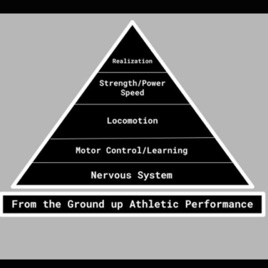
Advertise on podcast: From the Ground Up Athletic Performance Podcast
Rating
5from
This podcast has
60 episodes
Language
EnglishPublisher
Jesse curtisExplicit
No
Date created
2021/03/26
Latest episode
2022/06/28
Average duration
65 min.
Release period
9 days
Description
Examining a variety of topics related to athletic performance. Focusing on how to effectively build athletic performance through differing training methodologies. If you are looking to grow and continue to learn from a variety of viewpoints in relation to athletic development this podcast is for you!
Unlock From the Ground Up Athletic Performance Podcast podcast Email contact info,
Listeners & Audience details
Email contact information
Direct podcast contact details

Listeners
Audience numbers & engagement insights

Audience details
Podcast Insights

Podcast episodes
Check latest episodes from From the Ground Up Athletic Performance Podcast podcast
Tyler Anzmann Episode 59 " High Velocity Throwing, High Outputs, Fatigue monitoring, Big returns, & LTAD Perspective"
2022/06/28
Make Sure to Check out Amino Co's Line of Amino Acids, as referenced in the opening. I use their perform blend and it helps to power my performance and is a part of my daily supplementation protocol. Check the link aminoco.com/FTG Use code FTG at check out to save 30%.
On this weeks episode I sat down with Tyler Anzmann of TA performance. Tyler focuses on athletic development and performance, but is definitely focused on developing the throwing capabilities of the athletes that he works with. Tyler was able to increase his own Velo as he references early in the podcast to help give him a chance to extend his playing prospects after college.
Perspectives on LTAD flowed throughout many different portions of our discussion, and early on Tyler shares something that I whole heartedly agree with. If we can have athletes run fast, jump high, and throw in their early development, than we are on pace for a well rounded athlete. Tyler also shares that he likes to see the athletes compete and he discussed gamifying some portions of training as a natural facilitator to help drive up the competitive nature of training sessions.
Tyler shares how he balances neurological and physiological considerations within training and how these piece amplify the affects of one another. Orchestrating the intensification process is extremely important so we discuss how to use extensive to intensive means to build the physiological resilience into structures for later intensive means. Tyler shares some of the pitfalls that athletes can fall into in regards to recovery. The high/low model was discussed within many of the perspectives presented on this episode. Tyler shares that many athletes struggle to have a true low day and often fall into the trap of making a low day more of a moderate day with moderate intensity and volume.
The balancing act of stress accumulation is discussed throughout much of the conversation and we see that the off season is a time where High velocity can be developed at a premium. This is the time to chase those high outputs, it's not that we don't touch those qualities in season but the sport is where those qualities will be accessed most frequently at that time. Coaches can be more generous with drop offs in the offseason with the understanding that they still have to be careful with max output days. Off season is quality development time and individuals can carry a bit more fatigue or stress from sessions. Drop offs for in season are extremely low 1-2% as we don’t expect increases in max v at that time and we don’t want to carry fatigue into later sessions.
The training stimulus can encourage power and speed development or can inhibit. Tyler shares the research and idea behind fiber shifts. one of the reasons that coaches may choose to closely monitor fatigue and drop offs is to ensure that we are working in a manner that will not shift tissue quality towards a slower/ less explosive format. Understanding the preferences of athletes can go a long way in building a program that will productively build the strengths of athletes. Force velocity and load velocity assessments can help to inform coaches on whether athletes are force dominant or elastic in nature, By examining these qualities coaches can more naturally build potentiation into their training processes for athletes.
From the Ground Up Athletic Performance
Amino Co
Tyler Anzmann Insta
Tyler Anzmann.com
Youtube
James Earls Episode 58 "Understanding the Human foot and its role in movement, Form and function"
2022/06/21
Make sure to check out the great products offered by Aminoco referenced in the opening of the Podcast. aminoco.com/FTG After clicking on the link make sure you save 30% on your order by entering my personal Code FTG at checkout!
On this weeks episode I sat down with Author James Earls to discuss many of the talking points presented within his new text Understanding the Human Foot. James does an incredible job in his book of painting how the foot has evolved overtime to a certain form that fits its function. We discuss some of the basic concepts that help influence the foots function, James defines the terms stress and strain. As we move throughout the conversation we begin to see how different stresses place certain strains on the surrounding tissues based upon the ability of given joint actions and the integrity of certain structures. Our repeated patterns or differing experiences of stress and strain helps to design our bone structure and shape.
When discussing different modes of locomotion, intensity and thus energy expenditure appear to be a few of the main factors which differentiate the modes of walking verses jogging and sprinting. I believe to some extent we aim for proficiency in our modes of expression of these differing movement patterns; however, proficiency in our daily modes means lower energy consumption. High output modes of jogging and sprinting the chief concern is power production, this leads towards a model where we are driving in a many where power production as now become the chief concern, with this realization we can begin to see how the tissues have to deal with vastly different stresses and strains within the different modes of locomotion. Over time our body conforms to the repeated stresses/ strains that it becomes accustomed to, the tissues will optimize their form to control for more optimal and efficient movement options.
The gait process and the foots as well as other units functions throughout the gait cycle are in the center of this conversation as we move along. We begin by discussing the concept of the tripod foot and James raises a great point, its not that the tripod concept is faulty, but rather that it is a static model. James shares that the concept of a static phase of control transitioning to more dynamic means of locomotion is troubling. We don’t have stability because we have three points of contact, we have stability as the result of a dynamic and intelligent foot. As we move into the later portions of the conversation James shares the arrangement of the half dome and how it seems to be a more visual/ functional representation of the foot structure. James also discusses some of the common issues that one may encounter while working in some capacity as a movement professional. James shares some of the methods to access the foot for different compensations/ issues. Check the links below for James's socials, book, webpage.
James Earls Book offerings
Amino Co Supplment line Make sure to use my personal Code FTG to save 30%
Born to move
From the ground up.com
James insta
Wendy Posillico Episode 57 "Honing in on a high performance mindset, Balancing internal & external thoughts & processes"
2022/06/14
On episode 57, I sat down with Wendy Posillico Founder of Live your June. Wendy has a background in competitive sports and has been involved with the LPGA, Wendy currently focuses on helping individuals and groups find a high performance mindset. How we frame and rationalize things really paints our understanding of a given situation and our capacity to truly perform. The starting point as the conversation gets underway focuses on firstly identifying the things that in Wendy's experience often keep individuals from achieving great things or having a productive mindset. Wendy states that one of the biggest challenges to an optimal, healthy, or high performance mindset is the inability to know self and celebrate self. People often bring in old patterns of beliefs that will shield them from their potential or new more beneficial habits or beliefs. Language is one of our most powerful tools of expression. Language is important , Wendy states that we all have two voices in our head and how we choose to speak to ourselves and to others really frames and gives context to the situation and our capabilities.
Wendy believes that its very important to celebrate the things that make each of us unique. Models and frameworks are important, however, Wendy shares some of the dangers of projecting models onto every situation. We have to facilitate and help people realize their own vision, potential, and modes of expression. Wendy's starting point for developing a high performance mindset is firstly establishing your own ethos. This word really stood out to me as I have often discussed this term with many of my students and ethos most often equates to ones morals or credibility. For Wendy knowing self allows for us to identify and fortify our strengths in hopes that they may be projected towards a grander vision.
After establishing a sense of self and projecting ourselves towards a vision its important to reflect on the gap that exist between ones current situation and where their vision leads them. Why does this discrepancy or gap exist? We discuss the importance of short term focus and long term focus. In my own experience individuals tend to be either process and detail orientated only focusing on those things that are near, Or completely on the other end always looking towards the horizon for land all the while hitting the iceberg that's in plain sight. Wendy shares that its not natural for most to think big and by thinking big she doesn't mean ridiculous. Wendy is more or less referencing the power of disruption here, a push, a shift, a stretch that will make you do things that are out of the ordinary for you typically. Wendy also shares that its important to not miss the trees for the forest, make sure the foundation is right. what moves your needle most? You may be surprised how some of the smaller or more basic habits and choices such as sleep and am/pm bookends which is referenced later in the conversation will lead to a better mindset and greater productivity.
Mindfulness is very important, it calls attention to processes, but it can also completely freeze and inhibit the ability to perform in some instances. Wendy shares how mindfulness can be empowering and how to balance mindfulness or consciousness with detachment and seeking external feedback. As we discuss high performance in the second half of the conversation being open and curious are two different characteristics that seem to foster and build high performance cultures.
Live your June
Linked In
Instagram
From The Ground up athletic Performance.com
Matt Tometz Episode 56 "Integrating Coaching & Data, Charlie Francis 95% Rule for true speed, VDec for resisted sprints/max power"
2022/05/31
On episode 56, I sat down with Coach Matt Tometz of TCBoost Training. Coach Tometz has wrote several awesome articles for simplifaster detailing many of the talking points referenced in todays episode. This episode focused on speed training and how to get the most that you can out of speed training by utilizing objective data to validate when athletes are primed to perform max effort sprint sessions. The first portion of the conversation centered heavily on data and how to integrate data into the decision making process for a coach. One of the first things that Matt offered that I really enjoyed is that data is not a standalone variable. Data is part of a 3 part equation, 1) the data, 2) the coaches eye 3) The athlete and their current feeling. Before talking about speed training, its good to define the topic to give reference to the main talking points. Matt does just that and one can see the different traits that need to be arranged to effectively build and model towards speed and power development.
We next discuss Charlie Francis and his 95% rule and how practitioners can utilize this metric to help inform program choices and examine overall athlete readiness. Again Numbers are only valid if we can calculate them under valid conditions, Matt discusses how he calculates Athletes 95% capacity and how it helps him to give meaning and an aiming point for the session. I really like how in this section Matt discusses how it is unrealistic to expect a PR on each sprint attempt, such an environment and attitude can be detrimental to development. Matt shares how the 95% rule allows for him to complete high quality speed and combat unrealistic expectations and PRitis. Data is a great metric that allows for coaches to keep their finger on the pulse of a given session, however, Matt shares how one anomaly isn't cause for an alarm. Matt shares another great rationale that moving directly from data to decision can be a mistake. The appropriate order to insure optimal training would be data, discussion, decision, this involves athletes in the training process and also allows for coaches to appear less Draconian.
Much of the second part of the conversation discusses resisted sprinting and Matt and I share the observation that much of the resisted patterns of the weight room are not in the horizontal vector. This naturally shows why I believe Resisted sprinting to be extremely valuable for the building of plane specific force in athletes. Matt offers up a guiding question that he ask himself to guide his why in programming and decisions, What is the best use of my hour that I have with an athlete? Matt rationalizes and rightfully so that he firstly will provide a high quality speed stimulus to his athletes. This is really invaluable because most of the athletes that he is dealing with do not consistently encounter a potent speed stimulus, Prep and games more often fall into the 85% zone that Francis warned about. The last part of our conversation focuses on Velocity Decrements in sprinting and Matt does a great job explaining the process and stimulus of each zone. Matt also discusses how to use sprint profiling to develop programming on an individualized scale. Make sure to check the links below for access to Matt's socials and show.
Matt Tometz Insta
Matt Tometz Youtube
The Talking Shop Podcast
From The Ground Up Website
Angelo Gingerelli Episode 55 " Building Proficient Foundational Movement Patterns, The art of finishing strong Resistance training & Distance running"
2022/05/24
On episode 55 I sat down with Angelo Gingerelli of Seton Hall University. Angelo shares some of his personal experiences early on and shares how an early S & C coach was formative in his introduction to the field. Angelo also shares what it means to him to be a coach at Seton Hall, its like family to him he grew up right around the corner and always followed the university closely. I really like one of the first things that Angelo shares, he voices how beneficial it is for young athletes to get involved in track and field or the pursuit of linear speed early on. Its a great start and a great place to build some of the finer elements of an efficient running model at an early age. Angelo also shares that technical works and sport specific movements or starts are important, however linear speed really is the tide that lifts all boats, you have to have a good base line of speed for anything else to be of consequence.
Angelo shared an interesting perspective on how he often finds in shape individuals struggle with more rudimentary patterns of movement. He includes the movements that individuals are lacking in to some degree in every warm up session, this provides variance with the given movement pattern. The inclusion of these movements also allow for him to access the limiting factor to proficient movement models. Angelo shares a common sticking point for most in S & C, group size and being able to tailor programming needs to subsets within the group. The rationale he presents with building an adequate expression of strength is well founded. We must master the movement and scaffold through variations that allow for the proper expression of the quality of strength. To rush intensification through adding of load at both a youth and higher level is a mistake that will only limit future potential and perhaps end with injury. One of the biggest indicators for success of a given prep program is consistency of high level work. Angelo shares that its important for athletes and clients to find value in the exercises and joy as well.
Angelo shares the 6 foundational movements that he attempts to make athletes proficient in these are the squat, hinge, lunge, hip bridge, upper push, upper pull. Angelo feels that if individuals can show proficiency in these movements they have a great starting point to advance strength and resilience of structures. If individuals struggle to express these movements under light or body weight load, the regression and starting point is simple, firstly we must become more efficient movers. The end of the conversation shines a light on many of the topics featured in Angelo's book that is out currently. Angelo shares how resistance training can be used to help runners run more efficiently, avoid injury, and finish the race in a stronger state. Angelo shares that many in the running community completely leave resistance training out of their regiment. Those that choose to include resistance measures can start small and build upwards from there. Angelo believes that not only means a higher likelihood of success for those that are competitive but also a greater longevity as well, which is truly the end game of most forms of exercise.
Finish Strong Resistance Training for Endurance Athlete Book Link
Finish Strong Instagram
From the Ground Up Athletic Performance.com
Dominique Stasulli Ep 54 " Arranging of sessions for skill acquisition, Biomechanical process of running & Constraints, Lower body deficits"
2022/05/17
On Episode 54 I sat down with Dominique Stasulli of Zeal Endurance Coaching located in Boulder, Colorado. I familiarized myself with Dominique and her work by reading a great article on skill acquisition called The Neuroscience of skill acquisition. Much of the first portion of our conversation centers around many of the theoretical models you see referenced in that article, as I have grown as a prep coach I've increasingly become more interested in how preparatory methods translate in regards to retention for specific purposes. To do more and actually achieve less is not only a waste of time, it leaves you with an athlete or person who did not reach their optimal state due to the arrangement of practice or other preparatory methods.
Dominique shares according to Fitts and Posner that skill development follows a three step model. The Cognitive stage is what we associate with novice learners and is where thought and introspection are very involved in the process. At this stage, motor skills and the display of skills are rough and more exposure is needed to reach the next level. The associative level is where you begin to see a refinement of skills and association with other movement options, more efficient models are constructed in this portion. Lastly is the autonomous stage where motor skills are subconscious, this is the level of mastery and there appears to be an uninterrupted flow to the display of skills. We begin to talk about exposure and one of the big conundrums you discover in the building of skills is that myelination determines the motor pathways which we choose to activate to display a certain set of skills. Myelination occurs through repetition, the only problem with mind numbing repetition is that it lacks the variance of many of the dynamic settings that skills will have to displayed within. Dominique shares the difference between random order and blocked practices and how random order practices provide greater variance and opportunity for the growth and retention of a given set of skills.
Throughout the conversation Dominique shares multiple examples of different categories of constraints and you can see how it is easy to wisely construct constraints to tailor training to the needs of a given athletic or certain subset of athletes. Dominique shares how she likes to utilize variance in the task specific constraints to arrange meaningful and efficient sessions with her runners. She discusses how she switches up warmups, changes paces, changes energy system work, etc. to keep athletes on their toes. She also rationalizes why she includes sprinting with her distance runners, she states that it shows intent and also has a promotes feel for the runner to a greater degree. She shares how she utilizes hills to help build more efficient runners.
The last portion of the conversation deals with the 3 most common lower body deficits that she encounters among the athletes that she works with. They are 1) Poor Proprioception, 2) Core stability/Pelvic stability 3) Poor hip extension. Dominique shares how she helps to bring up these deficits and make her athletes less prone to injury and more resilient in the process.
Zeal Endurance Insta
Zeal Endurance Web
From The Ground Up Web
Shawn Sherman Episode 53 "PCS, Sensory integration, evolution of Square 1 System"
2022/05/10
On episode 53, I sat down with the founder of square 1 system Shawn Sherman, this is the second occasion that I’ve had Shawn on the show. On this episode Shawn reiterated the basis of square 1 systems and shared some of the major additions that he has made over the last year. Shawn also shared many of the exciting materials and concepts that he is currently preparing for release in the near future.
Shawn begins by discussing the PCS, which is the postural control system which includes our visual apparatus, vestibular system, and proprioceptive system. Our sensory experience paints our experience with our surroundings and how we respond to certain stimuli. Shawn shares how movement and posture are intricately tied to the PCS, when sensory information is dysregulated one cannot hope for optimization of movement. We discuss some of the terms that are utilized to explain structural elements of the body( hardware) and the nervous system(software). Shawn shares the reciprocal nature in which hardware and software components interact, while also discussing how software interventions are different from hardware(tissue) interventions.
Vision occupies a ton of neurological real estate and is at the peak of the neural hierarchy. We discuss how when software interventions clear up inhibitions within the PCS neurological resources can be allocated to other systems throughout the PCS. For instance, if we clear threat or inhibition in the visual apparatus, it may also have beneficial effects on the vestibular or proprioceptive. Shawn shares some of his own anecdotal experiences in the last year, in which he has expanded the peripheral vision of many of his clients as he has cleared intolerances and threats from his clients. Shawn discusses how this could be beneficial for athletes as it will allow for them to start with a more optimized visual field, that even under fatigue will be expanded in comparison to their counterparts.
Shawn also shares interesting information on Nasal breathing and how he has been able to utilize different head positions in combination with nasal breathes to provide quick and easy interventions that optimize sensory integration. The things that Shawn currently has out are game changers and the things which he is referencing will be groundbreaking and allow for professionals working with large groups even more dynamic tools for building robust and optimized movers. Check the links below for access to Shawn’s materials, as well as my newly launched website for From the Ground Up Athletic Performance.
Instagram
Square 1 Systems Webpage
From The Ground Up Webpage
Travis Mash Episode 52 "Fatigue monitoring, VBT & power production, teaching & involving the clean in athletic development"
2022/04/26
On this episode I sat down with Coach Travis Mash to discuss his fatigue monitoring process that he utilizes with his weightlifting team at Lenoir Rhyne University. Coach Mash has founded an exceptional weightlifting team at Lenoir Rhyne University and I routinely see insane numbers posted from his team. Coach Travis begins by sharing his realization that accounting for stresses within his system and from the outside were a major determinant of overall readiness to perform at peak levels. Coach Mash shared the unique challenges that adolescents and young adults deal with in regards to stress exposure and blue light exposure and how those factors may be affecting performance more than we realize. Coach Mash discusses how he utilizes the Velocity of the first days movement, which he typically likes to use a hang clean pull for various reasons. Velocity measures overall speed, Stress is defined by fatigue, which is a loss of ones ability to produce force. When employing this rationale it is easy to see how by having a baseline number for velocity measurements allow for us to keep a pulse on the moving target that is athlete readiness. Coach Mash also utilizes RSI measurement to validate athlete readiness, he shares how he gets a meaningful and useful RSI score. The third piece of the puzzle is a subjective questionnaire that athletes complete upon entering into training for the day. One of the metrics that stood out for me was how Coach Mash calculated the impact of a given workout he took the RPE of the athlete and multiplied it times the duration of the workout to give an impact score. In this first piece of the conversation it was great to see how Coach mash is able to bring together multiple measures to give a detailed view of an athletes overall readiness's and abilities for a given session. This is a major tool for overall athletic development and safe progression of training, athletes abilities ebb and flow based upon an almost immeasurable amount of daily stressors. The more Coaches take into account where an athlete is in the present, the more suitable to days training session will be.
As we discuss Velocity measures and Coach Mash's protocols based upon RSI or velocity measures being lower than normal we are able to see how training can easily be adjusted to salvage a days session and give athletes the appropriate dose. At 5% drop in RSI measurement or Velocity measurement both volume and intensity planned for the day are adjusted between 10-20%. If they measure 10% or greater they do low eccentric bodybuilding and go home for the day at that point the risk exceeds anything you will get out of the training session. The subjective questionnaire discussed earlier tells Coach Mash the why for the anomaly or drop in RSI or Velocity of first movement. We discuss the different ranged of velocity loss that would be employed for the development of strength, power, and hypertrophy. Coach mash shares that he seeks high quality hypertrophy due to weightlifting being a weight class competition. This definitely made me think about he individualized needs in team sport settings where lineman and those in the box may need on zone and skills and more speed based positions may need to stay away from areas that don't recruit the higher twitch fibers. We end the conversation talking about where to begin when implementing the clean with youth populations, how to find the proper set up based upon anthropometrics, and how to vary the clean for the needs of given athletic populations. Check the links below for access to my newly published website as well as Coach Travis Mash's offerings.
From the ground up athletic performance
Coach Mash Insta
Mashelite.com
Brandon Holder Ep 51 "Sleds the multitool , the sled spectrum, and LTAD"
2022/04/20
On episode 51 I sat down with Brandon Holder of FASST sports performance training. Brandon works with a wide variety of clientele, however, as you can see early on in the conversation he has a passion for working with youth clients and developing them through a sensible long term approach. Brandon shares his starting point for young clients and how isometrics provide a great starting point to provide postural references and sensible methods to advance TUT. Brandon shares that with " the population that he currently works with Load is the last progression." Brandon shares how he likes to isolate to integrate, we discuss how he utilizes different exercises such as wall lateral load and lift. By doing exercises such as this, Brandon gives young athletes a great reference point that is stable and allows for athletes to build proficient modes of movement before entering more dynamic and chaotic agilities or competitions.
Most of the conversation centers around sleds and how they are an extremely useful and versatile tool. All training exist on a spectrum, sleds are no different. The sled spectrum places sled training on a spectrum with strength on one end and power on the other. Load and position influence Ground contacts and ground contacts are the most telling for if an exercise is more strength or power based. Sleds can be utilized for PAP effects as well as a method to contrast training. Sleds allow for users to produce force in vectors that traditional barbell based movements do not. Sleds allow for us to move in a horizontal vector, where as force production in traditional barbell based movements are more vertically based. Sleds can be utilized to build energy systems and used for lower intensity methods as well, they provide a good format for variance and a break from more traditional barbell based movements in training. Brandon shares how to utilize periodization for sled based movements and shares some of the rationales about why sled training is a timely, safe, and powerful method for in season strength development.
We end the conversation by talking about speed development and Brandon shares some of the concepts that he utilizes to gamify and involve clients in everyday processes. Brandon shares how varied starts are good to provide a robust base of movement for younger clientele. Different variations may be more applicable to team based settings and allow for athletes to interact with a variety of angles for more effective displays of speed and power. Brandon shares how showing different athletes that he understands the need of their sport helps to garner buy in to the process. Overall this is a great conversation on the rationale for including sled work, whether you chose to integrate sled training for all the methods mentioned today or you only utilize some of the options, sleds are a valuable tool that athletes can easily benefit from. Make sure to check the links below for access to my new website as well as Brandon's social's and some of the things referenced in todays conversation.
Fromthegroundupathleticperformance.com
Coachbholder Insta
FASST Insta
Sled Training Simplifaster
Dr. Pat Davidson Episode 50 "RTBP 7 Pillars of movement, The propulsion arc, Mechanical Examination of Elasticity and Reactivity"
2022/04/12
This week's episode marks my 50th episode and is my one year anniversary for the podcast. On this episode, I sat down with Dr. Pat Davidson author of A coaches guide to optimizing movement: Rethinking the Big Patterns. Pat also runs a great seminar series where he discusses many of the ideas mentioned on this episode. We start the conversation by talking about what inspired him to develop his own categorical system. Pat shares many of his early inspirations and how they drove him to think critically and also inspired him to synthesize the systems he encountered into an approachable and useable framework. Throughout the entire conversation Pat jumped around the 7 Pillars of movement, which is one of the foundational aspects of the approaches shared in RTBP. The 7 pillars of movement are as listed 1) Movement Quality 2) Movement Quantity 3) Movement Standardization 4) Movement Progression 5) Movement Strategy 6) Muscular Orientation 7) Muscular Action.
Within each of the pillars listed above Dr. Pat has organized a framework to help identify, adapt, and advance movement in light of the given focus or ability of an individual. We spend a good bit of time discussing Pillar 1 Quality, Pat shares the exercise taxonomy which lives under the quality pillar as 13 different motor patterns. These 13 motor patterns can be arranged under the umbrella of Control Patterns, Athletic Patterns, or Resistance patterns. Control patterns really tell us what an individual's potential is to correctly perform a given movement pattern. If individuals can't display it on the table they certainly can't display it under time constraints or in dynamic environments. Dr. Pat shares a good bit on pillar 3 which is movement standardization , which is where sensorimotor competency comes into play, what does the individual feel? What individuals feel may be a more telling example of a persons given proficiency than the coaches eye. Pillar 4 is described as an algorithm that can be used to build the desired motor patterns that are necessary and required to move. This pillar includes the 10 principles of progression, which may also be used to regress exercises to the specific requirements of a given individual. Pillar 4 also includes the propulsion arc, which we spend the last portion of the conversation devoted to. The propulsion arc encompasses three zones of movement, which are denoted as either expansion or compression dominant and are also incorporated into the gait cycle process. This pillar doesn't tell you why someone struggles with a given movement; however, it tells you how you can fix their inadequate forms of movement.
Pillar 5,6,7 allow for you to explain how pillar 4 was able to guide individuals towards more proficient models of movement. Pillar 5 is movement strategies (Compression/Expansion) ,Pillar 6 Muscular orientation (Eccentric/Concentric) ,Pillar 7 Muscular action (Yielding/Overcoming). We spend the last part of the conversation talking about the importance of managing forces, muscular orientation, and how the last three pillars can explain why someone is able to perform in a dynamic, elastic, and explosive manner. The last portion of the conversation is food for thought and something that has really guided my programming rationale and choices in recent times. Dr. Pat did a great job of breaking this dense topic down into something that is manageable and digestible. Check out his offerings listed below for an even more in depth dive.
Instagram
Webpage
Coaches Guide to Optimizing Movement
David "Jacko" Jackson of the school of Calisthenics Episode 49 "Harnessing the power of breathing for athletic performance"
2022/04/05
On this episode I sat down with David Jackson better known as Jacko to discuss all things breathing. I’ve referenced breathe practices on numerous podcast, but this is the deepest dive I’ve had on the potential benefits and necessity of proper breathe work practices within athletic programs. We start by talking about the very act of breathing, an inhale, pause, and exhale, as with athletic development we are often concerned with the output or concentric, many only focus on the inhale with breathwork. Jacko discusses how the respiratory center is in the oldest part of the brain the brain stem, meaning it is hardwired and reflexive in nature. Jacko discusses how all but one sport to his knowledge (free diving) includes breathing, therefore, we should be taking note of suboptimal or improper forms of breathing.
Breathing has a globalized effect on the human body; it influences the nervous system, blood pressure, heart rate, thoughts, emotions, sleep, and more. Jacko discusses how the bohr effect influences breathing and shares how the primary influence for breathing is not oxygen, but CO2.
Carbon dioxide is tied to release of hemoglobin that is tied to red blood cells. Jacko Discusses how to get your Bolt Score, which is a baseline of a person breathing capabilities. He discusses what a good bolt score is and what we should all be aiming for as we increase our breath work practices. A higher bolt score means a calmer nervous system, more mental focus, and that you use less energy for breathing.
Jacko shares different breathwork methodologies and how one can bias the inhale/exhale to elicit a parasympathetic or sympathetic response. Jacko shares how one can use breathwork to calm or excite and how teams can use breathholds to increase bolt scores, overall athletic preparedness and RSA. We close the conversation by talking about some of the callisthenic methods that Jacko employs in his training. He discusses how it frees the body and mind and causes one to be more creative than traditional barbell based movements. Jacko provides a ton of quality content in this episode and I really enjoyed this one. Make sure to check the links below for Jacko’s social, School of Calisthenics webpage, the movement, strength, and play podcast referenced in the episode. As well as the oxygen advantage program which Jacko is a master coach within.
School of Calisthenics Webpage
Jacko Insta
The movement, strength, and play podcast
Oxygen Advantage
Nick Moss Functional Neuro Health Episode 48 " taking subconscious threat response/stress into account, Implicit memory/response, Primitive Reflexes"
2022/03/29
On this weeks episode I sat down with Nick Moss of Functional Neuro Health. We start our conversation by talking about how we are only aware of a limited amount of information, while the vast majority of information lies below the subconscious level. We start by discussing the performance iceberg, the only things that lie at surface level are behavior and results. Below the surface lie many subconscious mechanisms (Thoughts, emotions, feelings, physiology) that reflect the behaviors and movement choices that we often see in subjects. The nervous system is constantly scanning the environment and labeling different inputs as threat, no threat, nick shares how some of the more primitive structures examine our surroundings for threat.
We discuss the bodies response to stress, stress is neither good nor bad, in fact it's an unavoidable and essential part of life. The problem with stress is more to do with thresholds, too little you find boredom , too much and you find chronic adaptations to stress. Nick discusses how we can utilize the breathe to help build certain buffers and increase our threshold to stress. We then get into how the nervous system is a conglomeration of signals, the system perceives something to be a threat when a signal reaches too high of a threshold. If signals consistently register as high this often manifest in patterns of weakness in the nervous system, this creates a compounding effect that we would often deem to be a symptom or perhaps a perceived injury. Nick discusses the function of noise and how the function of noise can go a long way to show where individuals may be having issues.
Muscle inhibition is a product of one of three or a combination of structural, emotional, physiological. Nick shares that the more threatened someone is based upon their prior history the more likely he would be to take a top down approach. We end the conversation by talking about the role of primitive reflexes and Nick shares that primitive reflexes are the base. If we aren't addressing retained primitive reflexes there's a great chance that the other neurological means we are attempting are not being optimized. Nick discusses some of the more common of primitive reflexes, why reflexes may be retained and some of the manners in which we can work to integrate primitive reflexes. Make sure to check out the links below for access to Nick's socials as well as website
Functional neuro health
youtube
Website
Podcast reviews
Read From the Ground Up Athletic Performance Podcast podcast reviews
Coach Houchin 2022/02/10
FTGU Is Top Notch
Exploring the things that matter most with regard to performance is what this podcast is all about! If you want to learn the best ways to level up, sp...
Coach Koehring 2021/04/27
Great, Informational
This podcast has been great so far and I look forward to continuing to follow along to the great guests on this podcast.
Podcast sponsorship advertising
Start advertising on From the Ground Up Athletic Performance Podcast relevant audience podcasts
You may also like to advertise on these Podcasts

4.62902000
On Texas Football
Bobby Burton

4.131061265
No Filter With Zack Peter
Zack Peter

4.81107858
Limited Resources
Marshall Sutcliffe

4.9167572000
The GaryVee Audio Experience
Gary Vaynerchuk

4.9244351271
Unashamed with the Robertson Family
Tread Lively

4.619412736
All Ears English Podcast
Lindsay McMahon and Michelle Kaplan

4.742561602
Dan Snow's History Hit
History Hit
4.6121851045
10% Happier with Dan Harris
10% Happier

4.8815227
ArtCurious Podcast
Jennifer Dasal/ArtCurious
4.664698752
The Charlie Kirk Show
Charlie Kirk