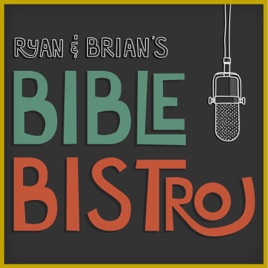
Advertise on podcast: Ryan and Brian's Bible Bistro
Rating
5from
This podcast has
200 episodes
Language
EnglishPublisher
Ryan SarverExplicit
No
Date created
2021/03/31
Latest episode
2026/08/18
Average duration
56 min.
Release period
33 days
Description
A podcast about the Bible, theology, and all things related to the Christian faith. Hosted by Ryan Sarver and Brian Johnson..
Unlock Ryan and Brian's Bible Bistro podcast Email contact info,
Listeners & Audience details
Email contact information
Direct podcast contact details

Listeners
Audience numbers & engagement insights

Audience details
Podcast Insights

Podcast episodes
Check latest episodes from Ryan and Brian's Bible Bistro podcast
Paul for the World with Dr. Nijay Gupta
2026/08/18
Brian talks with his professor Dr. Nijay Gupta about his new book Paul for the World, its predecessor Strange Religion, and what's next.
Highlights:
Crossover publishing — Gupta writes for engaged "nerdy lay people" and pastors, bridging academic scholarship and pop-Christian devotional writing.From Strange Religion to Paul for the World — the first book immersed readers in the ancient "marketplace of gods"; readers then asked how to actually live faithfully today, prompting this follow-up (original title: Here and Now).A "here and now" gospel — Gupta argues the gospel is about present life, not just future heaven, drawing on Bonhoeffer's idea of "worldliness" (invasion, not escape) and Philippians 3 / Revelation 21.How topics were chosen — built around (1) what makes up a human life (work, health, friendship, sports) and (2) what Paul himself actually wrote about most — mostly practical, worldly problems, not abstract theology.Friendship in Paul — Paul wasn't a lone wolf; he's constantly surrounded by named companions. Gupta argues Paul favors agapētos ("beloved") over philos to "Christianize" friendship.Wellness & suffering — 2 Corinthians' "sentence of death" language connects to modern anxiety and depression; Gupta shares a personal near-death story from a snowstorm.Love in Pauline theology — revisiting The Affections of Christ Jesus: love isn't just ethics, it's central to Paul's theology (Galatians 2:20, 1 Corinthians 13).Strange Religion revisited — ancient religion as civic/communal, not private; the Roman ritual of evocatio as background for "I will never leave you nor forsake you."What's next:2 Timothy commentary (Smyth & Helwys series)Fierce and Faithful — children's book on 25 women in Scripture (w/ Carmen Imes)God Spoke Through Her — on women prophets (Feb. 2027)The Wooden Compass (working title) — a book on the cross and discipleship
Books mentioned: Paul for the World, Strange Religion, The Affections of Christ Jesus, Tell Her Story (Gupta) · Dominion (Tom Holland) · Letters and Papers from Prison (Bonhoeffer)
Scripture referenced: Philippians 2–3 · Galatians 2:20 · 2 Corinthians 8–9 · 1 Thessalonians · 2 Timothy · Revelation 5, 21 · Acts 19 · Joel 2/Acts 2
Be Perfect? Rethinking Jesus' Hardest Command
2026/07/21
Ryan and Brian return from an extended break to close out Matthew chapter 5 in their ongoing Sermon on the Mount series, tackling Jesus' teaching on loving your enemies and the puzzling command to "be perfect as your heavenly Father is perfect."
Episode SummaryPicking back up in the Sermon on the Mount, Ryan and Brian work through Matthew 5:43–48, where Jesus contrasts the popular teaching "love your neighbor, hate your enemy" with his own command to love and pray for enemies. They trace the "hate your enemy" idea to a possible source in Psalm 139, examine parallel teaching in Luke 6, and dig into the Greek word teleios — usually translated "perfect" — arguing that "mature" or "complete" better captures Jesus' meaning. The conversation widens into Paul's theology of love in Philippians 2, John 13, and Ephesians 4, and closes with a reflection on Galatians 6:2 ("carry each other's burdens") and what it practically looks like to love the way Christ loved.
Key Discussion PointsMatthew 5:43–45 — Jesus quotes Leviticus 19:18 ("love your neighbor") and contrasts it with the added, extra-biblical teaching "hate your enemy," then commands love and prayer for persecutors, appealing to God's own impartiality (sun and rain on both righteous and unrighteous).Where "hate your enemy" came from — A look at Psalm 139:19–22 as a possible source for the added teaching, and how post-exilic hostility toward Israel's enemies may have shaped this interpretation.Luke 6:27–36 parallel — Comparing Jesus' "love your enemies" teaching in Luke, including the Golden Rule and the call to lend without expecting return.Matthew 5:46–47 — Jesus contrasts kingdom ethics with the behavior of tax collectors and pagans, calling his followers to a higher standard of love that extends beyond their own group."Be perfect" (Matthew 5:48) — Why "perfect" is a misleading translation of the Greek teleios; the case for "mature" or "complete," tied to imitating God's character rather than achieving moral flawlessness.Philippians 2 and John 13 — Jesus' self-emptying (kenosis) and foot-washing as models of the same self-giving love, and Michael Gorman's argument (from his work on Paul and John) that these passages share deep conceptual and linguistic ties.Ephesians 4:11–16 — Paul's use of teleios ("mature") in the context of the body of Christ growing up into Christ through love; a brief detour on how the NIV adds interpretive language not present in the Greek, compared to the NRSV.Cruciformity — Drawing on Michael Gorman's concept (and its later expansion to "resurrectional cruciformity"), the idea that believers conform their lives to the shape of the cross — self-sacrificial, others-focused love.Nijay Gupta's "Affections of Christ Jesus" — Central to the episode's second half; Gupta's argument that Pauline love is both feeling and action, produced by the Spirit rather than willpower, with reference to Romans 5:5 ("God's love poured into our hearts").Practical application — Wrestling with what loving enemies looks like in ordinary life (patience in traffic, responding to anger with love, forgiveness) rather than only in extreme examples like Mother Teresa.Galatians 5:13–15 and 6:2 — "Carry each other's burdens" as fulfilling the "law of Christ"; a footnote referenced from Gupta's book noting that burden-bearing was historically slave/servant work, reframing mutual burden-bearing as mutual servanthood.
Scripture ReferencedMatthew 5:43–48 · Leviticus 19:18 · Psalm 139:19–22 · Luke 6:27–36 · Matthew 22:37–39 · Philippians 2:5–11 · John 13:1–17 · Romans 5:5 · Romans 5:6–8 · Ephesians 4:11–16 · Galatians 5:13–15 · Galatians 6:2 · 1 Peter 1:16
Books & People MentionedAffections of Christ Jesus — Nijay GuptaPaul for the World — Nijay Gupta (upcoming interview episode)Michael Gorman — Paul and John in Harmony (new release); concept of "cruciformity" / "resurrectional cruciformity"From Adam to Christ — Morna Hooker (quoted on the cross and self-emptying love)Charles Taylor, A Secular Age — referenced via Andrew Root's concept of "the haunting of transcendence"Andrew Root — previous podcast guest, referenced regarding transcendence and secularism
Oaths, Vows, and Letting Your Yes Be Yes
2026/05/28
Ryan and Brian reunite in person at "Bistro East" (Ryan's home in Indianapolis) to celebrate Ryan's 45th birthday and dive back into their ongoing Sermon on the Mount series. This episode covers Jesus' teaching on oaths and vows — what the Old Testament commanded, where things went wrong, and what Jesus calls his followers to instead.
In This Episode
A birthday dinner recommendation: Bodhi Thai restaurant in Indianapolis (reservations required — book 7 days ahead!)Milestone: Episode 202 of the podcastMain text: Matthew 5:33–37 — Jesus on oaths and swearing
Key Scripture References
Leviticus 19:12 — Do not swear falsely by God's nameNumbers 30:1–2 — A man must fulfill every vow made to the LordDeuteronomy 23 — Do not delay fulfilling a vow; silence is better than a broken promiseJudges 11:29–31 — Jephthah's hasty vow and its tragic consequencesJudges 21:1 — Israel's rash oath regarding Benjamin, leading to further tragedyMatthew 5:33–37 — Jesus: "Do not swear at all... let your yes be yes and your no be no"James 5 — "Let your yes be yes and your no be no" (parallel teaching from Jesus' brother)Matthew 23:16 — Jesus rebukes the Pharisees as "blind guides"Numbers 15:26 — Unintentional sins and forgiveness for the community
Main Takeaways
The Old Testament law was clear: if you make a vow, you must keep it. Breaking an oath meant profaning God's name and incurring serious consequences. But the stories of Jephthah and the tribe of Benjamin illustrate the danger of hasty vows — rushed promises that lead to devastating outcomes.
Jesus cuts through all of this with a radical simplification: don't swear at all. His point isn't legalistic — it's about the kind of people his followers should be. Kingdom people should have such consistent integrity that oaths become unnecessary. When your word is always good, there's no need to back it up with a sworn guarantee.
The deeper issue: swearing an oath implies your normal words can't be trusted. If your yes always means yes and your no always means no, the whole system of oath-taking becomes redundant.
Interesting Side Note: The Kol Nidre
Brian discusses the Kol Nidre, a prayer chanted at the opening of Yom Kippur (the Day of Atonement) in Jewish tradition. Rooted in Aramaic for "all vows," it essentially declares any inadvertent oaths made in the coming year null and void — a fascinating reflection of how seriously Jewish tradition has wrestled with the problem of broken vows.
Coming Up
Next, Ryan and Brian will continue in Matthew 5 with Jesus' teaching on turning the other cheek.
Find More Episodes & Series Visit the Bible Bistro website for full series archives including studies on Zechariah, Daniel, and more — useful for personal study, teaching, and preaching.
Don't Burn the Eggs (and Other Ways to Prevent Divorce)
2026/05/05
In this episode of Ryan and Brian’s Bible Bistro, Ryan and Brian continue their walk through the Sermon on the Mount, focusing on Jesus’ teaching in Matthew 5 about adultery and divorce. What does Jesus mean when He says lust begins in the heart? Is He making the law stricter, or restoring its original intent? The conversation explores how desire, temptation, and the “lust of the eyes” work together, tracing those themes from Genesis and David & Bathsheba all the way to modern life with phones, advertising, and social media.
The discussion also dives into the difficult topic of divorce, unpacking the Old Testament background from Deuteronomy, the debates between the Pharisees, and why Jesus points back to creation and God’s design for marriage. Ryan and Brian talk honestly about the ways these passages have sometimes been used harmfully in church contexts, while emphasizing the importance of understanding both the historical setting and the high view of marriage Jesus presents. Along the way, they touch on rabbinic teachings, the meaning of the Greek word porneia, Paul’s words in 1 Corinthians 7, and how both singleness and marriage can be understood as gifts from God.
Takeaways:
The podcast discusses the significance of the Sermon on the Mount, focusing on Jesus' teachings regarding the law and moral conduct.The conversation emphasizes the importance of understanding Jesus' interpretation of the law, particularly regarding issues like adultery and divorce.Listeners are encouraged to consider the heart of the law, as Jesus seeks to redirect the focus from mere legalism to the underlying intentions of God's commandments.The speakers highlight the complexities surrounding divorce in biblical context, stressing that the focus should not solely be on legalism but on the sanctity of marriage and God's design.
Jesus and the Law
2026/04/21
Ryan and Brian hit their 200th episode while continuing their deep dive into the Sermon on the Mount. In this episode, they tackle one of Jesus’ most misunderstood statements: His relationship to the Law.
Did Jesus do away with the Old Testament—or deepen it?
Walking through Matthew 5:17–26, they explore how Jesus fulfills the Law by revealing its true purpose: not just external obedience, but transformation of the heart. From Sabbath controversies to anger and reconciliation, the conversation shows how the Law points beyond rule-keeping to mercy, relationships, and the Kingdom of God.
Key takeaway: Jesus doesn’t lower the bar or raise it—He redirects it to the heart.
Scripture: Matthew 5:17–26
Topics: Sermon on the Mount, Law & Grace, Pharisees, Heart vs. Behavior
Salt to the Land, Light to the Nations
2026/03/24
In this episode of the Bible Bistro, Ryan and Brian return to their series on the Sermon on the Mount, focusing on Jesus’ teaching in Matthew 5:13–16 about being the “salt of the earth” and the “light of the world.” They explore how these familiar metaphors would have been understood in their original context, emphasizing that salt functioned primarily as a preservative — pointing to the believer’s role in resisting decay — while light represents revealing truth and drawing others toward God. Anchored by insights from Scot McKnight, the conversation reframes the Christian life as more than personal faith, highlighting a call to actively participate as agents of God’s redemption in the world. The discussion also wrestles with the tension of living distinctly without withdrawing from culture, warning against losing one’s “saltiness” by blending in with the surrounding world. Ultimately, the episode challenges listeners to see their faith as a fully integrated calling — one that shapes how they live, speak, and engage the world around them.
Blessed are the Peacemakers: Living the Beatitudes in Exile
2026/01/20
Ryan and Brian are back and picking up their study of the Beatitudes, focusing on the second half of Jesus’ opening words in the Sermon on the Mount. This episode explores what it looks like to live as a citizen of the Kingdom of Heaven—not just in belief, but in everyday relationships and public life.
The conversation moves through mercy, purity of heart, peacemaking, and persecution, showing how these Beatitudes reveal Jesus’ vision for how Kingdom people treat others. Peace is not passive, mercy is not optional, and faithfulness often comes at a cost. Drawing from Jeremiah, Peter, and the prophets, Ryan and Brian ask what it means to seek shalom in a divided, often hostile world.
In a culture quick to react, withdraw, or escalate conflict, this episode challenges listeners to pursue peace, speak truth with humility, and trust God when faithfulness leads to opposition—remembering that the Kingdom of Heaven belongs to those who endure.
Kingdom Blessings: The First Four Beatitudes
2025/10/21
Overview
Ryan and Brian launch a fresh series on the Sermon on the Mount (Matthew 5–7), Jesus' iconic teaching on kingdom living. Often quoted but rarely lived out, it calls for radical repentance (metanoia: heart/mind shift to action) and distinctiveness from "hypocrites" and "pagans" (e.g., no showy prayers or fasting in Matt. 6:5–8, 16). They cover intro context, Jesus' authority, and the first four Beatitudes as a Godward progression.
Key Discussion Highlights
Sermon Essentials: Full red-letter discourse (ch. 5–7); contrasts John's back-and-forth dialogues and Luke's Sermon on the Plain. Likely Matthew's memorable summary—not verbatim—but stresses doing over hearing (Matt. 7:24–29: wise builder on rock vs. fool on sand). Crowds follow post-sermon, amazed by Jesus' authority (7:28–29).Setting & Echoes: Jesus ascends mountainside amid crowds, evoking Moses at Sinai (law mediated) but speaking directly as living Word—no barriers. Ties to OT: distinct people (e.g., no pagan practices like raisin cakes).Kingdom Ethics: Draws from law (from above), prophets (future hope), wisdom (human observation). Frames as loving God/neighbor (Matt. 22:34–40). First four Beatitudes focus on God-relationship; latter four on others. Quotes: John Stott (familiar yet least obeyed); Stanley Hauerwas (new age realized now).Beatitudes Breakdown (Matt. 5:3–6): Paradoxical "blessed" (makarioi: flourishing in God's favor, not mere happiness). Describes kingdom citizens' traits—calling all to repent toward these:Poor in spirit (v. 3): Recognizing spiritual poverty/utter dependence on God (vs. wealth as "blessing" in culture; cf. Luke 6:20's "poor"). Promise: Theirs is the kingdom of heaven.Those who mourn (v. 4): Grief over personal sin/failure (e.g., tax collector's humility in Luke 18:9–14 vs. Pharisee's self-righteousness). Promise: They will be comforted.The meek (v. 5): Humility/gentleness (praus: not weakness, but not self-important—like Jesus in Phil. 2 or silent before accusers). Contrasts Roman power. Promise: They will inherit the earth. (Martyn Lloyd-Jones: true self-view expressed humbly.)Hunger/thirst for righteousness (v. 6): Deep craving for justice/rightness (like desert thirst satisfied). Promise: They will be filled.Progression: Spiritual poverty → mourning sin → meek approach → desiring God's righteousness.
Resources Mentioned
Books: The Message of the Sermon on the Mount by John Stott; Sermon on the Mount (Story of God Commentary) by Scot McKnight (narrative flow, ethical models).Key Verses: Matt. 5:1–2; 6:5–8,16; 7:24–29; 22:34–40; Luke 18:9–14 (Pharisee/tax collector).
Next Episode
Beatitudes 5–8: Mercy, pure in heart, peacemakers, persecuted—shifting to loving others as kingdom ambassadors.
Unpacking Glory: Paul’s Vision in Romans and 2 Corinthians
2025/09/30
In this episode of Ryan & Brian's Bible Bistro, Ryan and Brian explore the concept of "glory" in Paul’s writings, building on Brian’s paper on 2 Corinthians 4:16-18 and insights from Haley Goranson Jacob’s Conformed to the Image of His Son. They dig into the theological depth of doxa (glory) and its implications for Christian life.
Key Points:
What is Glory? The Greek doxa (glory) and doxazo (to glorify) are central in Paul’s writings, especially in 2 Corinthians 3-4. Glory is more than splendor—it’s tied to honor, authority, and God’s redemptive acts.Old Testament Context: The Hebrew kavod (weight) links glory to reputation or ruling authority (e.g., kings, the temple). God’s glory appears in theophanies (burning bush) or redemptive acts.Paul’s Framework: Paul echoes Psalm 8 and Genesis 1-3. Humanity was created to rule creation with glory (Psalm 8), but sin led to its loss (Romans 3:23). In Christ, believers are restored to “functional glory” (Romans 8:29-30).Key Texts:Romans 8:18-30: Believers are co-heirs with Christ, glorified to rule in God’s kingdom.2 Corinthians 3:18: Transformation into Christ’s image with ever-increasing glory.Daniel 7:9-14: The Son of Man receives glory and authority.Romans 1:21-23: Humanity exchanged God’s glory for idols.Implications: Glorification is both now (living out God’s kingdom) and future (consummated at Christ’s return). Believers reflect Christ’s cruciform glory through service (Philippians 2).
Why Listen? This concise yet rich discussion unravels Paul’s theology of glory, connecting Old Testament roots to Christian calling. Perfect for anyone seeking a deeper understanding of Scripture.
Support Us:
Visit thebiblebistro.com to listen, share, or donate.Leave a review on Apple Podcasts or like to boost our reach.Share with friends to spread the conversation.
Seeing the Unseen: Unpacking the Paradox of Faith in 2 Corinthians
2025/09/16
In this episode of Ryan and Brian's Bible Bistro, the hosts dive into a deep exploration of 2 Corinthians 4:16-18, focusing on the intriguing phrase, "we fix our eyes not on what is seen, but on what is unseen." Brian shares insights from his recent study, unraveling the paradox of seeing the unseen and its significance in Paul’s theology. From the contrast of the inner and outer person to the eternal weight of glory versus light and momentary troubles, this episode uncovers how Paul’s message encourages believers to focus on the eternal through the lens of the gospel. The discussion connects themes of sight, blindness, and glory across the New Testament, drawing parallels with the Gospel of John, Hebrews, and Colossians. Ryan and Brian also explore how living a cruciform life—modeled after Jesus’ self-sacrifice—reveals God’s glory in a secular age. Tune in for a thought-provoking conversation about faith, perseverance, and the transformative power of the unseen. Visit thebiblebistro.com for more episodes and to support the podcast!
Gospel Allegiance: Salvation, Discipleship, and the Kingship of Jesus with Matthew Bates
2025/08/26
In this episode of Ryan & Brian’s Bible Bistro, Brian flies solo (no co-host required!) and sits down with Dr. Matthew Bates, Professor of New Testament at Northern Seminary and award-winning author of Why the Gospel?, Gospel Allegiance, and Beyond the Salvation Wars.
Together, they explore:
What it really means to say “Jesus is the Christ” — and why it’s a royal proclamation, not just a religious label.How the Greek word pistis reshapes our understanding of “faith” as allegiance, loyalty, and faithfulness to King Jesus.Why salvation and discipleship can’t be separated — and how this changes the way we practice our faith.The difference between the gospel itself and the benefits of the gospel.How the incarnation, resurrection, ascension, and enthronement of Jesus each form essential parts of the good news.Insights from Bates’s latest work, Beyond the Salvation Wars, and the push for a unity-centered, truth-rooted vision of the church.
You’ll also hear stories of how Bates’s academic journey (from Notre Dame to teaching at a Catholic university, and now Northern Seminary) shaped his theology, plus a look ahead at his upcoming book, Christ Formed.
The Resurrection of Israel with Jason Staples
2025/08/12
In this episode of Ryan and Brian’s Bible Bistro, we welcome Dr. Jason Staples, Assistant Teaching Professor in the Department of Philosophy and Religious Studies at NC State University. Dr. Staples’ expertise spans biblical literature, early Judaism, Christian origins, ethics, and more—but today we’re diving deep into his groundbreaking book, Paul and the Resurrection of Israel.
Jason shares how his research challenges the assumption that Paul’s mission to the Gentiles conflicted with his vision for Israel. Instead, he lays out a compelling case that Paul’s gospel flows directly from Israel’s restoration promises, redefining how we understand “Israel” in the New Testament.
We explore:
The core thesis of Paul and the Resurrection of Israel and how it reframes Paul’s theology.Why “Israel” in Paul’s writings often means more than just “the Jews.”How Old Testament prophecies about the Northern Kingdom connect to Paul’s Gentile mission.The “potter and clay” metaphor in Romans 9—and why our modern reading might miss Paul’s point.How Matthew’s “lost sheep of the house of Israel” fits into the bigger gospel narrative.Why understanding the ancient craft of pottery can improve our biblical interpretation.Jason’s upcoming projects, including a more accessible version of his Paul book and a study on C.S. Lewis’ use of Scripture.
Whether you’re a pastor, Bible study leader, or a curious student of Scripture, this conversation will deepen your appreciation for Paul’s coherence, God’s faithfulness, and the beauty of biblical narrative.
Jesus and the End of the Law
2025/08/05
🎙️ Episode Summary:Welcome back to the Bistro! In this deep-dive episode, Ryan and Brian return from their summer break to explore a provocative theological question: What does Paul mean when he says Christ is the “end” or “culmination” of the law? Drawing from Jason Staples’ book, Paul and the Resurrection of Israel, they unpack Romans 10 and connect it to key Old Testament texts—especially Deuteronomy 30 and 34.
You’ll hear how Staples’ thesis reshapes the way we think about “Israel,” the Gentiles, exile, righteousness, and the role of the Messiah in fulfilling the law—not just ending it. From linguistic nuance in the word telos to fascinating textual parallels, this is a Bible-nerd dream episode you won’t want to miss.
📘 Main Topics Covered:📚 Preview of Upcoming Guest: Dr. Jason Staples, author of Paul and the Resurrection of Israel🧠 Romans 10:4 – “Christ is the end of the law” – Is telos best translated as “end,” “goal,” or “culmination”?📖 Deuteronomy Connections – How Deuteronomy 30 and 34 inform Paul’s theology🇮🇱 Israel vs. Jews in Paul’s Letters – Staples’ argument about Israel referring to the northern tribes in exile🌍 Gentiles as a Reformed Israel – How Paul’s mission to the Gentiles may fulfill the promise to regather all of Israel🕊️ Transformation by the Spirit – New covenant imagery from Jeremiah and 2 Corinthians 3🔥 Mount Sinai Revisited – Did the people refuse to meet with God directly?👀 Face-to-Face With God – From veiled glory to unveiled transformation
🧩 Key Scriptures:Romans 10:1–13 – Paul’s use of Deuteronomy and the meaning of righteousnessDeuteronomy 30 & 34 – Life, death, the giving of the law, and Moses’ final words2 Corinthians 3 – Moses’ veil, transformation by the Spirit, and the unveiled faceExodus 20 – Israel’s fear of hearing God’s voice directlyDeuteronomy 18 – The promised prophet like Moses
🔍 Takeaways:Paul’s use of “Israelite” is deliberate and theological—often distinct from “Jew”Christ doesn’t just end the law—he fulfills and transforms itThe Spirit’s arrival is key to true obedience and righteousnessThe Gentile mission is deeply tied to God’s promise to regather all of IsraelSeeing God’s glory face-to-face was always the goal—but now, in Christ, it’s reality
👥 Who Should Listen:Bible teachers, preachers, and theology studentsFans of Pauline theology or biblical theologyReaders of N.T. Wright, Michael Gorman, or Craig KeenerAnyone interested in Second Temple literature and Jewish-Christian dialogue
🎧 Coming Soon:Dr. Jason Staples joins the Bistro to unpack his book firsthand and talk about what it means for how we read Paul, Israel, and the church today.
Breaking Bad...Paragraphs
2025/06/24
Overview:
In this episode, Ryan and Brian return after a brief hiatus to dive into the topic of breaks in Scripture—chapter, verse, paragraph, and section breaks—and how these editorial additions impact the way we read and interpret the Bible. They discuss the historical origins of these breaks, their purpose, and how they can sometimes obscure the original flow of the text. Using examples from John, Matthew, Isaiah, Philippians, and Colossians, they highlight “bad breaks” and offer practical strategies for reading Scripture more holistically.
Key Topics Discussed:
Life Updates:
Brian shares his experience at Northern Seminary, meeting his doctoral cohort, and taking a class with Matthew Bates, author of Gospel Allegiance and Beyond the Salvation War. Bates has promised to join the podcast in July.Ryan discusses his ongoing classes, including a deep-dive exegetical study of Philippians, which inspired this episode’s topic.Both hosts have been busy with school, leading to a brief podcast break, but they’re excited to be back.
Historical Context of Breaks in Scripture:
New Testament: Originally written without breaks, punctuation, or chapters, using conjunctions like kai (and) and de (but) to structure sentences.Old Testament: Some books, like Psalms, had natural breaks, but most chapter breaks were added in the 13th century by Stephen Langton, Archbishop of Canterbury. Verses were introduced in the late 16th century, with the Geneva Bible (c. 1607) being the first to include them.Purpose: Chapters and verses were added to make referencing easier (e.g., John 3:16), but they can sometimes disrupt the text’s flow.King James Version (1611): Early adoption of chapter and verse divisions, which explains why some verses are “missing” in modern translations due to improved textual criticism.
Types of Breaks and Their Impact:
Chapter Breaks: Can seem arbitrary, as humorously attributed to Langton’s “horseback” decisions.Paragraph Breaks: Editorial decisions in Greek texts (e.g., Nestle-Aland 28, UBS 5) and English translations (e.g., NIV) that vary and affect interpretation.Section Breaks: Headings in modern Bibles, added by editors, can influence how readers group and understand passages.
Examples of “Bad Breaks” in Scripture:
John 20:24-31 (Doubting Thomas):A section break after verse 29 separates Thomas’s story from the Gospel’s purpose statement (verses 30-31). Reading them together shows Thomas as a negative example, encouraging readers to believe without seeing, based on reliable testimony.Key Insight: Section headings can disconnect related thoughts, obscuring the author’s intent.Matthew 24-25 (Jesus’ Teaching on the Second Coming):The chapter break between 24:51 and 25:1 disrupts a continuous teaching about faithfulness and preparedness. The parable of the virgins (25:1-13) logically follows the servant parable (24:45-51).Key Insight: Chapter breaks can fragment unified discourses, missing the broader context.Isaiah 52:13-53:3 (Suffering Servant):The chapter break between 52:15 and 53:1 splits the introduction of the servant (52:13-15) from the description (53:1-3), which is part of the same discourse.Key Insight: Reading across chapter breaks reveals the full context of familiar passages.Philippians 1:12-15 (Paul’s Chains):A chapter break at verse 15 disconnects Paul’s discussion of his imprisonment advancing the gospel (1:12-14) from the motives of preachers (1:15). Without the break, it’s clearer that “some” preaching out of envy and rivalry are insiders, possibly motivated by financial jealousy.Key Insight: Paragraph and chapter breaks can create false pauses, altering interpretation.Colossians 1:9-15 (Paul’s Prayer):English translations combine long Greek sentences, ignoring full stops in the Greek text (e.g., after “endurance and patience” in 1:11). A semicolon in 1:14-15 connects the Son’s redemption to His divine image, which English breaks obscure.Key Insight: Sentence structure in the original Greek can reveal connections lost in translation.
Strategies for Reading Scripture Holistically:
Use Reader’s Bibles: These remove verse numbers, though chapter breaks may remain.Remove Breaks Manually: Copy text into a document, strip out chapter and verse markers, and read as a single unit.Adjust Bible Software Settings: Tools like Logos allow users to hide verse and chapter breaks for a cleaner reading experience.Read Large Sections: Treat breaks with skepticism and look for logical connections (e.g., “therefore,” “however”).Consider Context: The smaller the passage, the more critical the surrounding context becomes.Compare Translations: Differences in wording or breaks highlight areas for deeper study.Read Aloud or Listen: Oral reading or audio Bibles can reveal repeated phrases, puns, or narrative flow missed in silent reading.Use Tools like Logos: Bible software offers flexibility for studying texts without artificial breaks.
Closing Thoughts:
Ryan and Brian emphasize the oral nature of ancient texts, encouraging listeners to hear Scripture as it was originally shared.They invite feedback on topics or examples of problematic breaks and recommend resources like Reader’s Bibles.The hosts reaffirm their commitment to the podcast despite busy schedules and encourage listeners to share and support the show.
Resources Mentioned:
Books:Gospel Allegiance by Matthew BatesBeyond the Salvation War by Matthew BatesThe Unseen Realm (discussed in a previous two-part episode)Bible Editions:Nestle-Aland 28 (Greek New Testament)UBS 5 (United Bible Societies Greek New Testament)New International Version (NIV)Geneva Bible (c. 1607)King James Version (1611)Reader’s BiblesTools:Logos Bible SoftwareWebsite: thebiblebistro.com – Support the podcast, explore recommended resources, or contact the hosts.
Contact and Support:
Feedback: Reach out with questions, topic suggestions, or examples of Scripture breaks via thebiblebistro.com.Support: Contribute monthly or check out the bookstore for recommended resources at thebiblebistro.com.Share: Spread the word if you find the podcast helpful!
"The Unseen Realm" Part 2 - New Testament
2025/05/27
In this episode, Ryan and Brian continue their discussion of Michael Heiser’s The Unseen Realm, shifting focus from the Old Testament to the New Testament. They explore Heiser’s “Deuteronomy 32 worldview,” which emphasizes spiritual beings, the Divine Council, and Jesus’ mission to reclaim authority over the nations. The hosts dive into key New Testament passages, connecting them to Heiser’s thesis about spiritual warfare, the role of demons, and the significance of Jesus’ actions in the Gospels.
Key Topics Discussed:
The Divine Council and Deuteronomy 32 Worldview
Recap of Heiser’s concept of the Divine Council: spiritual beings in God’s presence, referenced in Psalms and Deuteronomy, who witness and participate in God’s dominion.Heiser’s “Deuteronomy 32 worldview” ties to Genesis 11 (Tower of Babel) and the Table of Nations in Genesis 10, where 70 nations are assigned to spiritual beings, while Israel remains under Yahweh’s direct authority.Discussion of how this worldview shapes the understanding of spiritual dynamics in both Testaments.
Jesus and the Twelve Disciples
The hosts explore the symbolic significance of Jesus choosing 12 disciples, representing the 12 tribes of Israel (Mark 6:7-13).Jesus sends the 12 out with authority over impure spirits, a mission tied to preaching repentance and healing.Casting out demons is noted as unique to Jesus’ ministry, absent in early Judaism and the Old Testament, suggesting a spiritual confrontation stirred by the announcement of God’s kingdom.
The Sending of the 70 (or 72)
In Luke 10:1, Jesus sends out 70 (or 72, depending on the manuscript) disciples, which Heiser connects to the 70 nations in Genesis 10.This act symbolizes Jesus’ authority over all nations, not just Israel, as a spiritual offensive against the powers assigned to those nations.The disciples return, reporting that “even the demons submit to your name” (Luke 10:17), prompting Jesus’ declaration: “I saw Satan fall like lightning from heaven” (Luke 10:18).Jesus emphasizes rejoicing in salvation (“your names are written in heaven”) over power over spirits.
Hades and Spiritual Warfare
Discussion of Hades as both the underworld and a Greek god, referenced in Revelation 6:8 (the pale horse and rider named Death, followed by Hades).Connection to Matthew 16:13-20, where Jesus, at Caesarea Philippi (near Mount Bashan, a place of pagan worship), declares, “On this rock, I will build my church, and the gates of Hades will not overcome it.”Heiser interprets this as an offensive move: the church will break down the defensive “gates” of false gods, not merely resist them.The Transfiguration (Matthew 17) is also linked to this location, reinforcing Jesus’ authority over spiritual realms.
Paul’s Perspective on Spiritual Realities
In 1 Corinthians 2:6-10, Paul speaks of “the rulers of this age” who did not understand God’s mystery, leading to Jesus’ crucifixion. Heiser suggests these rulers are spiritual beings, not just human authorities, defeated through Jesus’ death and resurrection.Ephesians 6:10-12 (the armor of God) emphasizes the battle against “spiritual forces of evil in the heavenly realms,” aligning with Heiser’s view of ongoing spiritual warfare.1 Corinthians 10:18-21 connects idol worship to “demons” (Greek: daimonion), which could also mean “gods” in the Septuagint (Deuteronomy 32:17). Paul warns against participating in sacrifices to these entities.
1 Peter and the Imprisoned Spirits
1 Peter 3:18-22 discusses Jesus’ proclamation to “imprisoned spirits” after his resurrection, which Heiser ties to Genesis 6 and the Book of Enoch (fallen spiritual beings and the Nephilim).This proclamation signifies Jesus’ victory over these rebellious spirits, with his exaltation placing all “angels, authorities, and powers” in submission to him.Baptism is framed as spiritual warfare, a pledge of allegiance to Jesus’ side against evil forces.
Cultural Context and Modern Misunderstandings
The hosts emphasize the importance of understanding the first-century worldview, where idols and gods were part of daily life (e.g., statues in Corinth and Ephesus).Modern readers often misinterpret terms like “demon” due to Hollywood or later cultural influences (e.g., Dante’s Inferno).Heiser’s work encourages readers to rethink familiar passages through the lens of the original audience’s spiritual worldview.
Key Takeaways:
Heiser’s The Unseen Realm provides explanatory power for New Testament passages by connecting them to Old Testament concepts like the Divine Council and the 70 nations.Jesus’ actions (choosing the 12, sending the 70, confronting Hades) are seen as a spiritual offensive to reclaim authority from rebellious spiritual beings.Paul and Peter’s writings reflect a worldview where spiritual forces, not just human ones, are at play, with Jesus’ death and resurrection as the decisive victory.The book challenges modern readers to reexamine scripture with the cultural and spiritual context of the biblical authors.
Resources Mentioned:
The Unseen Realm by Michael HeiserPaul and the Resurrection of Israel by Jason Staples (potential future guest)The Bible Bistro website: thebiblebistro.com for book recommendations and ways to support the podcast.
Podcast reviews
Read Ryan and Brian's Bible Bistro podcast reviews
Mick Marvel 2022/07/14
One of Christianity’s Best!
If you’re looking for entertaining conversation that is also deepens your study in the Bible, Ryan and Brian’s Bible Bistro is for you! This podcast i...
mike strunga 2021/09/30
Deep theology in simple terms
Brian and Ryan are down to earth and conversational as they approach difficult and interesting biblical topics. I had Brian as a freshman in Bible col...
kirbycrook 2021/09/17
Great podcast about a wide range of topics in the Bible
Awesome podcast for anyone wanting to learn more about the Bible. Ryan and Brian tackle tough-to-grasp concepts
Dljccc 2021/06/23
Enjoyable and Understandable
Really enjoying this podcast! Ryan does a good job of asking questions and seeking understanding to help Brian explain theological and biblical topics...
mitchgreen330 2021/04/19
Great new Bible podcast
Super excited about this new Bible podcast! Ryan does a great job asking the questions that we all are wondering, and Brian always has a great graciou...
Podcast sponsorship advertising
Start advertising on Ryan and Brian's Bible Bistro relevant audience podcasts
You may also like to advertise on these Podcasts

4.8219787
Imperfect Action
Steph Taylor

4.727388583
This Past Weekend w/ Theo Von
Theo Von

4.712974372
The Tim Dillon Show
The Tim Dillon Show

4.115911450
The Tucker Carlson Show
Tucker Carlson Network

4.827973446
Huberman Lab
Scicomm Media

4.240683
To Be The Man
Podcast Heat | Cumulus Podcast Network

4.41511152000
The Ben Shapiro Show
The Daily Wire

4.2155648
TENNIS.com Podcast
TENNIS.com Podcast/Tennis Channel Podcast Network
4.510815766
The Joe Budden Podcast
The Joe Budden Network

4.611603506
The Bulwark Podcast
The Bulwark