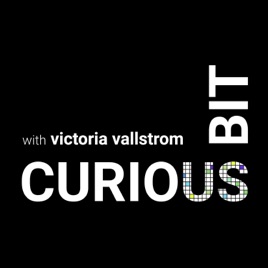
Advertise on podcast: Bit Curious
This podcast has
12 episodes
Language
EnglishPublisher
Victoria VallstromExplicit
No
Date created
2021/04/05
Latest episode
2022/01/14
Average duration
33 min.
Release period
27 days
Description
Welcome to Bitcurious. A podcast about us, humans, working and creating things together My hypothesis is that understanding basic concepts of us humans can improve how we work and create things together. Explore the fundamentals forgotten or hidden in systems or buzz words This curiosity launches me onto a quest to understand concepts underlying assertions and science. I find, read, and digest the science on the topic to help me make better sense of the world I share these findings hoping those answers can also help you If you r like me, a curious bit, come along on this quest for answers
Unlock Bit Curious podcast Email contact info,
Listeners & Audience details
Email contact information
Direct podcast contact details

Listeners
Audience numbers & engagement insights

Audience details
Podcast Insights

Podcast episodes
Check latest episodes from Bit Curious podcast
E10: Science of Power in Teams & Organizations
2022/01/14
Research demonstrates that power's impact on individuals is associated with a set of positive side effects, such as increased performance and outcomes.
However, the positive benefits power has on us individuals are paradoxically the opposite for teams. Evidence suggests that power's impact is negatively related to team performance, outcomes, and corrupt social interactions within teams.
This sparked my curiosity to understand more about power in the context of groups, teams, and organizations - and how to mitigate power's negative effect on teams & organizations.
If you are a curious bit 🤓 🧠, come along on this week's quest to understand and untangle the science and research of power in the context of teams and organizations.
Enjoy!
Victoria
Each episode´s content stands on the shoulders of giants - on what others already figured out - scientists and researchers who spent their whole life dedicated to answering specific questions. Huge credit to all those people and their excellent work!
The main credit for this episode goes to the professors and scholars, Julie Battilana, Tiziana Casciaro, Dachner Keltner - who´s research is greatly summarized in the following books.
Power, for All: How It Really Works and Why It's Everyone's Business, by Julie Battilana, Tiziana Casciaro, et all
The Power Paradox: How We Gain and Lose Influence, By Dachner Keltner
The full list of sources and specific research papers can be found at my website https://www.victoriavallstrom.com/
Disclaimer: Keep in mind I am not a scientist in the areas I cover, for example, psychology, neuroscience, biology, etc. I come from the other direction - practical experience working and creating things with other people in organizations. Education-wise have a degree in computer science, coupled with university studies in the history of ideas/history
E9: Science of Power
2021/10/25
Come along on this week's quest in the Science and research of power.
Searching for answers to questions such as: what is power, what are the origins of it, who gains it, ones gained, what does power does to us?
Some of those answers are grim, which will bring us to the next set of questions, why is there so much misuse of power, why are power structures so sticky?
However, our quest through the dark forest of power will end on the field of hope, as we seek answers to questions such as how and what do you do to stay on the right side of power?
Enjoy!
Victoria
Each episode´s content stands on the shoulders of giants - on what others already figured out - scientists and researchers who spent their whole life dedicated to answering specific questions. Huge credit to all those people and their excellent work!
The main credit for this episode goes to the professors and scholars, Julie Battilana, Tiziana Casciaro, Dachner Keltner - who´s research is greatly summarized in the following books.
Power, for All: How It Really Works and Why It's Everyone's Business, by Julie Battilana, Tiziana Casciaro, et all
The Power Paradox: How We Gain and Lose Influence, By Dachner Keltner
The full list of sources and specific research papers can be found at my website https://www.victoriavallstrom.com/
Disclaimer: Keep in mind I am not a scientist in the areas I cover, for example, psychology, neuroscience, biology, etc. I come from the other direction - practical experience working and creating things with other people in organizations. Education-wise have a degree in computer science, coupled with university studies in the history of ideas/history
E8: From Perfectionism to Optimalism in the Workplace
2021/09/08
In this episode, we will talk about the concept of Perfectionism in the Workplace.
There is a continued prevalence of perfectionism in the workplace, which is striking, given the magnitude of the negative effects perfectionism has on how we work and create things together.
This goes back to our widely held (incorrect) assumption: that perfectionism is beneficial to job performance.
Today's episode will, based on current research, poke holes in this assumption - and look at ways to mitigate the negative effects of perfectionism.
If you are a curious bit 🤓 🧠, come along this week's quest to understand and untangle perfectionism at the workplace, details how it is expressed, what to do about it including concrete actual interventions how to prevent feeding perfectionism and develop and foster optimalism.
Enjoy!
Victoria
If you want a fast recap of what I just covered - there are slides and visuals posted with the key takeaways of this episode’s material on my website.
Each episode´s content stands on the shoulders of giants - on what others already figured out - scientists and researchers who spent their whole life dedicated to answering specific questions. Huge credit to all those people and their excellent work!
The full list of sources can be found at my website https://www.victoriavallstrom.com/ Disclaimer: Keep in mind I am not a scientist in the areas I cover, for example, psychology, neuroscience, biology, etc. I come from the other direction - practical experience working and creating things with other people in organizations. Education-wise have a degree in computer science, coupled with university studies in the history of ideas/history
E7: Science of Perfectionism
2021/06/23
In this episode, we will talk about the concept and Science of Perfectionism
While there is scientific consensus that perfectionism leads to negative consequences, there has been a longstanding debate within perfectionism research if there are any positive aspects of perfectionism.
At what point does healthy striving for perfection turn unhealthy?
Come along this week's quest to understand and untangle what perfectionism is and how, when, and why it is problematic.
Enjoy!
Victoria
If you want a fast recap of what I just covered - there are slides and visuals posted with the key takeaways of this episode’s material on my website.
Each episode´s content stands on the shoulders of giants - on what others already figured out - scientists and researchers who spent their whole life dedicated to answering specific questions. Huge credit to all those people and their excellent work!
The full list of sources can be found at my website https://www.victoriavallstrom.com/
Disclaimer: Keep in mind I am not a scientist in the areas I cover, for example, psychology, neuroscience, biology, etc. I come from the other direction - practical experience working and creating things with other people in organizations. Education-wise have a degree in computer science, coupled with university studies in the history of ideas/history
E6: Autonomy-Supportive Organizations
2021/06/02
In this episode, we will talk about the concept of Autonomy-Supportive Organizations.
An autonomy-supportive organization is an organization that fulfills its members’ autonomy needs.
When we perceive that we are free to perform our work in our own way within an autonomy-supportive context, we are more likely to find work engaging, have higher job satisfaction, and increased performance.
We also engage in more self-directed behaviors, address obstacles and challenges more freely, and feel more support and connection.
And the great news is that you can deliberately foster such an environment
Come along on this quest to find answers: what are the most effective interventions, according to science, for organizations to foster an autonomy-supportive environment?
Enjoy!
Victoria
If you want a fast recap of what I just covered - there are slides and visuals posted with the key takeaways of this episode’s material on my website https://www.victoriavallstrom.com/
Each episode´s content stands on the shoulders of giants - on what others already figured out - scientists and researchers who spent their whole life dedicated to answering specific questions. Huge credit to all those people and their excellent work!
The full list of sources can be found at my website https://www.victoriavallstrom.com/
Disclaimer: Keep in mind I am not a scientist in the areas I cover, for example, psychology, neuroscience, biology, etc. I come from the other direction - practical experience working and creating things with other people in organizations. Education-wise have a degree in computer science, coupled with university studies in the history of ideas/history
E5 Bonus: Philosophy of Autonomy (and free will)
2021/05/19
This is a Bonus Episode, that goes along with E5: Science of Autonomy
It is not only modern software development organizations that spent many cycles on the concept of autonomy. Autonomy is a topic that has engaged us, humans, for thousands of years, in philosophy, ethics, science, politics, and business.
This is a quick crash course, a simplified version, of discussions around autonomy free will.
Enjoy!
Victoria
Each episode´s content, stand on the shoulders of giants - on what others already figured out - scientists and researchers who spent their whole life dedicated to answering specific questions. Huge credit to all those people and their excellent work!
A full list of sources can be found at https://www.victoriavallstrom.com/
Disclaimer: Keep in mind I am not a scientist in the areas I cover, for example, psychology, neuroscience, biology, etc. I come from the other direction - practical experience working and creating things with other people in organizations. Education-wise have a degree in computer science, coupled with university studies in the history of ideas/history
E5: Science of Autonomy
2021/05/19
In this episode, we will talk about the concept and Science of Autonomy
Autonomy is a common term frequently thrown around in organizations in the past decade.
Yet, the concept of autonomy is still controversial and creates issues. Stop and think about it; when you think about autonomy in your workplace, what feelings arise? I suspect it is a mixed bag of emotions, right?
Come along on this quest to find the answer, what is autonomy, why do we obsess about it, and should we care?
Enjoy!
Victoria
Each episode´s content, stand on the shoulders of giants - on what others already figured out - scientists and researchers who spent their whole life dedicated to answering specific questions. Huge credit to all those people and their excellent work!
A full list of sources can be found at https://www.victoriavallstrom.com/
Disclaimer: Keep in mind I am not a scientist in the areas I cover, for example, psychology, neuroscience, biology, etc. I come from the other direction - practical experience working and creating things with other people in organizations. Education-wise have a degree in computer science, coupled with university studies in the history of ideas/history
E4: Applied Fairness in Organizations
2021/05/05
This episode is an extension of the prior episode on Science of Fairness.
When members of an organization perceive the workplace as fair, it has a significant positive impact, both economic and psychological.
I did not cover in that episode that there are more things you can do, and with quite some precision, to increase fairness. And also, did you know that your organizational structure impacts fairness?
Applying fairness in organizations hence deserved this additional episode on fairness!
This episode is about, with a little bit of nerd warning, ways to with precision apply fairness research to increase fairness in organizations. To reap all the great benefits of fairness, for everyone involved.
Enjoy!
Victoria
Each episode´s content, stand on the shoulders of giants - on what others already figured out - scientists and researchers who spent their whole life dedicated to answering specific questions. Huge credit to all those people and their excellent work!
A full list of sources can be found at https://www.victoriavallstrom.com/
Disclaimer: Keep in mind I am not a scientist in the areas I cover, for example, psychology, neuroscience, biology etc. I come from the other direction - practical experience working and creating things with other people in organizations. Education-wise have a degree in computer science, coupled with university studies in the history of ideas/history
E3: Science of Fairness
2021/04/21
In this episode, we will talk about the concept and Science of Fairness
Fairness is the very essence of balancing interests of self, group, and between groups.
Why don´t we talk more about the concept of fairness in organizations? When digging into the research on fairness, Wow, I was blown away by the impact of fairness in organizations. What a gold mine!
In this episode, I will share these findings, form the basis of fairness, biology, and norms. To the impact of fairness on organizations, and some concrete ways to apply these learnings.
Enjoy!
Victoria
Each episode´s content, stand on the shoulders of giants - on what others already figured out - scientists and researchers who spent their whole life dedicated to answering specific questions. Huge credit to all those people and their excellent work!
A full list of sources can be found at https://www.victoriavallstrom.com/
Disclaimer: Keep in mind I am not a scientist in the areas I cover, for example, psychology, neuroscience, economy, biology, etc. I come from the other direction - practical experience working and creating things with other people in organizations. Education-wise have a degree in computer science, coupled with university studies in the history of ideas/history
E2: Group Flow
2021/04/14
In this episode, we will talk about the concept and science of Group Flow.
Flow is considered one of the optimal states of human consciousness and claims to produce high creativity, optimal performance, deep engagement, and happiness. This also happens to be true for group flow.
Studies show that groups that find flow have more effective team performance, greater innovation, and higher workplace satisfaction and engagement. Seems like a win-win, for an organization and its members.
(0:51) Skip intro
A full list of sources used and episode key takeaways can be found at https://www.victoriavallstrom.com/
Enjoy!
E1: Science of Flow
2021/04/07
This episode is about the concept and science of Individual Flow.
Flow is considered one of the optimal states of human consciousness and claims to produce high creativity, optimal performance, deep engagement, and happiness.
The science of flow has shown that flow is trainable, hackable, and can show up in any of us. There are triggers that can lead to more flow if certain pre-conditions are met. These triggers and the science of flow are what we will be covering in this episode.
A full list of sources used and episode key takeaways can be found at https://www.victoriavallstrom.com/
Enjoy!
Trailer ´Bit Curious
2021/04/01
Welcome to Bitcurious - A narrative non-fiction podcast about us, humans, working and creating things together.
My hypothesis is that understanding basic concepts of us humans can improve how we work and create things together. Explore the fundamentals forgotten or hidden in systems or buzz words.
This curiosity launches me onto a quest to understand concepts underlying assertions and science. I find, read, and digest the science on the topic to help me make better sense of the world.
I share these findings hoping those answers can also help you.
If you are like me, a curious bit, come along on this quest for answers!
You can find more information on victoriavallstrom.com
Podcast reviews
Read Bit Curious podcast reviews
Podcast sponsorship advertising
Start advertising on Bit Curious relevant audience podcasts
You may also like to advertise on these Podcasts
4.4371061566
The Megyn Kelly Show
SiriusXM
4.888901269
Fearless with Jason Whitlock
Blaze Podcast Network
4.8118931000
Mind Pump: Raw Fitness Truth
Sal Di Stefano, Adam Schafer, Justin Andrews, Doug Egge
4.8102131585
Tara Brach
Tara Brach
4.541561215
Something You Should Know
Mike Carruthers | OmniCast Media
4.513841343
Strictly Anonymous Confessions
Kathy Kay

4.8292781897
Fantasy Footballers - Fantasy Football Podcast
Fantasy Football

4.62382612
Football Weekly
The Guardian

4.45387666
Two Judgey Girls
Two Judgey Girls
3.8258501152
The Viall Files
Nick Viall