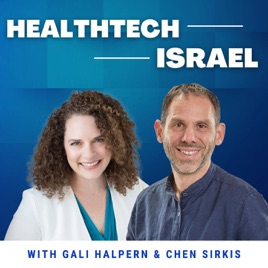
Advertise on podcast: HealthTech Israel Podcast
Rating
5from
This podcast has
21 episodes
Language
EnglishPublisher
Chen SirkisExplicit
No
Date created
2021/04/12
Latest episode
2022/01/24
Average duration
51 min.
Release period
21 days
Description
The HealthTech Israel Podcast is where you can connect to the vibe of Israel’s bustling HealthTech ecosystem and be inspired by Israel’s thought leaders, and industry frontrunners. By listening to a lively conversation, you’ll see how incredible medical solutions that impact the lives of many are realized – with sheer innovation and a touch of chutzpah. So if you are into medical technology, innovation, leadership, and Israel…this is where you want to be.Intro music credit: Yuval Halpern
Unlock HealthTech Israel Podcast podcast Email contact info,
Listeners & Audience details
Email contact information
Direct podcast contact details

Listeners
Audience numbers & engagement insights

Audience details
Podcast Insights

Podcast episodes
Check latest episodes from HealthTech Israel Podcast podcast
Dedi Gilad, CEO, TytoCare
2022/01/24
Dedi Gilad is the CEO of TytoCare, the healthcare industry’s first all-in-one modular telehealth device and AI-powered platform for on-demand remote medical exams and visits. To date, TytoCare has raised more than $160M in funding.
Cecile Bililious, Head of Impact and Sustainability, Pitango VC
2021/10/31
In this episode, we're speaking with Cecile Blilious, who is the head of impact and sustainability at Pitango Venture Capital.
Interview questions
00:56 Tell us about your professional journey and what brought you to where you are today?
03:03 How would you define impact investments? And what does it take to be an impact investor or entrepreneur today?
07:40 Why should I as a CEO of a startup company be focused on ESG?
15:02 What are the sustainability models that you're developing at Pitango and how is this relevant to HealthTech companies?
21:54 Is there an expectation that companies will have an Impact and Sustainability Officer?
24:13 Is there going to be a personalization of expectation around ESG for health tech, specifically?
32:43 Could you tell us a little bit about GITA, the Global Impact Tech Alliance, which you founded?
38:29 Is there anything that, in the next 5 years or in 5 years, you are dreaming of doing once you've put in motion this train of ESG connected to impact?
Daniella Gilboa, CEO AIVF
2021/10/26
Today we're speaking to Daniella Gilboa, CEO of AIVF. A company that is out to transform the fertility and IVF treatment journey. Daniella was an embryologist for more than 15 years before establishing AIVF. And she's a biostatistician too.
00:55 We'd like to hear about your personal journey. What is the process that leads an embryologist to establish an AI driven IVF company?
07:42 You have said that you believe that being an embryologist is probably one of the most noble professions in the world. What did you mean by that?
09:12 What made you feel like you have the tools to take this endeavor forward as its CEO?
11:47 What in your eyes are the problems in the current status of IVF and the journey in which women are trying to or families are trying to conceive?
19:15 What would be the role of the embryologist going forward, once you have this technology out in the market?
22:45 How do you bring patients into the equation of IVF transformation?
31:51 How does the AIVF solution work?
35:02 Can you tell us where you are in the AIVF journey in terms of the product and regulation and market?
38:16 How is Dan Ariely involved with the company and what does her behavioral economics have to do with IVF?
43:36 Is there an element of the product right now that connects to the patients? Will the patient be able to follow what is happening with their embryo, remotely, while everything's happening.
47:46 Why aren't there more female CEOs in healthtech?
50:55 What is your best tip for a scientist who is thinking about opening a startup?
Yotam Drechsler & Yaron Segal PhD, BrainQ
2021/10/19
In this episode we are talking to Yotam Drechsler and Dr. Yaron Segal from BrainQ.
Yotam is the CEO of the company and Yaron is the investor, founder and Chief Innovation Officer.
This is the story of a personal quest to help a loved one that morphed into a game-changing solution making a significant impact on the neurorecovery of stroke victims.
BrainQ’s investigational cloud-based technology aims to reduce disability and promote neurorecovery for stroke victims. Using a Brain Computer Interface-based approach, the company’s frequency-tuned low intensity electromagnetic field therapy is designed to operate based on biological insights retrieved from brainwaves using explanatory machine learning tools. These insights are aimed at imitating the natural processes of neural network synchronization and promoting recovery processes. The system is designed to allow for scalable and decentralized care via a portable, non-invasive wearable device that is cloud-connected with integrated telemedicine tools that enable remotely monitored sessions through an app.
Prof. Varda Shalev, Co-Founder & Chief Medical Officer - Alike Health
2021/10/06
Prof. Varda Shalev, Co-Founder & Chief Medical Officer at Alike.Health
Prof. Varda Shalev is a practicing Primary Care Physician, a medical researcher, associate professor of medicine at the Tel Aviv University School of Public Health, founding director of the Macabbi Institute for Research and Innovation KSM and recently the co-founder and Chief Medical Officer of Alike Health - a healthcare startup developing an AI-based system designed to help patients manage their medical data, monitor their conditions and gain insights into their treatment.
Summary of interview
01:15 What are the most memorable milestones that brought you to where you are today?
02:58 What is the driving force behind your passion for Health Technology?
05:43 What made you the jump into co-founding a startup?
07:14 What is the difference between being an intrapreneur that innovates within an organization, and an entrepreneur?
09:06 What was the value you found in collaborating with startups in your work at the Morris Kahn and Maccabi Research & Innovation Institute?
15:03 Let's talk about Alike Health, what does Alike do?
20:27 Obviously the US market is very interesting, why aren’t you creating a product for the German market?
22:15 Doesn't the scoring system create more anxiety with the patient? Will the patients know how to act upon it when there is no 100% certainty?
24:27 Do you give patients the option to call a live person and discuss or get clarifications on the report?
26:12 What is the business model for your company?
28:35 You raised your seed round from a single investor – Pitango. Do you think raising a seed fund from one VC investor is advantageous?
29:33 How has the Israeli Health Technology ecosystem evolved over the decades?
36:27 Where are we going with health? What is going to be the next revolution that we're going to see?
40:04 How is Alike.health closing the loop on data?
41:45 What advice would you give to someone who wants to do what you are doing?
46:15 If you could go back to your 16-year-old self, what would you tell her?
47:13 Why do you think there are less Women entrepreneurs and what needs to be done in order to change it?
Liron Fendell, CEO, Nutritional Growth Solutions
2021/07/26
Liron Fendell is the CEO of Nutritional Growth Solutions, or NGS, which specializes in scientific supplement formulas for children of small stature. NGS shares are traded on the stock exchange in Australia.
01:01 Who is Liron Fendell? Would you mind telling us a little bit about your professional background?
04:19 What does NGS actually do now?
06:16 What does the gain is 1 to 5, 7 centimeters mean to children and their families.
08:15 When did you start thinking about what the brand would be? What kind of affected that decision and how do you balance that nutrition versus pharmaceutical in your work?
12:30 Could you maybe talk about your branding process? What does it take to build a brand for a company?
16:56 What type of resources do you need internally to be able to support a deal as you had with GSK?
20:59 Is India the only territory where you white-label your products? Or does it happen in other areas of the world? What is your strategy in each region?
22:41 What did you find are the pluses and minuses of working via Amazon or Shopify?
26:35 How do you interact with your customers to receive feedback for your products?
29:13 Who really is involved in your marketing efforts in the different markets?
30:50 How does working with influencers work to push your brand on social media?
35:12 What is your perspective of the US versus China, or, China versus the rest of the world?
41:09 How did NGS's listings on the Australian Stock Exchange come about?
42:53 How has your life changed since the IPO?
44:39 What's next in terms of markets, products, ducks, etc.?
47:25 If someone wants to go through your journey, what would you recommend that they do and prepare?
Uri Goren, Head of Digital Engagement at Teva Pharmaceuticals and Founder of e-pochonder
2021/07/20
Uri Goren is the head of digital engagement and capabilities at Teva Pharmaceuticals, and just recently became a member of the National Advisory Board for digital health for the Israel Ministry of Health. Uri founded and continues to contribute insights through his digital magazine, e-Pochonder and is one of the first advocates for patient centric health care.
Interview milestones:
02:25 How did you decide to become a trailblazer and advocate for patient-centric healthcare?
07:20 When do you think it is the most important moment to listen to patients?
11:50 Tell us about the Society of Participatory Medicine and the E-Patient Movement.
17:02 How can we keep that balance of - the empowered patient, who is the most important person in the room, with the knowledge and judgment of the medical professional whose recommendations should be trusted?
21:40 Do you think breaking away from traditional channel to market is happening on a wide scale in the industry?
25:51 Do you have any comments on how you're using different digital channels for your personal and professional messaging? And what is the difference between them when you make a decision about which channel to use?
30:37 How many hours a day do you commit or spend in order to promote these channels?
32:30 How much time do you spend on an average day on digital media
34:14 What you do at Teva?
37:38 What exactly is digitalization of B2B?
40:28 Are there any social networking tools that you can use to differentiate B2B from B2C?
43:32 What is the National Advisory Board for digital health for the Ministry of Health in and what are your goals in the advisory board?
48:12 What are you seeing that is special in the Israeli Digital Health ecosystem? And what do you think is missing, and maybe entrepreneurs should pay more attention to?
52:21 What is the main problem do you think that needs to be solved for the healthcare market with technology?
Michal Geva, Co-Founder and Managing Partner, Triventures
2021/07/14
Michal Geva is the managing partner and co-founder of Triventures. Michal is one of the most prominent investors in Israel's MedTech and digital health scene. She resides on the boards of many companies and has accumulated a track record of multiple exits, including 6over6, Orthospace, and Aprica.
01:01 Where did your passion for health tech actually start?
03:42 Why did you decide to found Triventures?
09:34 Could you expand a little bit on how your model works?
11:52 Do you build a company to exit versus building a company to scale?
18:30 At what stages do you look for ventures intrapreneur ships in terms of their lifecycle?
29:01 What has changed for try ventures over the last two years in terms of the investment strategy?
38:30 What are some tips for working with investors and managing the Board of Directors?
42:06 How does an early-stage company or a company get on your radar? And what can they do at the meeting with you to come out better or not worst on the other side?
49:02 What are the unique challenges to females on the leadership side as running a VC on the one hand and as a CEO on the other?
Galit Zuckerman Stark, Founder & CEO, MedaSense Biometrics
2021/07/07
Galit Zuckerman Stark, CEO and cofounder of Medasense. Medasense is NOL technology, enables clinician to personalize pain management, optimize treatment and avoid overmedication. All this in it with a noninvasive sensor platform and AI technology.
01:14 What brought you to the medical field and to becoming the CEO of a breakthrough product in what is actually a very difficult market to operate in?
03:18 How did you get to pain as a field of interest?
05:05 Why is there a need for an objective measurement of pain?
09:05 Can you go back to 10-11 years ago and share what you were thinking your product process was going to be? And then go to, where you are now and what your product actually is?
13:40 What do you think are the main things that have changed in the “Pain industry” and allowed you to sell products and raise significant amounts of capital from investors?
16:46 Can you explain a little bit about how Medasense’s technology works?
20:03 How is Medasense’s pain score personalized?
20:59 Are you only addressing the pain component of surgery or are you helping the anesthesiologist manage the types of medications administered during surgery?
22:54 How and why did you make the decision to work with a large multinational company such as Medtronic for distribution?
26:08 it's quite unusual for an Israeli company to start with Europe. Why did you decide to begin your sales in Europe?
28:50 How do you make sure you don’t lose touch with the market when you sell through distributors?
34:10 Who helped you during the transition from a product company to a commercialization
36:59 What's next for Medasense?
41:05 How does your product work with patients who can communicate? How can you reconcile the gap between your measurement and what the patient is saying?
43:20 Do you think you have different challenges because you're a female CEO in this space? And if so, you know, do you have any tips for other female CEOs?
Omri Shor, CEO, Medisafe
2021/06/29
Omri Shor is the co-founder and CEO of Medisafe, where for the last decade, he and his team are trying to free patients from the stress of managing complicated medications, thus enabling them to lead healthier, safer, and fuller lives.
01:00 Tell us the story behind the founding of Medisafe
02:28 What is it like starting a business with your brother and still managing it today after nearly a decade?
04:21 Can you tell us a bit about how your product has evolved from what you thought you were doing when you began to where you are now?
07:06 How does Medisafe ensure that the patients get the right medication, at the right dose and at the right time?
09:06 Can you give us some examples of strange adherence-related behaviors that you've seen with people that you wouldn't have even imagined?
13:51 What are the main things you know now that you wish you had known a few years ago working and navigating in healthcare organizations and pharma companies? And what would you recommend to those who wish to sell into these systems?
16:43 The unique culture of Medisafe – “we dare!”
18:27 Why would you want to come work at Medisafe?
23:00 How do you maintain this fast-moving, exciting spirit of a startup when the company is not that small?
25:40 What was your original business model for Medisafe and has that business model shifted for you?
31:14 Could you elaborate on how Medisafe sits at major junctions throughout the patient's continuum of care? And how do you combine the tech, the AI, big data, etc., with the behavioral aspects of the patient's needs?
34:32 Do you view the elderly population as a separate group and make sure that you're creating a solution that is relevant for them? are you putting more focus on them in your product development?
35:48 Tell us about using JITI and Maestro to build the patient journey.
38:23 Can you share your own personal experience of growth in the last years?
40:59 Did you feel that moving to the US was the only option for you as the CEO or was this a choice? How has that move affected you on a business and personal level?
44:12 What's next for Medisafe? And what is your best tip to aspiring digital health entrepreneurs?
Keren Leshem, CEO, OCON Healthcare
2021/06/21
Today we're speaking with Keren Leshem. Keren Leshem is the CEO of OCON Healthcare that focuses on women's health, primarily creating high-quality intrauterine drug delivery solutions. OCON is innovating in areas that have not been touched for three decades. Furthermore, Keren is very active in the FemTech ecosystem as a whole.
00:55 What was your journey that brought you into this market of pharma, MedTech and drug delivery? And why did it begin abroad?
02:59 What does OCON do?
06:31 Why did you build OCON with a female majority? Is there any difference in managing a company that is predominantly female on a day-to-day basis?
09:23 Do you think that you need to be a woman to lead a FemTech company?
10:40 What are seeing is changing in the FemTech space? What do you expect will happen looking forward?
16:47 When did you feel that OCON’s solution is really unique?
22:44 What did you find when you joined the company in 2018? And what did you do to turn it around?
26:40 You mentioned you found a way to recruit patients inexpensively during COVID. Can you tell us a little bit about how you did this?
33:23 Do you do any promotion to the end-user using social media?
34:49 Where does the world of direct-to-consumer or at least consumer-centric marketing live in your vision going forward for OCON?
38:40 What would you say to those people that say that using social media and LinkedIn is only applicable to MedTech companies that are already in the market?
42:28 What tips you would give to up-and-coming CEOs in the MedTech space if they can contact you for advice and mentorship?
46:51 Could you elaborate a little bit on your volunteer work with Michla’la? How did you get involved with that?
Nahum Ferera, CEO, EyeYon Medical
2021/06/14
Nahum Ferera is the CEO of EyeYon Medical, a company he co-founded in 2011, that is developing therapies for a range of corneal diseases. Nahum holds a Bachelor of Science in biomedical engineering and an MBA both from Tel Aviv University.
Here are some of the questions we asked Nahum:
01:11 What's your personal journey in med tech? How did you come to found EyeYon?
04:00 Why do you think we don’t hear about ophthalmology startups and do you think that this is changing?
08:10 Can you explain what the cornea is? And why is it considered the window to the eye?
12:50 What is the story behind EyeYon and behind EndoArt, which is your main product?
17:45 When you fundraised for the company 10 years ago, what was the story behind that fundraising? And did it involve the two products you are now focused on?
22:40 How did you attract a VC from a very early stage?
26:40 Are there two different got-to-market strategies for your products or are you building on top of each other for it to go to market?
32:20 What are your plans moving forward with EndoArt and beyond?
38:00 How do you keep your work and life balance?
42:00 If you could go back to your 16-year-old self, what words of wisdom would you give to you?
Podcast reviews
Read HealthTech Israel Podcast podcast reviews
eChitayat 2021/05/13
Medical technology conversations from Israel
Israel medical = Chen and Gali and their innovative guests. It’s as simple as that. Definitely tune in a reap the rewards if you’re interested in th...
Podcast sponsorship advertising
Start advertising on HealthTech Israel Podcast relevant audience podcasts
You may also like to advertise on these Podcasts

4.740717
Complicit, A True Mystery Podcast
Seventh Guest Productions

4.7769
Who Trolled Amber?
Tortoise Media

5165178
Elephant Radio
FRANK ROTH

4.932714
Roker Rapport Podcast
Roker Rapport
4.9135300
Big Stud Podcast
Mike Claudio

51169
Common Sense Ohio
Common Sense Ohio
4.8161214
Lash Boss Radio
Shelby Tarleton

4.816538
Star Wars: Old Canon Book Club
Star Wars: Old Canon Book Club

4.4162284
8AM Podcast with Arlin Moore
Arlin
4.8187163
The Logan Bartlett Show
by Redpoint Ventures