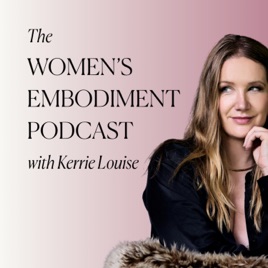
Advertise on podcast: Women's Embodiment with Kerrie Louise
Rating
5from
This podcast has
83 episodes
Language
EnglishPublisher
Kerrie LouiseExplicit
No
Date created
2021/04/17
Latest episode
2026/09/28
Average duration
51 min.
Release period
7 days
Description
Welcome to Women's Embodiment, the podcast where healing isn’t just talked about, it’s lived, breathed, and deeply felt. I’m Kerrie Louise, somatic guide and creator of The Global Institute for Women’s Embodiment, and I’m here to walk with you through the real work of transformation. From nervous system healing and women's intuitive power, to cyclical wisdom and soul alchemy - we go there. This is a space for high-level women who are done with surface-level work and are craving true liberation from their trauma and a life of deep soul-alignment. I can't wait to dive in with you!
Unlock Women's Embodiment with Kerrie Louise podcast Email contact info,
Listeners & Audience details
Email contact information
Direct podcast contact details

Listeners
Audience numbers & engagement insights

Audience details
Podcast Insights

Podcast episodes
Check latest episodes from Women's Embodiment with Kerrie Louise podcast
84. Walking in Alignment: How to Tell What's Truly for You
2026/09/28
In this episode of Women's Embodiment, I explore what alignment actually feels like, and why so much of what we have been told about it is wrong. There is a version of this conversation that says if something is meant for you it will simply flow, and I see that idea keep people stuck inside their own suffering for years. Alignment is not the absence of resistance. The path that is genuinely yours is almost always the one that asks more courage of you, because it requires you to alchemise fear rather than avoid it.
I break down the quieter signals that tell you whether your energy is going somewhere that gives back, or into a dead end. We look at your relationship with stress, at the reward system you inherited from the people who raised you, and at why resentment and exhaustion that rest does not touch are information rather than failure. I share the one question I ask myself whenever I cannot tell which path to take, and how to sit with friction long enough to know whether to lean in or step away. If you have been doing everything and still cannot cross a threshold, this one is for you.
__________________________________________________
Key Highlights
🌱 Alignment Is Not the Absence of Resistance: The spiritually bypassing idea that the right path simply flows keeps people stuck. Real alignment asks you to invest energy and courage, and it will feel like something.
🔥 Ask Which Path Requires More Courage: When you cannot tell which way to go, the part of you that needs expression is usually the one meeting the most pushback. The easier path avoids the fear and quietly keeps you stagnant.
⚖️ A Healthy Relationship With Stress: Expansion requires stress, but it has to be reciprocal stress: the kind you channel into something that gives back. Stress that only ever gets consumed is a different signal entirely.
🧬 Rewiring an Inherited Reward System: If you grew up where your energy was consumed and nothing came back, you learned that effort does not pay. That imprint can be relearned, and doing so often means surpassing the ceiling of the people who raised you.
🪞 Giving From Wholeness, Not Expectation: Watch where enough actually is. If the giving itself does what it needs to do for you, you are coming from wholeness. If you are waiting for validation on top, you have overextended.
🚩 Resentment and Rest That Does Not Restore: Building resentment usually means overgiving. When stress compounds no matter how much you rest, the problem is where the energy is going, not how tired you are.
🌿 Emotional Maturity When Something Feels Off: Emotional immaturity rushes to criticise, label and demonise. Maturity says something is causing friction and stays with the question long enough to find out what.
__________________________________________________
Resources & Next Steps
🌐 Take the Free Quiz
🎓 Watch the Free Training
🎧 Subscribe to Women's Embodiment on Apple Podcasts
🎧 Subscribe to Women's Embodiment on Spotify
__________________________________________________
YouTube Chapter Timestamps
00:00 Welcome and what this is about
02:30 Alignment is not the absence of resistance
05:00 Why alignment asks for courage
07:30 Turning fear into expansion
10:00 Believing effort is rewarded
12:30 Your dreams versus your upbringing
15:00 The question to ask when unsure
17:30 What courage looks like in practice
20:00 Giving from wholeness
22:30 Relearning that effort gives back
25:00 When rest does not restore
27:30 A gauge for worthwhile stress
30:00 How that energy compounds
32:30 Why the easy path is the problem
35:00 The skills that sit under alignment
37:30 What a draining situation tells you
40:00 The two ways we stagnate
42:30 Unlearning consumed energy
45:00 Maturity when something feels off
47:30 Closing thoughts
83. The Attachment Pattern Behind Your Finances
2026/09/21
In this episode of Women's Embodiment, I explore the bridge between your attachment patterns and your finances. We usually think about attachment in the context of romantic relationships or the parent and child bond, but attachment is really about something much broader: your relationship with resource itself. When I need something, what happens? When I reach out, what response do I get? Is it safe for me to securely depend on anything in physical reality? Long before money was a concept we could understand, resource arrived through people, in the form of food, safety, comfort, protection and attention. Money simply became the thing that represents resource in adult life.
We dig into why healing this at a nervous system level shifts your financial story as well as your relationships, because it is the same wiring underneath both. I walk through three things: whether love and resource felt reliably available to you early on, what you learned about investment and return, and what a more secure relationship with money can look like now, whatever your history. We also look at energetic stagnation, the loop where you reach, give, perfect and overextend without the return that moves you forward. This is not a conversation about budgets or spreadsheets. It is about learning to read your own feedback loop honestly, so you can invest your energy where it actually yields something.
__________________________________________________
Key Highlights
🔗 Attachment Is About Resource, Not Just Romance: Attachment is your relationship with resource itself: whether support is dependable, and whether you can weather its ebbs and flows.
🧸 People Were Your First Currency: Before money was a concept, people represented resource. Those first access points are the template money later slots into.
🌱 What Consistency Teaches a Child: Consistency says resource exists and I can participate in it, and that receiving need not come layered with guilt.
🔁 Energetic Stagnation and the Feedback Loop: Reaching, perfecting and overgiving with no return. With insecure attachment you cannot see the loop, so it repeats.
💸 Money in the Account Is Not Safety in the Body: You can have money and still lack the internal experience of security, staying vigilant well past what circumstances warrant.
🔍 Assess the Evidence, Not the Story: Ask what return you are actually getting, read the evidence in reality, and course correct sooner each time.
__________________________________________________
Resources & Next Steps
🌐 Take the Free Quiz
🎓 Watch the Free Training
🎧 Subscribe to Women's Embodiment on Apple Podcasts
🎧 Subscribe to Women's Embodiment on Spotify
__________________________________________________
YouTube Chapter Timestamps
00:00 How early experiences of resource shape money
01:06 The bridge between relating and finances
02:02 Attachment is broader than romance
03:17 Why nervous system work shifts both
04:02 People as the first access to resource
06:16 Can I trust that what I invest returns
08:05 The three things we cover
09:32 What consistency teaches a child
11:12 The inconsistent emotional environment
13:03 When ordinary needs overwhelmed the adults
14:37 Rewiring resource, not chasing extra money
17:04 Having money without feeling secure
18:37 Investment and return
20:28 Trauma and a child's actual resources
24:38 Observing your energetic investment
26:03 Pouring in more because you already have
31:22 Knowing your own feedback loop
35:11 Refusing support when it is available
39:50 What security actually is
42:59 Discomfort with a payoff, and without
47:40 Closing: weathering the seasons
82. How to Deal With Emotionally Immature People
2026/09/14
In this episode of Women's Embodiment, I explore what happens when you are the more emotionally mature person in a relationship. This is not about someone being malicious, and it is not about a relationship that is obviously toxic. It is about an emotional capacity mismatch, which is far subtler and much harder to name. I speak to so many emotionally intelligent women who understand their own wounding, their motivations and their patterns, and who then find themselves confused and drained inside relationships with people who simply have less relational capacity than they do.
I walk through the three places this shows up: in the other person, in your own internal experience, and in the relational field between you. We look at defensiveness, stonewalling, and the belief that good intention cancels out impact. We look at why you feel guilty, frustrated and fragmented, and why you are so exhausted. Then we turn to what actually changes things, which is not fixing them. It is seeing their limitations clearly and adjusting how you participate, through realistic expectations, stronger boundaries, and far less over functioning.
__________________________________________________
Key Highlights
🔍 The Mismatch Is Subtle, Not Obvious: An emotional capacity mismatch is harder to see than overt toxicity, which is exactly why it goes unnamed for so long.
🚧 Where You See It In Them: Defensiveness rather than curiosity, difficulty holding two realities at once, and using intention to cancel out impact.
🌊 Escalation And Shutdown: Emotions escalate until no productive conversation is possible, or the person withdraws, goes cold and stonewalls. Often both.
🧭 Boundaries Are Not A Negotiation: A boundary is about how you move, not a request for compliance. The strength is in standing behind it when it gets challenged.
💭 What It Feels Like In Your Body: Frustration at not being received, guilt that you have not done enough, and a sense of fragmenting rather than becoming cohesive.
🔁 The Over Functioning Loop: You manage their emotional experience before you have made any space for your own, and the relationship stays stable only while you keep accommodating.
🔑 Discerning Your Participation: The shift is not tiptoeing around them. It is asking what is realistic given their capacity, and choosing how you take part.
__________________________________________________
Resources & Next Steps
💫 Explore Our Signature Relationship Transformation Course
🌐 Take the Free Quiz
🎓 Watch the Free Training
🎧 Subscribe to Women's Embodiment on Apple Podcasts
🎧 Subscribe to Women's Embodiment on Spotify
__________________________________________________
YouTube Chapter Timestamps
00:00 When the mismatch is capacity, not malice
01:30 Who this episode is for
03:00 The three places the mismatch shows up
04:30 Over explaining, ruminating and self questioning
06:00 Why discomfort reveals capacity
07:30 Emotional differentiation explained
09:00 Defensiveness and holding two realities
10:30 When intention is used to cancel impact
12:00 Shame, deflected accountability and compassion
13:30 Escalation until conversation stops working
15:00 Withdrawal, coldness and stonewalling
16:30 Setting a boundary without expecting compliance
18:00 Standing behind a boundary when it is challenged
21:00 Locating your limits in your own body
22:30 Bracing for contact is information
24:00 Questioning whether you are the bad person
27:00 Frustration, guilt and feeling unreceived
28:30 Fragmenting instead of becoming cohesive
30:00 Managing their chaos before your own needs
34:30 Small issues becoming disproportionately large
39:00 Is this worth your time and investment?
40:30 Adjusting expectations to their real capacity
46:30 Discerning your participation, not tiptoeing
49:30 How boundaries change the way you move
81. Why You Abandon Yourself In Relationships
2026/09/07
In this episode of Women's Embodiment, I explore what really happens when attachment activation takes hold and you begin to lose access to yourself inside a relationship. This is not the entry level conversation about attachment styles. You can already know your patterns, be capable and independent, have your life together in every other area, and still find that a certain level of intimacy or relational stress sends your whole system into securing mode. I want to name what that looks like from the inside, because most of us do not recognise it while it is happening.
We go through the quiet forms self abandonment takes: the boundary that collapses every time there is distance, the behaviour you swore you would never accept, the compulsive checking and rereading, the sleep that goes, the friendships and the training and the work that slide down the list. I talk about tunnel vision, about relating to someone else's capacity rather than your own, and about why relationships tied to your home, your money or your social world carry a heavier threat. And I close on what healing attachment actually means: not becoming less attached, but holding enough spaciousness around it to still ask whether this is right for you.
__________________________________________________
Key Highlights
🌀 Attachment activation, not attachment styles: Knowing your patterns is the self awareness layer. Relationships change when the responses change, not when the reading is done.
🪢 The boundary that keeps moving: Collapsing a boundary once under stress can be human. Collapsing it every single time distance appears is a pattern eroding your sense of self.
📱 The searching that never settles you: Checking socials, rereading messages, replaying conversations. All of it regulates activation rather than resolving it.
🔍 Tunnel vision around the connection: Their opinions start to matter more, your standards get quieter, and what you knew for yourself becomes harder to reach.
⚖️ You relate to their capacity, not just yours: When capacity is unequal, one person shrinks to fit the narrower container. Discernment, and time, keep it from being you.
🧠 Self awareness can become the hiding place: Explaining your dysregulation is not the same as feeling it. Come back to the body, not only the framework.
🕊️ Healing attachment is not detaching: It is attaching with enough spaciousness to still ask: if I keep leaning in, do I become more of myself, or less?
__________________________________________________
Resources & Next Steps
💫 Explore Our Signature Relationship Transformation Course
🌐 Take the Free Quiz
🎓 Watch the Free Training
🎧 Subscribe to Women's Embodiment on Apple Podcasts
🎧 Subscribe to Women's Embodiment on Spotify
__________________________________________________
YouTube Chapter Timestamps
00:00 Capable everywhere else, losing yourself here
00:52 Deeper than attachment styles
02:33 Self awareness is only the first layer
03:23 What self abandonment really means
04:24 Why a depleted season makes it likelier
06:18 Human response, or organised around the relationship
08:23 Why the overriding goes unnoticed
09:59 The boundary that collapses on distance
11:32 Checking, rereading, replaying
12:52 Sleep, training, work and friendships slide
14:08 Explaining yourself to someone who cannot hear it
20:30 Relating to their capacity: who shrinks
22:15 When home, money or status raise the stakes
24:01 Their needs louder, your standards quieter
25:48 Tunnel vision and the self going offline
29:17 Non negotiables that start to feel excessive
34:20 The self aware woman and her blind spot
36:39 Fear of loss clouds discernment
41:02 Healing attachment is spaciousness, not distance
43:24 The question to ask at every iteration
80. Patterns You Didn't Choose: How Childhood Shapes the Way You Love
2026/08/31
In this episode of Women's Embodiment, I explore the childhood patterns that quietly shape the way you love as an adult. We look at what may be playing out in your relationships now, where those strategies actually came from, and why so many of them were never a choice you consciously made. I also preface the whole conversation with something the trauma lens often leaves out: the spiritual component, the idea that you arrive with your own blueprint rather than as a blank slate waiting to be written on. This is not about laying everything at your parents' feet. It is about seeing the nuance clearly enough that you stop repeating a cycle you never understood.
We start with the difference between physical neglect and emotional neglect, and why the second one is so much harder to name when every visible box was ticked. From there we move through parentification, hypervigilance, and the way inconsistent people can feel more compelling than steady ones because they match a frequency your nervous system already knows. We look at loyalty binds, individuation, boundaries that feel like betrayal, and the quiet cost of becoming the capable one. The question I leave you with is simple: is the strategy still appropriate for the environment you are in now? Every adaptation carries a cost, and you get to decide which ones are still worth paying.
__________________________________________________
Key Highlights
🧭 The Spiritual Nuance: The trauma lens treats children as a blank slate. I open by holding space for something deeper, the blueprint you arrive with.
🪶 Physical vs Emotional Neglect: Every material box can be ticked while emotional attunement is completely absent. That second layer is what shows up later.
⚖️ Parentification and the Load Too Big: Carrying a parent's emotional state builds real capability, and a lifelong habit of shrinking your own needs.
📡 Why Inconsistency Feels Compelling: Inconsistent people match the frequency of hypervigilance. Steady, regulated love can feel unfamiliar rather than safe.
🔗 Loyalty Binds and Individuation: Becoming your own person can feel like betrayal, so a no starts to read as something that will hurt people.
🔄 Ebb and Flow in Healthy Love: Real relationships move between closeness and separateness. Collapse in either direction is the adaptation talking.
❓ The Question to Sit With: Is this strategy still appropriate for the environment I am in now? Every adaptation has a cost. You choose which ones to keep paying.
__________________________________________________
Resources & Next Steps
🌐 Take the Free Quiz
🎓 Watch the Free Training
💫 Explore Our Signature Relationship Transformation Course
🎧 Subscribe to Women's Embodiment on Apple Podcasts
🎧 Subscribe to Women's Embodiment on Spotify
__________________________________________________
YouTube Chapter Timestamps
00:00 Is the strategy still right for now
01:36 The layer the trauma lens misses
04:05 Physical neglect vs emotional neglect
06:37 Parents uncomfortable with vulnerability
08:15 Achievement over emotional attunement
10:37 The load that was far too big
12:09 Support structures falling away
13:44 Nervous system oscillation and intensity
16:50 Love that was never freely given
18:26 Repressing the need, not just the feeling
20:45 Losing the signal for your own needs
23:05 Reading tone as a survival skill
25:27 Freedom inside the family system
27:01 Carrying a parent's emotional state
29:23 Loyalty binds and where they break
31:00 Individuation needs support
32:35 Ebb and flow in a healthy relationship
34:14 Pleasing over your own disappointment
37:32 Becoming the capable, strong one
41:37 Where the healing journey usually starts
44:56 Which parent was the less obvious one
50:41 Learning the skills nobody modelled
55:00 The cost of every adaptation
79. Sex Is Not Intimacy: What Secure Connection Actually Requires
2026/08/24
In this episode of Women's Embodiment, I explore one of the most misunderstood distinctions in our relationships: the difference between sex and true intimacy. We so often use these words interchangeably, yet someone can be highly sexually expressive and still be unable to name what they actually feel or need. I unpack the question that sits underneath so much of my work, is sex expanding the intimacy in my relationship, or quietly compensating for its absence? Together we look at how emotional intimacy is so frequently the missing layer, and why attraction, compatibility, and even skill are never enough on their own to create the depth we're really craving.
From there, I turn toward what actually builds secure connection. We explore how sex can become a way to ground ourselves out of dissociation or numbness, and why the more regulated we feel, the less we need those intense avenues to come back into our bodies. I share the shift I see in the most emotionally mature people I work with, moving from 'do I want sex?' to the far more honest question, 'what am I hoping this gives me access to, or stops me from feeling?' We talk through life transitions, changing needs, the capacity to repair, and what it looks like to stay connected to your body and your partner in a new way. It's an invitation to stop asking sex to carry the weight of everything, and to tend to the relational foundation beneath it.
__________________________________________________
Key Highlights
🔥 Sex and Intimacy Are Not the Same: Why someone can be sexually expressive yet unable to identify what they truly feel or need, and how emotional intimacy is so often the missing layer.
🧭 Expanding or Compensating?: The question at the heart of this work: is sex deepening the intimacy in your relationship, or filling in for its absence?
🌊 Grounding vs. Regulation: How sex can become a way to ground out of dissociation or numbness, and why real regulation reduces the need for intense avenues back into the body.
💬 What Am I Really Reaching For?: The shift emotionally mature people make: from 'do I want sex?' to 'what am I hoping this gives me access to, or stops me from feeling?'
🔄 When Intimacy Changes: Navigating life transitions where your sexuality and needs evolve, without collapsing back into old patterns.
🤝 Secure, Repairable Connection: Why deep emotional intimacy and the capacity to repair are what make sexual connection genuinely secure.
__________________________________________________
Resources & Next Steps
🌐 Take the Free Quiz
🎓 Watch the Free Training
💫 Explore Our Signature Relationship Transformation Course
🎧 Subscribe to Women's Embodiment on Apple Podcasts
🎧 Subscribe to Women's Embodiment on Spotify
__________________________________________________
YouTube Chapter Timestamps
00:00 Sex vs. intimacy: why we confuse them
04:11 Disconnection from pleasure and intimacy
08:08 Reaching for sex when we feel dysregulated
11:55 Sex as 'immediate evidence' of connection
15:29 The deeper question: connection to what?
17:07 When intimacy changes through life transitions
21:35 Expressive, but unable to name the need
23:28 Why attraction and skill aren't enough
31:07 The capacity to repair
40:50 People-pleasing and losing yourself
51:10 Closing questions to sit with
53:23 When sex is asked to hold too much
78. When Dysregulation Gets Mistaken for Feminine Embodiment
2026/08/17
In this episode of Women's Embodiment, I want to offer another level to the feminine embodiment conversation. So much of what I see taught falls into one of two shapes: the collapse of the nervous system, or the flooding of it. One version of her is small and easy to digest, endlessly available, waiting to receive, handing her decision making and her structure to somebody else. The other is the swing back, the intensity, the chaos held up as proof of aliveness. Both are the same wound wearing different clothes, and both come from unmet needs rather than from integration.
We go into why feeling something intensely does not make your interpretation of it accurate. Feelings are always real, but the meaning we attach to them is not automatically true, and the more flooded we are the more distorted the reading tends to be. I talk about what emotional maturity actually asks of us: curiosity, discernment, and the willingness to meet a need without making the feeling the sole authority in the room. We also look at the inner masculine and the inner feminine as a working relationship rather than a hierarchy, why exiling your masculine leaves you porous, and what integration looks like in ordinary daily life.
__________________________________________________
Key Highlights
⚖️ Collapse or Flood, Same Wound: Most distorted femininity is either a nervous system that has collapsed or one that is flooded. Both come from needs that were never met.
🔍 Intensity Is Not Accuracy: Feelings are always real, but the interpretation attached to them is not. The more intense it gets, the more distorted the reading tends to be.
🍽️ A Need Met Is a Need Neutralised: Like hunger, an emotion stops shouting once it is actually fed. Chaos and submission are both what unmet needs look like.
🌗 She Waits, She Never Initiates: The collapsed version is small, endlessly available and porous, expecting someone else to provide structure, safety and leadership.
🧭 Maturity Over Expression: Ask what level of maturity an expression is moving through, not whether it looks feminine enough. Rejecting all structure is not embodiment.
🤝 Your Inner Masculine Is Not the Enemy: He protects without imprisoning and creates structure without rigidity. Exile him and you attract exactly what you cannot hold.
🌱 Authenticity Does Not Care: Authenticity does not filter itself through masculine or feminine. It simply responds to what is emerging, with the maturity to meet it.
__________________________________________________
Resources & Next Steps
🌐 Take the Free Quiz
🎓 Watch the Free Training
💫 Explore Our Signature Relationship Transformation Course
🎧 Subscribe to Women's Embodiment on Apple Podcasts
🎧 Subscribe to Women's Embodiment on Spotify
__________________________________________________
YouTube Chapter Timestamps
00:00 Collapse or flood: the two distortions
02:30 Why I want to offer another level
07:30 Asking every part what it actually needs
10:00 When repression flips into explosion
12:30 Integration, not performance of femininity
15:00 She waits, she never initiates
17:30 Collapse versus true surrender and receptivity
22:30 You can only repair to your level of integration
25:00 Two ways of abandoning yourself
27:30 Rejecting all structure is not embodiment
30:00 Less intensity means less fragmentation
32:30 What emotional maturity actually requires
35:00 On the words woman, feminine and masculine
37:30 Authenticity does not care about either
42:30 Why exiling your masculine leaves you porous
47:30 The feminine without the masculine floods
50:00 Structure without rigidity, action with feeling
52:30 What integration looks like in real life
57:30 Cyclical wisdom, and where it gets romanticised
77. From Numbness to Aliveness: Learning to Channel Emotions with Wisdom
2026/08/10
In this episode of Women's Embodiment, I explore what actually happens when you come out of numbness and start to feel again. Most of the women I work with are deeply self aware and have done years of trainings, courses and inner work, yet there is still a fracture between what they understand and what they can feel in the body. When the numbing and the avoiding stop, the bigger feelings finally come online, and that stage can feel overwhelming, isolating and chaotic. I want to name that clearly: feeling more emotion does not mean you are becoming more dysregulated. You were also dysregulated when you were dissociated, you just could not feel it.
We move through what this thawing out period really looks like, why it is a sign of a nervous system coming out of freeze rather than a sign that something is going wrong, and how to give each emotion somewhere to go. I share the practical channels I use for the main emotions: fear as preparation, anger as purposeful mobilisation and boundaries, grief as slowing down and being witnessed, joy as presence and expression. Because while this inner content stays unregulated, it gets mirrored straight back to you in your outer world, in the relationships and the situations you attract. The work is to integrate the chaos so that you can exhale.
__________________________________________________
Key Highlights
🌊 Feeling More Is Not Getting Worse: Coming out of numbness can look like chaos, but you were already dysregulated in the dissociation. Now you can feel it.
🧠 Rumination Is a Form of Dissociation: Shooting up into the head and building dialogue is how we keep a feeling from moving. Overthinking is not processing, it is a way of leaving the body.
📦 Too Vast for the Boxes: Career, relationship and home are not enough containers for a dynamic inner world. Squeezing all of you into a few approved buckets is where numbing and repression begin.
🔥 Why I Get Excited When Anger Arrives: Anger surfacing after years of nothing is a capacity signal. The system finally feels safe enough to let repressed material up.
🏷️ Label It Before It Gets Loud: Accurate, neutral labelling does far more than people expect. Emotions only scream when they have not been named and have nowhere to go.
💪 A Channel for Every Emotion: Fear becomes practical preparation, anger becomes purposeful action and boundaries, grief asks to be witnessed, joy asks for presence.
✨ Joy and Grief Are the Same Coin: You are rarely numb selectively. If joy is not landing, look at what grief is still waiting to be felt.
__________________________________________________
Resources & Next Steps
🌐 Take the Free Quiz
🎓 Watch the Free Training
💫 Explore Our Signature Relationship Transformation Course
🎧 Subscribe to Women's Embodiment on Apple Podcasts
🎧 Subscribe to Women's Embodiment on Spotify
__________________________________________________
YouTube Chapter Timestamps
00:00 Feeling more is not being more dysregulated
00:49 Self aware, but disconnected from the felt body
02:30 Your inner world is mirrored in your outer world
05:00 Too vast for society's few approved buckets
07:36 Why anger surfacing is a good sign
10:04 Coming out of the head, into the body
13:25 Rumination as a form of dissociation
15:00 High functioning emotional disconnection
16:51 Shutdown as intelligent protection
17:30 Thawing out, and crying for stored pain
20:03 Fear, exhaustion, the end of over functioning
22:30 Owning a feeling versus being flooded
25:01 Labelling the feeling accurately
30:01 Self trust: asking what it needs
33:16 Channelling fear as preparation
36:31 Channelling anger as action and boundaries
40:00 Channelling grief: naming the loss
42:36 Channelling joy, the twin of grief
47:30 Presence, movement and expression
50:03 Feeling without being consumed
76. Why You Stay Stuck in the Same Relationship Patterns
2026/08/03
In this episode of Women's Embodiment, I explore why you keep recreating the same relationship patterns, and why that loop feels so frustrating even after all the work you have done. The truth is uncomfortable but freeing: the pattern continues because in some way it is still working for you. It is protecting an identity, a familiar sense of self, and shielding you from an unknown that feels risky and vulnerable. I unpack how the frustration and anger we carry are really a form of armouring, guarding a deeper grief and a letting go we have not yet felt resourced to meet. Before anything can shift, you have to accept the current reality, not to settle for it, but to finally have the space to work with it.
From there I move into the real mechanics of change: the seasonal winter we have to weather when the old has fallen away but the new has not yet emerged, and why so many people turn back at that threshold. We look at the difference between victimisation and active participation, the I created this trap that turns responsibility into self blame, and how you are always co creating with a reality far larger than you alone. I close on the practical work of shifting your energy from one bucket to another, investing in embodiment over outcome. Real change is choosing the unknown over the familiar, again and again, until the new pattern holds.
__________________________________________________
Key Highlights
🔥 The Pattern Is Working for You: The loop continues because it still meets a need. Accepting that it serves you, without settling, is what creates the space to change it.
🛡️ What the Frustration Protects: Anger and frustration are armouring. Underneath sits a deeper grief, a letting go, and an unknown version of you that you have not yet felt resourced to meet.
❄️ The Seasonal Winter of Change: Change asks you to weather an inner winter, the empty gap where the old has fallen away but the new has not yet emerged. Most people turn back here.
🌱 Resource Before Transformation: You cannot bypass your foundational needs. Being supported internally and environmentally is what lets you safely move through an identity shift.
🤝 Victimisation vs Participation: Victimisation asks why is this happening to me. Participation asks, given this is happening, how do I want to work with it. That shift changes everything.
🪣 The Two Buckets: Real change comes from moving your time, energy, and investment out of the current reality and into the embodiment of the new one, over and over.
__________________________________________________
Resources & Next Steps
🌐 Take the Free Quiz
🎓 Watch the Free Training
💫 Explore Our Signature Relationship Transformation Course
🎧 Subscribe to Women's Embodiment on Apple Podcasts
🎧 Subscribe to Women's Embodiment on Spotify
__________________________________________________
YouTube Chapter Timestamps
00:00 Introduction: why the same patterns keep repeating
03:22 The pattern continues because it works for you
05:48 What the pattern protects: identity and the unknown
07:19 Protecting yourself from grief and letting go
08:35 The self responsibility you are avoiding
09:33 Every change requires you to weather a loss
12:13 Something must die for something new to be born
14:40 Losing the fantasy and the familiar role
16:40 Deconstructing identity through embodiment
18:58 The seasonal winter of change
21:07 Meeting the emptiness in small pieces
23:40 Why resource is the foundation of change
25:39 Why the in between feels threatening
28:47 Facing the fear and scarcity stories
32:08 Victimisation vs active participation
36:02 The I created this self blame trap
42:51 Actively building a new reality
46:42 The two buckets: shifting your energy
50:11 What actually changes the pattern: repetition
52:52 Choosing the unknown over the familiar
75. The Invisible Labour of Being the Self-Aware One in a Relationship
2026/07/27
In this episode of Women's Embodiment, I explore emotional labour in relationship, the invisible weight so many of us carry as the self-aware one. It is not only feeling your own emotions. It is interpreting theirs, tracking the dynamic, rehearsing conversations, softening your delivery, and bracing for the reaction before you have even spoken. I unpack the difference between aligned relationships, where emotional maturity and attunement flow both ways, and misaligned ones, where a single person quietly holds most of the weight. This is not about staying in a victim narrative. It is about giving you clearer information, so you can finally recognise what a genuinely balanced connection is meant to feel like.
I look at why hypervigilance, anxiety, and constant over explaining are signs of an insecure pattern, not proof that you simply care more. The way someone responds when you raise something, defensiveness, shutting down, or minimising your experience, quietly reveals who is avoiding the deeper work. We reach the moment self-awareness stops serving you, when it lives only in your mind and never reaches your body, your boundaries, and your choices. That is where awareness becomes overfunctioning. I close on self-trust, discernment around who gets access to you, and a truth that reframes everything: you receive the treatment you allow, not the treatment you believe you deserve.
__________________________________________________
Key Highlights
🪞 The Invisible Mental Load: Emotional labour is more than feeling your feelings. It is interpreting theirs, tracking the dynamic, and rehearsing every conversation before it happens.
⚖️ Aligned vs Misaligned Dynamics: Reciprocal emotional maturity and attunement define aligned relationships. Misalignment shows up when one person carries most of the relational weight.
🚨 When Hypervigilance Is the Signal: Constant tracking, anxiety, and self doubt are not proof you care more. They are signs of an insecure pattern asking to feel safe.
🗣️ What Their Reaction Reveals: Defensiveness, shutting down, and minimising your experience tell you who is avoiding the emotional work in the conversation.
🌱 Awareness Without Embodiment: Self awareness becomes harmful when it stays in your head and never reaches your body, your boundaries, and your actions.
🔑 From Overfunctioning to Self-Trust: You receive the treatment you allow, not the treatment you deserve. Reclaiming discernment and self trust is how the pattern shifts.
__________________________________________________
Resources & Next Steps
🌐 Take the Free Quiz
🎓 Watch the Free Training
💫 Explore Our Signature Relationship Transformation Course
🎧 Subscribe to Women's Embodiment on Apple Podcasts
🎧 Subscribe to Women's Embodiment on Spotify
__________________________________________________
YouTube Chapter Timestamps
00:00 Introduction: the invisible weight of emotional labour
01:41 How we attract relationships that drain us
03:21 Why relational equality conversations matter now
05:19 Leaning in without getting it back
07:14 Carrying the emotional climate of the relationship
09:03 When one person is far more invested
10:56 The work of translating and softening
12:51 Being made to feel small and choosing to leave
14:59 The real time labour of translating a relationship
17:52 Why small issues quickly inflate and stall
22:13 No space for closeness in an insecure dynamic
26:44 Understanding someone is not accommodating them
31:01 When you tread carefully around everyone
34:34 When self awareness tips into overfunctioning
37:30 The trap of psychoanalysing the other person
40:57 The final level: changing your own pattern
43:42 Boundaries and responding differently
46:02 Rebuilding self trust and confident response
74. Wanting Love Isn't The Same As Being Ready For It
2026/07/20
Wanting an intimate partnership and being ready for one are not the same thing, and Kerrie opens this episode by naming the gap so many women feel between the two. She explores why our old patterns, fears, and attachment wounds tend to surface precisely when we believe we know what we want, and why that resurfacing is not a sign that something is wrong. Instead, it is an invitation to look honestly at what a secure relationship actually asks of us.
Drawing on attachment history, emotional ownership, and the quiet work of self-development, Kerrie unpacks what present capacity really looks like versus the fantasy of potential. She gently challenges the idea that love should be effortless, offering instead a picture of intimacy as a skill set we can build over time. It is a grounding, compassionate conversation for anyone who longs for connection and wants to meet it as their most resourced self.
__________________________________________________
Key Highlights
💗 Wanting vs. being ready: Why desiring a relationship and being resourced for one are two very different things.
🌱 Old patterns are information: When childhood wounds and fears resurface, they point to the skills still waiting to be built.
🧠 Intimacy is a skill set: Secure relationship asks us to develop attachment awareness, emotional regulation, and self-honesty.
🪞 Fantasy vs. relational reality: Separating the idealised version of partnership from what present capacity actually looks like.
🗣️ Owning your emotions: Learning to name and hold your reactions without spiralling into shame or blame.
💫 Meeting love as your fullest self: Readiness is less about waiting and more about the inner work that lets connection land.
__________________________________________________
Resources & Next Steps
🌐 Take the Free Quiz
🎓 Watch the Free Training
💫 Explore Our Signature Relationship Transformation Course
🎧 Subscribe to Women's Embodiment on Apple Podcasts
🎧 Subscribe to Women's Embodiment on Spotify
__________________________________________________
Chapter Timestamps
00:00 The deeper question beneath wanting a relationship
02:47 What this episode is really about
06:16 Understanding our own patterns and mind
09:48 How intimacy surfaces our attachment history
13:08 When life circumstances reduce our capacity
16:35 Rushing to the end goal and missing the work
19:15 Wanting to be chosen without building the skills
21:54 Meeting another person in their fullness
24:24 What the skills of relationship really look like
27:24 Verbalising your needs as a requirement
30:40 Owning your emotions without spiralling into shame
34:03 Not confusing potential with present capacity
43:32 Separating fantasy from relational reality
73. When Fantasy Keeps You in the Wrong Relationship
2026/07/13
In this episode of Women's Embodiment, I explore one of the most quietly destructive patterns in modern relationships: fantasy and potential. So many of us find ourselves attached to who someone could become rather than who they are consistently showing up to be, and that subtle shift carries a heavier weight than the present moment ever could. I unpack why this is rarely a story problem and almost always a nervous system pattern, one that started long before any current relationship. We look at how early attachment experiences taught us that hope was a survival tool, and how that same hope can keep us locked inside dynamics that repeatedly fail to meet us.
From there, I walk through what fantasy actually does inside the body: how it shows up as dissociation, constant analysis, future planning, and obsessive meaning making, all of which keep us out of the felt sense of reality. We talk about why red flags get treated as exceptions, why fantasy boundaries feel like real boundaries but rarely change anything, and what it actually takes to grieve the imagined future so you can come back to the present. If you've ever felt loyal to a version of someone you've only met in your head, this conversation is for you.
__________________________________________________
Key Highlights
🔍 Potential vs. Present Reality: We're never in a relationship with who someone could become, only with what they're consistently available for now.
🧠 The Childhood Origin: When early attachments felt threatened, hope kept us connected. That same coping mechanism quietly keeps us in adult dynamics that fail to meet us.
💨 Dissociation as the Mechanism: Analysis, obsessive meaning making, future planning, fixating on potential. All are forms of dissociation from felt reality.
🚩 Red Flags Treated as Exceptions: Fantasy encourages us to treat patterns as exceptions rather than the rule, and to mistake emotional disclosure for emotional capacity.
⚖️ What a Boundary Actually Is: A boundary isn't a request. It's naming what you'll do if a behavior continues, and following through. Without that, it's a fantasy boundary.
💔 The Grief of Letting Go: You're not grieving a person. You're grieving the future you imagined and the version of yourself who would finally be chosen.
💪 Building Capacity to Stay Present: Regulation is building the internal stability to stay grounded in your body so you respond to reality, not escape into analysis.
__________________________________________________
Resources & Next Steps
🌐 Take the Free Quiz
🎓 Watch the Free Training
💫 Explore Our Signature Relationship Transformation Course
🎧 Subscribe to Women's Embodiment on Apple Podcasts
🎧 Subscribe to Women's Embodiment on Spotify
__________________________________________________
YouTube Chapter Timestamps
01:17 Why fantasy and potential cause heartbreak
02:35 Fantasy as an early coping mechanism
05:11 In relationship with words, not behavior
09:21 Why we're never in a relationship with potential
10:00 The childhood roots of fantasy attachment
14:38 How the pattern plays out in adult relationships
15:50 Settling for breadcrumbs
17:14 Signs you're stuck in fantasy
21:34 Dissociation and what it looks like
27:21 What digesting reality requires
30:18 How fantasy distorts red flags
34:32 Fantasy vs. real boundaries
37:32 Why letting go of fantasy hurts
41:00 When fantasy ties to identity
44:19 Building capacity, practically
48:30 Wrap up
72. Where Do I End And They Begin? Why We Lose Ourselves In Relationships
2026/07/06
In this episode of Women's Embodiment, I explore the nature of emotional codependency and the often blurred line between where you end and where someone else begins. We unravel why proximity activates our deepest survival responses, how enmeshment from childhood carries into adult relationships, and why we so often lose ourselves inside intimate dynamics. This is not a conversation about detachment or hyper independence: it is about differentiation and the skill of remaining yourself while staying closely connected.
I share the patterns I see most in my clients: collapsing boundaries, overriding standards, absorbing other people's moods, and making someone else's dysregulation mean something about your own worth. We dig into the difference between empathy and emotional merging, why intimate relationships are the ultimate nervous system training ground, and the deeper individuation conversation underneath all of this. Whether you are navigating partnership, motherhood, or your closest friendships, this episode offers a clear framework for building sovereignty inside connection.
__________________________________________________
Key Highlights
🌀 Codependency as lost differentiation: I define codependency as the inability to remain ourselves in the presence of another, and unpack why those without a strong sense of self merge faster.
⚠️ Why proximity activates survival responses: The closer someone is, the more sensory information your nervous system processes, and the more likely you collapse boundaries into fight or flight.
🩺 Inherited enmeshment from childhood: When parents never modelled emotional differentiation, we grow up unsure where we end and others begin, leading to chronic over attunement.
💗 Empathy without absorbing: I distinguish empathy (I understand how you feel) from merging (I make your experience mine and your healing my responsibility).
🪞 The individuation questions: Practical prompts like 'Who am I outside of being chosen?' and 'Who am I outside of managing other people?' to unwind codependent identity.
🌱 Differentiation, not detachment: Healing is not about needing nobody. It is about remaining fully yourself while remaining fully connected to another.
__________________________________________________
Resources & Next Steps
🌐 Take the Free Quiz
🎓 Watch the Free Training
💫 Explore Our Signature Relationship Transformation Course
🎧 Subscribe to Women's Embodiment on Apple Podcasts
🎧 Subscribe to Women's Embodiment on Spotify
__________________________________________________
YouTube Chapter Timestamps
00:00 Cold open: codependency in its extreme forms
00:53 Welcome back and the topic intro
02:58 Self abandonment and merging with another's identity
03:39 Defining codependency as a lack of differentiation
04:29 The chronic frustration: losing yourself in relationship
05:16 Why closer relationships trigger boundary collapse
07:12 Intimate relationship as nervous system training
09:30 Entering relationship from lack or status
12:16 Recognising what merging actually looks like
14:04 When merging masquerades as compassion
16:04 Checking dysregulation in your close relationships
20:54 The villain narrative as a separation strategy
23:02 Emotionally unavailable and enmeshed at once
25:04 Emotional maturity inside relationship
27:16 Releasing fantasy and resentment loops
31:33 Expectations in emotional relating
35:26 Where resentment and suffering really come from
39:31 Emotional merging versus interdependence
43:46 Individuation as the deeper conversation
47:11 Differentiation, not detachment, as the real goal
71. Why Your Body Won't Align With What You Say You Want
2026/06/29
In this episode of Women's Embodiment, I explore why so many of us feel like we are doing all the right things and still not landing the relationships, the money, or the freedom we say we want. The frame I use is the relationship between expansion and contraction: the desire side of you is real, but it can only land in your life when there is also a foundation built to hold it. You can only go up and out as far as your roots have gone down and in. So when the years pass and the thing you have been longing for still has not arrived, it usually does not mean you need to push harder. It means something else inside you has been doing the work of asking what it would take to actually receive it.
We walk through how this shows up in relationships, business, and money (the push pull behavior, the love bomb then withdrawal, wanting visibility and then judging it, wanting abundance and avoiding the actions that build it), and why resistance is not a sign that you are blocked. The contraction is protecting your boundaries, your discernment, and your nervous system. I also share the trap a lot of self aware women fall into: I am doing all the work, so why is it not here? I cover what shifts when we stop treating expansion and contraction as opposing forces and start holding both with neutrality and emotional maturity, and I close with a set of reflective questions that show you exactly where your capacity is asking to grow.
__________________________________________________
Key Highlights
⚖️ Expansion and contraction are partners, not opposites: Alignment lives in the balance between yang growth and yin grounding. We only receive what we have built the stability to hold.
🌱 Up and out matches down and in: You can only grow outward as far as your roots have gone inward. When the desire stays a longing, it usually means the foundation has not been built yet.
🛡️ Resistance is protection, not refusal: Contraction is preserving energy, clarity, boundaries, and your sense of self. Busting through it costs you red flags, your nervous system, and eventually your health.
💞 Push pull in relationships, money, and visibility: Wanting intimacy and flipping into distance, wanting income and avoiding the actions, wanting to be seen and judging visibility: these are signs of inner fracture, not personal failure.
🙏 The self aware woman trap: I am doing all the things, so why isn't it here? That sentence itself is the misalignment. The skill set has not been built yet, and there is more available than you are currently allowing.
🧘♀️ Holding opposites with neutrality: Emotional maturity is the capacity to feel two true things at once: I want expansion and I want stability, I want change and I will grieve what I leave behind.
🌸 Like a flower in time lapse: Expansion and contraction are cyclical, not a destination. Bring acceptance to both and nourish each in its season.
__________________________________________________
Resources & Next Steps
🌐 Take the Free Quiz
🎓 Watch the Free Training
💫 Explore Our Signature Relationship Transformation Course
🎧 Subscribe to Women's Embodiment on Apple Podcasts
🎧 Subscribe to Women's Embodiment on Spotify
__________________________________________________
YouTube Chapter Timestamps
00:00 The desire needs a foundation to hold it
01:10 Why we don't align with what we want
02:21 Expansion and contraction
05:35 The push pull of inner conflict
07:46 Money, visibility, relationships
09:36 The longing the actions never meet
12:05 What happens when we only focus on expansion
14:28 Working with both energies
15:26 Resistance is protection, not refusal
18:24 Examples: relationship, business, money
21:09 Self aware women and 'I should have it'
23:25 Opposing forces and your capacity edge
26:45 Healing increases awareness
29:33 Holding opposites with neutrality
32:05 Reflective questions
33:40 The flower analogy
70. Why Relationships Still Activate You After Years of Healing
2026/06/22
In this episode of Women's Embodiment, I explore why deep relationships can still activate you even after years of therapy, inner work, and self-development. I share the pivotal moment when I decided I was truly done repeating the same patterns, and the two years it took to change how I showed up. We look at why understanding your trauma, attachment style, and nervous system is not the same as embodying relational capacity, and why intimacy (whether romantic or with close friends) asks something far deeper of us. If you are highly self-aware yet still find yourself spiraling, overthinking, or losing yourself inside connection, this conversation was created for you.
I break down the difference between consumption and creation: how we gather endless information yet stay stuck in the same loops until we actually put it into practice. We move through the skills that build real relational security: emotional regulation inside intimacy, healthy co-regulation, boundary capacity, conflict and repair, secure communication, nervous system discernment, and healthy receiving. I also describe what security genuinely looks like in real life, not perfection or being unbothered, but a baseline of calm and regulation that can hold you. By the end, you will understand the next layer of work required to stop chasing what activates you and start creating the secure connection you desire.
__________________________________________________
Key Highlights
🔥 The moment everything changed: The defining decision that I am done repeating old patterns, and why what you believe you deserve anchors all the work that follows.
🧠 Insight is not embodiment: Understanding your trauma and attachment style is valuable, but relational capacity is a separate skill set you build through practice, not more information.
🔄 From consumption to creation: Why scarcity keeps us consuming endless content and certifications, and how real change begins when you put what you already know into practice.
🌿 Solitude and connection both grow you: Your capacity develops in stillness with yourself and in relationship with others, a titration between the individual self and the relational self.
🛟 The core relational skills: Emotional regulation in intimacy, co-regulation without childlike dependency, boundaries, conflict repair, secure communication, and healthy receiving.
🌅 What healing actually looks like: Not perfection or being unbothered, but a baseline of calm: recovering faster, chasing unavailable people less, and no longer confusing anxiety for connection.
__________________________________________________
Resources & Next Steps
🌐 Take the Free Quiz
🎓 Watch the Free Training
💫 Explore Our Signature Relationship Transformation Course
🎧 Subscribe to Women's Embodiment on Apple Podcasts
🎧 Subscribe to Women's Embodiment on Spotify
__________________________________________________
YouTube Chapter Timestamps
00:00 Why relationships still activate you after years of healing
01:18 Self-development versus the work intimacy requires
04:43 Why closeness asks something deeper of us
07:53 The pivotal moment: deciding you are done
09:46 What you believe you deserve anchors the work
13:36 Capacity grows in both solitude and relationship
18:56 From consumption to creation
22:01 Emotional regulation inside intimacy
24:16 Co-regulation without dependency
27:08 Boundaries and conflict repair
30:50 Secure communication and meeting your own needs
32:41 Nervous system discernment and self-trust
37:22 Who am I without the chaos
38:41 What security really is (not perfection)
43:01 Tangible signs you are healing
48:02 Closing reflections
Podcast reviews
Read Women's Embodiment with Kerrie Louise podcast reviews
Podcast sponsorship advertising
Start advertising on Women's Embodiment with Kerrie Louise relevant audience podcasts
You may also like to advertise on these Podcasts

4.7106572000
FantasyPros - Fantasy Football Podcast
iHeartPodcasts

4.890571544
Fearless with Jason Whitlock
Blaze Podcast Network
4.6137761966
The Rubin Report
Dave Rubin

4.732581927
The President's Daily Brief
The First TV

4.838292000
Entrepreneurs on Fire
John Lee Dumas of EOFire

4.715161997
Thrivetime Show | Business School without the BS
Clay Clark

4.920591167
Toni and Ryan
Toni Lodge and Ryan Jon

4.735951296
The Bonfire with Big Jay Oakerson and Robert Kelly
SiriusXM

4.762542000
The Lawfare Podcast
The Lawfare Institute

4.672722000
Timcast News
Timcast Media