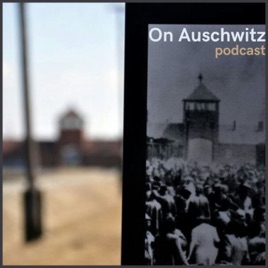
Advertise on podcast: On Auschwitz
Rating
4.9from
This podcast has
72 episodes
Language
EnglishPublisher
Auschwitz MemorialExplicit
No
Date created
2021/05/19
Latest episode
2026/01/17
Average duration
38 min.
Release period
26 days
Description
The official podcast of the Auschwitz Memorial. The history of Auschwitz is exceptionally complex. It combined two functions: a concentration camp and an extermination center. Nazi Germany persecuted various groups of people there, and the camp complex continually expanded and transformed itself. In the podcast "On Auschwitz," we discuss the details of the history of the camp as well as our contemporary memory of this important and special place. We kindly ask you to support our mission and share our podcast in social media. Online lessons: http://lesson.auschwitz.org
Unlock On Auschwitz podcast Email contact info,
Listeners & Audience details
Email contact information
Direct podcast contact details

Listeners
Audience numbers & engagement insights

Audience details
Podcast Insights

Social media
Check On Auschwitz social media presence


Podcast episodes
Check latest episodes from On Auschwitz podcast
"On Auschwitz" (68): Evacuation marches in the accounts of Survivors and other witnesses
2026/01/17
On 17 January 1945, the SS began evacuating the Auschwitz camp. Around 56,000 men and women, prisoners under the escort of armed SS men, marched out from various parts ofthe camp complex in the direction of Wodzisław Śląski and Gliwice. Several thousand people were killed during these so-called Death Marches.
In this episode of the “On Auschwitz” podcast, we quote fragments of eyewitness accounts relating to these events.
=====
Illustration:
Zbigniew Otfinowski, Marsz ewakuacyjny [Evacuation march] (1946). Auschwitz-Birkenau State Museum Collections
=====
Excerpts from accounts read by narrators (Therese McLaughlin & Mike Skagerlind) come from the Auschwitz-Birkenau State Museum Archives:
Teofil Balcarek, APMA-B, Zespół Oświadczenia [Statements],t. 115, k. 204-205.
Israel Berkowski, APMA-B, Zespół Oświadczenia [Statements], t. 35, k. 29.
Wanda Bienioszek, APMA-B, Zespół Oświadczenia [Statements], t. 116, s. 176.
Wanda Błachowska-Tarasiewicz, APMAB, Zespół Wspomnienia [Memories], t. 1, k. 19-20.
Józef Ciepły, APMA-B, Zespół Oświadczenia [Statements], t.86, k. 48, 127-128.
Jan Dziopek, APMA-B, Zespół Oświadczenia [Statements], t.10, k. 29.
Jan Dziopek, APMA-B, Zespół Wspomnienia [Memories], t. 50, k. 138-143
Róża Dryjańska, APMA-B, Zespół Wspomnienia [Memories], t.88, k. 211, 233.
Ilona Engelova, APMA-B, Zespół Oświadczenia [Statements], t. 80, k. 171.
Abraham Dawid Feffer, APMA-B, Zespół Oświadczenia [Statements], t. 16, k. 54.
Jan Gabryś, APMA-B, Zespół Oświadczenia [Statements], t.104, k. 138-140.
Janina Hinczowa, APMA-B, Zespół Wspomnienia [Memories], t. 62, k. 60.
Irena Konieczna, APMAB. Zespół Oświadczenia [Statements],t. 113, k. 130.
Wanda Koprowska, APMA-B, Zespół Wspomnienia [Memories], t. 13, k. 66-68.
Eulalia Kurdej, APMA-B, Zespół Oświadczenia [Statements], t.66, k. 142.
Erwin Olszówka, APMA-B, Zespół Oświadczenia [Statements], t. 72, k. 138.
Antonina Piątkowska, APMA-B, Zespół Wspomnienia [Memories], t. 85, k. 45
Franciszka Pieczka, APMA-B, Zespół Oświadczenia [Statements], t. 88b, k. 133.
Ilona Strusińska, APMA-B, Zespół Oświadczenia [Statements],t. 80, k. 170.
Marii Śleziona, APMAB. Inne Zespoły [Others] (IZ) – 27/3.
Maria Ślisz, APMA-B, Zespół Oświadczenia [Statements], t.61, k. 134.
Zofia Stępień-Bator, APMAB, Zespół Wspomnienia [Memories], t. 74, k. 167.
Maria Świderska, APMA-B, Zespół Wspomnienia [Memories], t. 21, k. 85, 88.
Józef Tabaczyński, APMAB, Zespół Oświadczenia [Statements], t. 44, k. 60-63.
Anna Tytoniak, APMA-B, Zespół Oświadczenia [Statements], t.12a, k. 198
Jan Wawrosz, APMA-B, Zespół Wspomnienia [Memories]t. 1, k. 59.
Franciszek Wieszała, APMA-B, Zespół Oświadczenia [Statements], t. 16, k. 81.
Helena Włodarska, APMA-B, Zespół Wspomnienia [Memories], t. 66, k. 78.
Jadwiga Zając, APMA-B, Zespół Oświadczenia [Statements], t. 139, k. 13-15.
Leszek Zienc, APMA-B, Zespół Wspomnienia [Memories], t. 2, k. 226.
Natan Żelechower, „Siedem obozów”, [in:] Zespół Wspomnienia [Memories], t. 83, k. 68-72, APMA-B.
Maria Żumańska, APMA-B, Zespół Oświadczenia [Statements], t. 4, k. 420.
"On Auschwitz" (67): The SS Hygiene Institute
2025/12/11
The Waffen-SS and Police Hygiene Institute at Auschwitz was established in the autumn of 1942. Its tasks included conducting hygienic and bacteriological tests for SS units, the German army, the police, and concentration camps, including the entire Auschwitz camp complex. Teresa Wontor-Cichy from the Auschwitz Museum Research Centre talks about the activities of the institute, which used camp prisoners both for labour and as research subjects.
=====
Voiceover: Sarah Edwards, Therese McLaughlin
"On Auschwitz" (66): Ideological Training of the SS Garrison of the Camp
2025/11/15
What did ideological training for SS personnel at the Auschwitz camp look like, and how did the ideology of national socialism influence the functioning of this SS formation? These questions are addressed in the podcast by Dr. Agnieszka Kita, Deputy Head of the Auschwitz Museum Archives.
====
Voiceovers: Therese McLaughlin and Kate Weinrieb
"On Auschwitz" (65): The trial of Rudolf Höss and other SS garrison members of Auschwitz
2025/10/13
Some 8,200 SS men and 200 women overseers served in the camp garrison of the German Nazi camp Auschwitz between 1940 and 1945.
How were the perpetrators from Auschwitz, including the first commandant, Rudolf Höss, and other garrison members, held accountable?
Dr. Wojciech Płosa, head of the Archives of the Memorial, explains.
=====
Voiceovers: Greg Littlefield, Mike Skagerlind
"On Auschwitz" (64): Block no. 11 in KL Auschwitz
2025/09/08
Block 11 at Auschwitz I was isolated from the rest of the camp. It served as a prison, an execution site, and the quarters of the penal company. Dr. Adam Cyra from the Auschwitz Museum Research Centre talks about the unique history of the so-called Block of Death.
=====
Voiceovers: Toon Dressen and Grey Stanford.
"On Auschwitz" (63): Punishments in KL Auschwitz
2025/08/04
At Auschwitz a system of punishments was in place for prisoners who broke camp regulations. In addition to official penalties, SS garrison members and functionary prisoners also imposed so-called unofficial punishments. Dr. Piotr Setkiewicz, head of the Research Center at the Auschwitz Museum, explains the types of punishments and the offenses for which men and women prisoners could be punished.
=====
Voiceover: Tom Vamos, Mike Skagerlind
"On Auschwitz" (62): Contemporary challenges of education at the Auschwitz Memorial
2025/07/02
The International Center for Education about Auschwitz and the Holocaust, established as a result of the efforts of Auschwitz Survivors, has been operating at the Memorial since 2005. The Museum director Dr. Piotr Cywiński and Education Center director Andrzej Kacorzyk discuss what education at the Memorial looks like today and what challenges it faces in the context of modern times.
=====
Voiceover: Greg Littlefield, Grey Stafford
"On Auschwitz" (61): History of education at the Auschwitz Memorial
2025/06/30
Education at the Auschwitz Memorial has been carried out since the Museum was established in 1947, and the first guides were Survivors who told visitors about the tragic history of the camp from their personal perspective. It was due to the efforts of the Survivors that the International Center for Education about Auschwitz and the Holocaust was established in 2005. Krystyna Oleksy, the first director of the Education Center, discusses its beginnings, the first educational projects, and significant challenges.
=====
Voiceover: Mary Castillo, Calum Melville
"On Auschwitz" (60): Paragraph 175 prisoners in Auschwitz
2025/06/26
Paragraph 175 of the German Penal Code criminalized homosexual contacts between men. One possible punishment was imprisonment in a concentration camp. Also at Auschwitz, there was a small group of men convicted of homosexuality. Dr. Agnieszka Kita, deputy head of the Auschwitz Museum Archives, talks about the persecution of homosexual men in Nazi Germany and the postwar memory of their fate.
English voiceover: Kate Weinrieb
---
Our online lesson about this group of prisoners of Auschwitz by Bogdan Piętka from the Research Center of the Auschwitz Museum.
“On Auschwitz”: First Transport of Poles to Auschwitz in the accounts of Survivors
2025/06/09
On June 14, 1940, the Germans deported a group of 728 Poles from a prison in Tarnow to Auschwitz. Among them were soldiers of the September campaign, members ofunderground independence organizations, high school and university students, as well as a small group of Polish Jews. They were registered with nos. from 31 to 758. The podcast "On Auschwitz" presents fragments of testimonies of:- Kazimierz Albin,
- Jan Baraś-Komski,
- Zbigniew Bentkowski,
- Włodzimierz Borkowski,
- Edward Ferenc,
- Adam Jurkiewicz,
- Stanisław Maliński,
- Eugeniusz Niedojadło,
- Wiktor Pasikowski,
- Tadeusz Pietrzykowski,
- Bronisław Wajda,
- Alfred Wilk
- Stanisław Zyguła.
=====
See also our online lesson about this topic:http://lekcja.auschwitz.org/en_17_deportacje/
=====
Voiceovers:Tom Vamos, Greg Littlefield, Grey Stanford, Mike Skagerlind, Michael Takiff, Toon Dressen
"On Auschwitz" (59): Block no. 10 in Auschwitz I and sterilization experiments
2025/05/12
Block 10 at the Auschwitz I camp was the so-called experimental block. SS doctors conducted medical experiments there, including those focused on sterilization. Why was this particular block chosen for such experiments, who were the doctors working there, and what happened to their victims? These questions are explored by Teresa Wontor-Cichy from the Research Center of the Museum.
Voiceover: Therese McLaughlin
=====
On-line lesson about medical crimes at Auschwitz: http://lekcja.auschwitz.org/2022_medycyna_en/
"On Auschwitz" (58): Day of a prisoner at Auschwitz
2025/04/15
The Auschwitz camp did not have a homogeneous character and was constantly changing during its operation. Dr Jacek Lachendro of the Auschwitz Museum Research Centre talks about what everyday life was like for Auschwitz prisoners, from the morning roll-call, through the hunger that accompanied them all the time, to working beyond their strength.
Voiceover: Ian Manger, Tom Vamos
If you find value in the "On Auschwitz" podcast, please consider subscribing on your favorite platform, leaving a rating to help others discover the podcast, and sharing it on social media.
Your support makes a difference.
"On Auschwitz" (57): Conservation at the Auschwitz Museum
2025/03/25
The Auschwitz Memorial covers nearly 200 hectares of land and includes about 300 ruins and 155 buildings, but also a huge number of historical objects, primary traces of Victims of Auschwitz: shoes, suitcases, brushes, or kitchen utensils.
Nel Jastrzębiowska and Andrzej Jastrzębiowski from the Conservation Laboratories of the Auschwitz Museum explain how these priceless items are preserved and talk about the philosophy of conservation of the Memorial today.
=====
We wish to thank Kate Weinrieb, Greg Littlefield, and Mike Skagerlind, who recorded the voiceover for this podcast.
If you find value in the "On Auschwitz" podcast, please consider subscribing on your favorite platform, leaving a rating to help others discover the podcast, and sharing it on social media.
Your support makes a difference.
"On Auschwitz" (56): Holocaust denial - strategies of lies and distortion
2025/02/12
Holocaust denial is nothing more than a conspiracy theory built on lies and hatred. Although it resembles flat-Earth claims in its approach to facts, it is, in reality, a dangerous and vile vehicle for antisemitism and hatred. Deniers ignore or manipulate facts solely to attack the memory of the Victims.
Dr. Piotr Setkiewicz and Dr. Igor Bartosik delve into the strategies employed by Holocaust deniers to spread misinformation and falsehoods about the history of Auschwitz.
---
We wish to thank Greg Littlefield, Mike Skagerlind, and Grey Stafford, who recorded the voiceover for this podcast.
"On Auschwitz" (55): The Evacuation and Liberation of Auschwitz in the Accounts of Witnesses
2025/01/26
Some 7,500 prisoners of the German Nazi camp Auschwitz, including over 500 children, were liberated on January 27, 1945 by Red Army soldiers.
Listen about the last days of the camp's operation and the moment of liberation. The podcast includes testimonies of:
Anna Tytoniak
Kazimierz Smoleń
Lea Shinar
Irena Konieczna
Józef Tabaczyński
Wanda Błachowska-Tarasiewicz
Louis Posner
Jakub Wolman
Zofia Jankowska-Palińska
Anna Chomicz
Zofia Lutomska-Kucharska
Wanda Dramińska
Edward Czempiel
Jakub Gordon
Andrzej Kozłowski
Tadeusz Mleko
Garnier (first name unknown)
Alfred Fiderkiewicz
Aleksander Vorontsov
Wilhelm Wazdrąg
=====
(English voiceovers: Mary Castillo, Toon Dreessen, Greg Littlefield, Ian Manger, Therese McLaughlin, Calum Melville, Mike Skagerlind, Grey Stafford, Michael Takiff, Tom Vamos, Kate Weinrieb, Sarah Weinstein Edwards).
Podcast reviews
Read On Auschwitz podcast reviews
millan224 2025/12/12
An incredible podcast
We need more history podcast such as this one to remind the world of the atrocities that have come before, so we are not doomed to repeat them in the ...
Bunniya 2025/10/18
My “favorite” podcast
So informative and topics are varied.
SueLevinArt.Com 2024/06/30
Compassionate, Comprehensive
This podcast is incredibly well done—factual and compassionate. As an English speaker, I enjoy hearing a bit of the Polish and then the English transl...
Speechteach6 2025/05/09
Work Day
This particular episode seems to be very inaccurate. For example: they had to hurry up and get dressed and make their beds. This makes it sound like t...
Ellasophia09 2024/04/22
Thank you
It is important to me to learn from the past so that we do not repeat it. My most sincere thoughts to those lost and those still surviving the atrocit...
Narrow mind 2022/07/12
Thanks
So important.
dfrank69 2023/05/20
Informative…. but please check your pronunciation
It’s “high-drick” NOT “hay-drick”.
m island 2022/02/26
Outstanding
Essential listening. Never Forget.
Podcast sponsorship advertising
Start advertising on On Auschwitz relevant audience podcasts
You may also like to advertise on these Podcasts

4.5250144
Inside Jeopardy!
Jeopardy!

4.98707994
The Weekly Planet
Planet Broadcasting

4.8622755
Women of Impact
Impact Theory
4.72476900
This Naked Mind Podcast
Annie Grace
4.8115972
Beyond Clean Podcast
Beyond Clean Podcast
5169360
Retrograde Amnesia: Comprehensive JRPG Retrospective
Retrograde Amnesia

3.82011001
Marcus In The Morning Second Date Update
Star 101.3

4.9445221
Dragon Friends
Dragon Friends Podcasting
4.8222108
The Critical Care Obstetrics Podcast
Clinical Concepts in Obstetrics

4.822079
This Tantric Life with Layla Martin
Layla Martin