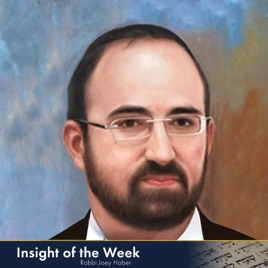
Advertise on podcast: Weekly Inspire
Rating
5from
This podcast has
24 episodes
Language
EnglishPublisher
Rabbi Joey HaberExplicit
No
Date created
2021/05/25
Latest episode
2026/10/06
Average duration
-
Release period
9 days
Description
Relevant weekly insights by Rabbi Joey Haber - delivered directly to your computer and/or mobile device
Unlock Weekly Inspire podcast Email contact info,
Listeners & Audience details
Email contact information
Direct podcast contact details

Listeners
Audience numbers & engagement insights

Audience details
Podcast Insights

Podcast episodes
Check latest episodes from Weekly Inspire podcast
We Just Have to Try
2026/10/06
We read toward the end of Parashat Bereshit that Hashem saw the evil of mankind and decided to destroy the world. Next week, in Parashat Noach, we read of the flood that Hashem brought upon the earth, sparing only Noach and his family. After the flood, Hashem made a promise that He would never flood the earth again. When we read these pesukim carefully, we notice something surprising. Here in Parashat Bereshit, the Torah says, וירא ה' כי רבה רעת האדם בארץ, וכל יצר מחשבות לבו רק רע כל היום – Hashem saw all the evil that the people were committing, and He saw the evil in their heart, their natural tendency to sin (6:5). The evil nature of people led Hashem to decide to destroy them. After the flood, however, we find just the opposite. Hashem announced that He would never again destroy the earth כי יצר לב האדם רע מנעריו – because of the people's yetzer ha'ra (evil inclination), because of their evil instincts. How could the yetzer ha'ra be both the reason to destroy mankind, and the reason not to destroy mankind? The answer is quite simple – and exceedingly important. In short: we just have to try. Before the flood, the people did not even try to restrain their sinful instincts. They followed their negative tendencies without any attempt to exercise discipline and act the right way. After the flood, however, Noach offered a sacrifice to Hashem – symbolizing the people's commitment to say "no" to their evil tendencies, to sacrifice the things they desire for the sake of fulfilling Hashem's will. When we do this, Hashem looks kindly upon us. Even when we're imperfect, and even when we're far from perfect, He treats us with compassion, because He understands our struggles and our challenges, and He sees that we're trying. What matters most is that we're trying, that we're making a sincere effort to restrain our negative instincts and do the right thing. This is so important for every one of us to realize. If a person is struggling, if he has some good days and some bad days, if he has a bad habit that he can't seem to kick, if he tries to do the right thing but doesn't always succeed – then this means he is human. It means he is living the way he is supposed to live. We are not meant to be perfect. We are meant to strive to be better. We are meant to work hard and to make a real effort to improve. If we're trying, then we are on the road to greatness. And we are the kind of people that Hashem wants in His world.
Yom Kippur- If It Doesn’t Challenge You
2026/09/14
One of the dramatic moments of Yom Kippur in the times of the Bet Ha'mikdash was when the kohen gadol would draw lots to determine the fate of two goats. One goat was designated as the שעיר לה' – a sacrifice to G-d, and its blood was sprinkled in the holiest place in the world, in the inner chamber of the Bet Ha'mikdash . The other goat – the שעיר לעזאזל – was taken out into the desert, symbolically carrying all the sins of the Jewish Nation, and then thrown from a cliff. The two goats brought for this "lottery" needed to resemble one another. They were to be a similar size, appearance, and price. These two outwardly similar goats ended up with two opposite fates – one was brought to the holiest place on earth, and the other was thrown off a cliff in the desert. The commentaries explain that two people could appear to be generally the same, but are really traveling on two different paths. They seem to dress more or less the same way and lead more or less the same lifestyle, but in truth they're very different. One is genuinely dedicated to Hashem, and the other is dedicated to עזאזל , to vanity, to things with no value. On Yom Kippur, we are called upon to take a long, hard look at ourselves and determine which path we're really on. Are we fully committed to Torah? Do we really devote our lives to Hashem? Or is our allegiance directed toward other things? The Midrash draws an analogy to a person who needs to reach a certain destination, and sees in front of him two routes that he could take to get there. One route begins with thick thorn bushes that are very difficult to traverse, but soon after this rough patch, there is a clear, beautifully paved road for the rest of the trip. The other route is just the opposite – it begins as a clear path, but is then filled with thorn bushes the rest of the way. So many people who suffer from addiction chose the second road. They saw opportunities for fun and enjoyment, and they indeed had fun and enjoyed, but this resulted in decades of anguish. The path of the Torah is like the first path. When someone tries to begin observing Shabbat, it is exceedingly difficult. But once he gets used to it, it's the most beautiful thing in the world, and he looks forward to it throughout the week. Learning Gemara is at first very difficult, and even frustrating. But once a student spends enough time learning and gets the hang of it, it is exhilarating. On Yom Kippur, our obligation is to make the decision of which road we are going to take – the road to ה' , or the road to עזאזל . And we need to know that the road to Hashem at times looks scary, it looks hard. The other path seems much easier. But on Yom Kippur, we make the firm, resolute decision to take the path of Torah, knowing that even when there are bumps along the way, it leads to a beautiful, fulfilling life. I was once walking on Kings Highway during the Aseret Yemeh Teshuvah (Ten Days of Repentance, from Rosh Hashanah through Yom Kippur), and I passed by a facility which looked like a fitness center. Outside there was a sign that read: If it doesn't challenge you, it doesn't change you . This was how they hoped to encourage people to sign up for their exercise program. I thought to myself, this is the perfect message for the period of Aseret Yemeh Teshuvah ! If we are going to grow, we need to challenge ourselves. We cannot go through this period without hard work, without having the difficult conversations with ourselves, without struggle. If we want to experience the unparalleled beauty and joy of Torah life, then we need to go through the "thorns," we need to challenge ourselves. Let us make this commitment to undertake the challenge of growth, to make the difficult decisions that need to be made, and may Hashem then lead us along the road to a beautiful and happy Torah life, amen .
The Hidden & the Revealed
2026/08/31
הנסתרות לה' אלוקינו, והנגלות לנו ולבנינו עד עולם – "The hidden matters are for Hashem our G-d; but the revealed matters are for us and our children, forever…" (29:28) The Hovot Ha'levavot (in the Sha'ar He'behinah section) presents an analogy which captures the idea that this pasuk in Parashat Nitzavim is telling us. He describes a blind man being brought into a fully-furnished and fully-stocked home. It has beds, chairs, tables and couches, and all the food and beverages that he would need. But it also has something truly extraordinary – a doctor with a special medication that would cure the man of his blindness. The man enters the home, and starts walking around – banging into furniture, falling and hurting himself. The doctor approaches him and tells him that he can cure his blindness so he can see again. But the blind man, stubbornly and inexplicably, refuses. He doesn't want the treatment. He continues walking around and getting hurt. He bitterly complains and asks why he was brought into this home where nothing is in the right place, and where he can't do anything without hurting himself. The Hovot Ha'levavot explains that many people here in our world are just like this blind man. They find the world difficult, inhospitable and painful. Things aren't where they should be. They expect something to happen a certain way, but it happens a different way. Just like the blind man doesn't expect the stairs to be where they were, people don't expect situations to unfold the way they do, and so they "fall" and get hurt, like the blind man. They have in their mind a plan of how things should be – just like the blind man is used to his old home, and expects everything to be the same in his new home – and so they repeatedly "bump" into things and feel embittered. All this happens because they are "blind," and they refuse to take the "cure" for their blindness, which is emunah . Emunah opens our eyes to realize that we are in a "house" furnished and designed by Hashem, who invites us to use everything there. The "chair" might not be where we expect it to be, or where we want it to be, but when we see it through the lenses of emunah , we are able to "sit," to use it, to benefit from it. Once we "treat" our "blindness" through emunah , we'll stop getting hurt, because we'll stop expecting things to be precisely the way we think they should be. הנסתרות לה' אלוקינו – the reasons why our world is arranged the way it is belong only to Hashem. These remain hidden for now. We believe that one day we will understand, but in the meantime, we do not have access to this information. It is not our job to explain why things are the way they are. Our job is the נגלות – to open our eyes, to cure our blindness, to accept the world and our lives as they are, and then make the most of it, by enjoying and appreciating our blessings, and by using our challenges and hardships as catalysts for growth. Unfortunately, so many people are disillusioned with Judaism because they have unreasonable expectations. They hear exciting stories of hashgahah peratit (divine providence), of how Hashem helped people, and assume that everything is always supposed to work out. They fail to recognize the נסתרות , that there are things they aren't supposed to understand. The stories of hashgahah peratit are of course real, and they show us that Hashem is here with us, but they do not mean that things will always work out perfectly the way we want. We live in a world of both נסתרות and נגלות – of things that we aren't supposed to understand, but that we are supposed to know how to respond to. We must not get bogged down by the נסתרות – why past events happened, and what the future will bring. Instead, we need to focus on the נגלות – on what Hashem expects of us right now, in the present, in whatever circumstances we currently face.
Being Present
2026/08/24
Parashat Ki-Tavo begins with the mitzvah of bikkurim , which requires farmers to bring the first ripened fruits to the Bet Ha'mikdash , and present them to a kohen . In one sense, bikkurim resembles other agricultural mitzvot which obligate a person to give the first portion of his produce to Hashem. On the other hand, the mitzvah of bikkurim has something unique, an element that we don't find with other mitzvot , and that is a requirement to make a special declaration when arriving in the Bet Ha'mikdash . This declaration, known as מקרא ביכורים , recounts the origins of our nation, recalling how our ancestors were enslaved in Egypt, cried out to Hashem, and then were miraculously freed, eventually coming into the Land of Israel. The farmer concludes by announcing that he has brought his first fruits to Hashem. These pesukim are familiar to us from the text of the Haggadah at the seder , where we use these pesukim as the springboard to discuss the story of our ancestors' enslavement and the miracles of Yetziat Mitzrayim . Why does the farmer give this whole speech? Why is it not enough for him to bring his first fruits and present them to the kohen in the Bet Ha'mikdash ? I occasionally have the experience of looking at a painting and wondering how much it cost. Due to my limited knowledge of art, I often cannot tell if a painting is a simple work, worth maybe $200, or is a rare collectors' item, worth perhaps tens of thousands of dollars. Often, we look at something which seems to us pretty ordinary, when it's actually a priceless object. This is true of life's experiences, as well. Life gets so busy, so pressured and so chaotic, that we so often don't appreciate the value of the moment. The brief conversation with a child who comes home from school. The dinner table. The family get together. The ride in the car with a spouse or child. These are precious moments, but because we're always feeling pressured and we're always rushing, we don't appreciate them. We rush through them instead of being fully present. Later in the parashah , we read a section where Moshe Rabbenu warns of the calamities that would befall the Jewish People if they abandon the Torah. One of these warnings is והיו חייך תלויים לך מנגד – "Your lives will be hanging in front of you" (28:66). This pasuk is generally interpreted to mean that the people would face such grave danger, that their lives would be "hanging," always at risk. However, somebody shared with me a different reading – that the people would be so pressured, so anxious, that their lives would be "hanging" in front of them instead of being actually lived and experienced. It would always seem that our lives are "hanging," that we're constantly under pressure, desperately trying to do what we need to do, to the point where we're not living. With this in mind, we can perhaps understand the law of מקרא ביכורים . The Torah didn't want the farmer to simply bring his first fruits to the Bet Ha'mikdash . It wanted the farmer to be fully present, and fully aware of the precious value of this moment, of what it means that he grew fruits in Eretz Yisrael . He was required to reflect on what this moment meant – that Hashem performed miracles for his ancestors, and brought them out of slavery so they could live in a special land and produce their own fruit. This seemingly simple event should be appreciated. This is not a $200 painting; this is a priceless moment. Institutions of Torah learning as known by the word yeshivah , which literally means "sitting." Rather than referring to them by the act of studying, we use the word yeshivah , because it connotes ישוב הדעת – focus and concentration. A yeshivah is not merely a place of learning. It is a place of focused attention on learning, a place free of distractions, a place where a student is fully present, concentrating solely on his growth as in Torah. Let us resolve to strive to always be present and focused in everything we do. Instead of right away thinking of the next thing on our schedule or our "to-do" list, let's instead be present in the moment. Whomever we're talking to, let's be present and focused on that person. Whichever mitzvah we're involved in at any given moment, let's be present and focused on that mitzvah . Whatever task we need to take care of, let's be present and focused to get it done the right way. Let's recognize and appreciate the precious value of every small moment. If we live with this mindfulness, being presented and focused, then we will feel so much more accomplished, knowing that each moment of our lives is a priceless "piece of art."
Taking Responsibility
2026/08/17
One of the mitzvot which the Torah presents in Parashat Ki-Tetzeh is שילוח הקן – sending away the mother bird. When a person wishes to take an egg or young bird from a best, he must first send away the mother bird before taking her young (22:6-7). The Mishnah (Megillah 25a) instructs that it is inappropriate to say to G-d while praying, על קן צפור יגיע רחמיך – "Your compassion reaches even the bird's nest." The Gemara gives the example of a certain hazzan who was leading the service in the presence of Rabbah, one of the great Rabbis of the Talmud, and this hazzan said to Hashem: אתה חסת על קן צפור אתה חוס ורחם עלינו – "You had compassion on the bird's nest; You shall similarly have compassion and mercy upon us." This hazzan , the Gemara related, spoke improperly, as one should not invoke the bird's nest in his prayer. The Hatam Sofer offers a unique explanation of the Gemara. The bird, he writes, symbolizes the human body, our physical beings. Thus, for example, we read in the Book of Vayikra that after a person was stricken with tzara'at , he was required to undergo a process of purification that included two birds, representing his body's restoration. When the hazzan prayed that G-d should have compassion on us like He has compassion for the bird, he was saying: "Just as You, Hashem, care for our bodies, for our physical wellbeing, making the heart, liver, kidneys, brain, lungs and the rest of our bodies work at every moment, please also help my soul." He was praying for G-d to take care of us spiritually, just as He takes care of us physically. And this is a mistake. When it comes to our physical wellbeing, we are to trust Hashem. We must make a reasonable effort, but with the understanding that the outcome depends entirely on Hashem and not on our hard work or ingenuity. The Shulhan Aruch mentions the custom to read every day the section of the Torah that tells of the manna, and the Mishnah Berurah explains, כדי שיאמין שכל מזונותיו באין בהשגחה פרטית – so that we believe that our livelihood comes through Hashem's providence. The Torah says that if a person in the desert collected more manna than he was supposed to, or less manna than he was supposed to, he would still end up with the amount he was meant to have. We are encouraged to read about this each day to remind ourselves that although we are expected to make an effort to earn a living, the results are determined solely by Hashem, and not by our efforts. When it comes to our spirituality, however, we need to take responsibility. We cannot just sit back and ask Hashem to take care of it for us. We need to be proactive. The greatest Rosheh Yeshiva in the world spend a great deal of time fundraising for their institutions. Of course, they pray to Hashem for help – but they see this as their responsibility. When the Greeks defiled the Bet Ha'mikdash and forbade the Jews from learning and observing the Torah, the Hashmonaim did not just arrange for large prayer gatherings and call for Tehillim groups. They mobilized an army and took up arms to defend the Torah – in addition, of course, to praying to Hashem to make their efforts successful. Elul is the time especially designated for this purpose – to take responsibility for our spirituality. This is the time to stop waiting for inspiration, for someone or something to get us more involved and more committed. More than any other time of year, Elul is when we must take matters into our own hands, when we need to take the initiative and motivate ourselves, push ourselves, and decide that we are going to try harder and grow.
Building Confidence
2026/08/13
The Torah in Parashat Shoftim discusses the situation of a person who had built a new house but was recruited to the army before he had a chance to live in it. Such a person would be sent home before battle. The Torah refers to this individual as האיש אשר בנה בית ולא חנכו – a person who built a house but has not done חינוך (20:5). Rashi explains: חינוך לשון התחלה – the root ח.נ.ך. means "begin." In this pasuk , לא חנכו means that the person built a new house but hasn't yet begun using it. The word חינוך , of course, is used also in reference to education. And Rashi's brief comment here sheds light on what חינוך is and how parents need to approach it. חינוך means "beginning." That is all. It means we prepare our children for the future, we get them off to a good start by teaching them how to live. It does not mean we control their lives, that we decide their lives, that we don't let them make their decisions. Controlling children is not חינוך . Education requires knowing when to let go, when to let children make their own decisions, to empower them by showing them that we trust them and have confidence in them. The founder of our nation, Avraham Avinu, is called in the Torah אברהם העברי . He is not called "Avraham the Tzadik ," or "Avraham the Holy One." He is called the עברי , which means that he came from the other side of the river. He moved to the Land of Israel, but he was from the other side of the Euphrates River, so he was called העברי . Why is this Avraham's name? Why does it matter that he came from the other side of the river? The answer is that this name expresses Avraham Avinu's most important quality – and the most important quality that we need to develop within our children. As the Midrash explains: כל העולם מעבר אחד, והוא מעבר אחד – the entire world was on one side, and he was on the other side. Avraham Avinu had confidence. He had the confidence to be different, to swim against the current, to stand alone. When the whole world was worshipping idols, he taught the belief in Hashem. When the whole world was selfish and corrupt, he taught and exemplified kindness and generosity. He followed his beliefs and convictions even when the entire world followed different beliefs and convictions. This is what our children need, especially in today's world. They need confidence. They need to believe in themselves. And one of the ways we give them this confidence and this belief in themselves is by getting involved, but not getting too involved; by setting limits, but knowing when to allow them to decide. If we pull away completely, then we are not giving our children confidence. We are conveying the message that they aren't important enough, that they don't matter enough, for us to care. But if we smother them, if we exert too much control, then we make them feel feeble and incapable. This is the difficult balancing act that parenting requires us to do. Somebody told me a remarkable story about Rav Yaakov Ruderman, the revered Rosh Yeshiva of Ner Yisrael in Baltimore, who was recognized as one of the leading Torah sages in the United States. When his wife passed away, he moved in with one of his children, and he shared a bedroom with a grandson. He walked into the room and saw posters of famous sports stars on the walls. He asked his grandson who these people were, and his grandson – embarrassed – told him. "You like them?" the great Rosh Yeshiva asked. "Yes I do," the boy replied. "Well if you like them," Rav Ruderman said, "then I LOVE them!" This is a beautiful example of חינוך , of preparing a child for adult life through empowerment, by showing them that they are valued, that their interests are important to us. When we take interest in their lives while respecting their space and allowing them to make decisions, they feel our respect and our trust, and this gives them the confidence to stand מעבר אחד , alone on one side, to resist negative influences and live according to their beliefs and values.
Giving – The Essence of Life
2026/08/06
Parashat Re'eh presents the precious mitzvah of tzedakah , the obligation to lend financial assistance to those in need: לא תאמץ את לבבך ולא תקפוץ את ידך מאחיך האביון. כי פתח תפתח את ידך לו... Do not harden your heart and do not shut your hand from your brother, the pauper. Rather, you shall open your hand to him… A famous pasuk in Mishleh (10:2) teaches וצדקה תציל ממות – "and charity saves from death." On one level, this means that charity saves the recipient from death. Poverty can be a form of "death." A person living in a constant state of financial stress does not truly live. By relieving a person's financial strain, one effectively restores his life. And, in reward, Hashem saves the donor from fatal decrees that had been issued against him. But additionally, charity saves from death in the sense that it defines the essence of life. We earn the privilege of continuing to live if we fulfill the purpose for which we were put here in the first place – to open our hands, to give, to contribute. In the Book of Shemuel I we read the story of Naval, a wealthy man to whom David sent his men to ask for food and provisions while they were are in the run. Naval rudely and apathetically rejected their request and turned them away. Soon thereafter, G-d killed him. This was a man who lived with his fists tightly clenched, keeping everything he was given for himself, and refusing to share it with anybody. Therefore, he did not deserve to live another day. If a person is not giving, then he cannot continue living – because giving is the essence of life. Appropriately, this man was named נבל , which means "repugnant" or "disgraceful." Living with clenched fists is disgraceful. It is a betrayal of the very purpose of life. It hurts to see people who have so much but refuse to share what they have with others. We are created precisely for the purpose of פתוח תפתח את ידך , opening our hands and giving to other people. We are here not to make the world perfect – something only G-d can do – but rather to live with open hands, to help anyone we are capable of helping in any way we can. The Gemara (Berachot 4b) teaches that one who recites three times each day the chapter of Tehillim known to us as Ashreh (145) is guaranteed a share in the next world. The reason this chapter is so special, the Gemara explains, is because of one particular pasuk in this chapter: פותח את ידיך ומשביע לכל חי רצון – "You open Your hands and satiate every living creature who wants." When we pray, we acknowledge the fact that Hashem is פותח את ידיך ומשביע , that He provides our needs. And if we want Him to "open His hands" to give to us, then we must open our hands to give to others. A pasuk elsewhere in Tehillim (121:5) describes Hashem as our "shadow": ה' שומריך ה' צלך על יד ימינך – "Hashem is your protector; Hashem is your shadow on your right side." This has been explained to mean that G-d acts towards us in accordance with the way we act. When we walk in the sun and produce a shadow, the shadow does what we do. If we lift our right arm, the shadow's right arm is raised. If we move our left leg, the shadow's left leg moves. Hashem is our "shadow" in the sense that He mimics our conduct. The more generous and giving we are to other people, the more generous and giving He is to us. And the more passion, energy and zeal we invest in giving, the more He steps in to assist us in our efforts.
Tough as Iron
2026/07/30
A man once approached me for advice regarding the following sticky situation that he found himself in. He was exceptionally wealthy, and he had three brothers who were not. For a long time, he was giving his three brothers collectively $1 million every year to help them out. He was able to afford it, except that as his kids were getting older, he wanted to buy them homes and start businesses for them, and did not have enough. He asked me what he should do, as he did not want to create problems with his brothers. This question touches upon a very important issue – the limits of the quality of ותרנות , more commonly called "being mevater " – giving in, foregoing, sacrificing to accommodate others in the interest of avoiding conflict and of being generous. There are many sources in the Gemara that talk about the great importance and great power of this quality. For example, the Gemara in Masechet Rosh Hashanah (17a) tells that Rav Huna Bereh De'Rabbi Yehoshua took very ill and was about to die, but he was allowed to continue living in the merit of this quality, of not being uncompromisingly insistent. Elsewhere (Ta'anit 20b), we learn that Rav Ada bar Ahava earned long life because, in his words, מימי לא הקפדתי בתוך ביתי – he never got angry at his family members, and always let things go. Countless stories are told of people who sought advice from great Torah sages regarding problems and challenges they faced, and the recommendation was to work on this particular character trait, to "be mevater ," to give in, to let go of hard feelings, to keep quiet, to not respond, to sacrifice for the sake of maintaining a peaceful relationship. But are there limits to this quality? Or is a person expected to turn himself into a doormat and let people take advantage of him, for the sake of peace? The Gemara answers this question very clearly toward the beginning of Masechet Ta'anit (4a). The Gemara cites a pasuk in Parashat Ekev (8:9) where Moshe Rabbenu describes the Land of Israel as ארץ אשר אבניה ברזל – "a land whose stones are iron." Clearly, stones are not iron. The Gemara therefore rereads this pasuk to mean, ארץ אשר בוניה ברזל – "a land whose builders are iron." The term "builders," the Gemara explains, refers to Torah scholars, who form the spiritual foundation of the Jewish People. The Gemara says that this pasuk is teaching that a Torah scholar must be קשה כברזל – "hard as iron." In order to accomplish, in order to lead, in order to firmly adhere to one's values and principles, one needs to be tough as nails. Of course, when it is appropriate to "be mevater ," one should certainly do so. If a friend or family member makes a comment we don't like, we should remain silent. If there's some disagreement over a relatively trivial matter, we should give in. If some issue arises that potentially puts the entire relationship at stake, then very often, the right thing to do is give in. But this does mean that a person should let himself be abused and taken advantage of. There are times when a person needs the strength and courage to stand up for himself, to not let things continue the way they are if they cause him harm or pain. If a friend continually speaks insultingly, then the right thing to do is end the friendship. If generously giving money to one's siblings prevents him from helping his children, he needs to have the strength to change the arrangement. If a devoted teacher spends so much time talking to and helping his students that he doesn't have time for his own children, then he needs to set limits. Immediately after teaching that a Torah scholar must be קשה כברזל , the Gemara then adds: אפילו הכי מיבעי ליה לאיניש למילף נפשיה בניחותא – "Nevertheless, a person needs to accustom himself to [speak] softly." At times a person needs to be tough and set limits – but this should be done gently, respectfully, without anger and resentment. There is no contradiction between קשה כברזל and ניחותא , between the strength and courage to change the situation, and remaining calm and avoiding hostility in the process of making that change. This was my advice to the man who was giving his brothers money every year. I recommended that he gently explain to them that he is happy to help them, and they should never hesitate to ask if something comes up and they need some extra money, but that he simply cannot continue the current arrangement. We must live with the feeling that every day is important, rife with possibilities, and full of opportunities to achieve. Therefore, we need to live each day with decisiveness, with leadership, with courage, with strength. We need to fight – not against people, but against situations that stifle us, that hold us back from maximizing our potential and living our best lives. And this fight often takes strength, and requires us to be קשה כברזל – not nasty, not rude, not angry, not bitter, but tough as iron. We are to be both tough and soft – tough enough to overcome the obstacles that stand in our way and to make the difficult changes that need to be made, but soft enough to do it gently and respectfully, without inviting animosity.
Humility & Marriage
2026/07/23
In one of the more famous pesukim in the Torah, Moshe Rabbenu tells the people in Parashat Va'et'hanan (4:4), ואתם הדבקים בה' אלוקיכם חיים כולכם היום – "And you, who are attached to Hashem your G-d, are all alive today." One of the commentaries offers us insight into the pasuk by noting that the gematria (numerical value) of the word חיים ("alive") is 68, which is twice the gematria of the word דל , which means "impoverished" or "lowly." Only a person who is exceptionally דל – humble, with "double" humility – can achieve the level of דבקים בה' אלוקיכם , of being "attached" to Hashem. When a person lives with extreme humility, recognizing his frailty, his weaknesses, his faults, his unworthiness, and his dependence on Hashem for everything, then he is constantly connected to Hashem. He is at all times acknowledging all that Hashem has done for him, thanking Hashem for everything he has, and praying to Hashem for everything that he needs. And when a person reaches this level, then he is truly חיים – "alive." Many people intuitively think that they are more "alive" and successful when they are self-assured and aggressive in pursuing what they want. The Torah is teaching us that to the contrary, a key to a happy, fulfilling life is "double" humility, submitting to Hashem's will and placing Hashem at the center of everything. If a person lives for himself, only for his own gratification and enjoyment, rather than for the higher purpose of serving Hashem, then his life is empty and lacks meaning. There is another pasuk in the Torah where we find the root דבק – "attached," and that is in the Torah's description of marriage: על כן יעזוב איש את אביו ואת אמו ו דבק באשתו – "Therefore, a man leaves his father and mother and attaches to his wife" (Bereshit 2:24). In marriage – like in one's relationship with Hashem – "attachment" requires humility and selfless devotion. ודבק באשתו means creation a deep, genuine emotional bond, and this cannot happen without selflessness. It requires listening, accepting, acknowledging, validating, understanding, and being flexible. All of these qualities demand humility, putting one's own ego and one's own interests to the side in order to make room for somebody else's needs. This week marks Tu B'Av, the day which the Mishnah (Ta'anit 26b) says was one of the two most joyous days of the year. It was a day when the unmarried girls would go out into the vineyards, and the young men would come and shidduchim were made. The Mishnah tells that the girls would all wear borrowed dresses, so that those from poor families would not feel embarrassed. One of the commentaries pointed out that this arrangement ensured that the girls would not feel overly proud. When people borrow clothing, they feel somewhat less comfortable and proud of themselves. When people are preparing for marriage, one of the most important qualities is humility. If a person is too consumed with himself, if a person is too self-absorbed, then he cannot take someone else's feelings, needs, wishes and preferences into account, and the marriage is not likely to be a happy one. Marriage is about דביקות , attachment, and this requires selflessness. When a husband and wife succeed in building that attachment, then they can be said to be truly חיים – "alive," with joy and vitality, connected in a way that brings unparalleled fulfillment and happiness.
Curing the Loneliness
2026/07/16
Many people, understandably, are confused about what the period of Ben Ha'metzarim – the Three Weeks from Shivah Asar Ba'Tammuz through Tisha B'Av – is all about. We observe certain mourning practices, and abstain from a number of activities, culminating with Tisha B'Av, when we fast, sit on the floor, and mourn. What is the purpose of this mourning if we then just resume our normal routines? What's the value of "losing" three weeks of fun during the summer? Why is this necessary? The answer is likely found in the opening verses of Megilat Echah , the collection of lamentations written by the prophet Yirmiyahu after the destruction of the Bet Ha'mikdash , which we read on Tisha B'Av. This Megillah begins: איכה ישבה בדד, העיר רבתי עם היתה כאלמנה.. בכו תבכה בלילה ודמעתה על לחיה אין לה מנחם מכל אוהביה... דרכי ציון אבלות מבלי באי מועד כל שעריה שוממין... How does she [Jerusalem] dwell alone, the city with so many people? She has become like a widow… She cries intensely at night, and her tear is on her cheek; she has no one from all her loved ones to console her… The roads of Zions are in mourning, without anyone coming for the holidays; all its gates are desolate… These opening pesukim clearly emphasize one theme: loneliness. The city that was once teeming with people is now alone, desolate, empty. It is like a widow, who lies alone, without anyone to wipe her tears, to bring her comfort. When people are hurting, the pain is made so much more intense by the feeling of loneliness, by having no one who understands, who commiserates, who provides emotional support. Our job when a friend or family friend is hurting is to make sure that person doesn't feel alone. If there is practical assistance that we can provide, then of course we should try to provide it. But if not, this doesn't mean we can't help. We can – and must – help by showing up, by being there, by calling, by reminding the person that he or she is not alone. This does not mean we are to be sad around the clock when somebody close with us is hurting. We can still enjoy and live a happy life. But we have to make sure that this person does not feel alone. Our Sages teach us that as long as the Bet Ha'mikdash remains unbuilt, Hashem Himself is in exile. He does not have His home, so-to-speak. It is as though Hashem is in pain. And this is what the Three Weeks, the Nine Days, and Tisha B'Av are all about – making sure Hashem is not "alone." During these weeks, we need to show Him that we care, that we have not forgotten about Him, that we understand that things aren't the way they're supposed to be, that He's "suffering." Different occasions on the Jewish calendar require us to connect to Hashem in different ways. The period we are in now requires us to connect to Hashem by feeling His pain, by sharing in His sadness, by showing that we are not indifferent to the "exile" of the Shechinah . One of the commentaries suggested an analogy to a businessman who did everything he could to help his sons and secure their financial future. He bought them homes and gave them money so they could jumpstart their own businesses, borrowing money against his own enterprise. The business couldn't keep up, and he ended up going bankrupt and struggling to repay his debts. One day, his friend saw him sitting and crying. The friend sat down next to him to offer some comfort. "It's not just that I lost all my money," the man said through the tears. "It's that my sons no longer talk to me. I did all this for them, I sacrificed all this for them, and they're not even in touch. That pain is just too much to bear." The pasuk describes Yerushalayim's weeping with the words בכו תבכה , as though there are two different types of crying. Hashem "cries" because He is in exile, but also because His children don't care. Hashem has done so much for us, and we benefit from His blessings each and every day, just like the sons of the man in the story. The period of the Three Weeks is the time to show Him that we care, that we feel His pain, and that we are ready to do what we can to heal it. May we all rise to the occasion and be worthy of the rebuilding of the Bet Ha'mikdash and the return of the Shechinah , אמן .
When Your Head Exaggerates
2026/07/09
A couple once came to me for advice, explaining that they have several children who are older and still not married. "We're embarrassed to go anywhere," they said. "We know that everyone's looking at us, everyone's feeling sorry for us and talking about what's wrong with us and our children." My response to them was clear and simple. I said: "Get it out of your head. No one's looking at you or talking about you. You're making yourselves upset and anxious for no reason. Go out and enjoy. Stop worrying about what other people are thinking or saying. They have their own problems to worry about. They're not talking about you." I explained that any normal adult who's been through life knows that some folks have a harder time than others – in shidduchim and in everything else. Any normal believing Jew knows that Hashem decides who should get married when, and we do not know and are not supposed to know how He decides these things. So many of the things we worry about, that hold us back and that weigh us down, are simply nonsense. Ideas that our imagination came up with but have no basis in reality. Parashat Maseh begins by listing the 42 places where Beneh Yisrael encamped over the course of their journey from Egypt until their final encampment before crossing into the Land of Israel, a list compiled and recorded by Moshe Rabbenu himself. For the most part, these verses just tell us that Beneh Yisrael journeyed from location X and encamped in location Y. The Torah does not tell us the events they experienced at these locations – not Matan Torah , not the war with Amalek, not the spies. There are, however, a few very unusual exceptions. We are told that in a place called Elim, the people found wellsprings and palm trees. We are told that in Refidim, the people didn't have water. We are told that Aharon Ha'kohen died in Hor Ha'har, at which point the Canaanites were able to attack, because the protective "clouds of glory" which shielded them in Aharon's merit were lost. Why did Moshe choose to mention this small handful of events, while omitting the more major events, such as Matan Torah , the sin of the golden calf, and the sin of the spies? Moshe was showing the people that there were times throughout their travels when they were scared, when they felt vulnerable and insecure, but everything turned out ok. They went into a desert, wondering where they would find water and food – and then they saw that Hashem prepared for them springs and date trees. They later came to a place with no water -and Hashem showed Moshe a rock which he struck, and which then miraculously produced water for the next forty years. When they lost their protective clouds, the Canaanite army attacked, but Hashem helped them and they defeated their enemies. Indeed, Rashi cites the Midrash as comparing Moshe to a father whose son was very ill, and needed treatment far away. On their way back home, the father recalled what happened at every stop along the way – the place where the boy had a fever, where he suffered from extreme pain, and so on. Moshe was showing Beneh Yisrael – and us – that they faced many different challenges over the course of these forty years, but it turned out ok. The situation was not always pleasant, but it always worked out in the end. This is an exercise that we all could – and should – do from time to time: to think about the times when we were very scared, when we were very anxious, when we were very upset, when we were very down, when we were very dejected, and then realize how the situation was somehow resolved. Even if it wasn't resolved exactly the way we would have ideally wanted, we managed. We were ok. When we feel anxious, more often than not, it's because our head exaggerates, turning the problem into something far bigger than it really is, and it imagines things that don't exist. We need to remember that Hashem has always helped us in the past, and He will help us now with whatever it is we're struggling with. Even if things don't turn out the way we want them to, they will turn out ok – because Hashem is in charge.
Strength, Courage, and Pride
2026/07/02
Parashat Pinhas continues the story that we began reading at the end of the previous parashah , Parashat Balak. After Bilam was unsuccessful in his attempt to place a curse upon Beneh Yisrael , he suggested to the king of Moav a different tactic for destroying them – to send the women of Moav and Midyan to lure Beneh Yisrael to immorality and idol-worship. Tragically, the plan worked. Hashem delivered a plague that killed 24,000 men among Beneh Yisrael who sinned with the women of Moav and Midyan. The plague stopped only when Pinhas – the grandson of Aharon Ha'kohen – stood up and killed two public violators, a man from Beneh Yisrael and a woman from Midyan. At the beginning of our parashah , the Torah names these two people whom Pinhas killed – Zimri, a leader of the tribe of the Shimon; and Kozbi, the daughter of a leader of Midyan. When naming the man who was killed, the Torah says: ושם איש ישראל המוכה אשר הוכה את המדינית – "And the name of the slain man from Yisrael , who was slain together with the Midyanite..." (25:14). The Keli Yakar points out that the Torah here twice mentions that Zimri was killed: איש ישראל המוכה אשר הוכה . This seems unnecessarily repetitive, as though Zimri was killed twice. The explanation might be that Zimri was already "dead" even before Pinhas killed him – because, despite his position of leadership, he went along with the crowd, he followed the tide. Rather than muster the strength to oppose the scandalous behavior – like Pinhas did – Zimri decided to go along with it, to participate, to be "one of the guys." When a person lacks the courage to stand up for his values and principles, if he is just swept away by the current, he surrenders his individuality. He loses his "life" – his uniqueness, his purpose and his mission. How did Pinhas muster this strength and courage? Where did he find the inner resolve and conviction to go against the tide? The answer is found in the way the Torah introduces Pinhas: פינחס בן אלעזר בן אהרון הכהן – "Pinhas, the son of Elazar, the son of Aharon Ha'kohen." Rashi, at the beginning of our parsha , writes that the Torah here is emphasizing Pinhas' distinguished lineage. The people were questioning Pinhas' right to do such an act, since his maternal grandfather was an idol-worshipper. Hashem therefore emphasized that Pinhas was also the grandson of Aharon, the great tzadik . Pinhas felt pride in his family background, in his belonging to a family of righteous people. The rest of the nation was acting one way – but he was too proud in who he was, in what his family stood for, to participate. This pride is what gave him the strength and the courage to resist the tide. Parents need to ensure that their children take pride in their family's "brand," in what their family represents. In order to resist the social pressures that they will, undoubtedly, face, they need this sense of pride to anchor them in place, to help them set firm, inviolable boundaries, to know that there are things they don't do, places they don't go, and activities they don't get involved in. And parents engender this pride by making it clear what their "brand" is, what their family is about, what they stand for, and what values they hold dear.
The Water is Already There
2026/06/25
A community businessman once told me his fascinating story. His business was very successful, at one point supplying more goods to Target than any other company. At that time, 70 percent of his business came from Target. Then, one day, out of the blue, another company that supplied to Target decided that they would continue selling to Target only if Target purchased other goods from them, too. Target had no choice but to purchase for them. And thus one morning, this fellow received a phone call that 70 percent of his business was gone. That day, his father, who would come to his office from time to time, was there. His father noticed that he was upset. The son explained to him that the business could not possibly survive this. "Let me ask you just one question," the father said. "Is this problem bigger than Hashem?" The man told me that this simple question changed his entire attitude. He realized that his father was right. This problem, like every other problem, was not too difficult for Hashem to solve. Within a few short years, this fellow said, the business was doing far better than it did when Target was buying from them. Indeed, no problem is bigger than Hashem. With this story in mind, let us turn our attention to the story of Moshe hitting the rock. After Moshe's sister, Miriam, passed away, the miraculous well which accompanied Beneh Yisrael and provided water in her merit, stopped flowing. The people complained to Moshe, and Hashem commanded him to assemble the people and bring water from the well by speaking to it. As everyone knows, Moshe struck the stone instead of speaking to it, for which he was punished. Among the many difficulties with this story is the fact that when Hashem commanded Moshe to assemble the people, He told Moshe to take his staff. Even though Moshe was to speak to the rock, and not hit the rock, he was told to bring his stick. Why? The Hatam Sofer explained that Hashem was presenting to Moshe two options. The first option was to recognize that the water was already in the rock – just as it had been for forty years until Miriam's passing, to realize that Hashem was ready and prepared to provide everything the people needed, and Moshe had to just say the word. The other option was to feel the need to scrape and claw, to work hard to extract water. The contemporary parallel between these two options are the different perspectives people have towards parnasah (livelihood). Some people, like the businessman described earlier, recognize that the water is already there, that Hashem has the berachah ready for us, He is taking care of us, He has an infinite number of ways to provide us with our needs. Others, however, live in a constant state of anxiety about the "water," wondering where it's going to come from. They feel the need to "strike the rock," to fret and to work extra hard to obtain more and more money. Moshe's mistake, according to the Hatam Sofer , was assuming that the people were not ready for the first option. He decided – incorrectly – that the people needed to see the rock being struck, because they did not have sufficient faith in Hashem. So many young men in our community – and throughout the Orthodox Jewish world – are very nervous about how they are going to support a family. I speak to so many boys preparing to get married, and they express their concerns about affording Orthodox Jewish life. I tell them that in order to get married they need to ensure to have enough income for the present, and the potential to grow. They don't need to have enough money for tuition and a house right away. They need enough for the immediate future, and the potential for growth – and then they can trust in Hashem for the rest. We can spare ourselves a lot of unnecessary anxiety by remember that the water is always there, Hashem is ready to provide us with what we need. Yes, we are going to encounter difficult times, like Beneh Yisrael did, when the "well dries," when we lose the big account or big customer, when the future is uncertain. And when this happens, we need to remember that no problem is bigger than Hashem, that He can and will take care of us in the future just as He did until now. With this mindset, we can live joyfully and contentedly, without the worry and aggravation that weighs so many people down. Hashem provided us with the "water" needed until now – and He will continue doing so in the future, as well.
Withdrawing & Rising
2026/06/18
The Gemara (Sanhedrin 93a) tells the story of two false Jewish prophets who lived during the time of the Babylonian King Nevuchadnetzar. The king accused them of prophesying falsely, and decreed that they should be thrown into a furnace. He said that if they were real prophets, then they would miraculously survive, just as three righteous Jews – Hananya, Mishael and Azarya – had previously emerged unscathed from the furnace. The two prophets argued that the merit of three righteous men exceeds that of just two, and so this trial was unfair. Nevuchadnetzar allowed them to choose a third person with whom to be cast into the furnace, and they selected the tzadik Yehoshua Kohen Gadol, hoping that his merit would protect them. The three was thrown into the furnace – and Yehoshua miraculously survived, while the two prophets perished. However, Yehoshua's garment was burned by the fire. Yehoshua was asked why his clothes were burned, whereas Avraham Avinu, when he was thrown into a furnace many centuries earlier, emerged completely unscathed, without even his garments being ruined. Yehoshua answered that since he was in the furnace together with two wicked people, the fire was given permission to consume, and so his garments were burned. Avraham, by contrast, was thrown into the furnace alone, and so the fire was not granted the power to consume anything. This story is teaching us a sobering but important truth: when we are in bad company, we get "burned" to some extent. Even if we succeed in "surviving," in maintaining our beliefs and values, we are likely to be affected. Let us take the example of a person who works with people who routinely use foul, vulgar language. He will, hopefully, "survive," and manage to refrain from speaking the way they do – but he will probably end up using words that he should not use; his standards are likely to be compromised in some way. After Korah and his followers challenged Moshe Rabbenu, launching an audacious uprising against Moshe's authority, Hashem told Moshe and Aharon, הבדלו מתוך העדה הזאת – that they must "separate," or withdraw, from this evil group of people, and Hashem would destroy them (16:21). Later, after Korah and his men were killed, the people continued protesting and arguing, and so Hashem commanded Moshe and Aharon, הרמו מתוך העדה הזאת – to "lift" themselves out of this nation, and He would destroy them. Aharon eventually saved the nation by bringing an incense offering. What's important for our purposes is the distinction between these two terms – הבדלו and הרמו . When possible, we are advised to "separate," to withdraw. Sometimes, there is a small group of people that we don't need to be with, or a small event that we don't need to attend. We need to have the conviction to withdraw, to refuse to go where we shouldn't go, to refuse to be in the company of people who pull us down, who cause us to be "burned" in one way or another. But sometimes withdrawing isn't an option. We all have people and settings that we cannot avoid, that are always going to be part of our lives – such as family members or coworkers. Regarding these, the Torah commands us: הרמו . We need to lift ourselves, to have the courage and confidence to keep ourselves high even when others are trying to pull us down. We do not need to be the product of our surroundings, or even be influenced by our surroundings. We have the capacity to lift ourselves above what is going on around us. The Midrash famously comments that the ארבע מינים – the four species we hold on Sukkot – represent the four different kinds of Jews. The etrog , with its delicious taste and pleasant fragrance, symbolizes the righteous person who both studies Torah and performs good deeds. The aravah , which features neither taste nor scent, symbolizes the Jew with neither Torah nor good deeds to his credit. The hadas branch has a fragrant scent but bears no fruit, while the lulav (palm branch) produces luscious dates but has no aroma – symbolizing those Jews who learn but do not perform mitzvot , or who perform mitzvot but do not learn. We bring the four species together to symbolize unity, the harmonious blending of the many different types of Jews. Significantly, however, while the lulav , aravot and hadasim are bound together, the etrog stands apart. It is held closely with the other three species – but is not tied with them. This shows that to be an " etrog " – to achieve greatness – we sometimes need to stand alone, to withdraw, to rise above. The etrog is held together with the other three species because the righteous person must, on the one hand, stand together with the rest of the people, without snobbery or elitism. However, on the other hand, the etrog remains separate – because one cannot be an " etrog " without occasionally pulling away from those who might keep him down. May Hashem give us the strength we need to withdraw when we need to, and to elevate ourselves when we need to, so we can continue to grow and achieve without anyone or anything ever stopping us.
A Vulnerable Moment is a Powerful Moment
2026/06/11
The spies were sent to Eretz Yisrael to find out about the land and then report their findings to the people. And this is exactly what they did. They told the people about the extraordinary quality of the land's produce, how it is a land "flowing with milk and honey." And they also told the people about the nations who lived in the land – about their very large, well-trained militaries, and about the enormous, fortified walls protecting their cities. So why were the spies punished? If they saw that the nations in Eretz Yisrael were too powerful, that they could not be defeated, then why were they wrong for sharing this information? Wasn't this exactly their job? A number of commentators explain that the very purpose of this scouting mission was for the meragelim (spies) to see that it was humanly impossible to conquer Eretz Yisrael , that the inhabitants were too powerful, that Beneh Yisrael could not prevail without Hashem's help. The goal was to enhance the people's bitahon , their trust in Hashem, to reinforce their awareness of their reliance of G-d's assistance. The meragelim were to come back with greater bitahon , not less. They were to come back with greater enthusiasm, with greater positivity, not with negativity and discouragement. The point of this mission was to make the people feel vulnerable – because moments of vulnerability are powerful moments, moments when a person can reinforce his faith and trust in Hashem, and feel closer to Him than ever before. Tragically, the meraglim did just the opposite. This is why Hashem punished the people for their sin – listening to the spies and deciding that they could not enter the land – by spending forty years in the desert. For forty years, they lived in an area where naturally a person is incapable of living. For forty years, they lived under Hashem's miraculous care and protection – to build their bitahon . When we confront a difficult reality, when we feel hopeless, when we feel lost, when our lives or the world seems completely out of control and upside-down – this is a powerful moment of vulnerability. This is a time for us to let go, to reaffirm our belief that Hashem controls the world, that nothing is random, that everything is under His control. We read in Sefer Bereshit (21:14) that after Abraham Abinu sent away Hagar, ותלך ותתע במדבר באר שבע – she got lost in the desert. Rashi explains this pasuk to mean that Hagar worshipped idols. The pasuk does not seem to say anything about idol-worship, but somehow, Rashi understood that this is what it means. The explanation is that when a person feels "lost," this shows a deficiency in his emunah , in his faith in Hashem. If we truly believed that Hashem controls everything, then we will never feel "lost" under any circumstances. No matter how chaotic the world seems, no matter what life throws at us, no matter how uncertain the future appears – we will feel calm and reassured, recognizing that everything is under control. We must try to live with this sense of calmness and serenity. We should not be wasting our time or emotional energy trying to figure out what is going to happen, what the future will bring, how events will unfold. The future is G-d's problem, not our problem. Our responsibility is to do our best in the present, and to leave the rest to Him.
Podcast sponsorship advertising
Start advertising on Weekly Inspire relevant audience podcasts
You may also like to advertise on these Podcasts

4.610766567
Serialously with Annie Elise
Annie Elise & Audioboom Studios

4.41171483
The Outlier Health Podcast
Matt Frazier, Matt Tullman, Isabelle Caputo, and Doug Hay

4.616081354
Giggly Squad
Hannah Berner & Paige DeSorbo

4.8219787
Imperfect Action
Steph Taylor

4.727420586
This Past Weekend w/ Theo Von
Theo Von

4.712993373
The Tim Dillon Show
The Tim Dillon Show

4.115929452
The Tucker Carlson Show
Tucker Carlson Network

4.827992447
Huberman Lab
Scicomm Media

4.240683
To Be The Man
Podcast Heat | Cumulus Podcast Network

4.41511112000
The Ben Shapiro Show
The Daily Wire