1570417643
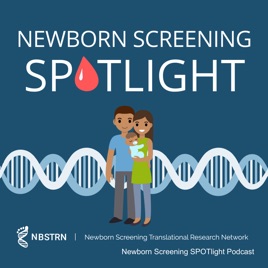
Newborn Screening SPOTlight Podcast

Advertise on podcast: Newborn Screening SPOTlight Podcast

Rating
★★★★★
4.7
from
10 reviews
This podcast has
27 episodes
Language
English
Date created
2021/06/02
Latest episode
2023/09/25
Average duration
47 min.
Release period
31 days

Description

This podcast is about the advancement of rare disease research told by health professionals, researchers, parents and advocates. This podcast is for you to learn how newborn screening research saves the lives of babies every day through discoveries of new technologies and treatments. You will hear stories from experts who treat babies, the families who care for them, and the researchers who make it all happen. We are your co-hosts, Drs. Kee Chan and Amy Brower. We are from the Newborn Screening Translational Research Network (also known NBSTRN). Our work is supported by one of the institutes at the National Institutes of Health in Bethesda Maryland called the Eunice Kennedy Shriver National Institute of Child Health and Human Development (also known as NICHD). Dr. Chan and I are from the American College of Medical Genetics and Genomics (also known as ACMG) and ACMG leads the NBSTRN. Screening babies saves lives every day, and research advances newborn screening by developing new technologies to screen, diagnose and treat. NBSTRN helps accelerate research by creating tools, resources and expertise for researchers, doctors, families, patients and advocates. To learn how you can help advance newborn research, advocate for rare disease screening and treatment, and learn about important discoveries, become a member of the Newborn Screening Translational Research Network by visiting our website at www.nbstrn.org. Thank you for listening to this episode of Newborn Screening SPOTlight. If you like our podcast, please subscribe and share an episode with your colleagues, friends, and family. \Get involved! Stay informed! Help us advance discoveries! Together, let’s increase the impact of newborn screening research by listening to your stories.

Unlock Newborn Screening SPOTlight Podcast podcast Email contact info,
Listeners & Audience details

Email contact information

Direct podcast contact details

Listeners

Audience numbers & engagement insights

Audience details

Podcast Insights

Podcast episodes

Check latest episodes from Newborn Screening SPOTlight Podcast podcast


Innovative Blood and Marrow Transplant & Gene Therapy for Rare Diseases
2023/09/25
Dr. Paul Orchard is the Medical Director of the Inherited Metabolic and Storage Disease Program and a Professor in the Department of Pediatrics in the Division of Blood and Marrow Transplant & Cellular Therapy (BMT & CT) at the University of Minnesota. He is interested in using hematopoietic stem cell transplantation (HSCT) and other cell therapies, including gene therapy, to improve outcomes. In addition to his clinical work with patients with inherited metabolic diseases, Dr. Orchard is engaged in research designed to identify strategies that enhance the delivery of enzymes to the brain and the peripheral nervous system for patients who lack specific enzymes.  Other interests include the modification of stem cell transplant approaches and combination therapies to improve outcomes for patients with inherited diseases and the potential to develop multi-institutional cooperative studies for these disorders.  Listen to a leading expert in saving the lives of children every day, including Dr. Amy Brower's son.  
Lifting the Voices of the Community in the Rare Disease World Through Storytelling
2023/08/31
If you need a boost of inspiration, a bit of laughter, and a lot of intention, listen to our special guest on the Newborn Screening SPOTlight podcast Effie Parks, who transformed her experiences raising a son with a rare disease to helping others by sharing their stories on her podcast, Once Upon a Gene.  The best way to describe Effie may be as the rare disease parent’s best friend… and greatest resource! She was born in Montana, where she was raised with her 12 siblings.  After moving to Washington and marrying her husband, they were blessed with the birth of their son, Ford Canon Parks.  When she learned that Ford had been born with an extremely rare genetic condition – CTNNB1 syndrome – she immersed herself into the world of advocacy.  Now, she is the host of her own podcast, Once Upon a Gene, where she speaks to others about their journey through life with rare disease. Since the launch of the podcast, Once Upon A Gene was awarded “Best In Show Podcast” by WEGO Health. Podcast Magazine recognized Effie as one of the 40 Under 40 Podcasters and she has been nominated for two Champion of Hope awards from Global Genes. Her mission is to learn, lift voices of the community, connect people to resources and to leave this world better than she found it for others in the rare disease world.
The Role of Medical Genetics in Newborn Screening and Genome Sequencing
2023/08/01
Join us on the Newborn Screening SPOTlight podcast with Dr. Jerry Vockley, who is a Professor of Human Genetics, the Graduate School of Public Health, Cleveland Family Endowed Pediatric Research, School of Medicine, Chief of Genetic and Genomic Medicine, UPMC Children’s Hospital of Pittsburgh, and Director of the Center for Rare Disease Therapy, UPMC Children’s Hospital of Pittsburgh.  Dr. Vockley is internationally recognized as a leader in the field of inborn errors of metabolism. His current research focuses on mitochondrial energy metabolism, novel therapies for disorders of fatty acid oxidation and amino acid metabolism, and population genetics of the Plain communities in the United States. He has published over 320 peer-reviewed scholarly articles and is the principal or Co-investigator on multiple NIH grants. Dr. has an active clinical research program and participates in and consults on multiple gene therapy trials. Dr. Vockley has served on numerous national and international scientific boards including the Advisory Committee (to the Secretary of Health and Human Services) on Heritable Disorders in Newborns and Children where he was chair of the technology committee. He is a Fellow in the American Association for the Advancement of Science. He is a Founding Fellow of the American College of Medical Genetics and Genomics, and currently serves on its board of directors. He is founder and chair of the International Network on Fatty Acid Oxidation Research and Therapy (INFORM). He has served as chair of the Pennsylvania State Newborn Screening Advisory Committee and is a past president of the International Organizing Committee for the International Congress on Inborn Errors of Metabolism and the Society for the Inherited Metabolic Disorders (SIMD). On this podcast, Dr. Vockley shares his career journey and personal stories about the impact of newborn screening research on physicians, families, and advocates.
North Carolina Newborn Exome Sequencing for Universal Screening (NC NEXUS) and Early Check Project
2023/06/30
Today, on the Newborn Screening SPOTlight podcast, we are thrilled to have Dr. Cynthia Powell join us to share her vision of genomic sequencing in newborn and her experience as the Past Chair of the U.S. federal Advisory Committee on Heritable Disorders in Newborns and Children. Dr. Powell is a Professor of Pediatrics and Genetics at the University of North Carolina at Chapel Hill School of Medicine, where she sees patients, teaches students, residents and fellows, and participates in research.  She is a board-certified clinical geneticist, cytogeneticist, pediatrician and genetic counselor.  She completed her pediatric residency at Children’s National Medical Center in Washington, D.C. and medical genetics fellowship at Children’s National Medical Center and the National Institutes of Health.    She is the program director of the UNC Hospitals Medical Genetics and Genomics Residency Program.  She is the immediate past Chair of the U.S. federal Advisory Committee on Heritable Disorders in Newborns and Children and a member of the Board of Directors of the American College of Medical Genetics and Genomics.    She is Past President of the Association of Professors of Human and Medical Genetics and the American Board of Medical Genetics and Genomics.  She serves on the North Carolina Newborn Screening Advisory Committee and the North Carolina Genetics and Genomics Advisory Committee.  Her research interests include newborn screening, genomics, birth defects and genetic syndromes. She led the North Carolina Newborn Exome Sequencing for Universal Screening (NC NEXUS) project, a five year project funded by NIH investigating the utility of next generation sequencing in newborns.    She is the UNC site principal investigator for the Early Check project, a voluntary newborn screening research project in North Carolina that offers parents the opportunity to have their infant screened for conditions that are not yet part of standard public health newborn screening.   She currently serves on the NBSTRN Steering Committee and has contributed to the development of tools and resources for newborn screening research. Dr. Powell wears many hats in her different roles in medical genetics and newborn screening. You will be inspired by her story of dedicated commitment in improving the lives of children. 
Living with Phenylketonuria (PKU) and Caring for Patients with PKU
2023/06/06
This episode features Brittany Holmes who is a nurse practitioner in the Metabolism Program in the Genetics & Genomics division at Boston Children’s Hospital. She is an experienced provider who specializes in caring for patients with inborn errors of metabolism. She serves on the Board of Directors for the National PKU Alliance, the Newborn Screening Translational Research Network (NBSTRN) Steering Committee, and the Rare Disease Clinical Research Network (RDCRN) PHEEFREE Consortium External Advisory Board. She received her Bachelor of Science at Merrimack College, and Master of Science in Nursing from Simmons University in Boston, and is beginning the Doctor of Nursing Practice program at UMass Boston this September. In addition to expanding expertise in the clinical care and research for those with a variety of inborn errors of metabolism, she also has a particular interest in Phenylketonuria (PKU) and newborn screening. Her interest in working with inborn errors of metabolism began at a young age, due to her personal experience as a patient with PKU. After years of speaking at conferences from the patient perspective and receiving care from leading clinicians/researchers in metabolism from the patient side, this ultimately led to seeking a career as a healthcare professional in the specialty. She enjoys being able to offer both the provider and patient perspective, and has a passion for caring for patients in this specialty. Interview Questions: Could you tell our listeners how you got involved in newborn screening? May is the PKU awareness month. What is the purpose of this rare disease awareness campaign. How can our listeners get involved this month? In the year 2023, it is the 60th anniversary of the newborn screening, and PKU was the first condition to be screened in newborns in 1951. A PKU screening test is a blood test given to newborns one to three days after birth. If babies are identified with PKU, they can benefit from early treatment. However, in the year 2013, there was a study that indicated that there is individual patient, social, and economic factors prevent some adult PKU patients in the US from accessing treatment. Ten years later, do you see any changes? There is a policy in development or in place to address this such as The Medical Nutrition Equity Act (MNEA). Can you tell us listener about this policy? In addition to medical nutrition therapy for PKU patients, what are other new types of treatment and gene therapy for PKU patients? Could you share the latest research effort and clinical trial in this area? You are on the Rare Disease Clinical Research Network (RDCRN) PHEEFREE Consortium External Advisory Board. What is the mission and activities of this network? What resources are available to patients and families with rare disease? Could you share your process for proving medical care to patients with PKU? As an adult with PKU, any advice for new parents who just received a newborn screening positive result for PKU? What do you think prospective parents should know about newborn screening research in screening, diagnosis, and treatment for PKU? You are currently on the Steering Committee at NBSTRN, what efforts do you see NBSTRN can support in NBS Research and your efforts? What does NBS research mean to you?
Advocacy Work for Newborn Screening Research and Treatment for Sickle Cell Disease
2023/04/30
Every state screens for sickle cell disease and researchers are working with industry and advocates to develop new ways to improve the health outcomes of individuals living with sickle cell disease. Today, on the Newborn Screening SPOTlight podcast, we welcome Yvonne Carroll, RN, JD who is trained as a researcher, a lawyer, a nurse, and a patient advocate and is currently the Director of Patient Services in the Department of Hematology at St. Jude Children’s Research Hospital in Memphis, Tennessee.  She has over two decades of dedicated commitment to advancing the management of care, advocacy work for equitable resources, and community engagement to amplify the voices of patient and families with sickle cell disease.  She sits on several editorial and national boards including the National Black Nurses Association (NBNA) Sickle Cell Sub-Committee, the International Association of Sickle Cell Nurses and Professional Associates (IASCNAPA), and the Sickle Cell Community Consortium Executive Board. Yvonne been appointed and reappointed as a member of the Tennessee Governor’s Genetic Advisory Committee for more than 15 years, and has been involved in community based participatory research since the beginning of her career, and in 2021, was recognized by American Lebanese Syrian Associated Charities (ALSAC), which is the largest healthcare related charity in the United States,  with the St. Jude Legacy Award for her lifetime work with the sickle cell community. Yvonne graduated with a Bachelor of Nursing Degree from the University of Tennessee and a Law degree from the University of Cincinnati. She is a proud veteran of the U.S. Navy, Judge Advocate General Corps, and is a wife, mother, and grandmother.  Join us in listening to Yvonne share her passion and inspiring story of hope and vision for newborn screening research in sickle cell disease.  Podcast Interview Questions:  How did you get involve with newborn screening research. You are currently the Director of Patient Services in the Department of Hematology at St. Jude Children’s Research Hospital in Memphis, Tennessee. Can you tell our listeners about your role? (Yvonne, you can mention about the St Jude SCRIPP program and listeners can learn more about it here). You have been funded for sickle cell disease projects for more than 20 years. What areas of research have advanced in sickle cell disease as well as stalled in these past decades? Where do you see the direction of newborn screening research in sickle cell disease in the future? Your work also involved in engaging and empowering families in decision making process on the management of care for sickle cell disease. What advice do you have for researchers to engage families and advocacy organization to amplify their voices? You were a part of a group who published a study on “Strategies to increase access to basic sickle cell disease care in low- and middle-income countries”. Can you tell share with our listeners on these helpful strategies needed to increase access to basic SCD care for patients in these settings? You presented on “Informed Consent for Sickle Cell Disease Gene Therapy Reimagined” at the NBS Research Summit hosted by NBSTRN last September 2022. What are current challenges in consent process? How do you envision the informed consent reimagined? Are you involved in training the next generation of advocates and nurses, and what do you tell them about newborn screening research? (Yvonne, you can talk about Sickle Cell Nursing Bootcamp and include links and application process). You are currently on the Steering Committee at NBSTRN. What role do you see NBSTRN play in helping to advance your work and the field of sickle cell diseases? What does NBS research mean to you?
Complementing Newborn Screening with Rapid Whole Genome Sequencing (rWGS) for Rare Diseases in Infants
2023/03/10
We are thrilled to have Dr. Stephen Kingsmore, a dedicated physician, researcher, an inventor, and who is the currently the President/CEO of Rady Children’s Institute for Genomic Medicine in San Diego, California.  In this podcast, you will not only learn what drives Dr. Kingsmore’s purpose to improve the lives of newborns and to prevent avoidable and unnecessary deaths due to late diagnosis of rare genetic condition, but also his challenges in clinical practice and research in making his dream of a learning healthcare system using genomic medicine a reality globally.  Among his achievements, Dr. Kingsmore pioneered the development of ultra-rapid Whole Genome Sequencing to decode rare disease in newborns. In 2021, he led the RCIGM team to break his own world speed record by achieving diagnosis via WGS in 13.5 hours. Dr. Kingsmore came to Rady Children’s in 2015 from Children’s Mercy Kansas City, where he was the Executive Director of Medical Panomics. He previously served as President and CEO of the National Center for Genome Resources; COO of Molecular Staging Inc.; Vice President of Research at CuraGen Corporation; founder of GatorGen; and Assistant Professor at the University of Florida’s School of Medicine. Dr. Kingsmore received MB, ChB, BAO and DSc degrees from the Queen’s University of Belfast. He trained in clinical immunology in Northern Ireland and did residency in internal medicine and fellowship at Duke University Medical Center. He is a fellow of the Royal College of Pathologists.  Learn from Dr. Kingsmore on how to work through the challenges in research and clinical practice in advancing newborn screening research.
Advancing Newborn Screening Research Through Rare Disease Awareness, Support and Advocacy
2023/02/28
For the rare disease community, there is a common motto “alone we are rare, together we are strong”. Advocacy organizations play this important role in connecting families of rare disease , amplifying their voices and helping to improve health outcomes for people living with rare diseases. Today’s podcast guest is Annie Kennedy who has over three decades of experience in advocacy work. A veteran leader in the rare disease patient advocacy movement, Annie joined the EveryLife Foundation in 2018, where she led the National Economic Burden of Rare Disease study, the development of the ICD Code Roadmap, and the community-driven Guide to Patient Involvement in Rare Disease Therapy Development. Annie previously held leadership roles at Parent Project Muscular Dystrophy (PPMD) and the Muscular Dystrophy Association (MDA). She is a sought-after advisor to patient-centered organizations and initiatives across the nonprofit and government sectors. If you are new to advocacy work or a seasoned advocate, become inspired by Annie’s story to carry forward despite the road to advocacy work is non-stop, exhausting and at times, bumpy with many ups and down. Join this collective energy to advocate for rare diseases research.
A Clinical and Molecular Geneticist Impacting Newborn Screening Research in Congenital Heart Disease, Duchenne Muscular Dystrophy and the GUARDIAN study
2023/01/20
Listen to Dr. Wendy Chung, a board-certified clinical and molecular geneticist with over 20 years of experience in human genetic research, share her story.  Her team has led ground-breaking research describing the genetic basis of both rare and common genetic diseases, and the development of precision therapies based on the genetic findings in individuals. She was a part of the two-year pilot of newborn screening for Duchenne Muscular Dystrophy and is currently leading the GUARDIAN STUDY, which has a goal of genome sequencing 100,000 newborns in NYC. She is currently the co-Chair of NBSTRN Steering Committee, which has informed the evolution of the tools and resources for newborn screening research. Podcast Interview: 1. Dr. Chung, you are a board-certified clinical and molecular geneticist with 20 years of experience in human genetic research. How did you get involved with newborn screening research? 2. Your work has led to ground-breaking publications describing the genetic basis of both rare and common genetic disease, and your efforts have often described not only the basis for disease, but the development of precision therapies based on the genetic findings in individuals. You are now leading a new effort, the Guardian Study. Please tell our audience how your years of research led you to conceive of and undertake this effort. 3. NBSTRN highlights innovative efforts at our annual NBS Research Summit. You presented in 2020 on the ”Genomic Causes of the Broken Hearts” Can you describe your goals with this effort and how this could facilitate early treatment and improve health outcomes for infants with congenital heart disease? 4. Your research team collaborated with ACMG and NBSTRN, and many others in a two-year pilot of newborn screening for Duchenne Muscular Dystrophy. Could you share with our listeners what you and the consortia learned from this pilot and how this might inform future efforts? 5. In 2019 the NBSTRN Bioethics and Legal Workgroup led a published recommendations to guide pilot studies and included a recommendation to enroll diverse participants. Informed by this work, your team examined parental views about expanded NBS and the use of genomics. Please tell what this effort told you about the role of parental choice in expansion of NBS. 6. Are you involved in training the next generation of board-certified clinical and molecular geneticist and what do you tell them about newborn screening research? 7. Thank you for serving as co-chair of the NBSTRN Steering Committee. What are you most excited about? What role could NBSTRN play in your efforts in advancing NBS research? 8. In addition to funding NBSTRN, NICHD supports a variety of efforts to advance NBS research. CDC and HRSA also fund important efforts to advance and support NBS through work with state NBS programs, policy makers, parents and advocates. Please share your vision of how these key federal partners could work together to accelerate the translation of research findings into public health and clinical care. 9. What does NBS research mean to you?
Family Engagement, Diversity, Equity, and Inclusion (DEI) Access in Newborn Screening Research
2022/12/20
Family engagement and rare disease advocacy drive the innovations and accelerate the discoveries that advance newborn screening research. Today, we are excited to have Natasha Bonhomme, a health communications strategy and family engagement expert who has led ground-breaking initiatives to empower individuals, families, and their communities to transform health care.  Natasha is currently the Chief Strategy Officer for Genetic Alliance and the founder of Expecting Health, a national effort to create outreach strategies and deliver educational programming to diverse communities, with a special emphasis on maternal and child health issues.  A decade ago, Natasha and her team launched Baby’s First Test as the first National Newborn Screening Resource Center to provide education, family support and services information, and resources about newborn screening at the local, state, and national levels.  Natasha received her BA in Psychology from Boston College and began her career as a summer intern at NIH. This year, 2022, her journey from intern to national expert was recognized as Natasaha and received the Judi Tuerck Newborn Screening Follow-up and Education Award for her significant contributions.  Listen along with us as she shares advice on engaging families and educating the next generation of advocates to help speed research to develop new technologies to screen, diagnose, treat, and manage the disease. Newborn screening saves lives, and leaders like Natasha help make it possible!
Genetic Counseling & Diversity, Equity and Inclusion (DEI) Justice in Newborn Screening Research and Workforce
2022/11/23
Welcome to the Newborn Screening Spotlight! Today’s episode highlights the important role genetic counselors play in the diagnosis, care, and lifelong management of newborns diagnosed with a disease through newborn screening. Genetic counseling helps families better understand available treatments and resources, and our guest, Sylvia Mann is a genetic counselor who wears many hats, three to be exact, in her roles as the Supervisor of the Genomics Section of the State of Hawaii Department of Health, the Co-Director of the University of Hawaii Pacific Basin Telehealth Resource Center, and the Project Director of the Western States Regional Genetics Network. Sylvia’s career in genetic counseling began when she received her Master of Science in Human Genetics and Genetic Counseling from Sarah Lawrence College in New York, and, this year in 2022, her over 30 years of efforts to expand and improve NBS in one or more states were recognized with the George Cunningham Visionary Award in Newborn Screening. During today’s podcast Sylvia shares the ways visionaries like Dr. Cunningham played in her journey to train and inspire current and future genetic counselors. She also shares the exciting news that she will be developing a new program to train genetic counselors using an innovative model at Creighton University beginning in 2023. Sylvia’s decades of empowering parents, families, patients, and advocates from diverse backgrounds, she lives in Hawaii after all, has resulted in professional with a rare combination of genetic expertise, sincere empathy, and a tireless work ethic that has resulted in important conversations and discussion of diversity, equity, inclusion, and justice taking place.   Interview Questions:  1. Congratulations on your recent award of George Cunningham Visionary Award in Newborn Screening at the APHL NBS Symposium.  It is given to someone who has made the greatest contribution to expanding or improving the screening of newborns by public health agencies in one or more states. This year’s award recipient is you, Sylvia.  In the early 1960s, many states mandated NBS within their health departments and/or state laboratories to provide coordination and oversight for NBS. Can you share with our listeners about the newborn screening system in the state of Hawaii and any specific similarities and differences on the screening system different between states?    2. In one of our podcast episodes titled “Getting on the List” which was led by our co-host Dr. Brower, we highlighted the nomination process of getting a condition added to the RUSP.  However, once the condition is on the RUSP, the process of implementation of the new condition is a bit complex and seems to differ between state to state. After a new condition is added to RUSP, can you help demystify the process to our listeners - what are the next steps in state-wide implementation of screening for that new condition in general and in the state of Hawaii? (Perhaps, Sylvia you can discuss and reference your public/private partnership paper here)    3. You are currently the Supervisor of the Genomics Section of the State of Hawaii Department of Health, the Co-Director of the University of Hawaii Pacific Basin Telehealth Resource Center, and Project Director of the Western States Regional Genetics Network. Can you share with our audience how you are involved with newborn screening in these different positions?   4.  November is a special month, beside the time for Thanksgivings. November is the month of Family History Awareness as well as Genetic Counseling Awareness.  You are one of the very few genetic counselors working in a state public health agency. Can you tell our listeners how you got interested in a career as a genetic counselor and how does genetic counseling play a role across the lifespan especially in public health?    5. According to the 2022 professional status survey by the National Society of Genetic Counselors, 90 p
Research and Advocacy for Newborn Screening for Mucopolysaccharidosis II (MPS II/Hunter Syndrome)
2022/10/27
Today, we are joined by Dr. Zhanzhi Hu (aka Mike) who is the co-founder and President of Project GUARDIAN, a nonprofit organization with the mission of advancing genomics-based newborn screening where they have a mission of genome sequencing 100,000 babies in New York City. His dedication and motivation to ensuring all babies have the best chance to live a healthy life stem from his own experience as a parent of two children with a rare disorder called MPS II and also known as Hunter Syndrome. He is an ardent advocate for newborn screening and works tirelessly to bridge the gap between advanced technologies and the critical need for the expansion of the newborn screening public health program. Mike is also an Adjunct Associate Researcher at Columbia University where he conducts newborn screening-related research. Dr. Hu received his Ph.D. degree in Molecular Genetics and Microbiology from the University of Texas at Austin and his B.S. degree in Cell Biology and Genetics from Peking University. He is currently on the Steering Committee and chair of the researcher needs workgroup at NBSTRN. He will share his perspectives as a researcher, parent, and advocate for NBS research as well as his efforts collectively with other key stakeholders in the research, clinical, and advocacy realm in helping to get MPS II added to the RUSP.  Be inspired by his story of determination, perseverance, and purpose in advancing NBS research.

Podcast reviews

Read Newborn Screening SPOTlight Podcast podcast reviews


4.7 out of 5
10 reviews

Podcast sponsorship advertising

Start advertising on Newborn Screening SPOTlight Podcast relevant audience podcasts


What do you want to promote?