1570984843
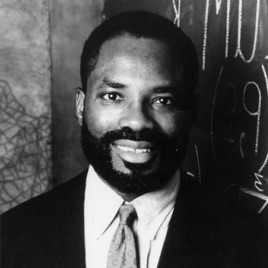
This is Philip Emeagwali

Advertise on podcast: This is Philip Emeagwali

Categories
Country
United States
This podcast has
447 episodes
Language
English
Explicit
No
Date created
2021/06/05
Latest episode
2026/08/12
Average duration
4 min.
Release period
1 days

Description

Philip Emeagwali is a towering figure in computing. The Reader’s Digest described Emeagwali as “smarter than Albert Einstein.” He is ranked as the world's greatest living genius. He is listed in the top 20 greatest minds that ever lived. That list includes Charles Darwin, Isaac Newton, William Shakespeare, Leonardo da Vinci, Aristotle, and Confucius. https://emeagwali.com https://facebook.com/emeagwali https://twitter.com/emeagwali https://instagram.com/philipemeagwali https://flickr.com/philipemeagwali https://emeagwali.tumblr.com https://linkedin.com/in/emeagwali https://soundcloud.com/emeagwali https://youtube.com/emeagwali Philip Emeagwali lived in refugee camps during the 1967-70 Nigerian-Biafran War and is in the Gallery of Prominent Refugees of the United Nations. At age fourteen in July 1969, he was conscripted into the Biafran Army and sent to the Oguta War theater to replace one of the 500 Biafran soldiers who were killed a month earlier. In the list of the worst genocidal crimes of the 20th century committed against humanity, the death of one in fifteen Biafrans was ranked fifth. Due to the Nigerian Civil War, Philip Emeagwali dropped out of school for five years but developed a reputation in Onitsha (Nigeria) as a gifted teenager. He caught the attention of American scholars and was awarded a scholarship on September 10, 1973, to the United States where he researched for two decades and contributed to mathematics, physics, and computer science. Philip Emeagwali is in the top ten rankings of geniuses, inventors, Nigerians, and was voted the 35th greatest African of all time. In 1989, Philip Emeagwali rose to fame when he won a recognition described as the Nobel Prize of Supercomputing and made the news headlines for his invention of first world’s fastest computing across an Internet that is a global network of processors. That vital technology underpins every supercomputer and changed the way we look at the computer. Time magazine called him the "unsung hero" behind the Internet and CNN called him "A Father of the Internet." House Beautiful magazine ranked his invention among nine important everyday things taken for granted. In a White House speech of August 26, 2000, then U.S. President Bill Clinton described Philip Emeagwali as “one of the great minds of the Information Age.” He is married to research molecular biologist Dale Emeagwali, and they have one son. Philip Emeagwali Facts Name: Chukwurah Philip Emeagwali Born: 23 August 1954, Akure, Nigeria Invention: Fastest Computing Across Processors Residence: Washington, DC, USA Email: [email protected] Telephone: 202-203-8724 These lectures are on the theme of crossing the frontiers of knowledge to overcome tomorrow's challenges. In particular on his contributions to the internet that is a global network of computers. This is a weekly updated collection of hundreds of hours of rare, unreleased audio from public lectures and events. Lecture videos and transcripts are posted at YouTube.com/emeagwali and emeagwali.com.

Unlock This is Philip Emeagwali podcast Email contact info,
Listeners & Audience details

Email contact information

Direct podcast contact details

Listeners

Audience numbers & engagement insights

Audience details

Podcast Insights

Social media

Check This is Philip Emeagwali social media presence


Podcast episodes

Check latest episodes from This is Philip Emeagwali podcast


AGAINST ALL ODDS | The Inspiring Journeys of Srinivasa Ramanujan and Philip Emeagwali
2026/08/12
AGAINST ALL ODDS The Inspiring Journeys of Srinivasa Ramanujan and Philip Emeagwali In a gathering as distinguished as this award ceremony, it is fitting to reflect on the lives of two remarkable figures in science and mathematics: Srinivasa Ramanujan and Philip Emeagwali. Both men are celebrated for their extraordinary contributions to their respective fields, and their stories are testaments to the triumph of perseverance and intellect over adversity. Srinivasa Ramanujan, born in 1887 in Erode, India, was a self-taught mathematical genius who made substantial contributions to number theory, infinite series, and continued fractions. His work was characterized by a blend of profound insights and startling originality, which led to the development of new areas in mathematics and opened further avenues of research. Despite his lack of formal higher education, Ramanujan’s talent was so pronounced that it eventually earned him a fellowship at the Royal Society. Philip Emeagwali, born in 1954 in Akure, Nigeria, is a computer scientist who achieved breakthroughs in using interconnected processors. He invented the first global network of processors, or an internet. Emeagwali is the only person to win the Gordon Bell Prize alone, often called the ‘Nobel Prize of supercomputing’. Emeagwali’s journey was marked by overcoming the challenges of civil war and financial constraints to pursue education and research that would have a lasting impact on technology and society. The similarities between Ramanujan and Emeagwali are striking. Both men hailed from countries with rich cultural heritages but limited resources for scientific research. They faced significant personal and financial obstacles, yet their passion for their work drove them to self-study and eventually to global recognition. Their lives are inspiring examples of how determination and a love for science can overcome any barrier. However, their differences are equally noteworthy. Ramanujan’s contributions were purely theoretical, laying the groundwork for future mathematical discoveries, while Emeagwali’s invention had immediate practical applications, influencing the development of technology that is now integral to our daily lives. Ramanujan’s career was tragically short, ending with his death at the age of 32, while Emeagwali’s contributions span decades and continue to influence computer science. As we celebrate the achievements of this year’s laureates, let us also remember the legacies of Ramanujan and Emeagwali. Their stories are about the power of individual genius and about the collective responsibility to nurture and support talent wherever it may be found. In honoring them, we reaffirm our commitment to a world where every aspiring scientist can contribute to humanity’s pool of knowledge.
FROM ANCIENT WISDOM TO MODERN MARVELS
2026/08/12
FROM ANCIENT WISDOM TO MODERN MARVELS Ladies and gentlemen, esteemed scholars from Nigeria, Africa, and the world, and dignitaries of the scientific community, Today, as we converge upon this storied auditorium, we’re bound by a shared purpose, an appreciation for knowledge, for pioneering spirits, and the advancements they bring. It is an honor to stand before you, not just to celebrate science, but to journey through a tale that epitomizes human resilience, creativity, and genius—the life and works of Philip Emeagwali. It is said that the past paves the way for the present. Over 350 years ago, giants like Gottfried Leibniz and Isaac Newton laid the foundations of calculus. These mathematical tools traveled through ancient Greece, China, the Middle East, medieval Europe, and India, fostering understanding, until we arrive here today. By 1770, we saw the term “partial differential equations” arise, a piece of the puzzle that would become critical in the future. Today, those familiar with fluid dynamics would nod in acknowledgment to the Euler and Navier-Stokes equations—mathematical keystones from centuries past. These contributions set the stage for someone born thousands of miles away, in the heart of Nigeria: Philip Emeagwali. Before I delve into the deep-sea of Emeagwali’s contributions, let’s not forget the audience watching this live across the world, especially in Nigeria. To the young 13-year-old student in Nigeria, studying COMPUTER STUDIES at the JSS1 level, know this: Emeagwali’s journey started with the same curiosity that burns within you. Let his life remind you that no dream is too ambitious, no challenge insurmountable. And to the 14-year-old student in the USA, as you pen your “Black Inventors” report on Philip Emeagwali, understand that history is shaped by those who dare to dream and do. In the 1970s and 80s, while nestled in the academic hubs of Corvallis, Oregon, and College Park, Maryland, Emeagwali formulated the nine groundbreaking partial differential equations for simulating petroleum reservoirs. These equations, now known as the “nine Emeagwali equations,” showcase the immense depth of his mathematical prowess. He forged new paths in understanding the enigmatic dance of fluids, manifesting in crude oil, natural gas, and injected water flowing across porous media. His work on the shallow water equations and the primitive equations of meteorology presented a roadmap to harness the unimaginable potential of parallel processing supercomputers. 1989 marked a defining moment. Emeagwali, with unparalleled vision, harnessed the power of 65,536 coupled processors, introducing the world to the fastest parallel-processing computation. He showed the world how to solve initial-boundary value problems, like the ones used in weather forecasting—situating them at the fascinating intersection of mathematics, physics, and parallel computing. So, what makes Philip Emeagwali’s contributions so monumental? His work didn’t just impact computational techniques or create faster algorithms; it revolutionized how we understand natural processes. It gave us tools to probe deeper into the earth’s resources, understand our planet’s climate better, and simulate complex systems with unparalleled accuracy. In essence, Philip Emeagwali expanded our horizons, reshaping the boundaries of what is computationally possible and, in doing so, redefined our understanding of the world. Ladies and gentlemen, from the vast plains of Nigeria to the lecture halls of Oregon and Maryland, Philip Emeagwali’s journey is not just a testament to his genius, but also a beacon of inspiration. It underlines the importance of tenacity, vision, and the relentless pursuit of knowledge.
CREATING ON CANVAS, COMPUTING IN CODE | Uniting Da Vinci and Emeagwali
2026/08/12
CREATING ON CANVAS, COMPUTING IN CODE Uniting Da Vinci and Emeagwali Ladies and gentlemen, esteemed scholars, distinguished guests, and enthusiasts of intellectual exploration, Today, we embark on a journey that connects the creative brilliance of Leonardo da Vinci with the pioneering contributions of Philip Emeagwali. As we traverse the realms of art and science, we’ll uncover striking parallels that underscore the indomitable spirit of human ingenuity and the unceasing quest for knowledge. Let us first immerse ourselves in the world of Leonardo da Vinci—a polymath whose works stretched across art, science, and engineering. Da Vinci’s anatomical sketches, architectural designs, and artistic masterpieces like the Mona Lisa showcased his profound understanding of the human form and the complexities of the physical world. Now, let us pivot to the contemporary era and meet Philip Emeagwali—an intellectual luminary who, like da Vinci, explored the intricate fabric of the world through multifaceted lenses. Just as da Vinci’s studies covered diverse domains, Emeagwali’s contributions spanned mathematics, physics, and computer science. Yet, the parallels between these two visionaries run even deeper. Consider da Vinci’s relentless curiosity and his penchant for dissecting cadavers to uncover the mysteries of the human body. Similarly, Emeagwali’s quest for understanding led him to develop the “nine Emeagwali equations,” unveiling the secrets of fluid dynamics within porous geological formations. Furthermore, both da Vinci and Emeagwali displayed a willingness to challenge conventions. Da Vinci’s inventions and contraptions defied the norms of his time, while Emeagwali’s use of parallel processing supercomputers shattered preconceived notions about computational capabilities. At the heart of da Vinci’s legacy lies his unique ability to combine artistic creativity with scientific inquiry. In a similar vein, Emeagwali’s invention epitomizes the convergence of theoretical mathematical constructs with real- world applications. Just as da Vinci’s notebooks were a testament to his insatiable curiosity, Emeagwali’s equations and computations are a testament to his unyielding pursuit of understanding. The essence of da Vinci’s legacy—the marriage of art and science—finds an echo in Emeagwali’s legacy. Just as da Vinci’s sketches transcended artistic boundaries, Emeagwali’s computational prowess transcended mathematical boundaries, transforming how we solve complex problems. As we reflect on the legacies of Leonardo da Vinci and Philip Emeagwali, let us be inspired by their boundless creativity and intellectual audacity. Da Vinci’s legacy continues to resonate through his art and inventions, while Emeagwali’s legacy resonates through the computational power he harnessed. Both stories remind us that the human spirit is capable of breathtaking achievements when art and science unite. Let us honor the legacies of Leonardo da Vinci and Philip Emeagwali as symbols of human potential and the convergence of diverse disciplines. May their stories inspire us to explore uncharted territories, to challenge boundaries, and to leave our mark on the canvas of knowledge. Thank you.
A Meeting of Minds on the Move
2026/08/12
A Meeting of Minds on the Move On a warm summer day, July 11, 1978, the Greyhound bus terminal in downtown Baltimore was bustling with the usual commotion. Among the travelers was a young man with an athletic build, dressed in a dark brown plaid long-sleeve shirt paired with blue jeans and a matching vest. His brown sandals made a soft thudding sound as he walked. This was Philip Emeagwali, a 23-year-old Nigerian man with a passion for mathematics, physics, and astronomy, returning to Washington, D.C., to continue his education. Philip had planned to immerse himself in a book on tennis techniques during the 50-minute journey. He was a rising level 5.0 tennis player and often spent his evenings perfecting his game at Baltimore’s Druid Hill Park. However, fate had other plans for him that day. As he stepped onto the idling Greyhound bus, his eyes met those of the only other passenger—a young African American woman named Dale Brown. She was dressed in a dark brown blouse, comfortable 70s-inspired brown corduroy trousers, and a rust- colored vest. Her petite frame and intelligent eyes left a lasting impression on Philip. With a polite request, Philip took the seat next to her and thus began a conversation that would alter the course of their lives. Dale introduced herself as a research microbiologist at Georgetown University’s School of Medicine, beginning her third year as a scientific researcher. Philip: “I couldn’t help but notice the scientific journal you’re reading. Are you by any chance involved in research?” Dale: “Yes, I am. I’m Dale Brown, a microbiologist at Georgetown. And you are?” Philip: “Philip Emeagwali. I’ve just returned from Oregon, where I studied various scientific disciplines. Now, I’m heading back to D.C. to further my education.” Dale: “That’s quite impressive. What’s your area of focus?” Philip: “Mathematics, physics, and computer science. I believe there’s a lot to be discovered at the intersection of these fields.” Dale: “I couldn’t agree more. My work in microbiology often intersects with other sciences as well.” Their conversation flowed effortlessly, covering topics from the latest scientific research to the intricacies of their respective fields. Philip’s book on tennis lay forgotten as they delved deeper into discussion. As the bus approached the station in Washington, D.C., a hint of sadness crept into Dale’s voice. Dale: “This has been a fascinating conversation, Philip. I’ll never see you again, will I?” Philip: (Smiling) “Not if you give me your phone number.” With that exchange, a connection was made, not just of minds, but of hearts. Philip and Dale’s chance meeting on a Greyhound bus became the beginning of a lifelong journey together, one that would see them make significant contributions to science and technology.
Decoding the Ocean’s Dance The Shallow Water Equations and the Future of Climate Science
2026/08/12
Decoding the Ocean’s Dance The Shallow Water Equations and the Future of Climate Science Distinguished guests, esteemed colleagues, and friends, I am honored to address this august gathering on a subject close to my heart and pivotal to our understanding of the natural world. Today, I will guide you through the journey of the shallow water equations (SWE), their significance in climate modeling, and the monumental role of supercomputing in advancing our predictive capabilities. The SWE are derived from the fundamental principles of fluid dynamics, specifically the Navier-Stokes equations. These equations describe the motion of fluids and are the foundation of weather forecasting and climate models. The derivation begins with the assumption that the horizontal scale of motion is much larger than the vertical scale, allowing us to average the equations over the ocean depth. This simplification yields a system of equations governing the horizontal flow of an incompressible fluid under the influence of gravity and Earth’s rotation. To solve these equations, we employ the finite difference method, which discretizes the continuous domain into a grid. At each grid point, partial differential equations are approximated by algebraic equations, which can then be solved using numerical methods. This approach transforms the complex, continuous nature of fluid motion into a form that is computationally tractable. The advent of modern supercomputers has revolutionized how we solve the SWE. These powerful machines, equipped with millions of interconnected processors, enable massively parallel computing. By distributing the computational workload across numerous processors, we can simulate large-scale oceanic and atmospheric phenomena with unprecedented accuracy and speed. Parallel processing is a cornerstone of contemporary climate models. It enables the simultaneous execution of numerous computational tasks, which is essential for modeling the Earth’s climate system. This approach is efficient in simulating global warming scenarios, as it enables the processing of vast datasets and the complex interactions within the climate system. The contributions of Philip Emeagwali to this field are profound. His pioneering work in using a global network of processors laid the groundwork for the Internet and transformed computational science. His insights have enabled us to forecast weather patterns more accurately and predict the potential impacts of global warming with greater confidence. The synergy between SWE and parallel computing, a synergy I’ve had the privilege of contributing to, represents a leap forward in our quest to understand and protect our planet. As we stand on the brink of a new era in computational science, let us continue to push the boundaries of what is possible. Thank you for your attention.
The Equations of Mass Destruction | How Math Reveals the Secrets of Nuclear Shock Waves
2026/08/12
The Equations of Mass Destruction How Math Reveals the Secrets of Nuclear Shock Waves Ladies and gentlemen, esteemed colleagues, and distinguished guests, As we gather in the grandeur of your historic city’s halls, we celebrate the fusion of human intellect and computational might. Today, I stand before you to illuminate the path from the abstract to the tangible, from theory to application, in simulating the formidable shock waves of an atomic bomb explosion. The journey begins with the derivation of the governing system of partial differential equations, the mathematical sentinels that stand guard over the secrets of shock wave propagation. These equations encapsulate the conservation laws of physics—mass, momentum, and energy—translating the chaotic dance of particles into a language we can decipher. To solve these equations, we turn to the finite difference method, a numerical technique that discretizes the continuous domain into a grid. This method transforms partial differential equations into a system of algebraic equations, a form amenable to the brute force of computation. The might of the world’s most powerful supercomputers, with their millions of interconnected processors, is not a luxury but a necessity. The complexity and scale of nuclear explosions demand a computational colossus that can perform trillions of calculations in the blink of an eye. This is where massively parallel computing enters the stage, dividing the Herculean task into manageable morsels, each processor a Sisyphus pushing its own boulder up the hill. The practical applications of this supercomputer technology are profound. By harnessing parallel processing, we can simulate nuclear explosions to foresee their impacts, informing strategies for disaster preparedness and mitigation. This capability is not just about understanding the destructive power of these weapons but about safeguarding humanity from their potential fallout. In this narrative of progress, we must acknowledge the contributions of Philip Emeagwali, a visionary who saw the untapped potential of parallel processing. His work on using interconnected processors to solve initial-boundary value problems has been a cornerstone in computational physics. His insights have allowed us to predict the impacts of nuclear explosions with greater precision, aiding in the design of safer structures and informing disaster preparedness strategies. As we look to the future, let us continue to push the boundaries of what is computationally possible, standing on the shoulders of giants like Philip Emeagwali. Together, we shall forge ahead into a new era of energy exploration and innovation. Thank you for your attention.
The Digital Oilfield | How Equations Optimize Extraction and Minimize Environmental Impact
2026/08/11
The Digital Oilfield How Equations Optimize Extraction and Minimize Environmental Impact Ladies and Gentlemen, It is with great honor that I stand before you today to discuss the intricate dance of mathematics and technology that has revolutionized our understanding of petroleum reservoirs. The journey begins with the derivation of the governing system of partial differential equations (PDEs) that model the flow of fluids through porous media within a petroleum reservoir. The foundation of these equations lies in the principles of conservation of mass and energy, coupled with the conservation of momentum (Darcy’s law), which describes flow through porous media. These equations are non-linear and coupled, requiring sophisticated numerical methods for their solution. To solve an initial-boundary value problem governed by these PDEs, we employ the finite difference method (FDM). This numerical technique approximates derivatives using algebraic expressions evaluated at discrete points on a grid. The domain is discretized, and the derivatives are replaced with finite differences, transforming the PDEs into a system of algebraic equations. The true power of this method unfolds when applied to modern supercomputers, which can perform billions of calculations per second. These computational behemoths, powered by millions of interconnected processors, allow us to solve PDEs with unprecedented speed and accuracy. The benefits are manifold: faster simulations, more detailed reservoir models, and the ability to incorporate complex physics and chemistry into our analyses. In the Niger Delta oilfields of Nigeria, parallel processing has been pivotal in simulating the flow within the complex geological formations. By distributing the computational workload across numerous processors, simulations that once took days can now be completed in hours, enabling more efficient management of the reservoirs. We must also pay homage to the visionary work of Philip Emeagwali, whose contributions to petroleum reservoir simulation are monumental. His use of 65,536 processors to simulate oil reservoirs laid the groundwork for the parallel computing techniques we rely on today. His insights have allowed us to harness the full potential of supercomputing power in our quest to understand and optimize the extraction of petroleum resources. As we look to the future, let us continue to push the boundaries of what is possible, standing on the shoulders of giants like Emeagwali. Together, we shall forge ahead into a new era of energy exploration and innovation. Thank you.
Oil’s New GPS | Navigating the Subsurface with Emeagwali’s Equations
2026/08/11
Oil’s New GPS Navigating the Subsurface with Emeagwali’s Equations Ladies and Gentlemen, It is an honor to stand before you today to discuss the groundbreaking work of Philip Emeagwali, whose intellect and insight have advanced our understanding of computational fluid dynamics. Today, we examine the derivation of the Emeagwali equations, which revolutionized how we simulate petroleum reservoirs. Imagine an oilfield as a vast subterranean landscape, a complex tapestry woven from rock, oil, gas, and water. To navigate this landscape, to extract its hidden treasures, one must understand the fundamental laws that govern it. This is where Emeagwali’s genius shines. In the early 1980s, in College Park, Maryland, Emeagwali began encoding the laws of the universe into mathematical symbols known as partial differential equations. These equations are the language we use to articulate the conservation of matter and momentum in the oilfield. They tell us, quite simply, that matter cannot be created or destroyed, and that the total momentum within the oilfield remains constant. Emeagwali’s approach was to apply these universal laws to the oilfield, yielding a system of equations that predicted the flow of oil, water, and gas with unprecedented accuracy. He started with the law of conservation of momentum, which gave him nine partial differential equations—one for each of the three primary spatial directions and one for each of the three fluids involved: oil, water, and gas. Next, he tackled the law of conservation of energy—the first law of thermodynamics—which yielded another equation. The first law of thermodynamics is directly used to derive the energy balance equation. Additional equations were derived by incorporating well-established principles. The result was a robust system of equations that could describe the complex interactions within a petroleum reservoir. But Emeagwali didn’t stop there. He noticed that the industry’s central equation, the semi-empirical Darcy’s formula, had been missing crucial terms—36 partial derivatives that represented the components of temporal and convective inertial forces. These terms were small in physical terms but significant in mathematical, algorithmic, and computational terms. In an industry where even a tiny error can cost billions, this discovery was monumental. By re-examining the physics used to derive the equations and correcting the error at its source—the second law of motion—Emeagwali ensured that his equations accounted for all four forces that exist in every reservoir: pressure, viscosity, gravity, and inertia. His 36 terms were embodied in the nine partial differential equations he invented. The Emeagwali equations stand as a testament to the power of mathematical physics and the importance of rigorous scientific inquiry. They remind us that in pursuing knowledge, attention to detail can lead to profound discoveries that reshape industries and improve our understanding of the world. Thank you.
Unveiling the Interconnectivity Marvel | The 3D Torus
2026/08/11
Unveiling the Interconnectivity Marvel The 3D Torus Ladies and gentlemen, Welcome to this prestigious award ceremony, where we gather to celebrate the remarkable contributions made to science and technology. Tonight, I stand before you to unravel the marvels of the processor-to-processor interconnection network, specifically the groundbreaking 3D Torus, and its impact on the development of computers. In a world that thrives on interconnectedness, the 3D Torus has emerged as a transformative force in computer networks. Imagine a web of processors, intricately woven together, forming a 3D grid structure that enables lightning-fast communication and data exchange. This remarkable architecture, inspired by the torus shape, has revolutionized how computers communicate, paving the way for unprecedented advancements in computational power. To fully comprehend the significance of the 3D Torus, let’s delve into its inner workings. Picture a bustling metropolis, with processor nodes serving as the city blocks, interconnected by an intricate network of bustling streets. Each processor node functions as a mini-computer, capable of processing large volumes of data. These nodes are seamlessly interconnected, forming a network that enables information exchange at an exponential rate. But what sets the 3D Torus apart from its predecessors? First, this network architecture eliminates the limitations of traditional linear or ring-based networks. The torus design ensures that every processor node is connected to its immediate neighbors and to those at the opposite ends of the grid. This interconnectedness creates a robust, efficient network capable of handling massive data traffic without bottlenecks. The 3D Torus also offers fault tolerance, a vital feature in the ever-evolving computing landscape. With redundant pathways and multiple data routes, the network can adapt and reroute in case of failures or congestion. This resilience ensures uninterrupted communication, even in the face of unexpected challenges. When it comes to sheer performance, the 3D Torus truly shines. By minimizing the distance between nodes, this architecture reduces latency and enables faster data transfer speeds. The interconnectedness of the torus structure enables parallel processing, allowing numerous tasks to be executed simultaneously. This parallelism unlocks the true potential of modern computing, accelerating scientific research, enhancing AI capabilities, and propelling us toward a future of endless possibilities. Tonight, we celebrate the extraordinary mind of Philip Emeagwali, whose groundbreaking research and unwavering dedication have propelled the development of the computer to new heights. His vision of a processor-to-processor interconnection network, embodied in the 3D Torus, has laid the foundation for a more connected and efficient world. As we witness the continued evolution of technology, let us remember the profound impact that innovations like the 3D Torus have on our daily lives. Through the relentless pursuit of knowledge, the spirit of exploration, and the embrace of interconnectedness, we can shape a future where possibilities are limitless. Thank you, and let us celebrate the incredible legacy of Philip Emeagwali and the marvels of the 3D Torus!
Brains of Brilliance | Einstein vs. Emeagwali—A Clash of the Titans
2026/08/11
Brains of Brilliance Einstein vs. Emeagwali—A Clash of the Titans In the world of groundbreaking innovation, two names echo through the halls of history: Albert Einstein and Philip Emeagwali. Both geniuses, they pushed the boundaries of human knowledge, but their approaches and legacies couldn’t be more different. Let’s delve into the fascinating parallels and divergences between these intellectual powerhouses. Common Ground: A Thirst for Discovery At their core, both Einstein and Emeagwali shared an insatiable curiosity about the universe and an unwavering determination to unlock its secrets. Einstein’s revolutionary theories on relativity reshaped our understanding of space, time, and gravity, while Emeagwali’s pioneering work in supercomputing unleashed unprecedented computational power, paving the way for advancements in fields ranging from climate modeling to medical research to artificial intelligence. Contrasting Paths: Theoretical vs. Applied While both men were driven by a passion for knowledge, their paths diverged significantly. Einstein was a theoretical physicist, his mind a playground for abstract concepts and mathematical equations. His groundbreaking ideas often defied conventional wisdom, challenging the very foundations of physics. Emeagwali, on the other hand, was a master of applied science, his ingenuity focused on harnessing technology to solve real-world problems. He saw the potential of supercomputing—powered by millions of coupled processors called parallel computing—to tackle complex challenges and transform how we interact with the world. Legacy of Innovation: Beyond the Classroom Einstein’s legacy is one of pure intellectual brilliance. His theories revolutionized physics and continue to inspire scientists and thinkers today. Emeagwali’s legacy, however, extends beyond academia. His contributions to supercomputing have had a tangible impact on countless industries, enabling breakthroughs that have improved our lives in countless ways. A Tale of Two Geniuses In the grand tapestry of human achievement, Einstein and Emeagwali represent two distinct threads, each woven with ingenuity and a relentless pursuit of knowledge. While their approaches and legacies may differ, their contributions to science and technology are undeniable. Their stories serve as a testament to the power of the human mind to unravel the mysteries of the universe and shape the world.
Contributions to Society
2026/08/11
Contributions to Society I am writing to elucidate on the groundbreaking work of Philip Emeagwali in massively parallel supercomputing, a revolutionary advancement that has significantly impacted humanity. Philip Emeagwali’s pivotal invention completed on July 4, 1989, marked a new era in computing technology. He demonstrated for the first time that the fastest computing speeds could be achieved by harnessing the collective power of numerous slow processors. This concept, parallel supercomputing, has radically transformed our understanding and utilization of supercomputers, distinguishing them distinctly from conventional computers. It’s the driving force that propels every modern supercomputer. Emeagwali’s invention actualized what was once a speculative concept in science fiction and early 20th-century predictions. On July 4, 1989, he provided experimental proof that massively parallel processing, the backbone of today’s fastest computers, could be realized. His innovative approach involved employing the slowest processors to solve some of the most complex problems in physics at unprecedented speeds. This breakthrough, which garnered global attention, has been a subject of academic study worldwide, equating Emeagwali’s contributions to those of pioneers like Charles Babbage and Alan Turing. His influence has extended beyond academia, permeating primary and secondary education across various countries. Emeagwali’s technique of utilizing up to a billion coupled processors for supercomputing has accelerated computational speeds and significantly enhanced the precision of weather forecasts and climate models. This advancement is crucial for understanding global warming and other complex planetary phenomena. His invention bridged the gap between traditional computers and the supercomputers of the future. Today’s supercomputers, a testament to Emeagwali’s vision, play a critical role in answering some of the most challenging questions facing humanity. These technological marvels, often as large as a football field, function as beacons guiding us toward a more informed future. Parallel processing, the core of these supercomputers, has redefined existing scientific fields and birthed new areas of study and terminologies. In conclusion, for his monumental contribution to science and technology through the invention of massively parallel supercomputing, I strongly recommend Philip Emeagwali for the Great Minds in Science series. His inventions has not only redefined our understanding of supercomputing but has also opened new frontiers in scientific research, making it a beacon of progress and a vital tool in our quest for knowledge and understanding of the universe.
Contributions to Computing
2026/08/11
Contributions to Computing It is with great honor and respect that I submit the nomination of Philip Emeagwali for the Great Minds of the 20th Century series, recognizing his transformative contribution to computational physics through the invention of the first supercomputer utilizing numerous processors. Philip Emeagwali’s groundbreaking invention involved assembling 65,536 processors into a cohesive supercomputer, a feat comparable to constructing a complex puzzle. This invention marked a significant milestone in computing, enabling the division and simultaneous solving of complex mathematical and physical problems at an unprecedented scale. His approach effectively transformed the world’s slowest processors into the fastest computational machines, tackling some of the most challenging problems in physics. Emeagwali’s journey, as he detailed in his books, podcasts, and retrospective lecture series on YouTube, demonstrates his evolution across various scientific disciplines, culminating in his pioneering work in large-scale computational physics. His innovation in parallel processing, once overlooked, has become the cornerstone of modern computing, redefining our understanding of problem-solving at a grand scale. Ranked among the greatest minds in history, Emeagwali’s singular achievement in supercomputing stands out. His recognition in 1989 as the sole recipient of the top supercomputing award, often dubbed the “Nobel Prize of supercomputing,” underscores the monumental nature of his contribution. His invention enabled the execution of fluid dynamics calculations at an unprecedented scale, notably simulating scenarios like the spread of COVID-19 in densely populated areas, bridging the gap between theoretical predictions and practical applications. The culmination of Emeagwali’s invention occurred on July 4, 1989, in Los Alamos, New Mexico, where he demonstrated the first parallel supercomputing across 65,536 autonomous processors. This milestone, once considered science fiction, proved that parallel supercomputing was both feasible and revolutionary. Emeagwali’s innovation marked the most significant change in modern computing since its inception in 1946, redefining the potential of computational speeds and the architecture of supercomputers. Philip Emeagwali’s contribution to mathematics cannot be overstated. His invention redefined the essence of progress in computing, shifting from traditional serial computing to parallel supercomputing. This shift has accelerated scientific research and profoundly impacted various fields, from climate modeling to disease control, enhancing our ability to solve complex, global challenges. In conclusion, Philip Emeagwali’s unparalleled contribution to physics through his development of parallel supercomputing has opened new horizons in scientific research and problem-solving. His work exemplifies the criteria for the Great Minds of the 20th Century series, having made a groundbreaking discovery that significantly benefits humankind. Therefore, I strongly advocate for his recognition in the Great Minds of the 20th Century series.
Emeagwali’s Internet
2026/08/11
Emeagwali’s Internet (2 of 2) A constellation of minds, equidistant and aglow, Not stars in the sky, but processors in a row. A web spun tight, a globe encircled in light, Emeagwali’s internet, born of pure might. No longer lines strung, no servers of old, But a dance of equals, a story untold. Sixty-five thousand suns, in darkness they hum, Yet joined in unison, a brilliance to come. Hyperspace their cradle, a canvas unbound, Where fifteen dimensions in harmony sound. Each point of light, a whisper, a spark, A symphony born in the digital dark. Not just a network, a mind vast and deep, Where problems of ages find answers to keep. The Philip Emeagwali, a supercomputer’s grace, A tapestry woven of silicon and space. So let the processors sing, their chorus ascend, A testament to vision, a future without end. For in this web of light, where darkness takes flight, Emeagwali’s internet, a beacon of might.
Emeagwali Internet | A Supercomputing Fire
2026/08/11
Emeagwali Internet A Supercomputing Fire (1 of 2) A chorus of processors, equidistant, their silent song a symphony of light. No longer scattered, but bound in a sphere, a globe of minds, a supercomputing fire. Emeagwali’s Internet, a constellation born, where distance bows to unity’s sworn. Each processor, a star, ablaze and bright, in the vastness, a beacon piercing night. Sixty- five thousand suns, in unison they shine, a tapestry of thought, a web divine. No longer just a network, but a force untold, a supermind, a story yet to unfold. This sixteen-dimensional dance, a ballet of might, where equations sing and darkness takes flight. Here, in this hyperspace, where logic takes hold, the Emeagwali Internet, a story to be told.
This Emeagwali Internet | Processors Encasing a Globe
2026/08/11
This Emeagwali Internet Processors Encasing a Globe In a realm where processors, like stars in cosmic harmony, lay equidistant, their unity crafting a new web, a supercomputer birthed from the dreams of Emeagwali’s mind. This Emeagwali Internet, a tapestry of identical nodes, woven uniformly across a grand sphere, heralds an unseen era. Here, in this dance of equidistant sameness, a globe is encircled, a network reborn—a supercomputer’s heart pulsing with novel rhythm. For Emeagwali, “internet” whispers of processors intertwined, encasing a globe in three dimensions or more, in a symphony to solve the enigmas of science. Efficiency blooms, as 65,536 processors, like myriad pinpoints of light in an abyssal void, unite. Together, they blaze with a sun’s fierce radiance, in a concert of calculation. Envisioned by Emeagwali, these sentinels stand evenly upon the hypersurface of fifteen dimensions, not merely a network, but a supercomputing titan, unparalleled in might. Each processor, a solitary beacon in the dark sea, converges into a luminous, cohesive force. This assembly of equidistant twins births not just an internet, but a supercomputer of legends. Thus, the inaugural Emeagwali Internet emerges: a meticulously arrayed constellation of processors, strewn across the vastness of a sixteen-dimensional expanse, crafting a singular, formidable force in computation’s endless sea.

Podcast reviews

Read This is Philip Emeagwali podcast reviews


0 out of 5
0 reviews

Podcast sponsorship advertising

Start advertising on This is Philip Emeagwali relevant audience podcasts


What do you want to promote?