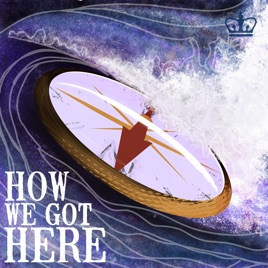
Advertise on podcast: How We Got Here
Rating
4.7from
This podcast has
7 episodes
Language
EnglishPublisher
Columbia Journalism SchoolExplicit
No
Date created
2021/07/19
Latest episode
2021/08/16
Average duration
44 min.
Release period
5 days
Description
How We Got Here is a podcast for journalists about how history and identity shape narrative. George Floyd’s murder, the Black Lives Matter movement, the election, the attempted coup - they’ve all brought America to a reckoning with its national character. Six professors from the Columbia University Graduate School of Journalism take a step back to examine the historical context of today’s news. They look at how race, gender, class, immigration and American empire impact the stories we cover and how we tell them.
Unlock How We Got Here podcast Email contact info,
Listeners & Audience details
Email contact information
Direct podcast contact details

Listeners
Audience numbers & engagement insights

Audience details
Podcast Insights

Podcast episodes
Check latest episodes from How We Got Here podcast
Genders and Sexualities
2021/08/16
Gender and sexuality can feel natural and even immutable, but science and the lived experience of numerous humans tell us that these categories are far more variable than they may seem. At a time when dozens of states around the US have passed or are considering legislation to enforce rigid definitions of gender, queer theorist Jack Halberstam and journalist Zach Stafford discuss the fallaciousness of what scholars call the “gender binary.” Bringing an intersectional perspective, and looking at examples from women’s sports, they invite journalists to speak truth to the power that is exercised, often violently, through an insistence on “normative” ideas of gender and sexuality.
Unwelcome to America
2021/08/16
The American Dream is often portrayed as the hook that pulls people to the United States. What is usually left out of the story is the hell many flee, sometimes a hell fed by the very country in which they seek refuge. The story of U.S. involvement in Central America is a classic example of wars inflicted on people by U.S. financed repressive regimes and later by gangs grown in the U.S. and deported wholesale to vulnerable nations. In this episode, a scholar sheds light on the invention of the “illegal alien,” its use and manipulation for the past 140 years (and counting) to exclude and exploit people of color and more recent notions of who and who is not deserving of legal admission into the United States.
Class
2021/08/10
Steel produced in Youngstown, Ohio, helped America win World War II, and it was used to build the bridges that we cross and the buildings in which we live. But in the 1970s, the mills began closing. Some 50,000 well-paid jobs were gone. There was a concurrent rise in anger as the workers and their children struggled to survive with minimum-wage jobs or in the gig economy. Youngstown represents the widening chasm of class division in the United States. Journalists need to understand how class informs politics and culture. In this episode we talk with a labor studies expert about how to cover the working class.
Empire
2021/08/10
There is a long tradition of imperial denial in the United States. After all, Americans fought the British Empire and have always thought of themselves as different from European colonialists. They are Empire Slayers — why else would “Star Wars” and its fight against the Galactic Empire have such a hold on the popular imagination? In this episode, two scholars explain how, from the nation’s birth, imperial expansion — first westward into Indian Country and later, overseas —was a defining character of the United States. The echoes of empire can be heard in today’s news. It’s impossible to talk about immigration, drone strikes, the attacks on Asian Americans, the US withdrawal from Afghanistan, etc., without understanding the history and projection of American power. What would journalism informed by the history of empire look like?
MUSIC CREDITS
Order of Entrance by Blue Dot Sessions
Greyleaf Willow by Blue Dot Sessions
Tapoco by Blue Dot Sessions
Gra Landsby by Blue Dot Sessions
Pencil Marks by Blue Dot Sessions
Lunette by Blue Dot Sessions
Watercool Quiet by Blue Dot Sessions
Pukae by Blue Dot Sessions
Checkered Blue by Blue Dot Sessions
Ottol by Blue Dot Sessions
Whiteness
2021/08/03
Whiteness in America isn’t just the neutral norm against which racial minorities, particularly Black people, are measured. Whiteness in America means having the privilege and power that go along with being part of that supposed norm. And becoming white – not in terms of pigment but of social status – is a choice that nearly every immigrant or refugee group in America has had to embrace or reject. We talk with two scholars in the field of Whiteness Studies, Nell Irvin Painter and Eric Goldstein, about how understanding the construction of white identity in this polyglot country gives us keen insights into its troubled racial history.
MUSIC CREDITS
Turning to You by Blue Dot Sessions
Our Only Lark by Blue Dot Sessions
Heather by Blue Dot Sessions
A Certain Lightness by Blue Dot Sessions
The Crisper by Blue Dot Sessions
Throughput by Blue Dot Sessions
Pukae by Blue Dot Sessions
Four and Fourteen by Blue Dot Sessions
The Longshoreman by Blue Dot Sessions
Ewa Valley by Blue Dot Sessions
Careless Morning by Blue Dot Sessions
Morning Glare by Blue Dot Sessions
Lick Stick by Blue Dot Sessions
The Half-Life of Democracy
2021/08/03
The issue of police violence and racism is a familiar one. It’s been present in the United States since the Republic's beginnings. And the stories of George Floyd, Breonna Taylor, Tamir Rice and others cannot be understood if we do not know and comprehend that history. In this episode, Jelani Cobb discusses race, crime, criminal justice, violence and the kind of cyclical dynamic that we have seen repeatedly over the decades with Harvard historian Dr. Khalil Muhammad. The conversation gives greater context and an insight into the shattering events of today by illuminating the roots of injustice and violence against Black Americans by those in authority.
MUSIC CREDITS
Pencil Marks by Blue Dot Sessions
Stock Still by Blue Dot Sessions
Ether Ridge by Blue Dot Sessions
Vine Crawler by Blue Dot Sessions
Gilly Wash by Blue Dot Sessions
Roadside Bunkhouse by Blue Dot Sessions
Arlan Vale by Blue Dot Sessions
Trailer – How We Got Here
2021/07/19
How We Got Here is a podcast for journalists about how history and identity shape narrative. As journalists, we like to say we’re writing the first draft of history. But if we don’t know our own history, we run the risk of misinterpreting what we see and what we hear. Of failing to connect the dots. George Floyd’s murder, the Black Lives Matter movement, the election, the attempted coup - they’ve all brought America to a reckoning with its national character.
Six professors from the Columbia University Graduate School of Journalism take a step back to examine the historical context of today’s news. They look at how race, gender, class, immigration and American empire impact the stories we cover and how we tell them.
How We Got Here is a production of the Columbia Graduate School of Journalism in partnership with Columbia Journalism Review.
Podcast sponsorship advertising
Start advertising on How We Got Here relevant audience podcasts
You may also like to advertise on these Podcasts
4.4371061566
The Megyn Kelly Show
SiriusXM
4.888901269
Fearless with Jason Whitlock
Blaze Podcast Network

4.8118931000
Mind Pump: Raw Fitness Truth
Sal Di Stefano, Adam Schafer, Justin Andrews, Doug Egge
4.8102131585
Tara Brach
Tara Brach

4.541561215
Something You Should Know
Mike Carruthers | OmniCast Media
4.513841343
Strictly Anonymous Confessions
Kathy Kay

4.8292781897
Fantasy Footballers - Fantasy Football Podcast
Fantasy Football

4.62382612
Football Weekly
The Guardian

4.45387666
Two Judgey Girls
Two Judgey Girls

3.8258501152
The Viall Files
Nick Viall