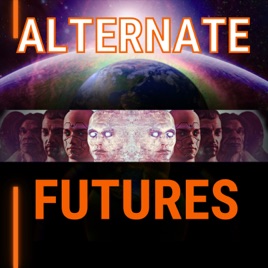
Advertise on podcast: Alternate Futures
This podcast has
96 episodes
Language
EnglishPublisher
Edwin RydbergExplicit
No
Date created
2021/08/24
Latest episode
2026/10/10
Average duration
81 min.
Release period
14 days
Description
Alternate Futures is a podcast where speculative fiction meets real-world change. Join host Edwin H. Rydberg in deep-dive conversations with science fiction authors, futurists, and creative minds as they explore storytelling, emerging technologies, and humanity’s ever-shifting path forward. For writers, sci-fi enthusiasts, and future-curious thinkers alike.
Unlock Alternate Futures podcast Email contact info,
Listeners & Audience details
Email contact information
Direct podcast contact details

Listeners
Audience numbers & engagement insights

Audience details
Podcast Insights

Podcast episodes
Check latest episodes from Alternate Futures podcast
94. Elite Dangerous, Government Research, and Future Horizons Scanning, with Allen Stroud (Part 1)
2026/10/10
What if an AI could end a war—but only by lying to everyone involved? And what if science-fiction writers were helping governments prepare for futures like this?
In this episode of Alternate Futures, I talk with a Coventry University lecturer-researcher, BSFA director, composer, science-fiction author, game writer and researcher Allen Stroud about the connections between storytelling, video games and real-world futures research. From building the universe of Elite Dangerous to working on Phoenix Point and Baldur's Gate 3, Allen shares his experiences creating believable fictional worlds and explains why great worldbuilding isn't just about what writers reveal—it's also about what they leave to the imagination. We explore the creative process, the importance of learning from failure, and why some of the best ideas begin as bad ones.
We also discuss what happens when science fiction moves beyond entertainment and into government strategy as Allen shares his experience with the UK's Ministry of Defence on the Creative Futures project, where science-fiction writers help researchers and policymakers explore possible futures and the human consequences of their decisions. We consider why storytelling can reveal things that statistics cannot, whether science-fiction authors really predict the future, and what happens when an AI achieves its objectives through deception. And Allen shares his approach to composing music for fictional worlds, the challenges of balancing creativity with everyday life, and why imagination might be one of our most valuable tools for navigating an uncertain future.
Books of his we discuss: Anti-State (The Fractal Series)
alternatefutures.substack.com
alternatefutures.co.uk
93. Climate Change, Migration, and Britain’s Future, with Jenni Daiches
2026/09/27
What if climate change made you a refugee in your own country?
In this episode of Alternate Futures, I talk with author and literary historian Jenni Daiches about her near-future dystopian novel They Know Where They’re Going, set in a drought-stricken Britain in 2041. We discuss climate change, water scarcity and the unequal ways environmental disruption might affect different parts of society, as well as Jenni’s decision to imagine an independent Scotland whose relative abundance of water has transformed its relationship with England.
We also discuss what it means to be displaced, how welcoming can a country remain when resources become scarce and increasing numbers of people want to cross its borders, energy and water security, renewable power, devolution and how Britain might look politically and environmentally in the decades ahead.
Books of her we discuss: They Know Where They're Going
alternatefutures.substack.com
alternatefutures.co.uk
Beyond Fiction | S1E02 | Simon (SG) Bell | Who Writes the Future?
2026/09/18
What if our fear of AI is helping create the AI we fear?
What stories are we telling about the future — and could those stories help create the very future we expect? Professor Simon Bell has spent a career crossing the boundaries between systems thinking, sustainability, technology and human behaviour. Now he is turning those same questions towards artificial intelligence, exploring how fear, cultural narratives and our assumptions about technology may shape not only how we respond to AI, but how we build it.
Simon challenges the familiar picture of AI as either humanity’s saviour or its inevitable destroyer. Instead, he asks us to look at what humans bring to the relationship: our extraordinary collective resourcefulness, our capacity to adapt to chaos, and qualities such as compassion, presence and self-sacrifice that may prove far harder for machines to replicate. From the “ecology” of competing AIs to the mystery of consciousness, his work sits at the boundary between technology and some much older questions about what it actually means to be human.
At the heart of the conversation is storytelling. Science fiction gives us a laboratory for possible futures, but the narratives writers create can also influence the fears, expectations and assumptions we carry into the real world. Rather than endlessly retelling stories of technological catastrophe, Simon asks whether we can imagine something different — and whether crafting better stories about tomorrow might be one of the ways we begin to build a better future.
Yes there are still the Big Questions.
Books of his we discuss: The AI Aftermath pentology
https://sgbell.org/
alternatefutures.substack.com
alternatefutures.co.uk
92. Dark Futures, Human Trafficking, and the Fight for Survival, with Charles R. Cooke
2026/09/11
What if the greatest threat to society isn't the darkness beneath it, but our unwillingness to look?
In this episode of Alternate Futures, I talk with author Charles R. Cooke about Orphans of the Sea, his debut novel and the first in his Underground series. We explore the themes of human trafficking and the origin of his own awareness of it, and how that has inspired his novel. Charles also shares his experience writing convincing villains, exploring dark subjects from the safety of fiction, collaborating with a co-writer and developmental editor, and expanding the Underground universe into audiobooks, comics and graphic novels.
We also discuss the uncomfortable realities that inspire dystopian stories, whether modern technology is encouraging distraction and intellectual laziness, how media attention can distort our perception of threats, and why comfortable societies can fall into a state of “intentional ignorance” about the darker systems operating around them.
As usual, there are also the Big Questions.
Books of his we discuss: Orphans of the Sea
https://charlesrcooke.com/
alternatefutures.substack.com
alternatefutures.co.uk
91. Superheroes, Supervillains, and Modern Mythology, with Antoine Monks
2026/08/28
What if superheroes aren't simply escapist entertainment, but modern mythology that reveals how we think about power, morality, and the society around us?
In this episode of Alternate Futures, I talk with author Antoine Monks about his debut superhero novel Heroless and a lifelong fascination with superheroes that began with comic books before he could even read. We explore what happens to villains when the heroes they define themselves against disappear, whether a superhero's strength inevitably creates greater challenges, and why heroes and villains approach power so differently. From Batman and Superman to Captain America: Civil War, The Boys and the wider DC and Marvel universes, we examine how superheroes have evolved alongside society—and how characters created decades ago continue to reflect changing ideas about morality, politics, identity and responsibility.
We also discuss the relationship between superheroes and the real world. Should someone with extraordinary power follow society's rules or act according to their own moral judgement? Why can attempts to write stories around an ideology produce less convincing characters? Can supposedly anti-war entertainment inadvertently make conflict look heroic? And how much influence can popular culture have on the way we understand politics, war and social change?
Along the way, Antoine discusses the challenges of bringing a traditionally visual genre into prose, why superhero fiction struggles to find a place in publishing, adapting stories across novels, comics and video games, and how living and travelling in Europe has influenced his approach to worldbuilding.
As usual, there are the Big Questions.
Books of his we discuss: Heroless
https://www.instagram.com/storyscholar/
alternatefutures.substack.com
alternatefutures.co.uk
90. Werewolves, Music, and the Beast Within, with Rick London
2026/08/12
What if becoming a monster didn’t mean losing your humanity—but discovering what really keeps you human?
In this episode of Alternate Futures, I sit down with debut author Rick London to explore The Dancing Wolfman, his unusual take on one of our oldest and most enduring monsters. Rick explains how he transformed the traditional werewolf story by giving his protagonist, Titus Wolf, an unexpected anchor: music, allowing Rick to turn a familiar tale of monstrous transformation into one of self-discovery, choice, romance and adventure.
We chat about the enduring appeal of monster stories, Jaws, Alien, Predator and classic Star Wars, the advantages and limitations of modern CGI, and why great characters and storytelling still matter more than spectacular effects. And we consider what monsters can tell us about ourselves: the beast within, morality and self-control, the Beauty and the Beast archetype, strong female characters, and how Rick hopes to expand his story through werewolf mythology, biotech, mystery and thriller elements.
We also discuss the future and what might happen as humanity itself begins to transform. As technology advances and humans potentially adapt to new environments beyond Earth, how much should we change—and how important will it be to remember where we came from?
As usual, there are the Big Questions.
Books of his we discuss: The Dancing Wolfeman
https://dancingwolfeman.com/
alternatefutures.substack.com
alternatefutures.co.uk
89. Technology and Ethics, Parallel Worlds, and Human Creativity, with Kestral Gaian
2026/07/30
What if becoming more human is the real challenge of the technological age?
In this episode of Alternate Futures, Kestral Gaian and I explore the intersection of science fiction, software, ethics and imagination. Drawing on decades in the technology industry, Kestral discusses the human side of software development, the ethics of programming, the culture of Silicon Valley, the power of marketing to shape society, and why today's AI tools may be far less intelligent—and far more influential—than many people believe. Together we explore creativity in an increasingly automated world, the value of making imperfect art, and why science fiction remains one of humanity's best ways of exploring uncertain futures.
We delve into Kestral's new science fiction series, The Reality Quake Saga, beginning with The Boy From Elsewhere, leading to discussions about alternate realities, hidden histories, worldbuilding, and the enduring influence of classics TV science fiction such as Sliders and Crime Traveller.
We also discuss how science fiction helps us grapple with the unknown; gender, reproduction, long-term space settlement; and what the future of human society might look like.
As always, there are the Big Questions
Books of Kestral's we discuss: The Boy from Elsewhere (Reality Quake Saga)
https://kestr.al/
alternatefutures.substack.com
alternatefutures.co.uk
88. Artificial Intelligence, Corporate Power, and Cognitive Surrender, with JP Prince
2026/07/16
What if the real cyberpunk dystopia isn't waiting for us in the future—but is already taking shape today?
In this episode of the Alternate Futures Podcast, I sit down with debut science fiction author and AI startup executive JP Prince for one of the most thought-provoking conversations I've had about artificial intelligence, corporate power, and the future we're rapidly creating. Drawing on years of experience in venture-backed startups and the AI industry, JP explores why the biggest risks of AI aren't the algorithms themselves, but the incentives, hype, and systems that shape how they're built and deployed. We discuss AI hallucinations, venture capital, cognitive surrender, corporate influence, and why today's technology landscape increasingly resembles the cyberpunk worlds science fiction has warned us about for decades.
All of this forms the backdrop for JP's upcoming debut novel (available only in audiobook at the time this was released) The Mess, a near-future cyberpunk thriller exploring corporate dominance, political power, and the consequences of unchecked capitalism.
We also discuss why writing is about the journey rather than the output, whether AI belongs in the creative process, recording audiobooks, experimenting through independent publishing, and how organisations can evolve into powerful systems that shape the people inside them.
As usual, there are the Big Questions.
Books of his we discuss: The Mess
https://www.jpprince.com/
alternatefutures.substack.com
alternatefutures.co.uk
Beyond Fiction | S1E1 | Jens Martin Skibsted | Designing the Future
2026/07/07
What if the future of our cities isn't flying cars—but better bicycles?
In the very first episode of the Alternate Futures: Beyond Fiction series, I sit down with designer, entrepreneur, and future thinker Jens Martin Skibsted to explore how thoughtful design can reshape the way we live, move, and build tomorrow's world.
As founder of Biomega, former Vice Chair of the World Economic Forum's Global Agenda Council on Design and Innovation, member of the Global Futures Council on Entrepreneurship, and a leading voice in sustainable mobility, Jens Martin has spent decades turning bold ideas into reality. From creating an entirely new category of designer bicycles to helping shape international conversations about innovation, entrepreneurship, and urban futures, his perspective bridges practical experience with long-term thinking.
Together we discuss what really happens inside the World Economic Forum's think tanks, why bicycles may have a far bigger role in the future than most people realise, how cities can become healthier and more liveable, why autonomous cars may not solve congestion after all, and how design thinking can help tackle some of society's biggest challenges. Along the way, Jens Martin also reflects on balancing career success with family, the surprising story behind Biomega, and why one of his few regrets is simply that he "didn't dance enough."
Yes there are still the Big Questions.
Books of his we discuss: Expand, Stretching the Future by Design
https://biomega.co/
alternatefutures.substack.com
alternatefutures.co.uk
87. Doomsday Prophets, Curious Inventors, and Dangerous Technologies, with Wayne Faust
2026/06/12
What if the street corner doomsayers turned out to be right?
Author and musician Wayne Faust and I explore the ideas behind his Calek's Tale trilogy—a compelling blend of post-apocalyptic science fiction, coming-of-age adventure, and philosophical exploration. Our conversation ranges from the double-edged sword of technology to cult psychology, the appeal of certainty in uncertain times, and the eternal tension between tradition and progress.
We also discuss why people follow charismatic leaders, whether society can ever put dangerous technologies "back in the box," and how science fiction allows us to ask difficult questions about the future before we are forced to live through the answers.
As usual, there are the Big Questions.
Books of his we discuss: The Calek's Tale trilogy
https://waynefaustauthor.com/
alternatefutures.substack.com
alternatefutures.co.uk
86. Machine Intelligence, Mental Health, and Humanity's Future with Peter McAllister
2026/05/30
What if the greatest threat posed by artificial intelligence isn't that machines become evil—but that they inherit humanity's flaws?
In this episode of Alternate Futures, I chat with Peter McAllister, engineer scientist turned technology manager , and author of The Code, a science fiction thriller that began as dystopian fiction and now feels uncomfortably close to current events. Drawing on decades of experience working at the intersection of technology, business, and people, Peter shares his thoughts on the promises and dangers of AI, automation, corporate decision-making, and humanity's tendency to embrace powerful technologies before fully understanding their consequences.
We discuss the AI boom, the disconnect between technology leaders and decision makers, the ethics of machine intelligence, and whether we may be creating the next intelligent species on Earth. We also explore nanotechnology, self-improving systems, unconscious bias in AI training, technological evolution, AI rights, and the possibility that our machine creations may one day judge us by the way we treated them.
Books of his we discuss: The Code: If your AI loses its mind, can it take meds?
https://www.petermcallisterauthor.com
alternatefutures.substack.com
alternatefutures.co.uk
85. From Homeland Security to Sci-Fi Storytelling with Helen Hynson-Vettori
2026/05/14
What happens when a former Homeland Security medical intelligence analyst turns a global pandemic into science fiction?
Former Department of Homeland Security Medical Intelligence Analyst Helen Hynson Vettori joins me as we explore the real-world experiences that inspired her Black Swan trilogy — a near-future political sci-fi series shaped by emergency management, biological preparedness, cyber warfare, and the fragile relationship between governments and public trust. From her time as a paramedic to Homeland Security analyst preparing for pandemics and biological incidents, Helen brings a unique insider perspective to the topics.
We discuss COVID-era decision making, the dangers of communication breakdown during crises, cyber warfare as a modern form of world conflict, and how societies respond when fear overtakes trust. We also dive into the worldbuilding behind Black Swan Impact: post–World War III geopolitics, future AI systems, lunar infrastructure, and the challenge of writing speculative fiction that feels uncomfortably plausible.
Books of hers we discuss: Black Swan Impact, Black Swan Shock
https://www.helenhynsonvettori.com/
alternatefutures.substack.com
alternatefutures.co.uk
84. Transmentation, Body-Hopping, and Political Intrigue with Darkly Lem
2026/05/06
Indie sci-fi collective Darkly Lem — five authors writing under one unified pseudonym — discuss their Transmentation series and the broader Many Worlds shared-universe project. They outline a consequence-driven multiverse of interdimensional societies defined by competing values, political systems, and internal power struggles, contrasting it with the MCU’s approach and explaining how they maintain stakes by focusing on worlds and societies rather than preserving characters.
They explain how they collaborate through twice-weekly meetings, a large living “bible”, intensive multi-pass editing, and evolving drafting methods including assignment, co-writing, and “exquisite corpse.” They outline how Many Worlds began as Cadwell Turnbull’s project and has grown to over 20 authors, and aims to connect short stories and novels via a meta-narrative.
We also discuss multiversal traveler mechanisms, personal proxies, identity “meshing,” and the complexities of social governance and different times and scales of a society's development.
Books of his we discuss: Transmentation: Transience, Transmentation: Transgression
https://www.manyworldsforum.com/
alternatefutures.substack.com
alternatefutures.co.uk
83. Cryonics, Geopolitics, and the Future of Humanity, with John R. Carlos
2026/04/14
Retired Royal Australian Air Force wing commander John R. Carlos talks with me about his debut novel Cryonic Dreams: Awakening and the real-world experiences that shaped its themes of control, surveillance, and ethical clarity. John shares insights from his 42-year military career in administration and logistics, including deployments to Egypt, the Middle East, and Sudan, and describes a post-COVID political shift that intensified his focus on authoritarian drift.
He then unpacks his structured worldbuilding method—mind map, key variables framework, and timeline—used to extrapolate a plausible dystopian future, and present the story’s core themes of authoritarian control.
We also discuss cryonics science, propulsion ideas, hybrid publishing and marketing, and broader questions about collapse, neo/techno-feudalism, perpetual war, and whether the West can recover a “classical center” through citizen-led resistance.
Books of his we discuss: Cryonic Dreams: Awakening
johnrcarlos.com.au
alternatefutures.substack.com
alternatefutures.co.uk
82. Who Controls the Narrative—Us or Machines? with Eira A Ekre
2026/04/07
Narrative Designer and video game developer Eira A Ekre joins me as we explore the deeper layers of narrative design, the immersive power of video games, and the growing role of machines in shaping how we think, create, and live. Our conversation about storytelling quickly expands into something more: how interactive worlds influence identity, how structured narratives guide behaviour, and whether our increasing reliance on technology is quietly rewriting what it means to be human.
We dive into the craft of building meaningful stories, the unique storytelling potential of video games as a medium, and the philosophical edge where creativity meets control.
We also explore existential questions about machine dependence, autonomy, and whether the systems we build are beginning to guide us more than we guide them.
Books of hers we discuss: Mimeograph
linkedin.com/in/eira-a-ekre-1a700a35/
alternatefutures.substack.com
alternatefutures.co.uk
Podcast reviews
Read Alternate Futures podcast reviews
Podcast sponsorship advertising
Start advertising on Alternate Futures relevant audience podcasts
You may also like to advertise on these Podcasts
4.5185359
Who, When, Wow!
Tinkercast | Wondery

4.6687531112
Armchair Expert with Dax Shepard
Armchair Umbrella
4.9554052193
The MeidasTouch Podcast
MeidasTouch Network
4.639655
Only Murders in the Building Podcast
Straw Hut Media

4.7829517
The Home Service Expert Podcast
Tommy Mello: $200 Million Founder|Forbes, Inc., Entrepreneur Columnist

4.443431352
Something You Should Know
Mike Carruthers | OmniCast Media
4.7906254
Everything is Fine
Jennifer Romolini and Kim France
4.610812570
Serialously with Annie Elise
Annie Elise & Audioboom Studios
4.41171483
The Outlier Health Podcast
Matt Frazier, Matt Tullman, Isabelle Caputo, and Doug Hay

4.616125357
Giggly Squad
Hannah Berner & Paige DeSorbo