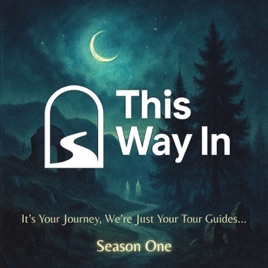
Advertise on podcast: This Way In
Rating
5from
This podcast has
20 episodes
Language
EnglishPublisher
Collected Sounds MediaExplicit
No
Date created
2021/09/09
Latest episode
2026/09/23
Average duration
56 min.
Release period
23 days
Description
This Way In is a therapist-guided, layperson-led journey into mental health, healing, and self-discovery. Brittney (the therapist) and Amy (the curious one) explore trauma, emotions, and the parts that make us who we are—with compassion and clarity.
Unlock This Way In podcast Email contact info,
Listeners & Audience details
Email contact information
Direct podcast contact details

Listeners
Audience numbers & engagement insights

Audience details
Podcast Insights

Podcast episodes
Check latest episodes from This Way In podcast
18: Why We Love the Way We Do (Symptoms & Diagnosis Series: Attachment)
2026/09/23
Why do some relationships feel safe and easy while others leave us anxious, distant, confused, or desperately trying to hold on?
In this episode, Amy and Brittney dig into attachment and the ways our earliest relationships can shape how we connect with other people throughout our lives. Brittney explains the difference between bonding and attachment, what children actually need from their caregivers, and how those needs can affect our relationships long after childhood.
They break down secure attachment and the three types of insecure attachment: avoidant, ambivalent, and disorganized. Along the way, they talk about why familiar relationship patterns can be so difficult to recognize, how attachment wounds can get passed from one generation to the next, and why our childhood experiences can continue showing up in adult relationships even when we have no idea they're running the show.
They also explore some attachment needs that may sound simple but can have a huge impact, including healthy limits and boundaries, validation, reassurance, loving correction, emotional attunement, and simply delighting in a child for being who they are.
And because discovering your own “attachment junk” isn't exactly the cheeriest revelation, Brittney explains why none of this means we're permanently stuck with the patterns we learned growing up. Attachment wounds can be worked on, and approaches including EMDR and ego state work can help adults begin meeting needs that weren't met earlier in life.
Because, as Amy puts it, everybody's got some sh*t they gotta work out.
Content note: This episode includes discussion of childhood abuse, sexual abuse, trauma, dysfunctional family relationships, and other potentially sensitive topics.
This Way In is a conversation about mental health and everyday well-being, but it is not therapy. The information shared is for educational and entertainment purposes only and should not replace care or advice from a qualified mental health professional.
Chapter Markers
00:00 Intro
01:30 What is Attachment
02:44 Bonding and Attachment
04:42 Boy Mom Tangent
06:52 Types of Attachment
18:12 Attachment in Relationships
19:25 Attachment Junk
20:39 Diagnoses for Attachment Trauma
22:42 Importance of Social Support
32:31 List of Attachment Needs
43:33 Other Attachment Needs from Parents
46:44 Attachment is Tricky
49:36 First Five Years
50:17 Being Attuned to Your Child
54:26 Not Taught in School
56:16 Disclaimer and Credits
Episode links:
Ego State Therapy Interventions to Prepare Attachment-Wounded Adults for EMDR by Shirley Jean Schmidt
https://amzn.to/4h5ES9b
The Developmental Needs Meeting Strategy: An Ego State Therapy for Healing Adults with Childhood Trauma and Attachment Wounds by Shirley Jean Schmidt
https://amzn.to/4zRzLRz
Leave us a voicemail at: https://www.podpage.com/this-way-in/voicemail/
Amazon links could generate a small commission to the show, at no additional cost to you.
This episode was recorded on August 19, 2026 and released on September 23, 2026.
17: When the Past Won’t Stay in the Past (Symptoms & Diagnoses of PTSD)
2026/09/09
In this episode, Amy and Brittney dig into PTSD: what actually qualifies for a diagnosis, how trauma can affect the brain and body, and why the symptoms can look very different from person to person.
They explore flashbacks, avoidance, hypervigilance, dissociation, emotional numbness, and the difference between “big T” and “little t” trauma. Brittney also explains complex PTSD, how trauma symptoms can overlap with conditions like anxiety, depression, and ADHD, and how severe trauma can sometimes involve hallucinations and delusions.
Plus, they talk about the role attachment and support systems play in trauma, why the body can hold onto experiences even when our conscious memory doesn’t, and treatment approaches including EMDR, ego state therapy, CBT, and DBT.
They also discuss the fear that can come with starting trauma therapy, why healing sometimes means going slowly, and the vicarious trauma experienced by first responders, therapists, and others who regularly witness or hear about traumatic events.
As always, this conversation is for education and discussion and is not a substitute for individualized mental health care.
This episode was recorded on May 18, 2026 and released on September 9, 2026.
Chapter Markers
00:00 Intro
00:00:45 What Actually Qualifies as PTSD
00:02:48 Avoidance
00:12:21 When the Stress Response Stays On
00:16:37 Big T, Little T
00:18:33 Complex PTSD
00:20:20 Complex PTSD Overlaps
00:21:59 Dissociation & Disintegration
00:30:25 Hallucinations, Delusions & Trauma
00:34:02 Narrative Disruption
00:47: 56 Therapies That Work for Trauma
00:56:15 Finding the Right Trauma Therapist for You
00:58:12 One More Thing About Types of Attachment
01:03: 25 First Wrap Up
01:06:21 Helpers Need Help
01:11:36 Disclaimer and Credits
Crisis Text Line is a global nonprofit organization founded in 2013 that provides mental-health support through text messaging.
In the U.S., people can text “HOME” to 741741 to connect with a live trained crisis counselor.
The service is free, confidential, and available 24/7.
They support people dealing with things like anxiety, loneliness, bullying, substance use, self-harm, and suicidal thoughts.
Disclaimer
This Way In is a conversation about mental health and wellbeing, not a replacement for therapy. Listening does not create a therapist–client relationship. Please never delay, disregard, or change professional recommendations because of something you hear here.
Credits:
Co-Produced and Hosted by: Brittney Baxter Dameron and Amy Lotsberg
Production, Artwork, and Editing: Amy Lotsberg at Collected Sounds Media, LLC.
Theme song. “The Journey” by Melissa West and Mixed/Mastered by Pink Flamingo Home Studio
Thank you for listening, take care of yourselves. We’ll see you next time!
16: Same Letters, Different Story (Symptoms & Diagnoses for Borderline Personality and Bipolar Disorders)
2026/08/26
Bipolar disorder and borderline personality disorder may have similar names and some overlapping symptoms, but they are very different diagnoses.
In this episode, Amy and Brittney break down the differences between bipolar disorder and borderline personality disorder, including depression, mania and hypomania, emotional reactivity, impulsivity, attachment, and fear of abandonment. They also look at where symptoms can overlap and why telling the difference isn't always as straightforward as it seems.
Along the way, they use examples from King of the Hill, Shameless, Crazy Ex-Girlfriend, Girl, Interrupted, and even Star Wars to help put some of these symptoms into context. They also discuss sleep, medication, support systems, routines, and other tools that may help manage symptoms.
Plus: Amy learns that apparently starting with the same letter is enough for her brain to file two completely different diagnoses in the same folder.
Chapters
00;21 Intro
01:11 Why the Mix-Up?
02:23 Symptoms if Bipolar Depression
08:00 Pop Culture Examples of Bipolar
12:24 Symptoms & Criteria of Borderline Personality Disorder
17:37 Pop Culture References of Borderline
22:56 Overlaps of Bipolar and Borderline
26:24 Getting Help, Not Self-Diagnosis
28:39 Help for Both Disorders
33:41 Three Spirit Drinks
34: 24 Is it Manic?
35:20 Medications
37:04 Non-Medicinal Help
47:22 One last question
52:08 How You Can Help Someone
This episode was recorded on May 4, 2026 and released on August 26, 2026.
Episode links:
I Hate You Don't Leave Me by Jerold J. Kreisman, Hall Strauss https://amzn.to/4qDgyyA
Amazon links could generate a small commission to the show, at no additional cost to you.
Crisis Text Line is a global nonprofit organization founded in 2013 that provides mental-health support through text messaging.
In the U.S., people can text “HOME” to 741741 to connect with a live trained crisis counselor.
The service is free, confidential, and available 24/7.
They support people dealing with things like anxiety, loneliness, bullying, substance use, self-harm, and suicidal thoughts.
Disclaimer
This Way In is a conversation about mental health and wellbeing, not a replacement for therapy. Listening does not create a therapist–client relationship. Please never delay, disregard, or change professional recommendations because of something you hear here.
Credits:
Co-Produced and Hosted by: Brittney Baxter Dameron and Amy Lotsberg
Production, Artwork, and Editing: Amy Lotsberg at Collected Sounds Media, LLC.
Theme song. “The Journey” by Melissa West and Mixed/Mastered by Pink Flamingo Home Studio
Thank you for listening, take care of yourselves. We’ll see you next time!
15: When Everything Feels Heavy (Symptoms and Diagnoses of Depression)
2026/08/12
Depression is much more than feeling sad. It can affect your body, your thoughts, your motivation, and the way you experience the world around you.
In this episode, Amy and licensed therapist Brittney Baxter Dameron explore the symptoms of depression, how it differs from grief and everyday sadness, why depression often overlaps with anxiety, and what it actually feels like to live with it. They also discuss practical ways to support yourself or someone you love, from building meaningful connections to finding small steps that can help break through the shutdown response.
Content Warning: This episode includes an in-depth discussion of suicide and suicidal ideation.
Crisis Text Line is a global nonprofit organization founded in 2013 that provides mental-health support through text messaging.
In the U.S., people can text “HOME” to 741741 to connect with a live trained crisis counselor.
The service is free, confidential, and available 24/7.
They support people dealing with things like anxiety, loneliness, bullying, substance use, self-harm, and suicidal thoughts.
This episode was recorded on April 6, 2026 and released on August 12, 2026.
If you prefer to consume your podcasts visually, we also offer video versions on YouTube @thiswayinpodcast or at our website at https://www.thiswayinpodcast.com\
Chapter Markers
00:00 Welcome and Trigger Warning
01:07 Why Depression Defies Logic
02:46 Personal Experiences and Prevalence
04:36 Roots in Trauma and Attachment
08:51 Depression Anxiety Overlap
10:56 Gender Differences and Control
13:54 Clinical Symptoms Checklist
16:28 Suicide and Misconceptions
18:26 How Depression Feels Physically
20:25 Dark Thoughts and Self Talk
22:57 Anhedonia and Grief vs Depression
26:43 Treatment Beyond Medication
27:19 Activate Your Body
28:16 Nature As Medicine
30:29 Senses And Small Wins
32:23 Music For Connection
34:12 Loneliness And Suicide Risk
37:32 Prevention Through Connection
38:58 Medication Tradeoffs
43:20 Therapy And Deeper Work
44:53 Reaching Out To Others
48:11 After The Episode
50:09 Treat Yourself And Credits
Disclaimer
This Way In is a conversation about mental health and wellbeing, not a replacement for therapy. Listening does not create a therapist–client relationship. Please never delay, disregard, or change professional recommendations because of something you hear here.
Credits:
Co-Produced and Hosted by: Brittney Baxter Dameron and Amy Lotsberg
Production, Artwork, and Editing: Amy Lotsberg at Collected Sounds Media, LLC.
Theme song. “The Journey” by Melissa West and Mixed/Mastered by Pink Flamingo Home Studio
Thank you for listening, take care of yourselves. We’ll see you next time!
14: Why Am I Panicking? (Symptoms & Diagnoses: Anxiety)
2026/07/29
What does a panic attack actually feel like? How is it different from everyday stress or generalized anxiety? And why can anxiety make you feel like you're having a heart attack when you're perfectly safe?
In this episode of This Way In, Amy shares her firsthand experience with panic attacks while Brittney explains what's happening in the brain and body during both panic attacks and generalized anxiety disorder. Together, they explore common symptoms, why anxiety can seem to come out of nowhere, how panic disorder differs from generalized anxiety, and practical grounding techniques that can help calm the nervous system.
Whether you've experienced anxiety yourself or want to better understand someone who has, this episode offers compassionate, practical insight into one of the most common mental health conditions.
This episode was recorded on March 23, 2026 and released on July 30, 2026.
If you prefer to consume your podcasts visually, we also offer video versions on YouTube @thiswayinpodcast or at our website at https://www.thiswayinpodcast.com
Chapter Markers
00:25 Intro
01:00 Amy's Past Experiences with Panic Attacks
06:58 Tips for Calming a Panic Attack
15:33 Panic Disorder
29:01 Anxiety Disorder
40:01 Next Time
40:32 Disclaimer
Leave us a voicemail at: https://www.podpage.com/this-way-in/voicemail/
Disclaimer
This Way In is a conversation about mental health and wellbeing, not a replacement for therapy. Listening does not create a therapist–client relationship. Please never delay, disregard, or change professional recommendations because of something you hear here.
Credits
Co-Produced and Hosted by: Brittney Baxter Dameron and Amy Lotsberg
Production, Artwork, and Editing: Amy Lotsberg at Collected Sounds Media, LLC.
Theme song. “The Journey” by Melissa West and Mixed/Mastered by Pink Flamingo Home Studio
Thank you for listening, take care of yourselves. We’ll see you next time!
13: The Many Faces of ADHD (Symptoms and Diagnoses Series)
2026/07/15
Have you ever wondered if you have ADHD... or if something else might be causing similar symptoms?
In this first episode of our new Symptoms & Diagnoses series, licensed therapist Brittney joins Amy to unpack The Many Faces of ADHD. Together they explore the differences between inattentive, hyperactive, and combined presentations of ADHD, why self-diagnosis can be misleading, and how conditions like anxiety, PTSD, and depression can sometimes look remarkably similar. They also discuss what ADHD symptoms actually feel like, why they develop differently from person to person, and how understanding your brain can be a powerful first step toward self-compassion.
Whether you've been diagnosed with ADHD, suspect you might have it, or simply want to better understand yourself or someone you love, this episode offers practical insights without judgment. Brittney shares real-world strategies for managing both inattentive and hyperactive symptoms, explains why getting the right diagnosis matters, and reminds us that behind every diagnosis is a unique person, not just a checklist.
This episode was released on July 8, 2026.
If you prefer to consume your podcasts visually, we also offer video versions on YouTube @thiswayinpodcast or at our website at https://www.thiswayinpodcast.com
Chapter Markers
00:23 Intro
11:25 Inattention Symptoms
19:34 Hyperactivity and Impulsivity Symptoms
24:11 Overlap to other Diagnoses
28:14 Being Diagnosed with ADHD
33:50 Ways to Deal with Hyperactivity Symptoms
34:40 Ways to Deal with Inattentive Symptoms
38:53 How We Learn
41:50 Music is Magic
46:03 Managing Symptoms of ADHD
01:02:24 Disclaimer/Outro
Disclaimer
This Way In is a conversation about mental health and wellbeing, not a replacement for therapy. Listening does not create a therapist–client relationship. Please never delay, disregard, or change professional recommendations because of something you hear here.
Credits:
Co-Produced and Hosted by: Brittney Baxter Dameron and Amy Lotsberg
Production, Artwork, and Editing: Amy Lotsberg at Collected Sounds Media, LLC.
Theme song. “The Journey” by Melissa West and Mixed/Mastered by Pink Flamingo Home Studio
Thank you for listening, take care of yourselves. We’ll see you next time!
12: Plaques & Tangles: This Way Into Your Sleep
2026/06/24
Sleep. We all need it. Most of us aren’t getting enough of it. And somehow we still treat it like an optional side quest instead of basic human maintenance.
In this episode of This Way In, Amy and Brittney tumble headfirst into the strange, fascinating world of sleep. From circadian rhythms and sleep hygiene to stress dreams, lucid dreaming, REM cycles, and the very real effects poor sleep can have on your brain and body, this conversation wanders through both the science and the deeply human side of what happens when we close our eyes.
Amy's Note: At the time we were recording we were having some technicians here installing our furnace. So I had to stop a few times to talk to them, and also the little dog barked incessantly. I tried to cut her out, but it was only possible when I was not talking
They talk about:
· Why sleep affects far more than just energy levels
· The connection between sleep and long-term brain health
· Sleep routines that actually work in real life
· Why some people are night owls and others aren’t
· Dream symbolism, lucid dreaming, and those “wait… was that real?” dreams
· Emotional dreams that stick with you all day
· Why alarms are basically tiny panic attacks
· The myth of “catching up” on sleep
· Dogs who believe breakfast should happen at 5:42 AM sharp
There’s science. There’s woo. There’s laughter. There’s existential dread about dementia. Basically: classic This Way In.
And yes... there is also a very vocal tiny dog making her opinions known throughout portions of the recording. At the time, Amy was also dealing with furnace technicians in the house, so despite editing efforts, some background chaos survived the final cut. Honestly? It feels on-brand for a conversation about disrupted sleep.
So fluff your pillow, silence your notifications (or don’t, we discuss that too), and join us as we wander This Way In… to your sleep.
This episode was recorded on February 23, 2026 and released on June 24, 2026.
If you prefer to consume your podcasts visually, we also offer video versions on YouTube @thiswayinpodcast or at our website at https://www.thiswayinpodcast.com
Chapter Markers
00:00:20 Intro
00:01:19 How Important is Sleep
00:12:16 Chronic Lack of Sleep
00:14:18 Sleep Hygiene & Circadian Rhythms
00:19:23 Why Teenagers Need More Sleep
00:21:52 Sleep Cycles, Alarms & Waking Up Groggy
00:29:03 Dreams, Lucid Dreaming & Emotional Processing
00:43:57 Sleep & Brain Health
00:53:01 Getting Your Circadian Rhythm Back on Track
00:56:02 Tools for Falling Asleep
01:04:31 Sleep Paralysis
01:08:49 Dreams vs. Visitations
01:13:33 Wrapping Up
Disclaimer
This Way In is a conversation about mental health and wellbeing, not a replacement for therapy. Listening does not create a therapist–client relationship. Please never delay, disregard, or change professional recommendations because of something you hear here.
Credits:
Co-Produced and Hosted by: Brittney Baxter Dameron and Amy Lotsberg
Production, Artwork, and Editing: Amy Lotsberg at Collected Sounds Media, LLC.
Theme song. “The Journey” by Melissa West and Mixed/Mastered by Pink Flamingo Home Studio
Thank you for listening, take care of yourselves. We’ll see you next time!
11: To Your Nervous System
2026/06/10
What does it actually mean to “reset your nervous system”? Is that even a real thing… or just another TikTok buzz phrase floating through the algorithm swamp?
In this episode, Amy and therapist Brittney Baxter Dameron dig into what the nervous system actually does, why our bodies react the way they do to stress, and why “calming down” is a lot more complicated than somebody yelling “just relax!” from across the room like an emotionally constipated camp counselor.
They explore the difference between real threats and perceived threats, how cortisol and adrenaline affect the body, and why chronic stress can leave us feeling exhausted, overwhelmed, anxious, emotionally fried, and stuck in survival mode. The conversation also covers the vagus nerve, fight/flight/freeze responses, and practical ways to give your nervous system a much-needed reprieve during difficult times.
Amy shares some of the tools that genuinely help her sleep and regulate stress, including guided sleep meditations, binaural beats, color-noise soundscapes, sleep stories, and even a surprisingly soothing color-by-number app that apparently relaxes her enough to convince her smartwatch she’s unconscious. Which honestly feels like a glowing review.
Brittney also explains:
· Why meditation doesn’t have to look like sitting cross-legged chanting “ohm”
· How creativity and sensory comfort can help regulate stress
· Why sleep is one of the most powerful nervous system reprieves we have
· The difference between healthy coping mechanisms and stress-relief behaviors that create even bigger problems later
· How to recognize when your body is trying to tell you something important
This episode also contains a very honest conversation about living through stressful and uncertain times, navigating fear and helplessness, and finding sustainable ways to care for yourself without shutting down completely.
So grab your coziest blanket, your comfort beverage, and maybe a pair of headphones for those binaural beats… and join us as we find our way into the strange, complicated world of stress, survival, and nervous system reprieves.
This episode was recorded on January 26, 2026 and released on June 10, 2026.
If you prefer to consume your podcasts visually, we also offer video versions on YouTube @thiswayinpodcast or at our website at https://www.thiswayinpodcast.com
Chapter Markers
00:00:21 Intro
00:00:54 What IS the Nervous System?
00:02:58 “Resetting” Your Nervous System
00:04:38 Controlling our Autonomic Nervous System
00:06:39 Breathing Exercise
00:07:35 “Calm Down” Rarely Works
00:09:56 Tips for Regulating Your Nervous System
00:11:02 Meditation
00:15:38 Binaural Sounds
00:18:47 Other Forms of Meditation
00:21:41 Other Nervous System Reprieves
00:23:03 Stress Responses in Everyday Life
00:25:18 A Cozy Environment
00:26:38 Sleep Hygiene
00:27:39 Cortisol Explained
00:31:57 Healthy Reprieves
00:32:18 Unhealthy Ways to Relieve Stress
00:36:06 Real and Perceived Threats
00:45:57 Credits
Episode links:
Leave us a voicemail at: https://www.podpage.com/this-way-in/voicemail/
Please see our blog post for the list of all the podcasts Amy recommends.
Disclaimer
This Way In is a conversation about mental health and wellbeing, not a replacement for therapy. Listening does not create a therapist–client relationship. Please never delay, disregard, or change professional recommendations because of something you hear here.
Credits:
Co-Produced and Hosted by: Brittney Baxter Dameron and Amy Lotsberg
Production, Artwork, and Editing: Amy Lotsberg at Collected Sounds Media, LLC.
Theme song. “The Journey” by Melissa West and Mixed/Mastered by Pink Flamingo Home Studio
Thank you for listening, take care of yourselves. We’ll see you next time!
10: To Choosing the Right Therapist For You
2026/05/27
WE'RE BACK!!!
After a "short" hiatus we are back!
Choosing a therapist can feel overwhelming. What do all those letters after their name mean? What’s the difference between therapy and counseling? And how do you know if the person sitting across from you is actually the right fit?
In this episode of This Way In, we unpack what therapy really is (and what it definitely isn’t), how to clarify what you want from the process, and how to tell if a therapist is helping you move forward—or if it’s time to try someone new. We also talk about telehealth, online therapy platforms, insurance realities, and the red flags to watch for. If you’ve ever wondered where to start—or whether you’re even “doing therapy right”—this conversation will help you feel more confident taking that next step.
This episode was recorded on January 12, 2026 and released on May 27, 2026.
If you prefer to consume your podcasts visually, we also offer video versions on YouTube @thiswayinpodcast or at our website at https://www.thiswayinpodcast.com
Chapter Markers
00:00:00 Intro
00:00:53 Therapy vs. Counseling
00:02:15 Credentials and What They Mean
00:06:29What Do You Want Out of Therapy
00:07:59 Reasons for Seeking Therapy
00:10:29 Dialectical behavior Therapy
00:17:16 Looking for Growth?
00:18:27 Looking for Trauma Healing?
00:19:56 Is This a Good Fit?
00:21:13 Reflective Listening
00:23:13 Treatment Plan
00:24:14 Things to Avoid
00:27:31 When it is NOT Therapy
00:30:08 When it’s the Parent’s Responsibility
00:33: 13 Your Responsibility in Therapy
00:36:07 When To Try a New Therapist
00:46:43 Popular Online Therapy Companies
00:51:13 Walking through the Search Process
00:52:57 Insurance or No
00:55:20 End Credits
Episode links:
“How to Behave So Your kids Will Too” by Dr. Sal Severe: https://amzn.to/4cchCEM
EMDR International Association: https://www.emdria.org/
Marsha M. Linehan https://en.wikipedia.org/wiki/Marsha_M._Linehan
Leave us a voicemail at: https://www.podpage.com/this-way-in/voicemail/
Amazon links could generate a small commission to the show, at no additional cost to you.
Disclaimer
This Way In is a conversation about mental health and wellbeing, not a replacement for therapy. Listening does not create a therapist–client relationship. Please never delay, disregard, or change professional recommendations because of something you hear here.
Credits:
Co-Produced and Hosted by: Brittney Baxter Dameron and Amy Lotsberg
Production, Artwork, and Editing: Amy Lotsberg at Collected Sounds Media, LLC.
Theme song. “The Journey” by Melissa West and Mixed/Mastered by Pink Flamingo Home Studio
Thank you for listening, take care of yourselves. We’ll see you next time!
9: Parts of Self Series: Logical Part and Series Wrap Up
2026/01/14
In this final episode of our Parts of Self series, we take a deep dive into the Logical Part. We explore what it does best, how it works with other parts, and what happens when it gets pushed out of the driver’s seat.
Logical is not emotionless or cold. When it is unburdened, it helps us problem-solve, reflect without spiraling, and navigate stress in a grounded and realistic way. When it becomes overwhelmed or co-opted by other parts, especially Critical or Protector, it can shut down or begin justifying behaviors that do not actually align with our values.
We also zoom out to look at how all parts work together, why balance matters more than control, and how logical thinking intersects with intuition, spirituality, and lived experience.
As part of the series wrap-up, Brittney walks through a practical overview of Parts of Self work, including how to create a mental meeting space, how to work with parts even if you cannot visualize, why physical sensations are often the clearest signal that parts work is active, and when doing this work on your own is appropriate versus when it is time to bring in a therapist.
We talk honestly about trauma containment, why parts exist in the first place, and how to approach this work safely and compassionately.
This episode brings together everything we have covered in the series and sets the stage for what comes next. This is not the end of the conversation, but a solid place to pause and integrate.
This episode was recorded on January 5, 2026 and released on January 14, 2026.
If you prefer to consume your podcasts visually, we also offer video versions on YouTube @thiswayinpodcast or at our website at https://www.thiswayinpodcast.com
Chapter Markers
00:00:23 Welcome to Your Logical Part
00:00:55 The Logical Part’s Job
00:06:53 Burdened Logical Parts
00:09:49 Logical Parts vs. Intuition
00:16:04 Parts of Self Dream Team
00:20:10 Mental Meeting Spaces
00:25:29 When Sh*t Gets Real
00:28:51 Self-Control
00:29:16 Good vs. poor Mental Health
00:30:53 Aphantasia: Can You Visualize?
00: 39:48 Brittney’s Thank Yous
00:43:52 Disclaimer/Outro
00:44:32 Outro
Episode links:
Julie Dubovoy Aguggia: https://juliedubovoy.com/
Fraser's Dissociative Table: https://newhopecounselling.com/psychology/frasers-dissociative-table-technique/
You Are the One You’ve Been Waiting For by Richard Schwartz: https://amzn.to/4gy3NAE
Easy Ego State Interventions by Robin Shapiro (accessible and clinician-friendly) https://amzn.to/3IaKkcx
EMDR Toolbox by Jim Knipe https://amzn.to/42H3AVP
Works by Sandra Paulsen on preverbal trauma
The Dynamic Needs Meeting Strategy (DNMS) by Shirley Jean Schmidt MA LPC https://amzn.to/4mugMV3
Leave us a voicemail at: https://www.podpage.com/this-way-in/voicemail/
Amazon links could generate a small commission to the show, at no additional cost to you.
Disclaimer
This Way In is a conversation about mental health and wellbeing, not a replacement for therapy. Listening does not create a therapist–client relationship. Please never delay, disregard, or change professional recommendations because of something you hear here.
Credits:
Co-Produced and Hosted by: Brittney Baxter Dameron and Amy Lotsberg
Production, Artwork, and Editing: Amy Lotsberg at Collected Sounds Media, LLC.
Theme song. “The Journey” by Melissa West and Mixed/Mastered by Pink Flamingo Home Studio
Thank you for listening, take care of yourselves. We’ll see you next time!
8: Parts of Self Series: Nurturing Part
2025/12/31
This one is a tearjerker.
This week on This Way In, we continue our “Parts of Self” series by diving into the Nurturing Part. We explore how our inner nurturer shows up, how it gets shaped (and sometimes burdened) by gender roles and life experience, and what it really means to love and be loved. Amy shares a vulnerable and timely story about navigating care for her mom, while Brittney offers deep insights into what happens when our nurturing part is overworked, unauthentic, or misunderstood.
We also touch on topics like:
The dynamic between nurturing and protector partsWhat happens when nurturing goes too far (hello, savior complex)Gender norms around who gets to be “the nurturer”Medical aid in dying, caregiver fatigue, and difficult end-of-life decisions
Plus, we talk about how to nurture ourselves in small and meaningful ways—from meditation and support groups to the underrated power of just showing up for one another.
Content Warning: This episode includes discussion of pet loss, elder care, assisted living/memory care transitions, and medically assisted death.
This episode was recorded on December 8, 2025 and released on December 31, 2025.
If you prefer to consume your podcasts visually, we also offer video versions on YouTube @thiswayinpodcast or at our website at https://www.thiswayinpodcast.com
Chapter Markers
00:00:00 Intro
00:01:49 Recap of Protector Part
00:04:29 Gender Roles: Protector and Nurturer
00:10:15 Nurturing Part
00:12:48 Short and Long-Term Nurturing
00:18:19 When Nurturing Parts Can’t Do Their Jobs
00:22:26 Burdened Nurturing Parts
00:32:50 Nurturing Too Much
00:41:59 What We Can Do to Nurture Yourself
00:47:38 Staying Nurturing in Relationships
00:50:55 Disclaimer/Outro
00:51:34 Credits
Episode links:
Women Who Love Too Much by Robin Norwood, (1990)
https://amzn.to/47YAmnm
Fight Right: How Successful Couples Turn Conflict Into Connection by Julie Schwartz Gottman PhD & John Gottman PhD
https://amzn.to/3KYsaMr
Other John Gottman books: https://amzn.to/4q41itT
Leave us a voicemail at: https://www.podpage.com/this-way-in/voicemail/
Amazon links could generate a small commission to the show, at no additional cost to you.
Disclaimer
This Way In is a conversation about mental health and wellbeing, not a replacement for therapy. Listening does not create a therapist–client relationship. Please never delay, disregard, or change professional recommendations because of something you hear here.
Credits:
Co-Produced and Hosted by: Brittney Baxter Dameron and Amy Lotsberg
Production, Artwork, and Editing: Amy Lotsberg at Collected Sounds Media, LLC.
Theme song. “The Journey” by Melissa West and Mixed/Mastered by Pink Flamingo Home Studio
Thank you for listening, take care of yourselves. We’ll see you next time!
7: Parts of Self Series: Protector Part
2025/12/17
In this episode, we’re diving into one of the most misunderstood — and most powerful — parts of the internal system: the Protector Part.
The Protector is the part of us that steps between us and anything that feels threatening… which, as Brittney explains, can mean real threats OR the ones our brain just perceives as dangerous. Sometimes that looks heroic and loving. Sometimes it looks self-sabotaging. And sometimes, when paired with the Critical Part, it can go to some dark places.
It’s heavier material, but it’s important material. And as always, we keep it real, grounded, and practical.
Content Warnings
This episode includes discussion of:
· Suicide and suicidal ideation
· Domestic violence and abuse
· Power, control, and harmful ideologies
· Real-world violence and systemic oppression
Please listen gently and skip sections as needed.
This episode was recorded on November 17, 2025 and released on December 17, 2025.
If you prefer to consume your podcasts visually, we also offer video versions on YouTube @thiswayinpodcast or at our website at https://www.thiswayinpodcast.com
Chapter Markers
00:00:15 Welcome
00:03:20 Real vs. Perceived Threats
00:16:17 When Protector Parts are Challenged
00:31:05 When Protector Interacts with Other Parts
00:45:00 Protector Parts and Suicide
00:50:08 Medically Assisted Suicide
00:53:00 When Protection Mode is Always On
00:54:40 What Can We Do?
01:01:03 Disclaimer and Outro
Episode links:
Women Who Love Too Much by Robin Norwood, (1990)
https://amzn.to/47YAmnm
Leave us a voicemail at: https://www.podpage.com/this-way-in/voicemail/
Amazon links could generate a small commission to the show, at no additional cost to you.
Disclaimer
This Way In is a conversation about mental health and wellbeing, not a replacement for therapy. Listening does not create a therapist–client relationship. Please never delay, disregard, or change professional recommendations because of something you hear here.
Credits:
Co-Produced and Hosted by: Brittney Baxter Dameron and Amy Lotsberg
Production, Artwork, and Editing: Amy Lotsberg at Collected Sounds Media, LLC.
Theme song. “The Journey” by Melissa West and Mixed/Mastered by Pink Flamingo Home Studio
Thank you for listening, take care of yourselves. We’ll see you next time!
6: Parts of Self Series: Critical Part
2025/12/03
This week, we’re tackling one of the most powerful—and complicated—parts of self: the Critical Part. You know that inner voice that claims it’s “just being helpful” but somehow leaves you feeling like garbage? Yeah, that one.
Brittney breaks down how our critical parts can either build us up or tear us (and everyone around us) down. When unburdened, they help us make solid decisions, set boundaries, and stay true to our values. When burdened, they morph into bullies—judgy, rigid, and obsessed with control.
We explore how these parts get shaped early on (hello, critical parents), why they can hijack relationships and even fuel abuse, and how our protectors often tag-team with them in the name of “safety.” The tradeoff? Freedom, joy, and genuine connection.
Amy shares personal reflections on how the critical part shows up in everyday life—from podcast goals to family dynamics—and Brittney offers practical ways to spot when this part’s in the driver’s seat. Together, they unpack how to shift from self-sabotage to self-awareness.
And yes, Paul Rudd makes another cameo as our unofficial Parts of Self mascot—because who better to remind us that you can be serious and stay playful?
And if your inner critic pipes up while you do—just tell it to chill. You’re doing great.
This episode was recorded on October 27, 2025 and released on December 3, 2025.
Chapter Markers
00:00:15 Intro
00:01:45 When Criticism Turns Toxic
00:05:35 Self-Criticism and Inner Abuse
00:10:03 Critical Parents
00:10:52 Control, Power, and Relationships
00:25:20 Critical Thinking vs. Judging
00:34:27 Freedom vs. Safety
00:37:16 Generational Patterns
00:42:43 Taming the God Complex
00:48:12 Harness Your Power
00:59:56 Domestic Violence Joined the Chat
01:03:14 Next Time: Protector Part
Episode links:
Visit us at: https://www.thiswayinpodcast.com
Leave us a voicemail at: https://www.podpage.com/this-way-in/voicemail/
Amazon links could generate a small commission to the show, at no additional cost to you.
Disclaimer
This Way In is a conversation about mental health and wellbeing, not a replacement for therapy. Listening does not create a therapist–client relationship. Please never delay, disregard, or change professional recommendations because of something you hear here.
Credits:
Co-Produced and Hosted by: Brittney Baxter Dameron and Amy Lotsberg
Production, Artwork, and Editing: Amy Lotsberg at Collected Sounds Media, LLC.
Theme song. “The Journey” by Melissa West and Mixed/Mastered by Pink Flamingo Home Studio
Thank you for listening, take care of yourselves. We’ll see you next time!
5: Parts of Self Series: Responsible Part
2025/11/19
In this illuminating episode of our Parts of Self series, Brittney and Amy dive deep into the Responsible Part—what it looks like when it's balanced and unburdened, and what happens when it hits burnout and critical parts step in like stressed-out understudies.
We explore the fascinating (and sometimes maddening) relationship between responsible and kid parts, how social conditioning and gender roles shape emotional labor, and what to do when our inner to-do list manager becomes a joyless tyrant. Amy shares how tech glitches turn her into a one-woman rage spiral, and Brittney offers powerful insights from therapy, life, and the beach (spoiler: pink Speedos are involved).
If you’ve ever felt overwhelmed, overfunctioning, or over-it—this one's for you.
Chapter Markers
00:00:15 Intro
00:01:12 Review of Kid Part – Onto Responsible Part
00:03:12 When Critical Comes to the Party
00:07:12 That Glorious Responsible Part High
00:08:00 When Responsibility is Kinda Fun
00:10:03 Crushed by the ToDo List
00:13:01 When You’re Not Allowed to be Authentically You
00:19:38 Emotional Labor: What is it Really?
00:24:58 Growing up with Kid Parts at the Helm
00:33:01 Wait. Was that Mania?
00:38:02 Balance Your Responsible with your Kid
00:40:30 Vacations and Paul Rudd
00: 44:17 Next Up: Critical Part
Disclaimer
This Way In is a conversation about mental health and wellbeing, not a replacement for therapy. Listening does not create a therapist–client relationship. Please never delay, disregard, or change professional recommendations because of something you hear here.
Credits:
Co-Produced and Hosted by: Brittney Baxter Dameron and Amy Lotsberg
Production, Artwork, and Editing: Amy Lotsberg at Collected Sounds Media, LLC.
Theme song. “The Journey” by Melissa West and Mixed/Mastered by Pink Flamingo Home Studio
Thank you for listening, take care of yourselves. We’ll see you next time!
4: Parts of Self Series: Kid Part
2025/11/05
In this episode of This Way In, Amy and Brittney explore one of the most central and authentic aspects of self: the Kid Part.
Together, they unpack:
· The difference between unburdened Kid Parts (playful, joyful, free) and burdened Kid Parts (shy, anxious, stuck in the past).
· How Kid Parts shape our dreams, desires, and even our adult responsibilities.
· Pop culture examples (yes, Paul Rudd makes an appearance!) that bring the Kid Part to life.
· How unprocessed childhood experiences can linger in our Kid Parts and influence how we react as adults.
· Ways to recognize, acknowledge, and support our Kid Parts without pushing them away.
From funny pet stories to reflections on childhood dreams, this episode balances lighthearted laughter with real talk about healing, validation, and making peace with the little kid still inside us all.
Tune in to learn how connecting with your Kid Part can bring more authenticity, play, and compassion into your life.
Chapter Markers
00:00:14 Welcome
00:01:07 What are Kid Parts?
00:09:46 Unburdened Kid Parts
00:11:42 Burdened Kid Parts
00:21:04 Importance of Knowing our Parts
00:24:12 Parental Expectations
00:27:36 How to Recognize and Help Our Burdened Kid Parts
00:32:57 Next Time: When Kid Parts Interact with Other Parts
00:35:09 Sign Off
This episode was recorded on September 15, 2025 released on November 5, 2025.
Episode links:
Visit us at: https://www.thiswayinpodcast.com
Leave us a voicemail at: https://www.podpage.com/this-way-in/voicemail/
Disclaimer
This Way In is a conversation about mental health and wellbeing, not a replacement for therapy. Listening does not create a therapist–client relationship. Please never delay, disregard, or change professional recommendations because of something you hear here.
Credits:
Co-Produced and Hosted by: Brittney Baxter Dameron and Amy Lotsberg
Production, Artwork, and Editing: Amy Lotsberg at Collected Sounds Media, LLC.
Theme song. “The Journey” by Melissa West and Mixed/Mastered by Pink Flamingo Home Studio
Thank you for listening, take care of yourselves. We’ll see you next time!
Podcast sponsorship advertising
Start advertising on This Way In relevant audience podcasts
You may also like to advertise on these Podcasts

4.549032000
The Daily Stoic
Daily Stoic | Backyard Ventures

4.737121980
The Eric Metaxas Show
Metaxas Media

4.682401276
The Daily Beast Podcast
The Daily Beast, Joanna Coles
4.834891999
Conservative Review with Daniel Horowitz
Blaze Podcast Network
4.87687824
Monsters Among Us
Derek Hayes | Audioboom Studios

4.827571695
Earn Your Happy
Lori Harder | YAP Media

4.89021965
Catholic Sprouts: Daily Podcast for Catholic Kids
Nancy Bandzuch
4.847052000
Pat Gray Unleashed
Blaze Podcast Network

4.813252012
The Jeff Cameron Show ~ Warchant.com
Jeff Cameron Show
4.913541949
Wholesaling Inc with Brent Daniels
Find distressed properties for pennies on the dollar and turn them for huge profits!