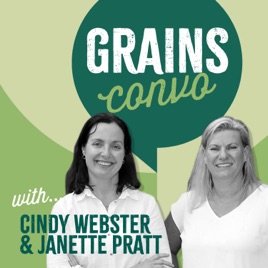
Advertise on podcast: Grains Convo
This podcast has
93 episodes
Language
EnglishPublisher
Grower Group AllianceExplicit
No
Date created
2021/10/20
Latest episode
2026/10/14
Average duration
23 min.
Release period
11 days
Description
The Grains Convo podcast shines a spotlight on the knowledge and tools developed by DPIRD to grow the grains industry.
Unlock Grains Convo podcast Email contact info,
Listeners & Audience details
Email contact information
Direct podcast contact details

Listeners
Audience numbers & engagement insights

Audience details
Podcast Insights

Podcast episodes
Check latest episodes from Grains Convo podcast
Aphids and viruses in canola: lessons from 2026
2026/10/14
In this episode of Grains Convo, DPIRD senior research scientist Dr Benjamin Congdon shares findings from the 2026 aphid and virus surveillance program, including regional differences in green peach aphid activity and the spread of turnip yellows virus across WA.
Discover why the timing of infection matters, how to identify potential virus problems and what the latest research means for management decisions.
With the 2027 growing season in mind, learn how green bridge control, early crop monitoring, virus testing and well-timed insecticide applications can help reduce your risk and protect crop productivity.
Episode links:
DPIRD’s PestFacts WA serviceGRDC’s Manage turnip yellows virus in canola factsheetDPIRD’s Insecticide spray guides
Late season pests: what to watch through harvest
2026/09/29
Harvest is underway in parts of the WA grainbelt, but there’s still plenty happening on the insect front.
DPIRD research scientists Dusty Severtson and Svetlana Micic join Cindy Webster and Janette Pratt to discuss the pests growers are seeing now, including armyworm, diamondback moth, native budworm, aphids and redlegged earth mite.
They unpack what to look for through harvest, the importance of correct identification and thresholds before making control decisions, withholding periods, grain contamination risks and what growers can do now to prepare for next season.
Episode links:
DPIRD’s PestFacts WA Reporter appDPIRD’s PestFacts WA newslettersDPIRD’s Native budworm trapping webpageUpdated TIMERITE® tool. Hosted on Australian Wool Innovation’s (AWI) website. Updates done by Cesar Australia in collaboration with CSIRO, AWI, GRDC and Meat & Livestock Australia.DPIRD’s 2026 Winter Spring Insecticide GuideCesar Australia’s Beneficials chemical toxicity table
Harvest underway: insights from across the grainbelt
2026/09/25
Harvest is already underway in parts of WA, but the 2026 grain season remains a mixed bag across the grainbelt.
In the latest Grains Convo, Tim Scanlon speaks with Development Officer Alison Lacey, who draws on DPIRD’s regional intelligence network to unpack what’s happening across WA’s grain growing regions: where crops are performing strongly, where low rainfall and subsoil moisture are limiting yield potential, and the risks to watch as the season finishes.
They also look at how intelligence from across the regions helps DPIRD respond as conditions change, with the Season 2026 webpage bringing together timely information and tools to support grower decisions.
Episode links:
Visit the Season 2026 webpageSeasonal Climate OutlookDPIRD Weather StationsPestFactsPestFacts Reporter AppGIWA Crop Report Harvesting Short CropsManaging stubble
After the frost, what happens next?
2026/09/07
A freezing night does not automatically mean a damaged crop. The real challenge is knowing where to look, what signs to trust and when the impact is serious enough to change course.
DPIRD frost researcher Brenton Leske joins Tim Scanlon to examine what frost is doing across the WA grainbelt. They discuss how to assess affected areas, monitor crop recovery and weigh up difficult decisions such as cutting for hay or limiting further inputs.
Episode links:
DPIRD Frost PageManaging frost risksManagement options for frosted cropsCereal frost guideCanola and pulses frost guideCanola genetics research to help develop more frost resistant varieties
Seeing the unseen: Smarter virus detection for grain crops
2026/09/02
Crop viruses can be difficult to identify, with symptoms often mistaken for waterlogging, nutrient deficiency, frost or other diseases. DPIRD research scientist Tim Scanlon speaks with plant virologist Dr Chi Cao about new diagnostic methods making virus detection faster, more precise and more comprehensive.
Discover how improved testing can identify multiple viruses at once, uncover unexpected and emerging threats, and help growers and consultants make earlier, better-informed crop management decisions. Chi also explains what to look for in the paddock and how to collect samples for testing.
Episode links:
Pestfacts WA interactive reporting servicePestFacts WA MapDownload the 2026 insecticide guidesDPIRD Diagnostics and Laboratory ServicesUseful grains and other field crops factsheetsNational Biosecurity Week: DPIRD scientists harness new technology to enhance detection of grain crop diseases
Weathering the finish: WA’s seasonal outlook
2026/08/21
WA’s grain growing regions are experiencing a season of stark contrasts, with strong rainfall totals in some areas and increasingly dry conditions in others.
DPIRD's Dr Meredith Guthrie joins Tim Scanlon to unpack the season so far and what could lie ahead for spring, harvest and summer. They discuss rainfall and soil moisture across the grainbelt, the risk of frost, the climate drivers influencing the outlook and the tools growers can use to understand conditions in their region.
Episode links:
VIsit the DPIRD 2026 season webpageVisit the DPIRD climate and weather webpageSeasonal Climate Outlook newsletterRainfall to date toolSoil water toolWeather stations and radar
Digging into soilborne disease
2026/08/17
Soilborne diseases can be difficult to spot, but their impact on crop performance and yield can be significant. In this episode of Grains Convo, DPIRD researchers Daniel Huberli and Ahmed Saad discuss key soilborne diseases affecting WA crops, including rhizoctonia, crown rot and take-all. Learn what symptoms to look for, how to get an accurate diagnosis and the integrated management strategies that can help reduce disease risk.
Episode links:
DPIRD’s Diagnostic laboraties Services – Plant pathologySARDI Predicta B testingDPIRD Fungicides webpageContact Ahmed Saad to send stubble samples
Understanding nematodes in WA grain crops
2026/08/06
Not all poor performing crops are suffering from nutrient deficiencies or disease. In this episode of Grains Convo, Senior Research Scientist Sarah Collins explains how plant parasitic nematodes affect WA grain crops, why the symptoms are often mistaken for other problems and how growers can identify infestations early. Discover why digging up roots is just as important as inspecting crops from above, how diagnostic testing can guide management decisions, and the long term rotation strategies that help reduce nematode populations and protect yield.
Episode links:
DPIRD Diagnostic Laboratory ServicesSouth Australian Research and Development Institute Predicta B (broadacre) service2026 WA Crop Sowing GuideDPIRD’s Root lesion and burrowing nematodes and their management factsheetDPIRD's How to diagnose Root lesion nematode YouTube videoGRDC’s Root lesion nematode in Western Australia podcast
Early season weeds and new paraquat regulations
2026/07/17
In this episode, DPIRD Principal Research Scientist Dr Harmohinder Dhammu discusses the new paraquat and diquat regulations, what the two year transition period means for growers and practical strategies for effective early season weed control. He also shares advice on weed identification, herbicide resistance management and choosing the right control options to protect crop yield potential.
Episode links:
Australian Pesticides and Veterinary Medicines Authority (APVMA)’s paraquat and diquat new regulations media statementCurrent herbicide resistance status of weeds in WA2026 WA crop sowing guideChemical weed control in canola
Herbicide resistance testing services:
University of Western Australia (Crawley, WA)Plant Science Consulting (Adelaide, SA)Charles Sturt University (Wagga Wagga, NSW)
Early cereal disease: Making the right call
2026/07/15
Young cereal crops are beginning to emerge, bringing the first signs of disease in some paddocks.
In this episode, DPIRD Principal Research Scientist Geoff Thomas and Research Scientist Jason Bradley discuss the cereal diseases growers are most likely to encounter early in the season, how to distinguish disease from herbicide damage and other lookalike symptoms, and why careful monitoring and accurate diagnosis can help avoid unnecessary fungicide applications.
Episode links:
DPIRD’s Diagnostic Laboratory Services – Plant pathologyPestFacts WA Reporter appNetBlotchBM appSeptoriaTriticiWM appYellowSpotWM app
Spotting diseases before they cost you yield
2026/07/09
In this episode, DPIRD Senior Research Scientist Andrea Hills discusses the key diseases affecting broadleaf crops early in the season, including blackleg, downy mildew, ascochyta blight and botrytis. She explains why accurate disease identification and regular crop monitoring are critical, and shares practical advice to help growers make timely management decisions that protect yield.
Episode Links:
PredictaB (broadacre) diagnosticsDPIRD Diagnostics and Laboratory Services - Seed testing and certificationPestFacts WA Reporter appBlacklegCM appUCIBlacklegCM appSclerotiniaCM app
Enjoyed this episode? Visit the Grains Convo podcast on the DPIRD website for related links, show notes and more episodes.
What's causing crop damage this season?
2026/07/06
Crops are emerging and can be vulnerable to damage from insects or infection from viruses such as turnip yellows virus which is vectored by the green peach aphid.
In this episode Research Scientists Benjamin Congdon, Dusty Severtson and Sveltana Micic discuss what insects (pests and beneficials) growers and consultants can expect to find at crop establishment. They also discuss the importance of regularly monitoring crops and correctly diagnosing the cause of plant damage and not assuming it’s caused by an invertebrate pest or virus. They also mention the importance of targeted and registered insecticide applications if insect pests are accurately identified and plants are not outgrowing damage.
Episode Links:
DPIRD’s PestFacts WA service Cesar Australia’s Redlegged earth mite hatch tool Cesar Australia’s Beneficials Chemical Toxicity Table GRDC’s Manage turnip yellows virus in canola factsheet DPIRD’s Insecticide spray guides
Enjoyed this episode? Visit the Grains Convo podcast on the DPIRD website for related links, show notes and more episodes.
Unlocking the full potential of WA soils
2026/06/30
New research is showing what's possible when multiple soil issues are addressed together. In this episode, DPIRD principal research scientist Dr Gaus Azam discusses findings from the Soil Water and Nutrition Management (SWAN) investment. From soil reengineering to large scale grower trials, Gaus shares insights into building more productive, resilient soils that can support stronger crop performance now and into the future.
The economics behind nitrogen and rotation decisions
2026/06/12
DPIRD economists have analysed how different nitrogen strategies perform under urea prices ranging from $600 to $1,500 per tonne. In this episode, agricultural economist Sud Kharel discusses the findings, which compare common crop rotations across multiple WA environments and soil types using decades of weather, price and production data.
Sud explains the difference between fixed rate and economically targeted nitrogen strategies, explores how rising fertiliser costs can shift the profitability of crop rotations, and highlights the role legumes can play in reducing risk. The conversation also looks at how growers can use gross margin analysis to support paddock and whole farm decision making when fertiliser prices and supply remain uncertain.
What’s shaping WA’s season ahead
2026/05/26
DPIRD research scientists Meredith Guthrie and Steve Bradshaw discuss the 2026 seasonal outlook for WA and how growers can use climate and weather information, and DPIRD tools, to support decision making throughout the season. The episode explores current rainfall conditions, the potential development of an El Niño and positive Indian Ocean Dipole later this year, and what those climate drivers could mean for winter and spring rainfall across the grainbelt.
The discussion also highlights the newly upgraded DPIRD Weather App and DPIRD’s statewide weather station network, which provides growers with real time weather data, radar overlays, and customised alerts to help monitor seasonal conditions.
Episode Links:
DPIRD Weather Stations App - Apple
DPIRD Weather Stations App - Google Play
DPIRD Season 2026 webpage
Potential yield tool
Soil Water Tool
Rainfall to date tool
Extreme weather events tool
Podcast reviews
Read Grains Convo podcast reviews
Podcast sponsorship advertising
Start advertising on Grains Convo relevant audience podcasts
You may also like to advertise on these Podcasts

4.2155648
TENNIS.com Podcast
TENNIS.com Podcast/Tennis Channel Podcast Network

4.510846771
The Joe Budden Podcast
The Joe Budden Network
4.611626506
The Bulwark Podcast
The Bulwark

4.711480389
Matt and Shane's Secret Podcast
Matt McCusker & Shane Gillis

4.82510178
Smosh Reads Reddit Stories
Smosh

4.975169748
Small Town Murder
James Pietragallo, Jimmie Whisman

4.71285595
Bulwark Takes
The Bulwark
4.8583398
Didn't I Just Feed You
Stacie Billis and Meghan Splawn

4.4503509
Warfare
History Hit

4.8296651983
Fantasy Footballers - Fantasy Football Podcast
Fantasy Football