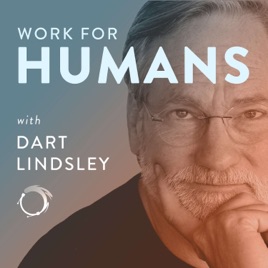
Advertise on podcast: Work For Humans
Rating
5from
This podcast has
228 episodes
Language
EnglishPublisher
Dart LindsleyExplicit
No
Date created
2022/03/04
Latest episode
2026/10/06
Average duration
72 min.
Release period
7 days
Description
Too often business leaders are forced to choose between the needs of their company and the needs of their employees. It’s a lose/lose scenario leaving managers burned out and workers seeking other opportunities. At Work for Humans, we believe work can be designed differently. When you design work like products people love, your company wins. Work becomes irresistible, employees passionately buy into their roles every day, and your company takes measurable strides towards your vision.
Unlock Work For Humans podcast Email contact info,
Listeners & Audience details
Email contact information
Direct podcast contact details

Listeners
Audience numbers & engagement insights

Audience details
Podcast Insights

Podcast episodes
Check latest episodes from Work For Humans podcast
Pay for Performance: How Compensation Becomes a System of Control | James A. Seechurn
2026/10/06
James Seechurn spent over a decade building compensation programs on a simple premise: design the incentive right, and you'll get the behavior you want. But his first clue that this was wrong came from watching it fail on him. As a young accountant on billable hours, slowing down to actually understand something cost him money. He kept redesigning bonus plans for clients anyway, until the pattern became impossible to ignore: paid people don't do better work, they just do whatever gets measured.
In this episode, Dart and James explore what we're actually buying when we pay someone, why pay-for-performance is really a form of control, and the false stories we tell ourselves about why people work.
James Seechurn is an independent rewards advisor and the author of What Pay Costs, Nothing Left to Take Away, and Close the Gap.
In this episode, Dart and James discuss:
- What you're really buying when you pay someone
- The cobra bounty that backfired
- Why performance reviews grade the wrong person
- Turning billable hours into a currency
- Why quality is mostly the system, not the person
- The company that let workers vote out their bosses
- Why Semco sold itself back to its own people
- Why pay-for-performance is really about control
- Why companies rarely last past 15 years
- And other topics…
James A. Seechurn is an independent rewards advisor with 20 years of experience in sales compensation and broad-based pay, including a decade at Aon's Rewards Solutions practice. A Fellow Chartered Accountant, he is the author of What Pay Costs, Nothing Left to Take Away, and Close the Gap. He hosts the Disengaged podcast.
Resources Mentioned:
James's Book, What Pay Costs: The Science of Pay, Incentives, Bonuses, Salaries, Equity Compensation, Motivation, and Performance:https://www.amazon.com/What-Pay-Costs-Compensation-Performance/dp/B0FV3VPXWW
James's Podcast, Disengaged: https://podcasts.apple.com/au/podcast/disengaged/id1874104719
Maverick: The Success Story Behind the World's Most Unusual Workplace, by Ricardo Semler: https://www.amazon.com/Maverick-Success-Behind-Unusual-Workplace/dp/0446516961
Humanocracy: Creating Organizations as Amazing as the People Inside Them, by Gary Hamel and Michele Zanini: https://www.amazon.com/Humanocracy-Creating-Organizations-Amazing-People/dp/1633696022
Barry Schwartz on Work for Humans: https://podcasts.apple.com/us/podcast/the-tragic-state-of-work-in-america-barry-schwartz/id1612743401?i=1000577078192
Geoffrey West on Work for Humans: https://podcasts.apple.com/gb/podcast/the-problem-with-scale-what-growing-too-big-does-to/id1612743401?i=1000749058561
Gary Hamel on Work for Humans: https://podcasts.apple.com/gb/podcast/bureaucracy-is-killing-our-organizations-gary-hamel/id1612743401?i=1000577070311
Connect with James:
LinkedIn: https://www.linkedin.com/in/james-seechurn/
Website: https://www.jamesseechurn.com/
Work with Dart:
Dart is the CEO and co-founder of the work design firm 11fold. Build work that makes employees feel alive, connected to their work, and focused on what’s most important to the business. Book a call at 11fold.com.
Dangerously Incompetent: How AI and Robots Are Deskilling the Workforce | Matt Beane, Revisited
2026/09/29
In robotic surgery, a device good enough to let the surgeon operate alone makes the resident, the future expert, optional. Matt Beane saw this pattern everywhere technology gets smart enough to make the apprentice unnecessary. Dart calls this one of the episodes he keeps returning to, for how clearly Matt names one of AI's biggest threats to how we learn. In this revisited episode, Dart and Matt explore how technology reshapes workplace learning, whether tech shapes us or we shape it, and the difference between knowing something and being able to do it.
Matt Beane is an associate professor at UC Santa Barbara and the CEO and cofounder of SkillBench. He is the author of The Skill Code, and his TED talk on the subject has nearly two million views.
In this episode, Dart and Matt discuss:
- How tech reshapes workplace learning
- What technology management programs actually study
- Does tech shape us, or do we shape it?
- Using tech to build skill at scale
- Knowledge vs skill: what's the difference?
- Why skill development breaks down in tech-heavy jobs
- Using positive deviance to grow at work
- How human capital drives productivity
- And other topics…
Matt Beane is an associate professor in the Technology Management Program at UC Santa Barbara and the CEO and cofounder of SkillBench, a company building tools to help organizations develop skills alongside AI. He is a Digital Fellow with Stanford's Digital Economy Lab and MIT's Initiative on the Digital Economy.
He holds a PhD and a master's in management research from MIT's Sloan School of Management. His research on robotic surgery has appeared in Administrative Science Quarterly, Harvard Business Review, and Organization Science. And his TED talk on the subject has nearly two million views. He is the author of The Skill Code: How to Save Human Ability in an Age of Intelligent Machines.
Resources Mentioned:
Matt's Book, The Skill Code: How to Save Human Ability in an Age of Intelligent Machines: https://www.amazon.com/Skill-Code-Human-Ability-Intelligent/dp/0063265956
How Buildings Learn, by Stewart Brand: https://www.amazon.com/How-Buildings-Learn-Happens-Theyre/dp/0140139966
Connect with Matt:
Website: https://www.mattbeane.com/
LinkedIn: https://www.linkedin.com/in/matt-beane-3947271/
Work with Dart:
Dart is the CEO and co-founder of the work design firm 11fold. Build work that makes employees feel alive, connected to their work, and focused on what’s most important to the business. Book a call at 11fold.com.
Employees Are Family: How John Chambers Played Hardball at Cisco Without Getting Ruthless
2026/09/22
Under John Chambers, Cisco grew from $70 million to $47 billion, completed 180 acquisitions, and became the most valuable company in the world. He built the company on one idea: employees aren't employees, they're family. Then the dot-com crash hit, and John had to lay off 7,854 people, almost all of whom he'd hired himself. He calls it his worst year as a leader. In this episode, Dart and John explore why John calls employees family, how John builds a leadership team, and why playbooks create speed instead of bureaucracy.
John Chambers led Cisco as CEO from 1995 to 2015 and as Executive Chairman until 2017, and now holds the title of Chairman Emeritus. He is also the author of Connecting the Dots.
In this episode, Dart and John discuss:
- What are companies for?
- Why John calls his employees family
- How Cisco kept attrition under 5% for 25 years
- Competing hard without turning ruthless
- The three questions Cisco asked before every acquisition
- Why John hates the word hierarchy
- Laying off 7,854 people he'd helped hire
- Why playbooks create speed, not bureaucracy
- The little girl who changed how John talks about dyslexia
- And other topics…
John Chambers is the founder and CEO of JC2 Ventures, which he launched in 2018 to invest in and mentor startups navigating major market transitions. He joined Cisco in 1991 as Senior Vice President of Worldwide Sales and Operations, served as President and CEO from 1995 to 2015, and as Executive Chairman until 2017, helping grow the company from $70 million to $47 billion in revenue through 180 acquisitions. He now holds the title of Chairman Emeritus at Cisco. He is the author of Connecting the Dots: Lessons for Leadership in a Startup World and the host of the podcast Chambers Talks.
Resources Mentioned:
John's Book, Connecting the Dots: Lessons for Leadership in a Startup World: https://www.amazon.com/Connecting-Dots-Lessons-Leadership-Startup/dp/031648654X
John's Podcast, Chambers Talks: https://podcasts.apple.com/us/podcast/chambers-talks-a-podcast-series-with-john-chambers/id1542075631
Connect with John:
LinkedIn: https://www.linkedin.com/in/johnchambersjc/
JC2 Ventures: https://www.jc2ventures.com/
Work with Dart:
Dart is the CEO and co-founder of the work design firm 11fold. Build work that makes employees feel alive, connected to their work, and focused on what’s most important to the business. Book a call at 11fold.com.
7 Rules for Gaining Power and Influence at Work | Jeffrey Pfeffer, Revisited
2026/09/15
Jeffrey Pfeffer has spent decades showing that people-first companies outperform, and just as long watching that evidence lose to habit. His answer is blunt: whether you're cautious about power or thirsty for it, there's no denying its role in the workplace, and ideas without power are just ideas. In this revisited episode, Dart and Jeff explore the purpose of power, the knowing-doing gap, and how to build profits by putting people first.
Jeffrey Pfeffer is the Thomas D. Dee II Professor of Organizational Behavior at the Stanford Graduate School of Business, where he has taught since 1979. He is the author of several books, including The Human Equation, Dying for a Paycheck, and 7 Rules of Power.
In this episode, Dart and Jeff discuss:
- Why most of us are ambivalent about power
- Why a big title doesn't make you powerful
- Why ideas alone don't change anything
- The seven rules, and which one matters most
- Why we never pick the leaders we say we want
- Why evidence keeps losing to habit
- Getting ideas past people who can ignore you
- Why HR keeps losing the power game
- Can you have power and put people first?
- And other topics…
Jeffrey Pfeffer is the Thomas D. Dee II Professor of Organizational Behavior at the Stanford Graduate School of Business, where he has taught since 1979. He previously taught at the University of Illinois and the University of California, Berkeley, and has been a visiting professor at Harvard Business School, London Business School, Singapore Management University, and IESE. He is the author or co-author of several books, including The Human Equation, The Knowing-Doing Gap, Leadership BS, Dying for a Paycheck, and 7 Rules of Power. His work has been cited more than 200,000 times. He hosts the Pfeffer on Power podcast and has taught a MasterClass since 2025.
Resources Mentioned:
Jeff's Books,
7 Rules of Power: https://www.amazon.com/7-Rules-Power-Pfeffer-Jeffrey/dp/1800751281
The Human Equation: Building Profits by Putting People First: https://www.amazon.com/Human-Equation-Building-Profits-Putting/dp/0875848419
Dying for a Paycheck: How Modern Management Harms Employee Health and Company Performance, and What We Can Do About It: https://www.amazon.com/Dying-Paycheck-Management-Employee-Performance/dp/0062800922
Leadership BS: Fixing Workplaces and Careers One Truth at a Time: https://www.amazon.com/Leadership-BS-Fixing-Workplaces-Careers/dp/0062383167
The Knowing-Doing Gap: How Smart Companies Turn Knowledge into Action (with Robert Sutton): https://www.amazon.com/Knowing-Doing-Gap-Companies-Knowledge-Action/dp/B00DEK8PAA
Chimpanzee Politics: Power and Sex among Apes, by Frans de Waal: https://www.amazon.com/Chimpanzee-Politics-Power-among-Apes/dp/0801886562
Influence: The Psychology of Persuasion, by Robert B. Cialdini: https://www.amazon.com/Influence-Psychology-Persuasion-Robert-Cialdini/dp/006124189X
Connect with Jeff:
Website: https://jeffreypfeffer.com/
Pfeffer on Power podcast: https://jeffreypfeffer.com/pfeffer-on-power/
LinkedIn: https://www.linkedin.com/in/jeffrey-pfeffer-57a01b6
X: https://x.com/JeffreyPfeffer
Stanford GSB: https://www.gsb.stanford.edu/faculty-research/faculty/jeffrey-pfeffer
Work with Dart:
Dart is the CEO and co-founder of the work design firm 11fold. Build work that makes employees feel alive, connected to their work, and focused on what’s most important to the business. Book a call at 11fold.com.
Positive Discipline at Work: Why People Do Better When They Feel Better | Alanna Beebe
2026/09/08
Parents come to Alanna Beebe's classes hoping to change their kid. But by the second week, most of them realize the person who needs to change is them. Soon after, they notice the same tools working on their boss, colleagues, and staff. None of this surprises Alanna though. Her work rests on Alfred Adler's idea that every human is striving for belonging and significance, and that misbehavior, in a child or an adult, is a discouraged attempt to get there. In this episode, Dart and Alanna explore where agency comes from, why encouragement is not the same as praise, and what parenting can teach us about designing better workplaces.
Alanna Beebe is the founder and Managing Director of Sproutable, which helps parents and teachers grow remarkable kids through Positive Discipline.
In this episode, Dart and Alanna discuss:
- Why discipline was never meant to be punishment
- What Adler believed that Freud didn't
- What a misbehaving kid is really asking for
- Why fixing your kids means changing yourself
- Kind and firm at the same time
- Where agency comes from, and who takes it away
- Why companies extract instead of grow
- What shared power looks like in practice
- Why money doesn't build motivation
- Why encouragement beats praise
- And other topics…
Alanna Beebe is the founder and Managing Director of Sproutable, a Seattle-based education company that has helped parents, teachers, and caregivers raise socially and emotionally skilled kids since 2016 through coaching, classes, and video content grounded in Positive Discipline and Adlerian psychology. In 2025, she founded Audacious Leadership, offering executive, life, and co-parenting coaching. She is a certified Positive Discipline Educator, Empowering People in the Workplace Educator, and Co-Active Practitioner. Before Sproutable, she spent more than 15 years in public health and early learning communications.
Resources Mentioned:
Positive Discipline, by Jane Nelsen: https://www.amazon.com/Positive-Discipline-Jane-Nelsen/dp/0345348567
Trust Factor: The Science of Creating High-Performance Companies, by Paul J. Zak: https://www.amazon.com/Trust-Factor-Creating-High-Performance-Companies/dp/0814437664
Peter Liljedahl on Work for Humans: https://podcasts.apple.com/gb/podcast/thinking-classrooms-how-to-design-environments-that/id1612743401?i=1000631582031
Connect with Alanna:
Sproutable: https://www.besproutable.com
Audacious Leadership: https://www.audacious-leadership.com
LinkedIn: https://www.linkedin.com/in/alanna-beebe-5027967
Work with Dart:
Dart is the CEO and co-founder of the work design firm 11fold. Build work that makes employees feel alive, connected to their work, and focused on what’s most important to the business. Book a call at 11fold.com.
How Companies Create Bad Performers | Elena Aylott, Revisited
2026/09/01
When Elena Aylott was asked to lead HR at Oriflame Cosmetics, she initially saw the function as administrative and feared becoming a “chief firing officer.” Instead, she saw an opportunity to rethink what the people function could be. In this revisited episode, Dart and Elena explore how to remove the friction that gets in the way of good work, create individualized experiences at scale, and build workplaces where people can develop their potential, form meaningful relationships, and feel a sense of belonging.
Elena Aylott is the Founder & CEO of Aylott Group and the former VP of Global Communications and Employee Experience at Oriflame Cosmetics. During her time at Oriflame, she worked to transform the employee experience across more than 60 countries.
In this episode, Dart and Elena discuss:
- Why Elena didn’t want to lead HR
- Making HR more human
- Why companies create bad performers
- Creating personal experiences at scale
- The power of small moments
- Building a team without HR professionals
- How language shapes culture
- The real meaning of personal branding
- Building one community at work
- Creating transformational experiences
- And other topics…
Elena Aylott is the Founder & CEO of Aylott Group and the former VP of Global Communications and Employee Experience at Oriflame Cosmetics. She spent 16 years at Oriflame, including seven years leading the company’s global people function. She is also a Business and Leadership Advisor to Wisory, a Certified Leadership Coach for the EuroAcademy Leadership Institute, and a member of the TEDxStockholm Speakers’ team.
Resources mentioned:
The Employee Experience Advantage, by Jacob Morgan: https://www.amazon.com/Employee-Experience-Advantage-Employees-Workspaces/dp/111932162X
The Power of Moments, by Chip and Dan Heath: https://www.amazon.com/Power-Moments-Certain-Experiences-Extraordinary/dp/1501147765
The Experience Economy, by Joseph Pine: https://www.amazon.com/Experience-Economy-Updated-Joseph-Pine/dp/1422161978
Mass Customization, by Joseph Pine: https://www.amazon.com/Mass-Customization-Frontier-Business-Competition/dp/0875843727
Connect with Elena:
LinkedIn: https://www.linkedin.com/in/elenaaylott/
Aylott Group: https://www.linkedin.com/company/aylottgroup/
Work with Dart:
Dart is the CEO and co-founder of the work design firm 11fold. Build work that makes employees feel alive, connected to their work, and focused on what’s most important to the business. Book a call at 11fold.com.
How Sabbaticals Can Change Your Career | DJ DiDonna
2026/08/25
DJ DiDonna had built the kind of career many people would be reluctant to walk away from. He cofounded a growing company, built a life around work, and had every reason to keep going. But eventually, he decided to step away and take an extended break, an experience that changed how he thought about work, identity, and what comes next. In this episode, Dart and DJ explore what happens when people step away from work long enough to see their lives from a different perspective.
DJ DiDonna is a Senior Lecturer at Harvard Business School and the founder of The Sabbatical Project, where he researches the effects of extended time away from work. He is also the author of Big Time Off.
In this episode, Dart and DJ discuss:
- Why DJ left his “dream job”
- What makes a sabbatical different from a vacation
- Why six to eight weeks can change the experience
- How time away can change your identity
- The feeling of “being human again”
- Why people rush back into the next job
- How sabbaticals build organizational resilience
- The risk of treating burnout as a medical problem
- What companies gain when people step away
- The three ways people use a sabbatical
- How to make space for curiosity and exploration
- And other topics…
DJ DiDonna is a Senior Lecturer of Business Administration at Harvard Business School and the founder of The Sabbatical Project. Before entering academia, he cofounded EFL Global, a fintech company that developed alternative credit scoring for entrepreneurs in emerging markets. His research focuses on sabbaticals, entrepreneurship, and the ways extended time away from work can affect people and organizations. He is the author of Big Time Off: The Transformative Power of Sabbaticals and How to Take One.
Resources Mentioned:
Big Time Off: The Transformative Power of Sabbaticals and How to Take One, by DJ DiDonna
The Sabbatical Project: https://thesabbaticalproject.org/
DJ DiDonna: http://djdidonna.com/
LinkedIn: https://www.linkedin.com/in/djdidonna/
Work with Dart:
Dart is the CEO and co-founder of the work design firm 11fold. Build work that makes employees feel alive, connected to their work, and focused on what’s most important to the business. Book a call at 11fold.com.
What We Get Wrong About Work | Barry Schwartz, Revisited
2026/08/18
We’ve spent decades designing work around the idea that people need incentives to perform. But what happens when the systems designed to motivate people actually get in the way of motivation? Professor Barry Schwartz has spent decades studying what makes work meaningful, and his research challenges the idea that money and performance incentives are enough. In this revisited episode, Dart and Barry explore what people really want from work, why pay-for-performance can undermine motivation, and what organizations can do to create work where people have the autonomy and responsibility to do good work.
In this episode, Dart and Barry discuss:
- Why Barry wrote Why We Work?
- How did we learn what people want from work?
- Lack of autonomy as a cost of employment
- How has Why We Work been received?
- How to protect against bias?
- Practicing autonomy with restraint
- The dangers of neglect in the workforce
- And other topics…
Barry Schwartz is an emeritus professor of psychology at Swarthmore College. He is the author of Why We Work, Practical Wisdom with Kenneth Sharpe, and The Paradox of Choice, as well as books on psychology, learning, and human behavior. His writing has appeared in The New York Times, Harvard Business Review, The Guardian, Scientific American, and other publications.
Resources mentioned:
Barry Schwartz: https://en.wikipedia.org/wiki/Barry_Schwartz_(psychologist)
Why We Work by Barry Schwartz: https://books.google.com/books?vid=ISBN9781476784861
Practical Wisdom by Barry Schwartz: https://books.google.com/books?vid=ISBN9781594487835
The Paradox of Choice by Barry Schwartz: https://www.amazon.com/Paradox-Choice-Why-More-Less/dp/149151423X
Barry’s TedTalks: https://www.ted.com/speakers/barry_schwartz
Jeffrey Pfeffer: https://jeffreypfeffer.com/
The Human Equation by Jeffrey Pfeffer: https://www.amazon.com/dp/0875848419
Work with Dart:
Dart is the CEO and co-founder of the work design firm 11fold. Build work that makes employees feel alive, connected to their work, and focused on what’s most important to the business. Book a call at 11fold.com.
When Career Success Feels Unfulfilling | Megan Hellerer
2026/08/11
Megan Hellerer had done everything she was supposed to do. She went to Stanford, graduated with a 3.9, and dutifully climbed the ladder at Google. But the life that looked great on paper felt terrible inside. A panic attack on the floor of a public restroom forced her to confront a bigger question: what if the problem wasn't choosing the wrong destination, but the idea that we need a destination at all? In this episode, Dart and Megan explore how we move from “destinational living” to “directional living,” and what it means to build a life and career by following curiosity, experimenting, and learning as we go.
Megan Hellerer is the author of Directional Living and the founder of Coaching for Underfulfilled Overachievers. She spent eight years at Google in Strategic Partner Development before leaving to help other underfulfilled overachievers rethink work, success, and fulfillment.
In this episode, Dart and Megan discuss:
- The underfulfilled overachiever
- Why success can still leave you miserable
- Where our “shoulds” come from
- Destinational vs. directional living
- Why certainty can be so seductive
- Curiosity over purpose
- Using “warmer” and “colder” to find your direction
- The value of small experiments
- Designing more directional work
- Can fulfillment become another destination?
- And other topics…
Megan Hellerer is the author of Directional Living: A Transformational Guide to Fulfillment in Work and Life and the founder of Coaching for Underfulfilled Overachievers. She has spent the past decade helping high-achieving people who feel unfulfilled rethink their relationship with work and success. Before becoming a career coach, she spent eight years at Google in Strategic Partner Development. She graduated from Stanford University with a degree in International Relations and is a Certified Professional Co-Active Coach.
Resources Mentioned:
Megan’s book: Directional Living: A Transformational Guide to Fulfillment in Work and Life: https://www.amazon.com/dp/0593299272
Designing Your Life, by Bill Burnett and Dave Evans: https://www.amazon.com/dp/1101875321
Bill Burnett on Work for Humans: https://podcasts.apple.com/us/podcast/designing-your-life-how-to-use-design-principles-to/id1612743401?i=1000738307337
Margaret Heffernan on Work for Humans: https://podcasts.apple.com/us/podcast/the-hidden-cost-of-certainty-at-work-margaret-heffernan/id1612743401?i=1000754431168
Connect with Megan:
Website: https://meganhellerer.com/
LinkedIn: https://www.linkedin.com/in/megan-hellerer-6868326/
Work with Dart:
Dart is the CEO and co-founder of the work design firm 11fold. Build work that makes employees feel alive, connected to their work, and focused on what’s most important to the business. Book a call at 11fold.com.
The Core Value Equation: Building Culture That Scales | Darius Mirshahzadeh, Revisited
2026/08/04
Darius Mirshahzadeh built the company he'd always wanted. In just three years, he grew it from a one-person operation into one of the fastest-growing companies in the United States. But when he looked around, he realized something unsettling: he hated the company he had created. That experience forced him to rethink what it really means to scale a business. In this revisited episode, Dart and Darius discuss how core values shape the way organizations grow, why culture must be designed intentionally, and what it takes to build a company that can scale without losing itself.
Darius Mirshahzadeh is an entrepreneur, author, and leadership advisor who helps founders build values-driven organizations. He founded Twin Capital Mortgage, later served as CEO of The Money Source, and is the author of The Core Value Equation.
In this episode, Dart and Darius discuss:
- Building culture through values
- When values become operational
- Hiring for alignment
- The language organizations create
- Measuring engagement differently
- Why some polarization is healthy
- Scaling without losing your culture
- Finding your calling
- And other topics…
Darius Mirshahzadeh is an entrepreneur, author, and leadership advisor who helps companies scale through strong culture and clearly defined core values. He founded Twin Capital Mortgage, growing it into one of the fastest-growing private companies in the United States, and later served as CEO of The Money Source. He is the author of The Core Value Equation, where he shares a framework for building organizations around values that guide hiring, leadership, and growth.
Resources Mentioned:
The Core Value Equation, by Darius Mirshahzadeh: https://www.amazon.com/Core-Value-Equation-Framework-Limitless/dp/1544506708
Connect with Darius:
Official website: https://therealdarius.com/
LinkedIn: https://www.linkedin.com/in/dariusmirshahzadeh/
The Greatness Machine podcast: https://podcasts.apple.com/us/podcast/the-greatness-machine/id1555334180
Work with Dart:
Dart is the CEO and co-founder of the work design firm 11fold. Build work that makes employees feel alive, connected to their work, and focused on what’s most important to the business. Book a call at 11fold.com.
The Missing Discipline for Better Work | Chris Metcalfe
2026/07/28
After years building software products, Chris Metcalfe crossed into People & Culture and noticed something surprising. Organizations invested enormous effort into understanding customers, testing ideas, and improving products, yet the work people did every day was rarely designed with the same discipline. That realization led him to ask a different question: what if work itself were managed like a product? In this episode, Dart and Chris discuss what happens when organizations move beyond HR as a service function, how product thinking changes the way work is designed, and why better work begins with solving the right problems.
Chris Metcalfe is a product leader and organizational strategist helping organizations apply product management to the design of work. After leading product teams at Workday, Docebo, and Primark, he now helps People teams build product capabilities through Red Oak and PX as a Product.
In this episode, Dart and Chris discuss:
- HR through a product lens
- Treating work like a product
- The customer inside your company
- Solving real work problems
- Outcomes over outputs
- The power of constraints
- Product thinking for HR
- Rethinking HR as product
- And other topics…
Chris Metcalfe is a product leader and organizational strategist who helps organizations apply product management to the design of work. He has held product leadership roles at Workday, Docebo, and Primark, where he led product teams spanning enterprise software and People & Culture. Today, he is the founder of Red Oak and PX as a Product, where he helps organizations build product-led People functions and apply product operating models to the design of work. He also writes The Operating Model, a newsletter on product leadership, organizational design, and the future of work.
Resources Mentioned:
Inspired, by Marty Cagan: https://www.amazon.com/dp/1119387507
Transformed, by Marty Cagan: https://www.amazon.com/dp/1119697336
SapienX: https://sapienx.co.uk/
Chris's newsletter, The Operating Model: https://metcalfec.substack.com/
Connect with Chris:
Red Oak: https://www.red-oak.agency/
PX as a Product: https://pxasaproduct.com/
LinkedIn: https://www.linkedin.com/in/chris-metcalfe-red-oak/
Work with Dart:
Dart is the CEO and co-founder of the work design firm 11fold. Build work that makes employees feel alive, connected to their work, and focused on what’s most important to the business. Book a call at 11fold.com.
Jobs to Be Done: A Better Way to Understand Customers | Jim Kalbach, Revisited
2026/07/21
Most companies obsess over products, but Jim Kalbach believes they're asking the wrong question. Customers don't buy products because of what they are. They "hire" them to make progress in their lives. Jobs to Be Done is a way of uncovering that progress, helping organizations stop guessing what people want and start understanding twhat people are really trying to accomplish. In this revisited episode, Dart and Jim discuss how Jobs to Be Done helps organizations uncover unmet customer needs, align teams around real problems, and apply the framework to innovation, hiring, and finding the right work for people.
Jim Kalbach is an author, speaker, and instructor in innovation, design, and the future of work. He is the Chief Evangelist at Mural and Co-Founder and Principal of the JTBD Toolkit, where he helps organizations apply Jobs to Be Done to innovation, product strategy, and customer experience.
In this episode, Dart and Jim discuss:
- Why customers "hire" products
- Finding unmet customer needs
- Solving problems, not building features
- Using JTBD to drive innovation
- Matching people to the right work
- Understanding customer circumstances
- A shared language for teams
- Mindset before methodology
- And other topics…
Jim Kalbach is the Chief Evangelist at Mural and Co-Founder and Principal of the JTBD Toolkit, where he helps organizations apply Jobs to Be Done to innovation, product strategy, and customer experience. He is the author of Designing Web Navigation, Mapping Experiences, and The Jobs to Be Done Playbook, and co-author of Collaborative Intelligence. Before joining Mural, Jim worked in design and innovation consulting with organizations including eBay, Sony, IBM, EY, LexisNexis, and Citrix.
Resources Mentioned:
The Jobs to Be Done Playbook, by Jim Kalbach: https://www.amazon.com/Jobs-Be-Done-Playbook-Organization/dp/1933820683
Mapping Experiences, by Jim Kalbach: https://www.amazon.com/Mapping-Experiences-Complete-Creating-Blueprints/dp/1491923539
JTBD Toolkit: https://www.jtbdtoolkit.com/
The Experience Economy, by B. Joseph Pine II and James H. Gilmore: https://www.amazon.com/Experience-Economy-Competing-Customer-Time/dp/1633697975
Connect with Jim:
LinkedIn: https://www.linkedin.com/in/kalbach/
JTBD Toolkit: https://www.jtbdtoolkit.com/
Work with Dart:
Dart is the CEO and co-founder of the work design firm 11fold. Build work that makes employees feel alive, connected to their work, and focused on what’s most important to the business. Book a call at 11fold.com.
Designing Better Work With Product Thinking | Vanessa Monsequeira
2026/07/14
Vanessa Monsequeira spent years leading change initiatives and helping organizations roll out new systems. Again and again, she saw that the hardest part wasn't convincing people to change, it was that the work itself had never been intentionally designed. That realization led her to apply product thinking to the workplace, treating work as something to be researched, tested, and continuously improved. In this episode, Dart and Vanessa discuss what it means to design work intentionally, how product thinking is reshaping HR, and why the future of work depends less on new technology than on better design.
Vanessa Monsequeira is a people and product leader who applies product thinking to the design of work. She has led People teams at Miro and Gorilla and now advises founders and executives on building more intentional, human-centered organizations.
In this episode, Dart and Vanessa discuss:
- Why work should be designed
- HR as a product team
- The MVP approach to work
- Experimenting before scaling
- Rethinking performance management
- Designing fairness into systems
- Better managers by design
- AI as a learning partner
- Leading with an abundance mindset
- And other topics…
Vanessa Monsequeira is a people and product leader who helps organizations design better work through product thinking. She has held leadership roles at Miro, Gorilla, PwC, Deloitte, and Philips, where she applied product management principles to people strategy, employee experience, and organizational design. Today, she advises founders and executives on building better workplaces, developing stronger leaders, and navigating AI-driven change.
Connect with Vanessa:
LinkedIn: https://www.linkedin.com/in/vanessamonsequeira/
Website: https://www.vanessamonsequeira.com/
Work with Dart:
Dart is the CEO and co-founder of the work design firm 11fold. Build work that makes employees feel alive, connected to their work, and focused on what’s most important to the business. Book a call at 11fold.com.
Beyond HR: The Rise of Human Development | Bob Aubrey, Revisited
2026/07/07
Dr. Bob Aubrey has spent decades advancing the field of human development across Asia. With experience spanning 25 countries and six continents, he founded and chairs the Advisory Board of the ASEAN Human Development Organisation (AHDO), which promotes human development across the region and beyond. In this episode, Dart and Bob discuss the global human development movement, where it fits alongside HR, and what it means for capitalism, company profitability, and the future of work.
Dr. Bob Aubrey is a human development consultant, author, educator, social entrepreneur, and leadership advisor whose work has spanned more than 25 countries across six continents.
In this episode, Dart and Bob discuss:
- How human deveolpment (HD) creates a better work environment
- How HR and HD work together
- HD curriculum and career paths
- The importance of ethics in companies and investments
- How Environmental Social Governance improves profitability
- HD within the Association of Southeast Asian Nations (ASEAN)
- HR practices in Western vs. non-Western nations
- How to create an organization that prioritizes employee well-being
- If and how HD can coexist with capitalism
- And other topics...
Dr. Bob Aubrey is a human development consultant, author, educator, social entrepreneur, and leadership advisor whose work has spanned more than 25 countries across six continents. He is the Founder and Chair of the Advisory Board of the ASEAN Human Development Organisation (AHDO) and the Managing Director of Bob Aubrey Associates.
Bob has authored numerous books on human development and leadership, including Human Development Careers: Leading the Future of Work, one of the first books dedicated to careers in human development, and The Ethics of ASEAN. Through his writing, consulting, and educational initiatives, he continues to advance the field of human development across Southeast Asia and beyond.
Resources mentioned:
Human Development Careers, by Bob Aubrey: https://www.amazon.com/Human-Development-Careers-Leading-Future-ebook/dp/B08QJ1BS98
Measure of Man, by Bob Aubrey: https://www.amazon.com/Measure-Man-Leading-Human-Development-ebook/dp/B014IF1W36
The Structure of Scientific Revolutions, by Thomas S. Kuhn: https://www.amazon.com/Structure-Scientific-Revolutions-50th-Anniversary-ebook/dp/B007USH7J2
Human Resource Champions, by David Ulrich: https://www.amazon.com/Human-Resource-Champions-David-Ulrich/dp/0875847196
Connect with Bob:
LinkedIn: https://www.linkedin.com/in/bobaubrey/
ASEAN Human Development Organisation: https://www.aseanhdo.com/about
Work with Dart:
Dart is the CEO and co-founder of the work design firm 11fold. Build work that makes employees feel alive, connected to their work, and focused on what’s most important to the business. Book a call at 11fold.com.
Teal Organizations: A Better Way to Organize Work | Matthew Spaur
2026/06/30
Most organizations are built around hierarchy, clear reporting lines, and top-down control. But a growing number are experimenting with a different way of organizing work through self-management, distributed authority, and evolving purpose. As more organizations experiment with alternatives to traditional management, Matthew Spaur has spent years studying Teal organizations and what actually happens when hierarchy gives way to self-management.
In this episode, Dart and Matthew discuss what Teal really is, how self-managing organizations operate, and whether these post-bureaucratic management models are delivering on their promise.
Matthew Spaur is a marketing consultant, author, and researcher who studies self-managing organizations and emerging models of work. He is a co-author of the annual Teal Landscape Report, which tracks organizations experimenting with post-bureaucratic management.
In this episode, Dart and Matthew discuss:
- Beyond bureaucracy
- What Teal organizations really are
- Predict and control vs. sense and respond
- Roles instead of job descriptions
- Leadership without traditional bosses
- Bringing your whole self to work
- Organizations with an evolving purpose
- Are these models actually working?
- AI and the future of management
- And other topics…
Matthew Spaur is a marketing consultant, author, and researcher focused on emerging models of organization and management. He is a co-author of the annual Teal Landscape Report, a global study of organizations experimenting with self-management and other post-bureaucratic management practices. Through his consulting work, Matthew helps organizations communicate their ideas, adapt to change, and rethink how work is organized.
Resources Mentioned:
Reinventing Organizations, by Frederic Laloux: https://www.amazon.com/Reinventing-Organizations-Creating-Inspired-Consciousness/dp/2960133501
Holacracy: The New Management System for a Rapidly Changing World, by Brian J. Robertson: https://www.amazon.com/Holacracy-Management-System-Rapidly-Changing/dp/162779428X
Connect with Matthew:
Official website: https://matthewspaur.com/
LinkedIn: https://www.linkedin.com/in/matthewspaur/
Work with Dart:
Dart is the CEO and co-founder of the work design firm 11fold. Build work that makes employees feel alive, connected to their work, and focused on what’s most important to the business. Book a call at 11fold.com.
Podcast reviews
Read Work For Humans podcast reviews
koneto12 2024/06/14
Smart, Insightful, and Inspiring
I’m so happy I found the Work for Humans podcast! It gives me hope that we can make work better for us humans. Dart Lindsley is an excellent interview...
ahartnyc 2023/11/24
Think better
This podcast is about how we can think better about work. Dart brings to light the invisible systems operating all the time as we navigate that work.
Rob 101010 2023/08/07
Life Changing
Our engagement with the work place is inevitable. My whole outlook on work has changed for the better. Dart navigates this under designed experience w...
hgxhsshx 2023/06/08
Engaging
Work for Humans is engaging and insightful. Dart does an incredible job of facilitating meaningful and practical content. Recommending this one to all...
Toby R_32 2023/05/02
Love this podcast so far!
Very insightful…Great range of guests and topics. Learn something new each episode I’ve listened to so far!
AD1206 2023/01/30
Great Podcast and Great Host
I came across Dart’s podcast when I heard him on another podcast where he was talking about work design. I have enjoyed this podcast and always leave ...
Shalverm 2022/11/23
Incredible podcast
Absolutely fascinating, thought provoking and educational episodes with thought leadership and practical tools and techniques to create the ultimate w...
Gaming mamma 2022/11/11
Feed your brain and your soul
I love Dart’s podcast! Besides being a great interviewer and conversationalist, he is well-read and intelligent, making the conversations among my fav...
scha3521 2022/10/21
Superb!
This podcast provides such rich insights across so many domains and serves up transformative ideas for anyone in HR. Dart is a superb interviewer and ...
GringaLinda 2022/09/24
Immediate Fave
Any person who works needs this podcast in their life. Dart does a great job at presenting work place and employee problems, then discussing the solut...
Podcast sponsorship advertising
Start advertising on Work For Humans relevant audience podcasts
You may also like to advertise on these Podcasts
4.7278152000
The Matt Walsh Show
The Daily Wire
4.922662003
First15 Devotional
First15

4.838332000
Entrepreneurs on Fire
John Lee Dumas of EOFire

4.890611563
Fearless with Jason Whitlock
Blaze Podcast Network

4.827601703
Earn Your Happy
Lori Harder | YAP Media
4.8121051000
Mind Pump: Raw Fitness Truth
Sal Di Stefano, Adam Schafer, Justin Andrews, Doug Egge

4.819462000
Football Ramble
Stak

4.920661175
Toni and Ryan
Toni Lodge and Ryan Jon

4.7106582000
FantasyPros - Fantasy Football Podcast
iHeartPodcasts
4.913551958
Wholesaling Inc with Brent Daniels
Find distressed properties for pennies on the dollar and turn them for huge profits!