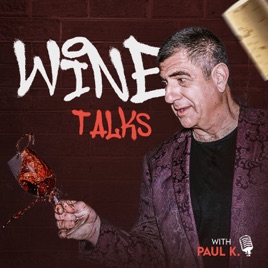
Advertise on podcast: Wine Talks with Paul K.
Rating
5from
This podcast has
528 episodes
Language
EnglishExplicit
No
Date created
2022/04/02
Latest episode
2026/09/29
Average duration
57 min.
Release period
5 days
Description
All you knew about wine is about to bust wide open… We are going to talk about what really happens in the wine business, and I'm taking no prisoners. Learn more at: https://www.winetalkspodcast.com/. I am your host, Paul Kalemkiarian, 2nd generation owner of the Original Wine of the Month Club, and I am somewhere north of 100,000 wines tasted. How can Groupon sell 12 bottles for $60, and the wines be good? How do you start a winery anyway and lose money? And is a screwcap really better than a cork? Sometimes I have to pick a wine at the store by the label and the price... and I get screwed. Subscribe now and prepare to be enlightened.
Unlock Wine Talks with Paul K. podcast Email contact info,
Listeners & Audience details
Email contact information
Direct podcast contact details

Listeners
Audience numbers & engagement insights

Audience details
Podcast Insights

Podcast episodes
Check latest episodes from Wine Talks with Paul K. podcast
The Hidden Power of Emotion in Selling World-Class Wine; Thomas Sequy of Troplong Mondot
2026/09/29
The more Wine Talks speaks with the Bordelaise, the more intrigued we become. Certainly the storied history of the region ios pure wine history, but the individual stories, philosophies, and the realities of marketing wine in 2026 take center stage when hashing out the headwinds. Meet Thomas Sequy of Troplong Mondot.
AI interpretation: Thomas Seguy strides into the studio with Bordeaux's heartbeat echoing in his suitcase and a Rolodex of global wine connections in his head, but he's not here for polished PR. He's here to torch the tired narrative that a bottle is just a status symbol or expensive dinner companion. Right out of the gate, Thomas Seguy dismantles the myth that Bordeaux is staid Old World tradition, revealing instead a region fueled by reinvention, relentless experimentation, and raw, unresolved rivalries—where wine isn't just aged in barrels, but forged in the heat of generational change and international demand. If you've bought the story that Bordeaux is for the gray-haired gentry, this episode is your wake-up call.
What will you really learn when you listen in? Prepare for a disruptor's lens on the very foundations of the wine world. You'll find out why négociants aren't just middlemen but the shadowy nerve center of the Bordeaux market, and how today's "second wines" are no longer the discount bin—sometimes, they're the sleeper hits. Get ready to see how market pressures and global warming are reprogramming Bordeaux's DNA, and why the soulless supermarket shelf is becoming the wine world's greatest battleground. From cash flow tricks that would make a Silicon Valley CFO sweat, to the unspoken warfare between tradition and the urge to break free, Thomas Seguy and Paul K pour you a glass of the real story—a blend that's far more complex than most labels dare to reveal.
What will you get with every listen?
The secrets behind Bordeaux's labyrinthine distribution network—and who really pulls the strings.
Why "en primeur" is the financial hack that keeps French wineries alive (and what Napa can only dream of).
The inside dirt on how classifications are made, manipulated, and outright rejected—sometimes by the region's biggest players.
The truth about why younger generations are walking away and what the industry is terrified to admit about it.
How grape-picking dates, not just grape types, are becoming rebellion and identity rolled into one.
The reason a bottle's story—and your emotional reaction—might be the future (and last defense) of great wine.
Thomas Seguy tosses away the veneer of wine as polite conversation fodder and shows you what it looks like to get your hands dirty in the vineyard and your mind twisted by the marketplace. Think wine is just about terroir or technique? Think again. Here, you'll hear why tech, climate, and even hospitality can dictate the fate of a vintage as much as rainfall or barrel choice. Listen as Paul K fires the hard questions and Thomas Seguy responds, sometimes with a scientist's precision, sometimes with a street hustler's defiance. There are no soft landings; there's only the unfiltered truth of what it takes to keep Bordeaux alive and relevant.
By the end, you'll never walk the supermarket aisle—or scan a Michelin list—without hearing the echoes of this conversation. You'll spot the poseurs. You'll feel the real thing. And you might just realize that choosing a bottle is far less about what you've been taught and far more about whether the story, the vineyard, and the label can stir something restless in you. Wine, at least as Thomas Seguy serves it, is both an act of rebellion and a love letter—and after this, you'll crave nothing less.
Troplong Mondot: https://www.troplong-mondot.com
Duclot (négociant): https://www.duclot.com
Jack Daniel's: https://www.jackdaniels.com
Château Montelena: https://www.montelena.com
Château Beychevelle: https://www.beychevelle.com
Guide Michelin (Michelin Guide): https://guide.michelin.com
YouTube: https://youtu.be/CMj-WThiWPc
The Dark Side of Food Network: Are We Really Learning About Real Food?
2026/09/24
If I was to say I was 'taken"by this young woman, it would be an understatement. Besides her immense accomplishments in the world of cooking, wine and writing, her humility will set her apart. I think if all the world of hospitality took on her world view, the world would be in a better place.
If you think Emily Saladino is just another name among wine writers, wait until you join her at the table—because the conversation quickly shifts from ordinary pours to the kind of deep, delicious stories you want to savor and swirl for hours. Emily Saladino doesn't just write about food and wine; she dismantles the myths, exposes the secret handshakes of the wine world, and invites you to explore flavors the average drinker might never encounter. This episode of Wine Talks promises to make you see your next glass—and your next plate—in an entirely new light, blending practical knowledge with high-spirited tales from the frontlines of food media, international tastings, and vibrant family reunions where new bottles meet skeptical drinkers.
From the first sip, you'll be hooked by Emily Saladino's approach to making wine accessible, even as she navigates the high-stakes, jargon-filled world of tastings and reviews. Ever wondered why orange wine is suddenly everywhere, or why some people seem to speak an entirely different language around wine labels and tasting notes? Emily Saladino breaks it all down, sharing candid moments—like explaining to her own family in New Jersey that "orange" wine isn't made from citrus. She reveals how different corners of the country, and the globe, have differing encounters with flavor, tradition, and the very concept of wine itself.
As the story unfolds, Paul K joins Emily Saladino in questioning why American wine consumers still face so many hurdles when trying to find "real" wine—the kind that isn't mass-produced, stripped of its origin, or drowned in celebrity hype. Their conversation exposes the complex machinery behind wine distribution and answers pressing questions: Why do some regions have to market themselves with words like "natural" or "biodynamic" to catch your attention? Are these just buzzwords, or genuine guideposts to better, more honest wine? Together, they recount adventures among ancient vineyards in Georgia and Armenia, tasting the difference that truly local food and attentive farming make.
Prepare to get hungry, as well as thirsty, when Emily Saladino and Paul K turn toward the kitchen and table. The episode dives into food's forgotten rules—like only eating strawberries in season—and explores how America's obsession with convenience has dulled our collective palate. Yet, the revival is underway, powered by younger generations seeking out genuine ingredients and regional specialties, and fueled by experiences that prove the difference between bland trucked-in tomatoes and those dug fresh that morning is bigger than you'd ever guess.
What's in it for you? Beyond the lively banter and bold ideas, you'll walk away with a glass full of actionable insight and newfound confidence. This isn't just a story about wine—it's an invitation to taste, question, and celebrate more:
🍷 The secret behind the wine world's three-tier system—and how it shapes every bottle you buy
🍷 Why "orange wine" turns heads (and sparks confusion) in both hipster bars and family BBQs
🍷 How industrial agriculture shaped modern taste—and how local, sustainable food could rescue it
🍷 Why fancy terms like "natural" and "biodynamic" matter (or sometimes don't)
🍷 The single conversation that can open wine's closed doors for new drinkers
🍷 How memory, flavor, and the story in your glass can connect generations and cultures
With Emily Saladino at the mic, you're not just learning the ins and outs of wine and food—you're discovering the beauty of not having all the answers, but being passionate enough to keep tasting, keep learning, and savoring every unexpected detail along the way.
YouTube: https://youtu.be/bCs7a7dfPVQ
Wine Enthusiast: https://www.winemag.com
VinePair: https://vinepair.com
Food Network: https://www.foodnetwork.com
Pie 'n Burger: https://www.pienburger.com
iHeartRadio: https://www.iheart.com
Spotify: https://www.spotify.com
Pandora: https://www.pandora.com
Blue Hill at Stone Barns: https://www.bluehillfarm.com
EmilySaladino.com: https://www.emilysaladino.com
When Business Kills Passion: Florencia Palmaz Questions the Soul of America's Wine Country
2026/09/17
When a visionary enters the proverbial "studio," the world should listen. It isn't every guest that graces Wine Talks with Paul K that raises an eyebrow, Florencia Palmz did just that. She didn't say enything that industry leaders don't already think, but she was compelled to express the very thoughts that need to be expressed...to change things, to reorient the view point of the wine trade. Bravo.
What you will learn:
🍷 Why the "connection to the land" isn't just marketing fluff—and how Florencia Palmaz bottles that connection
🍷 How risk, resilience, and a little immigrant grit end up in every glass of Palmaz wine
🍷 The real origin story—hint: it wasn't about wine, but about family and healing
🍷 Inside the cave: why they dug a gravity-flow winery into the side of a Napa mountain
🍷 How real hospitality blows up the "fancy story" and marketing-first approach
🍷 The unfiltered truth about surviving COVID, channel swings, and a fickle wine market
Forget the safe, polished stories that float around high-end wine country. Florencia Palmaz doesn't care for superficial sales pitches or the flavor-of-the-month marketing tactics that have turned too many Napa wineries into hollow brands. She's not afraid to call out the poseurs—those who build ugly faux-châteaux and let consultants craft their "legacy"—and instead gets real about what actually makes a bottle of wine worth drinking: the raw, sometimes messy fight for connection, survival, and honesty. Whether she's recounting how wildfire threatened to erase everything her family built, or skewering the industry's drift into marketing babble, she brings a directness that cuts through the noise.
Her story isn't just another rags-to-riches "American Dream" cliché. Florencia Palmaz arrived in the US as a baby, the youngest passenger in her family's leap-from-Argentina odyssey, riding the wake of her physician father's obsession to fix what killed both grandfathers—heart disease. The family's Napa venture started as a wild dream: mom wanted a vineyard because she saw how cattle ranching unified kin for generations. Dad chased a vision to heal, not just with surgery—but, one day, with the slow medicine of gathering family and friends around a table. The original plan? Make a place for people to stay connected, not just make iconic wine.
By the time the Palmaz family started plotting out a winery, they didn't care about tasting rooms or trendy tourism—they wanted a gravity-flow cave cut straight into Coombsville bedrock, built to preserve the integrity of what they'd grown and harvested. For Florencia Palmaz, "romance" isn't something you layer on through storytelling—it's a byproduct of doing the hard, risky, unglamorous work, and then inviting others to share the table for an unfiltered experience. Her background means she doesn't flinch when confronted with chaos—whether it's wildfires, swings in the market, or the near-overnight pivot to virtual tastings that saved her team during the pandemic.
Listen as she torches the smoke-and-mirror tactics of the modern wine world, insists that hospitality starts with actually caring (not performing), and reminds us that the room where it happens—whether a rustic asado or a high-design cave—is just a vessel. What matters? Who you gather, the grit you bring, and the memories built, one earnest glass at a time. If you're craving more than a collector's label and want the hard truths of wine, family, and survival, consider this your invite to see what's really behind the bottle.
YouTube: https://youtu.be/VUxeVsE03O4
Palmaz Vineyards: https://www.palmazvineyards.com/
Château Montelena: https://www.montelena.com/
Grgich Hills Estate: https://www.grgich.com/
Terra Vox: https://terravox.wine/
Heitz Vineyard (Heitz Cellar): https://www.heitzcellar.com/
Digital Nomads Swarm Armenia—And a 400 year old vineyard? Meet Mathew Zein
2026/09/15
Who does this? I am actually part jealous and part concerned for this mans sanity.
He goes to a country, married no less, to visit for a week and hasn't left for 10 years. I'm like "what?"
When Matthew landed in Armenia, he didn't bring a suitcase full of big plans—just a battered laptop and the crazy notion that a tiny country he didn't even have roots in could become his home. Instead, what happened next might change how you think about destiny, culture, and even what it means to plug in and connect. This isn't another dry "expat tale" about escaping the ordinary for a bit of Old World charm; it's a crash course in how Armenia—a place you probably imagine as ancient, troubled, or stuck in the past—has thrown the rulebook in the shredder and started rewriting everything.
Pull up a chair. You're about to get the straight truth from Matthew: a digital nomad, accidental insider, and the founder of Life in Armenia magazine, whose life now flickers between coworking spaces, ancient vineyards, and surprisingly rowdy late-night barbecues. Paul K leads the charge with sharp, candid questions—so expect less travel-brochure, more reality check.
Here's what your brain is going to download:
💻 How Armenia's leap into 5G, remote work, and startup culture is outpacing expectations—and why tiny size is now a massive tech advantage.
💻 The bizarre, science-backed theory that Armenian grammar actually reprograms minds for coding and artificial intelligence—yep, seriously.
💻 Why Armenia's streets run safe and free after dark, why young women don't think twice about walking home at 2 a.m., and why this is a bigger tourism draw than you'd guess.
💻 The uproarious collision of ancient vineyards, French winemakers, and a hands-off philosophy: "let the Armenian mountains make the wine, not the machinery."
💻 How the digital nomad wave is remaking provincial Armenian towns into year-round creative hubs—no more sleepy border outposts here.
💻 What happens when a magazine refuses politics, gloom, or handouts and spotlights only the positive—sparking thousands to ask, "Is this really Armenia?"
By the end, you'll realize: the only thing more unpredictable than Armenia's future is the energy that powers it—and how, in a place with a new story on every corner, sometimes the biggest risk is never showing up at all.
YouTube: https://youtu.be/zBVKweKgorg
Life in Armenia magazine: https://www.lifeinarmenia.org
Voskevaz Winery: https://voskevaz.am
Invino Wine Bar: https://invino.am
Caras Winery: https://www.karaswines.com/
Wine Paris (wine show): https://wineparis-vinexpo.com
Willy's Wine Bar: https://www.willyswinebar.com/
Why Most Master Sommeliers Are Still Broke: Doug Frost Exposes Industry Secrets
2026/09/11
The top accolades in the wine trade are tough to acquire. The Master of Wine and the Master Sommelier both can take years if not a decade to study for and pass the tests. But to have both credentials on your resume! I'm like what? Doug Frost is the man...and one of three in the world that have accomplished earning both accolades.
It's one thing to love wine, but it's another to flat-out admit you may have to drink your entire inventory if nobody else buys in. That's the raw honesty you're in for with Doug Frost, a man who admits that in wine, if you want a small fortune, you'd better start with a large one.
Think you know what "success" means in the wine world? Think again. As Doug Frost reveals, chasing the rarest titles—Master of Wine and Master Sommelier—wasn't about the money or even the glory. In fact, his big reward was a job offer that didn't get a dollar sweeter after adding Master of Wine to his resume.
Ever fallen for the myth that a fancy degree or diploma in the wine industry guarantees you fat paychecks and endless wine-soaked vacations? Doug Frost calls B.S.—the "brass ring" is an illusion, and the real payout is getting to teach, write, and hang with "your people."
Get ready to question the cult of Napa: why would anyone with "Kansas City blood" chase wine real estate thousands of miles away? Doug Frost dishes on why he'd never do Napa—but risked it all on Walla Walla, Washington instead.
If you thought passing the Master Sommelier exam is just a European geography bee, brace yourself. The modern test now requires you to know Australia's Premier Crus and regional clones—but don't be surprised if your whole study session gets wasted on the world's easiest question.
You'll get the cold, sobering truth about the state of the industry: wine sales are slumping, the cool kids are either skipping booze or lighting up something else, and the real money these days is in spirits and cocktails.
But don't expect nostalgia for days gone by—this is a brutally honest evisceration of the "wine business romance." It's about survival, hard choices, and the ugly realities of making "honest wine" in a world obsessed with packaging and instant gratification.
Forget fairy tales. You'll find out why direct-to-consumer is the only endgame for most American wineries, and why, even after 30 years, Doug Frost is still hustling for every bottle sold—because the alternative is disappearing into the shadows of venture-capital wine giants.
What You'll Learn:
🍷 Why nobody gets rich in wine—unless they start off rich, and even then, it's a gamble.
🍷 The dirty difference between a Master Sommelier and a Master of Wine—depth, width, and what really matters.
🍷 Why "passion" is the only thing keeping people in the industry—and why that's a dangerous drug.
🍷 The dark side of wine packaging: cans, paper bottles, and the marketing scam that might be ruining real wine.
🍷 How generational shifts and social taboos are putting wine on the endangered list, while cocktails and cannabis cash in.
🍷 "Honest wine" vs "grocery store swill"—how most popular wines are engineered for shelf space, not soul.
Get ready. This is wine talk with the gloves off.
YouTube: https://youtu.be/31Robx9XTOM
WSET (Wine & Spirit Education Trust): https://www.wsetglobal.com
Court of Master Sommeliers: https://www.mastersommeliers.org
Trader Joe's: https://www.traderjoes.com
Penfolds: https://www.penfolds.com
Venturi Aerator (Vinturi): https://www.vinturi.com
Echolands Winery: https://www.echolandswinery.com
Pepper Bridge Winery: https://www.pepperbridge.com
Amavi Cellars: https://www.amavicellars.com
Constellation Brands: https://www.cbrands.com
Château Ste. Michelle: https://www.ste-michelle.com
Mondavi Winery (Robert Mondavi): https://www.robertmondaviwinery.com
Inglenook: https://www.inglenook.com
Yao Family Wines (Yao Ming): https://www.yaofamilywines.com
Southern Glazer's Wine & Spirits: https://www.southernglazers.com
Breakthru Beverage Group: https://www.breakthrubev.com Napa Valley Register: https://napavalleyregister.com
"Cali Red from Snoop Dogg" refer to 19 Crimes—https://www.19crimes.com
Is It Going To Work? Ancient Wines, Modern Idea: How Armenia Is Sharing Its Bottles: Vahe Baloulian.
2026/09/08
This is cleaver, and grass roots. Vahe has an idea to promote the wines of Armenia, one bottle, one dinner, one enthusiat at a time. And, if you ask me, that is what it is going to take to get the industry grounded again.
There is alot of spectulation on the role AI will play in this renassance, and most likely the role will be voluminous, but AI cannon the place of sharing a bottle of wine with a friend. And Vahe is proposing this very idea.
If you've ever wondered how the wine world can get shaken up by a little friendly challenge, you're in for a treat! In this episode, host Paul Kalemkiarian and guest Vahe spill the wine (figuratively) on why the second week of November is something to circle on your calendar: Armenian Wine Week—globally!
What's the Big Idea?
During Armenian Wine Week, every Armenian is encouraged to:
Buy 2 bottles of Armenian wine. Gift 1 bottle to a non-Armenian friend—spread the love, and the tannins! Challenge 3 friends to do the same—think of it as the "Ice Bucket Challenge" but far more delicious (and less shocking to the system). As Vahe quips, "Every Armenian is a boat that can take this wine to the ocean of wine drinkers" 00:18. You don't even have to drink it all yourself—just share, enjoy, and invite others to the wine party. Imagine your Thanksgiving table with a bottle from "my ancient land" and a great story to go with it! 00:24.
The Grassroots Spirit
This isn't your typical top-down campaign. Vahe describes it as purely grassroots—no big-budget ads, just community, passion, and a dash of friendly competition. There's no event to organize, no one to blame, and no committees to argue over poster colors 44:39.
It's "everybody's wine week," with customizable logos and materials—so if you hate the color, make your own (and maybe throw in some glitter if you're feeling festive) 46:46.
Why Armenian Wine (and Why Now)?
Armenian wines have come a long way. Once, they were (to put it gently) "virtually undrinkable" according to Paul Kalemkiarian 05:12, but now there are bottles that belong on the world stage, at a price that's still a bargain 10:14. The experiment is simple: let the world taste and discover them. And if you need a makeshift conversation starter while gifting your neighbor a bottle, drop the "world's oldest winemaking region" fact for bonus points 15:53.
How Do You Measure Success?
It's easy: when distributors start running out of stock and wine shops need to restock those Armenian labels, you'll know the experiment worked 45:32. Until then, every bottle shared is a tiny wave in that "ocean of wine drinkers."
Want In?
Keep an eye out for www.armenianwineweek.com (coming September), where you can find which wine shops, distributors, and restaurants are on board. And remember—there's no wrong way to participate, as long as you're sharing, toasting, and challenging others to join in the fun 46:00.
So pour a glass, pass a bottle, and be the waves that bring something ancient to someone new! Cheers—may your "wine networking" be strong and your stories unforgettable.
https://youtu.be/lBf0xGz0cKY
Trinity Canyon Vineyards: https://trinitycanyon.com/
In Vino (wine bar in Yerevan): https://invino.am/
Armenian Wine Week campaign: https://armenianwineweek.com/, https://armenianwine.com/
Wine Armenia Network: https://winearmenia.org/
Champagne Rebel: Marvina Robinson Pops the Industry's Bubble
2026/08/31
Most...no, all Champagne and Sparkling wine houses will tell you: Champagne is not just foe celebration. Kind of like tinsel in the movie Elf (not just for decoration). Enter Marvina Robinson with an intriguing journey from Wall Street to the wonderful world of wine and Champagne. Who would hang up their proverbial cleats of a steady high paying job for the unknown landscape of adult beverages and uncertainty. Nobody ever told Marvina Robinson that starting a champagne brand as a Black woman from Brooklyn was "a good idea"—in fact, they told her the opposite. She laughed, uncorked, and did it anyway. In this intoxicating episode, you're invited behind the scenes of a sparkling rebellion—where French tradition meets Brooklyn hustle and a bottle isn't just something to toast with, but a lifelong calling and a statement of intent. If you think you know how a champagne label gets built from scratch, think again. Marvina Robinson is about to show you the underbelly, from hands-on midnight label designs to the grind of shipping logistics, stigma, and triumph. Settle in as Paul Kalemkiarian guides this no-bull** conversation through the unexpected and the defiant. You'll hear how champagne is more than the liquid in your flute—how every pop, fizz, and pour carries the imprint of a woman who built her brand without a cent from investors or a whisper of industry approval. The myth that champagne is just for celebrations? Consider it smashed. Here, it's a daily fuel, a vessel of memories, and sometimes, necessary armor against sexism and doubt. You'll sit at Marvina Robinson's tasting table—a place where experience is non-negotiable. Learn how word-of-mouth and hospitality can outperform any big-money PR blitz, and why real stories (and real setbacks) are the true foundation of resilience. This is the blueprint for anyone sick of gatekeeping, tired of artificial hype, and ready to find out what it actually takes to survive—and thrive—in wine. When the bottles open, so do the truths. Here's what you'll walk away knowing: 🍾 The gritty reality of building a champagne brand solo—zero PR, zero BS, all hustle 🍾 Why honest champagne is made in the vineyard, not in the marketing room 🍾 How to turn doubters and haters into fuel for your fire (and maybe even serve them a glass) 🍾 The secret to hosting unforgettable tastings that teach as much as they celebrate 🍾 How navigating racism, sexism, and "you'll never make it" shaped Marvina Robinson's mission 🍾 Why experience—not credentials—is the currency that keeps B. Stuyvesant Champagne growing, bottle by bottle Ready to bust every champagne myth you ever believed? Pour yourself something real and listen in.
Visionary Disruption: How David Kong Is Redefining Wine Glassware for a New Generation
2026/08/25
It takes "b_ll$"to go after industry giants. And it doesn't mean toppling an industry giant, it just means getting a slice of the pie. I have witnessed numerous attempts at this in a variety of sectors, and most fail...and for many reasons..but this idea is working.
David Kong might have traded the high-octane pace of New York hedge funds for the delicate clink of hand-blown glass, but don't think for a moment he's lost his edge. In this episode, you'll hear how an outsider to the wine glass industry spotted a wide-open niche, challenged global heavyweights, and built a thriving company—all by obsessing over quality, price, and experience. Paul Kalemkiarian sits down with David Kong to trace the unlikely journey from financial analysis to the sensory world of wine glass design, unearthing what really happens when you try to disrupt a tradition-bound market.
You'll learn how, through sharp intuition and a knack for timing, David Kong built a direct-to-consumer glassware company that quietly caught fire through word-of-mouth—not flashy ads or influencers. He reveals what makes a hand-blown glass so irresistible to both diners and restaurateurs, and why elevating the vessel is about a lot more than aesthetics: it's about economics, market trends, and the way people experience wine. The conversation spans the practical—such as breakage rates and budgets—to the philosophical, with a deep dive into how glassware touches the very heart of hospitality.
Curious how glass thickness, the weight of a vessel, or even the glass company's business model can change the way you enjoy a bottle? Wonder why the trend toward lighter, featherweight glasses has taken the fine-dining world by storm, or how the rise of non-alcoholic "wines" and ready-to-drinks is shaking up both producers and purveyors? This is your chance to hear it straight from the founder who's shifting expectations in some of America's best restaurants.
Here's what you'll learn, one wine glass at a time:
🍷 The critical role that hand-blown wine glasses play in enhancing the wine experience
🍷 Why restaurateurs break more glasses—and why that's actually a good sign for business
🍷 How premium glassware can differentiate a restaurant and boost wine program profits
🍷 The surprising ways glassware trends ripple through both high-end and everyday hospitality
🍷 Insights into the rise of non-alcoholic drinks—and how glass choice still shapes the experience
🍷 Why a business built on word-of-mouth, not marketing budgets, can change the landscape
By the end of this episode, you'll have an insider's appreciation for the intersection of touch, taste, and economics—and you might just find yourself scrutinizing your own stemware with new reverence the next time you pour a glass.
YouTube: https://youtu.be/J7kblUtLZAY
GlassVin: https://www.glassvin.com
Baccarat: https://www.baccarat.com
Coravin: https://www.coravin.com
Zalto: https://www.zaltoglas.com
Riedel: https://www.riedel.com
Wine Searcher: https://www.wine-searcher.com
Patina Restaurant Group: https://www.patinagroup.com
Benno (NYC Restaurant): https://www.bennorestaurant.com
Jancis Robinson Glassware: https://www.richardbrendon.com/pages/jancis-robinson-collection
Cantillon Brewery: https://www.cantillon.be
Whole Foods: https://www.wholefoodsmarket.com
Secrets Under the Table at Stecca: What Really Happens in a Tiny Kitchen: Giorgio Vizia and Wimberly Meyer.
2026/08/21
The crazy world of hospitality can be considered a lost art. It seems more and more restaurants are opening as a walk up, order, take your table number and wait. Hardly a "how are you?" and it all seems lost. Enter Stecca Traverna. An unassuming Italian tavern in the heart of the So Cal surf capital, Hermosa Beach. Then I visited the kitchen, it was so small..."how small was it?" "It was so small that the shrimp didn't fit."
Giorgio Vizia jokes that he was born to the sound of pots clanging and sauce simmering—destined for a life in the kitchen before he'd even tasted his first meal. When you listen to this episode of Wine Talks, you'll discover how that predestination, along with a passionate partnership at Stecca Taverna, has blossomed into far more than a place to eat: it's a loving invitation into an Italian living room, every bite crafted to make guests feel like family.
Your journey starts in a kitchen so tiny even Giorgio wonders how he fits his culinary dreams between the refrigerator and the stove. Using resourcefulness—and a keen sense of seasonality—he shares how every carrot and sprig of basil is handpicked, prepared, and plated the same day, resulting in meals that shimmer with authenticity and never rely on waste or shortcuts 13:18.
But beyond the food, you'll be invited to take a seat at their communal table, where mutual respect and creative freedom form the backbone of Stecca's success. Hear how Giorgio and his partners choreograph the dance between kitchen and front-of-house, each trusting the other to shine in their respective domains, avoiding the pitfalls of ego and competition that so often plague restaurant ventures 04:50.
As you listen, you'll see surprising parallels drawn between the worlds of film production and restaurant management. The adrenaline, scheduling, and improvisational skills learned on set transfer seamlessly into the high-octane, high-reward environment of a bustling Hermosa Beach taverna 03:15.
The conversation delves into the realities of hospitality today—a business where passion, not profit, is the true motivator, especially in uncertain economic times 09:25. Giorgio and his partners reflect on what it means to build community, serve joy, and maintain work-life balance in careers where the hours never really stop.
You'll also question the speed of modern life and the true value of slowing down. From intentional ambience to curated wine lists, Stecca aims to recreate that elusive spark of European dining, inviting us all to enjoy experiences over efficiency, to truly connect at the table 17:32.
Tune in for these six sharp takeaways—each a reason to savor this episode:
🗡 How a kitchen's tiny footprint can fuel daily freshness, eliminate waste, and enhance quality 13:54
🗡 Why mutual respect and defined creative zones are crucial for sustaining a passionate team 04:50
🗡 The transferable skills from film set chaos to restaurant floor—budgeting, timelines, and improvisation 03:15
🗡 Why old-world values and immigrant ambition remain the secret ingredients to restaurant resilience 30:34
🗡 What role curated wine lists play in creating unforgettable dining moments and community 12:25
🗡 How slowing down, savoring, and embracing experience over speed can revive our craving for genuine connection 17:32
Come away with a nuanced understanding of how every dish, every note of music, and every exchange at Stecca is intentionally crafted—a mosaic of passion, family legacy, and never-ending hunger to "do better every day."
YouTube: https://youtu.be/sTZWhAez44k
Stecca Taverna
https://www.steccataverna.com/
Drago Central (Drago Ristorante Group)
https://www.dragorestaurant.com/
Celestino Ristorante
https://www.celestinopasadena.com/
San Antonio Winery / Stella Rosa
https://sanantoniowinery.com/
https://www.stellarosawines.com/
Jonathan Club
https://www.jc.org/
Château Haut-Bailly
https://www.hautbailly.com/en/
Are Gen Z and High Wine Prices Killing the Industry? Paul Mabray and Andrew Levy Answer.
2026/08/18
It is going around. The wine business is slow. Slow to change, slow to recognize the market, slow to become digital...shall I keep going.
Two gentleman agree, at least on the retails front. Paul Mabray is an old friend. Andrew Levy is a new friend, and they have teamed up, with dozens of wine tech years between them, to solve some problems. Problems that seem natural to fix through tech in our trade.
Have a listen, these guys get it.
Paul Mabray and Andrew Levy have never been shy about shaking the wine industry's dusty foundations. They've watched as old ideas about how wine gets into a drinker's glass have collided with the demands of a digital-first world—and now they're ready to pour out what most in the business are too scared to say out loud.
Think wine distribution's stuck in the last century? You're not wrong. This episode takes you inside the chaos and opportunity of "the final mile," where millions in brand excitement evaporate because a shopper can't actually find the bottle they want.
PourNow isn't just another tech solution. It's a weapon against dead-end marketing and the three-tier system's ancient gatekeeping. Mabray and Levy aren't interested in playing nice with tradition—they're here to dismantle it.
Ever wondered why the average consumer ends up buying whatever's on sale, not what they love? Hint: Supermarkets stuff shelf talkers at you because nobody has figured out how to truly connect excitement to purchase—until now.
Amazon's ambitions to own the alcohol game? They fizzled. Listen in for what really happened behind the scenes—and how most digital marketplaces have failed drinkers and brands alike.
You'll find out why "omnichannel" isn't just marketing lingo, but a bare-knuckle fight for survival for small wineries, indie shops, and even industry giants. Turns out, nobody is immune from the shakeup.
Are you ready for the blunt truth about digital marketing "consultants" and the masses of self-proclaimed wine influencers? Mabray and Levy spill the real reasons most of them can't hack it.
Discover why today's shopper is digitally native and ruthless—expecting to buy whenever and wherever they want, even if it means bypassing the industry's sacred cows.
This isn't a glossy industry PR piece. It's about hard metrics, hard lessons, and the hard reality that the wine business is forever at risk of being outpaced by its own customers.
Pour yourself something bold, because after this episode, you'll never look at a wine shelf, a tasting, or an Instagram ad the same way again.
What you will learn:
🍷 Why the three-tier system's chokehold on wine sales is crumbling—and who's panicking behind the curtain
🍷 The dirty secret of so-called "omnichannel" marketing (hint: it's survival, not strategy)
🍷 How most consultants and digital "experts" are snake oil salesmen who can't deliver real conversions
🍷 The hidden tech and data tricks that actually trace every ad dollar to a bottle sold—exposing winners, losers, and frauds
🍷 How PourNow is arming brands and retailers to bypass the old guard, break dead ends, and put power back in the hands of consumers and innovators
YouTube: https://youtu.be/f7_BbMITmE0
Orange Wine Is Not a Fad: Digging Up Ancient Flavors in Modern Bottles; Meet Stetson Robbins.
2026/08/13
I met Stetson years ago. Orange wine was not a thing. But he was making it a thing. I was intrigued by his commitment to the sector and the develpment of Georgian wine in the US, particularly in Los Angeles.
Bringing Stetson Robbins onto this show is like popping the cork on a bottle you've never heard of, from a country you can barely pronounce, and finding it's the most fascinating taste you didn't know you craved. Forget everything you thought you knew about wine, because this conversation isn't about chasing the next California cab or French pinot—this is about tracking the wild, unfiltered edge of the wine world through the forgotten vineyards of Eastern Europe, where tradition, culture, and rebellion ferment side by side. The conversation focused on peeling away the comfort (and sometimes the snobbery) of the usual wine stories and diving deep into what it means for a wine to actually taste like where it's from—right down to the hands, palates, and histories of the people making it.
One concept discussed was the big secret of "terroir"—not just dirt, weather, or latitude, but the food, the local tradition, and even the pressures of the market itself. These are wines born not just from grapevines, but from migration, resistance, and centuries of culinary survival. You'll learn how post-Soviet countries like Slovenia, Croatia, and Georgia have turned their backs on cookie-cutter commercial varietals, instead resurrecting their own native grapes and bringing ancient techniques—like wild fermentation in massive underground clay qvevris—right to the glasses of skeptical sommeliers and thirsty Brooklynites alike. A key theme that emerged was that true winemaking is messy, unpredictable, and profoundly human.
The discussion explored not only what orange wine actually is (spoiler: it's not fruit salad in a glass), but why it's shaking up wine scenes from coast to coast, frustrating purists and delighting experimenters. Several points were raised, including how even the act of importing these bottles is a full-throttle exercise in grit, luck, and sometimes chaos. This episode will have you questioning everything you thought made a good wine—and craving an adventure, not just a drink.
🍾 How the culture, cuisine, and quirks of a region become liquid in your glass
🍾 Why "orange wine" is the oldest new thing in the wine world—and why it's taking over
🍾 The radical differences between Eastern European winemaking and Western obsessions
🍾 What really happened when ancient amphoras met modern Brooklyn bars
🍾 How grape genetics, wild fermentation, and centuries-old mistakes are now marketing gold
🍾 Why, after this hour, you might never look at a wine label—or a waiter—the same way
Stetson Robbins is a dynamic force in the world of wine, fusing a theatrical background with a passion for exploring wine's deepest roots. His journey began in college, majoring in theater and delving into Greek studies, where the Dionysian tradition first sparked his fascination with the cultural significance of wine 03:06. Waiting tables at Walt's Wharf in Seal Beach introduced him to the nuanced world of wine service, and fueled his desire to learn more. Encouraged by a wine-focused restaurant culture, he pursued sommelier training, including the Court of Master Sommeliers—a path that led him from Walt's Wharf to Napa Rose at Disneyland, a renowned training ground for aspiring sommeliers 06:10.
Despite this foundation, Stetson Robbins's real intrigue lay in the stories of winemakers and the diverse cultures shaping wine across the globe. His move into retail at shops specializing in value-driven French wines connected him with import specialist Peter Mann, opening the doors to heritage tastings in Bordeaux and Burgundy 08:07. The true turning point came with Blue Danube Wine, where he championed unique Eastern European wines—particularly from regions overlooked in the U.S. market, including Slovenia, Croatia, Hungary, and Georgia. Over more than a decade, Stetson Robbins was instrumental in building Blue Danube's portfolio and expanding its footprint to markets like New York and Los Angeles 22:46.
Today, Stetson Robbins is co-founder of Black Lamb, a California-based boutique wine importer run alongside his wife. Black Lamb specializes in sourcing wines from the Slovenian-Italian border and the Republic of Georgia, focusing on traditional, "ancient" winemaking techniques such as skin-fermented whites ("orange wines") and wines fermented in Georgian qvevris. His mission is equal parts education and adventure: introducing curious American drinkers to the diversity, culture, and terroir that make these wines unforgettable 01:06:30.
Strikes, Somms, and Screwups: David Schulner's Wild Ride Beyond Hollywood
2026/08/11
I am pretty sure you didn't catch the article in the Somm Journal written by David Schulner. And if you did, you were not as jealous as I was. Well, let's call it inspired.
Trading the glitz of Hollywood for the chaos of the restaurant floor, David Schulner doesn't just pour wine—he pours gasoline on the genteel myths swirling around it. You'll hear what happens when a successful TV showrunner, fresh off the picket lines of the 2023 writers' strike, crashes headfirst into the closed ranks of Michelin-star restaurants. Forget those dreamy drone shots over gleaming vineyards; David Schulner exposes the cutthroat realities of wine service, the humiliations of being the new kid at 50, and why, even with a TV resumé, you can't buy your way onto the restaurant floor. If you still think wine is all velvet gloves and romantic stories, think again—this is one guest who's happy to spill the dirty secrets, right alongside the Pomerol.
In this episode, you'll discover what hospitality really means in an industry obsessed with pedigree, why most people—Sommeliers included—are entirely faking it, and who gets left behind when Napa and Bordeaux "evolve." David Schulner and Paul Kalemkiarian aren't afraid to torch the sacred cows of the wine world, from pretentious tasting rooms to the sanitized myths of customer service. Instead of parroting the party line, you'll get a front-row seat to the raw, awkward, ego-bruising reality of what it takes to serve, sell, and survive when the masks come off.
If you're tired of wine podcasts that sound like a sommelier's TED Talk—or shows that make the industry look like a playground for privileged insiders—this conversation will rattle your cage. David Schulner lays bare why most restaurants won't hire a middle-aged rookie with Hollywood connections, why real hospitality is an act of rebellion against wine snobbery, and how every industry he's loved is "on the death knell"—and that's exactly what makes them magic. The result? An unfiltered, sometimes uncomfortable, ultimately inspiring blueprint for anyone who's ever wondered if there's a place for outsiders in one of the world's most insular trades.
You won't just walk away with surface-level talking points. You'll come away with forbidden knowledge and questions that might keep you up at night. Here's your table of contents—open these books at your own risk:
📖 What really happens when you trade TV scripts for wine lists—and why most in the business never see it coming
📖 Why restaurant jobs are harder to land than a first break in Hollywood, no matter your resumé
📖 The dirty secrets of wine certification, and why being a "Certified Sommelier" doesn't mean you actually know anything
📖 How high culture and humble hospitality are always at war behind the scenes—plus who gets trampled in the process
📖 Why Napa's "downturn" might just be the shake-out the wine world desperately needs—and who stands to lose their shirts
📖 The myth of the red carpet: why the best service isn't about knowing the bottle but about making everyone—even a broke, muddy waiter—feel royal
Consider this episode your permission slip to crash the velvet rope, ignore the script, and step backstage to where the true drama—and the best conversations—actually unfold.
YouTube: https://youtu.be/LsTL52ewBGI
Websites of Companies Mentioned Netflix: https://www.netflix.com/
Juilliard: https://www.juilliard.edu/
William Morris Agency (now WME): https://wmeagency.com/
Court of Master Sommeliers: https://www.mastersommeliers.org/
Napa Valley Wine Academy: https://napavalleywineacademy.com/
Gwen Restaurant (by Curtis Stone): https://www.gwenla.com/
Maude (by Curtis Stone): https://www.mauderestaurant.com/
Silver Oak: https://www.silveroak.com/
Caymus Vineyards: https://www.caymus.com/
Opus One Winery: https://www.opusonewinery.com/
Grgich Hills Estate: https://www.grgich.com/
Robert Sinskey Vineyards: https://www.robertsinskey.com/
Wine Paris: https://www.wineparis-vinexpo.com/
Stagecoach Vineyards (now owned by Gallo): https://www.gallo.com/
Vieux Château Certan: https://www.vieuxchateaucertan.com/
Château Cheval Blanc: https://www.chateau-cheval-blanc.com/
AdVini Global: https://www.advini.com/
Châteauneuf-du-Pape (general region info): https://www.chateauneuf.com/
Wine Masters TV: https://winemasters.tv/
SOMM TV: https://www.sommtv.com/
Strand House (Manhattan Beach): https://thestrandhousemb.com/
Great story.
Are Michelin Stars Ruining the True Spirit of Great Restaurants? Patric Kuh Tells All
2026/08/07
I first met Patrick at our favorite steak house in Manhattan Beach; the Arthur J. The wine list there is one of the most thought out I have seen in all my travels. It was Patricks first day there. We had an intriguing conversation and returned a week later to continue our discussion. Serendipitously, by me eavesdropping on a conversation, I learned that Patrick had authored a book: The Last Days of Haute Cuisine. I was seriously taken by this accomplishment and immediately found the book on Amazon and voraciously read it cover to cover. A stroy of food in America that had been untold prior.
Patric Kuh knows a thing or two about the high wire act that is fine dining—after all, he's balanced on that tightrope both in kitchens and at critics' tables, with a sharp pen and a sharper palate. If you've ever dreamed of opening a restaurant, wondered what true "haute cuisine" actually means, or questioned why credit cards changed the whole dining landscape, this is the episode that will entice your culinary curiosity and satisfy your appetite for secrets behind the swinging kitchen doors.
You'll discover not just the drama of French chefs staking their claim in midcentury Manhattan, but how the evolution of American dining reflects bigger shifts in society: from exclusivity and velvet ropes to the democratization of great food and the rise of everyday restaurants as vibrant community hubs. Listen as Kuh exposes the risks, financial heartbreak, and ritual of keeping a kitchen spotless—and why a chef's towel over the shoulder means more than a thousand Instagram likes. The conversation dives into the nuts and bolts of writing a food book, the art of savoring (and sometimes cutting) stories, and the age-old rule for restaurant critics to never, ever accept a free meal.
By the end, you'll come away with intimate knowledge of how Patric Kuh peels back layer after layer of the restaurant world—one story at a time—until a living, breathing portrait of cuisine, culture, and ambition is served up before you. Here are a few of the fascinating things you'll learn:
🔪 The real meaning—and controversy—behind "haute cuisine" and how it shaped American dining
🔪 How the invention of the credit card forever changed who was allowed to dine in fine restaurants
🔪 Why some of the greatest restaurant stories, like the Kennedy clan being kicked out of Le Pavillon, have roots in deeper social dynamics
🔪 The rigorous (sometimes ruthless) standards of kitchen cleanliness and why they matter to chefs at every level
🔪 What it actually takes—emotionally, financially, and physically—to open and run a successful restaurant
🔪 The unwritten laws of food criticism: anonymity, honesty, and the line that separates opinion from influence
YouTube: https://youtu.be/giWG6tQxhOU
Links to items spoke about:
Spotify
Stitcher
Google Play
iTunes / Apple Podcasts
Los Angeles Magazine
Pages, a Bookstore
Arthur J
DoorDash
Grubhub
Love & Salt
Sequoia Grove Winery
Osteria Mozza
Michelin Guide
Le Cirque
Chez Panisse
Bellagio Las Vegas
All Day Baby
21 Royal (Disneyland)
#WineTalks, #FoodWriting, #RestaurantLife, #FineDining, #HauteCuisine, #NouvelleCuisine, #MichelinGuide, #FoodHistory, #FoodCritic, #CulinaryArts, #Restaurateur, #Hospitality, #FrenchCuisine, #FoodCulture, #DiningExperience, #LAeats, #WritersLife, #JamesBeardAward, #FoodPodcast, #CulinaryStories
Napa's Lost Magic: How Commerce Ruined Wine and What Jessica Kogan Wants to Fix
2026/08/04
When you meet Jessica Kogan (in-person or virtual), it takes exactly 2/3's of a second to realize she is a force of nature...marketing nature as it were.
Perhaps the most frequent guest on Wine Talks, each episode has had a unique viewpoint on the latest in wine marketing, data mining, and outside pressures.
I welcome back, Jessica Kogan.
If you think Napa is just for tuxedoed snobs or that wine tastings only happen in picturesque châteaus, wait until Jessica Kogan shakes up your tired assumptions. Jessica Kogan is the industry disruptor who believes the heart of wine isn't bottled in glass—it's poured out in the local grocery aisle, one wild, unfiltered conversation at a time.
You'll hear how she's forging revolution from the retail trenches, ditching sterile focus groups for nearly a million real-life customer conversations every year. Here, sampling isn't just some checkbox—it's a battleground where authentic brand love is won, and the old guard of wine marketing is put on notice.
Forget discounting your way into hearts. Jessica Kogan explains why slashing prices only slices away the soul of your brand and how risk, confidence, and even the rise of wine-in-a-can are reshaping the landscape. She'll tell you why the TikTok generation isn't afraid of booze—they're just bored by mediocre storytelling and fake experiences.
Get ready for uncomfortable truths: Wine is in danger of losing the next generation unless it gets back to basics—face-to-face, glass-to-glass, moment-to-moment. And yes, the magic of Napa is still alive, but it's happening at the checkout line, not behind velvet ropes.
By the end, you'll realize that the future of wine may just be as much about listening as it is about tasting. And in the era of digital everything, you might crave the next awkward, enlightening chat with a stranger offering you a sample at the store.
What you'll learn:
Why sampling in your neighborhood supermarket might be more revolutionary than any digital campaign
How the wine aisle became a confidence-sapping jungle—and how to hack your way through
Why discounting is for cowards and storytellers win the real loyalty wars
How Gen Z and Millennials are demanding their wine—and why "wine in a can" isn't a joke
The dirty little secret about focus groups vs. real-world conversations with nearly a million shoppers
Why, if wine doesn't get back to real human connection, it might lose its soul forever
Cameron Hughes Wines: https://chwine.com
Vintage Wine Estates: https://www.vintagewineestates.com
HSP Brands: https://hspbrands.com
Total Wine & More: https://www.totalwine.com
Château Haut-Bailly: https://www.haut-bailly.com
Donna Karan: https://www.donnakaran.com
#wineindustry #podcast #winetasting #JessicaKogan #PaulKalemkiarian #NapaValley #Sonoma #consumerexperience #winemarketing #retailinsights #directtoconsumer #wineclubs #brandstorytelling #HSPBrands #digitalmarketing #experientialmarketing #offpremisesales #winetrends #winepricing #RTDs
Did Dr. Jan Krupp Abandon Medicine for a Vineyard Gamble That Changed Napa Forever?
2026/07/29
You have not heard it all, contrary to the American colloquialism "Now...I've heard it all."
I've seen many professionals trade in their shingle for the wine trade. Attorneys, eye doctors, MDs, and others. Most of the time they are seeking the lifestyle that is purported to belong to winemaking. For sure, this type of career move will test your resolve; many find out that it wasn't and isn't what they were seeking.
Enter Dr. Jan Krupp, a celebrated Internist who got the calling. Can you imagine? Solid career, solid practice, helping others all tossed to the side of the road to enter the wine trade.
But when he was told that his most desired property was virtually useless for wine grapes, he jumped at the opportunity- yes, jumped at the opportunity. This adventure would become the famed Stagecoach Vineyards....and turn into a multi-million dollar sale to Gallo.
Trading a stethoscope for a shovel is not your everyday midlife crisis, but Dr. Jan Krupp makes it sound as natural as coaxing vines from volcanic rock. In this episode, you're invited into the world of a physician who took the road less traveled—straight up an unplantable Napa hillside—to plant the seeds of what would become the famed Stagecoach Vineyard. You'll discover how Dr. Jan Krupp applied scientific precision and creative drive to transform barren land into one of California's most celebrated grape sources, all while welding together risk, relentless work, and a bit of luck in the kiln of family partnership. Listen as he peels back the layers of his own journey—from home winemaking in a garage to collaborating with legendary consultants and top winemakers, each step a blend of experimentation and vision. You'll gain an inside look at his new book, Forging Eden, an exploration not just of Napa terroir, but of personal transformation and resilience. Along the way, Dr. Jan Krupp and Paul Kalemkiarian reveal the untold challenges that come with creating a world-class vineyard, wrestle with the shifting tides of Napa's hospitality and wine tourism, and debate the future of authentic winemaking in the age of crown caps and experiential brands.
🥂 The creative leap from medicine to winemaking: what drove Dr. Jan Krupp to leave a successful career for the unknowns of Napa's rocky hillsides
🥂 The secrets behind transforming "unplantable" land into the renowned Stagecoach Vineyard, and why the world's top winemakers wanted his fruit
🥂 The intricate dance between science and intuition in crafting both grapes and wine—without ever having to earn a diploma from UC Davis
🥂 Personal sacrifices and how major life decisions—including upheavals in family—shaped the very landscape of modern Napa viticulture
🥂 A firsthand account of Napa's evolving wine scene, tourism struggles, and whether a new generation can discover the same passion for handcrafted wines
🥂 How inspiration—and a little serendipity—can help you forge your own path, no matter how daunting the odds
Pour yourself a glass and settle in for a conversation that uncorks the realities, risks, and rewards of chasing a vision that changed the face of California wine.
YouTube: https://youtu.be/LkZaS3b8rLI
Places and companies you may have heard during the show:
Stagecoach Vineyards: https://www.stagecoachvineyard.com/
Krupp Brothers: https://kruppbrothers.com/
Silver Oak: https://www.silveroak.com/
Wine of the Month Club: https://www.wineofthemonthclub.com/
Trader Joe's: https://www.traderjoes.com/
Château Montelena: https://montelena.com/
Opus (Opus One Winery): https://www.opusonewinery.com/
Orin Swift: https://www.orinswift.com/
Gallo (E. & J. Gallo Winery): https://www.gallo.com/
Caymus: https://www.caymus.com/
#wine, #winetalks, #napavalley, #stagecoachvineyard, #kruppbrothers, #drjankrupp, #winestory, #vineyardlife, #winepodcast, #forgingeden, #winemaking, #wineenthusiast, #winehistory, #medicinetowine, #grapegrowing, #wineinspiration, #napawine, #californiawine, #familybusiness, #wineindustry
Podcast sponsorship advertising
Start advertising on Wine Talks with Paul K. relevant audience podcasts
You may also like to advertise on these Podcasts

4.9328081389
REAL AF with Andy Frisella
Andy Frisella

48977549
20/20
ABC News
4.91361709
The Learning Leader Show With Ryan Hawk
Ryan Hawk
4.92108499
the bossbabe podcast
Natalie Ellis
4.4384811967
The Megyn Kelly Show
SiriusXM
4.947517405
The Shawn Ryan Show
Shawn Ryan
4.5185359
Who, When, Wow!
Tinkercast | Wondery

4.6687191107
Armchair Expert with Dax Shepard
Armchair Umbrella
4.9553872190
The MeidasTouch Podcast
MeidasTouch Network
4.639655
Only Murders in the Building Podcast
Straw Hut Media