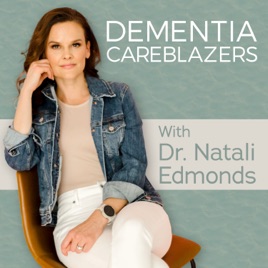
Advertise on podcast: Dementia Careblazers
Rating
4.9from
This podcast has
206 episodes
Language
EnglishPublisher
Dr. Natali EdmondsExplicit
No
Date created
2022/07/14
Latest episode
2026/10/02
Average duration
14 min.
Release period
7 days
Description
We prepare dementia caregivers for success. Say goodbye to the overwhelm & struggle and learn the real tips, strategies, and solutions that help make dementia caregiving easier. With board certified geropsychologist, Dr. Natali Edmonds Sign up for a free training on How To Care For A Loved One With Dementia- Without the Overwhelm, Dread, and Confusion
Unlock Dementia Careblazers podcast Email contact info,
Listeners & Audience details
Email contact information
Direct podcast contact details

Listeners
Audience numbers & engagement insights

Audience details
Podcast Insights

Podcast episodes
Check latest episodes from Dementia Careblazers podcast
5 MORE Strange Dementia Behaviors and Why They Happen
2026/10/02
Sometimes the strangest dementia behaviors have a pattern or explanation that isn't obvious at first.
Maybe your loved one seems fine earlier in the day but becomes restless every evening. Maybe they follow you everywhere, hide or collect unusual things, believe they're living in a different time of their life, or suddenly seem perfectly fine when the doctor walks into the room.
After the first strange behaviors episode, so many of you told me your loved one does these things too, or that the explanation finally helped it make sense. So in this episode, I'm breaking down 5 MORE: sundowning, shadowing, hiding and hoarding, time shifting, and show timing.
For each one, I explain what may be happening underneath the behavior and what you can try when it happens.
If you'd like to see this episode on video, you can hop on over to my YouTube channel here.
Because once you see what the brain may be trying to do, a lot of these behaviors start to make sense.
And if you want more ideas for what to do when these moments happen, I have two resources that can help:
→ Preorder the Dementia Care Toolkit Here: https://careblazers.com/toolkit
→ Learn about the Care Collective: https://tinyurl.com/podcast-cc
⏱ CHAPTERS
0:00 - Intro
1:39 - #1 Sundowning
6:22 - #2 Shadowing
9:01 - #3 Hiding, hoarding and collecting
13:06 - #4 Time shifting
15:11 - #5 Show timing
18:42 - How all 5 behaviors connect
20:03 - Where to get help with what to try
---
Hi, I'm Dr. Natali Edmonds, a board-certified geropsychologist specializing in dementia care. Whether your loved one has Alzheimer's, frontotemporal, Lewy body, vascular, or mixed dementia, we believe that to create a dementia-friendly world, we must first create a caregiver-friendly world.
This content is for educational purposes only and is not a substitute for professional medical advice. Always consult with a healthcare provider for medical guidance.
This Dementia Tool Helps When You're Not There
2026/09/28
➡️ Learn more about Memory Board: https://www.memoryboard.com/DEMENTIA24702
When you visit through this link, look for the pop-up with a Careblazers promo code.
Paid link: Dementia Careblazers may earn a referral fee from purchases made through this link and promo code.
Helping someone with dementia keep track of what's happening throughout the day can mean a lot of reminders, phone calls, notes, and repeated updates.
In this episode, I'm talking with Tyler Zannini, founder of Memory Board, about a simple tool families are using to share schedules, reminders, messages, photos, and other updates with a loved one with dementia.
We talk about how Memory Board came to be, how families are using it in real life, who it may be helpful for, how it works as dementia progresses, and some practical ways caregivers can use it from a distance.
Questions for Tyler's team: [email protected]
⏱ CHAPTERS
0:00 - Why Memory Board caught my attention
1:25 - How Tyler's grandmother inspired Memory Board
3:02 - What Memory Board is and how it works
4:48 - How families are using it
7:41 - Photos, visitors, and staying connected
12:04 - Can it help in later stages of dementia?
15:25 - Scheduling messages in advance
17:05 - Is there an ongoing subscription cost?
---
Hi, I'm Dr. Natali Edmonds, a board-certified geropsychologist specializing in dementia care. Whether your loved one has Alzheimer's, frontotemporal, Lewy body, vascular, or mixed dementia, we believe that to create a dementia-friendly world, we must first create a caregiver-friendly world.
This content is for educational purposes only and is not a substitute for professional medical advice. Always consult with a healthcare provider for medical guidance.
4 Common Phrases That Make Dementia Behaviors Worse
2026/09/24
There are a few phrases dementia caregivers say all the time that sound completely normal but can actually make dementia behaviors worse.
Things like "I already told you," "Don't you remember?" or "You just asked me that" usually come from frustration or from genuinely trying to help. But dementia changes what the brain is able to remember, process, and explain.
In this episode, I break down 4 common communication traps, why they can backfire, and what you can do instead. I also get into why the best response for your loved one might be completely different from the best response for someone else, and that is okay.
Dementia caregiving isn't about finding one perfect response. It's about learning what works for your loved one with dementia and adjusting as their brain changes.
If you'd like to see this episode on video, you can hop on over to my YouTube channel here.
📘 Looking for more practical strategies? My book, The Dementia Care Toolkit: Real Help for Challenging Behaviors and Caregiving Overwhelm, is available for preorder here:
https://careblazers.com/toolkit
→ Learn about the Care Collective: https://tinyurl.com/podcast-cc
⏱ CHAPTERS
0:00 - The repeated question that wears you down
2:14 - "I already told you" and the reminding trap
3:57 - "Don't you remember?" and highlighting their deficits
5:38 - "You just asked me that" and the repetition awareness trap
6:49 - "Why did you do that?" and the explanation trap
9:40 - Becoming a dementia detective when a behavior makes no sense
---
Hi, I'm Dr. Natali Edmonds, a board-certified geropsychologist specializing in dementia care. Whether your loved one has Alzheimer's, frontotemporal, Lewy body, vascular, or mixed dementia, we believe that to create a dementia-friendly world, we must first create a caregiver-friendly world.
This content is for
6 Normal Habits That Make Dementia Behaviors Worse
2026/09/18
Some of the habits that make dementia behaviors worse come from loving, kind caregivers doing exactly what works with everyone else in their lives. Correcting a mistake, explaining why the medication matters, or asking "do you remember who this is?" can quietly lead to more agitation, resistance, and mistrust.
In this episode, I'm walking through six of these everyday habits, why they backfire when someone has dementia, and what you can try instead. You can be completely right and still end up losing the moment. These habits take time to break, and noticing them is where it starts.
If you'd like to see this episode on video, you can hop on over to my YouTube channel here.
📘 My book, The Dementia Care Toolkit: Real Help for Challenging Behaviors and Caregiving Overwhelm, is available for preorder now: https://careblazers.com/toolkit
Inside, you'll find practical strategies for difficult dementia behaviors, communication, caregiver overwhelm, guilt, grief, frustration, and more.
→ Learn about the Care Collective: https://tinyurl.com/podcast-cc
⏱ CHAPTERS
0:00 - Why everyday habits can backfire with dementia
2:05 - Habit 1: Correcting
3:55 - Habit 2: Reasoning
8:45 - Habit 3: Arguing
11:40 - Habit 4: Testing their memory
13:00 - Habit 5: Talking as if they aren't there
14:55 - Habit 6: Reminding them what they can't do
17:40 - One question to ask before you respond
---
Hi, I'm Dr. Natali Edmonds, a board-certified geropsychologist specializing in dementia care. Whether your loved one has Alzheimer's, frontotemporal, Lewy body, vascular, or mixed dementia, we believe that to create a dementia-friendly world, we must first create a caregiver-friendly world.
This content is for educational purposes only and is not a substitute for professional medical advice. Always consult with a healthcare provider for medical guidance.
5 Strange Dementia Behaviors and Why They Happen
2026/09/10
Some dementia behaviors can make absolutely no sense from the outside. It can look like your loved one is being lazy, stubborn, rude, in denial, or even lying to you. But there's often a brain-based reason for what you're seeing.
In this episode, I break down 5 strange dementia behaviors, apathy, anosognosia, apraxia, disinhibition, and confabulation — and explain what may actually be happening in the brain when they occur. Because when you understand why a behavior is happening, it can completely change the way you see it.
If you'd like to see this episode on video, you can hop on over to my YouTube channel here.
And if your next question is, "Okay, but what do I DO when this happens?" I have two resources that can help:
→ Learn about the Care Collective: https://tinyurl.com/podcast-cc
→ My new book, The Dementia Care Toolkit is officially available for pre-order. ➡️ Preorder your copy here: https://careblazers.com/toolkit
⏱ CHAPTERS
0:00 - Why these behaviors are almost never a choice
1:31 - Apathy and the broken motivation switch
3:51 - Anosognosia and why they do not believe they have dementia
6:12 - Apraxia and why simple tasks stop working
8:26 - Disinhibition and what the frontal lobes control
10:11 - Confabulation and why it is not lying
---
Hi, I'm Dr. Natali Edmonds, a board-certified geropsychologist specializing in dementia care. Whether your loved one has Alzheimer's, frontotemporal, Lewy body, vascular, or mixed dementia, we believe that to create a dementia-friendly world, we must first create a caregiver-friendly world.
This content is for educational purposes only and is not a substitute for professional medical advice. Always consult with a healthcare provider for medical guidance.
How to Help When Someone With Dementia Knows They're Struggling
2026/09/03
When someone with dementia knows they're struggling, they may start doing less and less. They might get frustrated, say things like "I can't do anything right," or stop doing things they used to enjoy.
In this episode, I'm talking about why this can happen and, more importantly, how you can help. I'll share some simple ways to support their confidence and adapt activities as their abilities change.
If you'd like to see this episode on video, you can hop on over to my YouTube channel here.
→ Learn about the Care Collective: https://tinyurl.com/podcast-cc
⏱ CHAPTERS
0:00 - A Careblazer's question: is he losing motivation, or does he know he's struggling
1:23 - What anosognosia actually is, and why this is something different
3:10 - Practical ways to support someone who's aware they're struggling
3:42 - A real story: adapting a beloved hobby instead of giving it up
6:01 - What to watch for, and when to loop in the doctor
→ My new book, The Dementia Care Toolkit is officially available for pre-order. ➡️ Preorder your copy here: https://careblazers.com/toolkit
→ Get free weekly tools and tips in my newsletter, The Dementia Dose: https://tinyurl.com/dementiadose-podcast
---
Hi, I'm Dr. Natali Edmonds, a board-certified geropsychologist specializing in dementia care. Whether your loved one has Alzheimer's, frontotemporal, Lewy body, vascular, or mixed dementia, we believe that to create a dementia-friendly world, we must first create a caregiver-friendly world.
This content is for educational purposes only and is not a substitute for professional medical advice. Always consult with a healthcare provider for medical guidance.
Is It Jealousy or Dementia? Why They Act Worse When You're Busy
2026/08/27
Have you ever noticed your loved one with dementia is calm, nothing seems to be wrong, and then the moment you shift your attention to someone else they completely change? They get demanding, upset, anxious, or jealous that you are not there giving them attention. It can feel like they cannot stand not being the center of your attention, and understandably that leaves you feeling frustrated, resentful, and confused. It is not jealousy. It is not manipulation.
In this episode I share two real life examples of this, explain what is happening in the brain that causes it, and walk you through what actually helps when your attention has to go somewhere else.
If you'd like to see this episode on video, you can hop on over to my YouTube channel here.
→ Learn about the Care Collective: https://tinyurl.com/podcast-cc
⏱ CHAPTERS
0:00 - When your attention shifts and everything changes
1:16 - Two real life examples from Careblazers
2:52 - Why this is attachment distress, not jealousy
5:07 - Why it feels so personal, and a reframe that helps
5:54 - What actually helps when you have to step away
→ My new book, The Dementia Care Toolkit is officially available for pre-order. ➡️ Preorder your copy here: https://careblazers.com/toolkit
→ Get free weekly tools and tips in my newsletter, The Dementia Dose: https://tinyurl.com/dementiadose-podcast
---
Hi, I'm Dr. Natali Edmonds, a board-certified geropsychologist specializing in dementia care. Whether your loved one has Alzheimer's, frontotemporal, Lewy body, vascular, or mixed dementia, we believe that to create a dementia-friendly world, we must first create a caregiver-friendly world.
This content is for educational purposes only and is not a substitute for professional medical advice. Always consult with a healthcare provider for medical guidance.
4 Places Dementia Caregivers Can Turn for Help
2026/08/20
Caring for someone with dementia can feel overwhelming, especially when you're not sure where to turn for help.
In this episode, I'm sharing several places dementia caregivers can go for support, guidance, and resources, plus one important step families often wait too long to think about. You do not have to wait until there's a crisis to start getting help.
The Dementia Care Toolkit is officially available for pre-order. This book was written for the real-life moments of dementia caregiving, the moments when you're overwhelmed, unsure what to do, and need something practical to reach for.
➡️ Preorder Your Copy Here: https://careblazers.com/toolkit
⏱ CHAPTERS
0:00 - Two questions from a recent podcast interview
0:38 - Why you don't need to wait until you need help to ask for it
1:01 - Four places to turn for help after a dementia diagnosis
3:37 - What to do the very next day if your loved one was just diagnosed
#dementia #dementiacaregiver #caregiverburnout #dementiacare
---
Hi, I'm Dr. Natali Edmonds, a board-certified geropsychologist specializing in dementia care. Whether your loved one has Alzheimer's, frontotemporal, Lewy body, vascular, or mixed dementia, we believe that to create a dementia-friendly world, we must first create a caregiver-friendly world.
This content is for educational purposes only and is not a substitute for professional medical advice. Always consult with a healthcare provider for medical guidance.
Stop Trying to Make Someone With Dementia Happy All the Time
2026/08/13
If you have taken the car keys, stepped in on the checkbook, or said no to something your loved one with dementia badly wanted, you already know what comes next. They are hurt. They are angry. And they are angry at you.
I want you to hear this first. Their unhappiness is not a report card on your caregiving.
This is one of the hardest parts of dementia caregiving, because it does not just feel hard. It feels like proof you are getting it wrong. And that is exactly what it is not.
In this episode I explain why trying to keep your loved one happy all the time puts their safety at risk, what it costs you on the days you have nothing left to give, and the one response almost every Careblazer skips, because we are so busy looking for the dementia response when what we really need is the human response.
The Dementia Care Toolkit is officially available for pre-order. This book was written for the real-life moments of dementia caregiving, the moments when you're overwhelmed, unsure what to do, and need something practical to reach for. ➡️ Preorder the Dementia Care Toolkit Here: https://careblazers.com/toolkit
→ Join the Care Collective: https://tinyurl.com/podcast-cc
→ Get free weekly tools and tips in my newsletter, The Dementia Dose: https://tinyurl.com/dementiadose-podcast
⏱ CHAPTERS
0:00 - Why them being upset with you does not mean you failed
1:27 - Reason one: the things you take away to keep them safe
3:36 - Reason two: what saying yes every time costs you
5:23 - Reason three: the human response we skip
8:03 - What it means when they are sad and you cannot fix it
#dementia #dementiacaregiver #caregiverburnout #dementiacare
---
Hi, I'm Dr. Natali Edmonds, a board-certified geropsychologist specializing in dementia care. Whether your loved one has Alzheimer's, frontotemporal, Lewy body, vascular, or mixed dementia, we believe that to create a dementia-friendly world, we must first create a caregiver-friendly world.
This content is for educational purposes only and is not a substitute for professional medical advice. Always consult with a healthcare provider for medical guidance.
3 Things Dementia Care Gets Completely Backwards
2026/08/07
If you've ever felt like every appointment, every follow-up, and every ounce of attention goes to your loved one with dementia while nobody ever asks how you're doing, you're not imagining it.
Dementia care as a system was built around the person with the diagnosis, not the person keeping them alive day after day. And it's not just that you get overlooked. Most of what we call dementia care is reactive, waiting for a crisis before it teaches you anything, and even the best behavior advice skips right over the grief you're carrying underneath it.
In this episode I break down the three ways dementia care gets it completely backwards, and what actually changes the moment we stop waiting for things to get worse.
The Dementia Care Toolkit is officially available for pre-order. ➡️ Preorder the Dementia Care Toolkit Here: https://careblazers.com/toolkit
This book was written for the real-life moments of dementia caregiving, the moments when you're overwhelmed, unsure what to do, and need something practical to reach for.
⏱ CHAPTERS
0:00 - The 3 ways dementia care gets it backwards
1:00 - Backwards #1: all the focus goes to your loved one, not you
2:20 - Backwards #2: the system waits for a crisis instead of preventing one
4:44 - Backwards #3: behavior advice skips the grief underneath it
7:13 - What changes when we stop waiting
→ Join the Care Collective: https://tinyurl.com/podcast-cc
→ Get free weekly tools and tips in my newsletter, The Dementia Dose: https://tinyurl.com/dementiadose-podcast
---
Hi, I'm Dr. Natali Edmonds, a board-certified geropsychologist specializing in dementia care. Whether your loved one has Alzheimer's, frontotemporal, Lewy body, vascular, or mixed dementia, we believe that to create a dementia-friendly world, we must first create a caregiver-friendly world.
This content is for educational purposes only and is not a substitute for professional medical advice. Always consult with a healthcare provider for medical guidance.
Memory Care Doesn't Make Dementia Caregiving Easier
2026/07/30
You made the hardest decision of your life and moved your loved one with dementia into memory care. Then you waited for the relief you were promised. It never fully came. You still feel completely wiped out after visits, even good ones, and no one has explained why. Placement changes the physical work of caregiving, but it does not turn off your nervous system, your grief, or the recovery your body still needs.
In this episode I break down the three real reasons your exhaustion continues after a memory care placement, and what to actually do about it.
If you'd like to see this episode on video, you can hop on over to my YouTube channel here.
The Dementia Care Toolkit is officially available for pre-order. This book was written for the real-life moments of dementia caregiving, the moments when you're overwhelmed, unsure what to do, and need something practical to reach for.
➡️ Preorder the Dementia Care Toolkit Here: https://careblazers.com/toolkit
⏱ CHAPTERS
0:00 - Why the exhaustion hits even after a good visit
1:32 - The misconception that memory care makes things easier
2:34 - Why your nervous system stays on high alert
5:05 - The grief of losing someone who is still alive
8:59 - Three ways to support your own recovery
→ Join the Care Collective: https://tinyurl.com/podcast-cc
→ Get free weekly tools and tips in my newsletter, The Dementia Dose: https://tinyurl.com/dementiadose-podcast
---
Hi, I'm Dr. Natali Edmonds, a board-certified geropsychologist specializing in dementia care. Whether your loved one has Alzheimer's, frontotemporal, Lewy body, vascular, or mixed dementia, we believe that to create a dementia-friendly world, we must first create a caregiver-friendly world.
This content is for educational purposes only and is not a substitute for professional medical advice. Always consult with a healthcare provider for medical guidance.
Could Ozempic Help Prevent Dementia?
2026/07/23
You've probably seen the headlines about Ozempic and other GLP-1 drugs and Alzheimer's disease. One week it sounds like a breakthrough. The next, not so much.
A large study found a much lower rate of Alzheimer's diagnoses in people taking these medications. Then a major clinical trial published this year found something very different.
Neither one is wrong. And understanding why matters, especially if you're the one trying to make sense of it for your family.
In this video I walk you through what the research on Ozempic and other GLP-1 drugs actually found, the meaningful difference between preventing this disease and treating it once it's already there, and what this means whether your loved one already has Alzheimer's or you're a caregiver thinking about your own brain health.
If you'd like to see this episode on video, you can hop on over to my YouTube channel here.
→ Join the Care Collective: https://tinyurl.com/podcast-cc
→ Get free weekly tools and tips in my newsletter, The Dementia Dose: https://tinyurl.com/dementiadose-podcast
⏱ CHAPTERS
0:00 - The Ozempic and Alzheimer's headlines everyone's seen
0:51 - The study that found a 40 to 70% lower Alzheimer's risk
2:09 - Why a diabetes drug could protect the brain
4:16 - The 2026 clinical trial that changed the picture
5:26 - Prevention vs. treatment: what the research actually means
#dementia #dementiacaregiver #ozempic #alzheimers #dementiaresearch
---
Hi, I'm Dr. Natali Edmonds, a board-certified geropsychologist specializing in dementia care. Whether your loved one has Alzheimer's, frontotemporal, Lewy body, vascular, or mixed dementia, we believe that to create a dementia-friendly world, we must first create a caregiver-friendly world.
This content is for educational purposes only and is not a substitute for professional medical advice. Always consult with a healthcare provider for medical guidance.
Why Dementia Caregivers Stop Feeling Like Themselves
2026/07/16
If you're a dementia caregiver who barely recognizes yourself anymore, I want you to hear this before anything else: you are not broken, and you have not become a different person. Years of pouring everything into someone else can quietly erase the parts of you that existed before caregiving ever started. This isn't a personality change. It's what sustained, nonstop caregiving does to a nervous system. There is an actual name for what's happening to you, and once you understand it, it becomes something you can work with instead of something to fear.
In this episode I explain what's really going on in your brain after years of dementia caregiving, and I share four specific ways to start feeling like yourself again.
If you'd like to see this episode on video, you can hop on over to my YouTube channel here.
→ Join the Care Collective: https://tinyurl.com/podcast-cc
→ Get free weekly tools and tips in my newsletter, The Dementia Dose: https://tinyurl.com/dementiadose-podcast
⏱ CHAPTERS
0:00 - Why dementia caregivers stop feeling like themselves
1:44 - The psychological term for losing your sense of self
2:47 - How suppressing your emotions changes your brain
4:40 - Four ways to start feeling like yourself again
#dementia #dementiacaregiver #dementiacaregiving #caregiverburnout #selfcare
---
Hi, I'm Dr. Natali Edmonds, a board-certified geropsychologist specializing in dementia care. Whether your loved one has Alzheimer's, frontotemporal, Lewy body, vascular, or mixed dementia, we believe that to create a dementia-friendly world, we must first create a caregiver-friendly world.
This content is for educational purposes only and is not a substitute for professional medical advice. Always consult with a healthcare provider for medical guidance.
5 Dementia Caregiving Truths I Wish Every Caregiver Knew
2026/07/09
Dementia caregiving asks you to carry things nobody prepares you for, and some of the hardest parts are never said out loud. This video isn't based on research. It's based on what I've learned from working with thousands of caregivers over the past 17 years as a geropsychologist. If caregiving still hurts even though you're doing everything right, if people question your decisions, if you can't stop replaying every hard moment in your head, I want you to hear this first: none of that means you're failing.
In this episode I walk you through five truths about dementia caregiving I wish every caregiver knew, the ones that can make this whole journey feel a little more possible to live.
If you'd like to see this episode on video, you can hop on over to my YouTube channel here.
→ Join the Care Collective: https://tinyurl.com/podcast-cc
→ Get free weekly tools and tips in my newsletter, The Dementia Dose: https://tinyurl.com/dementiadose-podcast
⏱ CHAPTERS
0:00 - Why this caregiving journey always involves pain
2:40 - Why you can't control how others feel about your caregiving decisions
5:00 - Why you can't take away your loved one's emotional pain
6:50 - Catching the harsh things you say to yourself
7:49 - Why no caregiver has all the answers, and why that's okay
#dementia #dementiacaregiver #dementiacaregiving #caregiversupport #alzheimers
---
Hi, I'm Dr. Natali Edmonds, a board-certified geropsychologist specializing in dementia care. Whether your loved one has Alzheimer's, frontotemporal, Lewy body, vascular, or mixed dementia, we believe that to create a dementia-friendly world, we must first create a caregiver-friendly world.
This content is for educational purposes only and is not a substitute for professional medical advice. Always consult with a healthcare provider for medical guidance.
Why Someone With Dementia Keeps Asking the Same Question
2026/07/02
If your loved one with dementia has asked you the same question five, ten, or forty times in the last hour, you know the kind of patience it takes to keep answering. And you probably know the guilt that follows when you finally run out of it.
What most caregivers don't realize is that something very specific is happening inside the brain to drive this. Understanding it changes both how you respond and how hard you are on yourself afterward.
In this episode I walk you through why someone with dementia repeats the same questions and stories, what's actually going on neurologically, and five strategies that can help, including one proactive approach that rarely gets talked about.
⏱ CHAPTERS
0:00 - When the same question comes up again and again
1:40 - Why the brain stops storing your answers
3:00 - Why feelings outlast the facts
4:50 - When repetition is really anxiety
9:12 - Five strategies that actually help
#dementia #dementiacaregiver #dementiacare #alzheimerscaregiving
Get free weekly tools and tips in my newsletter, The Dementia Dose: https://tinyurl.com/dementiadose-podcast
Join the Care Collective: https://tinyurl.com/podcast-cc
#dementia #dementiacaregiver #shadowing #alzheimers #caregiversupport
---
Hi, I'm Dr. Natali Edmonds, a board-certified geropsychologist specializing in dementia care. Whether your loved one has Alzheimer's, frontotemporal, Lewy body, vascular, or mixed dementia, we believe that to create a dementia-friendly world, we must first create a caregiver-friendly world.
This content is for educational purposes only and is not a substitute for professional medical advice. Always consult with a healthcare provider for medical guidance.
Podcast reviews
Read Dementia Careblazers podcast reviews
NurseTDuck 2023/08/17
Highly recommend—thank you!
I am an Adult and Geriatric Nurse practitioner who is also struggling with the emotional roller coaster and challenges of having a mother with advance...
Podcast sponsorship advertising
Start advertising on Dementia Careblazers relevant audience podcasts
You may also like to advertise on these Podcasts
4.7906254
Everything is Fine
Jennifer Romolini and Kim France

4.610766567
Serialously with Annie Elise
Annie Elise & Audioboom Studios

4.41171483
The Outlier Health Podcast
Matt Frazier, Matt Tullman, Isabelle Caputo, and Doug Hay

4.616078353
Giggly Squad
Hannah Berner & Paige DeSorbo

4.8219787
Imperfect Action
Steph Taylor
4.727420586
This Past Weekend w/ Theo Von
Theo Von

4.712993373
The Tim Dillon Show
The Tim Dillon Show

4.115921451
The Tucker Carlson Show
Tucker Carlson Network

4.827992447
Huberman Lab
Scicomm Media

4.240683
To Be The Man
Podcast Heat | Cumulus Podcast Network