1652694140
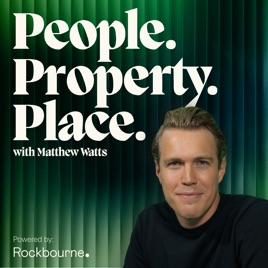
People Property Place

Advertise on podcast: People Property Place

This podcast has
197 episodes
Language
English
Publisher
Matthew Watts
Explicit
No
Date created
2022/11/02
Latest episode
2026/09/27
Average duration
63 min.
Release period
7 days

Description

Interviewing the leaders shaping the real estate investment management industry. Hosted by Matthew Watts, Founder of Rockbourne. The central intention of this podcast is to share the stories, views, opinions, and career journeys of the movers, shakers, innovators, and leaders in the real estate investment management industry. Whether you are an existing real estate professional, aspiring to break into the space, or just want to know more about this fascinating sector this podcast is for you. New episodes of The People Property Place Podcast will be released regularly and you will be able to find them for free on Apple, Spotify, YouTube, or any App that supports podcasts. Oh, and one last thing - in every episode, I will be asking each guest who are the People, what Property, and which Place they would be looking to invest, should they have £500m at their disposal. www.rockbourne.com

Unlock People Property Place podcast Email contact info,
Listeners & Audience details

Email contact information

Direct podcast contact details

Listeners

Audience numbers & engagement insights

Audience details

Podcast Insights

Podcast episodes

Check latest episodes from People Property Place podcast


Jack Palmer, Managing Director at PTSP - Two Phone Calls From Any Decision Maker in Asia
2026/09/27
Jack Palmer left school at 17 with his A-levels unfinished, supported by his dad and rather less so by his mum. He started out as an art handler at Christie's, working in the house sales department, photographing and cataloguing the contents of stately homes for a week or two at a time. At 19 he went back to Hong Kong, where he'd lived until he was eight, with the intention of getting into real estate. He spent years there building a network of family offices, first in an international role selling London property into Asian buyers, then moving into domestic commercial office leasing and transactions. At 25 or 26 he left the security of a larger firm and spent eight months from early 2019 writing a strategy for what became his own business, built on a simple observation: plenty of capital still wanted London commercial, plenty of managers operated there, but very few had a genuine Asia-centric focus. He partnered with Christopher, who had 35 years in the central London market, so the business had someone in Asia dedicated to private capital and someone in London executing the business plan. Seven years on, Palmer Tabor Properties runs assets in London and Australia with teams across London, Hong Kong, Singapore and Kuala Lumpur. Zac Goodman's TSP has now taken a 50% stake in the business, which trades as PTSP. Jack's argument about Asian capital is that the British misread it. The decision makers in the Far East are dealmakers in their own right, many of whom built their wealth being inquisitive and curious, and his theory is that you're only ever two phone calls from the person who actually decides. Getting in front of them isn't easy, but it's easier than most people assume. What they're judging you on once you're there is track record: they're looking for problem solvers who bring results. He's also open about what that costs. Around 63 flights last year, and the strain an international business puts on relationships and friendships. The People Property Place Podcast is powered by Art Capital & Yardi. For more on Yardi, head to: https://hubs.li/Q04wHxlH0 For more on Art Capital, head to: https://www.art-capital.co.uk/ LIKE - SHARE - SUBSCRIBE http://peoplepropertyplace.com/
Alex Price, Chief Executive at Ashen Capital - Character Matters More Than Skill When Backing a Founder
2026/09/20
Alex Price started his career as an officer in the British Army, moved into investment banking, did an MBA at London Business School, and joined Palmer Capital in 2003. At that point the business had three or four people, a balance sheet under £1m, no funds under management and three operating partners. Over 16 years he built it alongside founder Ray Palmer into a business with more than £1bn of assets under management, having raised over £1.5bn from the UK, US, Middle East and Asia, employing nearly 100 people across ten operating partners. They sold to Fiera Capital in 2019, and Alex went on to run the combined European business before leaving in 2023 to study a masters at King's College London. He set up Ashen Capital in 2024 with Steven Wright, a colleague of 15 years, to invest in the people investing in property. They take minority stakes in UK operating businesses, providing up to £5m of working capital alongside advice, connections and experience. Two investments so far: a land promotion business and an investment management business doing senior secured construction loans. His argument in this conversation is about what separates a real estate entrepreneur from any other kind. In most startups you risk a laptop, an office and your reputation. In real estate the numbers are staggering, so the downside is far larger relative to the upside, and that changes what investors look for. Alex backs character before skill set, because trust is what he's actually underwriting. He also never backs a solo founder, wanting two complementary people so one drives and one reduces risk. He walks through the mindset, skill set and character he looks for, the six steps to launching a business from concept through to launch day, and why he'd put £500m into UK residential rather than commercial. The People Property Place Podcast is powered by Art Capital & Yardi. For more on Yardi, head to: https://hubs.li/Q04wHxlH0 For more on Art Capital, head to: https://www.art-capital.co.uk/ LIKE - SHARE - SUBSCRIBE http://peoplepropertyplace.com/
Guy Butler, Co-Founder at Glenbrook - The Risks You Care About Aren't the Ones Investors Do
2026/09/13
Guy Butler grew up in a poor village in the Welsh valleys, the son of a butcher who understood the local property market better than he understood meat. He studied surveying at Reading, left an early consultancy role to co-found the planning and development boutique Turnberry Consulting in 1998, on the single condition that his name wasn't in the company name, and joined Grosvenor before he'd even qualified as a chartered surveyor. At Grosvenor he worked on major shopping centre developments, including a £330m scheme in Basingstoke, and built the relationships and reputation that gave him the confidence to go out on his own. He co-founded Glenbrook with former colleague Ian, setting the business up on £12,500 each while everyone else worked for favours and goodwill. Their first project took 14 months from start to finish, but by the time it was funded, Manchester had woken up to build-to-rent and sites became far harder to find. The Brexit vote in 2016 then cost the business roughly £2m in changed terms on a deal already in motion, right as they were trying to fund their first new-build scheme. Guy's central argument in this conversation is about risk. Developers tend to focus on the risks they understand best, things like rights of light or site access, and assume institutional funders share that focus. In reality, the risks that actually move capital are the ones outside the site altogether: where the bond market sits, the cost of debt, and what the entry and exit terms look like. Understanding an investor's risk tolerance, not just your own, is what actually gets a scheme funded. The People Property Place Podcast is powered by Art Capital & Yardi. For more on Yardi, head to: https://hubs.li/Q04wHxlH0 For more on Art Capital, head to: www.art-capital.co.uk/  LIKE - SHARE - SUBSCRIBE http://peoplepropertyplace.com/
Tim Robinson, Head of Commercial at Knight Frank - 32 Years of Results Lead to the Job of a Lifetime
2026/09/07
Tim Robinson joined Knight Frank as a graduate and has spent the whole of his 32-year career there, becoming an equity partner in 2008 and Head of Commercial in 2025. In April, he takes over as UK Managing Partner from Stephen Clifton, a role that will bring the firm's residential and commercial businesses together under one leader for the first time. His path started a long way from property. His father was an army colonel who wanted him to follow the same route, and Tim grew up moving between postings before boarding at Harrow from the age of six. He went into real estate instead, working his way up through agency roles at Knight Frank before taking on the property management, valuation, planning, business rates and building consultancy divisions in turn. He's candid about the timing of the new role. He'd assumed Head of Commercial would be his job until 60, and had committed to it fully, before Stephen Clifton told him a year in that he planned to leave and asked if Tim wanted to put himself forward. Taking over means running a residential business for the first time in his career, and merging two divisions that have operated largely independently to avoid duplicated costs and missed opportunities for clients. He also talks through how the partnership actually works, from the profit-sharing model to how someone becomes an equity partner, and where he'd allocate £500m of capital if he had it today, split across new talent, rural real estate and infrastructure. What guests would you love to see next on PPP? Let us know in the comments. The People Property Place Podcast is powered by Art Capital & Yardi. For more on Yardi, head to: https://hubs.li/Q04wHxlH0 For more on Art Capital, head to: www.art-capital.co.uk/ LIKE - SHARE - SUBSCRIBE http://peoplepropertyplace.com/
Allan Lockhart, CEO at NewRiver REIT - Retail Was a Dirty Word but Now It's the Top Performer.
2026/08/30
Allan Lockhart never went to university. He left school for a graduate broking scheme in the City, spent a few years as an oil and gas liability broker in the Lloyd's of London building, and decided it wasn't for him because it felt intangible. A knee injury three weeks before a round-the-world trip changed his plans, and he took a job at the bottom of Strutt & Parker's retail team instead, opening the post and making the coffee. He stayed 14 years, working leasing, development and capital advisory, before joining his father's business, Halladale, to set up its London office in 2000. Halladale listed on AIM in 2001 and sold to a large Australian REIT in early 2007 for around £170m, just months before the financial crisis hit. Allan and his father then founded NewRiver later that year, betting that the UK REIT market would follow the US model into sector specialisation. The years since have tested that bet. Retail spent the best part of a decade written off as a dying sector, hit hard by the rise of online shopping and then by Covid. Allan's argument is that the winners in online retail turned out to be the omnichannel operators - retailers like Next and Marks & Spencer who use their stores to fulfil online orders - rather than the pure online players, and that's driven demand for physical space back up while supply has kept tightening. NewRiver leaned into that rather than chasing the shift into logistics that much of the market made, built out its research and data capability, and is now one of the best-performing listed real estate stocks in the UK. He's also candid about lessons learned. Ten years ago he was too focused on the detail of individual assets and not focused enough on the macro, and today he watches gilt yields move on the back of geopolitical headlines as closely as anything happening inside his own portfolio. What guests would you love to see next on PPP? Let us know in the comments. The People Property Place Podcast is powered by Rockbourne, recruiting leadership talent for real estate funds, owners, investors, and developers. LIKE - SHARE - SUBSCRIBE http://peoplepropertyplace.com/
Roun Barry, CEO at ESR Europe - From an MBO in 1996 to a $100bn Global Platform
2026/08/24
Roun Barry moved to the UK from South Africa in 1986, aged 26, using the trip as both a career test and an act of defiance against the politics of the time. He trained as a lawyer but went into real estate instead, working as a partner at Jones Lang Wootton and then running the UK portfolio at ING Real Estate. In 1996, he led a management buyout of the Dunedin business from ING, backed by the Royal Bank of Scotland. The business grew, and by 2006 he had built roughly £700m of industrial property, all backed by RBS money, and completed what was at the time the largest private CMBS in the market, a £640m deal. Then the GFC hit. As interest rates rose and values fell, Roun made the call to warn the 200 bondholders holding the CMBS that there was a problem, hoping to work through it together. Almost none of them understood the underlying industrial estates the debt was secured against, no one could agree on a solution, and the structure went into administration. He calls it the biggest mistake of his career. In hindsight, he says he has no regret, because it cleared the decks while many of his contemporaries spent years tied up in negotiations with banks. He rebuilt from a blank sheet of paper between 2010 and 2016, got back to roughly £1bn of assets under management, and sold the industrial portfolio to Blackstone. From there he joined ARA Europe in 2018 in a joint venture that combined his local expertise with ARA's access to international capital. ARA later merged with ESR, and Roun now runs ESR Europe as part of one of the largest real estate investment managers in the world. The People Property Place Podcast is powered by Rockbourne, recruiting leadership talent for real estate funds, owners, investors, and developers. LIKE - SHARE - SUBSCRIBE http://peoplepropertyplace.com/
John Munday, CEO at Colliers UK - The Plan to Double Colliers UK by 2030
2026/08/17
John Munday took over as chief executive of Colliers UK in March 2025, and he's set the business a target: £165m of revenue last year, £250m and beyond by 2030, with profitability rising alongside it. He's asked every team in the business the same question - how do you double in the next four years? John came into the industry through building surveying rather than agency. Early on he turned down offers from Hillier Parker and Jones Lang Wootton to join a four-person firm instead, because he wanted a voice with clients rather than to wait his turn at the bottom of a large organisation. He made partner within a year, helped grow that business past 100 people, and sold it in 2007. The buyer, a $5bn US title insurance business, went to nothing in 15 months. Three of them started Paragon in 2009 with 13 people in an office in Hanover Square, grew it, and sold into Colliers four years ago on a partnership model that let the owners keep skin in the game. Turnover has gone from £25m at the point of sale to £36m last year. His argument about where advisory is heading is the sharpest part of the conversation. Clients don't want brokers, and they don't want a PDF punted round the market. They want advisors who understand the business plan and what a particular building means within it. That's why he's restructured the UK business around sectors rather than service lines, and why he's clear he'll bin something he implemented last year if clients need it done differently. He's also open about the cost of a career like this. A marriage that broke down, a difficult relationship with his two eldest daughters, major surgery on his aorta last year, and losing his sister on the day of his first interview for the job he now holds. The People Property Place Podcast is powered by Rockbourne, recruiting leadership talent for real estate funds, owners, investors, and developers. LIKE - SHARE - SUBSCRIBE http://peoplepropertyplace.com/
Brian Welsh, CEO at OPRE Group - Mobilise, Stabilise, Optimise: 21 Years in Operational Real Estate
2026/08/10
Brian Welsh came into real estate through a side door. He'd been a Butlins Redcoat warming up crowds for Little and Large, a ski rep in Italy moving 5,000 people a week between hotels, then a health club manager launching gyms for Fitness First and David Lloyd. In 2005, while drumming up membership for a new club in Newcastle, he walked into what looked like a block of flats to pitch a corporate deal. It was a 695-bed student building, running late, contractor gone bust, universities up in arms, no reservations taken. He told the CEO that launching it was no different to opening a hotel at the start of a ski season. They shook hands more or less on the spot. What followed is the argument that runs through the whole conversation. He painted 60 of the bedrooms himself to get it finished, appointed his own cleaning contractors, wrote the lettings spreadsheet, and ran a system of about 50 in-trays to track every application through the process. When the sewage leak flooded the underground safe, security guards dried 50 pound notes with hairdryers on the common room floor. That grounding is why he thinks the operation is the part investors underestimate: if you miss the EBITDA plan, yield compression isn't there to bail you out. From there it's Liberty Living in the Gherkin, then a decision that had people asking if he'd lost it - leaving a 2bn business and 100 staff for a basement in Fitzrovia and a startup with no assets. That became Knightsbridge Student Housing and ThreeSixty, four founders and 17,000 beds in seven years, first movers into Ireland, Spain and France. It ended with the four of them standing in a circle making each other redundant one by one, everything returned to investors. Then Nido and Round Hill, agreed over a drink at a conference and explained to his wife the next morning with a hangover. He founded OPRE in 2023 to do the same job from the other side, as what he calls a strategic enabler - the layer that lets institutional capital access operational cash flows while being insulated from the noise. He's good on the sector arguments too. Why institutions once wanted a single 25-year covenant and thought 900 student tenancies were the risk, and why Debenhams and Virgin settled that. Why a residential team panicking at 95% occupancy should look at the Oxford Street unit sitting empty for five years with a £5m refurb bill. And why the thing he hires for isn't a CV but agency - people who see a problem and fix it. The People Property Place Podcast is powered by Rockbourne, recruiting leadership talent for real estate funds, owners, investors, and developers. LIKE - SHARE - SUBSCRIBE http://peoplepropertyplace.com/
Rick de Blaby, Former CEO at Get Living - Looking Back on Building Britain's BTR Pioneer
2026/08/03
Three weeks before this conversation, Rick de Blaby left Get Living after a decade running it. This is a look back over a 46-year career, and over the business he built from the Olympic Village into one of the UK's first institutional build-to-rent platforms. When Delancey and Qatari Diar bought the Athletes' Village off the government, the word "BTR" wasn't even in the lexicon yet. Rick got the call, said "when can I start" in a heartbeat, and set about building a vertically integrated investor, developer and operator from scratch - even the repair crews had Get Living on their shirts. It grew from around 1,000 units to 6,500 during his tenure, writing the manual as it went, backed by APG, Delancey, Qatari, Aware Super and Oxford Properties. He's clear-eyed about the hard parts. Running rental stock at scale is an ultramarathon, relentless in a way deal-led businesses aren't. Then came the Building Safety Act after Grenfell - right in principle, he says, but badly drafted, landing the bill on freeholders like Get Living for buildings the government had built. That fight has run all the way to the Supreme Court, and his position is blunt: Get Living never refused to remediate, but it didn't build, design or contract the buildings, and it's litigating to make the people who did pay for it. There's the wider market too - why London built under 5,000 homes last year against a target of 88,000, why fixing planning alone won't open the taps, and why the government needs to understand how global capital actually chooses where to go. And there's the personal side: a son in Canada, a grandson, a wife telling him not to leave the other things too late, and a man three weeks into working out what comes next. The People Property Place Podcast is powered by Rockbourne, recruiting leadership talent for real estate funds, owners, investors, and developers. LIKE - SHARE - SUBSCRIBE http://peoplepropertyplace.com/
Robert-Jan Foortse, Head of European Property at APG - Invest in the Trend Lines, Not the Headlines
2026/07/27
Robert-Jan Foortse has been at APG for 23 years - he warned the man who hired him he'd probably get bored and leave within 3. He'd only been available because Arthur Andersen collapsed after Enron, and the job came out of sharing a cab back to the airport with the head of real estate at ABP. Today he runs the European property portfolio and sits on the investment committee at a pension investor with around €600bn under management, just over €50bn of it in property, run by 55 people. That headcount only works because APG doesn't manage anything itself. Every position sits alongside a local operating partner handling the leasing, financing and day-to-day. His framing is horse racing - back a blind pool fund and you're picking the jockey, and APG would rather pick the horses. After the GFC they cut the number of positions, wrote much bigger cheques, insisted on governance rights, and moved away from traditional fund managers towards operators like citizenM, McArthurGlen and The Social Hub. People building businesses, rather than collecting rent and charging a fee for it. What that's produced isn't the portfolio you'd guess. Offices are 1% of the European book, on the logic that a good office pitch is exactly where a council will happily consent the tower next door. Residential is close to 40%. They spent a long time trying to buy into European data centres, got outbid on one and couldn't agree terms on the other, then worked out they already owned the exposure - roughly 30% of Digital Realty and Equinix by assets sits in Europe. His sense-check for that sort of thing is his mother, a retired teacher, 91 this summer and an ABP pensioner. She doesn't care which regional portfolio it's parked in. What guests would you love to see next on PPP? Let us know in the comments. The People Property Place Podcast is powered by Rockbourne, recruiting leadership talent for real estate funds, owners, investors, and developers. LIKE - SHARE - SUBSCRIBE http://peoplepropertyplace.com/
Andrew Jones, CEO at LondonMetric - Size Is the Outcome. It Was Never the Strategy.
2026/07/20
Andrew Jones describes himself as a capital allocator first and a property person second. He was buying shares and reading Buffett and Munger as a teenager, long before he'd heard of a chartered surveyor, and he still thinks of a building as a widget - a tool for putting capital somewhere it'll be treated well. He was once asked by the man who developed the Trafford Centre what his ambitions for LondonMetric were. Andrew said he'd like it to be one of the better companies in the sector and a good place to work. The reply was: what about the biggest? Fifteen years on, LondonMetric is a FTSE 100 REIT with a £7.6bn portfolio, and Andrew's view is that size was the outcome of the strategy rather than the strategy itself. The strategy is triple net, and it's deliberately low energy. Buy assets that are mission critical to the occupier, let them on a full repairing and insuring lease, then leave them alone - LondonMetric owns buildings it hasn't spent money on in fifteen years. It runs on 54 people with no HR department, and Andrew has never run an IRR to justify a purchase because anyone can juice the numbers by guessing an exit yield. He's blunt too about the incentives around him: the lawyers, the bankers, the agents and the recruiters all get paid when he's busy, and the rent turns up either way. He talks through the trip to the Berkshire Hathaway AGM in Omaha that pushed him off the British Land board at 41 with three young kids and a mortgage, why the Christmas his wife did all her shopping online sent him into logistics, and why he thinks the listed sector today is really just a five-year swap business. The People Property Place Podcast is powered by Rockbourne, recruiting leadership talent for real estate funds, owners, investors, and developers. LIKE - SHARE - SUBSCRIBE http://peoplepropertyplace.com/
Thomas Collins, COO at L1 Property - Can 80% of Property Management Be Automated?
2026/07/13
Thomas Collins is the COO of L1 Property, the UK residential arm of Australian investment group L1. He came into real estate the long way round - economics at Oxford, McKinsey, a stint at Uber in its Travis Kalanick era, then British Airways - before an auctioned house on the south coast that cost six times its budget got him hooked on property. What makes this conversation different is what he's built since. Thomas taught himself to code, watched ChatGPT outperform a proprietary model his team had spent twelve months training, and set about applying that to the part of the business everyone finds painful: property management. The result is an AI system that now handles a large share of resident communication and reactive maintenance across L1's 3,000 units, letting the same team manage far more. He's honest about how it actually came together. The early version he vibe-coded himself, but it wasn't production grade, so he brought in an engineer and rebuilt it properly. He's equally honest about where it's heading - his view is that 80% of day-to-day property management is possible to automate today, and the hard part isn't the intelligence, it's the interface, the tools and the nerve to hand over the risk. The People Property Place Podcast is powered by Rockbourne, recruiting leadership talent for real estate funds, owners, investors, and developers. LIKE - SHARE - SUBSCRIBE http://peoplepropertyplace.com/
Gary Hersham, Founder at Beauchamp Estates - 45 Years Brokering London's Most Expensive Homes
2026/07/06
Gary Hersham has spent 45 years at the very top end of London property, brokering some of the most expensive private homes ever sold in the capital. He founded Beauchamp Estates, speaks seven languages, and has built a career on relationships with royalty, sovereigns and family offices who almost never deal in public. When he started in the early 80s, one of the established Chelsea agents told him they'd squeeze him out. They didn't. Gary built a business at the super prime end because he worked out early that it suited him: fewer deals falling over, faster transactions, and a chance to meet some of the most interesting people in the world. He's candid that the thing driving him was never proving a point to his successful father. It was the thrill of the deal, and hating to lose one. He talks through the deals that made his name, the way he gets into rooms he's not supposed to be in, and why he's still a major player today. What comes across is someone who genuinely loves the game - the people more than the property, and the relationships more than the transactions.  The People Property Place Podcast is powered by Rockbourne, recruiting leadership talent for real estate funds, owners, investors, and developers. LIKE - SHARE - SUBSCRIBE http://peoplepropertyplace.com/
Tony Smedley, MD & Head of Europe at Heitman - The Next Real Estate Cycle Belongs to the Brave
2026/06/29
Tony Smedley runs the European business at Heitman, a $50bn real estate manager that's 60 years old and still owned by its partners. He's spent 30 years working across pan-European real estate - early cross-border deals out of Brussels and Paris, building businesses at Insight and Schroders, co-founding Fountain Capital - and he's seen enough cycles to have a clear view on this one. His take is that the next three to five years will be consequential, and it's a good time to be courageous. The market's been through a rough capital markets cycle, but operating performance has stayed strong. The lesson he keeps coming back to is to stop relying on the capital markets to generate value and focus on what you can actually control: earnings, asset management, the operational performance of the business underneath the building. That's why Heitman has spent two decades buying real estate operating companies rather than just buildings, with a deliberate tilt towards needs-based areas driven by demographics rather than GDP - living, healthcare, student housing, senior housing, self-storage. Tony's wider argument is that the lines between real estate and infrastructure are blurring, and the industry needs to start talking infrastructure's language: earnings, operations, and duration. He's also candid about what that means for the people in the industry. The job is more operational than it's ever been, and the traditional real estate qualifications don't really prepare you for reading a P&L or running an operating business. The skill set has shifted. The People Property Place Podcast is powered by Rockbourne, recruiting leadership talent for real estate funds, owners, investors, and developers. LIKE - SHARE - SUBSCRIBE http://peoplepropertyplace.com/
Rodney Bysh, CEO at Feldberg Capital - It's the Best Time to Buy London Offices in 30 Years
2026/06/22
Rodney Bysh has spent 30 years operating between Germany and the UK. He set up what's now a €68bn real estate platform from a serviced office at Henderson, did M&A at Rothschild & Co, built and sold Cording Real Estate to Edmond de Rothschild, and then started again. Feldberg Capital launched at the end of 2022, merged with Brunswick Property Partners, and has grown from £500m to £2bn under management with a team of 30 across Berlin, Frankfurt and London. The conversation covers a lot of ground, but the through line is Rodney's view that this is the best window he's seen in his career for London offices. Rents are low and growing fast, there's virtually no supply, and institutional sellers are letting go of their best assets to free up liquidity. Three years ago it was a contrarian position. Now the market's catching up, but he thinks the opportunity is still there. He's also unusually well placed to explain the German market to a UK audience. Feldberg is one of the few platforms with genuine boots on the ground in both countries, and Rodney's bilingual background - he grew up between the UK and Germany after his family left Uganda - gives him access to a layer of local operators and developers that most London-based investors never reach. The People Property Place Podcast is powered by Rockbourne, recruiting leadership talent for real estate funds, owners, investors, and developers. LIKE - SHARE - SUBSCRIBE http://peoplepropertyplace.com/

Podcast reviews

Read People Property Place podcast reviews


0 out of 5
0 reviews

Podcast sponsorship advertising

Start advertising on People Property Place relevant audience podcasts


What do you want to promote?