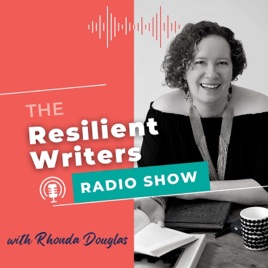
Advertise on podcast: The Resilient Writers Radio Show
Rating
4.9from
This podcast has
143 episodes
Language
EnglishPublisher
Rhonda Douglas Resilient WritersExplicit
No
Date created
2023/02/11
Latest episode
2026/10/01
Average duration
28 min.
Release period
8 days
Description
Welcome to the Resilient Writers Radio Show! This is the podcast for writers who want to create and sustain a writing life they love. It's for writers who love books, and everything that goes into the making of them. For writers who wanna learn and grow in their craft, and improve their writing skills. Writers who want to finish their books, and get them out into the world so their ideal readers can enjoy them, writers who wanna spend more time in that flow state, writers who want to connect with other writers to celebrate and be in community in this crazy roller coaster ride we call “the writing life.”
Unlock The Resilient Writers Radio Show podcast Email contact info,
Listeners & Audience details
Email contact information
Direct podcast contact details

Listeners
Audience numbers & engagement insights

Audience details
Podcast Insights

Podcast episodes
Check latest episodes from The Resilient Writers Radio Show podcast
How Play Can Help You Write a Better Novel, with Gail Anderson-Dargatz
2026/10/01
Send us a text! We'd love to hear your thoughts on the show.
An outline doesn’t have to limit your creativity. It can give you the freedom to explore your story without losing your way.
In this episode of The Resilient Writers Radio Show, I’m joined by award-winning Canadian author Gail Anderson-Dargatz to talk about her new novel, The Atlas Keeper, and the writing process behind this complex time travel romance.
Gail has written across genres, from literary fiction and domestic thrillers to hi-lo books and speculative fiction. Her novels include The Cure for Death by Lightning, A Recipe for Bees, The Spawning Grounds, The Almost Wife, and The Almost Widow.
With The Atlas Keeper, she gave herself permission to follow a longtime love of time travel stories and simply play.
That sense of play is at the heart of our conversation.
Gail shares how the idea for the novel began with a question: What would a map of someone’s life look like?
With help from her husband, a GIS analyst with an interest in astrology, she developed an intricate structure based on a lunar month, the twelve astrological houses, and a character who can visit different moments in her own life.
Writing a story with so many moving pieces required a clear map. Gail explains how she begins with a synopsis, moves into an outline, and then creates a chapter-by-chapter plan. At the same time, she writes snippets of scenes and allows room for discovery.
Her process offers a helpful reminder for writers who worry that outlining will take the magic out of writing. The outline is not a cage. It is a guide you can adjust as the story develops.
We also talk about what literary writers can learn from genre fiction. Whether you are writing literary fiction, romance, suspense, or fantasy, your character still needs a goal. Something must stand in their way. The reader needs a reason to keep turning the pages.
Gail also opens up about reaching a stage in her career where she is less concerned about awards and expectations and more interested in enjoying the act of creation. After experiencing burnout, she found her way back to the pleasure of writing by exploring new genres and remembering why she started.
This episode is a warm and honest conversation about outlining a novel, experimenting with genre, staying curious, and making writing feel playful again.
Listen now to discover how structure can support creativity, why writers benefit from trying new genres, and how finding the fun in your process can lead to a stronger book.
Writing Historical Fiction That Keeps Readers Turning Pages, with Terry Kirk
2026/09/24
Send us a text! We'd love to hear your thoughts on the show.
Strong historical fiction does more than recreate the past. It pulls readers into another time, helps them understand what was at stake, and keeps them turning the pages.
In this episode of The Resilient Writers Radio Show, I’m joined by lawyer, finance and fintech innovator, and historical fiction author Terry Kirk.
Terry is the author of Pitfall and Plunder, two financial thrillers that bring major moments in history to life through memorable characters, high stakes, and plenty of suspense.
Terry came to writing later in life after spending several decades practising law. She shares how her professional experience inspired her to write fast-moving stories that make the world of finance interesting and accessible, particularly for readers who might otherwise find it intimidating.
Her latest novel, Plunder, takes place in London in 1940, as World War II intensifies and America considers entering the war. Terry’s protagonist, Frank Cork, has been given an enormous task: find the money needed to help finance the war.
We talk about the research required to write historical fiction convincingly, from studying fashion and magazines to understanding how people communicated before email, text messages, and instant access to information.
Terry explains why the smallest historical details can make the biggest difference, and how she immerses herself in an era before she begins writing.
We also dig into the craft of writing suspense. Terry shares how she keeps a story moving even when the historical realities involve delays, letters, and slow communication.
Her approach includes strong chapter openings and endings, changing points of view, and resisting the urge to rely on words like “suddenly” to create tension.
As a committed plotter, Terry uses Excel to track her chapters, characters, word count, and story development. She sees the spreadsheet and the blank Word document as two different creative spaces, one for structure and one for imagination.
Our conversation also explores writing characters whose lives are very different from our own, the challenges of cultural appropriation, her surprisingly quick path to publication, and the discomfort many writers feel when they have to move from quiet creative work to marketing their books.
Terry’s story is a lovely reminder that it is never too late to begin writing. After decades in another career, she found that becoming a writer felt like coming home.
Listen to learn:
How to research historical fiction without overwhelming the storyWays to create suspense and maintain narrative paceWhy chapter endings and multiple points of view keep readers engagedHow plotting tools can support the creative processWhat Terry learned from beginning her writing career later in lifeWhy writers need courage during both publishing and promotionListen now for an honest and encouraging conversation about historical fiction, plotting, publishing, and finding the writing life that feels like home.
How Writers Can Use AI Responsibly, with Ana del Valle
2026/09/17
Send us a text! We'd love to hear your thoughts on the show.
AI is everywhere right now, but for writers, the conversation has become a lot more complicated.
Can you use ChatGPT to brainstorm your novel? What about getting feedback on your plot? Can AI help you edit? And where is the line between using AI as a tool and letting it do so much of the work that your authorship, copyright, or even publishing opportunities could be affected?
Those are exactly the questions I wanted to dig into in this episode of The Resilient Writers Radio Show.
I’m joined by Ana del Valle, novelist, CEO of StoryGroove.ai, and someone I turn to when I want to understand what’s happening with AI in the writing world.
Ana works with writers who want to understand how generative AI can fit into a creative process while staying aligned with current copyright guidance and recommendations from organizations including the Authors Guild and the Association of American Literary Agents.
And one thing becomes very clear in our conversation: there is a big difference between asking AI to help you think and asking AI to write your book for you.
We talk about where Ana believes that line sits, including the difference between using AI for brainstorming, outlining, analysis, and preliminary feedback versus asking it to rewrite, polish, tighten, expand, or generate your prose.
Ana also walks us through four different categories of AI tools writers are encountering right now.
We look at AI book generators that can produce entire books, more technical tools such as NovelCrafter that connect writers with large language models, AI-powered writing programs such as Sudowrite, and platforms designed around analysis, feedback, and editorial support.
We also talk about tools writers may already recognize, including ProWritingAid, AutoCrit, Scrivener, Plottr, Dabble, Claude, and ChatGPT.
But this conversation isn’t really about finding the newest shiny tool.
It’s about understanding what the tool is actually doing.
Is it helping you think more clearly about your story?
Or is it beginning to replace the creative work that only you can do?
Ana also shares why she believes experienced editors and publishing professionals can often recognize AI-generated prose, even without technological detection tools, and why writers need to think carefully before handing their sentences over to a chatbot for “just a little polishing.”
If you’re curious about AI but worried about accidentally crossing a line, this episode will give you a much clearer framework for thinking about it.
You don’t have to use AI in your writing process at all. I don’t.
But if you choose to explore it, understanding the boundaries matters.
Listen to the full conversation and decide what role, if any, AI should have in your writing life.
How to Write Historical Fiction, with Lynn Austin
2026/09/10
Send us a text! We'd love to hear your thoughts on the show.
Some stories begin with an idea. Others begin with a single question that refuses to let go.
In this episode of The Resilient Writers Radio Show, I had the pleasure of sitting down with bestselling historical novelist Lynn Austin, whose books have touched millions of readers around the world.
We talked about her latest novel, The Lumber Baron’s Wife, and the fascinating journey behind creating a story that bridges two timelines while remaining deeply rooted in the emotional truths that connect women across generations.
One of the things I loved most about our conversation was hearing how Lynn approaches history. She admits she never loved history class because it focused on wars and politics.
Instead, she became captivated by diaries, letters, and firsthand accounts that reveal what everyday people, especially women, were experiencing while history unfolded around them. That perspective has shaped her entire writing career.
Lynn takes us behind the scenes of The Lumber Baron’s Wife, explaining why this is her first true dual timeline novel. Rather than connecting the stories through family alone, she chose to connect them through place. The same historic homes become the bridge between two very different eras, allowing readers to see how love, motherhood, marriage, courage, and resilience remain constant even as the world changes.
We also dive into the surprising history behind Michigan's lumber boom, an era that transformed both the landscape and the people who lived there. Lynn shares how learning about the environmental impact of the lumber industry became an important part of the novel and how that history naturally connects with one of her modern-day characters, an environmentalist working to protect the forests that were once devastated.
Of course, we couldn't talk about historical fiction without talking about research. Lynn shares her wonderfully practical approach, describing how research becomes what she calls "book soup."
She gathers facts, visits locations whenever possible, collects fascinating details, and slowly watches her characters emerge from everything she's learned. Rather than outlining every chapter, she writes as a discoverer, allowing the story to surprise even her.
We also spend time talking about something every writer struggles with: finding time to write. Lynn offers refreshingly honest advice about protecting your writing time, setting realistic daily goals, and committing to the work even during the busiest seasons of life. Her own practice of writing five new pages a day has carried her through raising children, building a successful career, and publishing dozens of novels.
Before we wrapped up, Lynn gave us a sneak peek at the research behind her next novel, inspired by the remarkable true story of the Hello Girls, the bilingual women telephone operators who served during World War I. It's exactly the kind of forgotten history that has made her novels so beloved by readers.
If you love historical fiction, enjoy discovering little-known moments from history, or simply need encouragement to keep showing up for your own writing, this conversation is full of wisdom, practical advice, and plenty of inspiration. I think you'll come away ready to protect your writing time and maybe even visit your local library with fresh eyes.
How to Write a Series, with Kevin T. Johns
2026/09/03
Send us a text! We'd love to hear your thoughts on the show.
What if the best way to write a successful series is to stop thinking about the series and focus on writing one excellent book?
In this episode of The Resilient Writers Radio Show, I’m joined by Canadian author and writing coach Kevin T. Johns for an honest, funny, and deeply practical conversation about finishing ambitious writing projects, writing a trilogy, and giving your current book everything you have.
Kevin recently completed The Page Turners trilogy, a genre-bending series about three teenagers who discover a magical book of spells and accidentally release the fictional villains from the stories they love.
Across the three books, Kevin moves through horror, science fiction, and fantasy while exploring much bigger themes, including family, anger, identity, loneliness, and what it means to grow up.
But this conversation is not only for writers working on a trilogy.
It’s for anyone whose book has become too big, too complicated, or too precious to finish.
Kevin shares why every book in a series still needs to stand on its own, with a complete emotional arc, a clear theme, and a satisfying story. His advice is simple and powerful: do not save the good material for book three. Put your strongest ideas, scenes, emotions, and creative energy into the book directly in front of you.
We also talk about the “punk rock” mindset that transformed Kevin’s writing process. Instead of trying to create his version of The Lord of the Rings, he began asking how he could make the story shorter, more focused, more passionate, and more entertaining. That shift helped him finish the first book and allowed the rest of the trilogy to grow naturally.
Kevin also offers thoughtful advice for writers who love complex stories. A multigenerational epic with several timelines, continents, and points of view may sound exciting, but complexity does not automatically create depth. Sometimes the more focused your story becomes, the more deeply you can explore what truly matters.
We dig into revision too, including the challenge of returning to a manuscript written ten years earlier. Kevin explains how adding fresh material helped him reconnect with the story while honouring the younger writer who first imagined it.
And because this is a conversation about the real writing life, we talk about self-doubt, dark art, creative resilience, and why writers are rarely the best judges of their work in the moment.
Your readers are not waiting for you to fail. They want to love your book.
So stop saving your best ideas for later. Write the strongest version of the book you can write today.
Listen now to hear Kevin’s practical advice on writing a trilogy, simplifying an ambitious story, revising an old manuscript, finding your audience, and finishing the book in front of you.
How to Find the Form that Suits You, with Eleanor Lerman
2026/08/27
Send us a text! We'd love to hear your thoughts on the show.
What happens when the themes that shaped your earliest writing continue to follow you across an entire creative life?
In this episode of The Resilient Writers Radio Show, I’m joined by acclaimed poet and fiction writer Eleanor Lerman, author of King the Wonder Dog. Eleanor has spent more than five decades writing honestly about anger, loneliness, grief, love, rebellion, and survival.
Her work has earned recognition including a Guggenheim Fellowship, an NEA Fellowship, and the Lenore Marshall Poetry Prize from the Academy of American Poets.
Eleanor began writing poetry when she was very young, following the death of her mother and the sudden collapse of the close family life she had known. Those early poems grew out of anger and a powerful desire to escape. As a teenager, she began traveling alone from the Bronx to Greenwich Village, where she found the artistic community that helped her see herself as a writer.
We talk about what it meant to become one of the youngest finalists for the National Book Award, how she resisted being placed into categories, and why she has always thought of herself first and foremost as a writer rather than as a woman writer.
Eleanor also shares how she moved from poetry into fiction after believing that writing novels was the path to literary success. When novels did not feel natural to her, she eventually found her form in the short story. Her experience is such an important reminder that we do not have to force ourselves into a genre, career path, or version of success that does not fit who we are.
Much of our conversation centers on King the Wonder Dog, a collection of stories set primarily in contemporary New York. The book explores aging, illness, grief, and loneliness through the relationships its characters form with dogs and cats.
Eleanor did not originally set out to write a collection about animals, but her publisher at She Writes Press noticed the connection running through the stories and encouraged her to build the book around it.
We also get into Eleanor’s writing process, including why her fiction often begins with a place, how she imagines her memory as rows of filing cabinets, and why she often knows the final lines of a story before she writes the beginning.
Eleanor offers practical insight into revision as well. Drawing on her own experience as an editor, she explains why writers must read for clarity, watch for repetition, and remain open to the people who are trying to help make the work stronger.
This is a thoughtful conversation about finding the form that suits you, trusting your own definition of success, and accepting that certain themes may remain with us throughout our writing lives.
Listen in for an honest, generous look at what it means to keep writing across decades.
How to Write Historical Fantasy, with A.L. Sinclair
2026/08/20
Send us a text! We'd love to hear your thoughts on the show.
In this episode of The Resilient Writers Radio Show, I’m joined by dark fantasy author A. L. Sinclair for a fascinating conversation about historical fantasy, feminist storytelling, creative resilience, and what it takes to keep writing when the publishing journey feels especially difficult.
A. L. is the author of The Witch Queen’s Gambit, a sharp, sensual, and subversive Anne Boleyn retelling that blends history, witchcraft, queer romance, mythology, and feminine rage. If you love stories that take familiar history and turn it in a bold new direction, you’ll find plenty to enjoy in this conversation.
We talk about why Anne Boleyn remains such a compelling figure and how her story reflects the ways powerful women are still judged, misrepresented, and turned into villains.
A. L. explains how she took the rumours and mythology surrounding Anne and transformed them into a story where the so-called villain becomes someone readers can understand and root for.
We also explore the balance between historical accuracy and creative freedom. A. L. shares how she researches the Tudor era, decides which historical details to retain, and allows the fantasy elements of the story to reshape what might have happened. It’s a helpful reminder that research should support the story rather than overwhelm it.
Our conversation also moves into writing romance and intimate scenes with purpose. A. L. talks about consent, power, pleasure, and why every scene needs to contribute to the character arc or move the story forward. Rather than adding spice simply because readers may expect it, she approaches those scenes as an important part of character development and emotional connection.
One of my favourite parts of this episode is our discussion about where stories begin. For A. L., they begin with character. She listens for the character’s voice, motivation, pain, and desire, then follows those emotional threads into the story.
We also talk honestly about rejection. A. L. received more than 200 rejections while querying one of her novels. She shares how her background in somatic healing helped her sit with the discomfort of rejection without allowing it to define her or her work.
This episode is a powerful reminder that rejection is not always a verdict on your talent. Sometimes it is information. Sometimes it is timing. Sometimes it is simply one person saying that a book is not right for them.
If you’re navigating the query trenches, revising a manuscript, or trying to protect your creative confidence, this conversation will help you approach your writing life with more courage, curiosity, and resilience.
Women and the Creative Life, with Kasia Van Schaik
2026/08/13
Send us a text! We'd love to hear your thoughts on the show.
What happens when the people most likely to care for everyone else finally decide to make space for their own creative work?
In this episode of The Resilient Writers Radio Show, I’m joined by Kasia Van Schaik, author of the linked story collection We Have Never Lived on Earth and the new hybrid memoir and work of cultural criticism, Women Among Monuments: Solitude, Permission, and the Pursuit of Female Genius.
Kasia’s book began with a question she had carried since girlhood: Where are the women among monuments?
That question led her into the lives of women writers and artists, including Virginia Woolf, Mary Shelley, Gertrude Stein, Toni Morrison, Bernadette Mayer, and many others.
It also led her to the story of Elena Cornaro Piscopia, the first woman in the world to earn a PhD. In 2022, a proposal to place Piscopia’s statue in a public square in Padua, alongside statues of celebrated male thinkers and artists, was met with fierce resistance.
Why are women’s achievements still so difficult for some people to recognize? And what does that resistance reveal about the way we understand creative genius?
Kasia and I explore those questions while looking closely at what it takes for women to build and sustain creative lives.
We talk about the guilt that can arise when women step away from caregiving, housework, emotional labour, or professional responsibilities to write.
Even when time has been deliberately set aside, it can feel pressured or selfish. Instead of entering the writing space freely, we may feel that every minute has to produce something impressive.
Kasia shares how different writers protected their creativity. Toni Morrison worked during the quiet hours before sunrise. Gertrude Stein boldly claimed the mantle of genius for herself. Bernadette Mayer found poetry in the ordinary details of motherhood and domestic life, showing that the creative and “uncreative” parts of our lives do not always need to be separated.
We also unpack the complicated history of the word “genius.” It can feel exclusive, grandiose, and even a little cringe. Kasia offers another way to understand it: not as a title reserved for a chosen few, but as a capacity someone possesses.
You might have a genius for language, storytelling, observation, humour, or seeing connections others miss.
Our conversation also moves into literary awards, genre fiction, imposter syndrome, rejection, and the importance of creative community. Recognition can help a writer feel that they belong, but awards are subjective and limited. They cannot be the only measure of whether our work matters.
Ultimately, sustaining a creative life requires persistence and permission. It may mean protecting your brightest hours, creating a small ritual, joining a writing group, or continuing to submit your work after another rejection.
If you’ve been waiting for proof that your writing deserves your time, this conversation is for you. Listen now for an honest, encouraging reminder that your creative work matters, and you are allowed to make room for it.
Overcoming Fear to Finish the Book, with Mel West
2026/08/06
Send us a text! We'd love to hear your thoughts on the show.
What if the thing keeping you from finishing your novel is not a lack of talent, discipline, or ideas?
What if it is fear about what happens after you finish?
In this episode of The Resilient Writers Radio Show, I’m joined by debut novelist Mel West, author of Now Is Not a Good Time for a Breakdown, for an honest and deeply relatable conversation about creativity, mental health, publishing, and the fears that quietly shape our writing lives.
Mel’s novel began with snippets of dialogue and a character whose voice would not leave her alone.
It was not until Mel moved to New York City that the story fully came into focus. Suddenly, she understood where this character lived, how she moved through the world, and what kind of life she was trying to survive.
We talk about Mel’s discovery-based approach to drafting and how she eventually turned to plotting when the story began to lose momentum. She also shares why the pandemic became an unexpected missing piece of the novel and how returning to the manuscript helped her finally understand where the story needed to go.
One of the most powerful parts of our conversation is Mel’s realization that fear was one of the biggest obstacles between her and a finished book. Not fear that she could not write it, but fear of what would come next once the novel was done.
I think many writers will recognize themselves in that.
We also explore how Mel used dark humour to write about the fragility of mental health without making the novel feel heavy-handed. Her main character is not especially self-aware, which allows humour, discomfort, and emotional truth to exist side by side. Mel even shares how The Sopranos influenced the way she thought about revealing a character’s inner life.
Mel is refreshingly open about her publishing journey too. After exploring traditional publishing, she chose a hybrid path with Archway Publishing. She talks candidly about what she wishes she had known, how emotionally vulnerable it can feel to hand over your “book baby,” and why writers need to approach publishing with both creativity and clear-eyed research.
We also discuss author platforms, building community, and why TikTok has felt more natural and conversational for Mel than Instagram.
This episode is especially valuable for writers who are close to finishing a book but feel themselves pulling back. Mel’s advice is simple and important: learn what comes next, research your options, and pay attention to the fear underneath your resistance.
Because sometimes finishing the book is not the scary part.
Sometimes the scary part is becoming the writer who finished it.
Listen now for an honest conversation about fear, mental health, publishing, creative courage, and what it really takes to follow a novel all the way through.
How to Weave a Story, with Maureen Howley
2026/07/30
Send us a text! We'd love to hear your thoughts on the show.
Some books begin with a carefully planned premise. Others begin with a conversation you suddenly realize you do not want to lose.
In this episode of The Resilient Writers Radio Show, I’m joined by Maureen Howley, author of Small Shoes, Impossible to Fill, a memoir that began when Maureen sat down with her terminally ill mother during the COVID lockdowns and started recording her stories.
Maureen had recently retired from a long career in nursing and midwifery and had travelled to Scotland to be with her mum. Her mother had always been active and involved in her community, so the isolation of lockdown was especially difficult.
Their shared storytelling project became a way to pass the time, stay connected, and preserve memories that might otherwise have been lost.
But as Maureen listened, recorded, and wrote, she realized something important. The story was not only about her mother’s past. It was also about what was happening between them in the present.
That discovery shaped Small Shoes, Impossible to Fill into an unusual and deeply personal blend of memoir, fictionalized family history, and reflection. Maureen wrote her mother’s memories as scenes, drawing on her background in musical theatre to imagine the people and places almost as if they were appearing on a stage. She then wove those scenes together with journal entries from their final months and reflective passages written in her mother’s voice.
Creating one cohesive book from those three strands was not easy. Maureen’s early draft reached roughly 150,000 words, and she had to work carefully to shape it into a unified story. She studied three-act structure, character arcs, and the hero’s journey to make sure each strand contributed to the book’s emotional movement.
We talk honestly about that long revision process, the moments when Maureen nearly gave up, and why finishing the first draft was only one part of finishing the book.
Maureen also shares what she learned through assisted self-publishing, finding the right cover, and continuing to revise even after proofreading. We also discuss the unexpected challenge many authors face after publication: becoming their own marketing department.
One of my favourite parts of our conversation is hearing how Maureen transformed her book launches into meaningful events. Through readings, family photographs, music, and personal stories, she created celebrations in Scotland, Monaco, Sligo, and the south of France that brought the world of the book to life.
At its heart, this episode is about more than writing a memoir. It is about listening closely, honouring family stories, finding joy in difficult seasons, and trusting that a book does not need to fit neatly into a category to deserve to be written.
Listen in for an encouraging conversation about memoir writing, family history, revision, self-publishing, creative book launches, and what it really takes to keep going until your story is finished.
How to Finally Finish the Book, with Debra Hunt
2026/07/23
Send us a text! We'd love to hear your thoughts on the show.
What does it take to finally finish the book that has been living with you for years?
In this episode of The Resilient Writers Radio Show, I’m joined by Debra Hunt, author of the contemporary women’s fiction and domestic suspense novel Unlikely Hero.
Debra’s story is such a wonderful reminder that it is never too late to return to a long-held dream, build the support you need, and bring your book into the world.
Unlikely Hero follows Jesse, a woman trying to rebuild her life after a devastating loss, with only her loyal dog by her side. The original spark for the novel came from Debra’s own curiosity about working dogs, loyalty, and trust. She began wondering what might happen if a powerful dog had to choose between obeying a trainer and protecting the person he truly loved.
That question stayed with Debra for years. In fact, her earliest notes for the novel date back to 2002. Like so many writers, she worked on the story in starts and stops, sometimes putting it away for years at a time.
Eventually, the unfinished book began to feel like a personal failure. She had always wanted to become an author, but she kept asking herself: Where was the book?
Everything began to change when Debra joined my First Book Finish program. She already had a draft, but the structure, accountability, coaching, and community helped her stop treating time as unlimited.
Instead of endlessly revising as she drafted, she learned to finish the whole story and then approach revision step by step.
Debra shares how beta readers helped her strengthen the plot, deepen her characters, and expand what was initially closer to novella length. Just as importantly, their feedback helped her realize that other readers were often far kinder than her own inner critic.
We also talk honestly about self-publishing. After spending roughly 25 years with this story, Debra knew she didn’t want to wait through the traditional publishing process. She wanted the book in readers’ hands.
She discusses what she learned from using a publishing-services package, why she might choose a more à la carte approach next time, and why authors need to understand which parts of publishing they want to handle themselves.
Of course, publishing the book introduced a whole new challenge: marketing it. Debra talks about building a street team, connecting with local bookstores and libraries, collaborating with fellow writers, creating a newsletter, pitching podcasts, and slowly becoming more comfortable with social media.
What I loved most about this conversation was Debra’s definition of success. It isn’t about phenomenal sales. It is about being able to say, “I did this, and you can do it too.”
This episode is a beautiful conversation about consistency, accountability, courage, and finally allowing other people to read the work you have carried for so long.
How to Honour the Story, with Crystal AJ Smith
2026/07/16
Send us a text! We'd love to hear your thoughts on the show.
Some conversations stay with you long after they end. This was one of them.
In this episode of The Resilient Writers Radio Show, I'm joined by writer, poet, playwright, and activist Crystal AJ Smith to talk about her powerful debut novel, Gitwaałtk.
Crystal is Haisla and Ts’ymsen, was adopted into the Heiltsuk Nation, and brings both lived experience and deep cultural knowledge to every page of her work.
Our conversation begins with Crystal introducing herself in Lik̓wala, honoring the land she lives on and the ancestors who continue to guide her.
It immediately sets the tone for a discussion about identity, language, storytelling, and the responsibility of carrying stories that matter.
At the heart of Gitwaałtk is the Highway of Tears, the stretch of Highway 16 in British Columbia where countless Indigenous women and girls have gone missing or been murdered.
Crystal explains that while there are documentaries, statistics, and news stories about the Highway of Tears, she wanted to create something that would help readers do more than understand the facts. She wanted them to feel them.
We also talk about the novel's unique structure. Rather than following a traditional beginning-middle-end format, Gitwaałtk weaves together prose, poetry, Indigenous oral storytelling, and Sm'algya̱x language.
Crystal shares that she didn't consciously design this structure—it simply arrived that way. The story came through her, and her role was to listen, write, and honor it.
One of my favorite parts of our conversation is our discussion about ancestors and creativity. Crystal describes writing as something much bigger than inventing a story. For her, it feels like the stories already exist, and she has the responsibility to receive them, tell them truthfully, and pass them on.
We also talk about language revitalization, why she's learning Lik̓wala, and how reconnecting with language has become part of both her life and her writing practice.
Crystal also speaks candidly about balancing creativity with motherhood. As a mother of four, she's spent more than a decade bringing Gitwaałtk into the world while completing her education, leaving an abusive relationship, raising children, and continuing to learn her language and culture. Her honesty about protecting time for both family and creativity will resonate with many writers trying to hold all the pieces of their lives together.
This conversation is about much more than writing a novel. It's about resilience, remembrance, community, healing, and the power of stories to create empathy where facts alone sometimes cannot.
Whether you're interested in Indigenous literature, writing from lived experience, or simply want to hear one of the most thoughtful conversations I've had about why stories matter, I think you'll find this episode both moving and unforgettable.
Writing and Marketing a Rom-Com, with Alexa Bigwarfe [aka Lexi Haddock!]
2026/07/09
Send us a text! We'd love to hear your thoughts on the show.
In this episode of The Resilient Writers Radio Show, I’m joined by Alexa Bigwarfe, USA Today bestselling author, publishing coach, founder of Write|Publish|Sell, and creator of the Women in Publishing Summit.
Alexa has spent years helping women and underrepresented voices publish professional books, build author platforms, and grow businesses around their work. But in this conversation, we also get to talk about her fiction side: the romantic comedies she writes under the pen name Lexi Haddock.
Alexa shares the story behind her Paris-inspired fiction series, beginning with 4 Days in Paris, a book that was more than ten years in the making. The novel began with real-life inspiration from Alexa’s own time living and working in Paris, including a romantic New Year’s Eve encounter in 1999. As she says in our conversation, she wrote the story the way she wished it had ended.
We talk about what it means to draw from real life while still creating fiction that works for readers. Alexa opens up about the challenge of honouring real people and true memories while also shaping the story into something with enough tension, conflict, and emotional movement to become a satisfying novel. She also shares how friendship, Paris, and even the Eiffel Tower itself became central characters in the book.
One of the things I loved most about this conversation is how candid Alexa is about the timing of creativity. She began the original version of the book years earlier, but it wasn’t until 2020, while going through a divorce and living through the pandemic, that she returned to it. At a moment when writing something heavy felt impossible, romance gave her a way back into hope, possibility, and joy.
We also talk about the other books in the Sparks in Paris series, including the Christmas novella set in Strasbourg, France. Alexa shares how much she loves European Christmas markets, how she brought in elements of her military background, and how a small character from an earlier book found her way into the starring role.
Of course, because Alexa is also a publishing coach, we talk about marketing too. She shares what it’s like to market her own fiction while also running her businesses, and why tying a book to a theme, season, or reader mood can make a big difference.
Her Christmas novella gave her a chance to connect with readers who were already actively looking for holiday books, and she got to see some of the strategies she teaches authors actually working in her own author life.
In the second half of our conversation, Alexa shares what’s changing with the Women in Publishing Summit and why she’s moving toward a more community-based model. We talk about networking, business skills for authors, content strategy, and the importance of having a generous writing and publishing community around you.
And yes, there are more Lexi Haddock books on the way, including Back to Paris and a World War II novel set in France.
This is such a lovely conversation about romance, reinvention, publishing, community, and the long, winding path a book can take before it finally becomes what it was meant to be.
Books Take the Time They Take, with Christine Fischer Guy
2026/07/02
Send us a text! We'd love to hear your thoughts on the show.
In this episode of The Resilient Writers Radio Show, I’m joined by Toronto writer and journalist Christine Fischer Guy, author of The Umbrella Mender and her new novel, The Instrument Must Not Matter.
Christine’s latest novel follows Lila, a gifted young classical pianist who leaves Toronto for New York City after being chosen to study with a prestigious mentor. It’s an exciting opportunity, but also a terrifying one. Lila has to leave behind everything she knows and step into a world of artistic pressure, ambition, loneliness, and possibility.
What I loved about this conversation is how Christine talks about the way her novels begin: with character. For The Instrument Must Not Matter, the spark came from walking past the statue of Glenn Gould outside the CBC building in Toronto. That small moment of curiosity led her into biographies, research, music, and eventually into the world of this novel.
Christine isn’t a classical pianist herself, but while writing the book, she took piano lessons and even learned to play a Bach Partita in C. I loved hearing about that kind of immersive research—the kind that lets a writer feel their way into a character’s world, even when that world is technically demanding and unfamiliar.
We also talk about the deeper family history behind the novel. Lila’s grandmother was a violinist in Prague in 1968, when Soviet tanks rolled in after the Prague Spring. On the night before her planned debut, she goes out after curfew and plays the piece she was meant to perform—an act of artistic resistance that leads to her arrest and to a lifetime of silence as a musician.
One of the most fascinating parts of our conversation is Christine’s discussion of writing about music. Music exists beyond language, so how do you put that on the page? For Christine, part of the answer came through Lila’s synesthesia. Lila experiences sound as colour, which gives the novel a vivid, sensory way to bring music into language.
And of course, we talk about the writing process. Christine describes herself as a discovery writer. She doesn’t begin with an outline. Instead, she writes a messy first draft to find out what happens, then shapes the book through revision.
The Instrument Must Not Matter took ten years and at least ten major revisions, including one big change: in the first draft, the pianist was a man. When the protagonist became a young woman, the story truly opened up.
This is such a generous conversation about research, revision, artistic courage, and trusting the long process of writing a novel.
For any writer who is deep in the messy middle of a project, I think you’ll find real comfort here. Some books take the time they take—and sometimes, the long way through is exactly what allows the book to become its best self.
How to Write as a Neurodiverse Writer, with Catherine Quiring
2026/06/18
Send us a text! We'd love to hear your thoughts on the show.
What if the way your brain works isn’t something to fix, but something to understand, support, and work with?
In this episode of The Resilient Writers Radio Show, I’m joined by Catherine Quiring, a licensed mental health counselor, podcast host, empath, mystic mom of two, and writer, for a thoughtful and deeply validating conversation about neurodiversity, creativity, and what it means to support yourself as a writer.
Catherine specializes in neurodiversity, and much of that work began with discovering her own neurodivergence. Over time, she noticed that many of the clients who were drawn to her were also late-diagnosed with ADHD, autism, or both.
Together, we talk about how neurodivergence can show up in ways that are often missed, especially in women and highly sensitive people.
Catherine explains that the “female presentation” of ADHD often looks less like outward hyperactivity and more like internal overwhelm, perfectionism, difficulty organizing thoughts, struggling with task initiation, or feeling like the brain is constantly jumping from one thing to another.
For writers, this can show up as starting a shiny new book idea, getting 10,000 or 15,000 words in, and then abandoning it when the project starts to feel hard or boring.
And if that sounds familiar, you are definitely not alone.
We also talk about the gifts of ADHD, including creativity, intuition, and the ability to hyper-focus once you’re able to get into flow. Catherine shares practical ways writers can make writing feel more inviting again: creating a writing ritual, using music or silence, lighting a candle, bringing in a favourite drink, trying dictation, taking walks, using body doubling, or finding ways to “gamify” the writing process so it feels more enjoyable and less like a chore.
One of the most powerful ideas Catherine shares is the difference between fixing yourself and supporting yourself. So many writers carry shame around how they “should” be working, especially when they don’t fit the traditional advice of writing every single day or producing at a consistent pace.
Catherine invites us to ask better questions: What do I need? What helps me focus? What lowers the pressure? What makes this feel possible?
We also discuss her Define Your Neurodiversity Workbook, the idea of a “Goldilocks nervous system,” and how writers can create environments that feel “just right” for their brains and bodies.
Catherine also reminds us that while a diagnosis can be helpful, you don’t need one in order to use tools that support your executive function, creativity, and writing life.
This conversation is a beautiful reminder that your brain is not a problem to be solved. Your writing process does not have to look like anyone else’s. The more you understand what supports you, the easier it becomes to return to the page with compassion, curiosity, and maybe even a little more joy.
Podcast reviews
Read The Resilient Writers Radio Show podcast reviews
I'mHere33 2026/09/21
Fantastic
Always worthwhile
App is totes ameze 2026/08/15
Great voice and message
I love listening to Rhonda; she never wastes your time & she asks such good questions of the interesting authors she interviews. I’m always inspired t...
MaggieS1950 2026/08/07
Great advice for writers!
As a fairly new writer I have found this podcast to be a big help! Always good info, words of encouragement, guidance and practical tips ti get to th...
TeresaMR 2026/07/27
Thoughtful and articulate
Rhonda Douglas guides a writer through the oft times difficult journey of birthing a novel with grace, intelligence, and insight. She asks her guests ...
dudleydoo123 2025/12/28
Great Resources for Writers
This is one of my go-to shows for writing. I have literally been motivated to get off my butt (or, really, on my butt) and get back to writing my stor...
Babsie505 2025/10/07
Thanks!
Rhonda gives realistic and inspiring writing advice. As I enter the long awaited revision phase, it’s so helpful to get clear on the difference betwee...
Brooketbooks 2025/08/16
Procraftinating
I really appreciate your podcast and it’s a great grounding moment in my week. I particularly enjoyed your episode on procrastinating. Thank you, Rhon...
expressgirl727 2025/04/08
Enjoyable!
I really enjoy this podcast! It always has interesting topics and speakers with practical tips to incorporate into your writing life. Worth the listen...
Anmllovr 2023/12/26
Three Writing Myths
As an aspiring writer you read craft books, listen to podcasts and research courses. There can be information overload and listening to The Resilient ...
MariOsaR 2023/10/24
Listen and you will be inspired to write!
Rhonda is amazing! This radio show is full of insight, inspiration and caring about you as a writer. Take a listen and enjoy all that you gain as a re...
Podcast sponsorship advertising
Start advertising on The Resilient Writers Radio Show relevant audience podcasts
You may also like to advertise on these Podcasts

4.816561984
Juicebox Podcast: Type 1 Diabetes
Scott Benner

4.8121021000
Mind Pump: Raw Fitness Truth
Sal Di Stefano, Adam Schafer, Justin Andrews, Doug Egge
4.92002919
The Wright Report
Bryan Dean Wright
4.6221652000
Mark Levin Podcast
Cumulus Podcast Network

4.818382000
The Cabral Concept
Dr. Stephen Cabral

4.917101547
DarrenDaily On-Demand
Darren Hardy LLC

4.813262012
The Jeff Cameron Show ~ Warchant.com
Jeff Cameron Show

4.922602003
First15 Devotional
First15

4.8104482000
Steve Deace Show
Blaze Podcast Network

4.861381094
The David Pakman Show
David Pakman