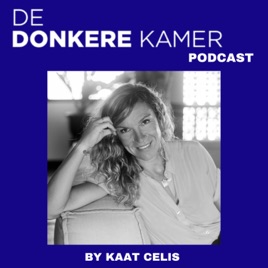
Advertise on podcast: De Donkere Kamer
Rating
5from
This podcast has
265 episodes
Language
EnglishPublisher
Kaat CelisExplicit
No
Date created
2023/04/30
Latest episode
2026/02/07
Average duration
48 min.
Release period
3 days
Description
Welcome to De Donkere Kamer podcast! I'm Kaat Celis and my mission is to support and inspire as many photographers and photo enthusiasts as possible and to make photography a must have in everyone's life. In this podcast I take you into the fascinating world of photography, storytelling & entrepreneurship. And I uncover the stories behind all those images. Whether you are an established photographer or still at the beginning of your career or just crazy about photography? Get inspired and motivated! Come on, I'll take you with me.
Unlock De Donkere Kamer podcast Email contact info,
Listeners & Audience details
Email contact information
Direct podcast contact details

Listeners
Audience numbers & engagement insights

Audience details
Podcast Insights

Podcast episodes
Check latest episodes from De Donkere Kamer podcast
#238 DUTC H - Relevant blijven in tijden van AI: bouw je fotopraktijk rond je ideale leven (niet omgekeerd)
2026/02/07
Na een maand in Patagonië kom ik terug met wat heimwee, veel helderheid en en zeker ook scherpe vragen. Over kernwaarden. Over hoe je je leven wil leiden. En over waarom je je fotopraktijk best bouwt rond dat leven niet omgekeerd. In deze aflevering neem ik je mee in mijn kijk op beweging versus stilstand, op zichtbaar zijn als fotograaf, en op de impact van AI op onze sector. AI is tegelijk een enorme kans én een reële bedreiging, zeker voor wie geen duidelijke identiteit, beleving en positionering heeft. We hebben het over relevant blijven, middelmatigheid vermijden, je eigen stem bewaken en durven kijken naar wat jou echt uniek maakt als beeldmaker.
Wil je hier dieper op ingaan? Op 12 februari om 15u organiseer ik een online masterclass met Lars Lindemann (ex-directeur fotografie bij GEO) over hoe je vandaag je projecten zichtbaar maakt, verkoopt en relevant blijft in een veranderende editorial wereld. Inclusief Q&A en ruimte voor persoonlijke vragen. Deelname €25, replay mogelijk. Inschrijven kan hier
En wil je graag close met me samenwerken? Misschien is mijn mentoring iets voor jou. Kijk hier even voor alle details.
#237 ENG - Photographer & curator Aaron Stern - New York and curating as an art form
2026/02/04
Recorded in the West Village, this episode of the De Donkere Kamer Podcast features Aaron Stern, American artist, curator, and author based in New York City, working between the U.S. and Europe.
We talk about how New York shapes you as a creative, why Aaron moved from photographing to curating, and how presentation, scale, sequencing, framing, and installation, can completely change the meaning of an image.
Aaron shares his thoughts on photography in the age of endless images, the importance of problem-solving in creative work, and why he prefers collaborating with artists rather than positioning himself as the central author.
We also discuss books as “movies in printed form,” his role as Visuals Director at Family Style Magazine, and why curiosity, conversation, and staying connected to other artists are essential for a sustainable creative life.
A grounded conversation about images, process, generosity, and building meaning around photographs.
Here's Aaron's website.
Also looking for some grounding and inspiring? Join us June 2–6 in the French Alps for an intimate retreat with renowned Dutch photographer Awoiska van der Molen.Not about creating a new project, but about defining your photographic core based on the work you’ve already made, so you leave with sharper clarity, stronger direction, and a deeper understanding of your own visual language.
Max 10 photographers · Portfolio check · Fully curated experience. More info here.
#236 ENG - From Magnum Photos to the Brooklyn Museum: Curator Pauline Vermare in conversation
2026/01/29
In this episode, I speak with Pauline Vermare, curator of Photography at the Brooklyn Museum in New York. Pauline is a photography historian, curator, and writer who previously worked at MoMA, the International Center of Photography (ICP), and as Curatorial Director at Magnum Photos. She shares how her path through these institutions shaped her vision, and what it means to work with photography inside a large encyclopedic museum like the Brooklyn Museum.
The conversation moves beyond career highlights into deeper territory: photography as a tool for representation, memory, conflict, and healing. Pauline reflects on her upbringing between France, Japan, and Hong Kong, the influence of her father, her long-standing connection to Japan, and her profound admiration for photographers such as Saul Leiter. She also speaks about museums as places of joy, agency, and responsibility, especially in times of political and social uncertainty.
This episode is an intimate and thoughtful exploration of lineage, curiosity, and a central question that runs through Pauline’s work: what can photography do; for individuals, for communities, and for the world at large?
Want to learn directly from international photographers? Each month, I host a live online masterclass with an international photographer who dives deep into a subject they have truly mastered. These sessions include space for personal questions and honest conversations about both the highs and lows of a photographic career. You can explore upcoming masterclasses and book your ticket here.
#235 ENGLISH - Why calmness is the new competitive advantage
2026/01/27
In this episode I’m speaking to you from Patagonia, a place where you don’t only arrive physically, but also internally. A place that, quietly and steadily, is teaching me something very simple and very profound: to slow down. To soften. To loosen my grip.
I share my two words of the year: calmness and beauty. Not as concepts, but as lived experiences. As directions I’m consciously moving toward. And as qualities that are slowly reshaping how I work, how I create, how I relate, and how I run my business.
We’re living in a time where the photography industry is shifting fast. AI is changing how images are produced. Editorial markets are under pressure. Old structures are dissolving. That can feel unsettling. But here, in this landscape, I’m discovering that panic doesn’t create clarity. Forcing doesn’t create direction. And hustling harder is rarely the answer.
What does create space is calmness.
I talk about how slowing down is not the same as falling behind. How you can build, create and generate income from a calmer nervous system. How calmness is not passive, but rooted in self-trust. And how beauty, in nature, in work, in attention, can become a compass in times of transition.
This episode also connects to my upcoming online masterclass with Lars Lindemann, former Director of Photography at GEO Magazine and now working as a curator, mentor and strategist in the photo industry. He will share what is really happening inside the editorial world, why it is changing, and how photographers can reposition themselves not underneath editorial, but alongside it.
This masterclass is not only for editorial photographers. It’s for anyone who wants to understand the larger ecosystem of photography and explore new ways of positioning their work.
You can sign up here
I hope this episode invites you to slow down. To observe your own patterns. Maybe even to choose a word for your year. And to remember that sometimes you are only one small step away from a complete shift.
#234 ENGLISH - My experiences in Patagonia
2026/01/23
In this episode, I take you to a remote estancia in southern Patagonia, where wind, silence, and distance force me to slow down—and at the same time sharpen my senses. I share what this workation is teaching me about flexible entrepreneurship, staying relevant as a photographer in the age of AI, and why your authentic voice matters more than ever.
I’m spending nearly two weeks in southern Patagonia, on a vast estancia of 40,000 hectares, 300 kilometers from the nearest shop. In this episode, I share my insights from this extreme context: how I continue working with limited internet, why slowing down is sometimes essential, and what this place teaches me about focus, intuition, and flexibility—in both life and entrepreneurship.
I dive deeper into the impact of AI on photography. Not as hype, but as a reality that is already taking over certain forms of photography. And more importantly: what does that mean for you as a photographer? How do you stay relevant? Where does real value lie today? Spoiler: not in efficiency alone, but in story, humanity, and a distinct photographic voice.
I also share why structure and rhythm are essential even on a workation, and why moments of “doing nothing”—walking, silence, space—often turn out to be the most strategic moments of all. Many of my new ideas were born here, including the seed for a workshop in Patagonia in 2027.
This connects seamlessly with the master workshop taking place this year in the French Alps, from June 2 to 6, together with Awoiska van der Molen. In this intimate workshop (max. 10 photographers), we don’t guide you toward making more images, but toward deepening your authentic photographic voice: what makes your work unmistakably yours, how you differentiate yourself from trends (and from AI), and how you create a stronger connection between your work and the viewer.
I will be present throughout the entire workshop as well, including business insight sessions on positioning, sales, marketing, and entrepreneurship.
If this resonates—if you feel the need to slow down in order to become sharper, and you want to create not more, but more precisely—then you’ll find all the information here.
Not sure whether it’s for you? You’re always welcome to reach out and explore together: [email protected]
#234 DUTCH - Mijn ervaringen in Patagonia
2026/01/23
In deze aflevering neem ik je mee naar een afgelegen estancia in Zuid-Patagonië, waar wind, stilte en afstand me dwingen te vertragen en tegelijk messcherp maken. Ik deel wat deze workation me leert over flexibel ondernemen, relevant blijven als fotograaf in tijden van AI, en waarom jouw authentieke stem belangrijker is dan ooit.
Ik zit bijna twee weken in Zuid-Patagonië, op een gigantische estancia van 40.000 hectare, op 300 kilometer van de dichtstbijzijnde winkel. In deze aflevering deel ik mijn bevindingen vanuit deze extreme context: hoe ik hier blijf werken met beperkt internet, waarom vertraging soms noodzakelijk is, en wat deze plek me leert over focus, intuïtie en flexibiliteit , in leven én ondernemerschap.
Ik ga dieper in op de impact van AI op fotografie. Niet als hype, maar als realiteit die bepaalde vormen van fotografie simpelweg overneemt. En vooral: wat betekent dat voor jou als fotograaf? Hoe blijf je relevant? Waar zit vandaag echte waarde? Spoiler: niet in efficiëntie alleen, maar in verhaal, menselijkheid en een uitgesproken fotografische stem.
Daarnaast deel ik waarom structuur en ritme ook op een workation essentieel zijn, en waarom momenten van “niets doen” -wandelen, stilte, ruimte - vaak de meest strategische momenten blijken te zijn. Veel van mijn nieuwe ideeën zijn hier ontstaan, waaronder het zaadje voor een workshop in Patagonië in 2027.
Dat sluit naadloos aan bij de master workshop die dit jaar al doorgaat in de Franse Alpen, van 2 tot 6 juni, samen met Awoiska van der Molen. In deze intieme workshop (max. 10 fotografen) begeleiden we je niet in méér beelden maken, maar in het verdiepen van jouw authentieke fotografische stem:wat maakt jouw werk van jou, hoe onderscheid je je van trends (en van AI), en hoe verbind je je werk sterker met je kijker.Ikzelf ben er ook de hele tijd bij, inclusief business insight sessies rond positionering, sales, marketing en ondernemerschap.
Voel je dat dit resoneert, dat je wilt vertragen om scherper te worden, en niet méér maar juister wilt creëren — dan vind je alle info hier. Twijfel je of het iets voor jou is? Dan mag je me altijd even contacteren om te sparren: [email protected]
#233 ENG - Seven minutes with Elon Musk: Mark Mahaney on pressure, portraits, and meaning
2026/01/20
In this episode, I’m joined by American photographer Mark Mahaney, whose work spans major editorial and commercial clients including Time Magazine, The New Yorker, Vanity Fair, Nike, Levi’s, and more. We recorded in New York City, inside the studio of legendary portrait photographer Timothy Greenfield-Sanders, where Mark once assisted and absorbed lessons that still shape his way of working today.
We talk about photography as a human practice, about respect, communication, and integrity on set, and why those values matter just as much as technical skill. Mark reflects on how publishing his book Polar Night and the forced pause of COVID fundamentally changed his approach, pushing him toward a more intuitive, varied, and story-driven way of working.
The conversation moves between extremes: from seven intense minutes photographing Elon Musk to weeks spent editing, because for Mark, the real creative work often begins after the shoot. We explore the tension between developing a recognizable voice and staying creatively alive, the blurred line between assignment and personal work, and what it means to photograph powerful figures without simply reinforcing their mythology.
This episode is for photographers and creatives who sense that their work wants to be more than a style, and who are searching for a way of working that aligns with who they are: artistically, ethically, and personally.
You can explore Mark Mahaney’s work here
If this conversation resonates and you feel called to go deeper into your own photographic core, you’re warmly invited to join my upcoming five-day retreat in the French Alps (June 2–6), co-hosted with renowned Dutch photographer Awoiska van der Molen. This retreat is not about producing new work, but about discovering and defining the essence that already runs through everything you’ve made, creatively, intuitively, and professionally.You can sign up here or get all info.
Bonus episode with Mark Mahaney
2026/01/20
In this bonus episode, Mark Mahaney steps away from his professional identity. No photography talk, no career narratives, no achievements to frame the conversation. Instead, five unexpected questions open a quieter door into how he thinks, feels, and moves through his inner world.
Mark speaks about his deep love for doing nothing — truly nothing — sitting in silence, watching a river, listening to birds. What many might call unproductive, he experiences as essential. He reflects on being perceived as serious, while humor and lightness live in a more private, protected space, only emerging where there is real connection.
The conversation moves into loss, memory, and lineage. Mark shares how certain objects tie him to the men who shaped him, and how energy, presence, and intuition blur the line between what’s gone and what’s still felt. Moments of grief intersect with moments of wonder, including an experience that felt unmistakably like guidance.
He also speaks candidly about his long-standing fear of death — not as something that paralyzes him now, but as something that sharpens his choices and clarifies what matters. It’s a fear that has matured into discernment.
Finally, the episode turns toward a deceptively simple question: if no one were ever to see your work again, would you still feel compelled to make it? Mark’s answer is thoughtful, honest, and unresolved — touching on the role of audience, memory, and the difference between seeing and documenting.
This bonus episode isn’t an interview in the traditional sense. It’s a pause. A glimpse into vulnerability, presence, and the subtle tension between living an experience and preserving it.
#232 ENG - Why stopping is part of serious creative work
2026/01/16
In this episode, I’m recording from a remote estancia in Patagonia, Argentina, a place where distance is real, infrastructure is minimal, and the internet disappears whenever the wind decides so. There is no backup connection, no quick fix, no way to keep pushing when things stop.
That’s where this episode begins.
I talk about what happens when you’re forced to pause. Not as a luxury, not as a retreat, but as a working condition. About the discomfort of not knowing what the next step is. About how quickly we try to fill that space with activity, decisions, and output and why that often works against clarity.
I connect this experience directly to what I see in photographers I mentor: the tendency to push harder precisely at the moment when ideas need time, not pressure. Why slowing down is not the same as doing nothing. And why focus doesn’t come from adding more, but from removing what doesn’t belong.
This episode is about learning when to stop interfering with your own process and trusting that direction emerges from attention, not urgency.This is also the thinking behind the upcoming online masterclass I’m hosting with Lars Lindemann, former Director of Photography at GEO Magazine and now curator, mentor, and visual strategy consultant.
In the masterclass, we address a central question:If editorial photography is changing, how do photographers still create meaningful impact without losing integrity?
It’s not about trends or shortcuts. It’s about focus, positioning, and making deliberate choices in a fragmented visual landscape.
📅 February 12th, 3:00 PM CET🔗 You’ll find the registration link here.
This episode — and this masterclass — are an invitation to slow down, think clearly, and work with intention.
#231 DUTCH - “Herken talent en geef het vrijheid” – Yves Desmet over leidinggeven en fotografie
2026/01/13
In deze aflevering van De Donkere Kamer praat ik met Yves Desmet, journalist, voormalig (politiek) hoofdredacteur van De Morgen en later Humo, en bekend van Polspoel en Desmet. We duiken in zijn weg naar de journalistiek (van opgroeien in een bibliotheek tot het leven als deadline-junkie), zijn visie op engagement en scherpe pen, en vooral: zijn liefde voor fotografie.
Yves vertelt hoe De Morgen fotografie ooit een autonome plek gaf - niet als illustratie, maar als verhaal op zichzelf - met iconische keuzes die tegen de stroom ingingen. We spreken ook over de keerzijde van die drang naar “het beste”: verantwoordelijkheid tegenover jonge fotografen, trauma en (het gebrek aan) nazorg. Verder gaat het over ego’s op redacties, leiderschap met afstand (“de oester”), de verschuiving van journalistiek naar “bladen maken”, en hoe AI de mediasector op z’n kop kan zetten. Een gesprek over kijken, kiezen, en waarom echte vrijheid soms het krachtigste redactionele instrument is.
Wil je hierop doorpakken in je eigen fotopraktijk? Boek dan een Review Sessie: een online 1-op-1 feedbackmoment met mij van 90 minuten waarin we samen kijken naar je beelden, je vragen en je groeipunten. Alle info vind je hier.
#230 ENG - the right kind of obsession
2026/01/09
When you’re listening to this episode, I’m in Patagonia, Argentina, on a work retreat, fully focused on photography.I recorded this from Belgium, but my mind is already there.
In this episode, I talk about a word that keeps returning in my work, my conversations, and my reflections: obsession.
Not obsession as burnout. Not hustle.But the kind of deep, conscious commitment that allows you to truly grow as a photographer.
I share why I believe obsession will become one of the most important forces in the creative industry in 2026 and why mediocrity is no longer safe. We talk about visual language, depth over volume, commitment over motivation, and what it really takes to create work that can’t be copied by people or machines.
This episode is an invitation to look honestly at how deeply you’re engaged with your craft and whether you’re willing to go all in on the things that actually matter.
At the end, I share more about a free webinar where I break down five patterns I see consistently in photographers who grow in a sustainable, meaningful way. You can register here for free
#229 ENG - David Campany: Why photography is always in crisis (and why that’s good news)
2026/01/06
In this episode, I sit down with David Campany — curator, writer, editor, educator, and Creative Director of the International Center of Photography (ICP) in New York. We talk about how he brings all these roles together within one institution, and what it means to run a physical space with a simultaneously local and global audience.
David explains why photography, in his view, is a true moving target: it shifts culturally, technologically, and even emotionally as makers and viewers change over time. Photography therefore seems to be “always in crisis.” And that, he argues, is exactly where its vitality comes from without friction, the medium would lose its urgency, its relevance, and its energy.
We explore what a curator can add alongside a strong photographic voice: not to override the work, but to help it become better — as a sounding board, editor, and someone who can think in terms of space, rhythm, and experience. David shares how exhibitions are shaped through seemingly small decisions about light, wall color, sequencing, and especially scale — the difference between simply seeing a photograph and truly approaching it.
He also reflects on two unforgettable collaborations: one with Jeff Wall, where experience and precision become almost physical, and another that began with an unexpected Instagram message from a Polish photographer and resulted in a book David considers his strongest editorial work.
We end with a quietly unsettling conversation about portraiture and selfies: what does it really mean when someone appears to “look back” at us from a photograph, while in fact they were staring into the lens of a machine? A wide-ranging, thoughtful conversation about images, attention, and why photography keeps reinventing itself.
If you want to continue growing as a photographer, we host a live online masterclass every month with international photographers. Each session runs for an hour and dives deep into a topic they have truly mastered — with time for your personal questions.
Click here to see the upcoming sessions and get your ticket. For €25 (or the equivalent in your currency), you’ll gain practical insights, honest experiences, and lessons you can apply immediately.
Links to David Campany and the International Center of Photography
Best of 2025 (Dutch) - Charlie De Keersmaecker: over eenvoud, licht en blijven kijken
2026/01/03
Dit is de laatste aflevering van mijn vakantie-reeks én een herhaling van één van de meest beluisterde gesprekken van De Donkere Kamer. Sommige afleveringen blijven werken, ook wanneer je ze opnieuw beluistert, misschien zelfs meer dan de eerste keer.
In deze aflevering ga ik in gesprek met Charlie De Keersmaecker. Iemand die ik al ken sinds mijn tijd aan Sint-Lucas, en wiens werk ik door de jaren heen rustig heb zien evolueren. Geen grote verklaringen, geen visueel lawaai. Wel een heel consequente manier van kijken.
We spreken over hoe je een signatuur ontwikkelt zonder die te forceren. Over zoeken, bijsturen en blijven werken terwijl niet alles vastligt. Over licht, eenvoud en rust in je beelden, maar ook in je manier van werken.
Van zijn studententijd in Brussel tot samenwerkingen met Raf Simons, van analoog werken tot digitaal minimalisme: Charlie deelt open hoe hij keuzes maakt, waarom Photoshop geen rol speelt in zijn praktijk, en waarom aandacht altijd belangrijker blijft dan techniek.
Een gesprek dat je niet hoeft te “volgen”, maar dat je mag laten meekomen.Misschien onderweg. Misschien in stilte.
Dit gesprek sluit inhoudelijk mooi aan bij de meerdaagse workshop die ik van 2 tot 6 juni in de Franse Alpen organiseer met Awoiska van der Molen. Net als hier draait het daar om vertragen, kijken, eenvoud en het verdiepen van je eigen beeldtaal. We doen dit met aandacht en focus en in een kleine groep. Alle praktische info en inschrijven kan hier.
Maar eerst: luisteren.
Beste of 2025 (Dutch) - Sybren Vanoverberghe — over tijd, plekken en wat blijft hangen
2025/12/30
In deze aflevering ga ik in gesprek met fotograaf en kunstenaar Sybren Vanoverberghe. Sybren richt zich in zijn werk op veranderende landschappen, restanten en sporen van plekken die niet helemaal verleden en niet helemaal heden lijken te zijn. Zijn beelden bewegen ergens tussen realiteit en verbeelding: herkenbaar en toch vreemd, alsof ze verwijzen naar een tijd die misschien nooit echt bestaan heeft.
We praten over hoe hij kijkt, waarom hij bepaalde plekken blijft opzoeken, hoe herhaling en terugkeren een rol spelen in zijn werk, en hoe geschiedenis, natuur en erfgoed samenkomen in zijn beelden. Hij deelt waar zijn drijfveer vandaan komt, wie hem inspireert, wat hij hoopt en waar hij naartoe wil. Het is een rustig, eerlijk en verdiepend gesprek over fotografie, tijd, identiteit en sporen die blijven nazinderen.
En als jij zelf dieper in je eigen fotografische stem wil duiken: van 2 tot 6 juni 2026 ga ik samen met Awoiska van der Molen naar de Franse Alpen voor een meerdaagse, intensieve workshop. Een week om dichter bij je artistieke kern te komen, je werk te laten groeien en tegelijk ook te kijken naar de duurzame kant van je praktijk. Er is zelfs één plek speciaal voor een student die enkel het verblijf betaalt, omdat talent ondersteuning verdient. Alle info en inschrijvingen vind je hier.
Best of 2025 (English) - Christopher Anderson — seeing, questioning, daring: a voice that keeps photography honest
2025/12/27
You’re listening to one of the most listened-to conversations of the past year — my talk with American–Canadian photographer Christopher Anderson. I met Christopher in Antwerp, right before he took the stage at Us by Night, and this conversation really stayed with people. Christopher isn’t simply someone who takes photographs; he’s someone who thinks, questions, and feels deeply through images. His work challenges us to look again, to doubt the obvious, and to consider what photographs can and maybe even should do.
Recently, he was back in the international spotlight with his series on the Trump administration for Vanity Fair, and the discussion around it — about ethics, perspective, and whether photographing power automatically becomes political — shows just how relevant his voice is. Christopher pushed back by referring to his earlier work with the Obama administration, reminding us that nuance matters. And that’s exactly why he’s such an important presence in contemporary photography.
As you listen, notice where his thoughts collide with yours, where they open space, or where they unsettle something in your own way of seeing. That’s the beauty of voices like his.
And if you’re someone who wants to deepen your own artistic voice, I also want to share this: in June 2026 I’m heading to the French Alps with Dutch photographer Awoiska van der Molen for a multi-day workshop. It’s an immersive week to reconnect with your inner drive, strengthen your photographic identity, and grow — artistically and sustainably. There’s even one special spot reserved for a student who only pays accommodation, because talent deserves support. You can find all the details and apply here.
For now, settle in and enjoy this conversation with Christopher Anderson.
Podcast reviews
Read De Donkere Kamer podcast reviews
Bjorn Moerman PHOTOGRAPHY 2023/08/13
Fotografie podcast van de hoogste plank
Mooie natuurlijke en goed doordachte manier van interviewen. Doet me vaak denken aan "the Candid frame" mijn favoriete fotografie podcast, weliswaar i...
Podcast sponsorship advertising
Start advertising on De Donkere Kamer relevant audience podcasts
You may also like to advertise on these Podcasts
4.7194221
Kimberly's Italy Travel
Kimberly Holcombe
4.9185858
Women of Substance Music Podcast
Bree Noble

4.9166314
Revenue Builders
Force Management
4.7290176
Trashy Royals
Hemlock Creatives
4.4223107
HAIL SATAN - Modern Satanism for the Outsider
Joseph Rose

4.818632
Gola: Italian Food & Beverage Culture
Parlegari
4.79072000
Mac OS Ken
Ken Ray
4.82422000
The Podcast by KevinMD
Kevin Pho, MD
4.44972000
FT News Briefing
Financial Times
4.9776756
The Brad Jensen Show
Brad Jensen